
Why Sustainable Growth Demands The Right Mix Of Paid And Organic
Performance marketing used to be simpler: spend more, optimize fast, watch results scale. But those days are over.
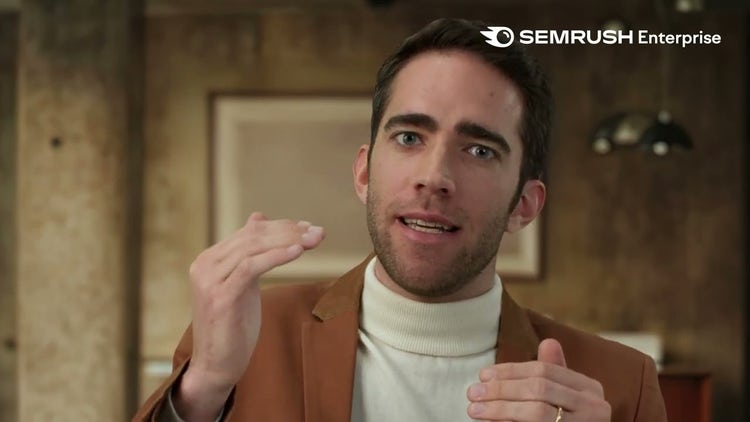
Luca Stef, Director of Growth at Adidas Digital Sports, has a wake-up call to brands still clinging to old paid media habits.
With rising acquisition costs, stricter privacy laws, and AI-driven black boxes reshaping attribution, the traditional ad-only model no longer holds.
Luca lays out a smarter path: a sustainable growth engine powered by a strategic balance of organic and paid marketing. Based on a decade of experience driving global growth, his insights cut through the noise and into driving ROI.
Watch the interview
If your strategy still draws a sharp line between organic and paid, it’s time to redraw it. Luca’s framework offers a clear roadmap for growth that compounds, not collapses.
Unlock The True Power Of Search
Made For Enterprise
What’s changed in paid performance?
It’s a hard truth: ads don’t work the way they used to. And it’s not just about iOS updates or rapidly produced AI-driven creative.
Here are the 3 key factors driving the shift:
- AI-algorithm disruption: Platforms now do much of the targeting for you, eroding manual optimizations.
- Loss of data fidelity: Privacy regulations (GDPR, CCPA) and cookie depreciation have severely limited multi-touch attribution models.
- Cost saturation: Paid acquisition has just become more expensive. Especially for DTC and B2C at scale.
These changes demand a fundamental rethink of your strategy, not minor tweaks.
Why you need to treat paid and organic as multipliers, not opposites
Too many brands treat paid and organic as siloed disciplines. One team does SEO. Another handles PPC. No one coordinates and that becomes a growth blocker.
Aim for true integration. Use organic channels (SEO, ASO) to drive sustainable visibility and long-term efficiency. Your paid channels (SEM, display, social) then offer fast feedback loops and scale.
Confused? Here are some high-level examples of true integration:
Social media: Boosting organically successful posts through paid promotion to reach broader or targeted audiences.
SEO & SEM: Coordinating paid search (PPC) and organic search (SEO) efforts, aligning keyword strategies so both tactics support visibility.
Content marketing: Creating content organically tested for audience interest, then promoting successful content through paid ads.
Remember: the goal isn’t either/or, but maximizing their combined impact. There are potential risks too, namely:
- Cannibalization: Paying for clicks you could’ve won organically hurts ROI.
- Missed synergy: Failing to amplify high-performing content or intent signals across both sides.
What’s the right balance between organic and paid?
The actual ratio depends on your product, business model, and audience, but the principle is universal: lean into long-term brand equity and use paid to fuel what’s already working organically.
Based on his real-world experience, Luca proposes a simple baseline:
- 70% organic, 30% paid is the sweet spot for most brands seeking scale and efficiency.
Anything skewed 50/50 or heavier toward paid? Likely unsustainable.
The role of channels, teams, and feedback loops
These three levers are integral to your team’s efforts at optimizing the channel mix:
1. Channel mapping
Not all channels are created equal. Different industries and audiences demand different approaches. Investigate:
- Where your audience spends time.
- Which platforms support incremental value without cannibalizing.
- How to map intentto your different channels.
2. Cross-team collaboration
This means breaking silos, especially in larger orgs. Paid and organic teams must:
- Share data on keyword performance.
- Co-plan around launches and campaigns.
- Transfer learnings in real time.
3. Dynamic budgeting
Monitor and adjust ad spend based on organic performance signals.
- If a keyword is rising organically, reduce paid bids.
- If a topic is surging in search, amplify this momentum with supporting paid content.
This turns your data into a true lever rather than a reporting afterthought.
Final takeaways
Traditional paid media playbooks are fading fast. Rising costs, AI, and privacy changes have rewritten the rules.
- Organic and paid aren’t separate strategies, they’re growth multipliers when combined.
- Most brands should aim for a 70/30 organic-to-paid split for sustainable growth.
- Align your teams, channels, and budget around shared intent and performance insights.
Organic and paid strategies can’t scale effectively when they live in separate dashboards, managed by separate teams, speaking separate languages.
Semrush Enterprise empowers marketers to break down these barriers and build a unified growth engine where every team works in harmony.
- Unified data, aligned teams: Every team has dashboards, reports, and charts—but too often, none of them speak the same language. Semrush Enterprise unites SEO, PPC, content, and digital PR metrics in one central hub. This ensures marketing, product, and sales teams align around the same data.
- Full journey visibility: Map journeys and understand how organic and paid efforts reinforce each other or where they might be cannibalizing results.
- Real-time insights: Dynamic dashboards bring together organic rankings, paid performance, and competitor benchmarking, so every team sees the same actionable insights, at the same time.
- Scalable infrastructure: Empowers growth with collaborative tools to align organic and paid teams around shared goals.
By uniting all your data, and your teams, in one place, Semrush Enterprise helps marketing leaders maximize every investment in organic and paid efforts, turning fragmented insights into a unified growth strategy.

Patrick has written content for in-house teams or as a freelancer for over 7 years, covering topics that range from digital marketing to satellite imaging.
Tells Google to show you more from Semrush in AI, Search, and Discover.