Most customers take multiple touchpoints to convert: They discover your brand, compare alternatives, return for another look, and buy when they're ready.
A conversion funnel maps this multi-touch journey from awareness to purchase, helping you identify where prospects drop off and optimize each stage to improve conversion rates.
In this article, we'll break down the conversion funnel framework (including ToFu, MoFu, and BoFu), the metrics that matter at each stage, and tactics to move more prospects toward purchase.
What is a conversion funnel?
A conversion funnel is the path potential customers take from initially discovering your brand to performing a conversion (the desired action a business wants a potential customer to take, like making a purchase).
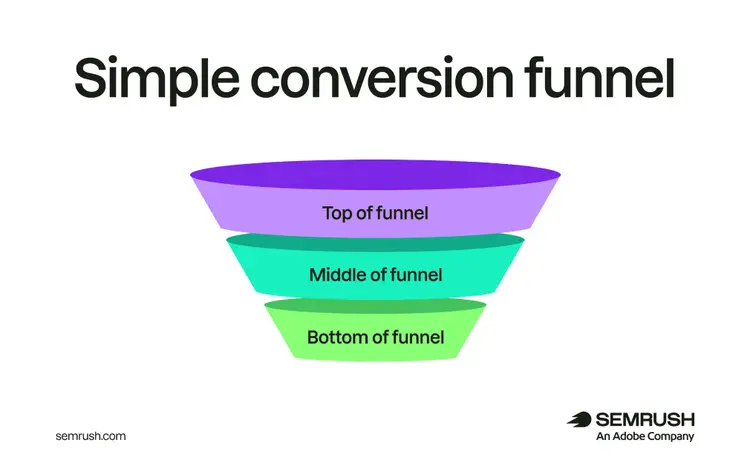
Conversion funnels have inverted triangle shapes because audience size decreases at each stage as prospects drop off due to reasons like disinterest, price, or competition. Like this:
For example, a laptop buyer's funnel might include researching "best laptops for [their needs]," reading reviews, comparing features and prices, watching unboxing videos, and visiting stores to test models before purchasing.
ToFu, MoFu, BoFu: Conversion funnel analysis
Any conversion funnel can be simplified into three distinct stages (top, middle, and bottom), each serving a specific purpose in the customer journey:
Top of funnel (ToFu) is the awareness stage. Potential customers discover your brand and begin exploring solutions to their problems. They're not ready to buy — they're researching, learning, and identifying options.
Middle of funnel (MoFu) is the consideration stage. Prospects now understand their problem and are actively evaluating different solutions. They're comparing features, reading reviews, and determining which option best fits their needs.
Bottom of funnel (BoFu) is the decision stage. Qualified leads are ready to purchase and need final reassurance. They're looking at pricing, seeking proof of value, and deciding whether to choose you or a competitor.
Each stage requires different marketing tactics, content types, and success metrics. Trying to sell too early (pushing BoFu content to ToFu audiences) creates friction and drives prospects away. Conversely, providing only educational content to BoFu prospects misses conversion opportunities.
In the following sections, we'll explore each funnel stage in detail. Ready to optimize your funnel? Let's start at the top and work our way down.
Top of funnel (ToFu)
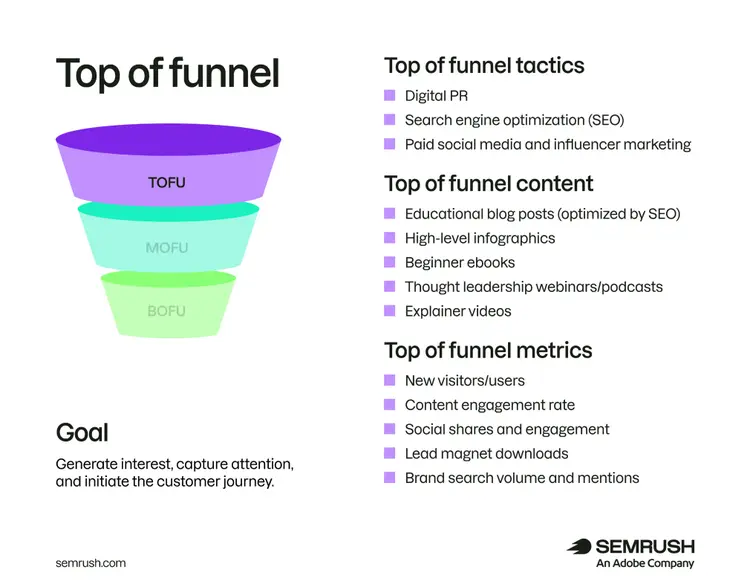
The top of the conversion funnel is the stage where potential customers become aware of your product or brand. The goal with the top of your conversion funnel is to generate interest, capture attention, and initiate the customer journey.
The main ToFu challenge is attracting the right customers, as getting the wrong people at the top decreases the chance of converting them later. The solution is to conduct thorough audience research to make sure you’re targeting the right audience segment.
ToFu marketing tactics
ToFu marketing tactics aim to attract and engage a relevant, broad audience in the early stages of their buyer's journey.
Here are three popular top-of-funnel marketing tactics to help your business reach potential customers who were previously unfamiliar with your brand:
Digital PR: Building brand reputation and visibility through compelling content, engaging with online communities, and leveraging various digital media outlets to create a positive brand image and increase awareness
Search engine optimization (SEO): Improving online visibility through search engine rankings via technical aspects of your website, link building, and keyword targeting
Paid social media and influencer marketing: Partnering with influential social media voices to amplify your brand and generate engagement
As an example, GymShark partnered with fitness influencer Whitney Simmons, who has 4M followers, on Instagram. Whitney often posts about her workout attire with discount codes for her followers.
ToFu content
ToFu content is about offering value and making a memorable first impression, as your potential customers in this stage don’t know who you are.
Instead of selling, demonstrate your understanding of potential customers’ pain points and your commitment to helping them using your specific expertise.
Some examples of top-of-the-conversion-funnel assets include:
Educational blog posts (optimized by SEO): Answer broad questions like "How does [concept] work?" to attract search traffic and establish credibility
High-level infographics: Visualize industry trends, statistics, or process overviews that introduce concepts without requiring deep commitment
Beginner ebooks: Create "101" guides and industry primers that provide foundational knowledge in exchange for an email address to grow your email list
Thought leadership webinars/podcasts: Feature industry trends, expert interviews, and emerging topics that showcase expertise without promoting products
Explainer videos: Short content that introduces concepts, tells your brand story, or demonstrates "why this matters" to build awareness
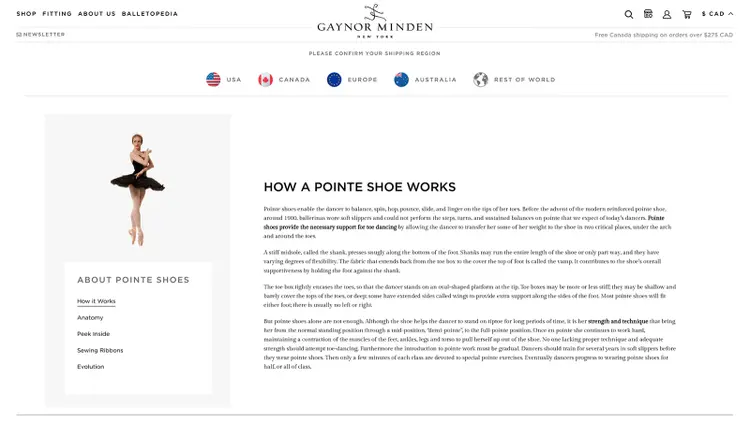
For instance, Gaynor Minden, a dance retailer, wrote a blog post about how pointe shoes work. The blog post doesn’t promote Gaynor Minden’s own shoes. Instead, it focuses on providing educational content to readers.
ToFu metrics
ToFu metrics help you understand which strategies work and which need improvement, and you can get these metrics from dedicated analytics tools like Google Analytics.
Here are useful ToFu metrics to help you measure the impact of your strategy:
New visitors/users: First-time visitors who've never been to your site before — true measure of awareness
Content engagement rate: Time on page, scroll depth, and clicks on educational content — shows if prospects find your materials valuable enough to consume fully
Social shares and engagement: Likes, comments, and shares on ToFu posts — signals if content resonates with your audience
Lead magnet downloads: Ebook, guide, or checklist downloads — measures how many ToFu-stage visitors become leads
Brand search volume and mentions: Direct brand searches plus media/social mentions — tracks growing awareness
Middle of funnel (MoFu)
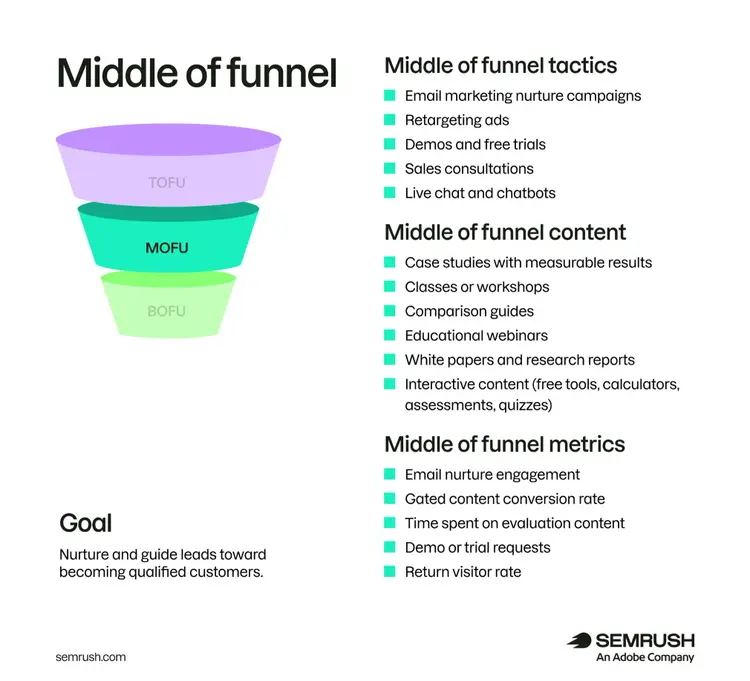
The middle of the conversion funnel is where potential leads become more deeply engaged, and your goal is to nurture and guide leads toward becoming qualified customers.
The challenge with the middle of the funnel is finding the right balance between the frequency and relevance of your communications to keep potential customers engaged without overwhelming them.
MoFu marketing tactics
MoFu marketing tactics are designed to nurture leads, build relationships, and guide potential customers further along the buyer journey. Tactics in the middle of the funnel tend to be less about broad awareness and more about direct engagement.
Here are some effective MoFu marketing tactics:
Email marketing nurture campaigns: Segment campaigns based on prospect actions. Someone who downloaded a comparison guide needs different follow-up than someone who attended a webinar. Track engagement rates by segment to identify which content moves prospects toward conversion.
Retargeting ads: Show ads to people who visited your site or engaged with your content to bring them back and continue the conversation
Demos and free trials: Provide hands-on experience with products or services. Demos showcase features and benefits, while free trials allow users to test the offering’s value. Both tactics reduce hesitations, foster trust, and encourage conversion by showing real value and usability.
Sales consultations: Offer one-on-one calls to understand specific needs, answer questions, and recommend tailored solutions
Live chat and chatbots: Engage prospects in real-time when they're actively browsing your site, answering questions and guiding them to relevant resources
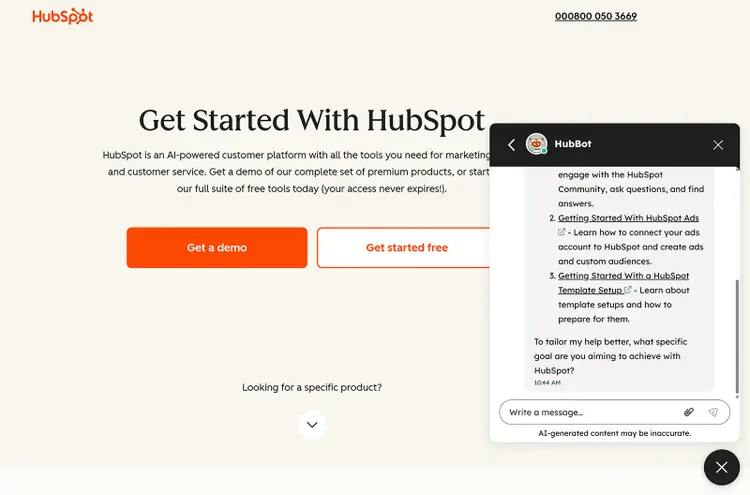
For example, HubSpot has an AI chatbot visitors can speak with to get direct answers to their questions.
MoFu content
Middle of funnel content focuses on nurturing leads, building relationships, and educating potential customers who have shown an initial interest.
Here are some well-suited types of content for the MoFu stage:
Case studies with measurable results: Prove you solve problems with specific metrics like "Company X reduced customer acquisition costs by 34% in 90 days." Structure case studies around likely objections: cost concerns, implementation time, technical complexity, or ROI uncertainty.
Classes or workshops: Host classes to engage potential customers. By providing valuable insights and solving challenges, these events establish authority, build trust, and guide attendees toward a purchase.
Comparison guides: Educational content comparing many different products and solutions. These help prospects understand their options and evaluate what matters most for their needs without pushing a specific brand.
Educational webinars: Live or recorded demonstrations focused on specific use cases rather than feature dumps. "How to Reduce Cart Abandonment by 25%" attracts more qualified leads than "Product Feature Overview."
White papers and research reports: In-depth industry insights and data that establish authority, helping leads justify solutions internally and understand broader context
Interactive content (free tools, calculators, assessments, quizzes): Offer interactive tools that provide personalized results and individual needs to enhance engagement, educate users, and nudge them closer to conversion
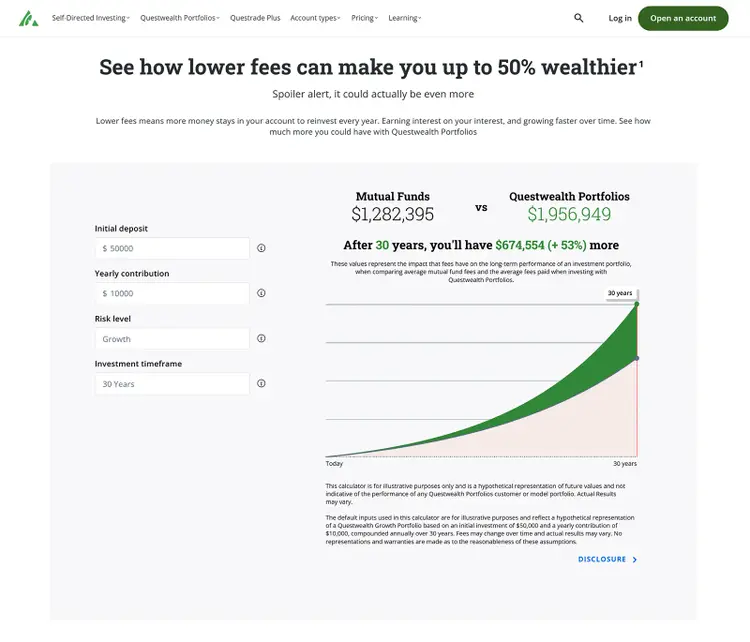
For example, investment platform Questrade offers a free investment calculator so users can see how much more money they can make with a Questrade portfolio.
MoFu metrics
MoFu metrics measure consideration-stage engagement, showing whether prospects are actively evaluating your solution and moving closer to a purchase decision.
Here are some metrics to measure on your MoFu content:
Email nurture engagement: Open rates, click rates, and replies to targeted email sequences — indicates whether consideration-stage content resonates and keeps prospects engaged over time
Gated content conversion rate: Percentage of visitors who access comparison guides, case studies, or product demos — measures how many prospects are ready to invest time evaluating your solution
Time spent on evaluation content: Average time on product pages, comparison guides, and case studies — shows depth of consideration and whether prospects are seriously evaluating features and benefits
Demo or trial requests: Number of prospects requesting product demonstrations or signing up for free trials — signals strong purchase intent and readiness to experience your solution firsthand
Return visitor rate: Percentage of prospects returning multiple times — tracks sustained interest and can indicate if users are actively comparing options before deciding
Bottom of funnel (BoFu)
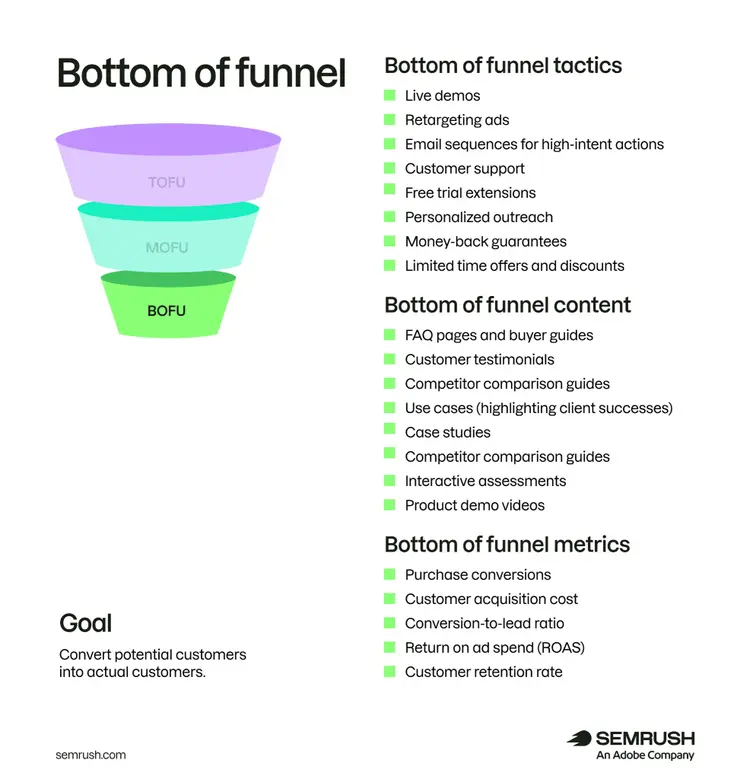
The bottom of the conversion funnel is where potential customers become ready to make a purchase decision. The primary goal of the BoFu stage is to convert potential customers into actual customers.
There are several challenges at this stage of the funnel, including pricing, alternatives, and customer concerns about efficacy or support.All of these potential issues can be solved with the right information and resources at the right time.
BoFu marketing tactics
BoFu marketing tactics are designed to turn potential customers into paying customers and brand advocates. You do this by creating confidence, clarity, and a sense of urgency that will encourage potential customers to make that final purchase decision.
Effective BoFu tactics include:
Live demos: Real-time presentations showcasing product benefits, addressing final queries, and persuading prospects to make informed purchase decisions
Retargeting ads: Target people who visited pricing pages, started trials, or abandoned carts with specific offers or reminders
Email sequences for high-intent actions: Automated emails triggered by pricing page visits, demo requests, trial signups, or cart abandonment to push prospects over the finish line
Customer support: Places for prospects to seek assistance and get quick answers to anything that is preventing them from buying
Free trial extensions: Extra time for prospects who need more proof before committing
Personalized outreach: Direct contact from sales reps to high-intent leads answering specific objections and tailoring solutions to their needs
Money-back guarantees: Risk-reversal offers that remove purchase hesitation by promising refunds if the product doesn't deliver
Limited time offers and discounts: Urgent and exclusive deals to prompt immediate action from prospects, driving conversions and purchases at the bottom of the funnel
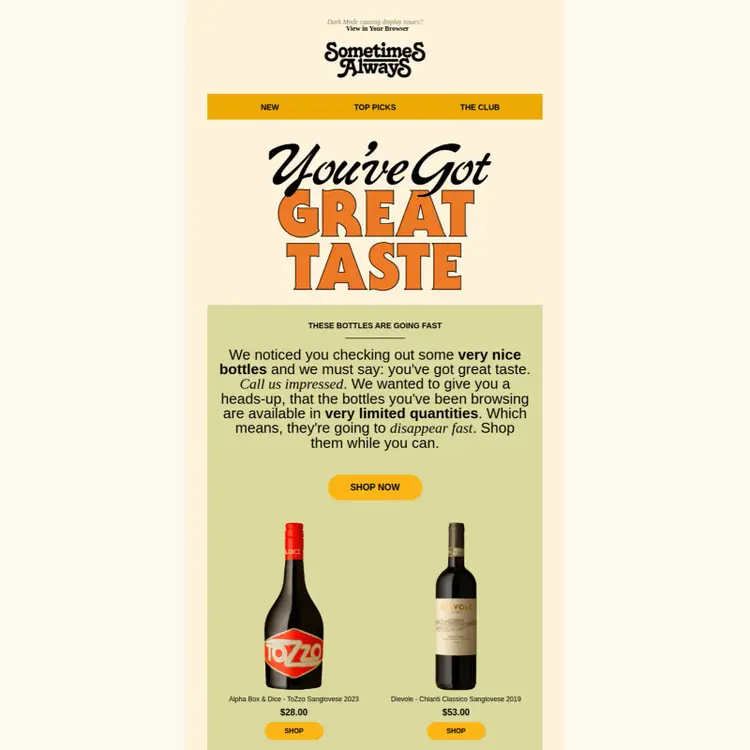
For instance, wine retailer Sometimes Always sends cart abandonment emails to folks who didn’t go through with their purchase.
BoFu content
BoFu content should help build customers’ confidence that your product is the right one for them and that now is the right time to buy.
Here are some common types of BoFu content:
FAQ pages and buyer guides: Detailed resources answering final queries and providing valuable information to drive purchase decisions
Customer testimonials: Inspiring narratives from satisfied customers who have achieved remarkable outcomes through your product or service
Competitor comparison guides: Content that highlights product advantages, guiding prospects to choose the brand over competitors and finalize their purchase.
Use cases (highlighting client successes): Compelling scenarios that vividly depict how your product or service has been employed to overcome challenges and achieve outstanding outcomes
Case studies: In-depth customer stories with specific metrics, challenges solved, and ROI achieved to show proof
Competitor comparison guides: Direct comparisons between your product and named competitors (e.g., "[Your Brand] vs. HubSpot"), highlighting your specific advantages and differentiators
Interactive assessments: Quizzes or tools helping prospects self-select the right pricing tier or buy the right product
Product demo videos: Focused walkthroughs showing key features solving specific problems to help prospects visualize using your solution and confirms it meets their needs
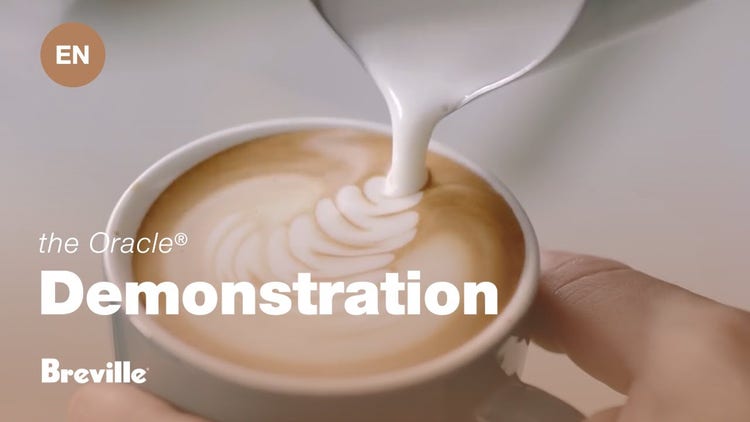
Here’s a product demo from Breville showcasing one of their espresso machines, highlighting how easy it is for people who might not consider themselves experienced home baristas.
BoFu metrics
BoFu metrics reveal whether your bottom-funnel tactics actually convert prospects into customers profitably, and when conversion rates fall short, they help pinpoint weaknesses throughout your entire funnel.
Here are a few key BoFu metrics to track:
Purchase conversions: Number of prospects who completed a desired action (e.g., made a purchase) at the bottom of the marketing funnel, indicating successful conversions
Customer acquisition cost: Total expenses to acquire a new customer, assessing the efficiency and cost-effectiveness of marketing efforts
Conversion-to-lead ratio: Percentage of leads that converted into customers, gauging the quality and performance of the bottom-funnel content
Return on ad spend (ROAS): Revenue generated per advertising dollar spent, indicating the profitability of ad campaigns at the bottom of the funnel
Customer retention rate: Percentage of retained customers over a specific period, measuring brand loyalty and post-purchase satisfaction
How to analyze your competitors’ conversion funnel
You can analyze your competitors' conversion funnels by identifying high-converting domains in your market, researching their audience, and analyzing their traffic channels and top-performing pages.
This kind of analysis can reveal the most impactful strategies your competitors use to convert your market’s customers.
To do this, we’ll pretend we’re marketers for a company in the Apparel & Fashion industry. Using the Semrush Traffic & Market Toolkit, we’ll identify a domain with strong metrics and gather data that can reveal various successful aspects of their conversion funnel.
Identifying companies that convert the most customers ensures you're learning from proven success rather than copying ineffective strategies.
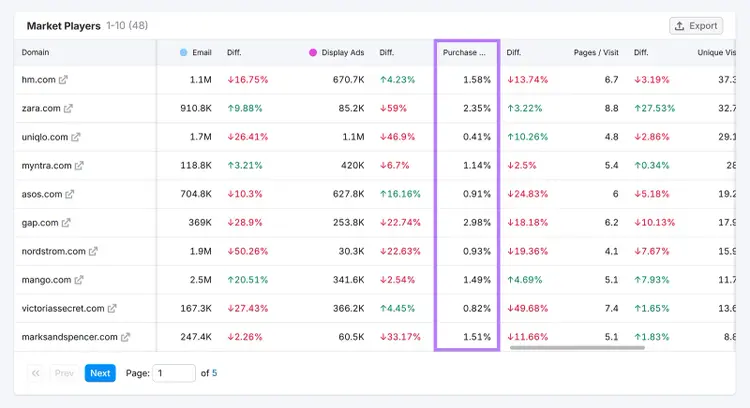
We analyzed the Apparel & Fashion industry using the “Market Players” section within the Market Overview. The tool gathered data for the top domains adjacent to our target domain hm.com.
Start by reviewing the “Purchase Conversion” column to find relevant domains with higher conversions than yours.
zara.com has a purchase conversion rate of 2.35%, which is higher than H&M’s conversion rate of 1.58%. Let’s see what strategies Zara is using to achieve this number.
2. Research competitor audiences
Researching competitor audiences shows whether their funnel tactics will work for your audience — if demographics align, you can confidently model their strategies, and if they differ, you'll need to adapt messaging and offers before implementing similar tactics.
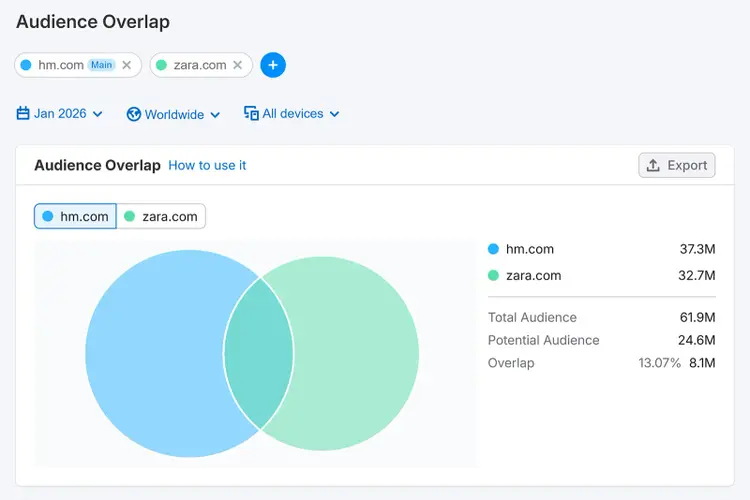
Head into the Audience Overlap dashboard and add your domain along with the competitor you wish to check. You’ll get a chart showing how much overlap you have with your chosen site.
No or little overlap means your audiences are fundamentally different — their funnel strategies likely won't work for you without significant adaptation. High overlap indicates you're competing for the same customers, making their proven tactics directly applicable to your funnel.
3. Find top traffic acquisition channels
Understanding your competitors' traffic acquisition channels reveals where they invest most heavily to attract customers which helps you prioritize your budget toward proven channels.
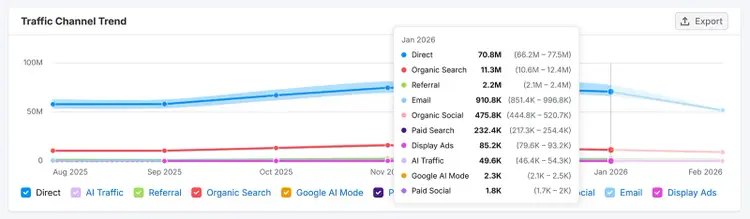
Let’s look at zara.com’s traffic acquisition strategy. To do this, we can start with the Traffic Overview dashboard.
Using the Traffic Channel Trend graph, we discover the top channel is direct, followed by organic search.
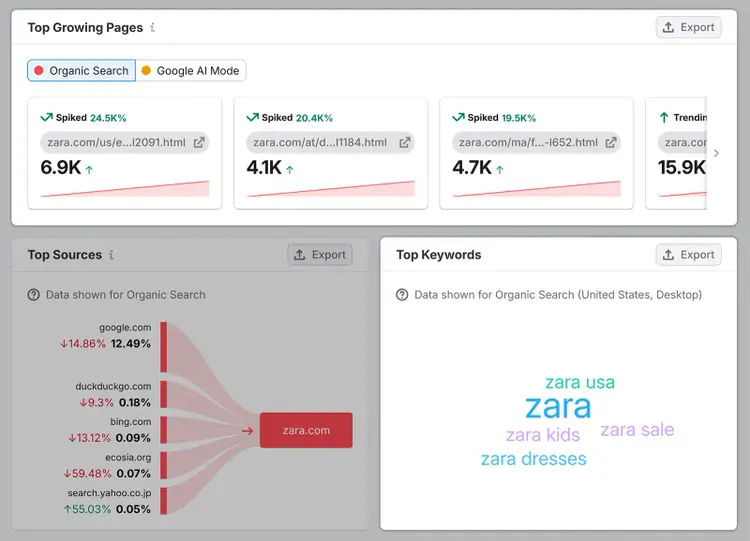
We can also dive into specific channels to get a better idea of how Zara drives traffic to its site. Let’s take a look at the Organic Search dashboard.
Pay attention to the “Top Growing Pages” and “Top Keywords” sections, where you can see which content is currently popular and which keywords drive the most traffic.
Knowing this information can give you content ideas and new keywords to target.
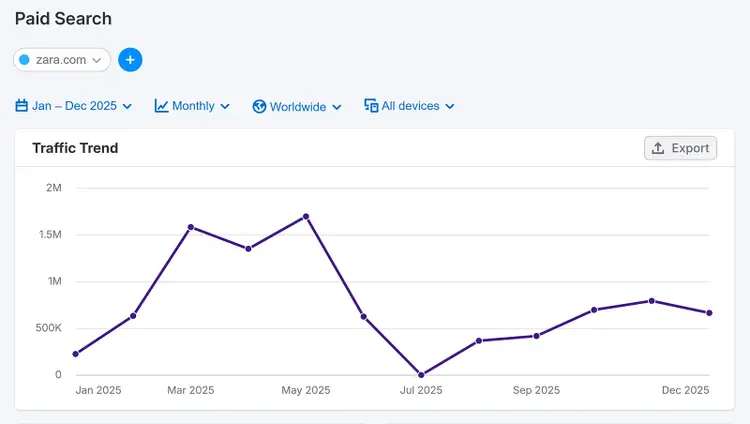
And if we look at the Paid Search dashboard, we’re able to uncover that Zara invested the most in paid search during March, April, and May 2025.
This suggests spring shopping drives high conversion in fashion, and you can either match this timing to capture peak demand or invest during quieter months (in this case, July).
Tip
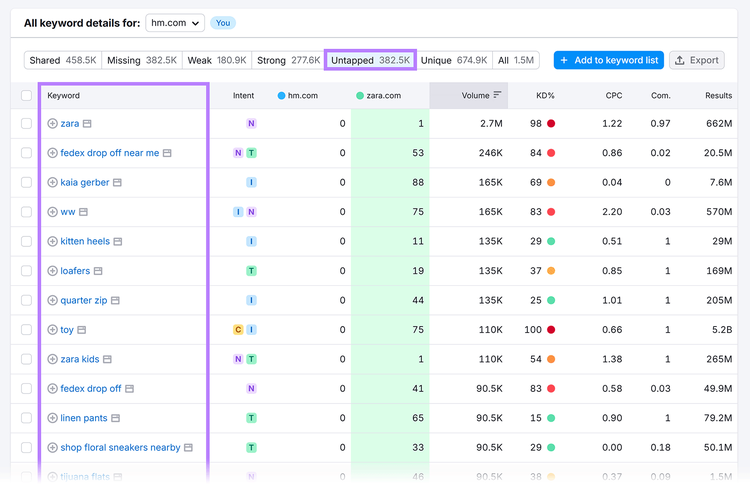
To identify keyword gaps (where competitors rank but you don't), use the Keyword Gap tool. Enter your domain and up to four competitors, then review the “Untapped” column (keywords you don’t rank for that at least one of the entered competitor sites does). This reveals organic content opportunities at every funnel stage.
4. Discover how competitors close sales
Analyzing competitors' top pages reveals the specific promotional tactics they use to turn traffic into revenue, so you know exactly which conversion techniques work in your market.
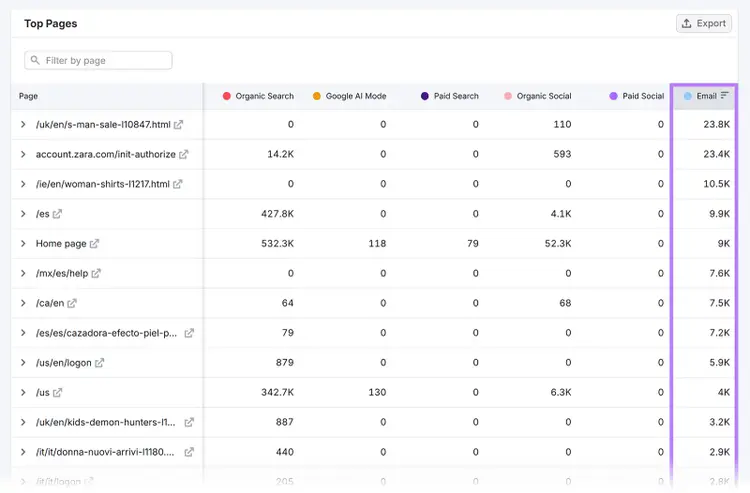
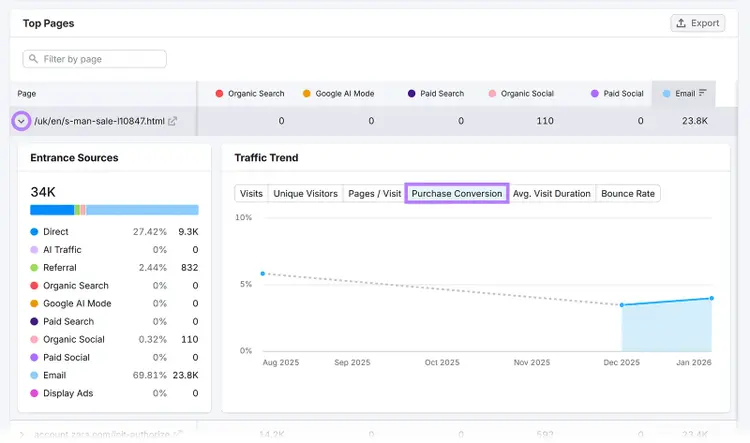
Using the Top Pages dashboard, we can see which pages perform the best. In this case, we sorted by “Email.”
You can expand certain pages to view their conversion rate (among other metrics). The below page had a conversion rate of 5.84% during August, suggesting that people in this audience might be looking to buy new clothes as summer ends.
When you find high-converting pages, click to the page and examine the specific elements driving conversions. Look for:
Compare these elements across your competitors' highest-converting pages to identify patterns. If multiple competitors use exit-intent popups with discount codes, that tactic likely works in your market.
5. Map your competitors’ funnel structure
Mapping out your competitors' funnel structure reveals where they invest most heavily and exposes gaps you can fill to satisfy your audience.
Create a simple spreadsheet tracking each high-performing page you discovered in steps three and four. For each page, note:
Funnel stage (ToFu/MoFu/BoFu)
Content format (guide, comparison, case study, calculator, video)
Primary keyword
Traffic/conversion metrics
This mapping shows investment patterns.
For example, you might discover competitors drive awareness through educational blog posts but lack MoFu comparison content, revealing an opportunity to capture prospects in the consideration stage.
6. Monitor your rivals’ online marketing activity
Monitoring your rivals’ online marketing activity helps you spot changes so you can adapt your strategy if necessary.
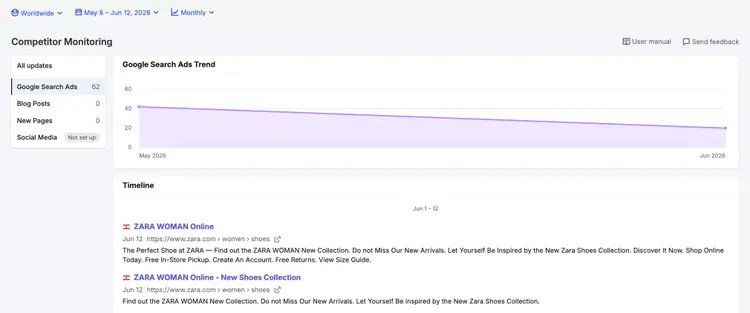
The Competitor Monitoring dashboard provides simple 24/7 monitoring of your rivals’ new pages, blog posts, Google Search ads, and social media activity.
Competitor Monitoring makes it simple to pinpoint new campaigns and stay ahead of the brand’s evolving conversion funnel strategy.
Here's what to watch for and why it matters:
New landing pages: Signal product launches, promotions, or funnel tests. If a competitor adds multiple comparison pages, they're likely investing in MoFu content to capture consideration-stage traffic.
Blog post patterns: Reveal content strategy shifts. A sudden spike in educational posts suggests they're building ToFu awareness. Look at topics and keywords they're targeting to spot gaps in your own content.
Google Search ads changes: Show budget allocation and seasonal priorities. New ad copy or landing pages indicate they're testing messaging that resonates — track which ads persist (winners) vs. disappear quickly (tests that failed).
Social media activity surges: Often precede major campaigns. Increased posting frequency or new content formats signal upcoming launches worth preparing for.
Optimizing your ToFu, MoFu, and BoFu strategy
The process of building and optimizing your conversion funnel is always a work in progress. As markets shift and customer behavior changes, you’ll need to stay engaged with your funnel, continue testing key metrics, and keep making upgrades to your tactics and content.
With these tactics, content ideas, and metrics — plus the ability to analyze competitor funnels — you’ll have everything you need to start attracting customers and guiding them toward a purchase.
Sign up for Semrush today to build and improve your conversion funnel.
Carlos Silva leads the editorial pipeline for the English blog—coordinating writers, editors, strategy, and building AI workflows that boost content quality and AI visibility. With 10+ years of experience writing and editing across in-house and agency roles, Carlos blends content strategy, SEO, and AI to help marketers stay ahead of an evolving search landscape.
Subscribe to learn more about General Marketing
Subscribe
By clicking “Subscribe” you agree to Semrush Privacy Policy and consent to Semrush using your contact data for newsletter purposes
Carlos Silva
Carlos Silva leads the editorial pipeline for the English blog and builds AI workflows that boost content quality and AI visibility. 10+ years writing and editing across in-house and agency roles.
Share
Tells Google to show you more from Semrush in AI, Search, and Discover.