
BoFu Content Strategy: How to Turn Prospects Into Customers
Want to know the secret to higher conversion rates?
It's mastering your bottom-of-funnel (BoFu) content strategy.
Here's proof: SurveyMonkey generates $200 million in annual revenue from their BoFu pages alone.
The best part? You can copy their approach.
In this guide, you'll learn exactly how to create BoFu content that converts, including:
- Real examples from successful companies
- Step-by-step processes you can follow
- Common mistakes to avoid (and how to fix them)
- Tools to measure your success
Let’s dive in.
What Makes BoFu Content Different?
Most content marketers focus on getting more traffic.
Big mistake.
Instead, you need content that converts the traffic you already have. That's where BoFu content comes in.
Think of it this way:
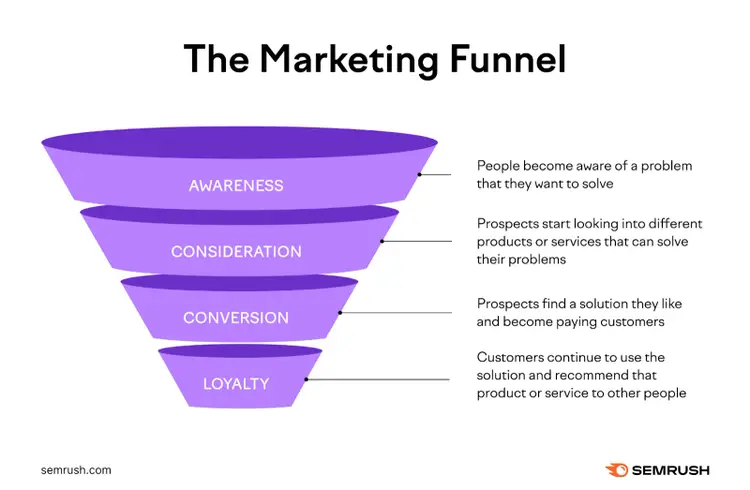
Your marketing funnel has three main stages:
- Top (ToFu): Educational content that builds awareness ("What is project management?")
- Middle (MoFu): Solution-focused content that shows options ("Best project management approaches")
- Bottom (BoFu): Decision content that drives purchases ("Monday.com vs. Asana comparison")
Here’s an example of a SaaS funnel (because every industry looks a little different):
BoFu content is different because it's designed for people who are ready to buy.
These visitors:
- Know exactly what problem they need to solve
- Have researched different solutions
- Are actively comparing options
- Just need that final push to purchase
The key difference? While other content educates and informs, BoFu content closes deals. It's your last chance to show prospects why they should choose you over the competition.
Signals Strong Purchase Intent
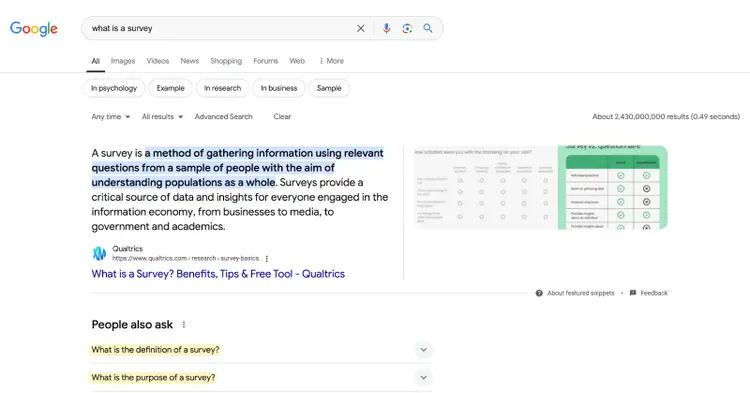
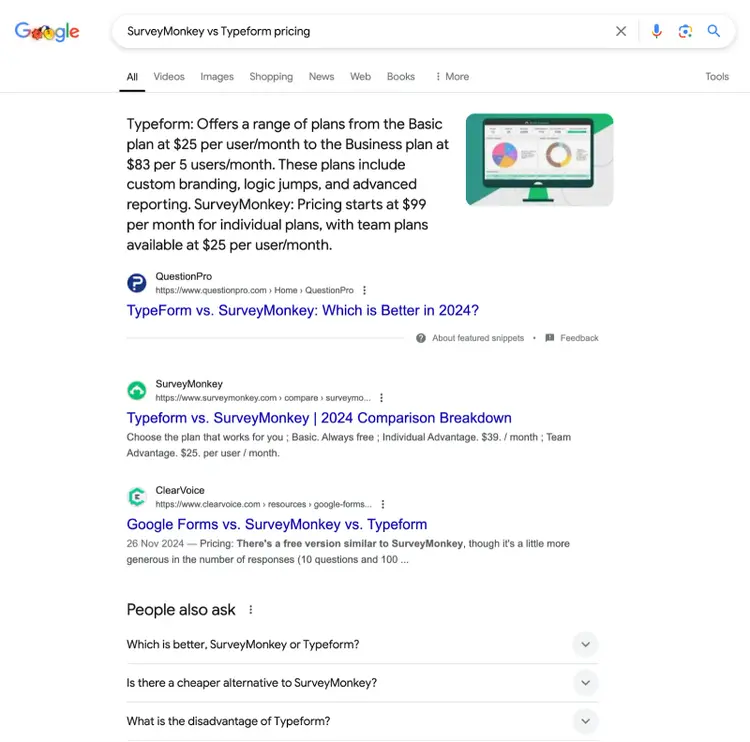
Here's something most people don't realize: BoFu visitors use completely different search terms than other prospects.
Let me show you:
Someone searching "what is a survey?" is at the top of the funnel. They're just learning.
But check this out:
Someone searching "SurveyMonkey vs. Typeform pricing" is ready to make a buying decision.
See the difference?
BoFu searches often include terms like:
- "Compare"
- "Pricing"
- "Reviews"
- "Vs"
- "Buy"
- “Alternative”
Pro tip
Use our free keyword tool to find these high-intent keywords for your product.
Contains Direct Calls to Actions
Here's another key difference: BoFu content always shows visitors exactly what to do next.
Instead of vague "Learn More" buttons, you'll see specific actions like:
- "Start your free trial"
- "Book a demo"
- "View pricing plans"
Check out how MailerLite does this on their comparison page:
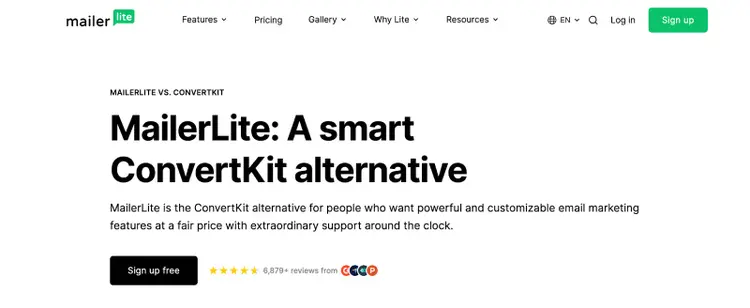
Notice how it leads with a clear "Sign up free" CTA? That's no accident.
Breaks Down Competitive Differences
BoFu content isn't about high-level overviews.
Instead, you need to get specific about:
- Features and capabilities
- Use cases and implementations
- Pricing and packages
- Technical requirements
Here's a perfect example from MailerLite:
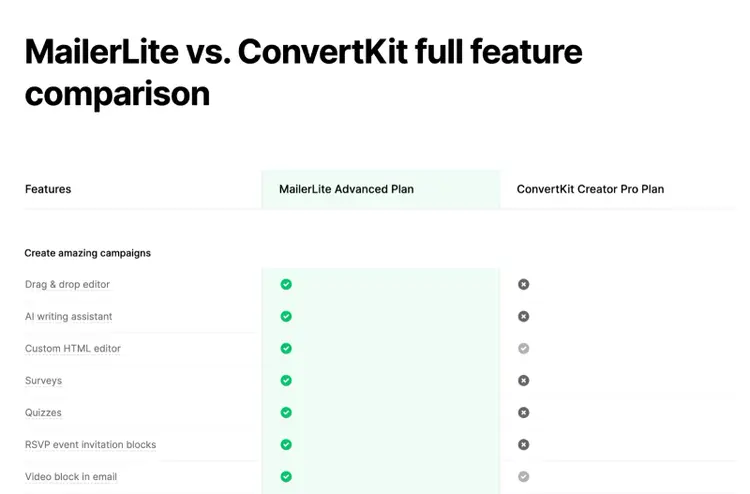
See how it breaks down exactly what you get with each plan? That's what BoFu visitors need to make a decision.
Connects Problems to Solutions
Here's what separates good BoFu content from great BoFu content:
The ability to match specific problems with exact solutions.
Let me show you what I mean:
Bad BoFu content says: "Our project management tool helps teams work better."
Great BoFu content says: "Our automated workflow templates save project managers five hours per week on task management."
See the difference?
Check out how Sastrify does this:

It doesn’t just say, "We help with procurement." Instead, it shows exactly how much time teams save: 653 hours per year on software purchasing.
Pro tip
Create a problem-solution matrix for your product. Map each feature to a specific customer pain point (AKA customer problem). Then, use these connections in your BoFu content.
How to Create BoFu Content That Converts
Ready to create BoFu content that actually drives sales?
Perfect.
I’ll show you exactly how to do it, step by step.
Step #1: Map Your Customer's Decision Points
Some companies create BoFu content around what they want to say.
This isn't a good idea.
Instead, you must address what your customers need to know before buying.
Here's how to find those decision points:
- Talk to your sales team. They hear customer questions every day. Ask them:
- What objections come up most often?
- Which features do prospects care about most?
- What competitor comparisons do they request?
- Mine your customer support data. Your support tickets are gold mines of information. Look for:
- Pre-purchase questions
- Feature requests
- Common confusion points
- Study review sites. Check G2, Capterra, or industry-specific review sites to find:
- Why customers chose your competitors
- What features matter most
- Common complaints and praises
Now, turn these insights into action:
First, create a decision matrix. Map each sales objection to a specific product feature and a supporting benefit.
For example: "Reports take too long" → "Automated dashboard builder" → "Cuts reporting time by 83%".
This becomes your content blueprint.
Next, build your content frameworks.
Create templates for comparison pages, objection-handling guides, and feature showcases. Focus on benefits over specs, and make sure each piece addresses specific customer concerns.
Finally, plan your content journey.
Map different content types to each buying stage (like comparison charts for research, case studies for validation, demos for decisions), then create clear paths between pieces.
Here's what your decision matrix might look like for a B2B SaaS product:
Use this template to map your customer decision points to specific features, proof points, and content types.
The key is ensuring every major customer concern has corresponding content backed by concrete evidence.
Pro tip
Turn this decision matrix into a living spreadsheet to track these insights.
Step #2: Set Up Your Content Distribution Plan
Creating great BoFu content is only half the battle.
You also need to get that content in front of prospects at the right time and in the right places.
Here are several ideas.
Use Multiple Contact Points
How often have you made a purchase the first time you land on a brand's website? The odds are slim to none.
Once someone finds your brand, you need to keep them engaged.
Here's how:
- Turn blog readers into email subscribers
- Convert video viewers into webinar attendees
- Move landing page visitors to product demos
The key? Multiple touchpoints with consistent messaging across every channel.
Think about it like this: A prospect might start with your comparison blog post, then join your email list, watch a demo video, and finally book a call with sales.
Sales tool Apollo.io nails this.
It uses a combination of free training videos, webinars, and blog posts to share engaging BoFu content for salespeople.
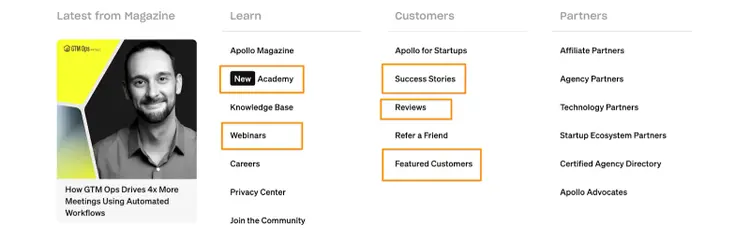
All of the content leads to either a free account or signing up for the email list to deepen the relationship.
Pro tip
Don't stop your BoFu content at conversion. Include content about the first 30 days with your product right in your sales materials. For example, add an implementation roadmap to your pricing page. Or include success milestones in your case studies. This pre-frames the post-purchase experience and helps turn new customers into long-term advocates.
Gate Strategic Content
Use gated content to identify serious buyers.
How? By offering valuable resources that prospects will happily trade their contact info for.
Someone downloading your detailed pricing comparison or ROI calculator is probably closer to buying than someone just browsing your blog.
Content worth gating includes implementation guides, whitepapers, and ebooks.
Check out Apollo.io's approach:
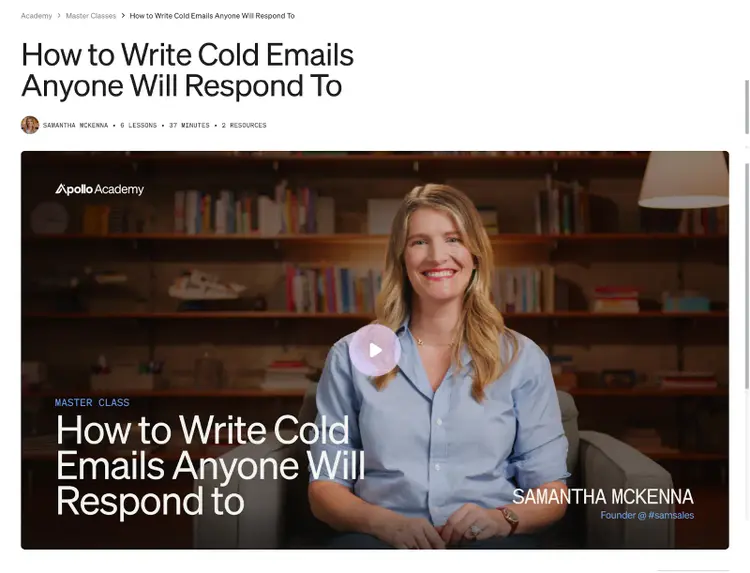
It partnered with top salesperson Samantha McKenna to create a 37-minute video course on cold emails. Halfway through, viewers need to enter their email to continue watching.
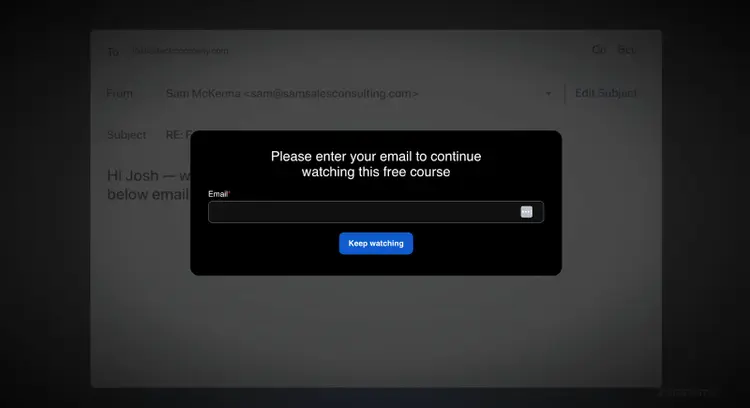
This approach is brilliant for two reasons:
- It proves the viewer is engaged (They've watched half the training.)
- It captures leads at their peak interest in sales techniques
Perfect BoFu timing.
Turn Content Into Sales Enablement
Did you know your BoFu content can double as sales collateral?
For example:
- Turn comparison blog posts into battle cards
- Convert case studies into presentation slides
- Transform feature guides into demo scripts
Pro tip
Create a central repository where your sales team can easily find and use your BoFu content during sales conversations.
Step #3: Choose the Right BoFu Format
Different buying decisions need different content types.
Here's what works best for each situation:
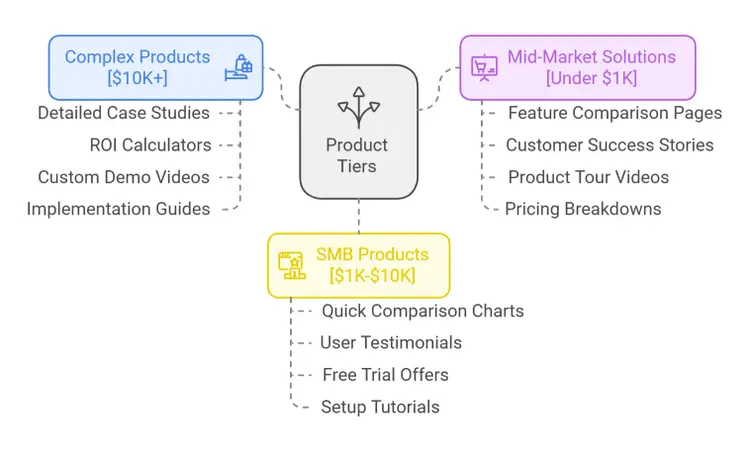
Here's how different companies nail their BoFu formats:
Enterprise Example: Salesforce
- Custom ROI calculator
- Industry-specific case studies
- Security whitepapers
- Implementation roadmaps
Mid-Market Example: Monday.com
- Interactive product tours
- Feature comparison tables
- Customer success stories
- Integration guides
SMB Example: Canva
- Quick feature demos
- Simple pricing tables
- User testimonials
- Templates gallery
Pro tip
Start with one format for each stage of your buyer's journey. Test and measure what works; then expand from there.
Step #4: Build Your Proof Foundation
Here's a harsh truth:
Your prospects don't trust your marketing claims.
(And why should they?)
That's why you need rock-solid proof. Here's exactly how to build it.
Customer Results
Don't just say "Our customers love us."
Instead, show specific results like:
- "27% increase in team productivity"
- "Cut reporting time from 5 hours to 30 minutes"
- "$50,000 saved in the first quarter"
Check out how Gong does this:
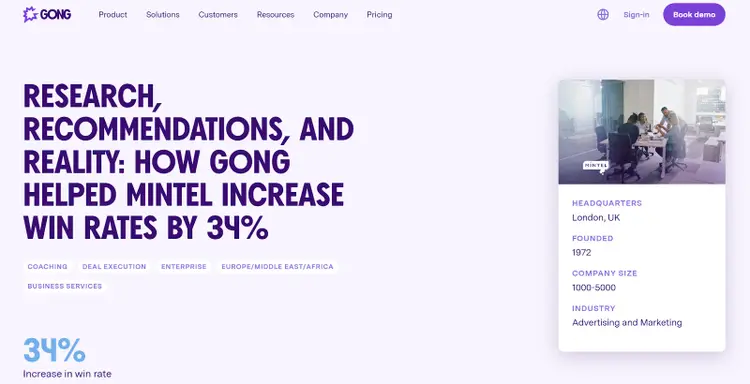
Notice how it leads with specific numbers? That's what convinces buyers.
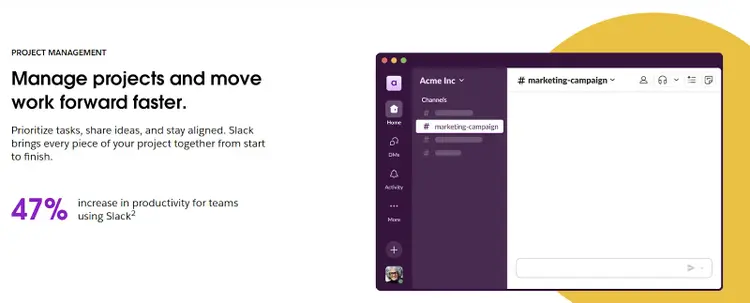
Slack also does an excellent job of backing claims with stats:
Pro tip
Match your proof points to your buyer's size and industry. Enterprise buyers want enterprise case studies. Small business owners want results from similar-sized companies.
Industry Validation
Third-party validation carries more weight than anything you say about yourself.
For instance, when Gartner names you a "Leader" in their Magic Quadrant, that means more than a hundred self-written blog posts.
Here's what to highlight:
- Analyst recognition: "Named a Leader in Gartner's Magic Quadrant 3 years running"
- Industry awards: "G2's Best Software Award 2023"
- Independent reviews: "4.8/5 stars from 1,000+ verified customers on Capterra"
- Market position: "Ranked #1 in email marketing by TrustRadius"
Look how Sundt leverages this:
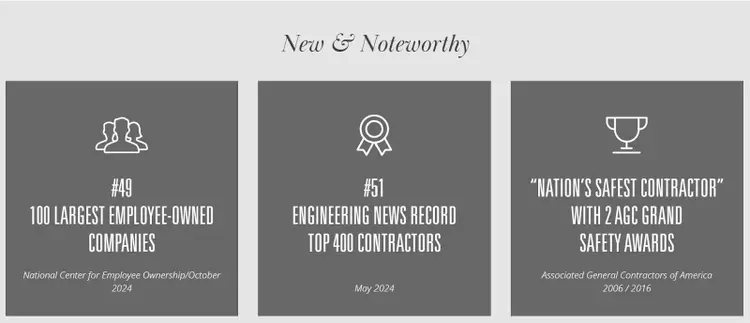
It showcases its industry awards prominently on its site, proving it's a leader in construction. This builds instant credibility with potential clients.
Technical Verification
For B2B buyers, especially in enterprise deals, technical proof is non-negotiable.
Here's what they need to see:
- Security certifications: "SOC 2 Type II and ISO 27001 certified"
- Reliability stats: "99.99% uptime over the last 12 months"
- Performance data: "50% faster load times than industry average"
- Integration proof: "Works with 200+ tools, including Salesforce, Slack, and Microsoft 365"
Check out how Docubee does this:
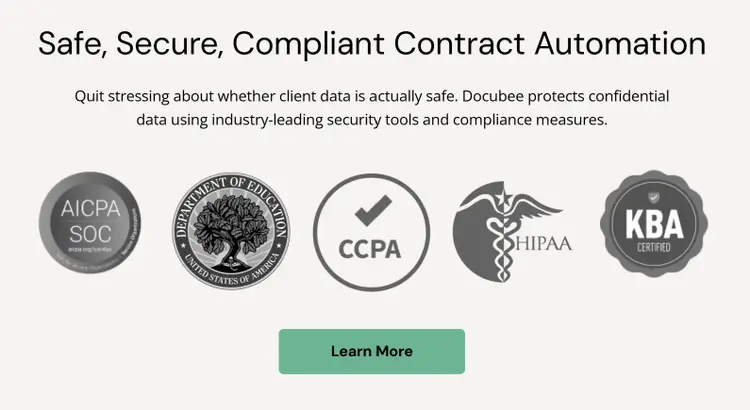
It displays its security badges prominently on the homepage, knowing these details often make or break enterprise deals.
Step #5: Create Killer Comparison Content
Let's face it: Your prospects are comparing you to competitors anyway.
So why not control the narrative?
Here's how to create comparison content that converts:
First, lead with key differentiators. Don't just create feature checklists. Instead, highlight what makes you unique.
Then, use clear visual formats. For example:
- Comparison tables
- Feature matrices
- Side-by-side screenshots
- Pricing breakdowns
Here’s a great example of ClickUp’s comparison chart:
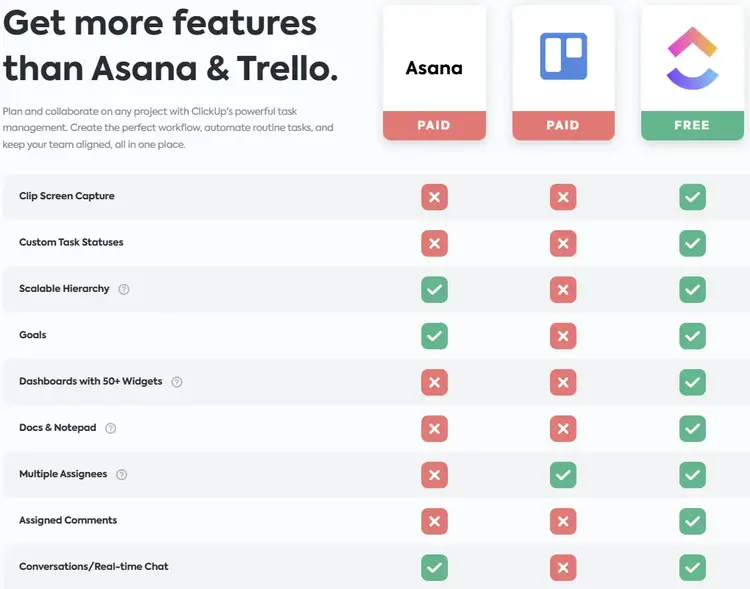
And always be honest about competitor strengths. Acknowledge where competitors excel—then show why you're still the better choice overall.
Here’s one way the Semrush team does this:
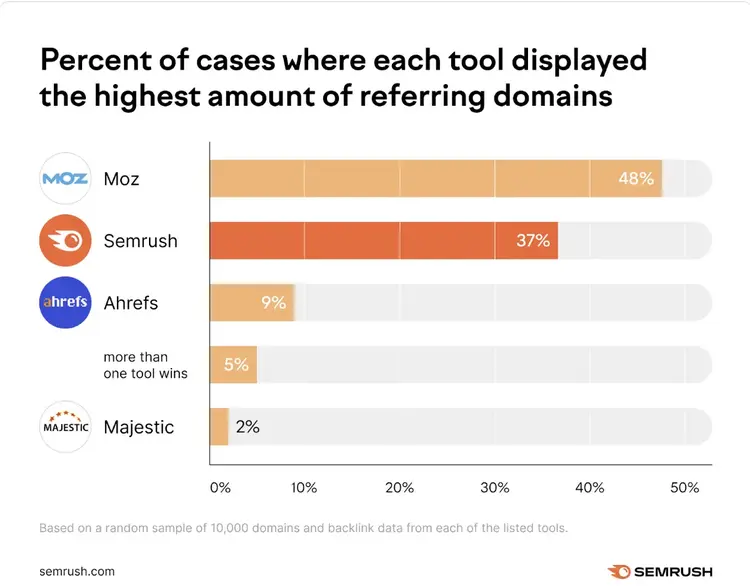
It admits when competitors outperform it, which makes its insights more credible.
Step #6: Add Strategic Social Proof
Here's something most people get wrong about testimonials:
Generic praise doesn't convert.
Instead, you need strategic social proof that addresses specific buyer concerns.
Here's how to do it right.
Match Testimonials to Objections
Have prospects worried about implementation? Show this:
"We were up and running in less than 2 days, and their support team was there every step of the way."
— Sarah Chen, CTO at TechStart
Concerned about ROI? Use this:
"We saw a 156% return on investment within the first quarter."
— Mark Thompson, CFO at ScaleUp
Place Proof Points Strategically
Don't dump all testimonials in one section.
Instead:
- Put technical testimonials next to feature descriptions
- Add ROI quotes near pricing sections
- Show implementation stories in your setup guides
Step #7: Create Multiple Conversion Paths
Most BoFu content ends with a single "Contact Sales" or “Try Our Demo” button.
Here's the problem:
Different prospects need different next steps.
Instead, create multiple conversion opportunities:
For Technical Evaluators:
- "See how it works" (feature demo)
- "Download API docs" (technical documentation)
- "Start free trial" (hands-on testing)
For Business Decision Makers:
- "Calculate ROI" (value calculator)
- "View pricing" (packages comparison)
- "Book demo" (sales consultation)
For Quick Starts:
- "Try it free" (instant access)
- "Watch quick tour" (2-minute demo)
- "See examples" (use cases)
Look how HubSpot provides multiple paths:

It allows visitors to decide whether they want to learn more or get started right away.
Step #8: Optimize for Search Intent
Here's something most marketers miss:
BoFu keywords are completely different from top- and middle-of-the-funnel keywords.
Let me show you why.
Finding Keywords That Convert
Here's the secret to finding BoFu keywords: Look for searches that show someone's ready to buy.
These searches typically fall into two categories:
1. Comparison Searches
When people compare options, they're close to deciding. Look for:
- "[Your product] vs [competitor]" — Like "Mailchimp vs Constant Contact"
- "[Your product] alternatives" — Like "Asana alternatives"
- "Best [product] for [use case]" — Like "best CRM for small business"
2. Purchase-Ready Searches
These searches show someone's got their wallet out:
- "[Product] pricing" — They're checking costs
- "Buy [product]" — They're ready to purchase
- "[Product] plans" — They're comparing options
Want to find these keywords easily?
Open Semrush Keyword Magic Tool and follow these steps:
- Type in your main product term (like "email marketing")
- Click "Advanced Filters"
- Select "Commercial" under "Intent"
This shows you keywords from people ready to buy.
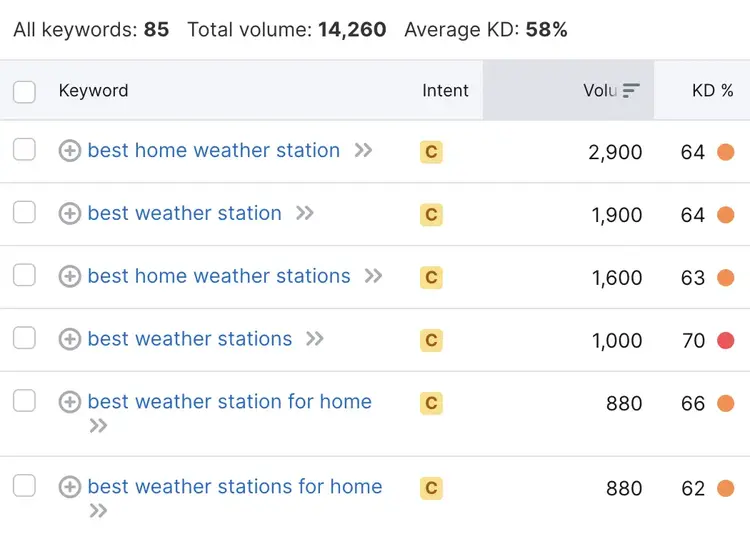
Here’s how the tool’s commercial intent filter looks:
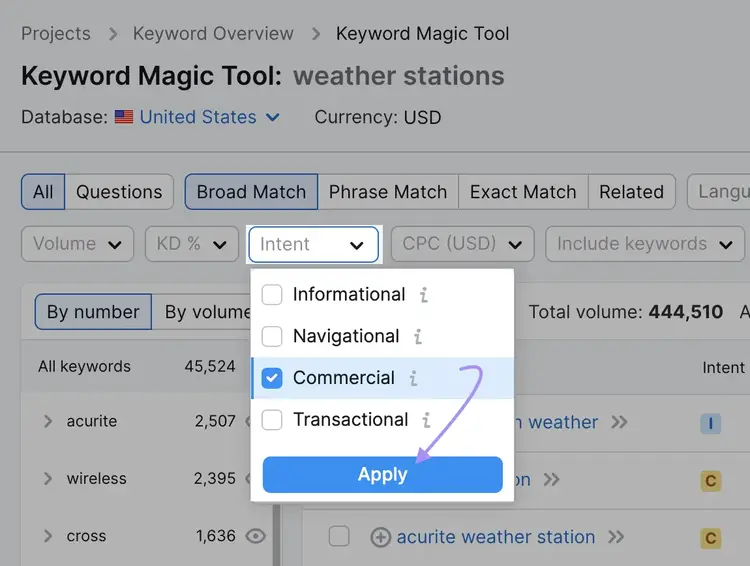
Then, commercial intent keywords will appear based on your original search term:
Pro tip
Don't get hung up on search volume. A BoFu keyword with 100 monthly searches can be worth more than a TOFU keyword with 10,000 searches.
Optimizing for BoFu Intent
Now comes the fun part: creating content that matches exactly what BoFu searchers want to see.
Here's how to nail it:
1. Create Detailed Comparison Content
When someone searches for "[Product A] vs. [Product B]," they're in final decision mode.
These comparison searches are golden opportunities. Why? Because these people are usually hours (or days) away from making a purchasing decision.
Here's exactly what your comparison content needs:
- Side-by-side feature analysis: Show exactly how features stack up, with real screenshots. For example: "Mailchimp's automation builder vs. Constant Contact's workflow editor"
- Real pricing scenarios: Break down costs for different business sizes. Like "Here's what each tool costs for a 10,000-subscriber email list"
- Specific use cases: Show which tool works best for different situations. For instance: "Mailchimp is better for ecommerce, while Constant Contact shines for nonprofits"
- Switching guides: Include migration tips and tools for people ready to switch
- Support comparison: Compare response times, support channels, and customer satisfaction scores
2. Build Comprehensive Pricing Pages
Here's something most people miss about pricing pages: They're not just about listing prices. They're about justifying value.
So, include these elements:
- Clear pricing tables: Show all costs upfront. No hidden fees or "contact us" mysteries.
- Package comparisons: Highlight which features matter most for different business sizes
- ROI examples: Show real numbers. Like "Companies typically save $2,000/month with our enterprise plan."
- Hidden cost alerts: Be upfront about additional costs like setup fees or usage limits
- Competitor context: Show why your pricing makes sense in the market
Look how HubSpot structures its pricing page:
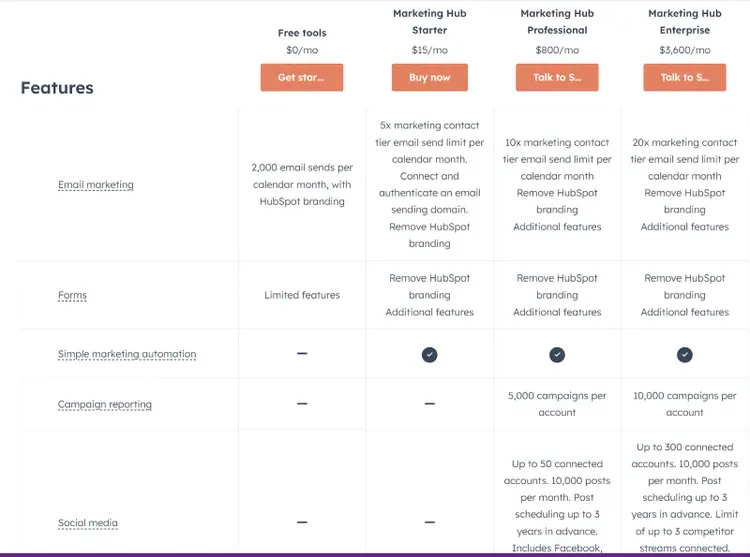
It breaks down exactly what you get at each tier, with clear CTAs for different buyer types.
3. Make Your Content Backlink-Worthy
Backlinks are like votes of confidence. Search engines use these votes (and various other factors) to decide which content to show first in search results.
But here's the challenge:
Most sites won't link to promotional content. That's why you need to make your BoFu pages link-worthy.
Here's exactly how to do it:
- Include original research. Run surveys, analyze data, or conduct experiments. For example, "We analyzed 500 SaaS pricing pages and found that 67% offer monthly plans."
- Create detailed comparison tables. Build comprehensive resources that compare multiple solutions. These become go-to reference points that other sites want to link to.
- Add downloadable resources. Create templates, worksheets, or calculators that solve specific problems. These practical tools naturally attract links.
- Feature expert quotes. Include insights from industry leaders. This adds credibility and encourages experts to share and link to your content.
Check out our guide on building backlinks for more strategies.
4. Nail Technical SEO
Technical SEO ensures search engines can find, understand, and rank your BoFu content properly.
Here's what you need to optimize:
- Mobile-friendly design: Your pages must work perfectly on phones and tablets. Google primarily uses mobile versions for ranking.
- Fast loading speed: Aim for under three seconds. Slow pages kill conversions and hurt rankings.
- Simple website addresses: Make your page URLs (the text in your browser's address bar) easy to read. For example, use "yourwebsite.com/pricing" instead of "yourwebsite.com/p?id=12345." This helps both people and search engines understand what the page is about.
- Website labels: Add special labels (called "schema markup") that tell Google what each page is about—like "This is a pricing page" or "This is a product comparison." Most website builders can add these automatically.
- Easy-to-navigate website: Organize your important pages logically. Put links to pricing, features, and comparison pages in obvious places like your main menu. Don't bury these pages deep in your website where visitors have to click multiple times to find them. Think of it like a well-organized store—you want your best products front and center, not hidden in the back.
Not sure where your pages stand? Run a free Site Audit to find issues to fix.
Pro tip
Use Semrush's Position Tracking tool to see where your pages show up in Google search results for important keywords.
Step #9: Track What Actually Works
BoFu content has one primary goal: driving conversions.
Without clear metrics, you won't know if your content is actually working. Let's look at the key metrics you should track:
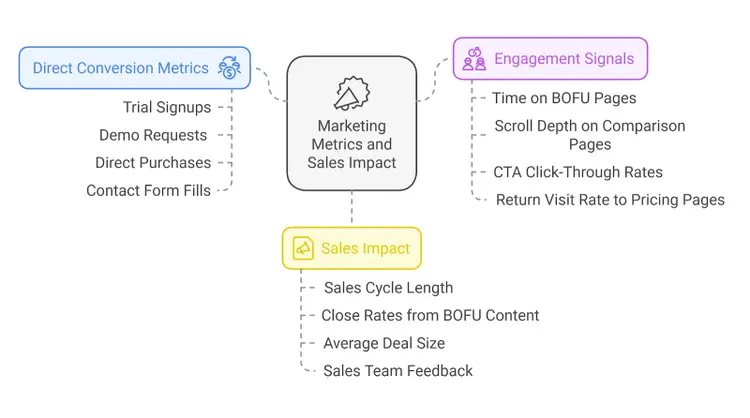
The key is connecting content engagement to actual sales outcomes.
Pro tip
Use tools like Dealfront or Amplitude to track the entire journey from content to conversion.
How to Track Your BoFu Content Performance
BoFu content has one primary goal: driving conversions.
Without clear metrics, you won't know if your content is actually working. Let's look at the key metrics you should track and how.
Step 1: Set Up Basic Conversion Tracking
First, you need to track direct conversions from your BoFu content. This tells you exactly how many visitors take action after reading your content.
What to track:
- Form submissions (like demo requests)
- Free trial signups
- Direct purchases
- PDF downloads
Why it matters: These numbers show you which BoFu content actually drives revenue. For example, you might find your pricing comparison page drives 3x more trial signups than your features page.
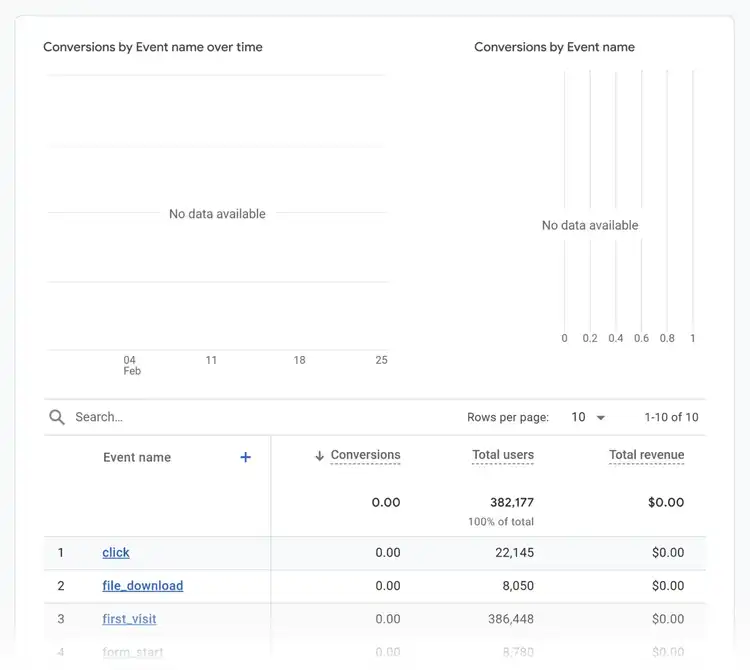
Here's how to set this up:
- Open Google Analytics
- Go to Admin → Goals → Create New Goal
- Select "Custom" goal type
- Name it (like "Demo Requests")
- Add the thank you page URL as the destination
Step 2: Monitor Content Engagement
Next, you need to understand how people interact with your BoFu content before they convert.
What to track:
- Time spent on pages
- Scroll depth (how far people read)
- CTA click rates
- Return visit frequency
Why it matters: These signals help predict future conversions. High engagement usually means more sales later.
Here's how to set it up:
- Log into Semrush
- Create a new project for your website
- Go to Position Tracking
- Add your BoFu keywords
- Set up weekly email alerts
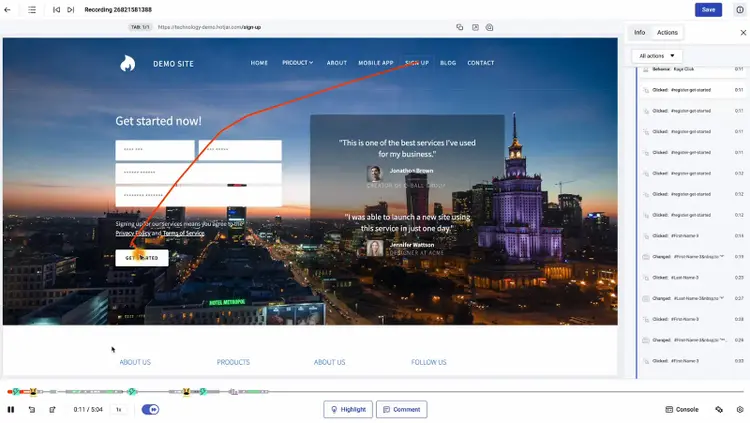
Step 3: Watch User Behavior
Now you need to see exactly how people interact with your BoFu pages.
What to track:
- Mouse movements
- Click patterns
- Scroll behavior
- Form interactions
Why it matters: This shows you where people get stuck or confused. For example, people might abandon your pricing page right before the CTA.
Here's how to do it:
- Install Hotjar on your BoFu pages
- Create heatmaps for pricing pages
- Set up scroll tracking
- Record user sessions
Step 4: Connect to Sales Data
Finally, link your content to actual revenue.
What to track:
- Content influence on deals
- Days to purchase
- Average deal size
- Content-attributed revenue
Why it matters: This shows which BoFu content actually makes money. You might find your case studies drive bigger deals than your comparison pages.
Here's the setup:
- Add UTM parameters to BoFu content
- Tag leads by content source in your CRM
- Create a "Content Influence" field
- Track days from content view to close
Start Creating BoFu Content That Converts
Creating high-converting BoFu content isn't rocket science.
Start with just one piece—maybe a comparison page for your most popular product or a detailed case study of your best customer story. Make it amazing by focusing on specific results and addressing real buyer concerns.
Track everything, learn what works, and use those insights to improve your next piece. Before you know it, you'll have a complete BoFu content strategy driving real results.
Need help tracking your content performance? Try Semrush's Position Tracking tool free for 14 days:
Track Your Rankings
with the Position Tracking Tool
Special thanks to Lashay Lewis for her valuable contributions to this article.

Alex is a managing editor with 10+ years of experience leading content and SEO teams across SaaS, tech, ecommerce, and digital publishing. He specializes in building editorial systems that balance human judgment with AI-assisted workflows, helping teams produce original, high-impact content as search and discovery evolve. His work spans SEO strategy, content quality frameworks, and adapting content operations for AI-driven search.
Alex Lindley
Alex is a managing editor with 10+ years of experience leading content and SEO teams. He focuses on building AI-aware editorial systems that help teams produce original, high-impact content as search evolves.

Tells Google to show you more from Semrush in AI, Search, and Discover.
Table of contents
-
How to Create BoFu Content That Converts
- Step #1: Map Your Customer's Decision Points
- Step #2: Set Up Your Content Distribution Plan
- Step #3: Choose the Right BoFu Format
- Step #4: Build Your Proof Foundation
- Step #5: Create Killer Comparison Content
- Step #6: Add Strategic Social Proof
- Step #7: Create Multiple Conversion Paths
- Step #8: Optimize for Search Intent
- Step #9: Track What Actually Works