
Ecommerce marketing in 2026 has two audiences: the shoppers you've always sold to, and the AI systems that increasingly stand between you and them, filtering search results, summarizing reviews, recommending products inside ChatGPT and Gemini, and in some cases shortlisting or buying on a shopper's behalf.
The fundamentals haven't changed. You still need traffic, conversions, and repeat purchases. But the path to all three now runs through systems that read your store differently than humans do, weigh different signals, and often make decisions before a shopper sees you at all.
This guide covers 10 strategies for winning both audiences at once. Whether you're starting from scratch or sharpening what's already working, each one is designed to serve the shopper in front of the screen and the AI system behind it.
What is ecommerce marketing?
Ecommerce marketing is the process of attracting people to your online store, turning them into customers, and keeping them coming back for more.
It covers everything from how you rank on Google to how your products look on a marketplace listing, but it's gone well beyond ads and SEO.
People are now using AI tools like ChatGPT, Gemini, and Claude to compare products and discover new brands. And before they hit "Buy," they're checking reviews, scanning return policies, and looking for any reason to trust (or not trust) your brand.
AI shopping assistants are even shortlisting products on shoppers' behalf, which means accurate product data and transparent policies aren't just good practice anymore. They're what determines whether you make the shortlist at all.
Why is ecommerce marketing important?
Ecommerce marketing is what drives traffic to your store, converts visitors into buyers, and builds a loyal customer base. Without it, even a great product in a well-designed store can go unnoticed.
Ecommerce marketing helps you:
- Reach the right shoppers at every stage of their buying journey
- Build trust before a shopper reaches the checkout
- Convert more of your existing traffic into paying customers
- Drive repeat purchases from people who've already bought from you
- Stay visible across search, social, and AI-generated results
What are the different types of ecommerce marketing?
The main types of ecommerce marketing include SEO, paid advertising, email marketing, social media, content marketing, influencer marketing, and affiliate marketing.
- SEO (search engine optimization): Getting your store and product pages to rank in organic search results
- Paid advertising: Running paid ads on platforms like Google, Meta, and TikTok to drive targeted traffic quickly
- Content marketing: Using blogs, guides, videos, and other content to attract shoppers and answer their questions
- Social media marketing:Building a presence on platforms like Instagram, TikTok, and Pinterest to engage shoppers and drive traffic to your store
- Email marketing: Reaching customers and prospects directly with promotions, recommendations, and automated sequences
- Influencer marketing: Partnering with creators who already have your audience's trust
- Affiliate marketing: Working with publishers and partners who promote your products in exchange for a commission
Best ecommerce marketing strategies
These ecommerce marketing strategies are practical, scalable, and don't require a big budget or team to execute.
1. Build high-converting product and category pages first
A high-converting product page gives shoppers everything they need to feel confident buying from you, including clear titles, high-resolution images, benefit-led descriptions, customer reviews, shipping details, and FAQs. It also gives AI tools the structured, specific information they need to recommend you when a shopper asks for one.
Clear titles and high-quality images
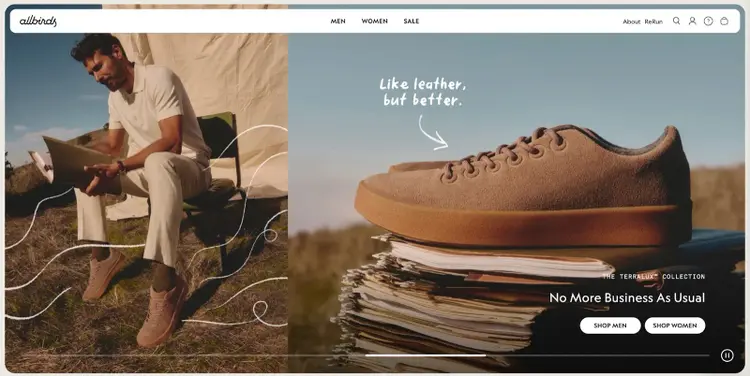
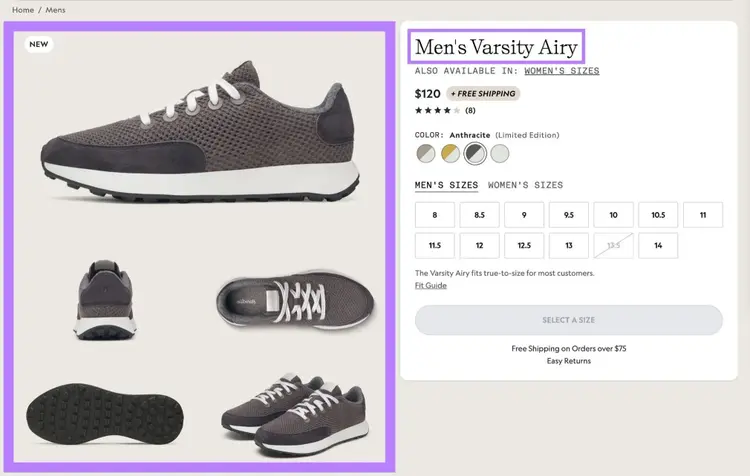
Your product title should tell shoppers exactly what they're looking at. Pair that with high-resolution images that show the product from multiple angles, in context, and (where relevant) in use.
Allbirds, for example, shows their shoes on foot, in real environments, and against clean backdrops, giving shoppers an understanding of the product before they ever read a word of copy.
The product pages themselves have the product name spelled out clearly and images of the shoes from different angles.
Benefit-led descriptions
Most product descriptions list features. The best ones sell outcomes.
So, instead of "made with moisture-wicking merino wool," try "stays fresh on all-day wear, even when things heat up." Lead with what the customer gets, then back it up with the specs.
This also helps your pages show up in AI-generated results, which tend to pull from clear, direct language that answers real questions.
Reviews and trust signals
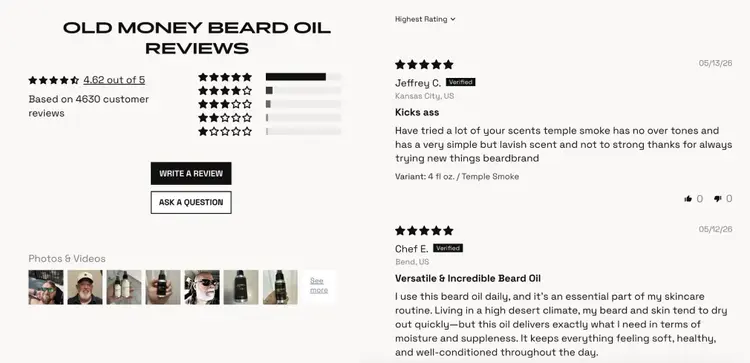
Shoppers trust other shoppers more than they trust your product copy. So, include star ratings, verified reviews, and customer photos on your product pages to increase your credibility. Like Beardbrand does:
Also, consider adding trust badges like secure checkout indicators and money-back guarantees near your CTA. They're often the push a first-time buyer needs.
Shipping and returns details upfront
Don't bury your shipping timeframes and returns policy at the bottom of the page or in a footer link. Vague or hard-to-find policies are a fast way to lose shoppers’ trust.
A simple line like "Free shipping over $50 · Free 30-day returns" below the price can reduce drop-off.
Buyer-focused FAQs
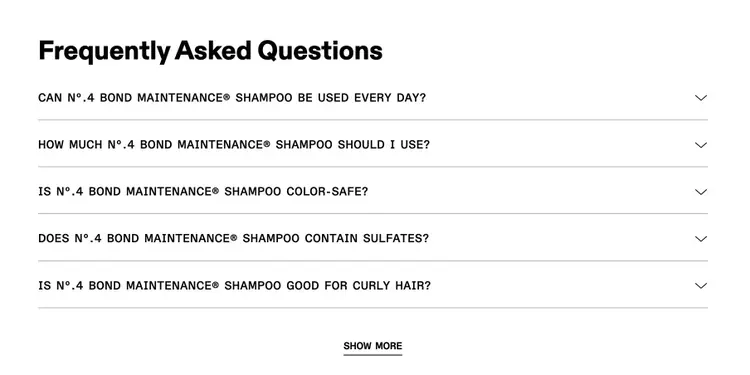
A short FAQ section on your product page handles the objections shoppers are too polite to email you about and gives search engines (and AI tools) more context to understand what your page is about.
OLAPLEX does this well. They build product-specific Q&As that address real concerns like frequency of use, amount to use, and ingredients in each item.
2. Start with SEO pages that match buying intent
Category pages, product pages, and comparison content each attract a different type of shopper at a different stage of the buying journey. They also serve as the source material AI tools draw from when answering shopper questions, which makes each one a visibility asset in two channels at once.
Category pages
Category pages, like Schuh's women's shoes, are the backbone of ecommerce SEO because they target shoppers who are actively looking to buy, but haven't committed to a specific product yet.
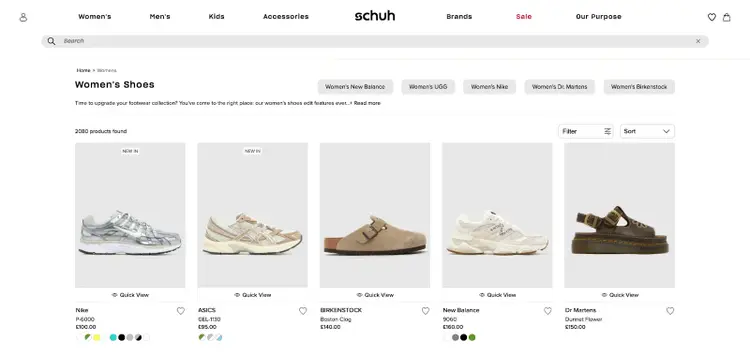
Unlike individual product pages, which can go out of stock, get discontinued, or go out of season, a well-optimized category page keeps ranking and drives traffic regardless of what's happening with your inventory.
That said, not every category page is worth targeting straight away. Sam Penny, SEO Manager at Rest Super, puts it this way:
"One major mistake I see is merchants focusing on category pages for groups of products where they don't have a competitive edge. If you have 9 belts, you're never going to rank for 'belts' vs. the Iconic or other brands, because catalogue depth is a huge factor for user engagement.
But if you sell the best snakeskin belts, the competition may be way lower — if you offer genuine value in this area, that's where there's an SEO opportunity for you. In the same way we do with informational content, you can start with low competition categories, and go broader and more competitive as you grow."
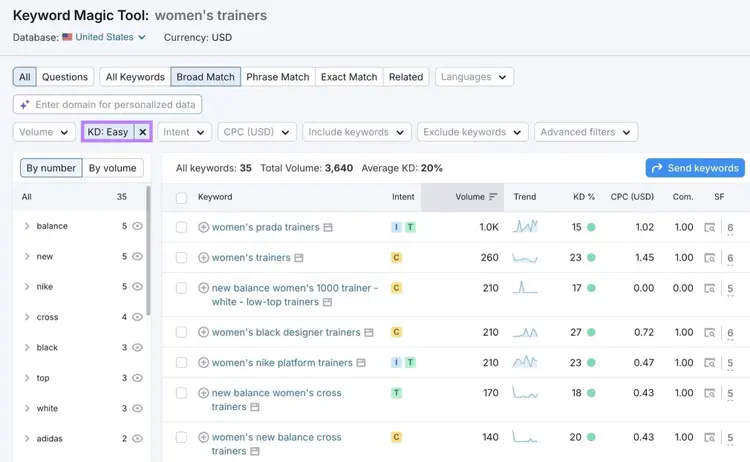
This is where our keyword research tool can help.
Plug in a category term (say, "women's trainers") and filter results by keyword difficulty to find the sweet spot between search volume and competition. That way, you're prioritizing category pages that you can rank for.
Product pages
Product pages should be optimized for more specific, transactional queries, like "white Saucony trainers" rather than "women's trainers."
These pages convert well when a shopper knows what they want. However, products go in and out of stock, and seasons come and go, so the rankings you build here may have a shorter shelf life than category pages.
Comparison and "best for" content
Shoppers who are weighing their options often search for things like "best running shoes for flat feet" or "waterproof vs regular trainers." This type of content is great for capturing mid-funnel traffic.
However, make sure it doesn't target the same search intent as your category pages, or you risk cannibalizing your own rankings.
Internal linking
Once pages are in place, internal links are what tie them together. A clear internal linking structure helps search engines understand how your site is organized and which pages matter most, and it helps shoppers navigate from one page to the next.
The most scalable way to do this is through a breadcrumb system and a clear internal linking hierarchy.
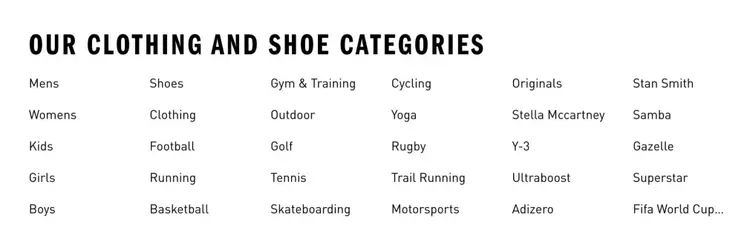
For example, at the bottom of their Low Profile category page, Adidas includes links to related clothing and shoe categories, which helps shoppers discover more products and passes link value across the site.
Further reading: The Complete Ecommerce SEO Guide for Beginners
3. Create content that helps shoppers decide
Ecommerce content marketing answers buyers' questions, addresses hesitations, and gives them a reason to choose you over a competitor. It's also the format AI systems pull from most heavily when generating shopping recommendations, so the same content that helps a shopper decide can earn you visibility in AI search results.
Buying guides, comparisons, and use-case content
A first-time buyer shopping for a standing desk typically wants to know what size fits their space, whether they need a motorized option, and what the difference is between a $300 and an $800 model.
A well-written buying guide answers all of that, and naturally positions your products as the solution.
Comparisons work the same way. A page like "Memory foam vs. hybrid mattress: Which is right for you?" captures shoppers who are mid-research and not yet brand-loyal. Done well, this content accelerates the decision-making process and moves shoppers closer to a purchase.
Use-case content is equally powerful. Instead of just listing a waterproof jacket's specs, show it in context, like "best jackets for hiking in unpredictable weather" or "what to wear for a winter commute." This type of content meets shoppers where they are and makes your products feel relevant.
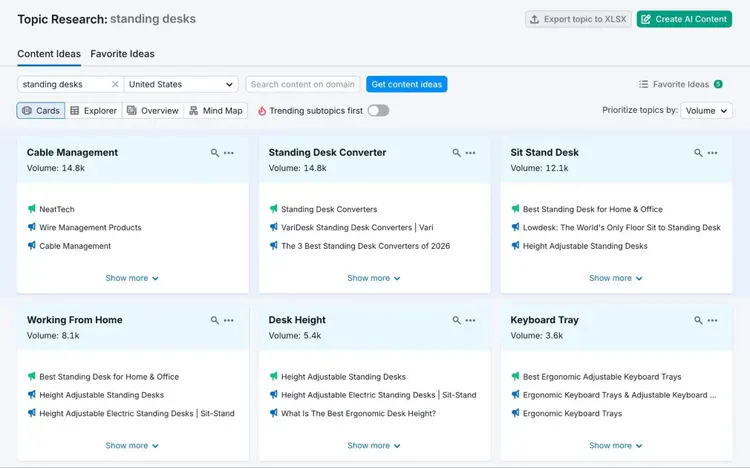
Not sure what to write about? Semrush's Topic Research tool helps you find the questions and subtopics your target audience is searching for around a given theme.
Type in something like "standing desks" and it surfaces related angles, including buyer questions, trending topics, and content gaps you can fill before your competitors do.
Add proof, examples, pros/cons, and product details
Vague content doesn't convert. Shoppers want specifics: real comparisons, honest trade-offs, and enough detail to feel confident in their decision.
That means including things like:
- Pros and cons that don't shy away from limitations (a tent that's great for summer but not ideal for winter camping, for example)
- Real customer quotes or case studies that show the product in use
- Specific product details like dimensions, materials, compatibility, or weight
Write clear answers that can surface in AI search results
When someone asks ChatGPT or Google's AI Overview, "What's the best protein powder for beginners?" the response pulls from content that answers the question directly and clearly. If your content is vague, overly promotional, or buried in fluff, it won't make the cut.
The fix is simple: write like you're answering a real question from a real person. Lead with the answer, then back it up with context. Short paragraphs, clear headings, and specific product callouts all help your content surface in AI-generated summaries.
Don't neglect branded content
Not every piece of content needs to be decision-focused. Some can be purely inspirational, with the aim of building affinity for your brand and keeping you top of mind even when someone isn't actively shopping.
Think of how Patagonia creates content around outdoor adventures and environmental activism, or how LEGO publishes building inspiration and fan stories in their magazines.
None of that is directly selling a product, but it deepens the relationship between brand and buyer for future transactions.
Further reading: The ultimate guide to creating a content marketing strategy
4. Use paid ads to test offers and capture demand
Paid advertising gives you immediate visibility and lets you test what resonates with your audience faster than almost any other channel. It's also the fastest way to learn what messaging works, intelligence you can then apply to the organic and AI-visible content where you don't have to keep paying for the traffic.
It's particularly useful when you need results quickly, e.g., a new product launch, a seasonal promotion, or a retargeting campaign for shoppers who didn't convert the first time.
The main formats are:
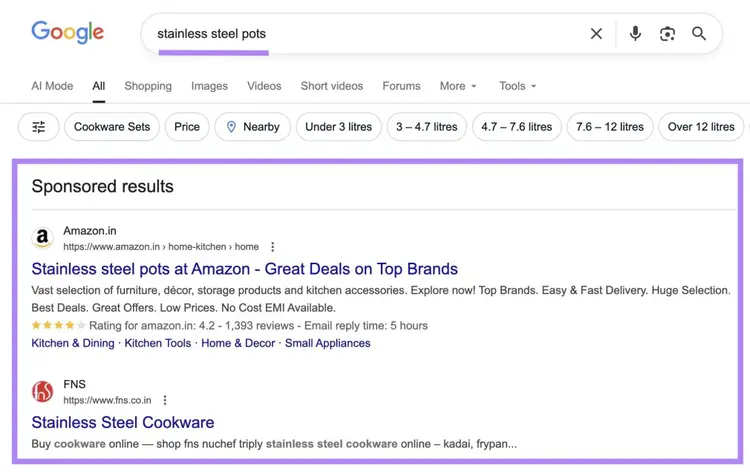
Paid search
Paid search ads are text ads that appear at the top of Google results when someone searches for a specific term. You're essentially bidding to show up when a shopper is already looking for something you sell.
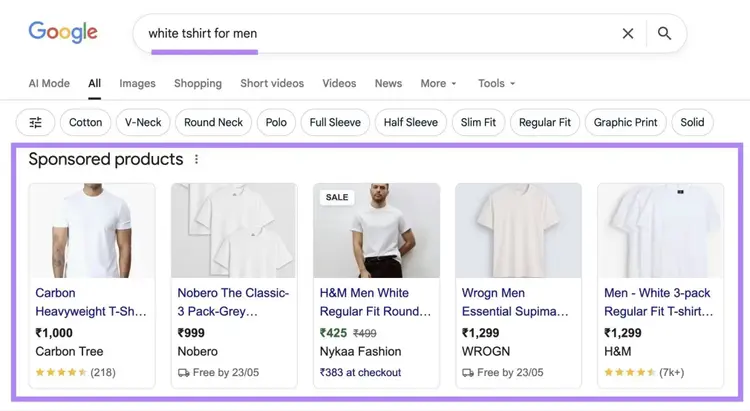
Shopping ads
These are product tiles that appear at the top of Google with an image, price, and store name. These are driven by your product feed and are especially effective for high-intent, bottom-of-funnel shoppers.
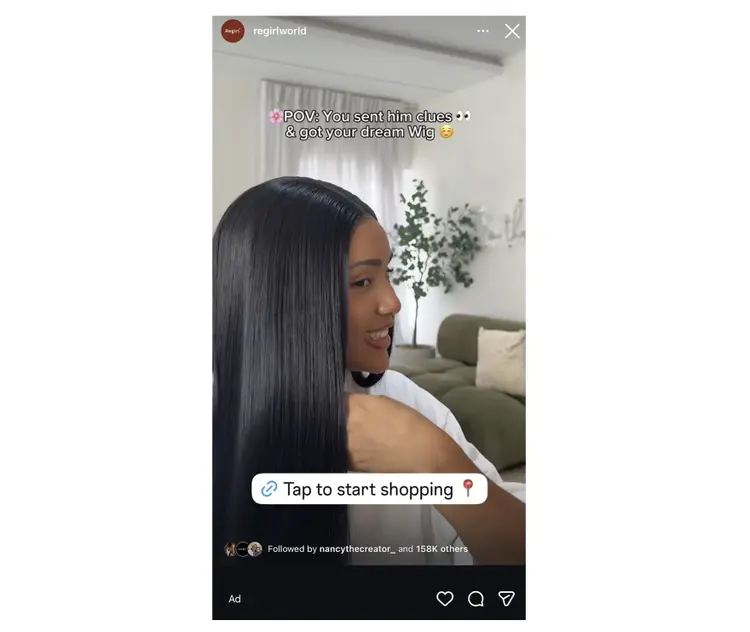
Paid social
Ads that run on platforms like Meta, TikTok, and Pinterest are paid social ads. Unlike search ads, these reach people who aren't actively searching (they're browsing), so they're better suited for building awareness, showcasing products visually, and retargeting.
When paid ads work best
Paid ads are particularly valuable in a few specific situations:
- New store launches: When you have no organic rankings yet, paid ads give you immediate visibility and drive traffic quickly
- Seasonal promotions: During high-demand seasons like Black Friday, Valentine’s Day or back-to-school, paid ads let you capitalize on spikes in demand
- Testing offers: Running two versions of an ad with different headlines, discounts, or CTAs tells you what messaging resonates with your audience before you commit to it across other channels
- Retargeting lapsed visitors: If someone browsed your store and left without buying, a well-timed retargeting ad showing exactly what they looked at (with a small discount) can help bring them back
How to set up a retargeting campaign
Say you run a skincare store. A visitor lands on your vitamin C serum page, spends 45 seconds reading it, and leaves without buying.
With a Meta retargeting campaign, you can serve that visitor an ad featuring the same serum (maybe with a line like "Still thinking it over? Here's 10% off your first order") within the next few days while they're still in the consideration window.
For a shopping campaign on Google, the setup is more straightforward: Connect your product feed (via Google Merchant Center), set a budget, and Google automatically pulls your product images, titles, and prices to build the ad.
Your ads are only as good as your product page
You can have a well-targeted, well-written ad, but if it sends traffic to a slow, confusing, or unconvincing product page, conversions will suffer.
Common culprits include unclear product descriptions, missing trust signals, a checkout process with too many steps, or slow mobile load times.
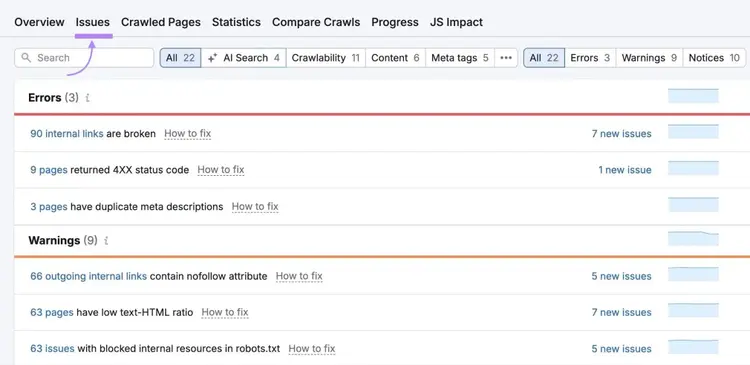
You can run a quick landing page audit using Semrush Site Audit. It checks crawlability, indexability, site performance, and security, flagging issues like broken links, duplicate content, and HTTPS errors so you know exactly what to fix.
5. Build an email revenue engine early
Ecommerce email marketing is one of the most reliable revenue channels you can build, because once you have your list, you own it. No algorithm or ad spend required. And as AI systems increasingly mediate discovery, that direct line to your shoppers becomes more valuable.
Start with these four automations:
Welcome email
This is sent immediately after someone joins your list. It’s your first impression, so use it to introduce your brand, set expectations, and give new subscribers a reason to shop. A small discount or free shipping offer works well here.
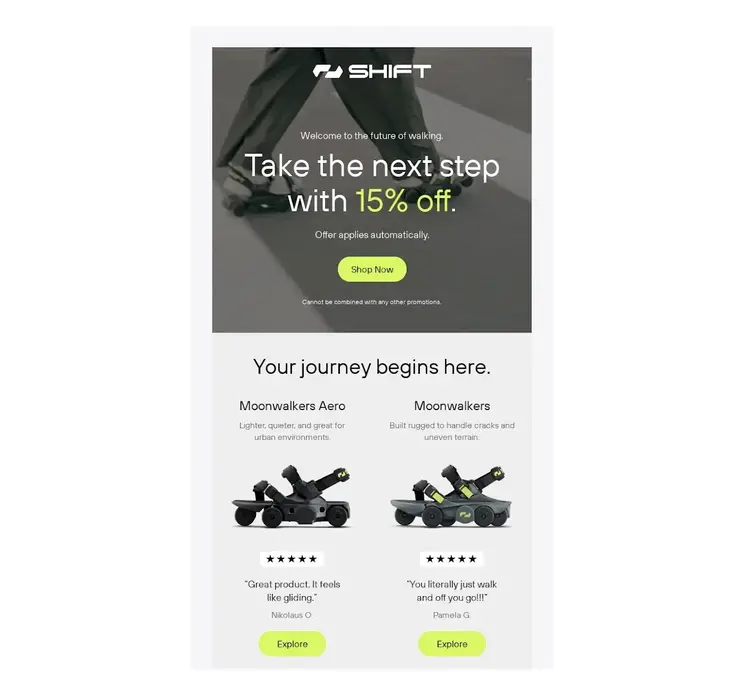
Image source: Really Good Emails
Cart abandonment
This is triggered when someone adds items to their cart but doesn't check out. A well-timed reminder, sent within an hour or two, recovers a meaningful share of that lost revenue. A follow-up email 24 hours later with a small incentive often converts those who didn't respond the first time.
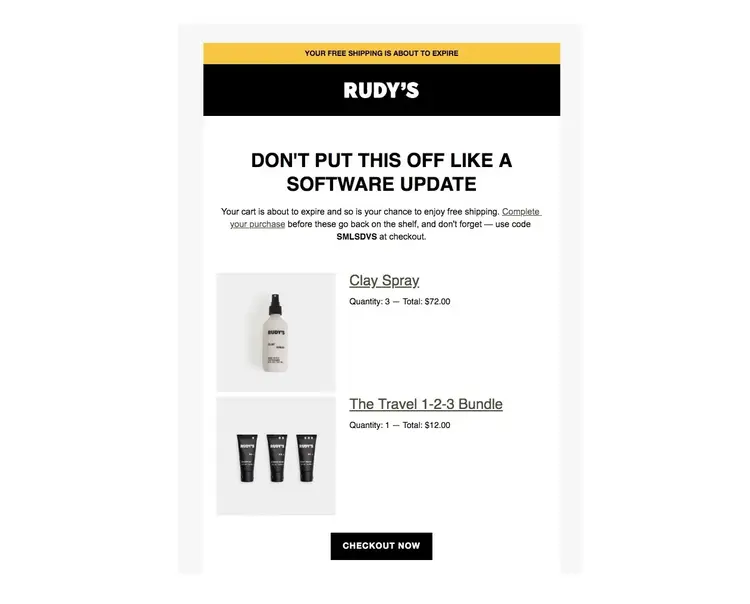
Image source: Really Good Emails
Post-purchase follow-up
This is sent after a customer buys from you. Use it to confirm the order, set delivery expectations, and plant the seed for a second purchase with a related product recommendation or loyalty incentive.
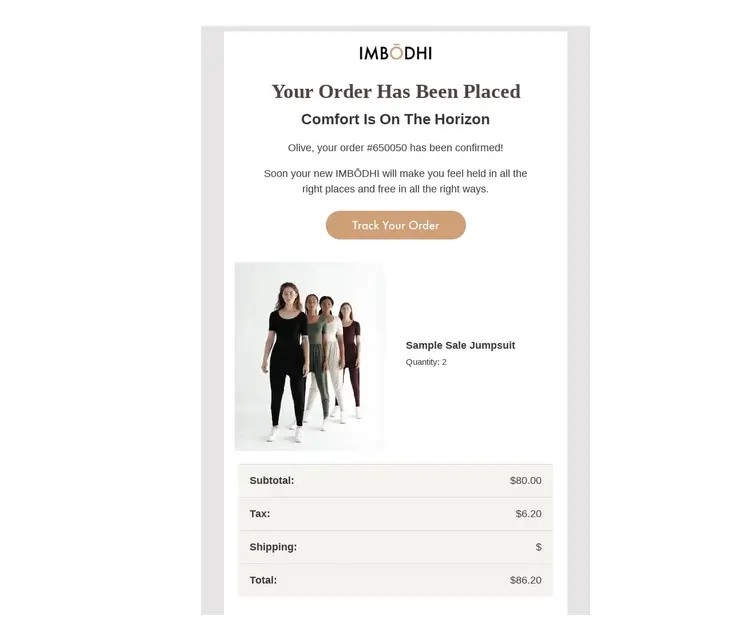
Image source: Really Good Emails
Winback email
This email targets customers who haven't bought in a while. A simple "we miss you" email with a time-sensitive offer is often enough to re-engage them before they drift to a competitor.
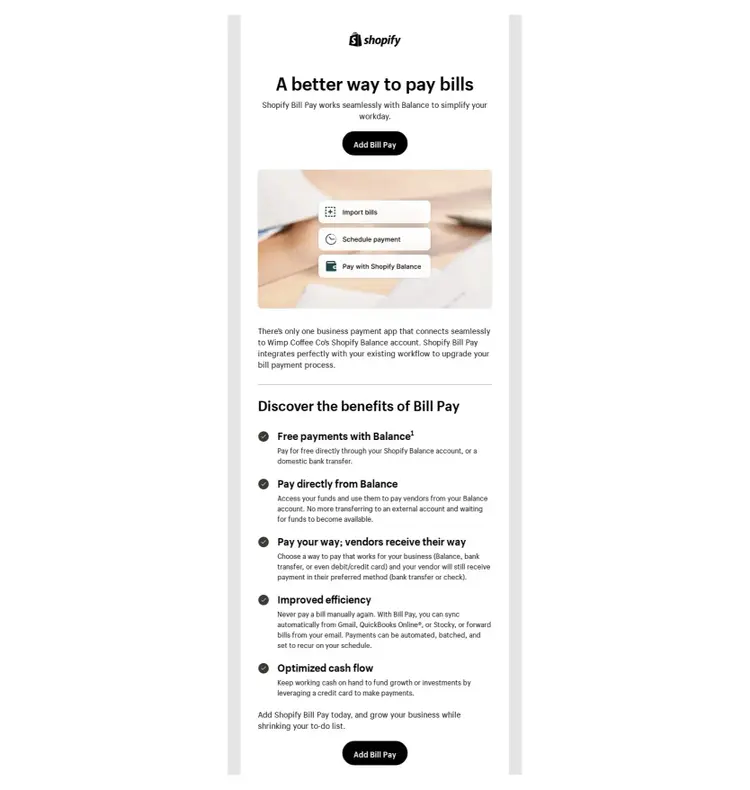
Image source: Really Good Emails
How to set up a basic drip campaign
- Day 1: A visitor signs up for your list via a 10% off pop-up and immediately receives a welcome email with their discount code
- Day 3: They receive a follow-up email featuring your bestsellers, click through to your site, and abandon their cart without purchasing
- Day 3, one hour later: They receive a cart abandonment email reminding them to check out, with their discount code still active
Running a promotion through email
Email is also one of the best channels for time-sensitive promotions. A flash sale exclusive to subscribers (e.g., "48 hours only, 20% off for our email list") creates urgency and rewards loyalty.
Framing it as subscriber-only access makes it feel like a perk rather than a generic discount, which tends to drive stronger engagement.
Pro tip
Consistency matters more than volume. One well-crafted email a week builds more trust than four forgettable ones. Get your automations right first, then build your broadcast schedule from there.
6. Use social media for trust, not just reach
The brands that get the most out of social media use it to show shoppers why they should buy from them specifically. That same content does double duty: AI tools increasingly pull from social signals when assessing brand credibility, so persuasive social content earns visibility in two places at once.
Show product use cases
Instead of posting a product photo, show the product solving a real problem or fitting into a real moment.
For example, if you’re a kitchenware brand, post a recipe video using your pans. Or if you’re a luggage brand, show how everything fits into your carry-on for a weekend trip. This kind of content answers the unspoken question every shopper has: "Will this actually work for me?"
Stanley does this well on TikTok. Their content regularly shows the tumbler in real, everyday situations, such as road trips, gym sessions, and long workdays. It's relatable, and that's exactly why it works.
Post customer content and testimonials
Posting a real customer showing your product in their home, on their body, or in their daily routine is some of the most persuasive content you can share. This is called user-generated content, or UGC.
Social posts featuring UGC outperform non-UGC posts on every key metric. According to Emplifi's Q3 2025 Social Media Benchmarks Report, UGC posts delivered:
- 10.38x higher conversion rates
- 3.84x more website visits
- 1.06x higher average order values (AOV)
For instance, Gymshark regularly posts creators using their workout gear during training sessions on Instagram. This builds far more credibility than a studio shoot and gives potential buyers a realistic sense of fit, quality, and performance.
Share short videos and creator-style clips
Short-form video (e.g., Reels, TikToks, YouTube Shorts) is the format with the most momentum right now. According to HubSpot's 2026 State of Marketing Report, 104% more marketers named short-form video their highest-ROI content format in 2026 compared to 2024.
However, the videos that perform best don't look like ads. They look like something a real person made, e.g., unboxings, honest reviews, "how I use this" clips, or behind-the-scenes content.
Rhode Skin does this well, using TikTok to show products in casual, lifestyle contexts that feel personal rather than promotional.
7. Add affiliates and creators once your basics are working
Once your store is converting and your core marketing channels are in place, affiliate marketing and creator partnerships (or influencer marketing) give you a way to reach new audiences and drive more revenue. They also build the third-party mentions and brand signals that AI systems read when deciding which products to recommend, so a creator partnership can earn you visibility well beyond their direct audience.
The idea is that partners promote your products to their audience, and you pay them a commission on the sales they drive.
It's become the norm. HubSpot's report revealed that 89% of companies worked with a content creator or influencer in 2025, up from just 50% in 2024.
But prevalence doesn't guarantee results. How you structure these partnerships matters just as much as who you work with.
- Start with a small group of relevant partners: Begin with a handful of partners who already create content in your niche and whose followers would naturally be interested in what you sell
- Give them clear offers and dedicated landing pages:Your partners need something worth promoting, so give them a clear, compelling offer, such as a discount code, a free trial, or an exclusive bundle. Pair that with a dedicated landing page that matches the partner's messaging.
- Track which partners drive quality traffic and sales:Use UTM (Urchin Tracking Module) parameters or affiliate tracking software to monitor clicks, purchases, and average order value by partner. Double down on what's working and pull back on partnerships that aren't delivering.
Pro tip
Don't chase follower counts. A creator with 20,000 highly engaged followers will often outperform one with 500,000 disengaged ones. The data backs this up: Teams reported the most success with micro-influencers in the 10,000 to 100,000 follower range.
8. Focus on retention to increase profit
Selling to someone who's already bought from you is much easier than winning new customers, especially if they had a positive experience with their last purchase. Repeat customers also generate the reviews, ratings, and word-of-mouth signals that AI tools weigh heavily when deciding which brands to recommend, so retention pays you twice.
Beyond the abandoned cart emails covered in strategy five, four other approaches can turn one-time buyers into repeat customers.
Add upsells and cross-sells
Say you sell coffee equipment, and a customer just bought a French press. An upsell would be prompting them to upgrade to a premium version with a better filter before they check out. A cross-sell would be suggesting a matching coffee grinder or a bag of specialty beans alongside the French press.
Either way, you're selling to someone who's already in a buying mindset, which is a very different conversation from convincing a stranger to try your brand for the first time.
Offer subscriptions for replenishable products
If you sell something people use regularly, like skincare, supplements, coffee, or pet food, a subscription option is worth setting up.
Offer a small discount (maybe 10-15%) in exchange for a recurring order, and you've locked in predictable revenue while giving the customer a genuine reason to stick with you over a competitor.
Most ecommerce platforms support this natively or through a simple app integration.
Encourage repeat purchases with loyalty perks
Loyalty perks like redeemable points, birthday treats, and free shipping thresholds give customers a tangible reason to come back to your store rather than buying from a competitor.
The more the perk feels like a genuine reward, the more effective it tends to be.
Ask for reviews and customer photos
A simple post-purchase email sent 3-5 days after delivery, asking how they're enjoying the product and inviting them to leave a review or share a photo, is an easy way to stay connected after the sale.
If a customer tags your brand on Instagram or TikTok, reach out personally, thank them, and ask if you can repost their content. It costs nothing and keeps the relationship going.
Further reading: How to Increase Ecommerce Sales: 25 Actionable Tips (2024)
9. Track what matters and improve monthly
Good marketing decisions come from good data. But you don't need to track everything, just the right things. And in 2026, that includes one new question worth asking monthly: how visible is your brand in AI-generated results, and how is that visibility changing over time?
Watch a small set of KPIs
Rather than drowning in data, focus on five metrics that actually tell you how your business is doing:
- Conversion rate: The percentage of visitors who complete a purchase. Globally, this sits between 2 and 3% depending on industry and device. If yours is consistently below that, take a closer look at your product/category pages, checkout flow, and ads.
- Average order value (AOV): The typical amount a customer spends per transaction. Even a small increase through upsells or cross-sells can have an outsized impact on revenue.
- Customer acquisition cost (CAC): How much you're spending to win each new customer across all your marketing channels. If it's creeping up, your paid channels may be getting less efficient.
- Repeat purchase rate: The percentage of customers who come back to buy again. A low rate usually signals an issue with your post-purchase experience.
- Revenue by channel: Which channels are driving sales, so you know where to invest more and where to pull back
Run simple A/B tests on product pages and offers
A/B testing doesn't have to be complicated. Pick an element, change it, and see what performs better over a set period:
- Test two different product page headlines: one feature-led ("Made from 100% merino wool") vs. one benefit-led ("Stays fresh all day, no matter how much you move")
- Test a free shipping threshold vs. a percentage discount to see which drives higher AOV
- Test the placement of your reviews section (above or below the product description) to see if it affects conversion rate
Pro tip
Change one thing at a time so you know what caused the difference.
Review what's driving sales, not just clicks
A channel can send you a lot of traffic without sending you a lot of buyers, so optimize for conversions over clicks.
For example, if TikTok content drives 5,000 visits a month but generates almost no sales, while your email list of 800 is consistently your top revenue channel, the right call is to invest more in email.
A simple monthly report breaking down revenue by channel, not just traffic, will tell you where to focus.
10. Make your store easy to trust across search and AI
Search engines and AI tools use the same signals to decide whether your store is worth recommending: accuracy, consistency, and trustworthiness. This is where every strategy in this guide pays off at once.
When AI is doing the filtering, your store doesn't always get a second chance to convince a skeptical shopper. The decision often happens before they ever see you, which is why every signal a machine can read has to point in the same direction.
Keep product information accurate and consistent
Your product titles, descriptions, prices, and availability should be consistent across your website, marketplace listings, and any platform you sell on.
Inconsistencies signal that your data isn't reliable, which can hurt visibility. And if shoppers see conflicting information, they're less likely to convert.
Add structured product data where possible
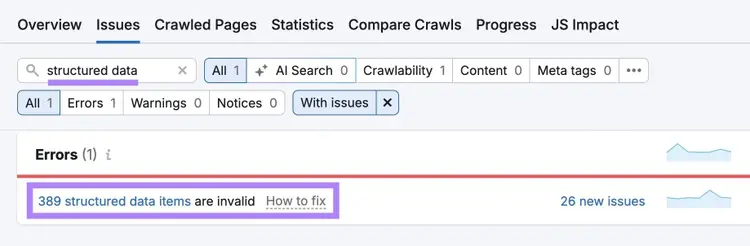
Structured data (also called schema markup) is a way of labeling product information so search engines can read and display it more accurately. Adding it to product pages helps your listings appear with rich snippets in Google (star ratings, price, availability), improving visibility and click-through rates.
You can use our Site Audit tool to check for structured data implementation issues on your site.
Build reviews, mentions, and useful content
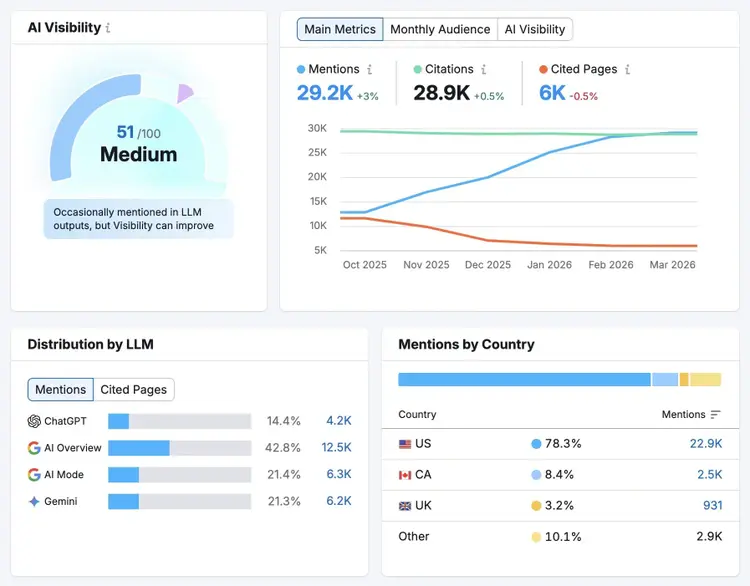
AI search tools look beyond your website to analyze what the broader internet says about you.
- Get good reviews everywhere: Google, Trustpilot, Amazon, and niche review platforms all contribute to brand credibility. The more positive your reputation across touchpoints, the more likely AI tools are to surface you.
- Earn third-party mentions and features: Getting your products featured in trusted, relevant publications carries serious weight. If you run a clothing brand and Vogue features you in a "best new brands" roundup, that signals to AI tools to recommend you when someone searches for similar products.
- Create search-everywhere content: TikTok videos and YouTube Shorts now appear in Google search results, which means a well-optimized video can earn you visibility beyond what your website alone can achieve
A haircare brand, for example, could partner with a creator to make a video on "best haircuts for men" that naturally features their product, driving traffic from shoppers searching that term.
To see how visible your store is in AI-generated results, use our AI Visibility Toolkit to track where your brand appears, see how competitors are showing up, and find opportunities to improve.
Start with an audit, then build your strategy
The ecommerce brands winning in 2026 aren't the ones with the longest strategy lists. They're the ones whose stores work the same way for a shopper reading a product page and an AI system summarizing it.
If you do nothing else after reading this, audit your top five product pages and ask one question: could an AI tool answer a shopper's specific question from this page alone? If not, that's where to start.
Use Semrush's Site Audit tool to find the technical and on-page issues holding you back across search, paid, and AI-driven channels. Then use our AI Visibility Toolkit to see how your brand actually shows up when someone asks ChatGPT, Gemini, or Google's AI Mode for a recommendation, and where the gaps are.
Beat your competition in LLMs
with the Semrush AI Visibility Toolkit

Cecilia is a senior editor and strategist with more than 12 years of experience shaping editorial strategies, refining brand messaging, and leading high-impact teams. She began her career in print and digital editorial leadership roles before transitioning to SEO and digital marketing, focusing on data-driven strategies. She‘s passionate about ensuring operational efficiency, upholding editorial standards, and mentoring writers to deliver top-quality, brand-aligned content.
Cecilia Meis
Cecilia is a senior editor and strategist with 12+ years of experience spanning print, digital, and SEO. She’s passionate about optimizing editorial processes, upholding quality standards, and mentoring writers to deliver brand-aligned content.
Tells Google to show you more from Semrush in AI, Search, and Discover.
Table of contents
-
Best ecommerce marketing strategies
- 1. Build high-converting product and category pages first
- 2. Start with SEO pages that match buying intent
- 3. Create content that helps shoppers decide
- 4. Use paid ads to test offers and capture demand
- 5. Build an email revenue engine early
- 6. Use social media for trust, not just reach
- 7. Add affiliates and creators once your basics are working
- 8. Focus on retention to increase profit
- 9. Track what matters and improve monthly
- 10. Make your store easy to trust across search and AI