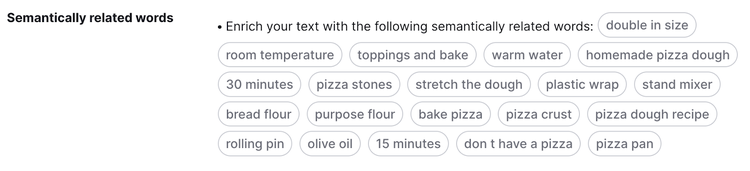
Semantic keywords are words or phrases that are conceptually related to a given keyword or topic.
For example, “italy” and “dough” are semantically related to “pizza.”
It’s important not to confuse semantic keywords with target keywords (keywords you want to rank for).
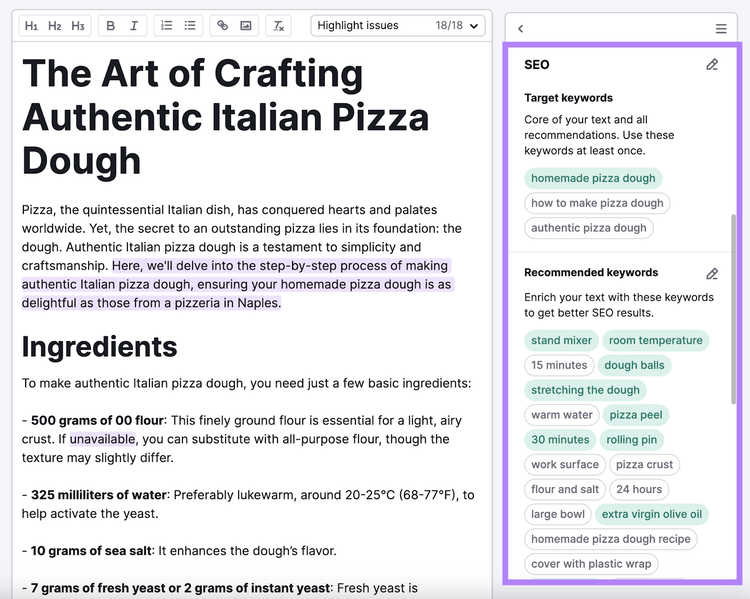
For example, you might want a page to rank for “pizza dough recipe” and related keywords like “how to make italian pizza dough.” But you wouldn’t really want it to rank for “italy.”
Note
Some people refer to semantic keywords as LSI keywords. But the terms are not perfectly interchangeable.
Why Use Semantic Keywords in SEO?
Semantic keywords help search engines understand your content’s subject matter, scope, and depth. And that can help you rank more prominently for relevant queries.
This is because Google uses semantic search (not keyword search) to find search results.
In other words, Google doesn’t just look for the user’s search terms on your page. It tries to match the meaning of the query with the meaning of your page.
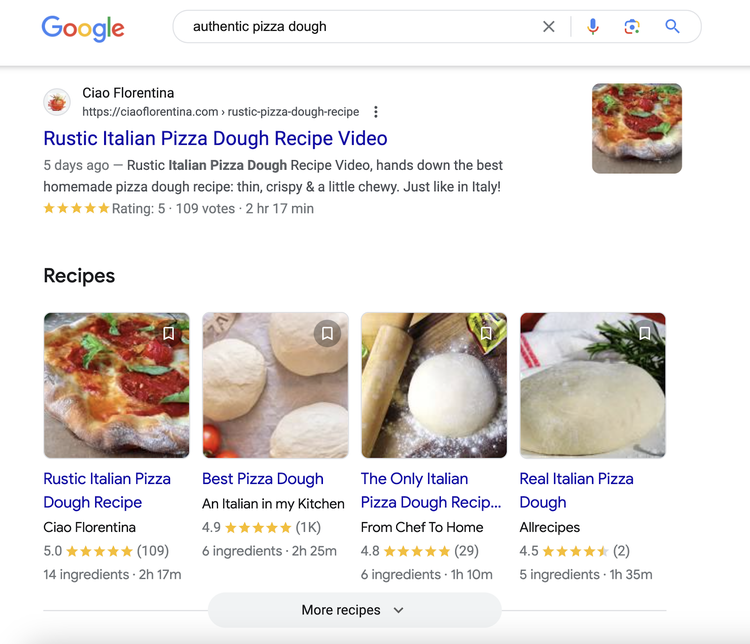
For example, Google infers that people searching for “authentic pizza dough” want Italian-style recipes. And infers that pizza recipes containing terms like “rustic Italian” and “Neapolitan style” are relevant.
Google performs semantic analyses with the help of various systems, such as:
Google Knowledge Graph: A database that maps relationships between people, places, and things
Natural language processing: A form of artificial intelligence that helps computers interpret human language
When you optimize your content for these systems, you’re doing semantic SEO.
How to Find Semantic Keywords
Once you’ve chosen a keyword or topic to base your content around, look for semantically related keywords. Because they’ll help you create relevant, information-rich content that’s easy for users and search engines to understand.
Here’s how to find semantic keywords with seven different tools:
Semrush Keyword Magic Tool allows you to search our keyword database. And you can use it to do a semantic keyword search.
Enter your target keyword and country. And the tool will present “Broad Match” keywords that contain the starting word(s) or a close variation.
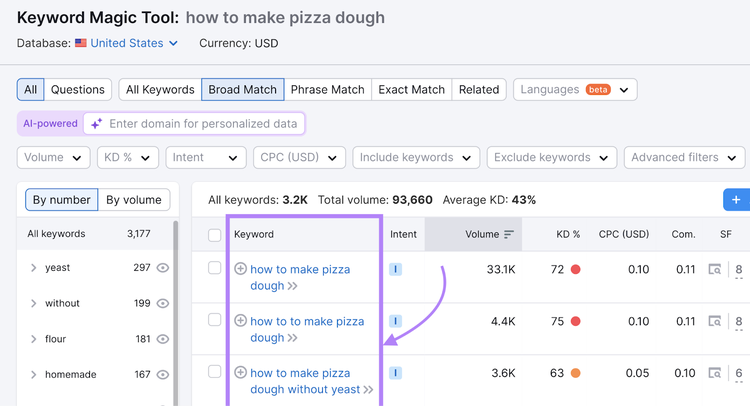
For example, here are the U.S. results for “how to make pizza dough”:
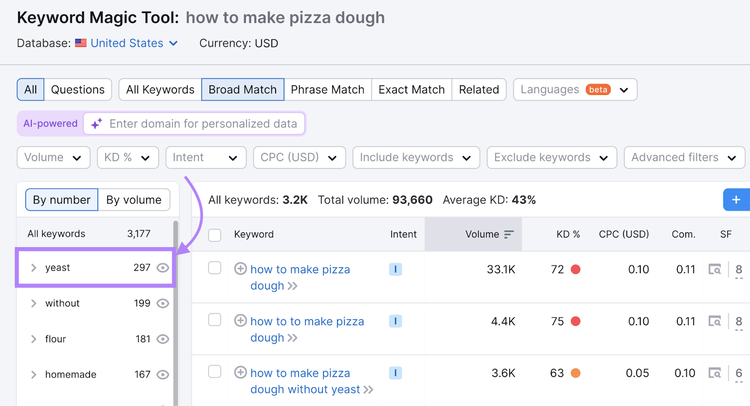
On the left, you’ll find a list of commonly occurring terms. Which can make good semantic keywords.
In our example, “yeast” is the most common modifier. So, it’s a good idea to use this term (and other popular terms) in your pizza dough recipe.
Take a look at specific keyword results, too. Because you might find secondary keywords (other relevant keywords you want your page to rank for)—e.g., “how to make pizza dough from scratch.”
Or you might find keywords you can target on other pages—e.g., “how to make pizza dough without yeast.”
Tip
Add internal links between highly related pages on your site. And place these links using descriptive text. This can help search engines (and users) understand semantic relationships between your pages. And help you increase your topical authority.
Organic Rankings
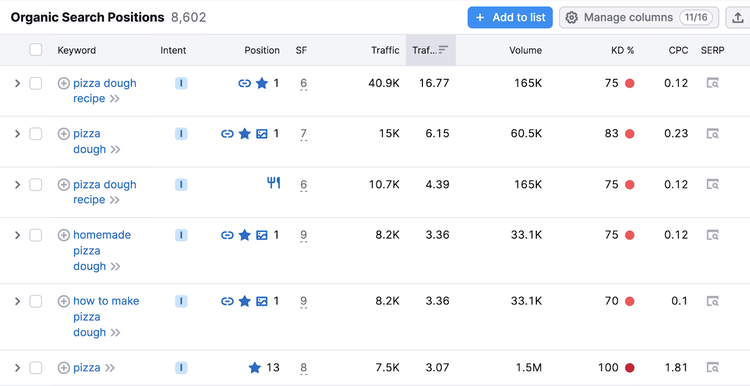
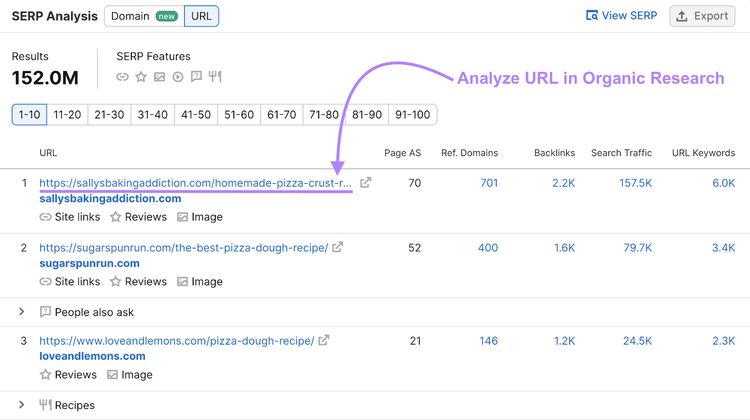
With the Organic Rankings tool, you can see what search terms a URL appears for in Google.
Analyzing your competitors’ keyword rankings can be a great way to source semantic keyword ideas.
For example, here are the results for a pizza crust recipe on the Sally’s Baking Addiction site:
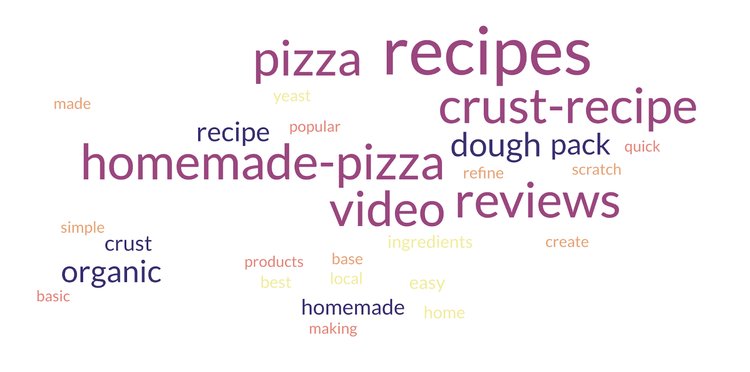
If there are lots of results to scroll through, you might want to export your results to a spreadsheet. And then import the keywords to a word cloud generator like this one. So you can visualize the most commonly occurring terms.
Like this:
Tip
Search your target keyword in the Keyword Overview tool to discover the top-ranking pages in your target location. Then, click the URLs to go to Organic Rankings to find semantic terms.
Google Search
You can often find semantically similar keywords on Google’s search engine results pages (SERPs).
Pay particular attention to the following elements (when they appear):
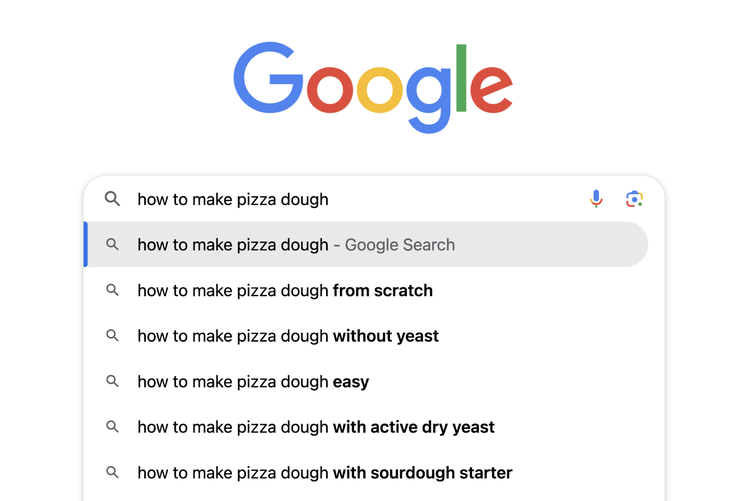
Autocomplete suggestions: Look at the autocomplete suggestions that come up as you type your query into Google
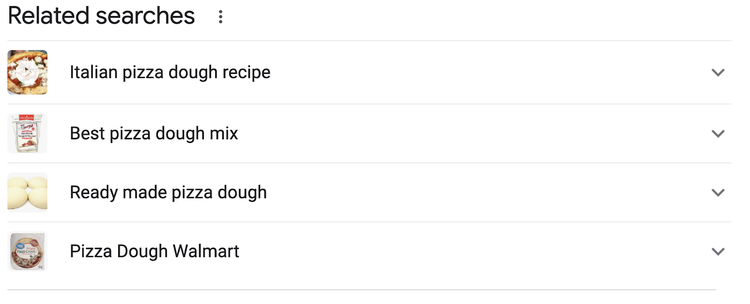
Related searches: Google may display related search queries that allow users to refine their search. These can provide great inspiration for semantic keywords.
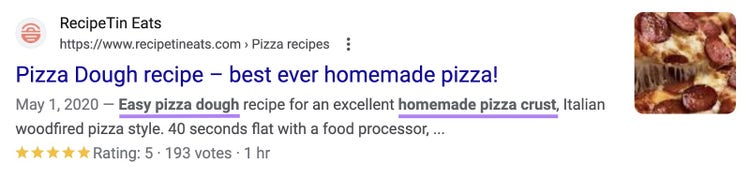
Bolded terms: In addition to bolding the search term used, Google may also bold related terms that appear in snippets
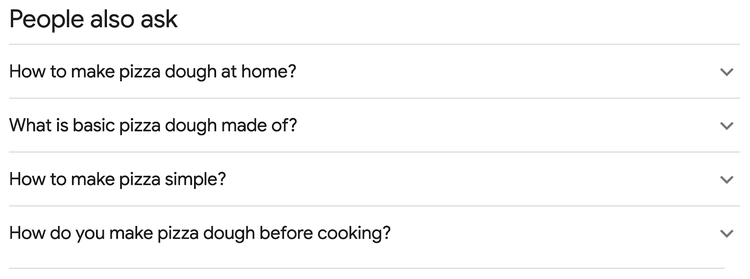
People Also Ask: The People Also Ask (PAA) box is a SERP feature (an additional element in search results) that contains popular questions and answers from across the web. This can be a great source of semantic keywords and question keywords.
Google Trends
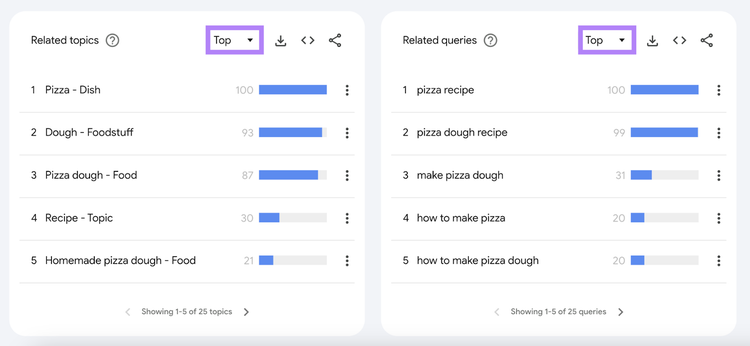
When you explore a subject in Google Trends, you can find related topics and search terms. Which you can use as semantic keywords.
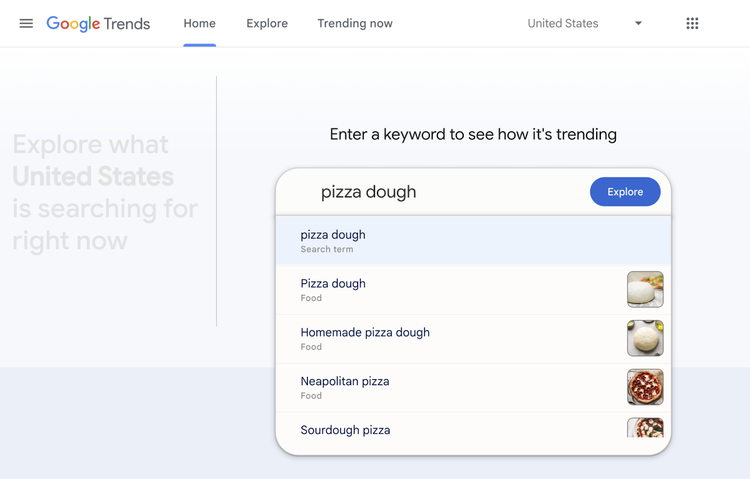
Head to Google Trends, enter a search term, and choose a result from the list:
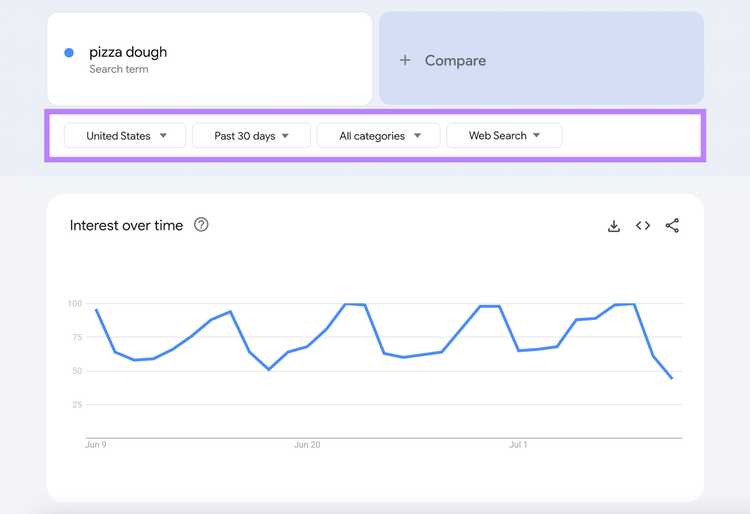
Then, select the region and time range you want to explore.
(You can also change the category and search type, if you wish.)
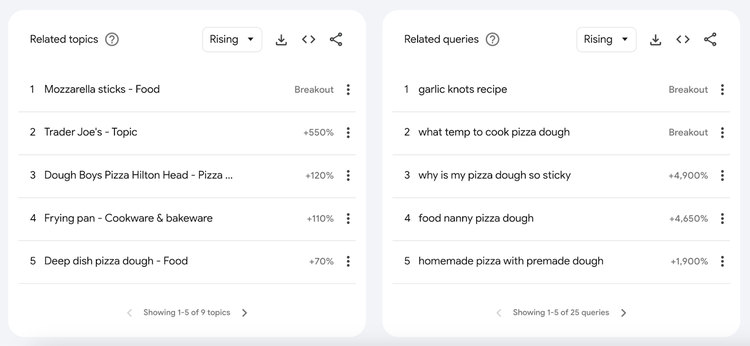
Scroll down to the “Related topics” and “Related queries” sections.
“Rising” topics and queries are those that have had the biggest relative increase in search popularity over the selected time range. (“Breakout” refers to an increase over 5,000%.)
Switch to the “Top” results to see the most popular related topics or queries.
The most searched result gets a score of 100. And the others are scored relatively (e.g., something with a score of 50 was half as popular).
Keyword Planner
Google Keyword Planner is a free tool that lets you find keywords for paid search ads. But you can also use it to find semantically related keywords.
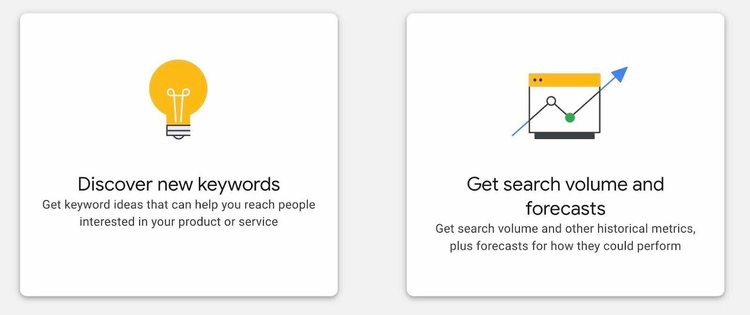
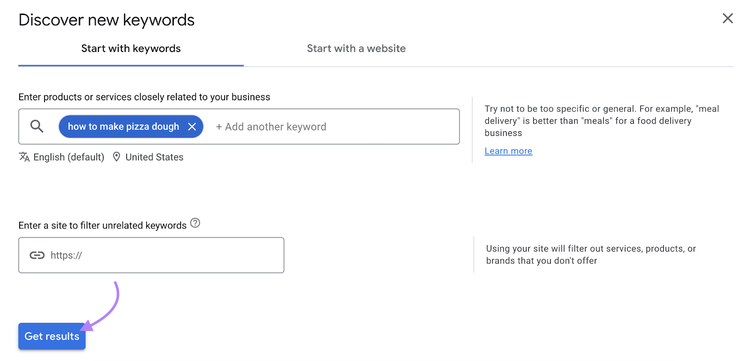
Visit Keyword Planner and click “Discover new keywords” to get started.
Then, enter your target keyword(s) and click “Get results.”
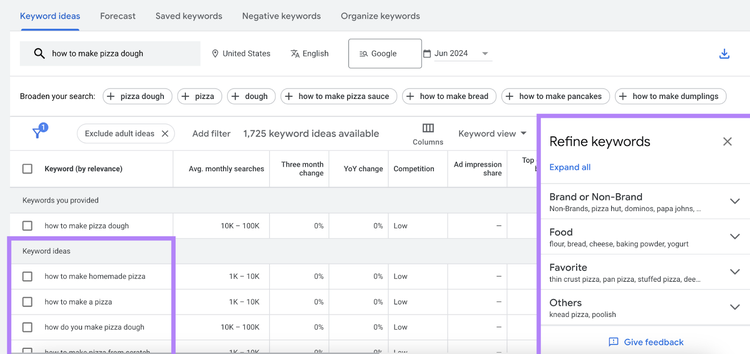
The tool will present a list of keyword ideas.
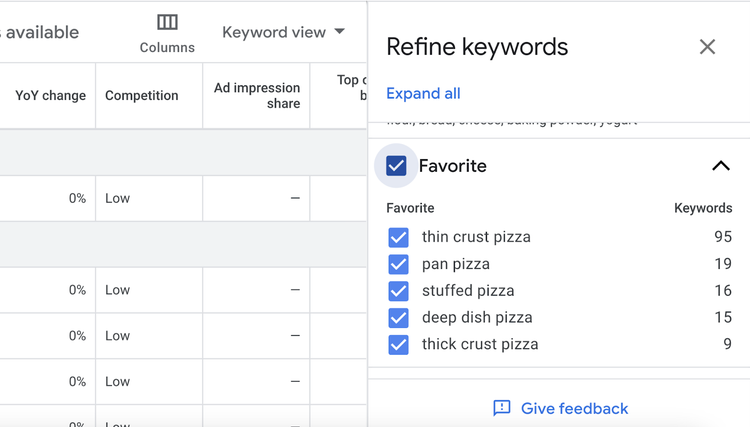
And in the “Refine keywords,” section, you’ll find common term categories.
Expand these categories to discover the specific terms to get inspiration for your content.
Start Creating Semantically Rich Content
Incorporating semantic keywords (in appropriate contexts) helps you create content that’s better for users and search engines. And more likely to generate rankings, traffic, and conversions.
Rachel is a Senior Content Writer with 12+ years‘ experience in content marketing and SEO. In a previous role as Head of Content at a digital marketing agency, Rachel developed and executed search-driven content strategies for a diverse range of clients, including global ecommerce brands and local B2B companies. She later transitioned to an in-house role at an SaaS startup, where she focused on scaling content operations and driving organic growth.
Subscribe to learn more about Keyword Research
Subscribe
By clicking “Subscribe” you agree to Semrush Privacy Policy and consent to Semrush using your contact data for newsletter purposes
Rachel Handley
Rachel is a Senior Content Writer with 12+ years‘ experience in content marketing and SEO. She has worked agency-side, developing and executing content strategies for a wide range of brands, and in-house, driving organic growth for a SaaS startup.
Share
Tells Google to show you more from Semrush in AI, Search, and Discover.