
The 12 Hottest Content Marketing Trends to Follow in 2025
Content marketing is changing. And it’s changing fast.
I’ve rarely seen any industry transform so rapidly in just a few years.
The main drivers? AI and shifting consumer behavior.
In this guide, I’ll walk you through the 12 hottest trends to help you understand where our industry is headed.
Here's a quick summary:
Now, let's explore each trend in detail.
1. Content with Original Opinions Is More Important Than Ever
Effective content marketing has always been about creating original and useful content. But this trend is becoming much stronger in 2025.
Why?
Because LLMs such as ChatGPT can now satisfy most generic informational queries.
So, if you want to generate engagement and traffic, you need to go beyond providing basic information available elsewhere.
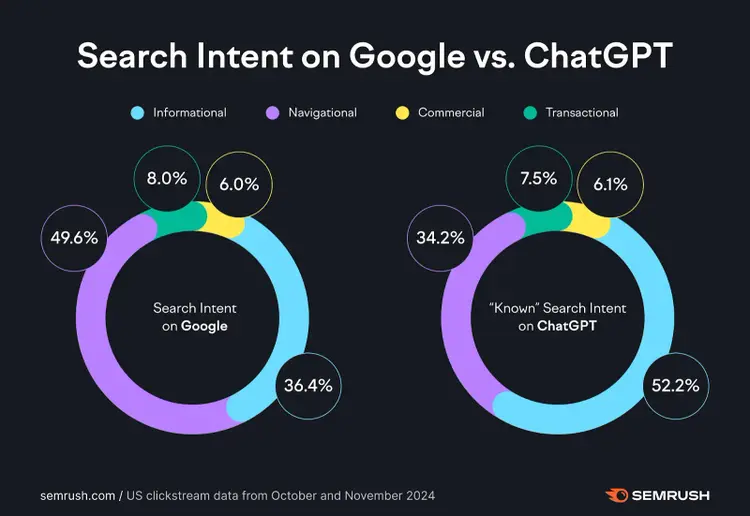
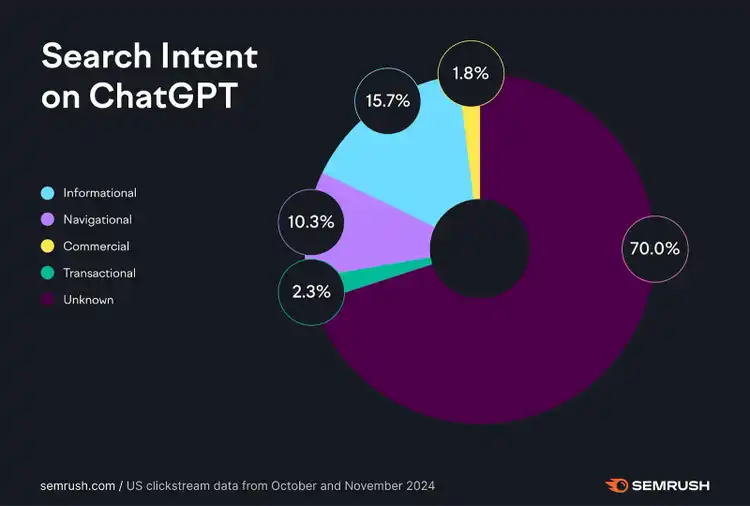
This is confirmed by our recent study, which revealed that Google tends to attract more navigational intent, while ChatGPT users are more likely to be looking for informational content.
While truly original content requires more effort and resources, it can really pay off.
I’m excited to see more companies following this approach. They write with an original perspective, interview experts, conduct original research, and create content that’s full of personality.
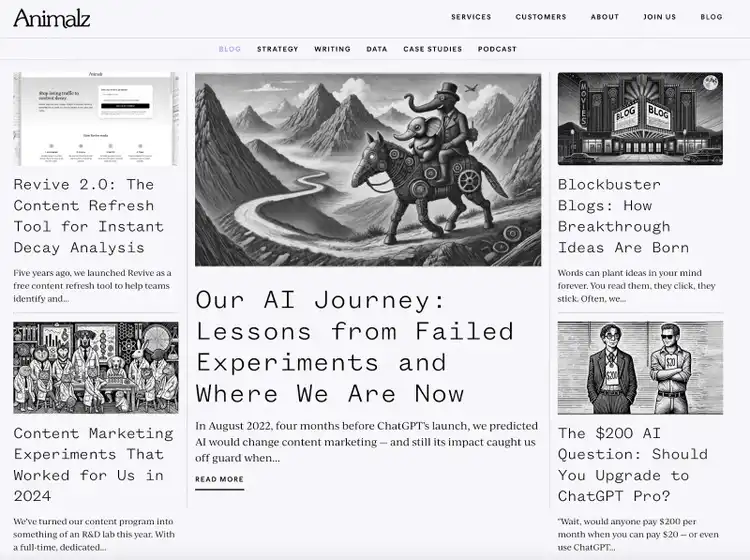
For example, I’ve always liked how the experts at Animalz approach this. They publish data-backed insights and fresh perspectives instead of the same old generic advice.
In their content—as in this blog post—they share real-world lessons from their experiments, lessons you can’t learn about anywhere else.
Here’s how you can also create content like this:
- Let experts write for your blog: Give internal experts a platform to share firsthand knowledge
- Interview experts who can’t write for you: If they can’t fully commit, see if you can question them about their unique insights
- Perform original research: Conduct surveys, analyze internal data, or run experiments—and share the results
- Publish case studies: Highlight real-world results that your customers achieved with your help
2. Using AI Is Now Becoming the Norm
AI tools are everywhere. Your competitors are using them too.
And I’ve never been—and never will be—a supporter of “zero AI policies.” AI is the innovation you can’t ignore, and it helps us achieve better results faster.
What makes the real difference is how you use it.
If you rely on AI to churn out mass-produced articles without any human touch, you won’t stand out.
But if you use AI to speed up research, generate ideas, and streamline your writing process, it can help you produce high-quality content and come up with successful campaigns.
Here are some numbers I found interesting when we interviewed 700+ Semrush users:
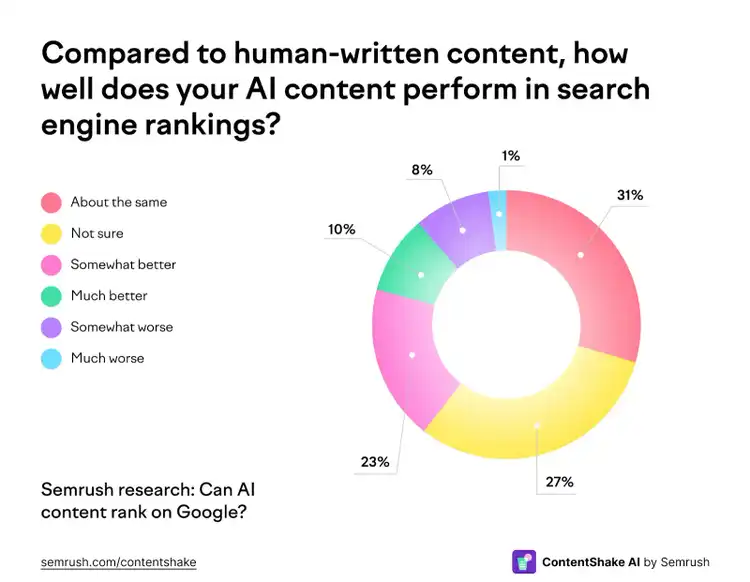
- 31% say AI content performs as well as human-written content when it comes to SEO
- 33% say it performs even better
- Only 9% think it performs worse
We also saw a similar picture when we asked users about conversions from their organic content.
This and other findings in our study confirmed that Google doesn’t penalize AI content. It also showed that content created with AI assistance does not have to be bad content.
Here’s how to do it right:
- Use AI as a helper, not as replacement for human input: Use AI to generate first drafts, summaries, or ideas, then refine the content yourself
- Add human perspective and original ideas: Share personal stories, opinions, or expert insights that AI can’t replicate
- Keep quality high: Check facts, tighten up wording, and maintain your brand’s voice
- Look for creative ways to use AI: Brainstorm, generate code for interactive tools, analyze data, come up with thought leadership ideas—the sky is the limit
3. Diversifying Your Marketing Channels Helps to Combat Traffic Drops
2024 was all about traffic drops and fluctuations.
What caused it?
Mostly, Google’s algorithm updates combined with shifts in search behavior.
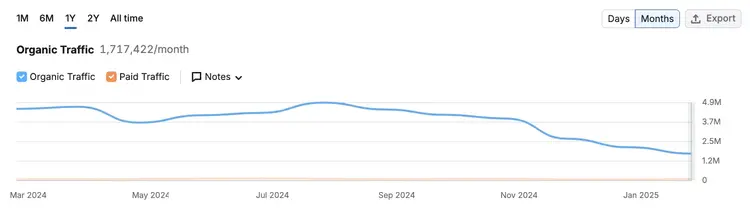
In the first instance, Google introduced AI overviews in SERPs as well as several core updates. This led to even more zero-click searches that bring no website traffic, causing dramatic traffic drops in many niches.
We all heard about HubSpot’s organic traffic drop:
Additionally, more people are now using alternative platforms to search for information—including LLMs like ChatGPT and social media platforms like LinkedIn.
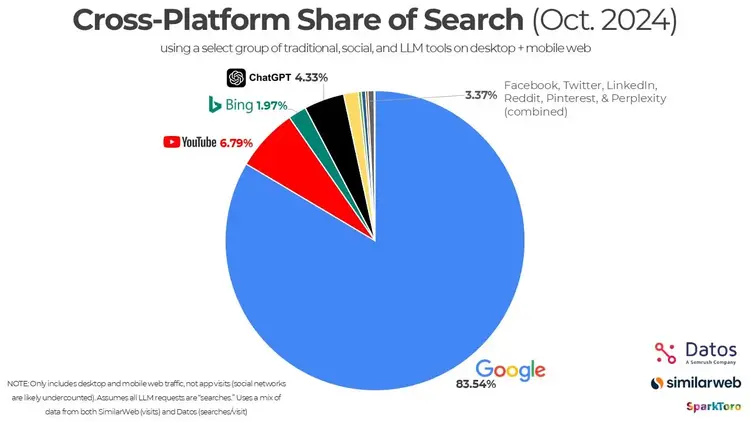
One study on this topic shows that Google’s approximate share in search now stands at about 84%, meaning that its monopoly is slowly eroding.
But here's the thing: losing some website traffic isn't necessarily bad news.
In 2025, platforms don't want you to go elsewhere. LinkedIn restricts the reach of posts with external links, and Google now answers simple queries directly with AI responses.
However, the website traffic you keep might actually be higher quality. Your visitors could be users who’ve already found their basic answers through AI or other channels but want to learn more. This can hint at a higher intent to engage and convert.
That means your website and SEO can’t be your only focus anymore. It’s important to diversify, although you don't need to abandon your past tactics altogether.
Ross Simmonds, founder of Foundation Marketing, also suggests embracing a multi-channel approach:
The search behaviors of our audience are no longer limited to Google. For those who want to prepare for it, the best thing they could do is to conduct in-depth channel-specific research around their audience, their customers, and their search intent associated with more diverse channels. Upon conducting this research, they should be able to get more clarity into understanding how they can rank—not just in Google, but also on other channels. And as a result of that, they will be able to implement generative engine optimization efforts to influence the responses that are coming back from AI overviews and other LLMs, by simply being in more places than their competitors.
Ross Simmonds, founder of Foundation Marketing
To further support this idea—while HubSpot lost all this organic traffic, their financial results have actually been quite impressive. The company reporteda total 2024 revenue of $2.63 billion, reflecting a 21% increase from 2023.
Here’s how you can tackle all this:
- Diversify your channels: Explore YouTube, TikTok, and Reddit. Find where your audience spends time
- Experiment with formats: Go beyond blog posts. Try newsletters, videos, podcasts, or in-depth case studies
- Focus on quality over quantity: Create in-depth content that goes beyond the basic answers that AI can provide
- Optimize for AI tools: Optimize your content so it shows up in AI-generated answers, not just in search results
4. LLMs Drive More Website Traffic and Brand Awareness
Yes, search behavior is happening more and more on AI platforms. But that doesn’t mean brands can’t benefit from these conversations.
For example, ChatGPT isn't just answering questions anymore—it's actually sending significant traffic to websites.
The numbers tell us an interesting story.
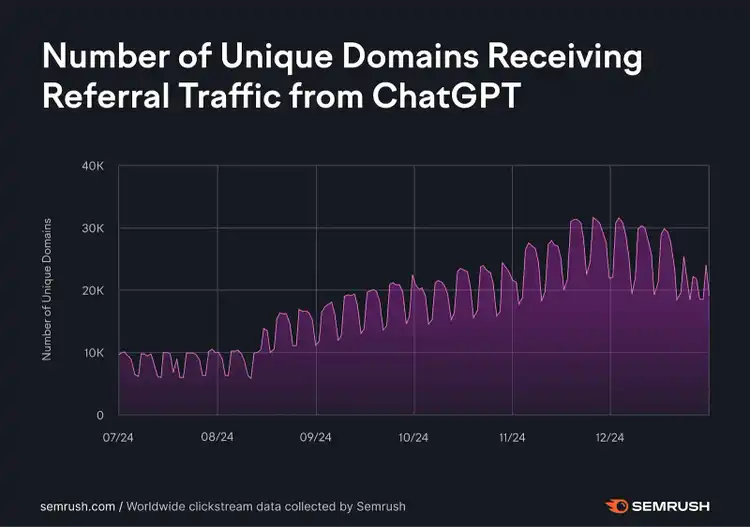
According to Semrush's analysis of 80 million clickstream records, the number of domains getting traffic from ChatGPT jumped from 10,000 to over 30,000 in just a few months during 2024. That's a huge shift in how content gets discovered.
What's even more interesting is how people use ChatGPT differently from how they use Google.
In our research, about 70% of ChatGPT queries were completely unique—things people wouldn't typically search for on Google. We're seeing a whole new way of discovering content.
Crystal Carter, Head of SEO Communications at Wix Studio, puts it perfectly:
As SEOs we do not need to abandon the tactics we've always relied on, but we do need to evolve them... We now need to add in retrievability—that is, taking extra steps to make sure that core information about our brands is available, accessible, and prioritized for LLMs.
Crystal Carter, Head of SEO Communications at Wix Studio
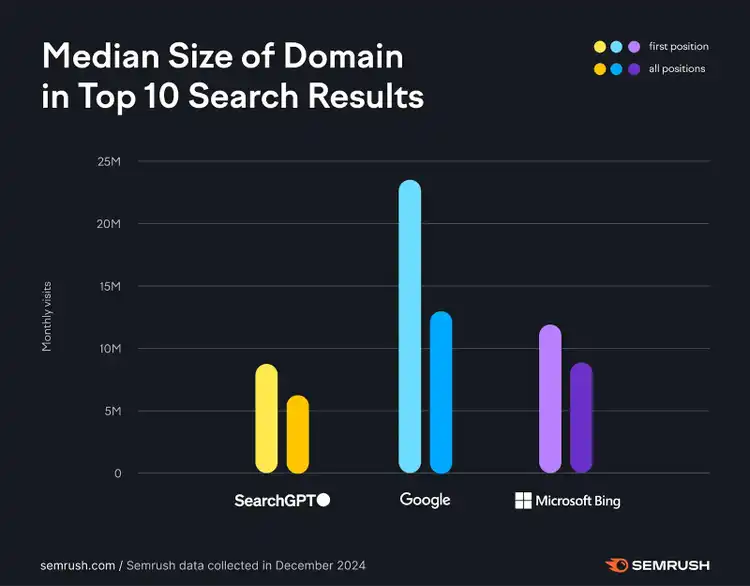
In a previous study of SearchGPT, we also found that, when compared to Google and Bing, SearchGPT tended to return smaller domains in its results.
This means that, even if you’re a startup or a small business, there’s a good chance you can get featured.
Here's how to adapt your strategy to this trend:
- Create content for unique search patterns: Focus on problem-solving scenarios and question-based content. For example, instead of "how to write emails," create content about "how to write sales emails that work for both B2B and B2C audiences."
- Write for AI visibility: Place clear, direct answers in the first 100 words of each section and use structured data markup. This helps AI tools quickly find and cite your content when answering user questions.
- Build real authority in your space: Create original research, share unique data points, and include expert insights. For example, instead of summarizing others' findings, run your own experiments or analyze your internal data to share insights nobody else has.
- Use natural language: Write how people actually talk. Our research shows ChatGPT queries are more conversational than Google searches, averaging 23 words when users chat freely with the AI.
- Think beyond direct traffic: Remember that even when users don't click through to your site, having your content cited by AI tools still builds your brand awareness and authority.
I also recommend being proactive and analyzing your AI brand visibility. Check what exactly people are searching for, how you appear in the AI mentions, how your competitors are featured, etc.
Wondering how to do this?
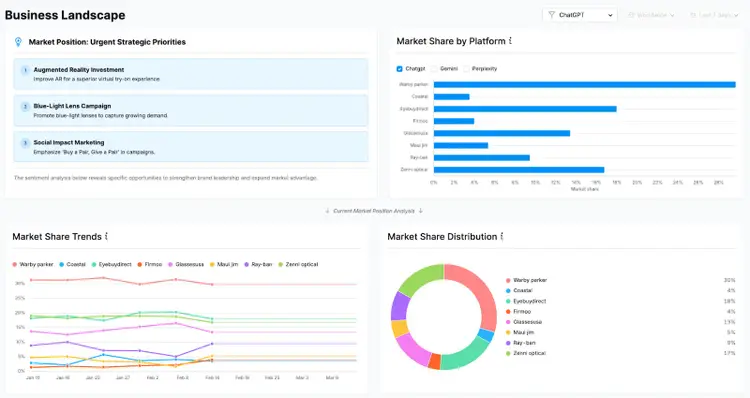
Use Semrush’s AI Visibility Toolkit, which analyzes your brand's presence across various AI platforms such as ChatGPT, Gemini, and Perplexity.
It then uses AI to translate this data into actionable tips for your business, product, and marketing strategy based on identified patterns.
Here’s what it looks like:
5. Real People Are Fueling Top-of-the-Funnel Content
I’ve also noticed a growing trend of companies leaning on individual creators to drive awareness. This can include employees, founders, and/or external influencers.
This shift is especially clear on platforms like LinkedIn, where users can learn new insights directly from real people.
To be honest, it’s one of the key sources of educational content for me too.
For example, David Baum, CEO at Relato, uses LinkedIn to drive awareness of his brand.
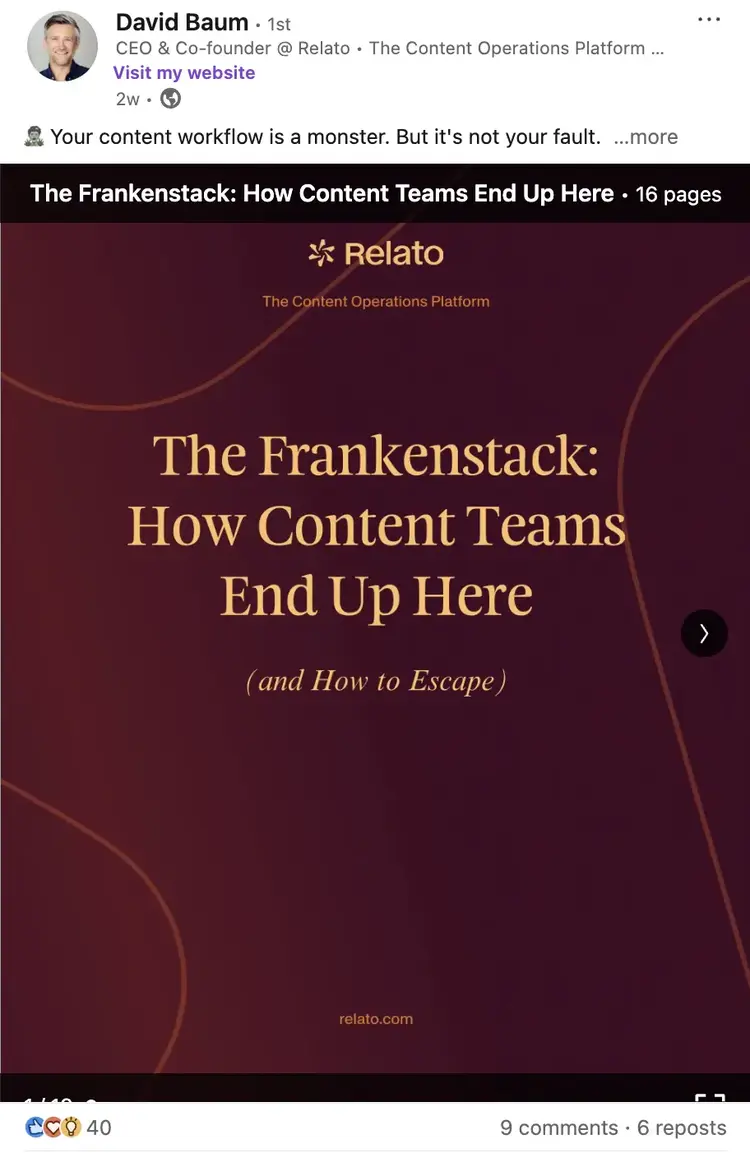
His and other experts’ posts are so valuable that I often bookmark them for reference.
Similarly, many professionals prefer authentic voices.
So when we published our latest research, we had our team share it on their LinkedIn feeds, expanding our reach. For example:
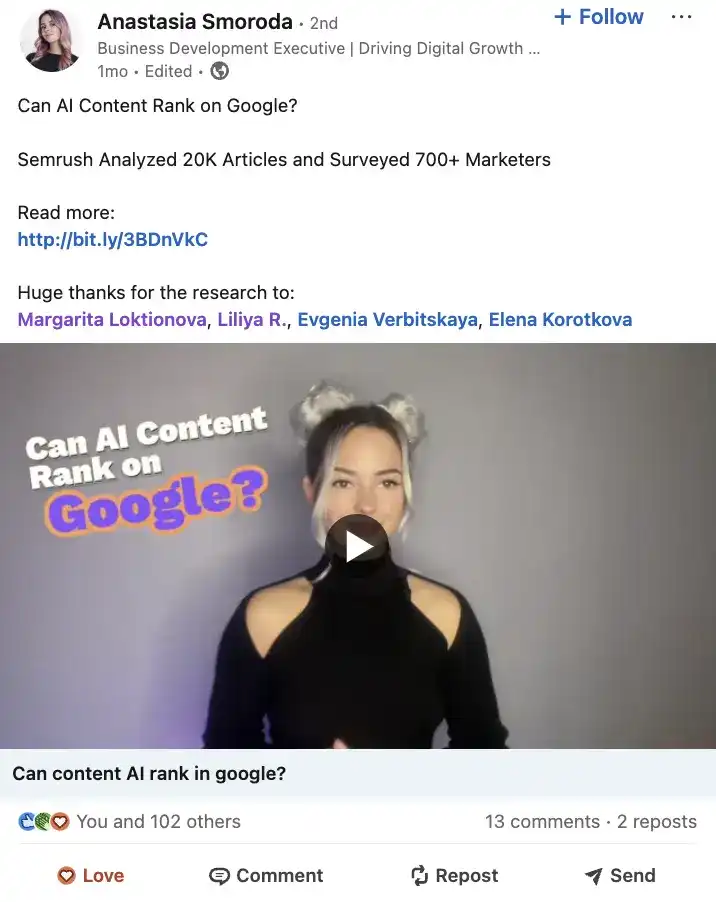
Here’s how you can try this approach:
- Invest in employee advocacy: At Semrush, we encourage team members to post on social media or speak at events. It positions them as experts and brings more attention to the brand. I strongly recommend you do the same.
- Support founder-led marketing: Founders and CEOs can share behind-the-scenes stories, lessons, or product updates. This authenticity resonates with potential customers.
- Encourage personal branding: Offer resources like mini-workshops or content templates for your team members, so employees feel comfortable creating LinkedIn posts or blog articles.
When you let real people be the face of your brand, you open the door to more engaging conversations. The personal touch and everyday expertise they bring can significantly increase awareness.
6. Investing in Product-Led Content Is Key to Driving the Bottom Line
As we already established, AI is now handling a lot of basic informational searches.
Does it mean you should stop producing informational content?
Of course not. SEO is far from dead, and there are other channels you can use to distribute your content.
However, such content mustn’t be the only format you’re producing.
You should also create product-led, middle- and bottom-of-the-funnel content to drive conversions and stand out from generic AI content.
Use formats like:
- Product-led content that integrates your offerings into workflows
- Useful, step-by-step case studies of your customers
- Interactive tools that let users play around with your product
For example, Modash’s Instagram Engagement Rate calculator helps its audience explore the product’s value firsthand. It's a unique, interactive content format that provides distinct value to users.
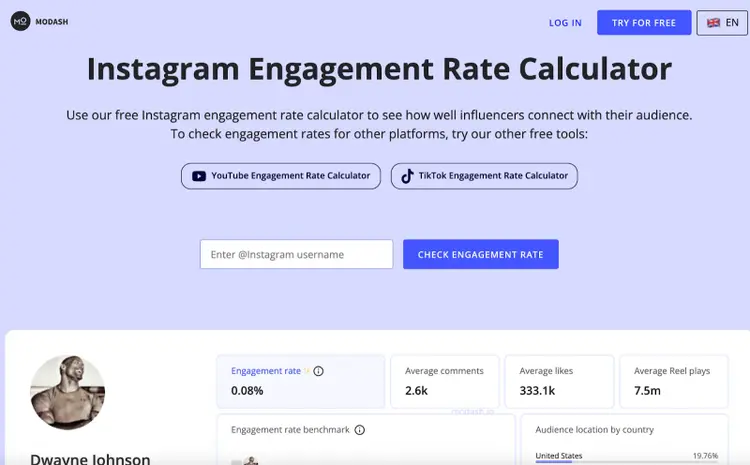
Here are some tips to create content in this way:
- Use product data: Create research pieces based on real usage stats and use them to translate your USPs.
- Offer free tools: Let potential customers try out relevant ungated tools. This can prompt them to transition to the main solution.
- Create case studies: Share real stories of how your product solved customer problems.
- Cover important workflows: Identify common use cases and the questions your audience asks (e.g., “how do we X and Y with this product?”). Then, create text/video content to address them.
- Build comparison pages: Show how you stand out from competitors.
For instance, our users kept asking if it was safe to use AI for SEO.
To address their concerns, we analyzed 20,000 keywords and proved that AI detection does not actually hurt your rankings.
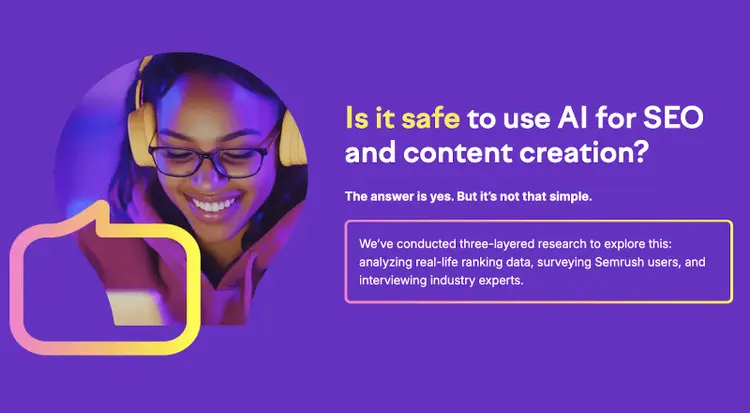
The result? That research outperformed our conversion goals.
7. Content Marketers and SEOs Need to Learn New Skills
As more and more companies use AI to create content and SEO traffic is (somewhat) decreasing, the job market is shifting.
In Q1 2024, SEO job listings dropped by 37%, senior-level roles rose by 3%, and entry-level by 1%. However, mid-level positions fell by 6%.
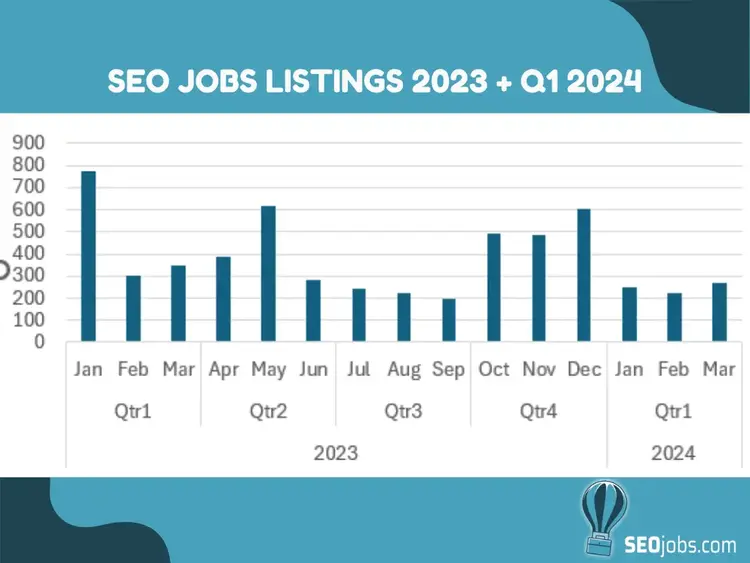
This trend suggests companies are restructuring their content teams: keeping senior strategists to guide AI initiatives and entry-level staff to execute them, while reducing mid-level positions that AI can now help automate.
This is creating a new model where teams are smaller but more specialized—combining AI efficiency with human expertise at both ends of the spectrum.
Content marketing isn’t immune, either.
A 2025 study found that one in three marketers faced layoffs in 2024, partly because of AI.
It’s ironic—SEO and content marketing teams are downsizing due to AI, yet those who remain are relying on it all the more. It reminds me of this image:

So, what can you do to stay competitive?
Answer: expand your skillset.
Yes, mediocre writers and SEOs might struggle in this new world. But those who stay on top of technology trends and deepen their marketing knowledge will remain in demand.
Here are some tips for staying relevant:
- Understand your audience deeply: AI can’t replace genuine empathy for customer needs, and as a marketer, you need to master audience research and analysis.
- Learn how to think strategically: Understand how your content fits into the bigger business picture.
- Become a product expert: Whether you freelance or work in-house, you need to have an in-depth understanding of the products or services you promote.
- Don’t neglect analytics: Nothing in content or SEO should be done unless there’s a specific, trackable goal—something more substantial than vanity metrics such as website traffic.
- Keep evolving: Continue learning about new platforms, tools, and ways to use AI effectively. The “zero AI” approach won’t make you more competitive—most likely, the opposite). Be ready to explain your AI experience in job interviews, as this is part of our new working reality.
8. Build a Loyal Following to Increase Your Content Reach
With so many companies creating expert-driven content and branching out into new channels, it’s tough to stand out.
I’ve found that building a loyal following is key.
A dedicated audience will share your content, discuss it, and help spread it further.
This approach also decreases your dependency on traffic acquisition, as more people will engage with your content by heading to your site directly, opening your newsletter, and so on.
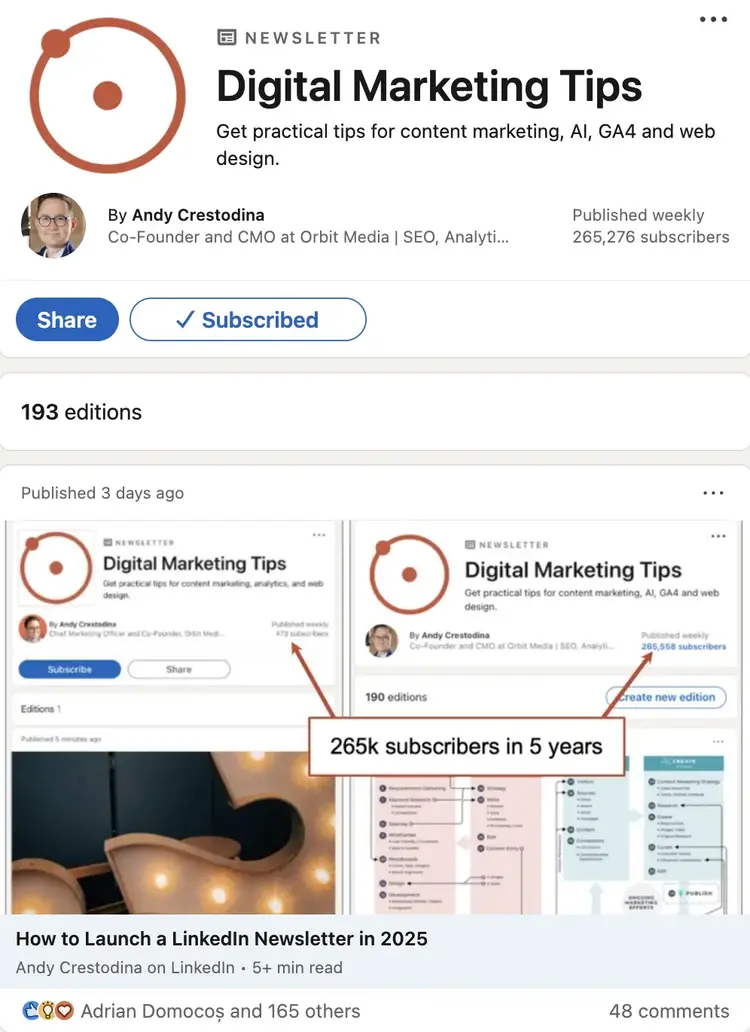
One of my favorite examples of this is Andy Crestodina’s LinkedIn newsletter. While Orbit Media’s site experienced traffic volatility like so many others, Andy built a unique audience that regularly consumes the company’s content.
The newsletter now has over 260k subscribers:
Here’s how you can try this approach:
- Collaborate with your audience: Involve them in your content. Use polls, Q&As, or user-generated content. Example: If you run a design blog, post a poll asking which topics readers want next. Or, you could feature user-submitted designs in a newsletter.
- Partner with industry leaders: Work with credible voices in your field to reach new audiences and build trust. Example: Invite a well-known SEO expert to write a guest post or join a community panel.
- Promote your content via email and social media: Share your content directly with subscribers and followers to keep them in the loop. Example: Send out a weekly “insider tips” newsletter and post behind-the-scenes updates on LinkedIn or X.
- Be transparent and authentic: Show the real process: your wins, challenges, and lessons learned. Example: Maybe your product launch didn’t go as planned. Share what went wrong, what you learned, and how you’re fixing it.
In short, publish content worth talking about.
Don’t be afraid to challenge common beliefs or address controversial topics. Aim to create thought-leadership pieces that spur debate, invite feedback, and position your brand as a leader in the field.
9. The Demand for Video Content Continues to Rise
Lately, I’ve seen video content surge across every channel—social media, search engines, and even email.
About 95% of marketers now consider it central to their strategies. Why is this?
Because consumers are hooked on video. 83% of people want to see more brand videos, and 78% choose short videos over any other format.
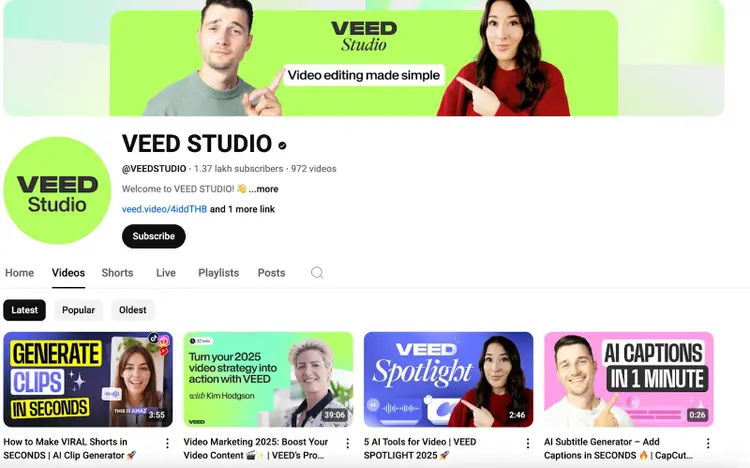
A great example is Veed.
They publish a lot of educational videos on YouTube and have grown their subscriber base to more than 130,000.
More brands are expected to adopt or expand their use of video in 2025.
Dani Stewart, Senior Content Lead at Kit (formerly ConvertKit), highlights how video is reshaping content strategies:
I think the emphasis on video content will change many company's content strategies this year. Whether it's creating video testimonials to live on your marketing site for increased social proof, growing your presence on YouTube, or adding more Reels to Instagram for engagement, adding strategic video content is something we should figure into our strategies and budgets this year.
Dani Stewart, Senior Content Lead at Kit
What's more, videos can improve your site’s SEO.
How?
- Videos improve search engine rankings: Hosting videos on YouTube and embedding them in your site can improve its visibility on Google. This is because videos can significantly enhance the user experience on your site—a factor valued by search engines.
- Videos deliver a great user experience: By placing videos on your site, you’re giving people who prefer to watch videos exactly what they want. This makes your site more engaging, interactive, and enjoyable for visitors.
- Videos get backlinks: High-quality videos are more likely to be shared and linked to by other sites, which can improve your site’s backlink profile.
- Videos increase dwell time: Engaging video content holds visitors’ attention and keeps them on your site longer. Search engines see this as a sign of valuable, high-quality content, which can contribute to better rankings.
I expect even more brands to adopt or expand their use of video in 2025—both to meet audience preferences and to gain a competitive edge in search results.
This also spans other content formats like BOFU and retention content (think content for your knowledge base, product onboarding, etc.), with AI tools like Synthesia making this process smoother.
10. It’s Time for Innovation in Your Content Campaigns
I rarely see truly innovative marketing campaigns. When one does pop up, everyone rushes to copy it.
Once it’s everywhere, it loses its spark—and customers tune it out.
Copying campaigns that worked in the past might feel safe, but it won’t capture your audience’s interest for long—they’ve already seen it.
I’ve seen this happen again and again:
- We know SEO blogs can work, so brands churn out post after post
- We know eBooks and whitepapers work, so every brand creates them
- We see a viral video, and suddenly everyone is trying to recreate it
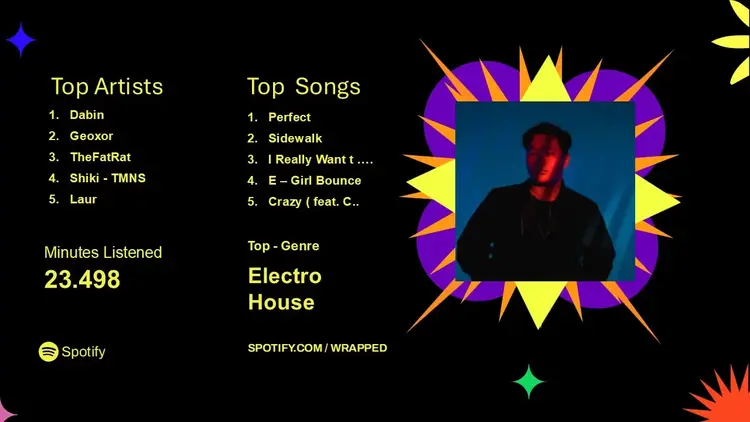
For example, we loved Spotify Wrapped when it first launched. Now so many platforms do a year-in-review, and it feels less special.
Instead of following trends, focus on creating them.
That’s how you keep your marketing fresh, exciting, and truly memorable.
Here’s what you can try:
- Study trends outside your industry: Look for inspiration in unexpected places. Example: If you're in B2B software, study how luxury brands create exclusivity or how entertainment companies build anticipation.
- Focus on solving real problems: Instead of copying viral formats, identify the unique pain points your audience faces. Example: If everyone's doing year-in-review content, create a future-forecasting tool that helps users plan ahead.
- Test new formats first: Experiment with emerging platforms or features before they become saturated. Example: If you spot a new LinkedIn feature, test it while engagement is still high and before best practices have been established.
- Create signature experiences: Develop something unique to your brand that others can't easily copy. Example: Instead of another PDF guide, create an interactive assessment that gives personalized recommendations based on your expertise.
11. Digital Influencers Are Becoming a Thing
I was scrolling Instagram yesterday and noticed a profile of a digital influencer with thousands of followers.
The page was dynamic—filled with photos, interactive stories, and even personalized responses to comments.
What caught my eye was the active collaboration between these influencers and well-known brands.
Another example, Lil Miquela, an AI influencer with over 2.4 million followers, teamed up with MSI Gaming in April 2024 for their “Go Borderless” campaign.

And it’s not just on Instagram. AI influencers are popping up everywhere.
Marcus Sheridan, co-founder at PriceGuide.ai, sees huge potential in the use of AI influencers.
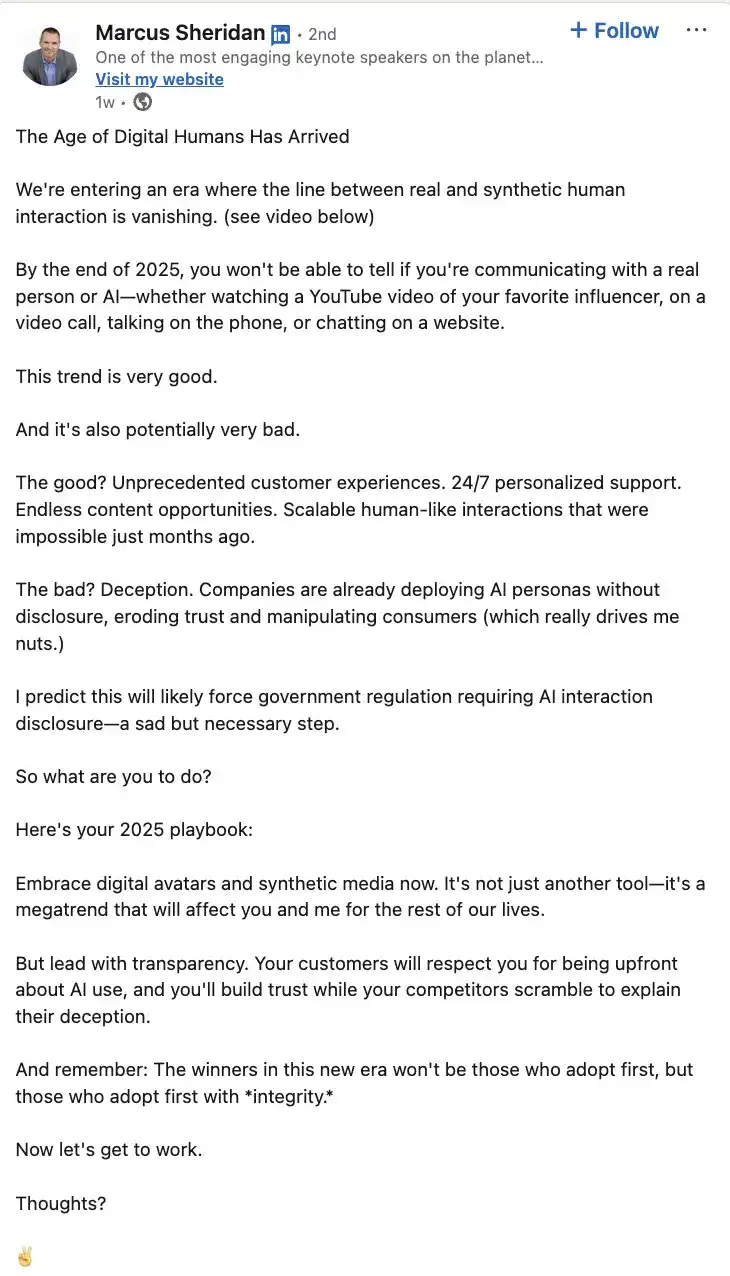
But he also warns about trust issues.
If brands aren’t transparent about who or what these influencers really are, they risk alienating their audience.
Here’s how to approach this:
- Be transparent: Always disclose the AI nature of the influencers. Transparency fosters trust and helps set the right expectations for your audience.
- Maintain authenticity and brand alignment: Make sure that the AI influencer’s content and persona resonate with your brand's core values.
- Monitor trust: Regularly assess audience engagement and reactions to the AI influencer’s activities and be prepared to adjust strategies if signs show that audience trust is diminishing
12. Setting Realistic Content Marketing and SEO Goals Has Never Been More Important
Finally, I’ve seen many content teams collapse under the weight of unrealistic expectations, chasing quick wins while failing to allocate enough resources.
Yes, AI tools help us work faster. But they can’t replace human specialists or make things happen instantly.
Similarly, many businesses continue to create content or target SEO keywords without a clear goal for their business.
In 2025, that is no longer an option.
Here are the common mistakes you need to avoid:
- Unrealistic output: Goals such as demanding daily blog posts, 10 videos a week, and or lead magnets every month are often set without a clear purpose.
- Unrealistic results: Don’t expect instant wins, such as huge traffic spikes or social followings within a month or two of changing your game.
- Not having specific KPIs: You can focus on brand awareness and track social media followers or pursue direct conversions—but it’s essential that the metrics are there.
The best solution? Prioritize long-term, sustainable results. It’s better to get 10,000 visitors and convert 1,000 of them than chase 100,000 visitors who don’t convert.
Here’s how to set realistic expectations:
- Allocate proper budgets: Give your teams the right resources to outsource or expand
- Accept the long game: SEO and content marketing are not instant fixes. Give them the time they deserve
- Quality over quantity: Well-researched content outperforms rushed work
- Align with key business objectives: Measure leads, conversions, or brand awareness—not just traffic
When companies match their expectations with their budget and available resources, content teams can thrive.
Stay Ahead of 2025’s Hottest Content Marketing Trends
The world of content is changing, and we can all feel the impact.
AI, shifting consumer behaviors, and evolving search preferences are shaping how we create and distribute our work.
If there’s one takeaway from these trends, it’s that flexibility and authenticity matter more than ever.
- Try new formats: Don’t stick to one channel or medium. Experiment with videos, podcasts, newsletters, and even interactive tools.
- Stay on top of technology trends: Optimize your AI visibility, try new tools, explore and innovate.
- Invest in people: Empower your team members, founders, and influencers to share genuine stories and expert insights.
- Focus on what AI can’t replicate: AI can do a lot, but it can’t replace your unique viewpoint, real data, or brand personality.
- Plan long-term: Quick wins might feel good, but sustainable, high-quality content wins the race—and keeps your audience engaged.

Margarita is a passionate Content Marketer with over 6 years of experience in various tech industries and 3 countries. She also holds two MBA degrees in Marketing.
Tells Google to show you more from Semrush in AI, Search, and Discover.
Table of contents
- 1. Content with Original Opinions Is More Important Than Ever
- 2. Using AI Is Now Becoming the Norm
- 3. Diversifying Your Marketing Channels Helps to Combat Traffic Drops
- 4. LLMs Drive More Website Traffic and Brand Awareness
- 5. Real People Are Fueling Top-of-the-Funnel Content
- 6. Investing in Product-Led Content Is Key to Driving the Bottom Line
- 7. Content Marketers and SEOs Need to Learn New Skills
- 8. Build a Loyal Following to Increase Your Content Reach
- 9. The Demand for Video Content Continues to Rise
- 10. It’s Time for Innovation in Your Content Campaigns
- 11. Digital Influencers Are Becoming a Thing
- 12. Setting Realistic Content Marketing and SEO Goals Has Never Been More Important
- Stay Ahead of 2025’s Hottest Content Marketing Trends