
Branded vs. Non-Branded Keywords: What’s the Difference?
Defining Brand vs. Non-Brand Keywords
Branded keywords are search terms that include your brand name. Or some variation of it. Non-branded keywords are general search terms that don't mention your brand.
For example:
- Branded: "iPhone," "Semrush SEO tools," and "Microsoft Office 365"
- Non-branded: “smartphone,” "SEO software," and "productivity suite"
Those who use branded keywords are already familiar with your brand. Others may use broader, non-branded keywords until they narrow their choices. Or become aware of your brand.
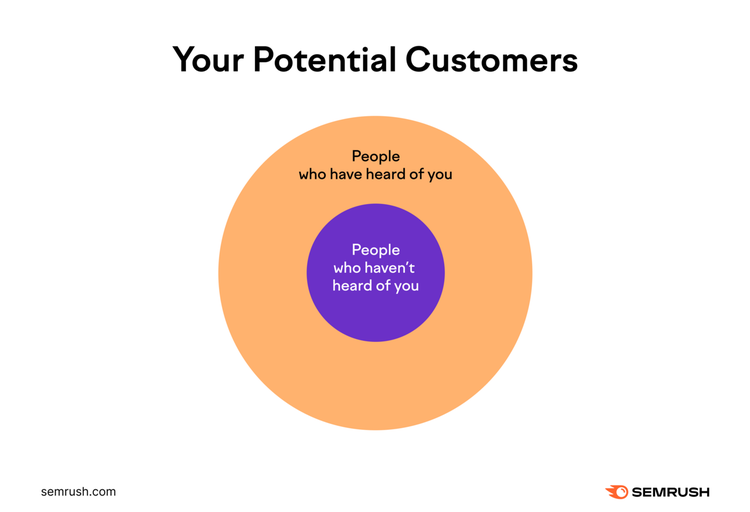
The key difference is user intent (the reason someone is searching). We’ll talk more about user intent in the next section.
Why You Should Target Both Branded and Non-Branded Keywords
People choose search terms depending on what they want to accomplish. Businesses and marketers use those terms to gauge where potential customers stand in their buying journey.
A buyer journey typically starts when people become aware of a problem they need to solve. Say someone needs to take aerial photos of their property before listing it for sale. Someone at this stage might search broadly with a query like "aerial photography techniques."
Past this stage, people can become aware of some potential solutions to their problem, and may be considering their options. They'll look for the right solutions for their needs using search terms like "best drones for aerial real estate photography."
Then, people who continue on the buyer's journey will move to the decision-making stage. Here, they’re looking for information on specific brands or products with keywords like "iPhone 15 Pro price comparison."
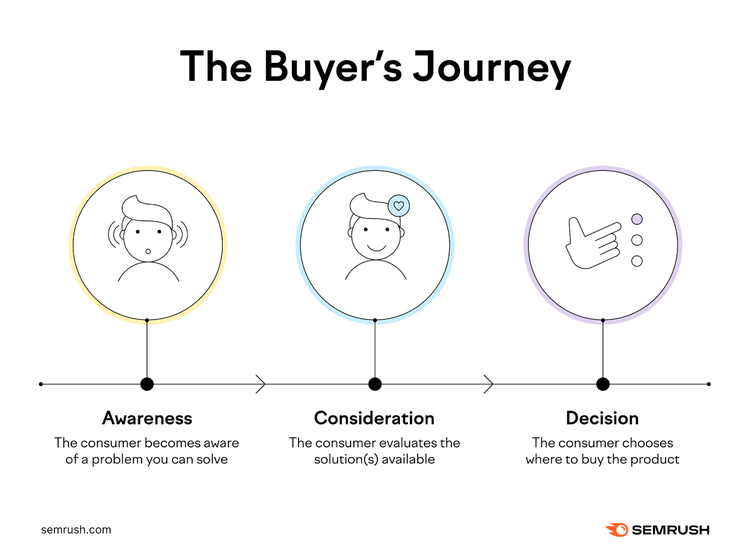
As they move from Awareness to Consideration to Decision, the keywords become more focused, often reflecting an intent to purchase. As their intent changes, they move from non-branded to branded keywords.
Search intent influences search terms. Which affects how businesses should target branded vs. non-branded keywords. Rely on only one or the other, and you might miss a segment of your potential customers in different stages of their buyer's journey.
Comprehensive SEO or PPC campaigns use both to achieve varied benefits:
Maximizing Visibility
Branded keywords capture users already familiar with your brand. They can be used to:
- In SEO: Integrate branded keywords into your blog posts and other content to control the narrative and reinforce your marketing messages
- In PPC: Use branded keywords in your campaigns to help your ads appear to users searching for your brand. This can prevent competitors from capturing these potential customers instead.
Non-branded keywords cast a wider net, attracting audiences searching for products or services you offer. They can be used to:
- In SEO: Attract new, potential customers searching for the solutions you provide
- In PPC: Target people searching for generic products or services, which helps you reach users at an earlier stage of the buying process
Reaching Users at Different Stages of the Funnel
Branded and non-branded keywords play a crucial role at various stages of the funnel. To guide potential customers from knowing about your product, to deciding to purchase it.
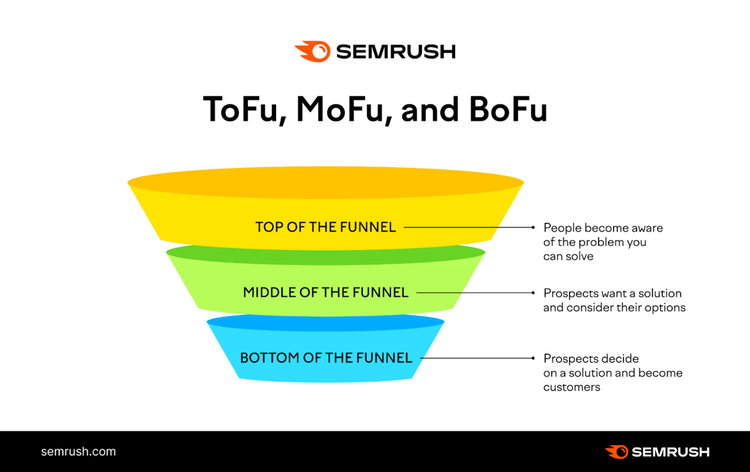
Branded keywords capture users in certain parts of the funnel like the decision and purchase phases. Who are actively seeking your brand.
- In SEO: These keywords are often used to optimize product and service pages to make them more visible in search engine results pages (SERPs). The idea is to make it easy for potential customers to find what they want from you on your owned sites.
- In PPC: Branded keywords are usually “high-intent.” The person using high-intent keywords is more likely to take action. Like making a purchase. So these keywords are often used to reach searchers who already know what they want from you. And are ready to sign up, download, or buy.
Non-branded keywords target users in the awareness and consideration phases, researching and comparing their options.
- In SEO: Non-branded keywords are often placed in educational content like blog posts and ultimate guides. This way, you align your educational and helpful content with the research intent of the people searching for the non-branded keywords.
- For PPC: Various non-branded keywords can effectively target people in different stages of their buyer's journey. For example, “drone photography courses online” and “buy FPV drones” can show ads to wildly different audience groups.
Meeting Search Intent
Search intent is the reason behind a user’s search query. What are they really trying to achieve when they type something into Google? There are four types of intent:
- Informational: The user wants more information about something
- Navigational: The user wants to go (i.e., “navigate”) somewhere specific
- Commercial investigation: The user is comparing and researching options
- Transactional: The user wants to take action, like making a purchase
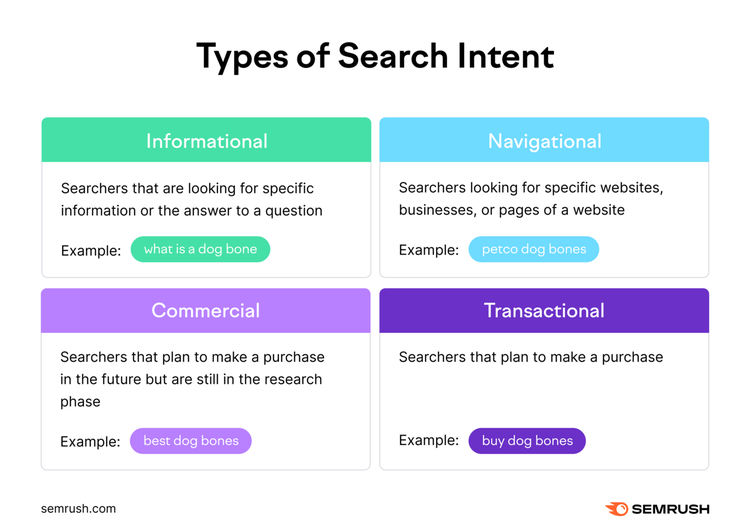
Branded keywords help searchers go to relevant owned content and web pages directly.
- In SEO: These keywords are used to give visitors direct access to specific web pages. A keyword like “iPhone 15 Pro” can guide people directly to the relevant product page, while something like “iPhone 15 Pro tips” might lead to a company blog post or tutorial.
- In PPC: Branded keywords are used to reach people who want to take an action, like buying or signing up. They can also be used to reinforce brand recognition and help users get to specific product or service pages.
Non-branded keywords cater to broader searches and more search intents.
- In SEO: Non-branded keywords are used to optimize web pages for any of the four search intents. Optimizing content for various search intents helps you reach potential customers regardless of what they want to accomplish with their search query.
- In PPC: These keywords are used to position your brand as the answer to a potential customer's problem. Depending on the keyword, they can encourage micro- or macro-conversions. Micro-conversions are actions like sign-ups and downloads. Macro-conversions are purchases.
When to Optimize for Branded Keywords
- Capturing high-intent traffic: Users searching for branded keywords are often farther down the funnel. They want specific products or information. Capitalize on their high purchase intent to drive conversions.
- Reinforcing brand recognition: For situations like launching new offerings, bid on branded keywords. This can help shape the narrative and capture early interest.
- Defending market share: Competitors may bid on your terms to intercept potential customers. Actively manage branded vs non-branded paid search keywords to stay on top of SERPs when users seek you directly.
- Controlling brand messaging: Guarantee your users encounter accurate and consistent information when searching for your brand. Optimize landing pages to tailor content, showcase marketing messaging, and create consistent branding experiences.
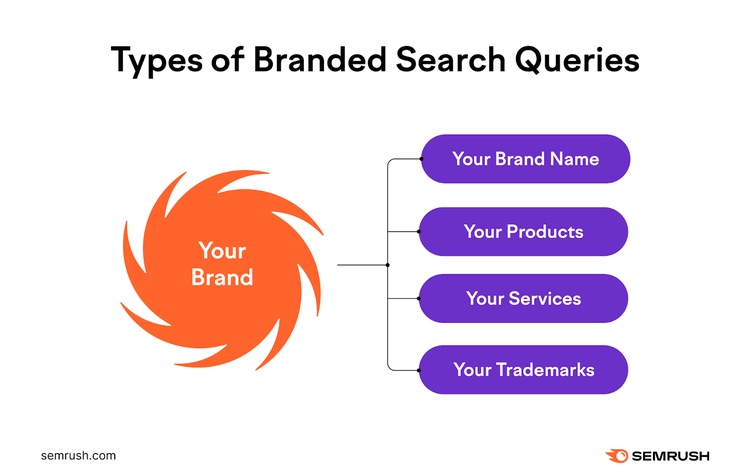
SEO Examples:
- Product/service pages: Optimize these for relevant branded keywords (e.g., "iPhone 15 Pro specs"). This helps users who know what they want find it easily on your site.
- Blog posts: Create content about your offerings, optimized with branded keywords (e.g., "Tips for landscape photography with iPhone 15 Pro"). This educates users familiar with your brand. But who are exploring options.
- Company news/updates: Optimize pages announcing new features or products (e.g., "iPhone 15 Pro launches new software update"). This captures users specifically searching for your latest developments.
PPC Examples:
- Brand name bidding: Bid on your brand terms to prevent competitors from outranking you for searches directly related to your company
- Competitor targeting: Bid on competitor brand terms to capture users considering alternatives. (e.g., If you're Apple, bid on "Samsung Galaxy S24 Ultra comparison")
- Product-specific campaigns: Target high-intent branded keywords (e.g., "Buy iPhone 15 Pro"). Send traffic to dedicated landing pages optimized for purchase conversions.
When to Optimize for Non-Branded Keywords
- Expanding reach and brand awareness: You can connect with users who are searching for information related to what you offer. But may not yet know your brand. This approach broadens your online visibility.
- Educating and building trust: Provide valuable, informative content that addresses common questions, pain points, and needs in your industry. This can establish your brand as a credible and helpful resource.
- Attracting ideal customers: You can attract users actively searching for solutions you offer. Once they land on your site, use targeted content, clear calls to action, and lead capture mechanisms to convert them.
- Targeting different buyer journey stages: You can engage users who are in the awareness and consideration phases. This enables you to guide them through the initial stages of their buying journey.
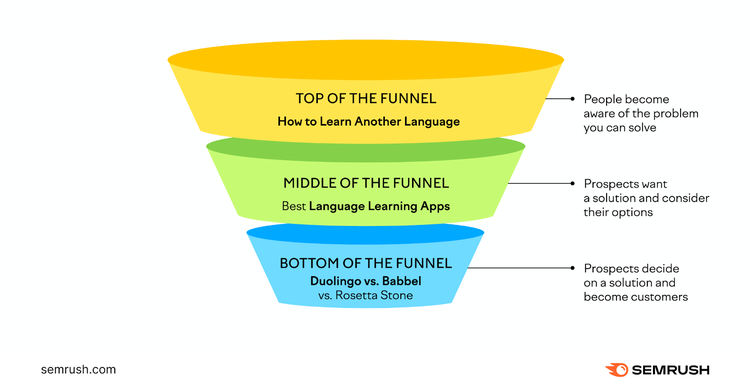
SEO Examples:
- Informational blog posts: Answer common questions related to your industry (e.g., "What is 5G technology in smartphones?")
- In-depth guides and resources: Create comprehensive content on relevant topics (e.g., "The ultimate user guide to smartphones")
- Product comparison pages: Help users compare different solutions within your niche (e.g., "Top smartphones to buy right now").
- Glossary or FAQ pages: Optimize for non-branded keywords related to specific terms or questions common in your industry (e.g., “Can you record your screen on smartphones?”)
PPC Examples:
- General product/service targeting: Bid on keywords related to your offerings (e.g., "Smartphones,")
- Problem-focused campaigns: Target keywords that indicate a specific problem or need (e.g., “how to choose a gaming smartphone,” )
- Competitor comparison campaigns: Target keywords that focus on comparisons within your industry (e.g., "best smartphones for gaming," )
4 Tips for Integrating Branded and Non-Branded Keywords
1. Perform Balanced Keyword Research
You want to mix branded and non-branded keywords in SEO and PPC campaigns. To reach customers familiar with your brand while attracting new prospects. First, you'll need to find those keywords.
To do this, use the Keyword Magic Tool to build a list for each type of keyword.
First, enter a broad keyword into the tool and click “Search.”
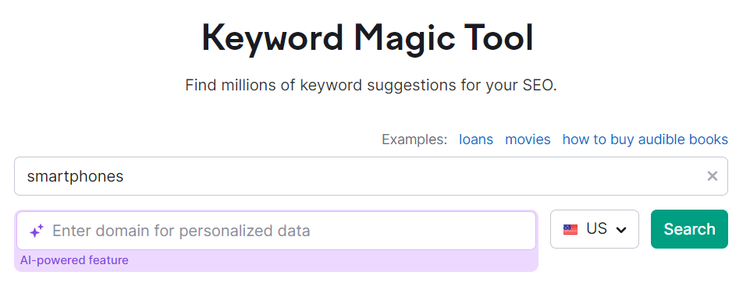
Tip
Enter your domain in the “AI-powered feature” box before hitting “Search” for a more personalized approach that helps you find the best keyword opportunities for your domain.
Explore the keyword groups and subgroups to discover both branded ("samsung smartphones") and non-branded keyword ("best smartphones") variations.
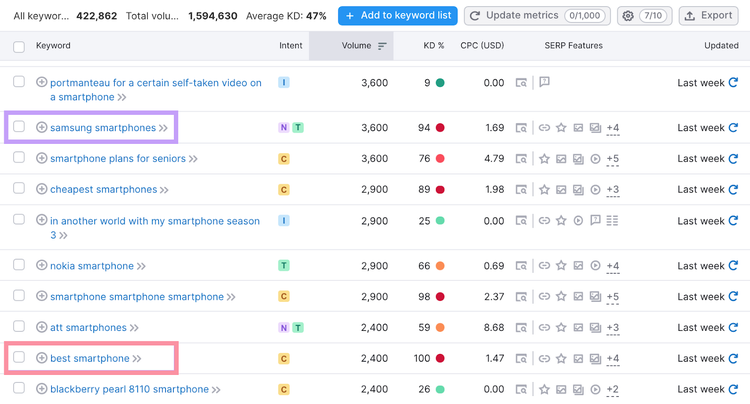
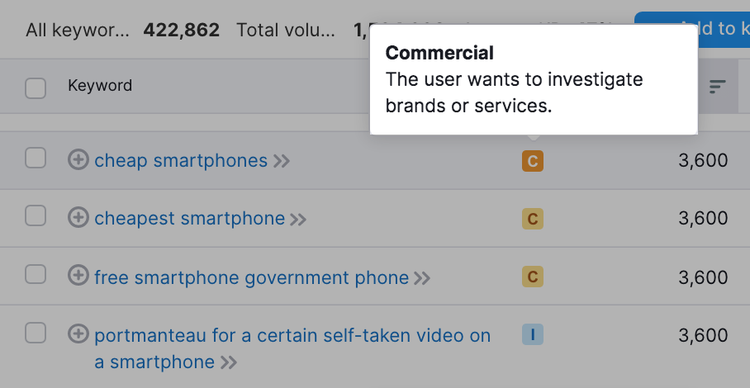
Take note of the “Intent” column, which contains colored initials corresponding to the four search intents:
- N: Navigational
- I: Informational
- C: Commercial
- T: Transactional
Hover over the initials for reminders of their meanings.
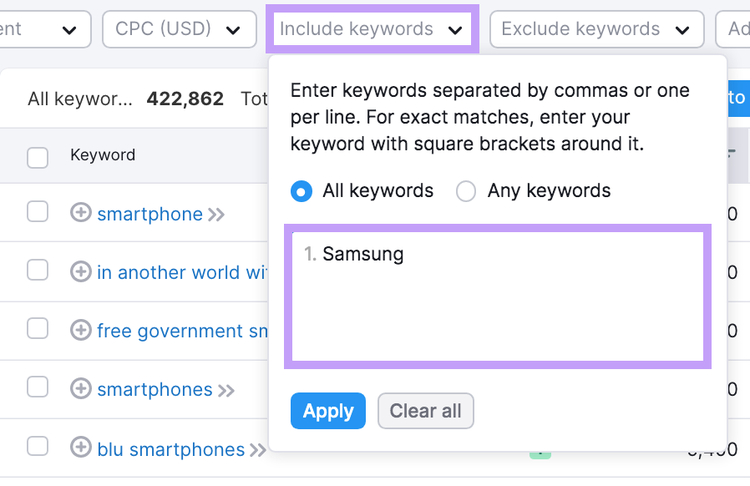
To collect branded keywords, use the “Include keywords” field to include your brand name.
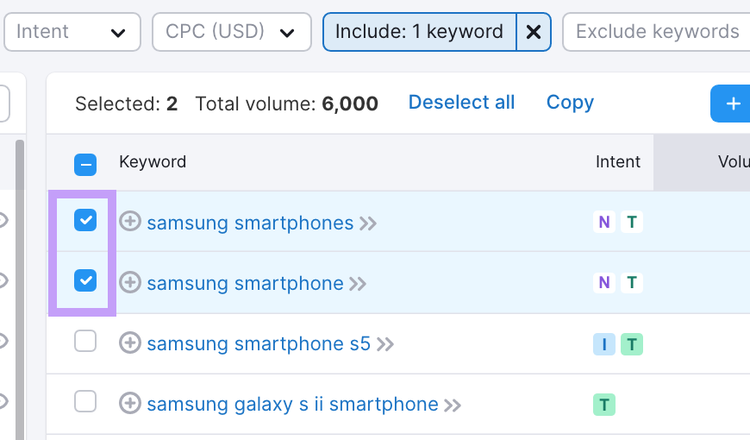
Then, check the boxes next to the keywords you want to target.
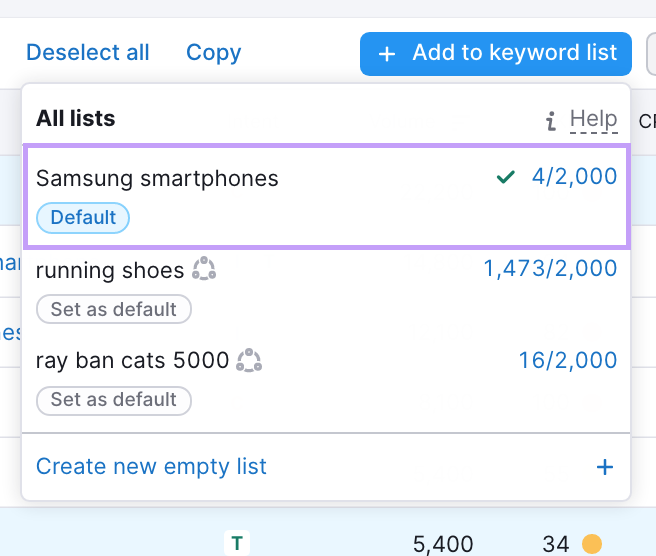
Click the “+ Add to keyword list” button. Create a new empty list, add the name for your list and click the check mark to save the list.
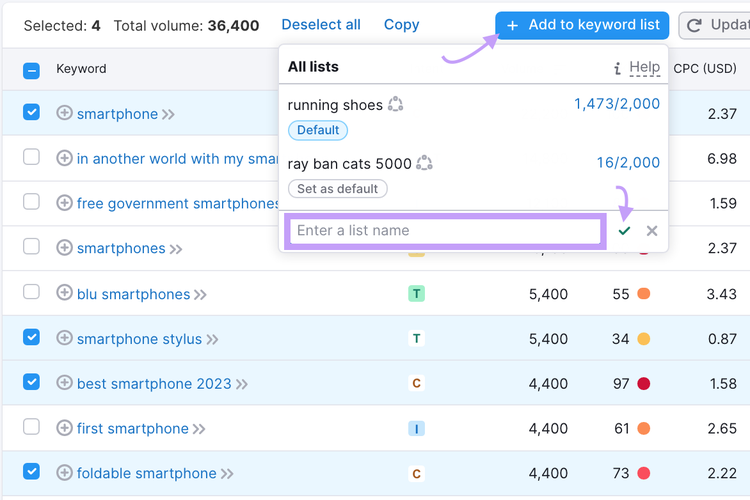
You'll then see your keyword list available when you click "Add to keyword list":
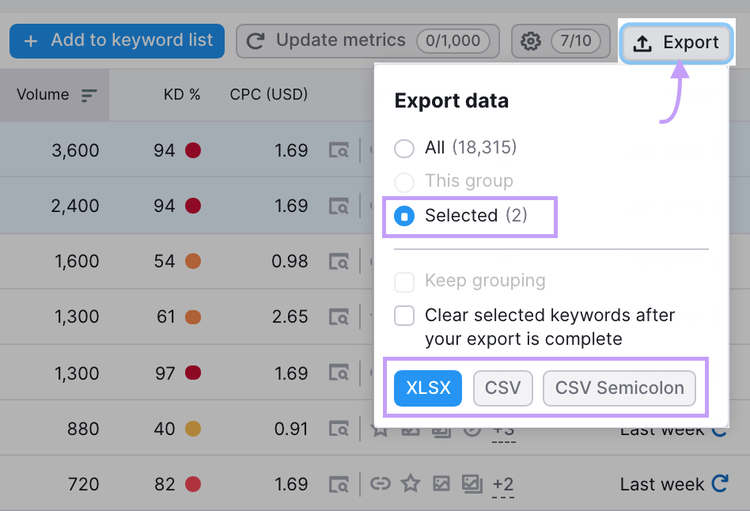
Export your selected keywords in whatever format you need (CSV, XLXS).
Click the export icon. Select “Selected” and choose your preferred file format.
Incorporate your keywords into your website's content and SEO strategies to enhance visibility and attract targeted traffic.
2. Ensure Your Messaging Is Consistent
Consistent messaging across all channels builds a unified brand experience. Use the same tone, style, and keywords in your website content, ads, and social media.
It’s simple, but it reinforces brand identity and recognition, regardless of where people encounter your brand.
Use the Brand Voice feature inside Semrush’s Content Toolkit to help you maintain content consistency.
When generating blog posts with the AI Article Generator, you can set your custom brand voice, which guides the tone, language, and style of every draft the tool produces.
Just upload a sample of your brand’s writing (like a homepage, about page, or blog post) and the tool will analyze it to build a custom voice profile.
Once saved, you can apply this brand voice every time you generate content. This helps ensure that all your blog posts follow the same tone and feel, no matter who’s creating them.
3. Regularly Analyze Performance
Track your keyword performance with Position Tracking. Regular analysis can help you adapt to changing market conditions and user preferences.
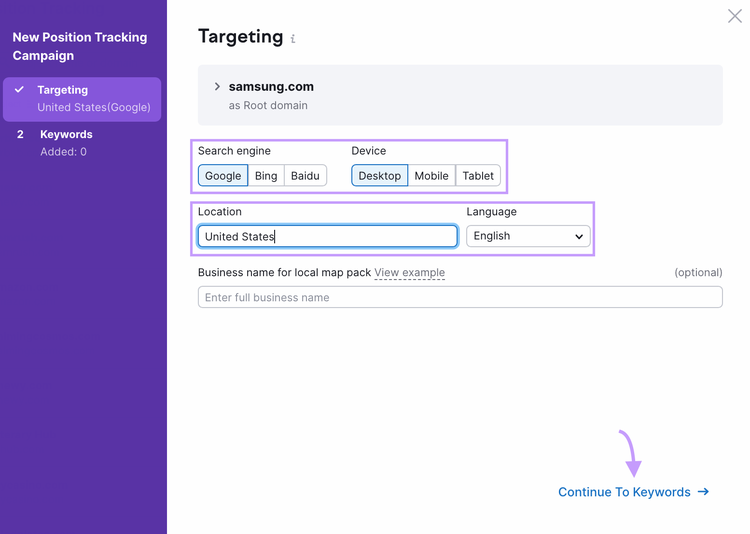
If you don’t have one yet, set up a campaign. You’ll need to enter domain details, keywords, device types, and other information where prompted.
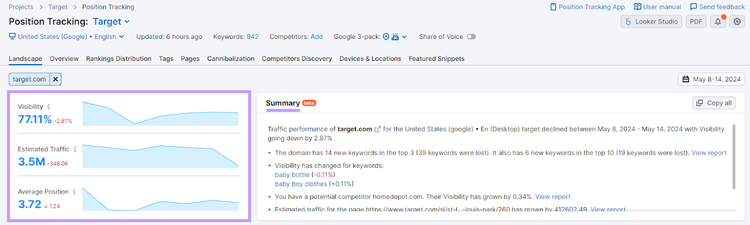
Once your campaign is up and running, the “Landscape” tab will offer a snapshot of your campaign’s performance in visibility, estimated traffic, and average position. There’s also an automated summary report that highlights key changes in an easy-to-read format.
Scroll down a bit, and you'll see top keywords and performance tables. Click any keyword to see more detailed information.
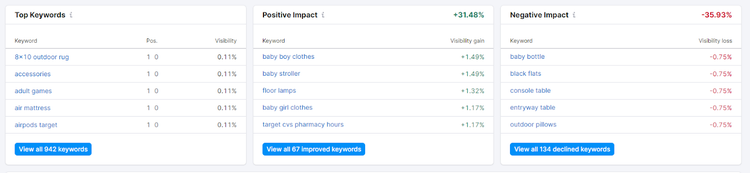
You can dig deeper into which of your landing pages are getting visitors. And from what keywords. Or find out how well competitors are doing with the same keywords targets. Check your progress week by week, month by month, or whichever date range you prefer.
4. Leverage Cross Promotion in Content
Content cross-promotion is sort of like putting up flyers for your business all over town. It increases your visibility and lets you spread the word about your content.
- Share your blog posts on social media
- Include links to relevant website pages in your email newsletters
- Join discussions in online forums by referencing your content
Create a Comprehensive Keyword Strategy
Branded and non-branded keywords are essential for reaching your target audience at every stage of their journey. A balanced keyword approach in your SEO and PPC can maximize visibility, drive conversions, and build a unified brand experience.
Ready to unlock the full potential of your keyword strategy?
Explore Semrush's powerful toolkit for keyword research, position tracking, and more. Start your free trial today and elevate your digital marketing efforts.
Access 55+ Tools
with a Free Semrush Account

Sydney has been creating content for over 10 years. She has been a writer, content manager and coordinator, editor, and strategist. At Semrush, she’s a blog editor who makes sure each article is as accurate, optimized, and helpful as possible.
Tells Google to show you more from Semrush in AI, Search, and Discover.