
How to Create Your Buyer Personas: the What, the Why, and the How
The most successful marketers go beyond audience data and hard numbers, and think deeply about who their customers actually are as people. What are their interests? How do they talk? What do they believe in and value?
When you know your customers deeply, you can communicate authentically and inspire action. You can speak to their specific needs and desires, and do so in a language familiar to them. These factors can have a profound impact on your conversion rate.
There’s only one problem: You can’t create a unique marketing message for each individual customer. At a certain point, you need to find a balance between specificity and generalization, and this is where buyer personas come into play.
A Buyer Persona Definition
A buyer persona—also called a user persona, marketing persona, or audience persona—is a fictional profile of your ideal customer based on market and audience research. In other words, it’s an imaginary person who embodies your broad audience's most important characteristics.
Just like a real living and breathing customer, a buyer persona should have a demographic and psychographic profile, behavior trends, values, desires, pain points, and affiliations. Though the persona is fictional, the profile should be as well rounded as possible.
Generating buyer personas isn’t about describing a potential customer or a vision for business expansion. To the contrary, the buyer persona should reflect individuals who already exist within your target market to help marketing, sales, and product departments make better decisions.
Why Are Buyer Personas Important for Business?
After an initial market assessment, creating buyer personas is the next logical step for businesses. This step allows businesses to understand their target market thoroughly before making significant investments in product development, marketing strategies, and sales infrastructure.
Working with buyer personas can help:
- Guide product development
- Inform content generation efforts
- Provide insights for lead follow-up
- Improve customer acquisition and retention strategies
When businesses begin with the customer in mind, the end results tend to be positive. Among other things, personas lead businesses toward higher-value customers, better leads, and higher conversions and customer retention rates.
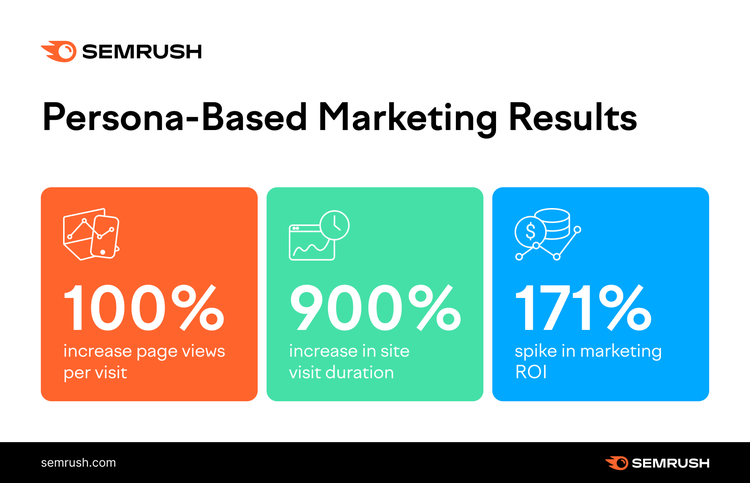
NetProspex published a case study reporting that its target persona creation efforts led to a doubling of the number of page views per visit, a 900% increase in site visit duration, and a 171% spike in marketing ROI.
Who Should Be Involved in Creating Your Buyer Personas?
Most businesses include stakeholders from multiple departments across the company as they create their buyer personas. This may slow down the process, but it ensures that insights from across the company are taken into account.
Typically, these 5 business departments are included:
- Marketing—The marketing team is responsible for creating messaging and campaigns that appeal to specific audience segments
- Sales—The sales team has direct contact with customers and can provide insights into their needs, pain points, and motivations
- Customer service—The customer service team has direct contact with customers and can provide insights into their behavior, preferences, and feedback
- Product development—The product development team can provide insights into the features and benefits that customers are looking for in a product or service
- Management—Senior management can provide strategic direction and ensure that the buyer personas align with the company’s overall goals and objectives
Bringing a variety of stakeholders to the table ensures customer experiences from across the board are included and that everyone in the company is in agreement with the buyer personas you build.
How Businesses Put Buyer Personas into Practice
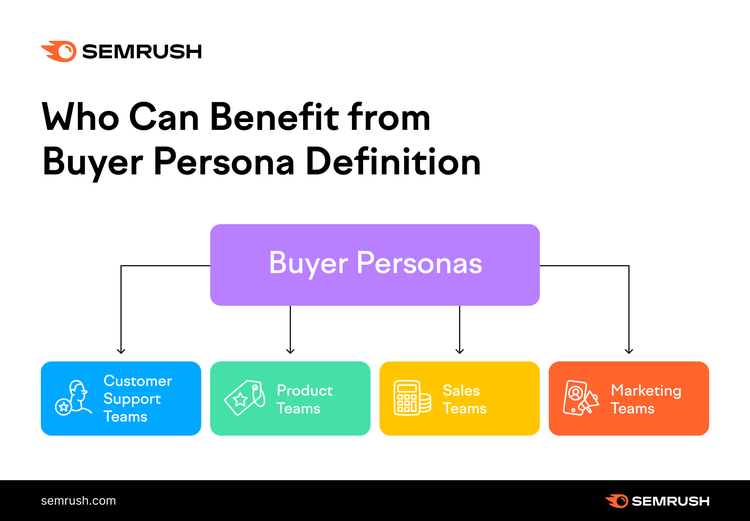
In practice, buyer personas can help drive many essential processes within a company. Here are a few examples:
- Product development—Buyer personas offer valuable insights into the needs, preferences, and pain points of the target audience. This understanding helps businesses develop products that meet customer needs and provide solutions to their problems.
- Marketing strategy—Buyer personas help businesses understand audience motivations and behaviors, which can help craft messaging that drives engagement.
- Sales infrastructure—Buyer personas can help you identify the most effective sales channels and tactics for your target audience so businesses can tailor their sales approach.
- Customer support—Buyer personas can help you provide better customer support by understanding your audience’s communication preferences and support needs.
Create Your Own Buyer Persona Template
Having a buyer persona template is essential before conducting research. It enables you to organize insights and gather information required to paint a comprehensive picture of your hypothetical customer.
Buyer persona template’s criteria vary based on business needs and goals, and businesses commonly include various criteria when creating their buyer personas.
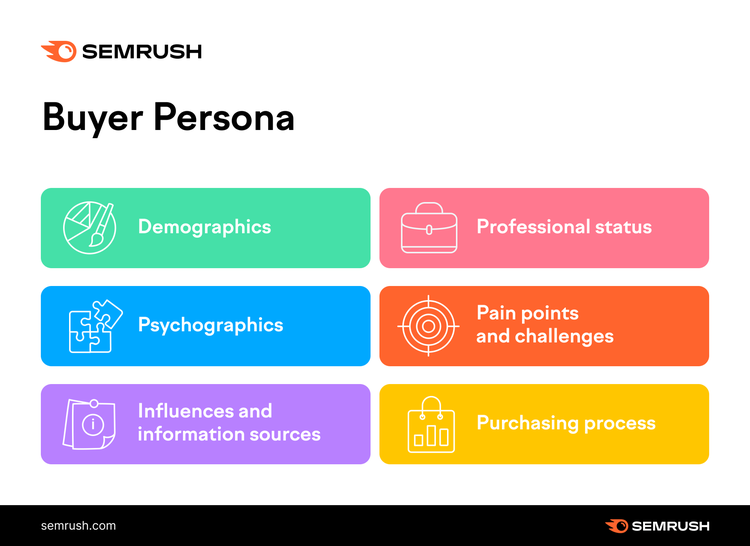
Demographics
Demographics are the characteristics of a specific population. They are often closely related to the individual’s identity and can have a large impact on their experience of the world.
Some examples of demographics are:
- Age
- Sex
- Location
- Family status
- Level of education
Because demographic factors are such an important component of the customers experience, they should definitely be included on the user persona template.
Professional Status
Professional status refers to the occupational or employment status of individuals in the market audience.
These can include:
- Job title
- Industry
- Work arrangement (in office or remote)
- Level of seniority
- Income
This criteria is particularly important in business-to-business (B2B) marketing, where targeting decision-makers and influencers within a company can greatly impact the success of a marketing campaign.
Psychographics
Psychographics refer to personality, values, interests, and attitudes of a target audience. It goes beyond demographics to identify the psychological characteristics of individuals that influence their behavior as consumers.
Some examples include:
- Values
- Beliefs
- Political views
- Lifestyles
Understanding psychographics can help create a more emotional connection with customers and increase conversions.
Influences and Information Sources
Influences and information sources reveal where customers spend their time, where they get their information, and who they trust.
Some examples are:
- Preferred websites and blogs
- Favorite social networks
- Favorite media (digital/audio/print)
- Influencers and thought leaders they trust and look up to
- Favorite events or conferences (online or offline)
This information is a valuable source to guide influencer marketing, communication, PR, advertising, and content placement efforts.
Pain Points
Pain points are the specific problems or challenges customers face while trying to accomplish their goals or meet their needs.
They can include things like:
- Frustrations
- Inconveniences
- Obstacles
- Inconsistencies
- Dissatisfactions
By understanding the specific problems or challenges customers face while trying to achieve their goals or meet their needs, businesses can create solutions that directly address these issues.
Purchasing Process
Purchasing process data provides information about how customers make purchases.
This includes:
- Role in the purchase decision-making process
- Potential lifetime cycle (the frequency or use or purchase)
- Barriers in the purchasing process
By understanding the customer’s perspective and experience, businesses can improve their chances of converting potential customers into actual customers and building long-term relationships with them.
A Free Buyer Persona Template from Semrush
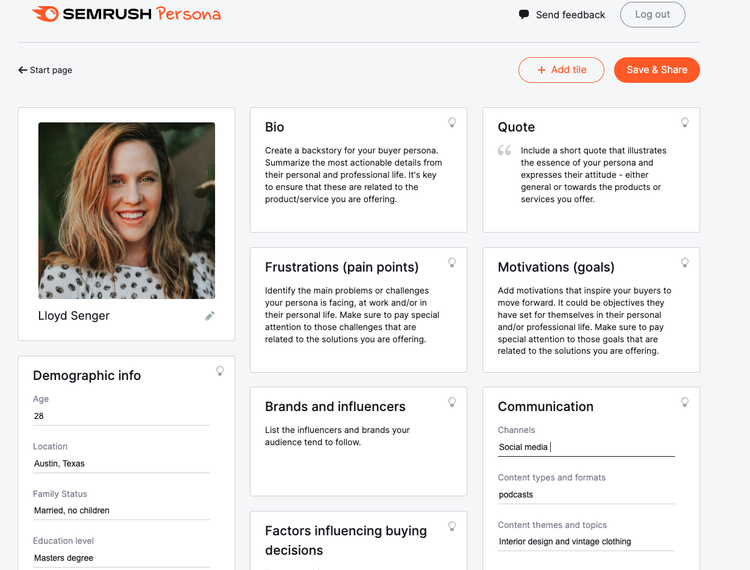
Semrush offers a free buyer persona tool for building your buyer personas. The tool includes several templates and provides guiding questions to help inspire your process. Once you’ve completed your personas, the tool makes it easy to save them and share across teams. Check it out for a quick entry point into your buyer persona building process.
How Do You Do Buyer Persona Research?
While buyer personas are technically fictional people, they should be built upon a strong foundation of data-driven insights. So the question becomes: Where do you get the audience data to gain the insights you need to create your buyer personas?
Here are some of the most common sources of data for your buyer personas:
- Customer research—Collecting data through surveys, focus groups, interviews, and observation. This is a popular option for well established businesses who already have a large customer base.
- Direct customer feedback—Soliciting feedback from customers about their experiences through online reviews, customer service interactions, and social media interactions. This is also a good option for well established companies.
- Government data sources—Accessing publicly available data from government agencies, such as the Census Bureau or Bureau of Labor Statistics. This data can provide information about demographics, economic indicators, and market trends.
- Industry research—Collecting data through market research reports by organizations like Gartner or Forrester, industry publications, and competitor analysis tools. Though this data can be costly, it offers insights that go beyond what businesses can gather from their own audience.
- Social media—Tracking social media conversations, interactions, and trends on platforms like Facebook, Twitter, and Instagram. It also enables businesses to understand how people discuss their industry and adjacent interests.
- Analytics software—Collecting and analyzing data from various sources, such as website traffic, social media engagement, and email campaigns. Analytics software can provide insights into consumer behavior, preferences, and interests.
For data on your own website’s audience, you can use Google Analytics, but for data on competitor’s audiences you’ll need to turn to Semrush’s Audience Profile dashboards.
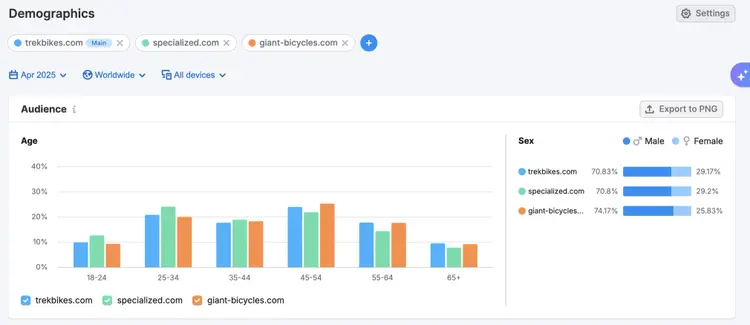
As you can see, there are a number of ways to gather data to help with your buyer persona research. Since more data is always better, you’ll likely rely on more than one data source as you work toward the insights that will help you build your personas.
How Many Buyer Persona Interviews Should You Aim to Complete?
If you choose to do interviews as part of building your buyer personas, you may be wondering how many interviews you should complete. It’s a good question, and the answer depends on a few things.
- The complexity of your product or service—The more complex your offering, the higher the number of interviews you will want to conduct. For example, with a product that has many functions, you’ll want to interview individuals who will use it in all of it’s various ways.
- The size of your target audience—A larger target audience will likely have more segments, and therefore, more kinds of customers. Each of these segments should have its own buyer persona, so with large audiences, more interviews are better.
- The resources you have available—The amount of resources, including budgets and time, matter when thinking about the number of interviews to conduct. It can be difficult to get volunteers for interviews, and they take time to conduct. Keep these things in mind as you set your aim on an ideal number of interviews.
Regardless of your decision, it’s important to focus on diversity of experience so you can get the best understanding of your audience’s demographics, needs, pain points, and behaviors. The more interviews you’re able to conduct, the more clearly you’ll be able to see commonalities and patterns emerging.
At the same time, the quality of interviews matters more than the number of interviews completed. As a general rule of thumb, shoot for 5-7 interviews per persona.
Uncover target audience peculiarities
sources, regions, visitor behavior, and more
Why You Should Create a Buyer Persona Story
The human mind is unique in its tendency toward narrative. As humans, we understand the world and our place in it through the stories we tell. “First, this happened. Then, that started. And finally, here I am!”
Likewise, creating a story associated with the buyer persona can help bring it to life and make it more relatable. A buyer persona story is a fictional story that represents the typical customer’s challenges, goals, and motivations for a product or service, based on research and insights.
It usually includes a protagonist, demographics, psychographics, pain points, and decision-making process. By presenting buyer personas in narrative form, it becomes easier to empathize with customers, understand their needs, and create effective marketing messages that resonate with them.
From Data to Persona: a Buyer Persona Research Example
Now that we’ve covered a ton of information about what buyer personas are and why they’re crucial for businesses, let’s look at how they’re made. Here, we’ll use Semrush’s One2Target tool to gather some data and design an example buyer persona.
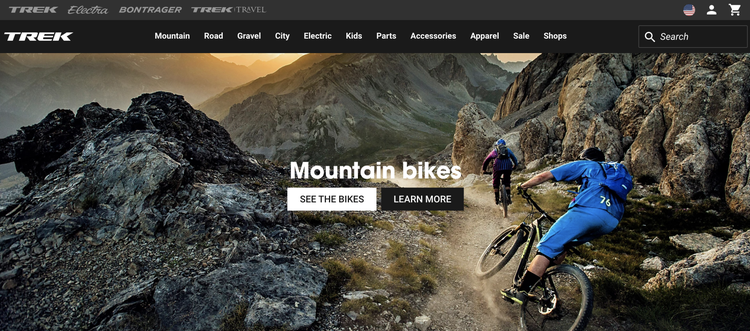
For this example, let’s pretend we work for a bicycle manufacturer that wants to start selling mountain bikes. We’ll begin by choosing 3 mountain bike brands we admire (and hope to one day compete with) to understand our audience.
Age and Sex
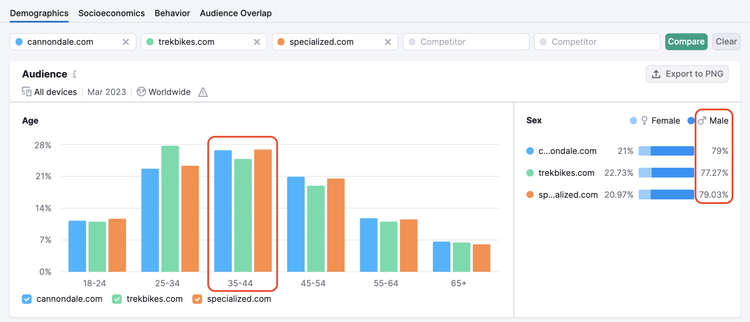
First, we turned to the Demographics Report. The mountain bike market based on our three domains reveals that the majority of audience members are males between the ages of 35-44.
Socioeconomics
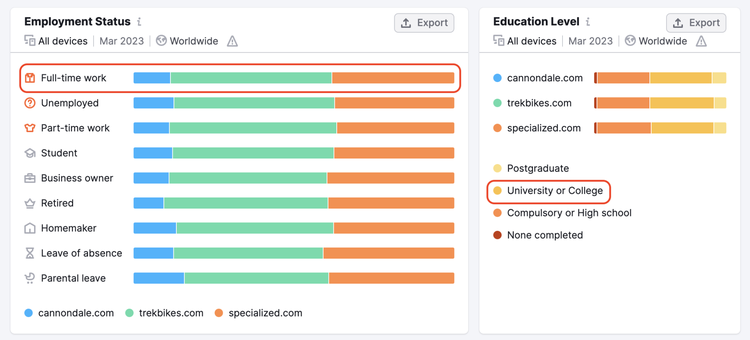
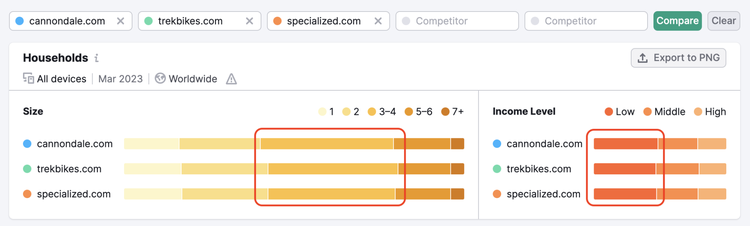
Then, we looked at the Socioeconomics Report. The majority of the audience lives in households of 3-4 people (likely families), and have a lower income. They work full time and have a college degree.
Interests
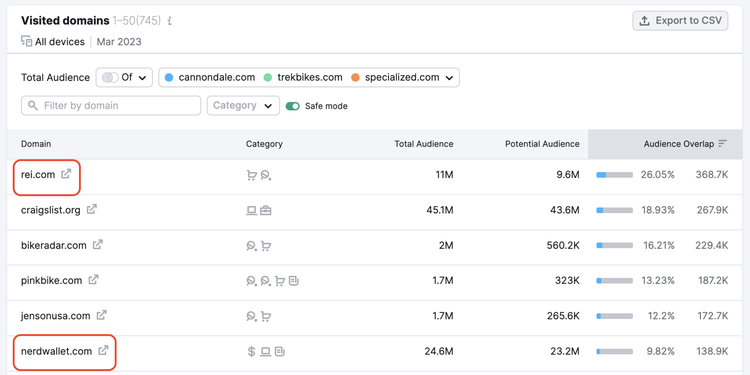
Beyond mountain bikes, the Audience Overlap Reportshowed the audience also visited sites like REI and Nerdwallet, suggesting an interest in outdoor activities more generally and also enjoy personal finance.
Social Preferences
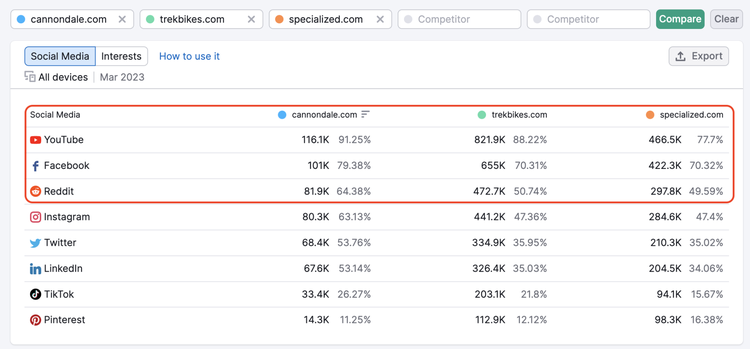
Finally, we looked at their social media preferences in the Behavior Report. This audience prefers Youtube, but also spend time on Facebook and Reddit.
An Example Persona
Based on the data gathered from the One2Target tool, we can begin to imagine our buyer persona. Here’s the raw data:
- Male
- Age 35-44
- Household size of 3-4
- Works full time
- Bachelor’s degree
- Lower income
- Likes outdoor activities and personal finance
- Prefers youtube, but also likes Facebook and Reddit
Based on these insights, we can begin to generate ideas into a more deeply imagined buyer persona.
Brian Hernandez is a male aged 35-44. He lives in Vermont with his wife and two children. He works full time as a marketer for an outdoor apparel company, and has a bachelor’s degree from Bennington College. He likes outdoor activities like hiking and camping, and also has an interest in financial planning.
When he isn’t outdoors, he likes to watch mountain biking videos on Youtube. He stays in contact with college friends through facebook, and looks to Reddit to stay connected to the mountain biking community and find ideas about where to ride his bike in the Green Mountains of Vermont.
Don’t Let Your Business Outgrow Your Personas
In conclusion, user personas are a valuable tool for businesses to understand and connect with their target audience. However, it’s important to remember that user personas are not static; they need to evolve as your business grows and your audience changes.
Don’t let your business outgrow your personas—instead, regularly revisit and update them to ensure they accurately represent your current target audience.
By keeping your user personas up-to-date, you can continue to create effective marketing strategies and provide your customers with the products and services they need and want. Remember, the key to success is staying connected to your audience and adapting to their changing needs and preferences.
Uncover target audience peculiarities
sources, regions, visitor behavior, and more

Natalia is a data-driven marketer focusing on market research and strategy development. Having a solid experience in digital marketing, Natalia has a passion in SEO, content marketing and multilingual website creation and optimization.

Tells Google to show you more from Semrush in AI, Search, and Discover.