
What Are Commercial Intent Keywords?
Commercial intent keywords (also called commercial keywords) are search engine queries people use to research brands, products, or services before making a purchase. These searchers are considering their options and haven’t decided exactly what or where to buy yet.
Common examples of commercial intent keywords include:
- “[product] reviews”
- “[brand] vs [brand]”
- “best [service] near me”
- “is [service] worth it”
- “[product] with [feature]”
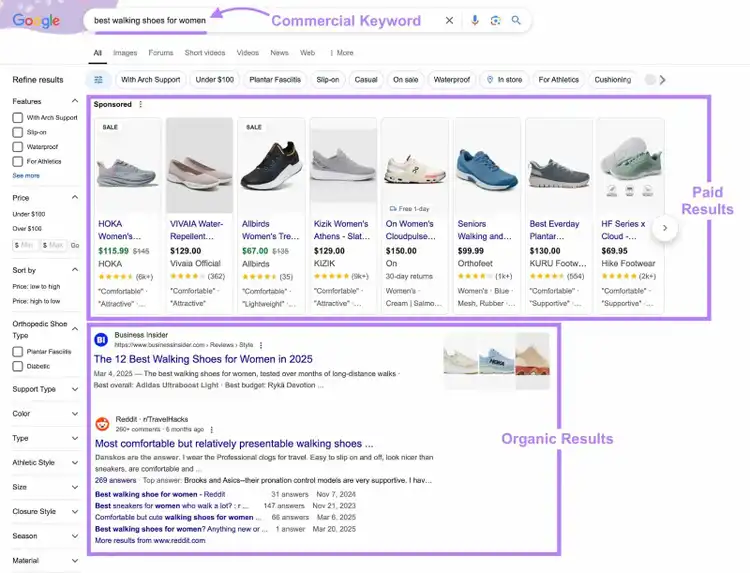
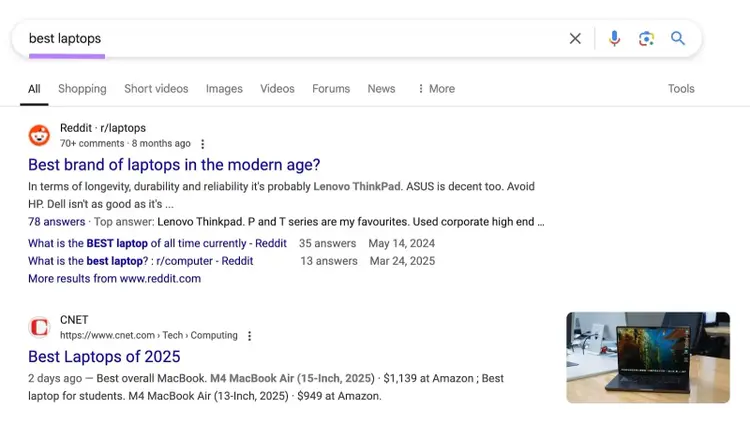
Commercial keywords trigger results that help users evaluate their buying options, such as product roundups, buying guides, comparison articles, business reviews, and online discussions.
These keywords also tend to trigger paid search ads.
Here’s a snippet of a search engine results page (SERP) for a commercial intent keyword:
Why Are Commercial Keywords Important?
Commercial keywords are important in marketing because they provide an opportunity to reach, engage, and influence target audiences in the consideration stage of the buying journey.
This stage can play a crucial role in purchasing decisions—especially when the purchase is costly, complex, and/or highly impactful. For example, if someone is buying an engagement ring for their partner or software for their business.
According to Semrush’s Organic Rankings tool (U.S. database, October 2025), keywords with fully or partially commercial intent drive:
- 58.1% of organic (unpaid) visits per month to bestbuy.com (a tech retailer)
- 57.3% organic visits per month to kay.com (a jewelry retailer)
- 45.3% of organic visits per month to amazon.com (an online marketplace)
- 26.4% of organic visits per month to jpmorgan.com (a financial services firm)
- 25.9% of organic visits per month to shopify.com (an ecommerce platform)
- 22.2% of organic visits per month to adobe.com (a creative software provider)
And commercial keywords still drive traffic and sales in the age of AI Overviews.
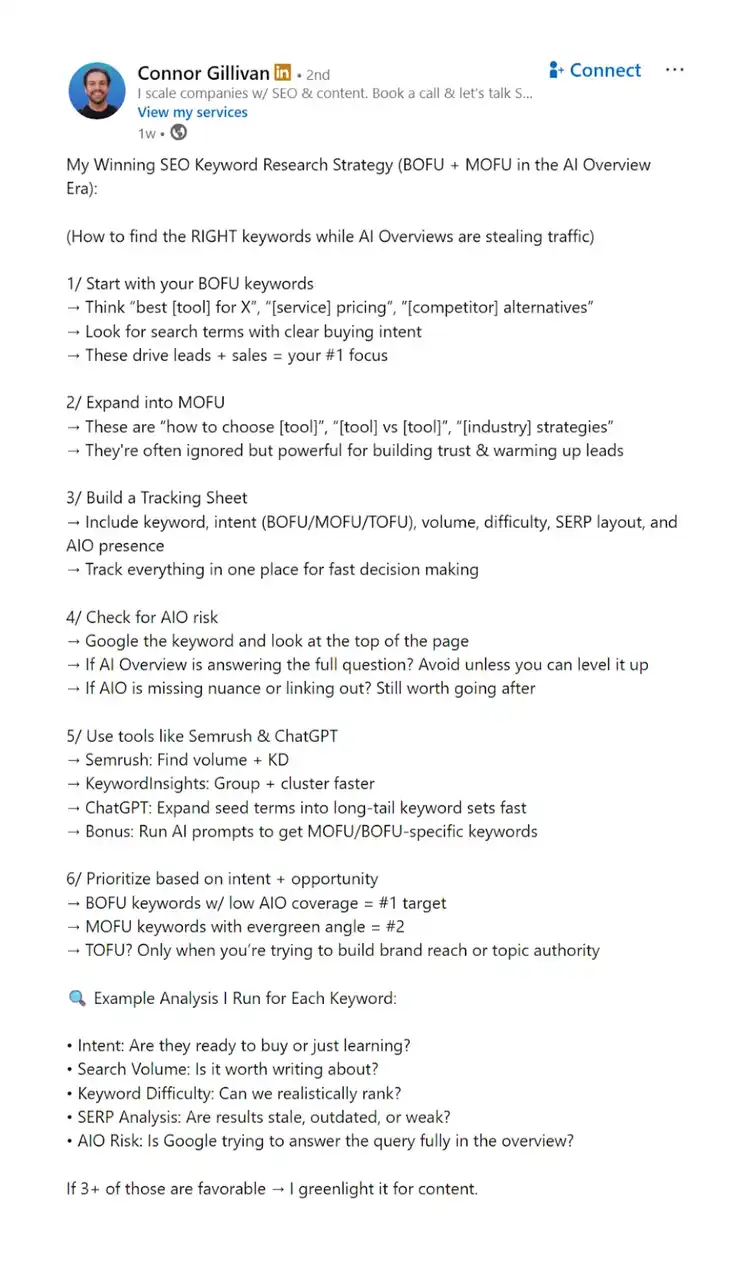
SEO expert Connor Gillivan says he prioritizes middle of the funnel (MOFU) and bottom of the funnel (BOFU) commercial keywords. Especially ones without AI Overviews.
Commercial keywords can also drive traffic to your website through ads. Or direct users to third-party pages (e.g., independent buying guides) that feature your brand.
Ultimately, if you target commercial keywords effectively, you can influence more people to buy from you.
How to Find Keywords with Commercial Intent
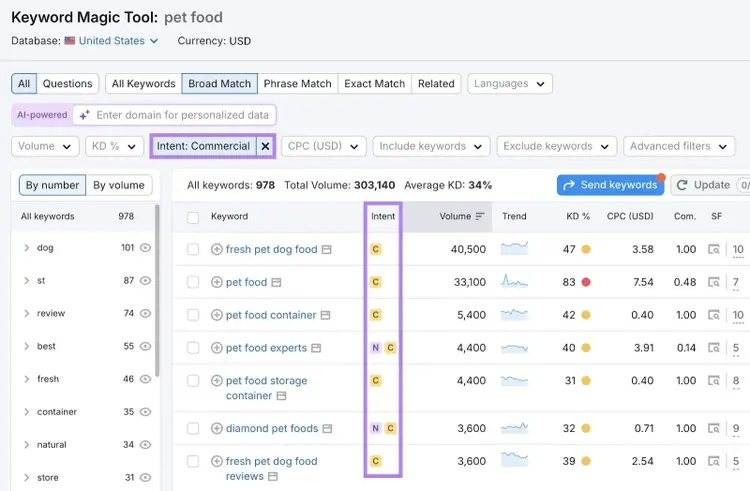
You can find keywords with commercial intent by using a keyword tool with reliable intent data.
For example, Semrush uses a machine learning algorithm to classify keyword intent.
Search our free keyword research tool for keyword ideas, and then look for results with commercial intent.
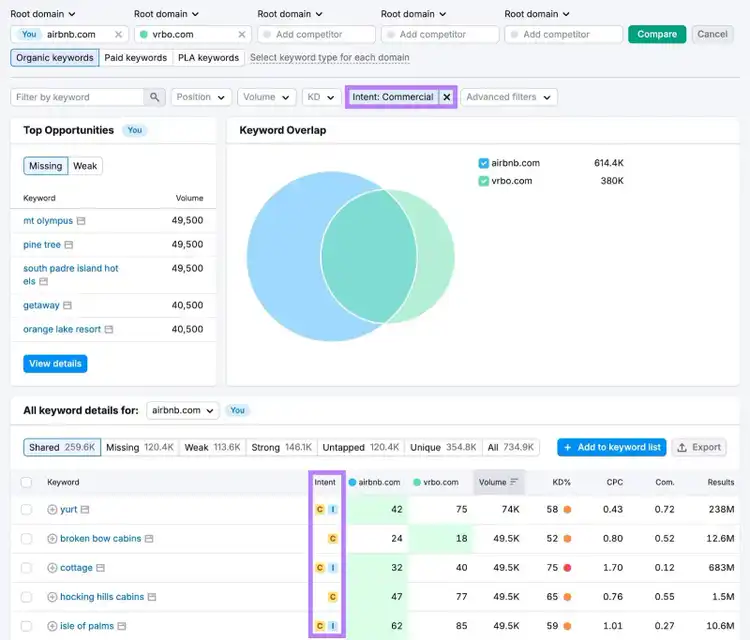
Or, use the Keyword Gap tool to see commercial keywords you and your competitors rank for in Google. So you can focus on filling any competitive gaps.
To identify the best commercial keywords for your strategy, pay attention to these metrics:
Here are some other options for conducting keyword research:
- Google Keyword Planner: This keyword tool is designed for Google Ads users and doesn’t provide keyword intent data. But you can use Keyword Planner to find keyword ideas and then evaluate search intent manually by conducting a Google search.
- AI keyword research: Ask an AI chatbot like ChatGPT to provide commercial keyword ideas related to your product, service, or brand. Just bear in mind that chatbots don’t have access to real search engine data and can provide false information.
- Google search suggestions: Start typing relevant keywords into Google’s search bar to see autocomplete suggestions. You can also get inspiration from related searches, People Also Ask, and other search suggestions in SERPs. You’ll need to evaluate intent manually.
- Explore online communities: Explore relevant online communities like Reddit and Quora to see what kinds of research consumers in your niche perform. This can provide inspiration for commercial intent keywords, but consider validating your ideas with a keyword tool.
How to Appear for Commercial Intent Keywords
You can appear for commercial intent keywords in Google by getting your brand featured in third-party content, publishing helpful content on your website, running search ads, submitting product information to Google Merchant Center, and optimizing your Google Business Profile.
Let’s explore these tactics in more detail:
Get Your Brand Featured in Third-Party Content
People who use commercial intent keywords tend to trust third-party content more than branded content because they usually want impartial information about a brand, product, or service.
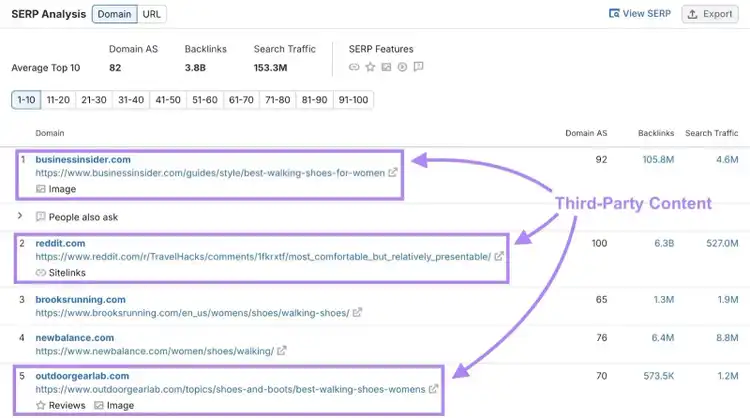
Third-party websites often top the organic results for commercial keywords.
Like this:
Getting your brand featured in relevant third-party content can be an effective way to expand your reach and convert more searchers into customers.
To start, identify third-party pages that rank highly for your chosen commercial intent keywords.
You can check the SERP manually or with a tool like our free Keyword Checker.
Then, visit these pages to see if your brand is already mentioned.
If not, consider whether it’s worthwhile and feasible to get your brand included.
Ask yourself questions like:
- Does the publisher have a relationship with your brand or a competing brand?
- When was the content last updated? Might the creator be willing to update it?
- Would mentioning your brand, product, or service add value to the content?
- Are the featured brands included organically or are they part of affiliate or sponsored placements?
- Is the page likely to receive significant and consistent traffic over time?
- Is the domain trusted in your niche? Is the content high-quality?
If you think there’s a good opportunity for your brand to be featured, send a personalized and friendly outreach email to the content creator. Explain how they could include your brand and why this would add value to their content.
For example, you could contact the author of a product roundup to explain how your product fills a user need that the other products don’t.
Publish Quality Content on Your Website
If you publish quality content that satisfies target searchers’ needs, your page might rank well in search results.
Like this:
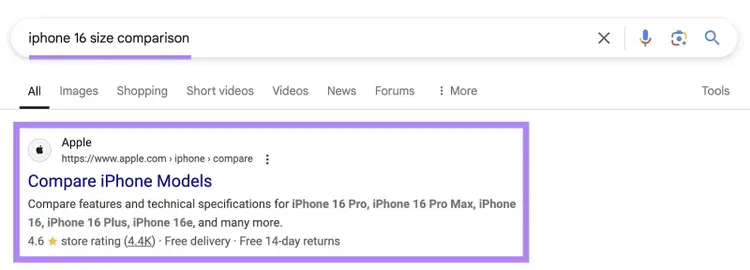
These kinds of rankings can drive organic traffic to your website.
Look at the SERP for one of your target commercial keywords to better understand search intent (what the searcher wants). Then, determine whether you can satisfy search intent—and whether you’re likely to benefit from doing so.
Ask yourself questions like:
- What kinds of sites and pages rank highly?
- What resources are required to create helpful content?
- Can you create a better resource than what’s already out there?
- Do the potential benefits of targeting this keyword outweigh the probable costs of content creation?
If the keyword presents a good opportunity for your brand, work to create content that satisfies search intent. This content should be original, comprehensive, well-written, and well-presented.
Run Search Ads
Google often displays ads when people search for commercial intent keywords, and you can get your search ad to show (like below) if you have the right strategy.
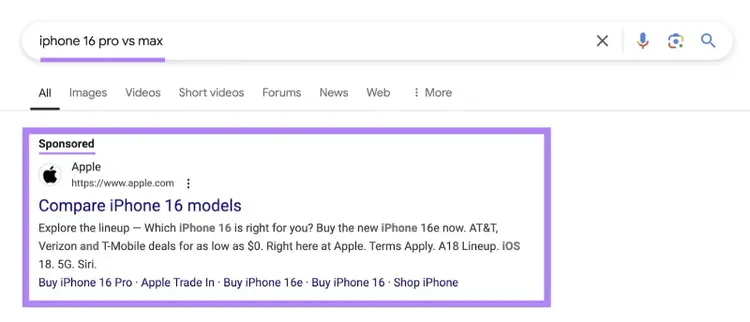
Google’s search ads typically work on a pay-per-click (PPC) basis, which means you pay only when someone clicks your ad. So, advertising on commercial keywords can be a cost-effective way to build brand awareness and get more traffic.
Here’s a quick step-by-step guide to advertising on Google:
- Sign in to Google Ads: Go to the Google Ads website and create or sign into your account
- Create a new campaign: Choose a campaign goal and select “Search” as the campaign type
- Select commercial keywords: Add the commercial keywords you want your ads to show for
- Write your ad copy: Create compelling ad headlines and descriptions
- Choose a landing page: Select a relevant page that aligns with your ad messaging for users to visit when they click your ad
- Choose your target audience: Set your location, language, and other targeting options
- Set your budget and bid: Decide how much you're willing to spend per day and per click
- Launch your campaign: Review everything and publish your ad campaign
Google decides which ads to show (and how to rank them) based on advertisers’ bids and the quality of their ads and landing pages.
The actual cost per click you pay depends on a variety of factors but will never exceed your maximum bid.
Submit Your Product Information to Google Merchant Center
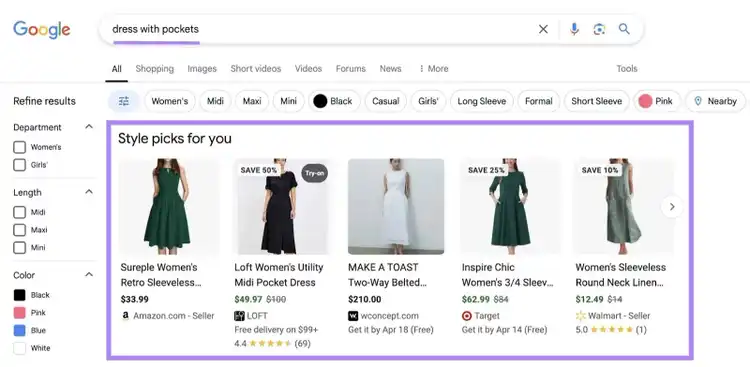
Submit your product information to Google Merchant Center so your products are eligible to appear in popular products and related products sections—which often show for commercial keywords.
Like this:
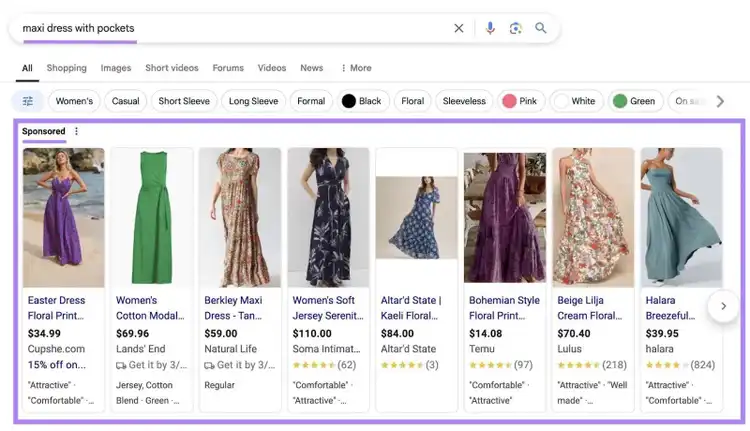
You can also link Google Merchant Center to Google Ads to start running Google Shopping ads for your products.
Like this:
To get started, create a product file containing properly formatted data about your products.
You can find the information you need in Google Merchant Center’s Help Center.
Optimize Your Google Business Profile
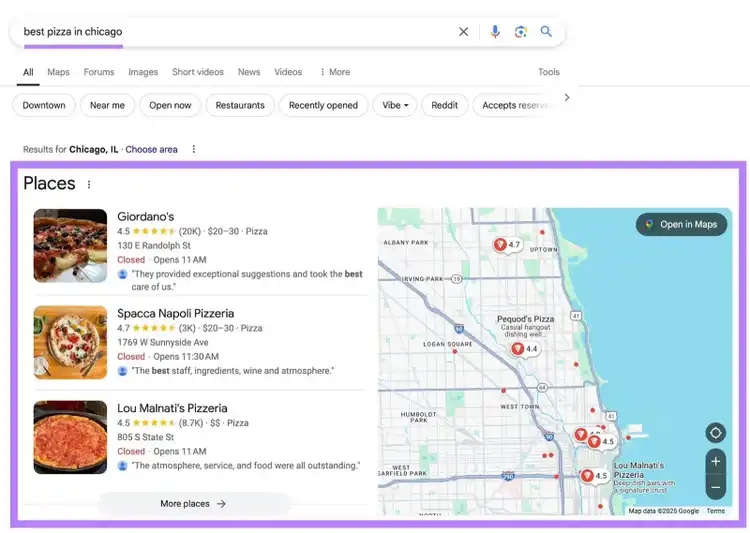
If you have a local business, optimize your Google Business Profile (GBP) to show for commercial keywords with local intent—e.g., “best [products] in [city].”
Your GBP can appear in Google Maps and map-based results like this:
Here are some quick tips to improve your GBP’s visibility:
- Complete your profile: Fill out your profile with detailed information to help Google understand what keywords your profile should appear for. And help users find the information they need. You can add a business description, product listings, opening hours, photos, and more.
- Ask for reviews: Encourage customers to review your business on Google. The quality and quantity of reviews can affect your rankings. And the content of reviews can help you appear for relevant keywords.
- Build NAP citations: Get your business’s name, address, and phone number (NAP) listed on other high-quality directories. This makes your business appear more prominent and allows Google to verify your information.
- Respond to users: Provide quick and helpful answers to any questions that users submit to your profile. Also provide fast, friendly, and thoughtful responses to your reviews—whether these reviews are positive or negative.
For help managing your online reviews and listings, check out the Semrush Local toolkit.
Track Your Commercial Keyword Rankings
Tracking your commercial keyword rankings helps you gauge the success of your strategy.
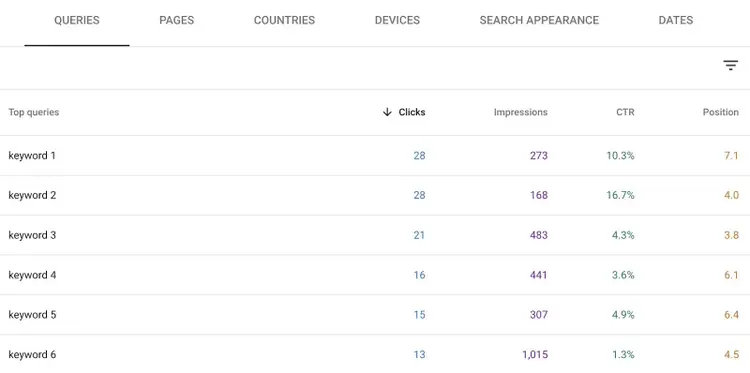
In Google Search Console, you can see your average organic position for up to 1,000 top queries chosen by Google. And manually look up your commercial keywords in the list.
Alternatively, use Semrush’s Position Tracking tool to track your chosen keywords.
This tool provides intent information so you can easily filter for commercial intent keywords. Rather than having to look them up manually.
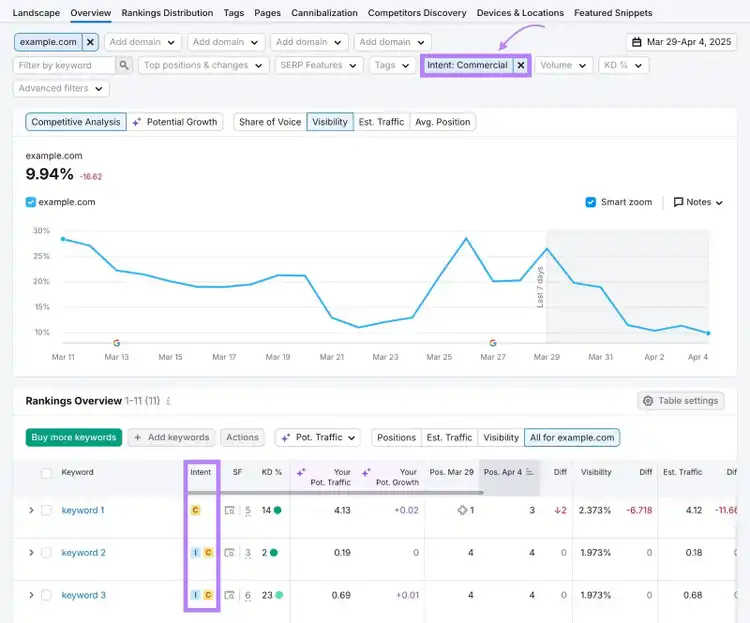
Position Tracking also shows whether your website appears in any SERP features, such as related products or popular products sections.
You can use the tool to track your Google Ads rankings, too.
Find & Track Commercial Keywords
with a Free Semrush Account

Carlos Silva leads the editorial pipeline for the English blog—coordinating writers, editors, strategy, and building AI workflows that boost content quality and AI visibility. With 10+ years of experience writing and editing across in-house and agency roles, Carlos blends content strategy, SEO, and AI to help marketers stay ahead of an evolving search landscape.
Carlos Silva
Carlos Silva leads the editorial pipeline for the English blog and builds AI workflows that boost content quality and AI visibility. 10+ years writing and editing across in-house and agency roles.
Tells Google to show you more from Semrush in AI, Search, and Discover.