The buyer’s journey (or purchase journey) is the process a customer typically goes through before making a purchase. From the moment they identify a desire or need to when they decide to buy.
Understanding the buying journey helps you choose the best marketing tactics and communicate with your audience more effectively. And that should ultimately lead to more sales.
The process is typically broken down into three stages.
What Are the Buyer Journey Stages?
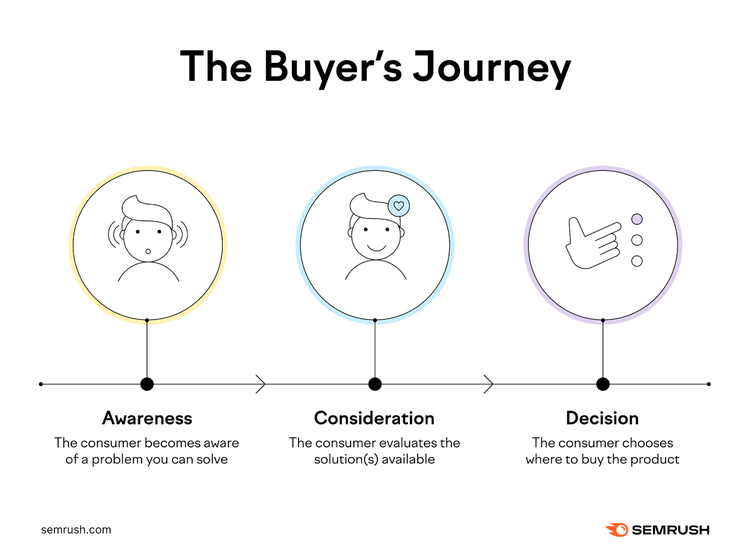
The three stages of the buyer’s journey are awareness, consideration, and decision.
The consumer becomes aware of a problem, considers the solution(s) available, then decides where to buy.
Let’s say you sell kitchen appliances:
Someone’s dishwasher breaks and they want a replacement (awareness)
They read online comparison guides about the best models (consideration)
They decide to buy from you because you offer free delivery (decision)
In reality, your customers’ buying journeys are unique. And they can be far more complex than this model suggests.
But the awareness > consideration > decision framework makes it easier to understand prospects’ thoughts and behaviors at the most important stages. So you can work out how to engage them earlier in their decision-making process. And increase the chance that they ultimately buy from you.
Note
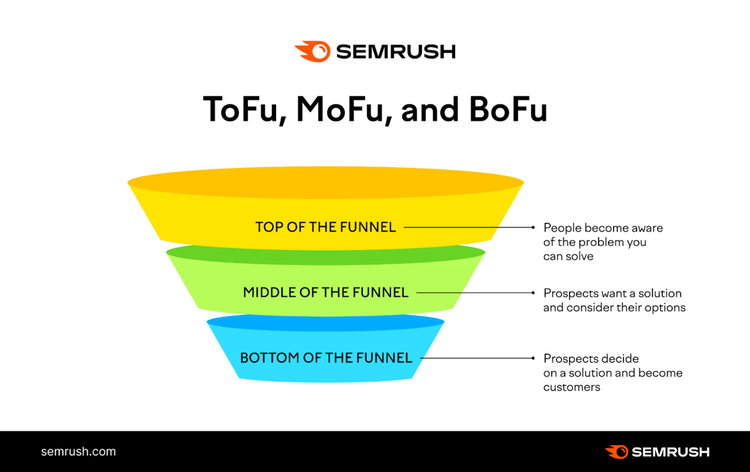
The three stages of the buyer’s journey correspond with the top, middle, and bottom of the marketing funnel (ToFu/MoFu/BoFu). This model helps you understand audience behavior on the whole, rather than a specific buyer’s perspective.
How to Do Buyer Journey Mapping
Buyer journey mapping is the process of defining and visualizing the awareness, consideration, and decision stages.
The idea is to create representatives of valuable buyer journeys. So you can work out how to engage prospects at each crucial phase.
Let’s dive in.
1. Create Buyer Personas
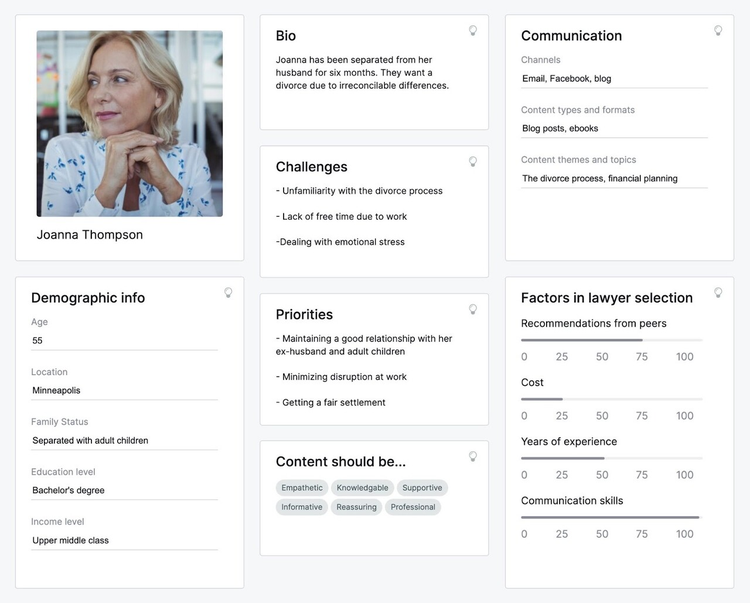
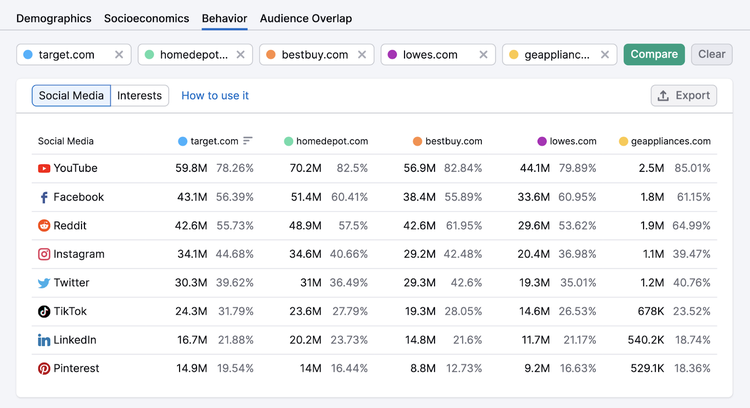
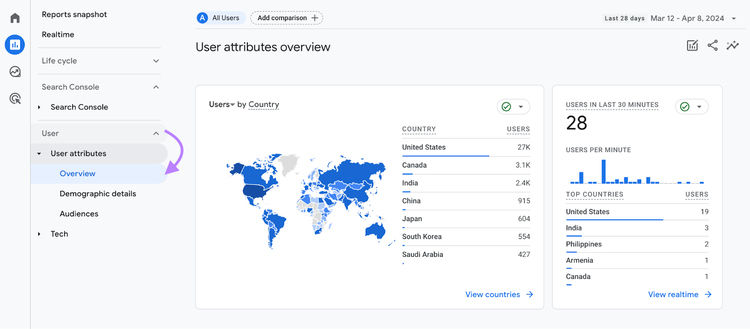
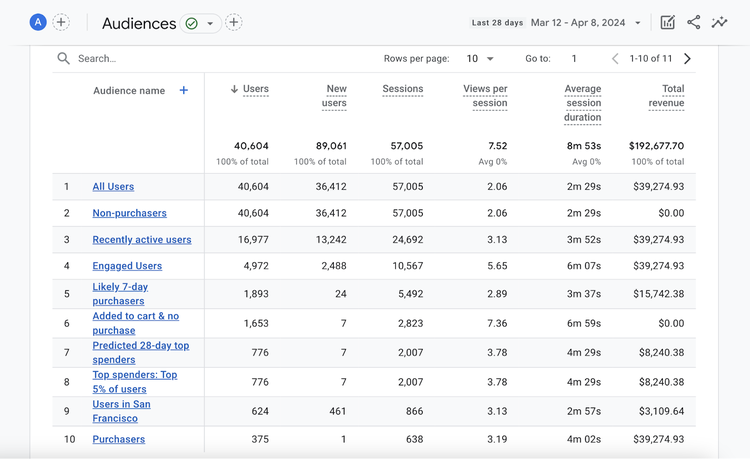
Buyer personas are fictional profiles that represent different types of prospects. They help you understand the audience segments you’re targeting.
By reaching prospects earlier and more frequently, you increase the chance they ultimately buy from you.
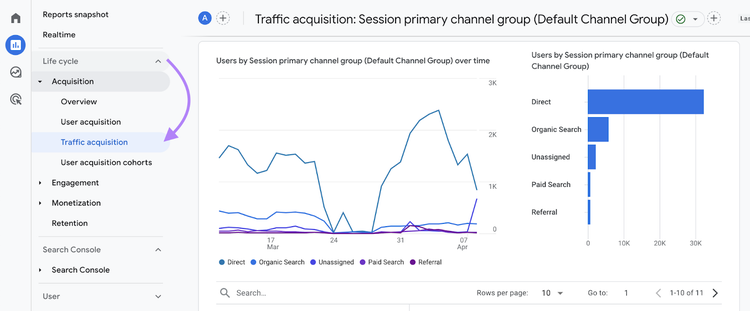
You can see what sites and channels your current visitors come from by going to “Life cycle” > “Acquisition” > “Traffic acquisition” in GA4.
Tip
Google can identify some traffic sources (e.g., google.com, facebook.com) automatically. For more precise tracking, use UTM parameters on links placed outside your site.
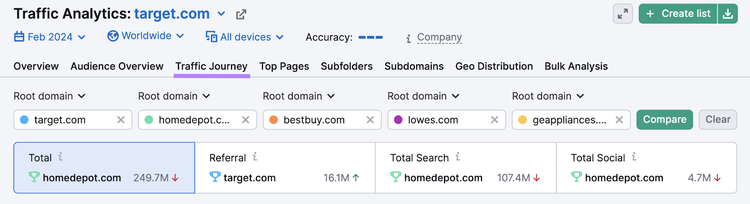
To find out where your competitors’ visitors come from, use the Traffic Analytics tool.
After entering the domain(s) you’re interested in, open the “Traffic Journey” report.
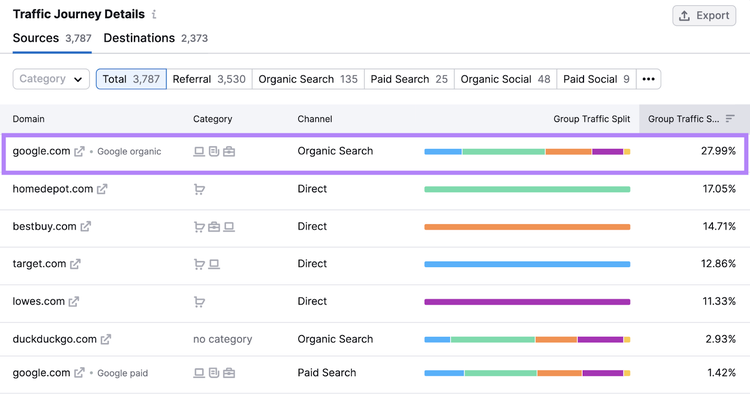
Then, scroll down to “Traffic Journey Details.”
Below, we can see that organic (unpaid) Google results drive 27.99% of competitors’ traffic. This indicates that organic search plays a major role in awareness and consideration stages.
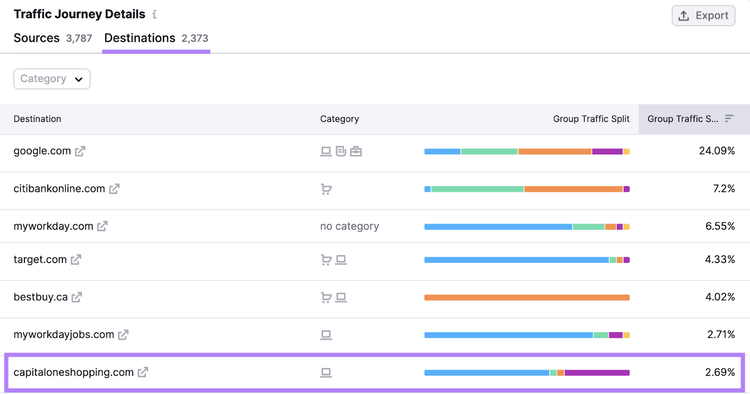
If you go to the “Destinations” tab, you’ll see where users go after visiting your competitors.
This can provide valuable insight into the consideration and decision stages.
In our example, many users go to coupon sites like capitaloneshopping.com after visiting a competitor. This suggests that discounts play a major role in the decision stage.
Our dishwasher retailer might therefore decide to offer exclusive discounts. Or partner with coupon sites.
Tip
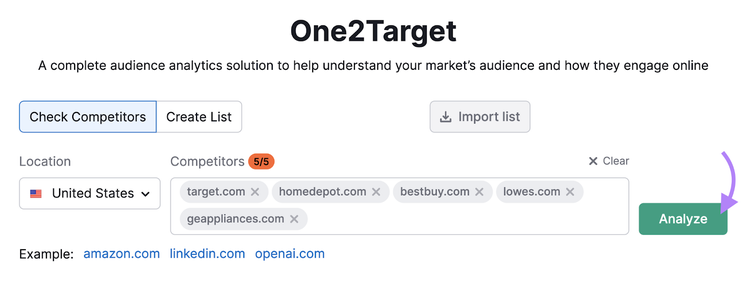
You can access Traffic Analytics, One2Target, and other helpful tools with a Semrush .Trends subscription.
3. Perform Keyword Research for Every Stage
The keyword research process involves identifying search engine queries that prospects use, so you can work out how to appear in the results for them.
Here’s a keyword example for each buyer journey stage:
Awareness: dishwasher not draining
Consideration: best dishwasher 2024
Decision: frigidaire dishwasher
Many marketers rightfully focus on buyer keywords (search queries that people use when they’re ready to purchase). Because they’re keen to generate sales.
But it’s important to target keywords used in the earlier stages, too. Not only will this maximize your brand’s reach, but it will help you build trust that can pay dividends later.
One of the best ways to find keywords is with our free keyword tool.
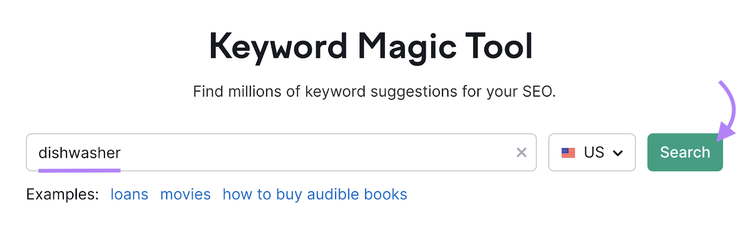
Enter a term to base your search around (e.g., “dishwasher”), choose your target country, and click “Search.”
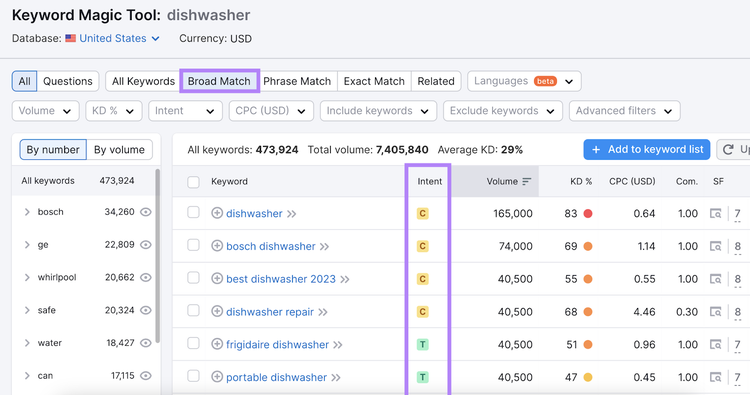
By default, the tool presents a list of broad match keywords that contain your starting keyword or a close variation.
In the “Intent” column, you can see the type(s) of search intent behind each keyword—i.e., the general purpose behind the user’s search. This gives a good indication of what buyer journey stage the keyword corresponds to.
Intent Type
Description
Buyer Journey Stage
Keyword Example
Informational (I)
The user wants to find information
Awareness
dishwasher not draining
Commercial (C)
The user wants to research a brand, product, or service
Consideration
best dishwasher 2024
Navigational (N)
The user wants to find a specific page or website
Decision
best buy dishwashers
Transactional (T)
The user wants to take action (e.g., buy something)
Decision
frigidaire dishwasher
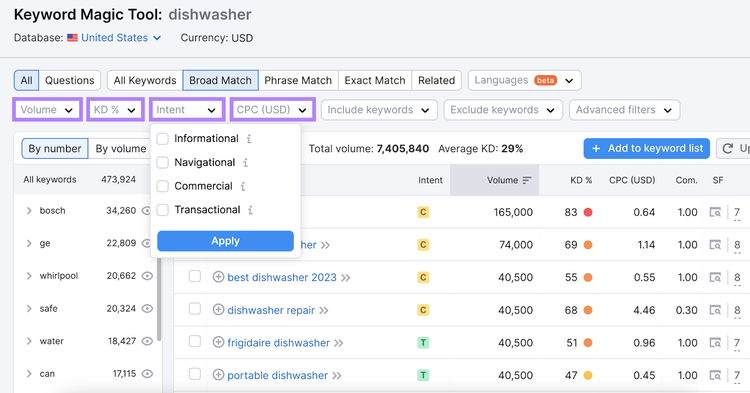
The metrics shown include:
Volume: The average number of monthly searches for the keyword
KD %: The keyword difficulty score, which measures organic ranking difficulty out of 100
CPC (USD): The estimated cost per click to advertise on this keyword
Once you’ve identified the keywords you want to target, you can create SEO-friendly content and/or paid search ads.
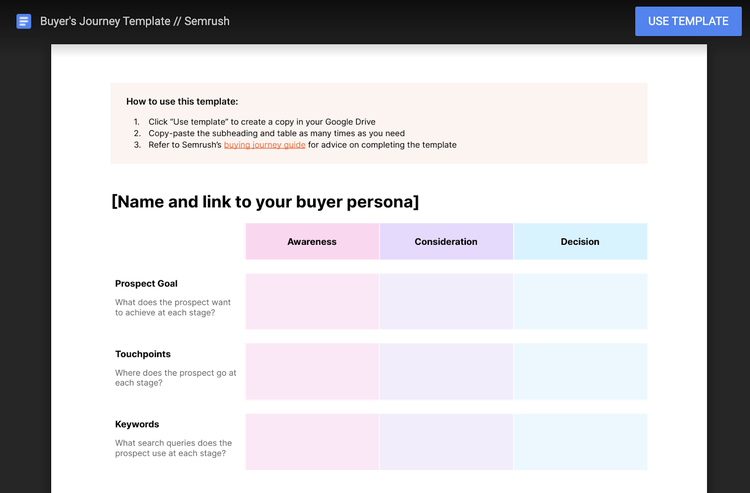
Follow the link then click “Use Template” to create your copy in Google Docs. (You might need to sign into Google first.)
Then, follow the advice in this guide to fill out each section.
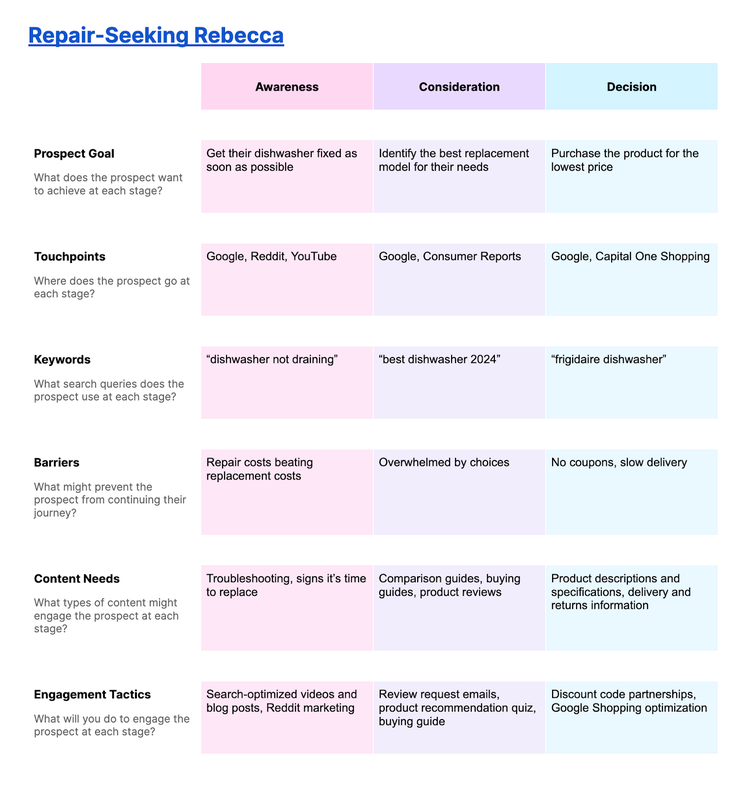
You should end up with a few buyer journey maps that look something like this:
Buying Journey Content: Tips & Examples
Let’s explore some content marketing tips and examples for the three buyer stages:
Awareness Stage
Awareness stage content should help prospects to recognize and understand their pain point.
That way, you can build trust with the prospect. And start guiding them toward purchase.
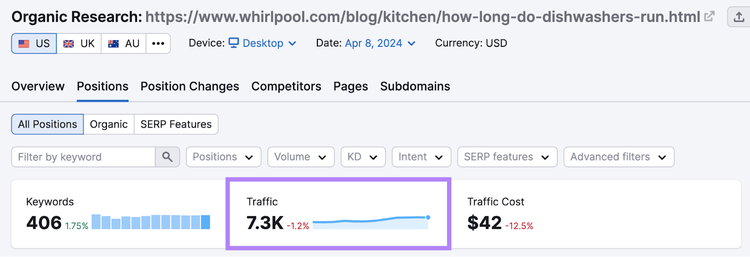
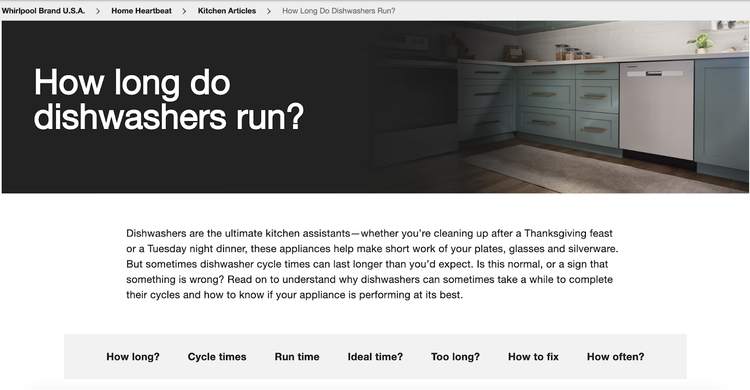
For example, appliance brand Whirlpool has a blog post about how long dishwashers run for. It gets around 7.3K unpaid visits from Google each month, according to Semrush’s Organic Rankings tool.
The post attracts people who are concerned about their appliance’s performance. And gives them useful advice and information—with no hard sell.
As a result, prospective customers are gently guided toward the next phase of the buying journey. Having built familiarity and trust with the Whirlpool brand.
Generally, the best types of content for the awareness stage are:
Consideration stage content should help prospects weigh the solutions available to them. And present your product or service as one of the best options.
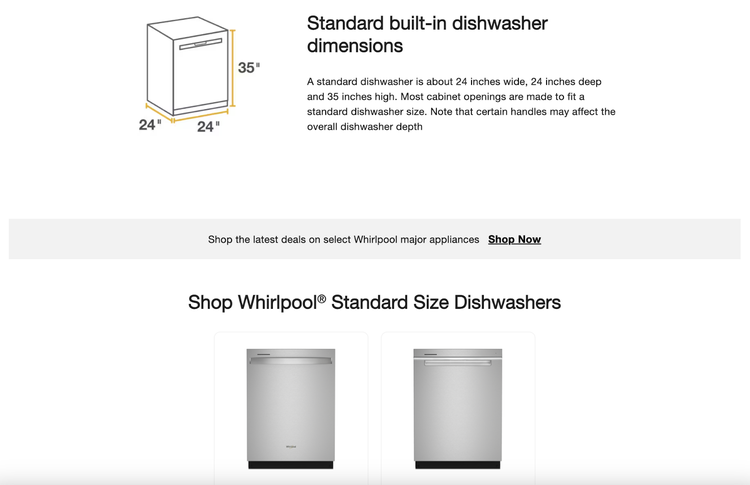
For example, Whirlpool has a dishwasher measurement guide that equips shoppers with all the information they need to find the right-sized model.
It also introduces them to relevant products.
Generally, the best types of content for the consideration stage are:
Comparison guides
Buying guides
FAQs
Product buying quizzes
Gift guides
Decision Stage
Decision stage content should convince customers to get their chosen product or service from you (rather than a competitor).
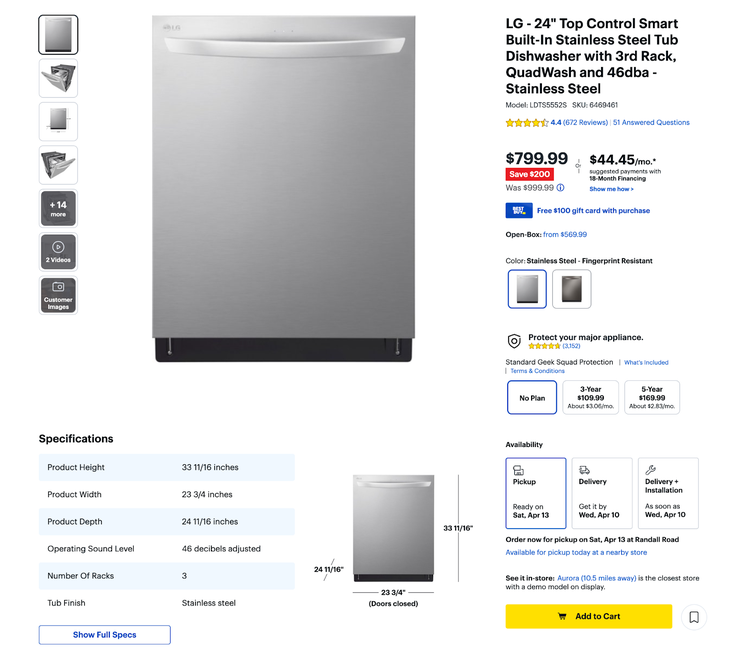
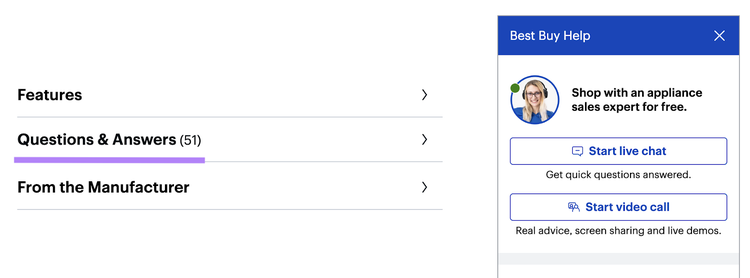
For example, Best Buy’s product pages immediately draw attention to special offers, financing options, pickup/delivery information, and customer reviews. Which can all play a pivotal role in customers’ buying decisions.
Shoppers can also read various questions and answers. Or speak to a customer service advisor.
This reduces the risk that they abandon their purchase due to a lack of information.
Generally, the best types of content for the consideration stage are:
Rachel is a Senior Content Writer with 12+ years‘ experience in content marketing and SEO. In a previous role as Head of Content at a digital marketing agency, Rachel developed and executed search-driven content strategies for a diverse range of clients, including global ecommerce brands and local B2B companies. She later transitioned to an in-house role at an SaaS startup, where she focused on scaling content operations and driving organic growth.
Subscribe to learn more about General Marketing
Subscribe
By clicking “Subscribe” you agree to Semrush Privacy Policy and consent to Semrush using your contact data for newsletter purposes
Rachel Handley
Rachel is a Senior Content Writer with 12+ years‘ experience in content marketing and SEO. She has worked agency-side, developing and executing content strategies for a wide range of brands, and in-house, driving organic growth for a SaaS startup.
Share
Tells Google to show you more from Semrush in AI, Search, and Discover.