Our subject matter experts have reviewed this article to ensure it meets the highest standard for accurate information and guidance. Learn more about our editorial standards and process.
Every marketer should understand the marketing funnel to help generate more sales.
In this article, you’ll learn about every stage of the marketing funnel, from top to bottom. You’ll also get actionable tips on making your marketing funnel more efficient.
What Is a Marketing Funnel?
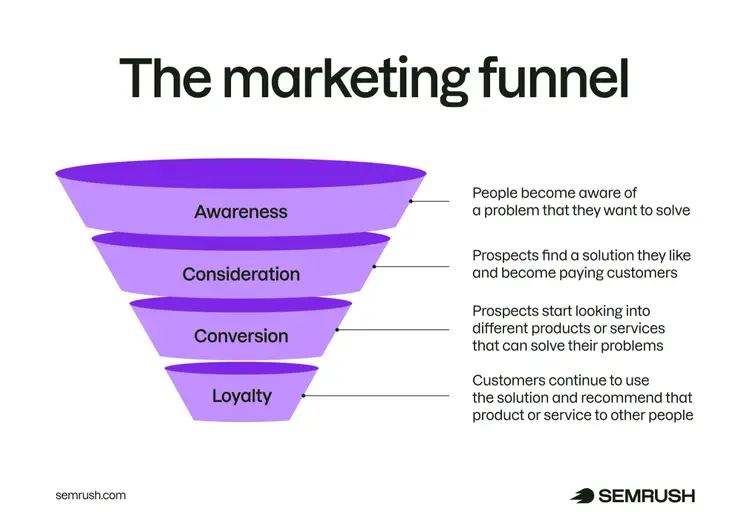
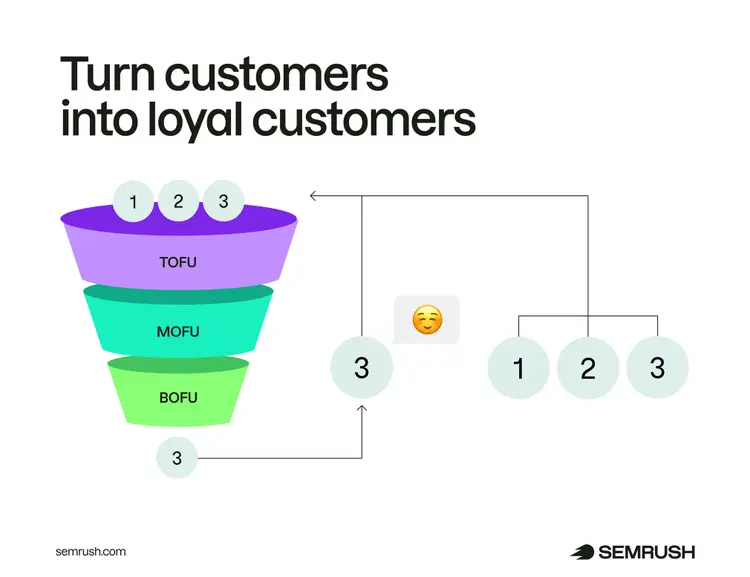
A marketing funnel is a model of the customer journey that shows how people move from discovering a brand or product to making purchases and becoming loyal advocates.
Customer journeys can be complex. The marketing funnel simplifies them so you can build a better strategy. The funnel also helps you:
Understand your audience and tailor your marketing approach
Identify and address weaknesses in the customer journey
Contextualize your marketing results
Some potential customers will drop out at each stage of the marketing funnel. Your highest-quality leads will reach the end.
Note
The marketing funnel is also called the purchase funnel, buyer funnel, customer funnel, conversion funnel, or sales funnel.
Why Are Marketing Funnels Important?
Marketing funnels are important because they help you create more effective marketing strategies and understand where leads are in their buying journey so you can deliver the right message at the right time. You can also see where leads drop off.
Use a marketing funnel to find out where your leads drop off or why they become customers, and adjust your marketing strategy to match your potential customers’ needs.
For example, if most leads disappear after the consideration stage, you may need different messaging.
3 Types of Marketing Funnels & Their Stages
Marketing funnels vary by industry and target audience. Businesses build funnels that suit their specific customers.
Example: Imagine you sell band merchandise at a concert.
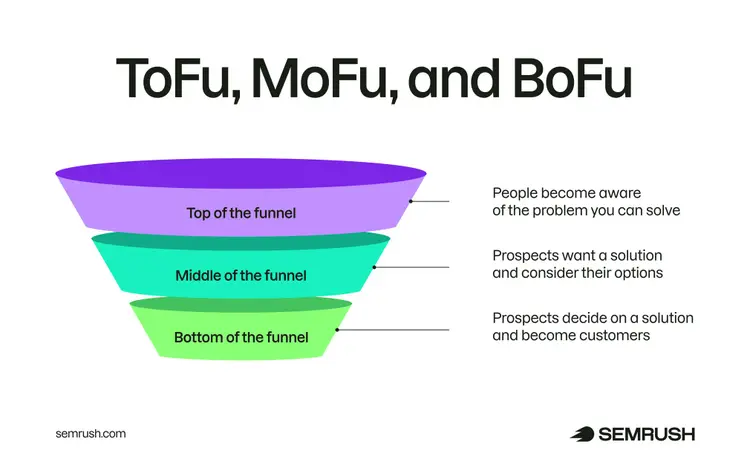
New fans (ToFu): People discovering your brand for the first time
Casual fans (MoFu): People interested in the music, considering your merchandise
Die-hard fans (BoFu): People ready to buy tickets and merchandise
The basic marketing funnel is great for beginners because it keeps things simple and easy to track. It helps you see how people move from just hearing about you to becoming paying customers.
2. AIDA Marketing Funnel
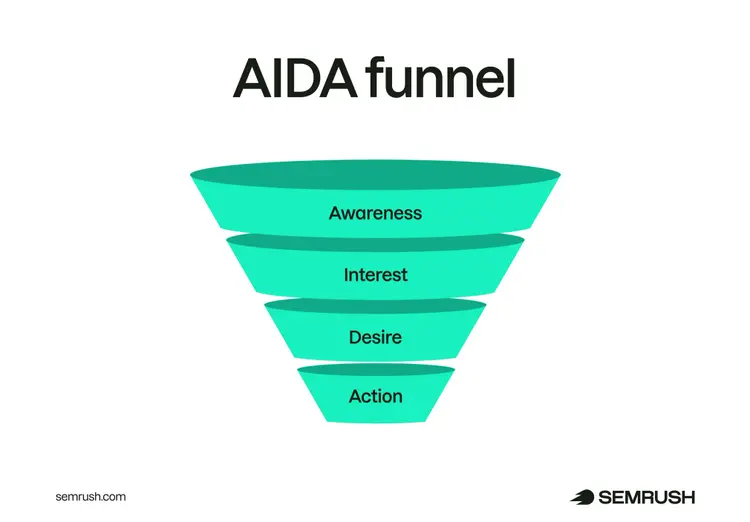
Another popular marketing funnel model is AIDA: Awareness, Interest, Desire, and Action.
Awareness: Potential customers discover your brand
Interest: They develop curiosity about your offering
Desire: They prefer your brand and consider purchasing
Action: They make a purchase or take another desired action
AIDA is a classic model that clearly outlines how to capture attention and drive action. It’s especially useful for guiding marketing messages in a structured, straightforward way.
3. Granular Marketing Funnel
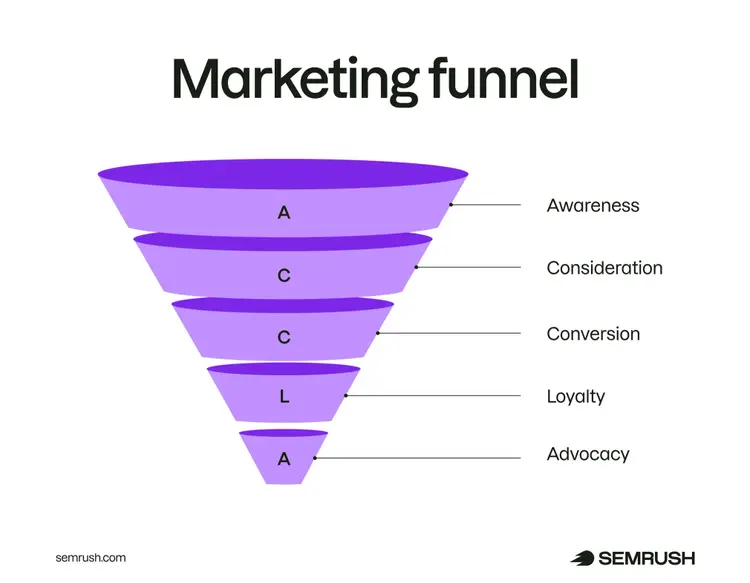
You can also break the customer journey into more specific stages:
Awareness: People learn about your brand
Consideration: They compare your products or services to alternatives
Conversion: They decide to buy
Loyalty: They make repeat purchases
Advocacy: They recommend you to others
The granular marketing funnel dives deeper into each stage, giving you more control over how you engage with customers. It’s ideal if your customer journey is complex and you want to nurture long-term relationships.
Customers respond better to certain messages based on their stage in the marketing funnel. Here are strategies that can help.
Top of the Funnel (ToFu)
Potential customers in the top of the funnel (ToFu) stage have just become aware of a problem. They are starting to look for the right solutions.
This is the ideal time to introduce your business, service, or product as the solution they want.
Note
The ToFu stage is also called the awareness, attention, discovery, or engagement stage.
To properly address leads at the ToFu stage, define your target customers and increase brand awareness.
Here’s how.
Define Your Target Customers
Your target customers are people who are most likely to become paying customers. Not everyone who sees your brand will buy what you offer.
Start by analyzing your existing customers. What kinds of people have already purchased your product or service?
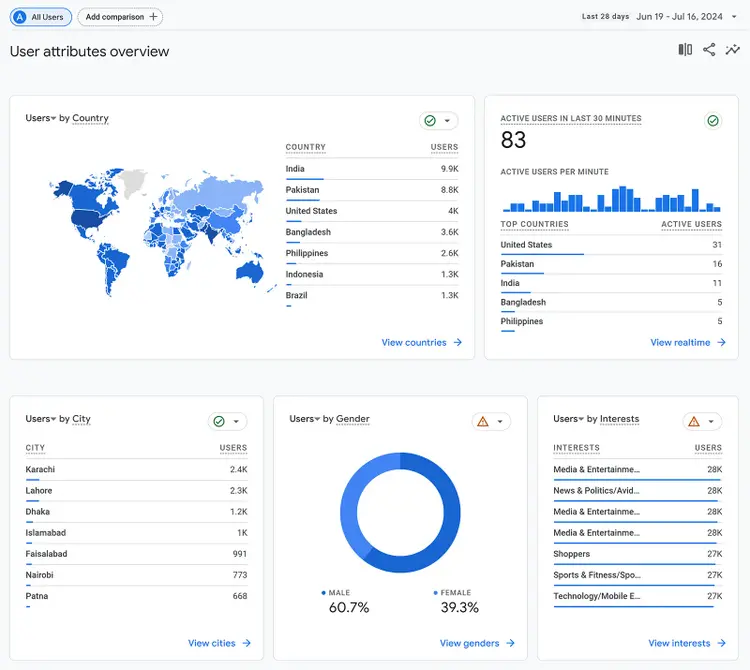
Find out using Google Analytics’s “User attributes overview” report. Then note your existing customers’ age ranges, genders, countries, cities, languages, and interests.
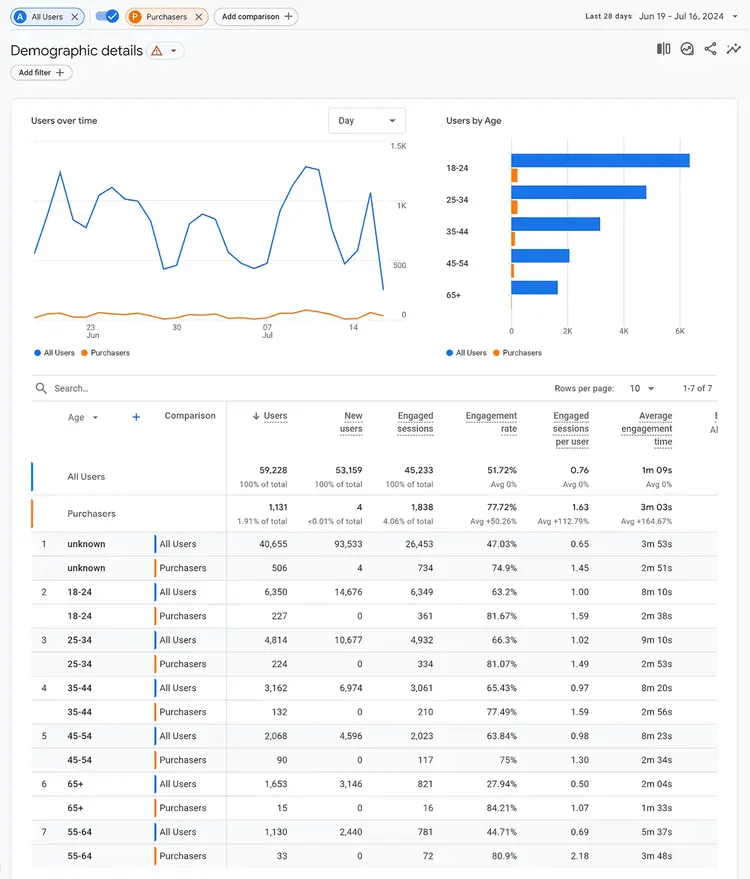
Next, compare segments in the “Demographic details” report to see which audiences are most likely to engage and convert:
In this example, 25- to 35-year-olds are the most likely to visit the website and make a purchase.
After that, perform market and competitor research with the Semrush Traffic & Market Toolkit. You can gather data about your potential audience, like:
Age
Sex
Household size
Income level
Employment status
Education level
Social media usage
Interests
Device usage
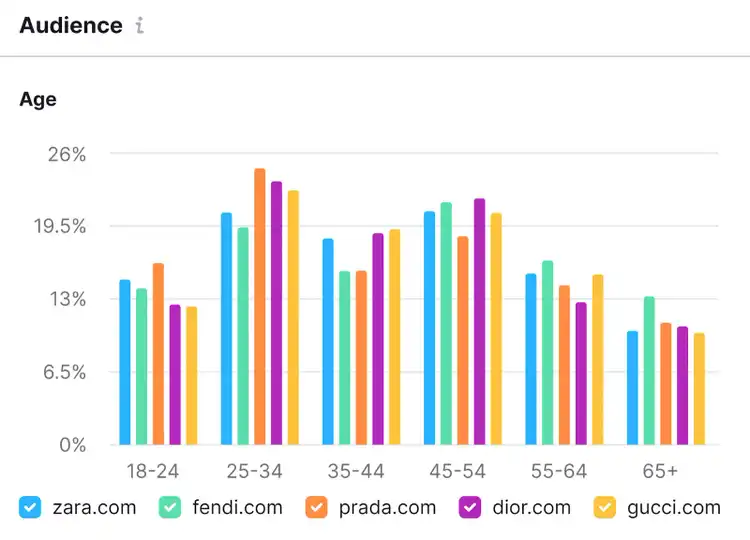
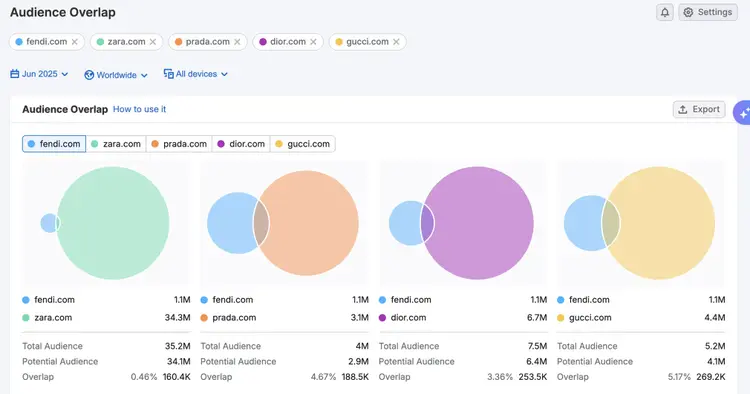
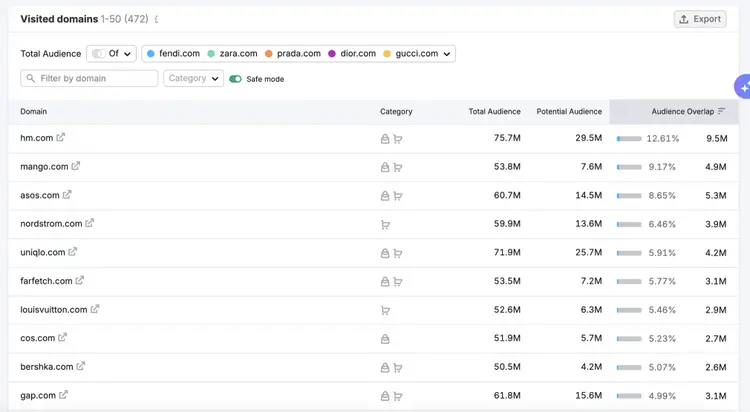
Use the tool to analyze up to five competitors at the same time. The tool offers several dashboards, like the Demographics and Audience Overlap dashboards, to help you see what competitor audiences look like and what sites they also frequent.
In this example, Gucci is most popular among 35- to 44-year-olds. Zara, Fendi, Prada, and Dior skew toward a slightly younger audience.
Using the Audience Overlap dashboard, we can see how these domains’ audiences overlap with one another, and also check what other domains the market audience frequents.
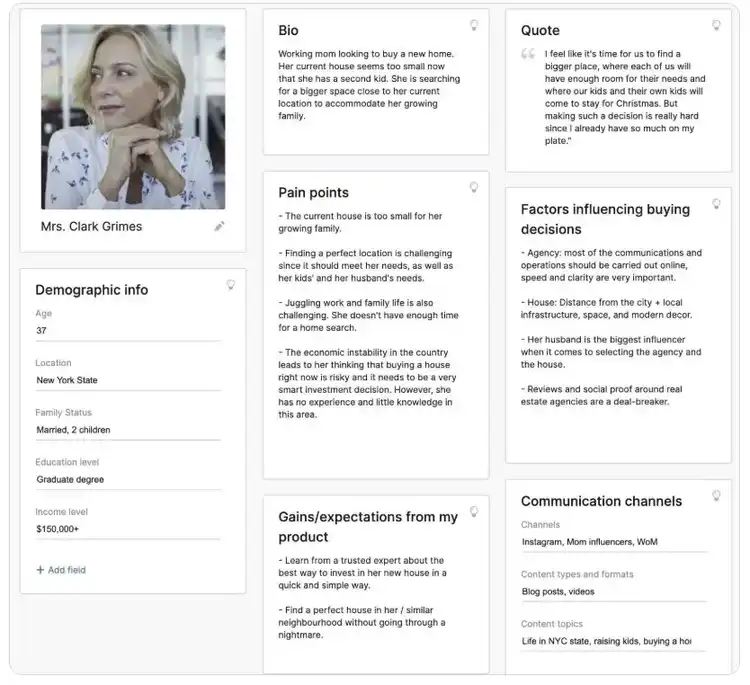
Use the information to create buyer personas—profiles describing your main customers. Craft marketing messages that speak directly to these personas.
Inbound marketing is a tactic that attracts your target market’s attention by creating content that is relevant to them. In other words, use relevant keywords to rank on Google (or other search engines). This ensures your target audience finds your brand even if you do not reach out.
This method often feels less promotional than advertising. It can also deliver a better return on investment at this stage.
Here’s an example.
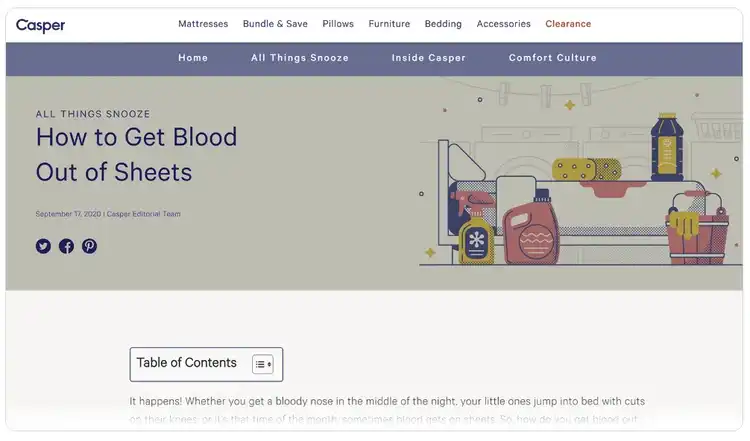
Mattress brand Casper has a blog post about cleaning blood out of sheets. The post includes a step-by-step cleaning guide and tips—not a hard sales pitch.
The goal of this article is not to sell a product. It’s to increase brand awareness by:
Discussing a broad but relevant topic that potential customers are interested in
Ranking on Google so potential customers can easily find the brand
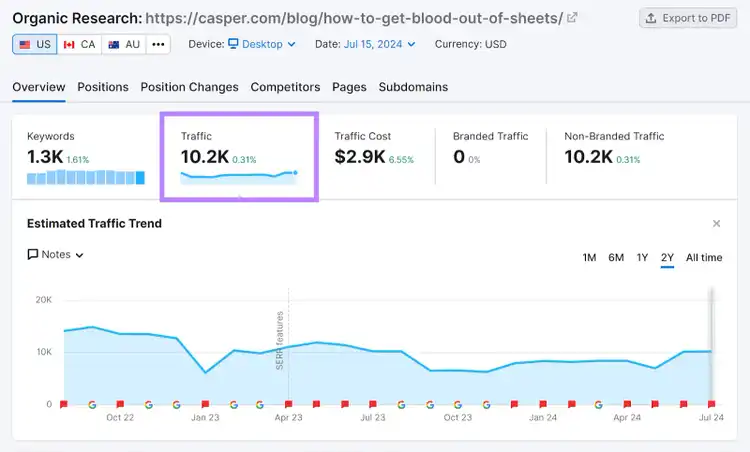
And this tactic works. According to Semrush’s Organic Rankings tool, the cleaning article from Casper gets around 10.2K visitors per month.
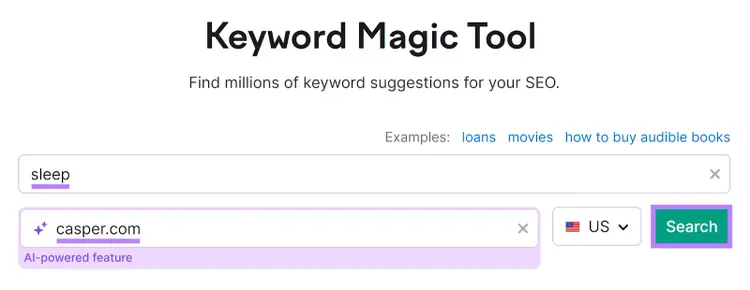
Start your inbound marketing strategy by finding the keywords your prospects search for. Try Semrush Keyword Magic Tool. Then, target those keywords with valuable content that naturally draws potential customers to your business.
Open the tool. Enter a keyword related to your product or service. Also, enter your domain name for AI-powered, personalized keyword data. Then click “Search.”
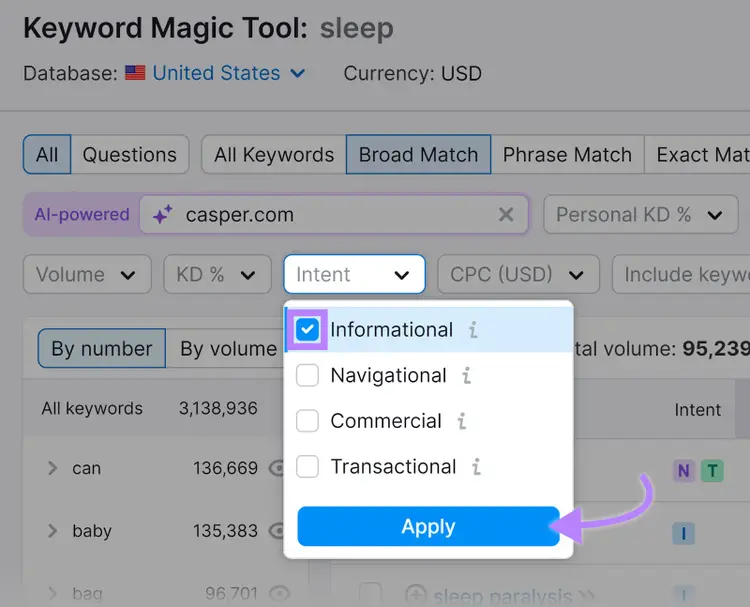
At the ToFu stage, people typically look for general information. So they often use keywords with informational intent.
Note
You need to understand search intent (i.e., the motivation behind a search) to rank well on Google. Check out our guide to search intent if you want to learn more.
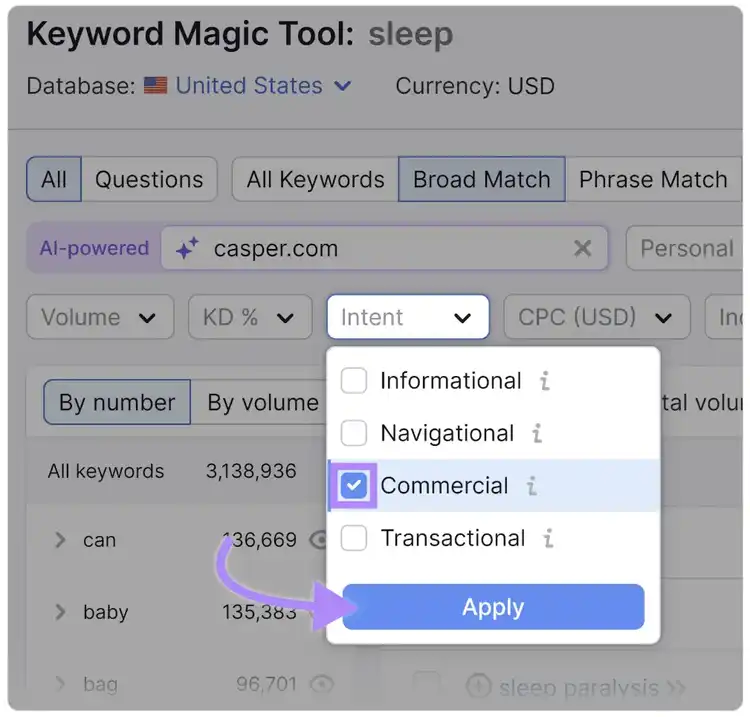
To find these keywords, click on the “Intent” filter. Select “Informational,” and click “Apply.”
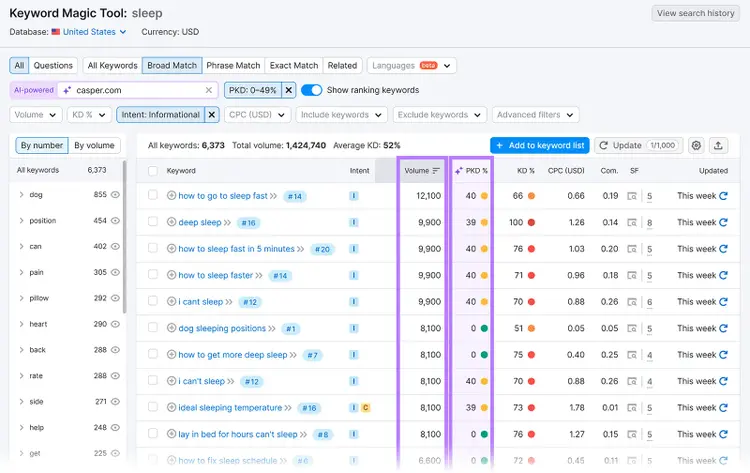
You now have a list of informational keywords. Look through the following columns:
Volume: How many searches a keyword gets per month. We recommend focusing on keywords with volumes higher than 100.
PKD%: How easy or difficult it may be for your site to rank for a keyword, as calculated by AI. We recommend focusing on keywords with PKD% below 50%.
Pro tip
Use the filters to find keywords that meet these criteria.
From the list above, Casper could write a blog post around “how to go to sleep fast” to attract more people into their marketing funnel.
Pro tip
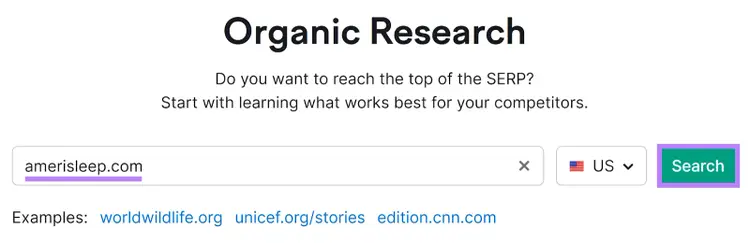
Find more keywords by looking at what your competitors rank for. Use Semrush’s Organic Rankings tool.
Start by entering a rival’s domain, choosing your country, and clicking “Search.”
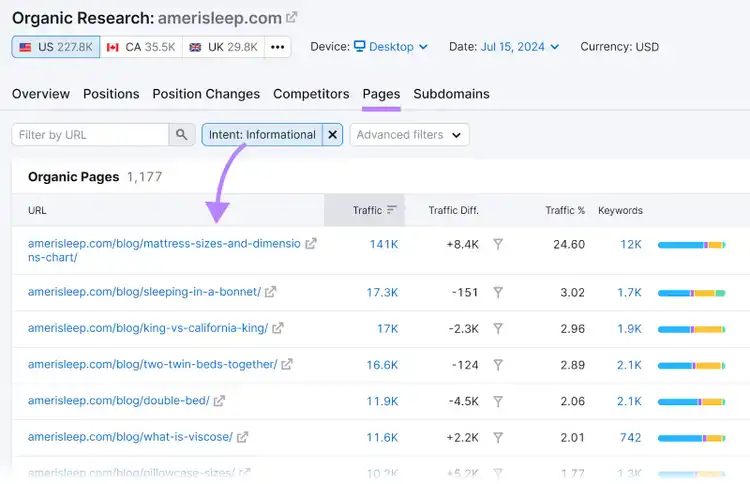
Then, go to the “Pages” tab and filter for “Informational” intent again.
You’ll see pages that rank for informational keywords. They’re sorted by estimated organic search traffic, from highest to lowest. These pages can inspire top-of-funnel content ideas.
Now that you have your list of keywords, the next step is to write search-friendly content. This content can help you secure high search rankings and get more people into your marketing funnel.
However, search is not the only channel for brand awareness. You can also consider:
Digital PR: Earn media coverage on sites your prospects visit
Online communities: Answer relevant questions on sites like Reddit and Quora
Guest blogging: Write helpful articles for sites your audience visits
Events: Speak at or organize events your target audience attends
Email marketing: Keep in touch with prospects who sign up for your emails
Try not to spread yourself too thin. Focus on one or two tactics when starting out. The best strategy depends on your buyer personas and resources. Testing and measuring will help you allocate time and money more efficiently.
Pro tip
Use clear CTAs (calls to action) to tell readers what to do next. For example, encourage blog readers to sign up for your newsletter or follow you on social media. That way, your brand stays on their radar.
Middle of the Funnel (MoFu)
In the middle of the funnel, people research solutions. Prospects know they have a problem, and they want to decide which product or service solves it.
Two key tactics:
Educate your prospects
Manage your reputation online
Educate Your Prospects
Show your expertise with educational content to build trust and clarify how you differ from competitors. A strong support team can answer questions via live chat, phone, email, or social media.
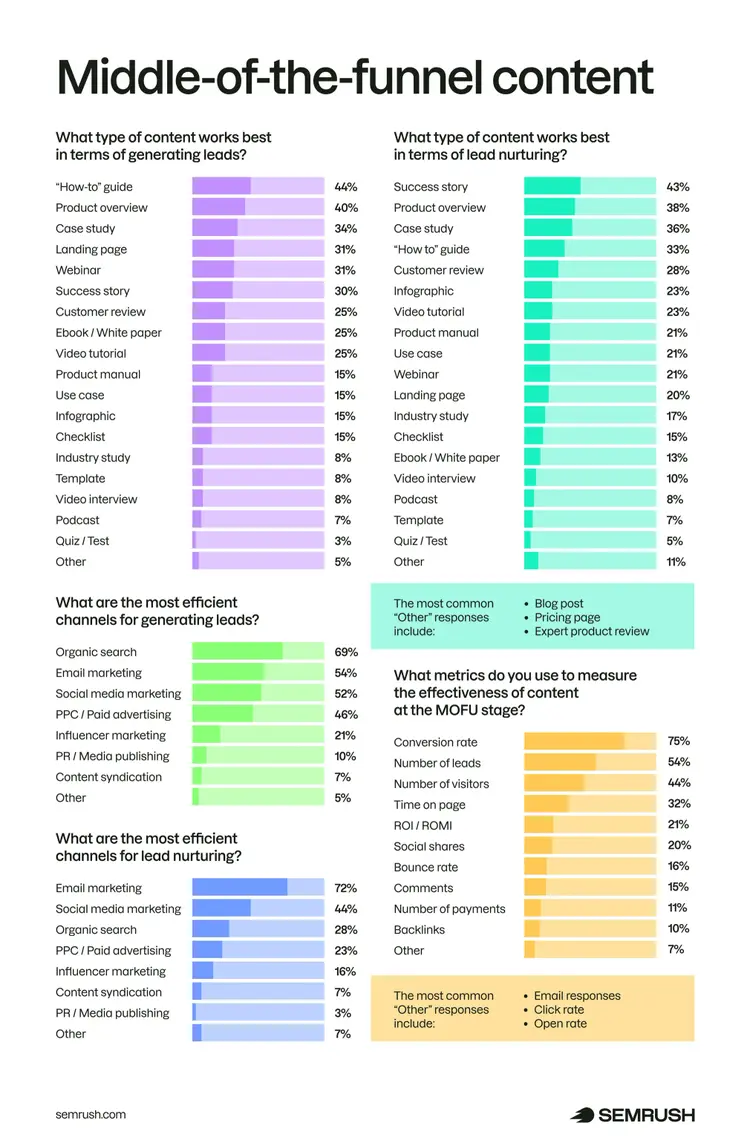
Offer self-serve resources (like success stories or product overviews) highlighting your product’s usability.
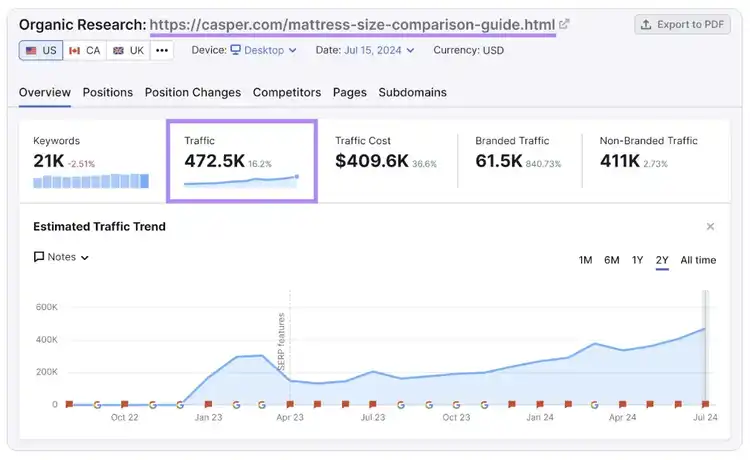
Example: Casper’s mattress size comparison guide attracts prospects seeking the right mattress. The guide draws more than 472,000 organic visits a month from Google.
If you have a local business, use Semrush’s Listing Management tool to manage your listings and reviews
Bottom of the Funnel (BoFu)
At the bottom of the funnel, prospects decide to buy. People may search for transactional keywords like “buy mattress” or “mattress store near me.”
You want prospects to click on your site or go directly to your product pages.
Build Awesome Landing Pages
Landing pages convince visitors to purchase. A landing page’s quality affects organic and paid rankings, conversions, and bounce rates.
Best practices:
Optimize content for target keywords
Reduce barriers to purchase
Reassure customers by highlighting benefits and social proof
Use Semrush’s On Page SEO Checker for recommendations on improving content and user experience.
Pro tip
Retarget ads to people who leave your site without buying. Show prospects ads to remind them of your offerings.
Turn Buyers into Loyal Customers
Loyalty and advocacy also belong at the bottom of the funnel because the buyer’s journey should continue after purchase. A strong relationship encourages repeat purchases and referrals.
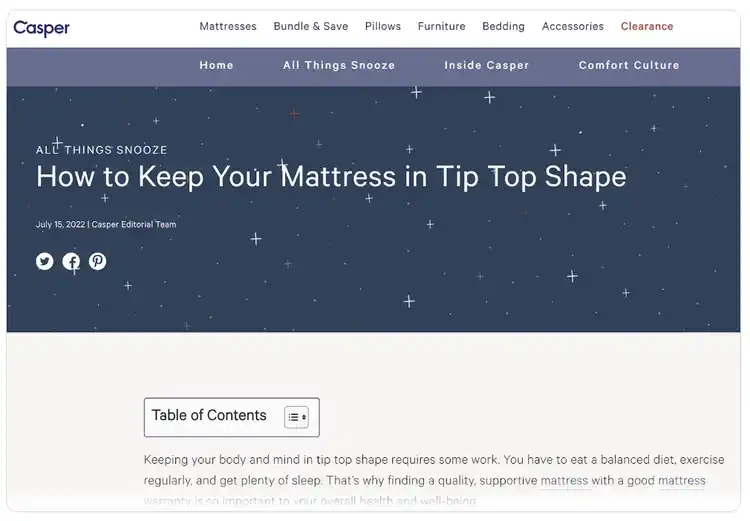
Loyalty or referral programs should reward customers for coming back or recommending you. If you choose not to have a loyalty program, offer great aftercare. For example, Casper shares a mattress maintenance guide.
Use email and social media to keep customers engaged and remind them of your brand after a purchase.
Marketing Funnel Metrics
Set goals for each stage of the marketing funnel so you can identify weak areas and measure growth. Common funnel metrics include:
Percentage of landing page visits that result in a sale
Return on ad spend (ROAS)
Ad revenue minus ad costs equals ROAS
Use Google Analytics for most funnel metrics. Refer to our Google Analytics guide for help.
Create Your Marketing Funnel
Building a marketing funnel involves more than drawing stages. You must understand your target customers, how their needs change, and how to serve them at every stage. Data is essential for making these decisions.
That’s why many marketers use Semrush to build a marketing strategy. Semrush’s digital marketing toolkit provides the data you need to understand your audience and optimize your strategy—every step of the way. Try Semrush for free today.
Hava Salsi is a Swiss-based content writer specializing in B2B SaaS, HR, and tech. With over 5 years of experience working with startups and businesses around the world, she produces engaging, user-centric content that ranks highly and drives conversions.
Subscribe to learn more about General Marketing
Subscribe
By clicking “Subscribe” you agree to Semrush Privacy Policy and consent to Semrush using your contact data for newsletter purposes
Share
Tells Google to show you more from Semrush in AI, Search, and Discover.