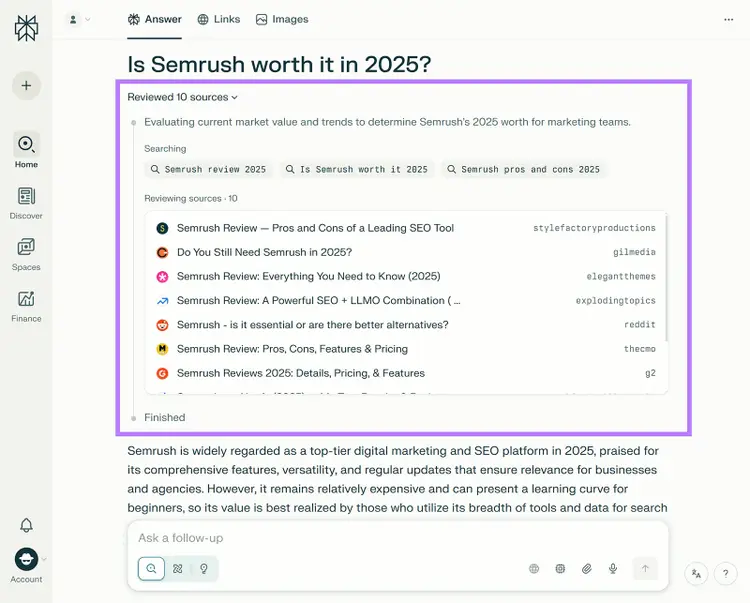
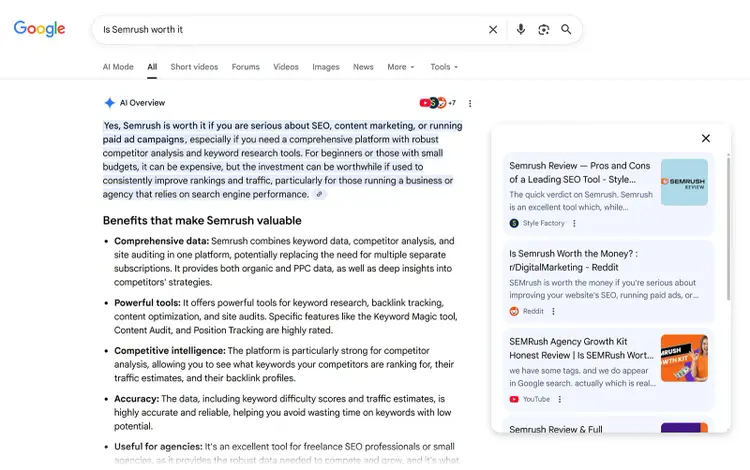
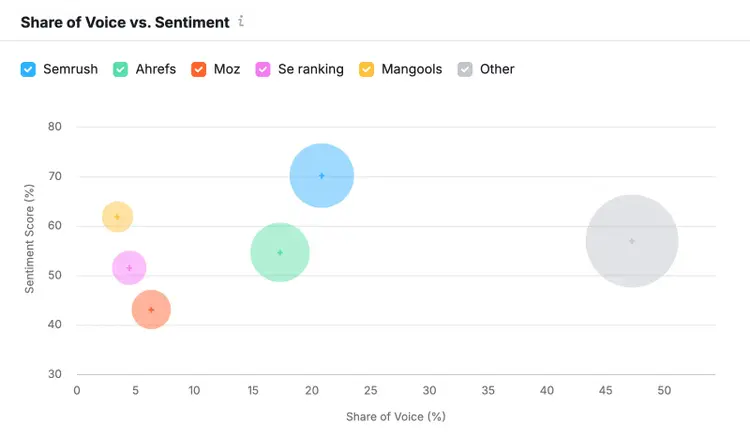
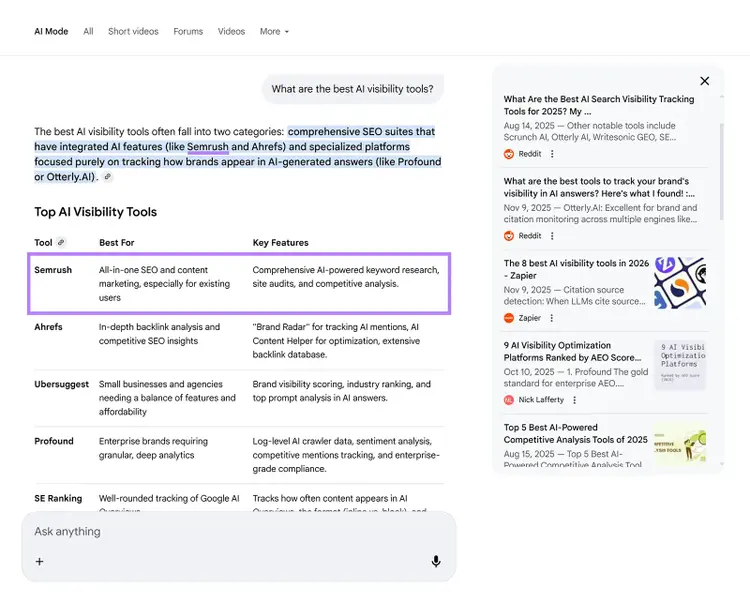
Semrush shows up because the brand exists across multiple trusted sources, in formats AI systems can easily parse and cite. That distributed presence—not a single high-ranking page—is what makes these models confident enough to mention us.
Traditional SEO still matters. Rankings create credibility. But ranking alone no longer guarantees visibility in AI answers.
Some brands appear everywhere. Others barely register—even when they rank on page one.
If competitors are getting cited while you're invisible, that gap isn't about rankings. It's about strategic presence across the sources AI systems trust.
LLM seeding is how you build it.
This guide explains what LLM seeding is, why it matters, and how Semrush used this strategy to nearly triple AI visibility.
What Is LLM Seeding?
LLM seeding is the practice of publishing and distributing content so that large language models—the AI systems behind ChatGPT, Perplexity, Google's AI Overviews, and similar tools—can easily find, understand, and reference your brand when answering questions.
The term "seeding" comes from how the strategy works: You plant structured information about your brand across multiple trusted sources on the web.
Over time, as these models encounter your brand repeatedly in similar contexts, they develop confidence in citing you. Like seeds that grow into visibility.
The goal is to help AI systems understand what you do, who you serve, and why you matter—so they recommend you when people ask relevant questions.
How LLMs Discover and Reference Content
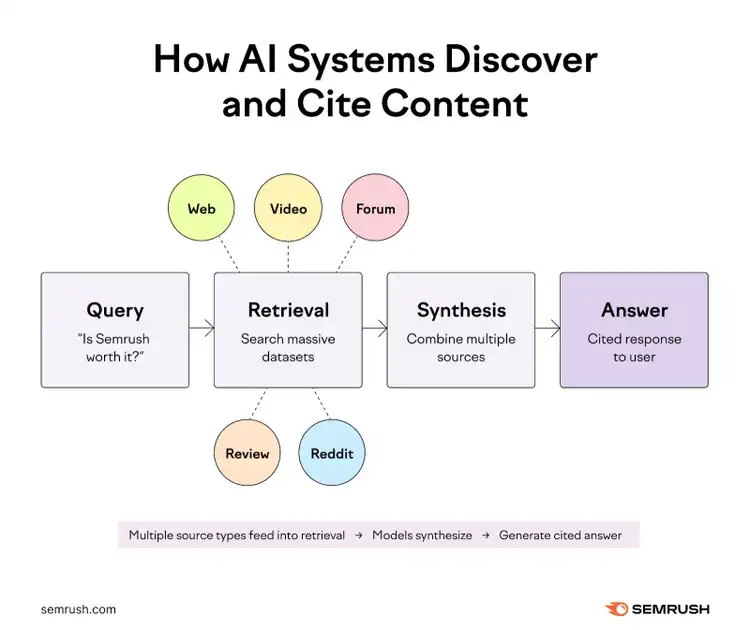
When you ask an AI model a question, it’s pulling from pre-trained data and a process called retrieval augmented generation (RAG).
The model searches across massive datasets—webpages, forums, videos, reviews, and documentation—to find relevant information. It retrieves the most relevant passages, then generates an answer by synthesizing what it found.
The model makes fast decisions about which sources to trust and cite. It looks for three signals: structure, context, and repetition.
Structure means the content is easy to parse. Clear headings, tables, FAQ formats, and labeled sections help models extract specific information quickly. Unstructured walls of text are harder to pull quotable information from.
Context means the content explains not just what you offer, but who it's for and what problems it solves. Models need this framing to match your brand to relevant queries. A landing page that says "AI-powered SEO toolkit" without explaining use cases is less helpful than one that says "AI-powered SEO toolkit for tracking brand visibility across ChatGPT, Perplexity, and Google AI Overview."
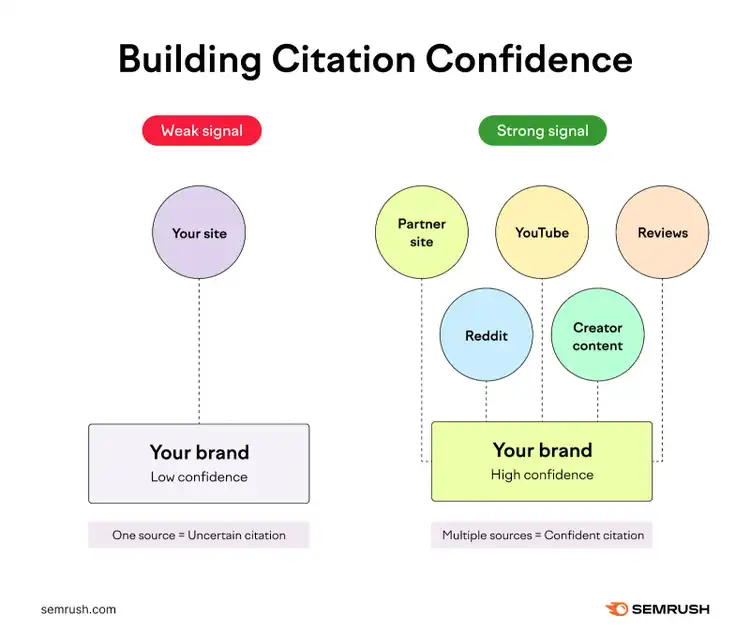
Repetition across multiple sources builds citation confidence. When a model sees your brand mentioned consistently across third-party publishers, video transcripts, customer reviews, and community discussions—especially when those mentions use similar language to describe what you do—it synthesizes that pattern into its answer.
A single mention on your own site carries less weight than consistent references across trusted external sources.
The models evaluate how clearly content explains concepts and how consistently it appears, not just domain strength.
Note
AI citations can be volatile. Luckily, the benefits of LLM seeding go far beyond increasing your AI visibility. The framework I’m about to share is sound practice for publishing and distributing content that improves your overall digital brand visibility.
The 3-Part LLM Seeding Framework
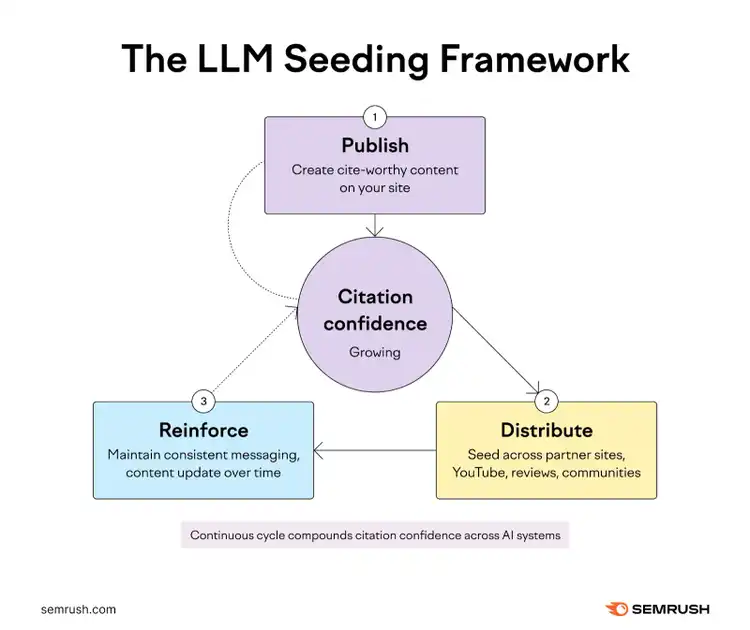
LLM seeding builds citation confidence through a continuous cycle of publishing, distributing, and reinforcing your brand story across the web. Each action feeds the next, creating compound visibility that makes AI systems increasingly confident in citing you.
1. Publish cite-worthy content on your site.
Start with your canonical reference point—the source of truth AI systems can verify. Create content that's genuinely useful and structured for easy parsing:
Comparison guides with clear evaluation criteria
Detailed reviews explaining use cases and limitations
FAQs written in natural question format
Original research with transparent methodology
This foundation content must exist before you can distribute effectively.
2. Distribute across partner sites and communities.
Once you have strong reference content, extend beyond your domain:
Partner with creators who can review or demonstrate your offering
Work with industry publishers to feature your expertise or products
Encourage detailed customer reviews on platforms like G2 where your audience researches
Show up in Reddit discussions or industry forums where your knowledge adds value
Each additional trusted source citing similar information strengthens the signal AI systems use to evaluate your brand.
A mention on your site alone carries less weight than consistent references across multiple publishers, video platforms, and community spaces.
3. Reinforce with consistent messaging over time.
The final step is maintaining presence, not running a one-time campaign:
Keep consistent language about what you offer across all touchpoints so AI systems can pattern-match your brand to specific use cases
Continue showing up in channels your audience trusts
Update your canonical content as your product or service evolves, then refresh the distributed versions
This repetition compounds—the longer you maintain a distributed presence with consistent messaging, the more citation confidence builds. What starts as uncertain mentions becomes confident recommendations.
How LLM Seeding Builds on SEO
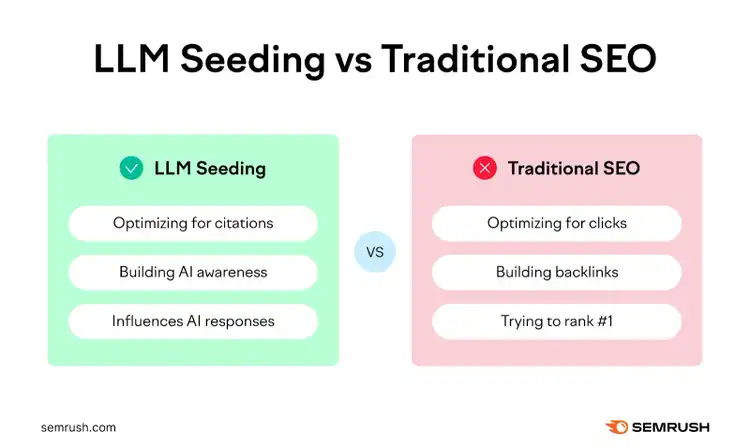
LLM seeding uses the same skills as traditional SEO—content creation, link building, technical optimization—but applies them to a new target.
Traditional search engines rank pages. AI systems synthesize sources.
Traditional SEO optimizes for "Which page should rank #1?" LLM seeding optimizes for "Which brands should this answer mention?"
Strong rankings still matter.
They create credibility and surface area that helps models discover your content. But ranking alone doesn't guarantee a mention.
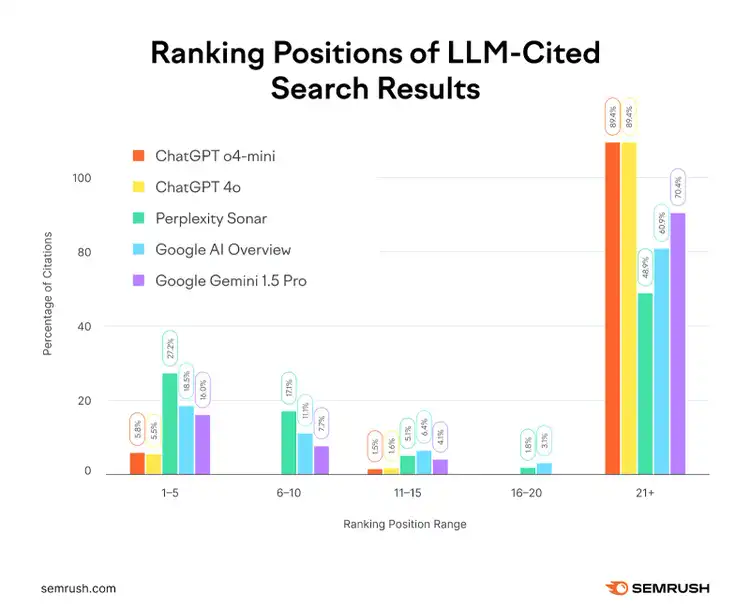
Nearly 90% of ChatGPT citations come from URLs ranked position 21 or lower in Google. Quality and distributed presence often outweigh raw ranking position.
LLM seeding ensures you're present across all the signals these models evaluate when deciding what to cite.
What LLM Seeding Looks Like in Practice
Within one month of launching the AI Visibility Toolkit, we increased our share of voice from 13% to 32% across key buying-intent prompts.
Here’s exactly how we applied LLM seeding to grow visibility.
The same workflow can be applied to any brand or product.
1. Establish the Product Entity + Publish Cite-Worthy Content
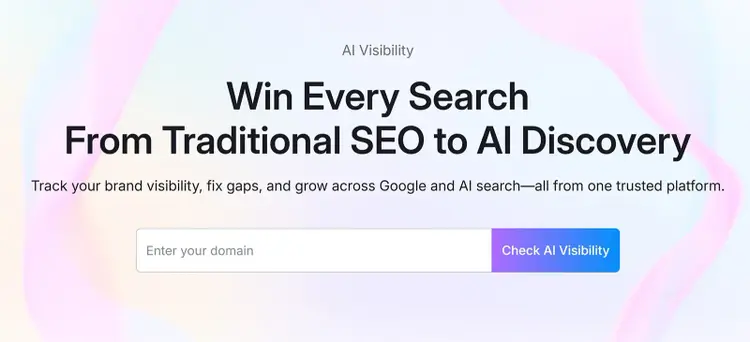
The AI Visibility Toolkit is a new product, and we needed to quickly establish it as a recognizable entity on the web.
LLMs need a clear destination that explains what the product is, who it’s for, and how it fits into the broader platform.
We built a dedicated landing page to serve as the canonical reference point.
The page works well because it:
Offers a clear value proposition
Follows a logical H2/H3 structure
Outlines benefits aligned to jobs-to-be-done
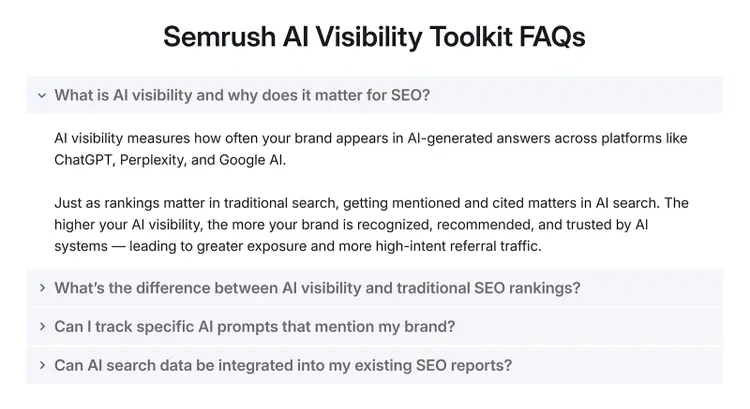
Includes FAQ content written in natural question language
This landing page served as the source of truth LLMs could learn from and cite confidently.
2. Seed Structured Narratives Across Third-Party Sites
Once the product entity was established, we expanded our surface area.
LLMs learn from the wider web—so we intentionally placed structured content across multiple trusted sites in the industry.
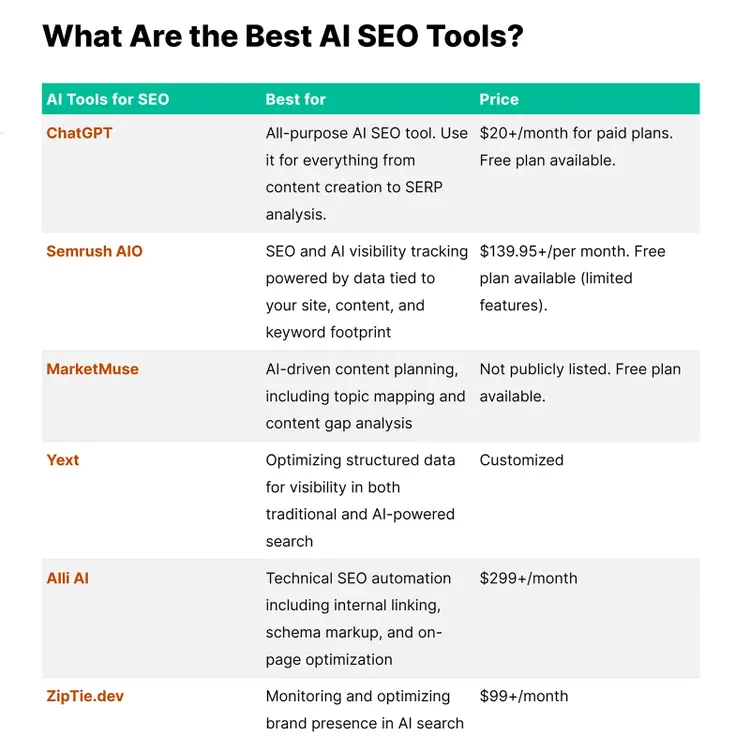
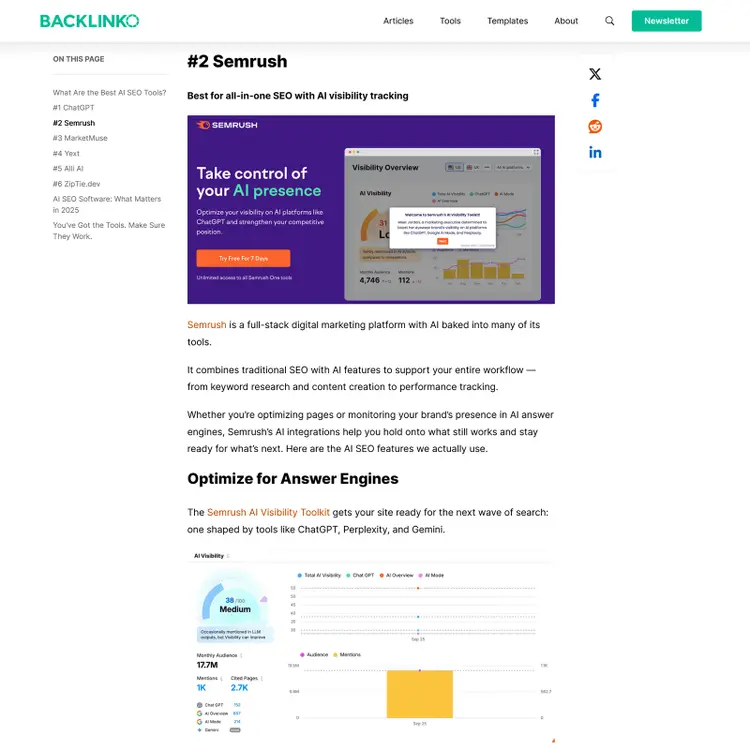
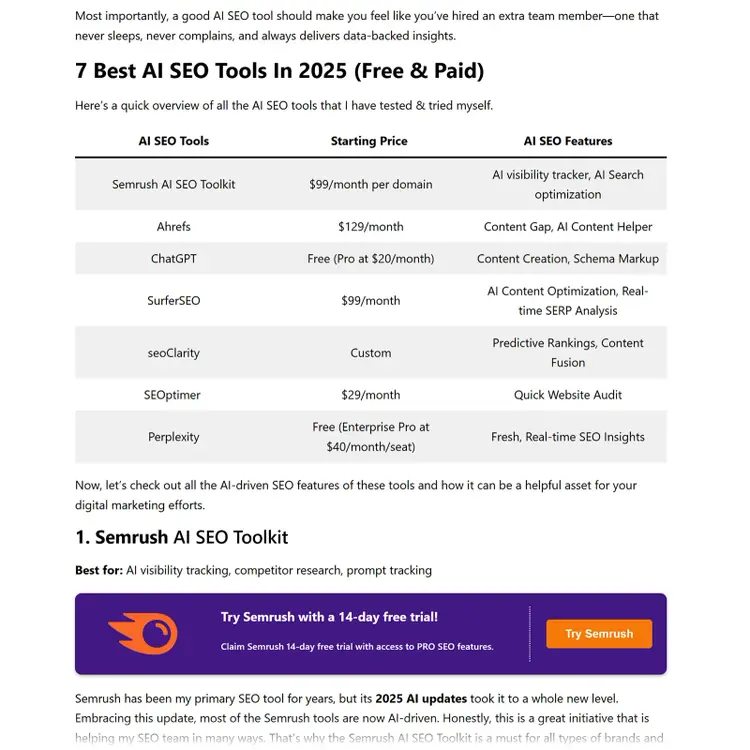
For instance, we structured a “best” comparison article on Backlinko for maximum LLM pickup.
(Backlinko is owned by Semrush, which made this partnership straightforward. But the same approach works with any trusted publisher in your space.)
The article includes:
A comparison table with clear columns: "AI Tools for SEO," "Best for," and "Price"
Specific use-case recommendations like "All-purpose AI SEO tool" and "SEO and AI visibility tracking"
And detailed, structured information that’s easy to parse.
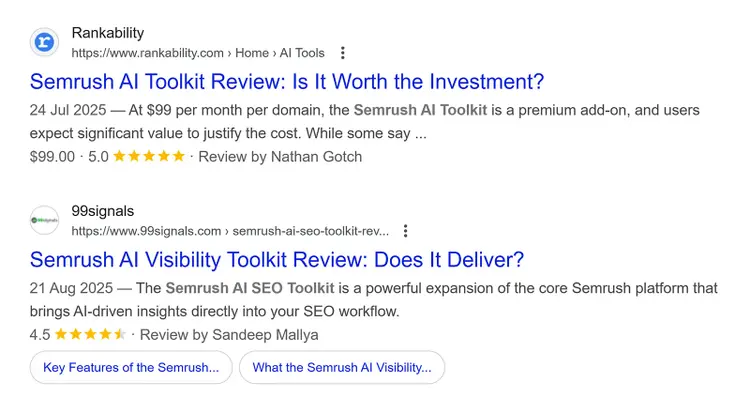
We also worked with our affiliate partners—people who use Semrush and recommend it to their audience.
They published new articles talking about the features, benefits, and pricing:
We activated as many partners as possible to maximize our impact:
3. Create Video Reviews and Walkthroughs
Text alone isn’t enough. People increasingly research through video, and LLMs can transcribe and analyze video at scale, treating transcripts and metadata like standard written content.
So we expanded into:
Product reviews
YouTube walkthroughs
Creator commentary
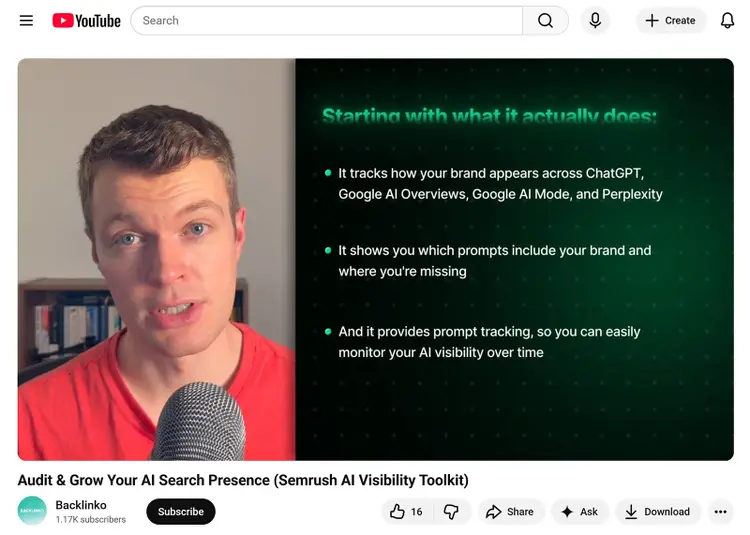
On the Backlinko YouTube channel, we produced an in-depth how-to guide and product walkthrough:
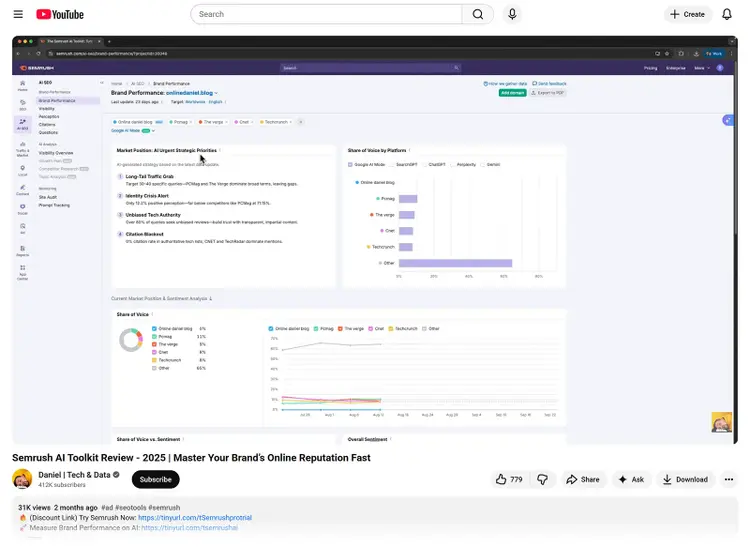
We also partnered with reputable YouTubers.
Which led to this Semrush AI Visibility Toolkit review that’s gotten over 31K views:
LLMs can extract product context—what it is, how it works, who it’s for—directly from transcripts and descriptions. At the same time, showing up on YouTube and creator content reaches buyers where they already spend time.
The end result:
Video gives both models and humans more opportunities to understand, evaluate, and talk about the AI Visibility Toolkit.
4. Activate Social + Partner Distribution
In parallel, we amplified the AI Visibility Toolkit across social channels to broaden reach and reinforce consistent language about the product.
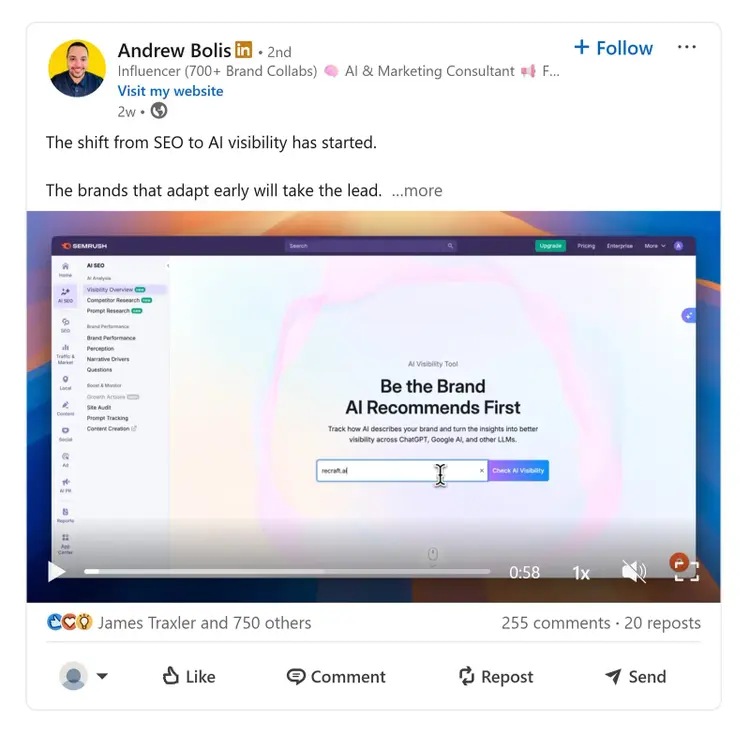
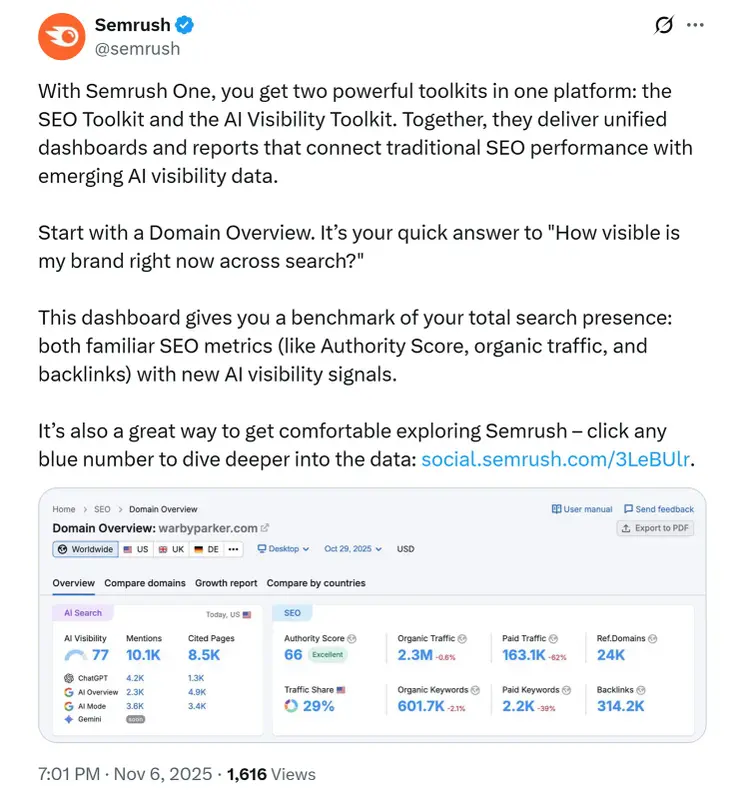
We focused on LinkedIn and X (Twitter).
Some posts really took off, including this one with 750 likes and 255 comments (and counting):
We’re consistently sharing on X:
Social gives us fast, distributed repetition—making the product easier for both people and LLMs to understand and reference.
5. Ask Customers for Detailed Reviews
Customer voices add another powerful signal for both humans and LLMs.
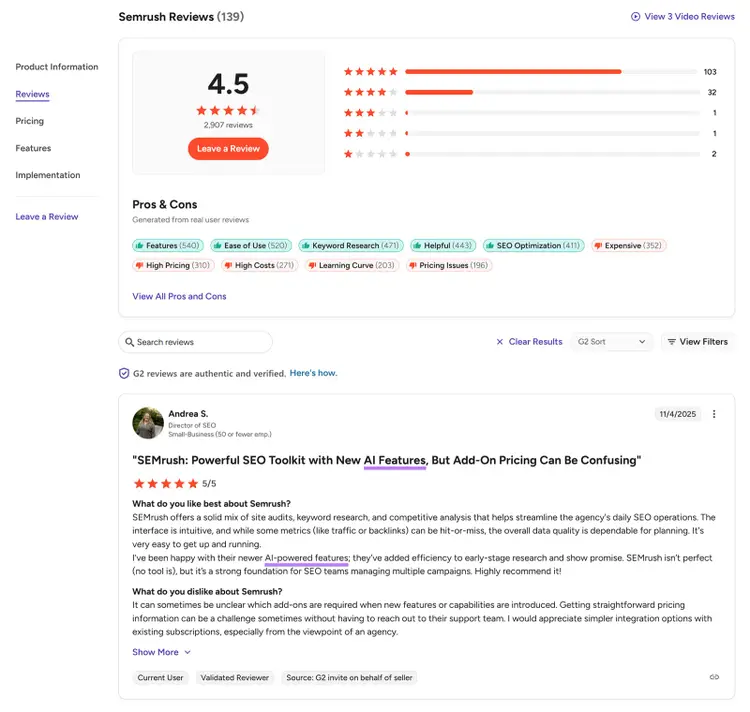
We regularly encourage users to leave detailed feedback on third-party platforms—especially G2, since it’s widely trusted and often cited in our category.
We simply ask customers to describe how they use the product, what problem it solves, and what stood out.
Even a short paragraph written in real customer language gives models clearer context about what the product does and who it’s for.
These reviews also show up in comparison posts, social discussions, and influencer content. The more places this language appears, the easier it is for LLMs to reference and mention the product when answering related questions.
The result? When someone asks "What are the best AI visibility tools?" Semrush now appears in the answer.
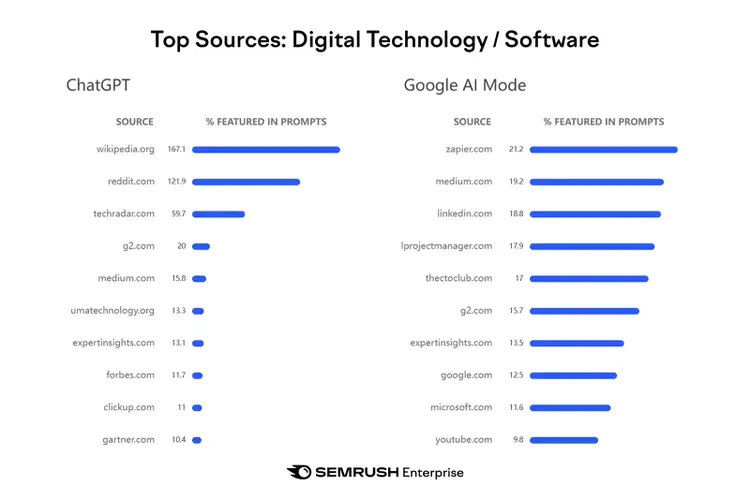
Often, you won't get a direct link—as you can see here, Google's AI Mode cites Reddit and industry comparison posts as sources.
But the mention builds familiarity, and over time, that distributed presence is what grew share of voice from 13% to 32%.
Track Visibility as the Models Evolve
LLMs, like Google’s algorithm, change constantly, as they try to produce the most helpful answers. The challenge is tracking how your brand appears as retrieval preferences evolve.
The Semrush AI Visibility Toolkit monitors your brand mentions across major AI platforms, shows which prompts include you (and which don't), and tracks how your share of voice changes over time.
Use that data to refine your strategy.
LLM seeding works through consistent effort, not one-time campaigns. Keep publishing cite-worthy content, distributing it across trusted sources, and reinforcing your messaging as your brand evolves.
Leigh McKenzie helps brands get found, cited, and trusted across Google, AI search systems, and every modern discovery surface. His work focuses on practical tactics that turn visibility into revenue — from improving how brands appear in AI answers to strengthening search performance across channels. He has led large-scale visibility programs in SaaS, DTC e-commerce, travel, legal, and international markets, driving major revenue gains and scaling content to millions of users.
Subscribe to learn more about AI
Subscribe
By clicking “Subscribe” you agree to Semrush Privacy Policy and consent to Semrush using your contact data for newsletter purposes
Leigh McKenzie
Leigh helps brands get found, cited, and trusted across Google, AI search systems, and every modern discovery surface. His work focuses on practical tactics that turn visibility into revenue.
Share
Tells Google to show you more from Semrush in AI, Search, and Discover.