
Market Opportunity: Definition, Examples, and Analysis Strategies
Companies that identify and seize market opportunities have the potential to enjoy exceptional growth.
But how do you find those opportunities?
In this post, we’ll define “market opportunity” and list examples to give you a better understanding of what it entails. We’ll then cover strategic steps for discovering market opportunities that can help you maximize your business’s potential.
What Is a Market Opportunity?
A market opportunity is a need or want for a product, service, or feature that is either not being met or is underserved.
Identifying a market opportunity enables you to launch new offerings or improve existing ones. If successful, these may boost your sales and profits.
Tip
Also, you’ll likely secure funding more easily if you discover a market opportunity and develop a plan to seize it. Investors look for companies with business growth potential.
Market Opportunity Examples
Some market opportunities are created through innovation. Others are the result of regulatory changes.
Let’s cover some of the most important types of market opportunities below.

Untapped or Underserved Audience
Identifying and targeting an audience that’s not adequately served by current market offerings can be a significant opportunity. This may involve catering to niche markets or specific demographics.
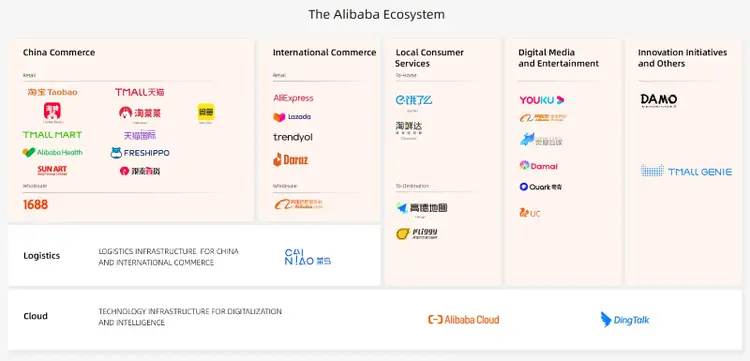
Take Chinese tech juggernaut Alibaba. Jack Ma founded the group in 1999 to help underserved Western companies in search of an easier, digital way to connect with Chinese exporters.
Alibaba profited from facilitating these relations. Growing into a massive B2B and B2C marketplace, and later on diversifying into dozens of sectors.
Technological Innovations
Technological advancements can open up new markets and transform existing ones. Companies can then build new products and services to seize these market opportunities.
The rise of generative AI is a case in point. The technology makes it possible to create new content through the use of prompts.
Numerous startups were quick to commercialize it, including OpenAI, Copy.ai, Jasper, and others. The VC firm Antler’s visualization of the generative AI landscape shows just how many raced to exploit this market opportunity.
Societal Changes
Shifts in societal attitudes, values, and behaviors change the way people perform certain processes. There’s then a chance that existing products and services become obsolete, creating a market gap that companies rush to fill.
For example, more and more people are looking for plant-based meat alternatives.
The US startup Impossible Foods launched in 2016 to seize this opportunity. The company has grown considerably over the last 12 years, raising around $2 billion.

Many other startup competitors, such as Beyond Meat and Perfect Day, were also quick to develop plant-based options to meet this growing demand.
Regulatory Interventions
Changes in laws and regulations can create opportunities for businesses. They include deregulation in certain sectors, new compliance rules that demand innovative solutions, and government incentives for particular business activities.
Let’s take the EU’s General Data Protection Regulation (GDPR) as an example. The framework introduced stricter data privacy rules in 2018.
Traditional tools like Google Analytics faced challenges under GDPR because of their extensive data collection practices. This opened up a market opportunity for new, privacy-focused and GDPR-compliant tools like Plausible Analytics.

Various analytics startups often position themselves as privacy-friendly and compliant with the likes of GDPR, the California Consumer Privacy Act (CCPA), and Privacy and the Electronic Communications Regulations (PECR).
Further reading: 15 Best Google Analytics Alternatives for 2023
How to Conduct a Winning Market Opportunity Analysis
Market opportunity analysis is the process of researching and discovering possibilities for growing your revenue and acquiring more customers. This kind of analysis helps brands to:
- Identify new markets with unmet or underserved needs
- Better understand customer preferences
- Differentiate themselves from the competition
- Allocate resources for maximum return on investment (ROI)
Market opportunity analysis is not to be confused with market research. The latter is a broader process focused on gathering data about your customers and target market.
But due to its broad scope, market opportunity analysis does involve elements of market research. Since you have to collect information on your target audience and markets to identify revenue opportunities.
Market opportunity analysis entails several strategic steps that we’ll go through below.
Here’s how you do it:
Analyze the Market
Collect and analyze information on the dynamics, size, market trends, and overall demand of your target market. To reveal unmet needs and untapped niches you could explore next.
Aim to learn things like:
- How big is the market?
- Is the market growing or shrinking?
- How many potential customers are there?
- How strong is the competition?
- Are there alternative products or services about to enter the market?
Answering these questions may point out interesting market opportunities.
For instance, you learn that a specific niche grew rapidly in the past 12 months. You then further investigate this insight. And, eventually, decide you should enter that niche and launch relevant products.
There are different market research tools you can use to carry out your analysis—like Semrush’s Market Explorer.
Get a Quick Overview of Your Market
with the Market Explorer Tool
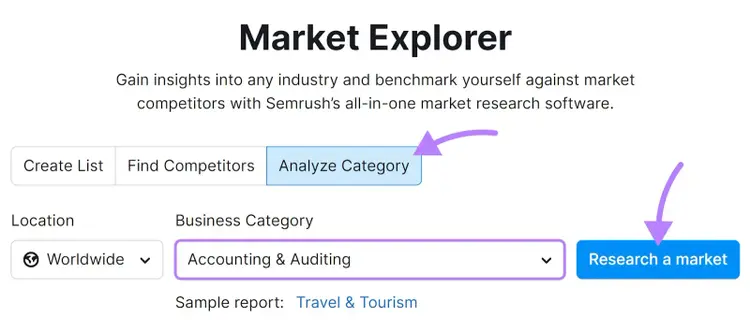
Open the tool and click the “Analyze Category” tab.
Choose your target location, select your business category from the drop-down menu, and click “Research a market.”
Once on the main dashboard, you’ll see useful market insights:
- Market Domains: An insight into the number of domains you’ll compete against within your chosen market. Helping you determine how easy or difficult it might be to penetrate the market.
- Market Consolidation: This indicates the division of market share among different players. A low level of consolidation means you face many smaller competitors—increasing your market access potential.
- Market Traffic: The total traffic of all domains in your market over a given period. The higher this number, the better your chances are of attracting your fair share of this traffic. Market Traffic Cost further estimates total costs for organic keyword ranking.
- Market Size: The total number of potential buyers your market covers. The higher this number, the better your sales opportunities will be.
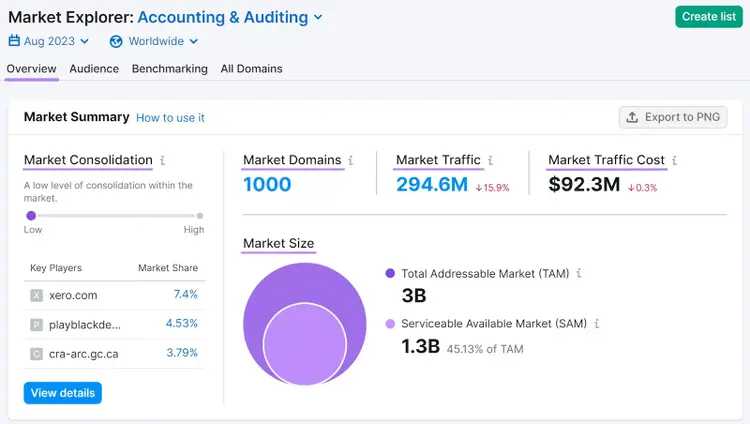
Let’s say the Market Consolidation data point shows that your target market is highly fragmented. This may mean you could dominate smaller competitors with a solid product and smart marketing investments.
Scroll down further to see the market share trends of individual countries.
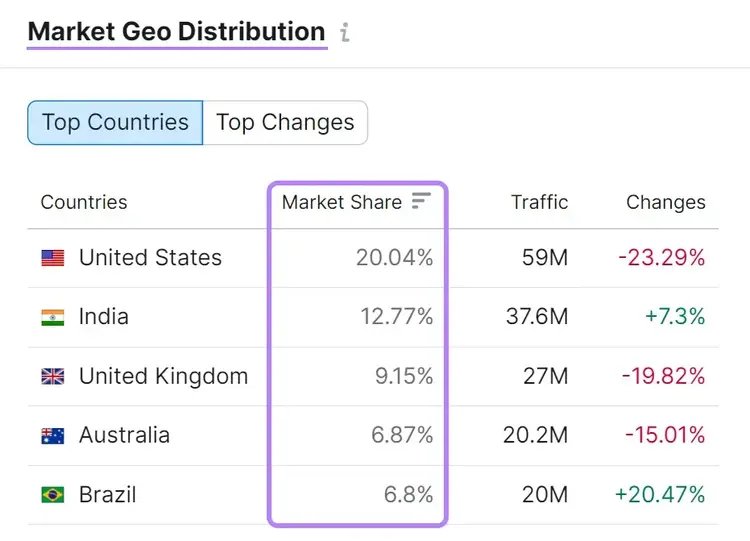
This information can help you decide which geographical markets in particular are worth your attention.
Lastly, navigate to the “All Domains” tab to find the main market players.
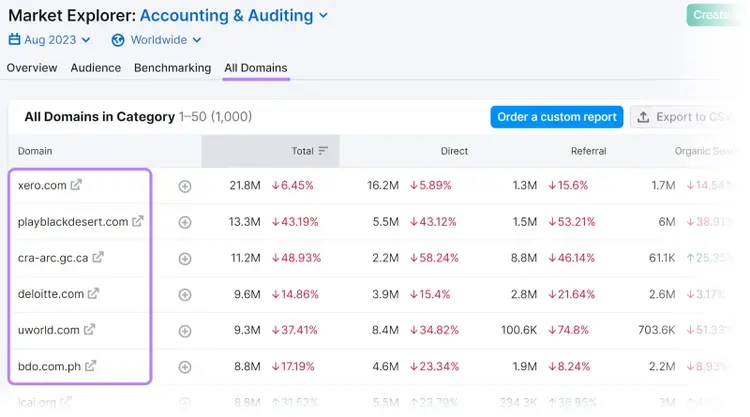
The tab lists visitor data for each domain across different traffic sources, helping you identify which competitors are becoming more popular. You can then proceed to investigate their sites, analyze what they’re doing right, and improve on their strategy.
Understand Your Target Audience
Create a detailed profile of the consumers you aim to reach. Identify their behaviors, preferences, and challenges. You’ll understand your target audience better and identify any unmet needs.
Aim to answer questions like:
- Where, when, and why do people buy certain products or services?
- How do they pay?
- What devices do they use most?
- What is their profession?
- Why do they think your competitors are better than you?
- How did they hear about your brand?
- What specific features of your product or service do they particularly like?
The information you obtain may reveal market opportunities for your business or product.
Let’s say you learn that your customers are low-income and prefer to shop online.
With that insight, you might partner with digital buy-now-pay-later (BNPL) providers to offer short-term financing to your online store visitors. Which can boost your sales potential, as online payment provider Klarna’s stats reveal:

You have a choice of tools to help you learn about your target audience.
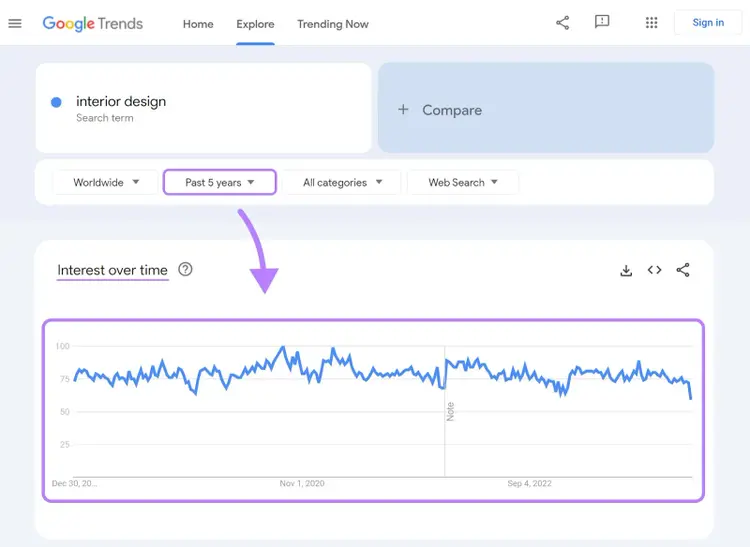
Among these, Google Trends lets you monitor the popularity of search terms within your industry or niche.
In the example below, the Google Trends graph shows how searchers’ interest in interior design remained consistent over the past five years.
You can also run Semrush’s One2Target to research your audience.
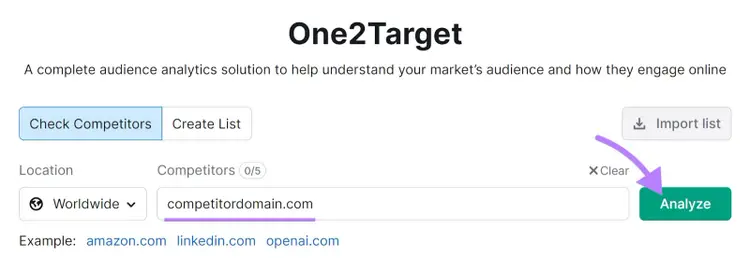
In the tool, enter the URLs of up to five competitors and click “Analyze.”
You’ll get detailed information about your target market, including audience demographics.
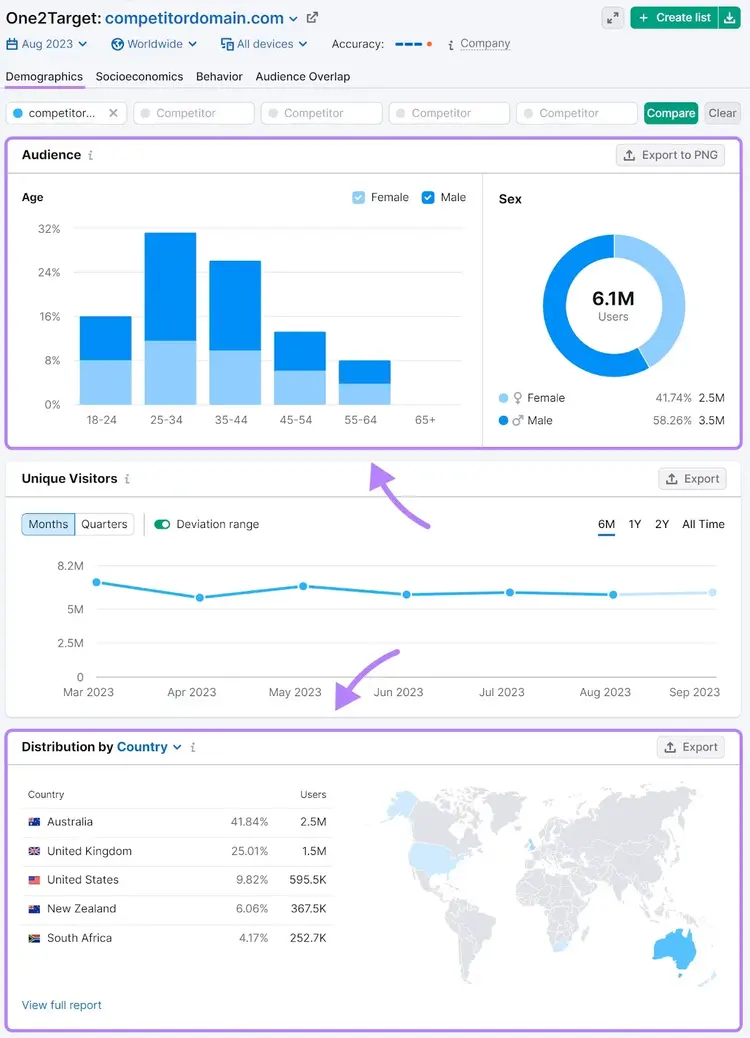
These data points may reveal actionable insights.
For instance, you may find out that females aged 35-44 make up the majority of your audience. Based on that information, you can adjust your marketing messaging and visuals to target those specific customers.
Hit the “Socioeconomics” tab to learn about the household size, income level, education level, and employment status of your target audience.
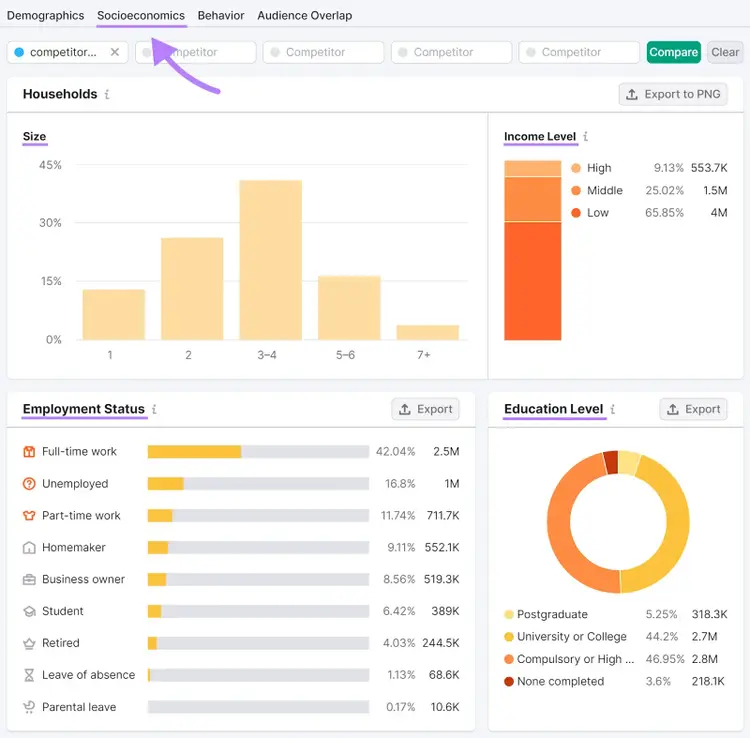
You might discover that your audience is wealthy and lives in large households. Then, create a separate offering tailored to big, rich families.
You can also discover which devices and social media platforms your audience prefers by clicking the “Behavior” tab.
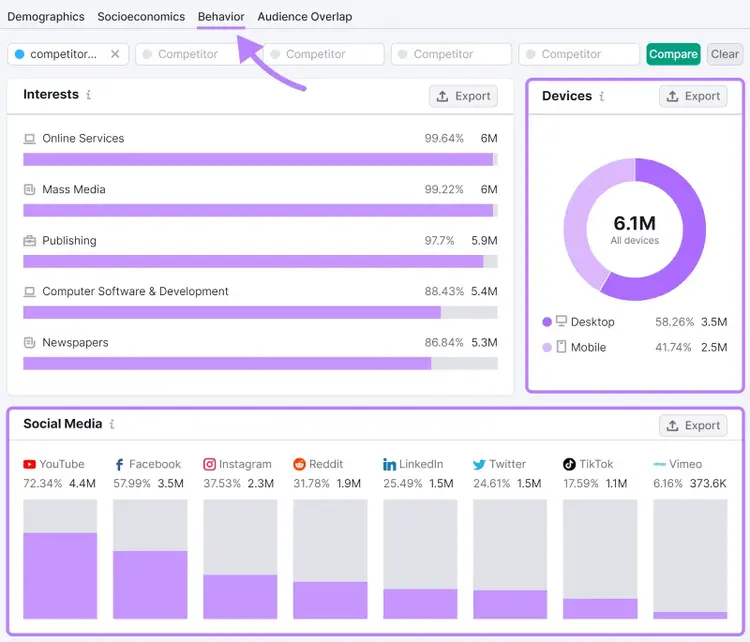
Compare your marketing efforts against these data points. To ensure you focus on the channels where your potential customers spend a lot of time online.
Get In-Depth Audience Behavior Insights
with Semrush One2Target Audience Research
Research Your Direct and Indirect Competitors
Discover and research both your direct and indirect competitors. Proper analysis will help you identify market gaps, learn from the successes and failures of others, and refine your unique selling proposition (USP).
Ask the following:
- Who are your direct and indirect competitors?
- Which competitors are growing and why?
- What competitive advantage do they have?
- How are competitors marketing their products or services?
- What do reviews say about your competitors’ offerings?
- What do competitors offer that you don’t?
Note
Direct competitors offer similar products or services—think Netflix and Disney+. Indirect competitors sell different products but satisfy the same customer needs. Netflix and cable TV, for instance.
Knowing which direct and indirect competitors are growing helps you understand changes in consumer preferences.
For instance, cable TV companies are well aware of the increasing popularity of video streaming services. And know it’s worth considering how to elevate cable TV offerings with similar on-demand entertainment.
Semrush’s Market Explorer helps you discover who your competitors are.
Select the “Find Competitors” tab in the tool. Specify your target location, enter your domain, and click “Research a market.”
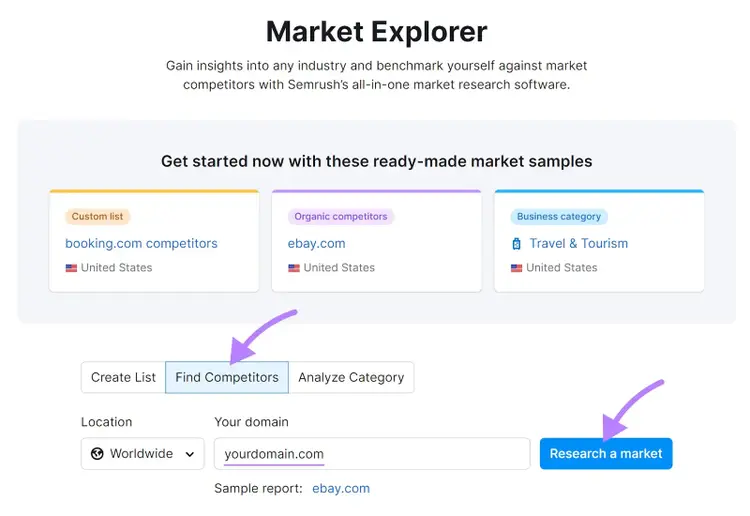
Once on the main dashboard, head to the “All Domains” tab. You’ll find a list of the main players competing in your market.
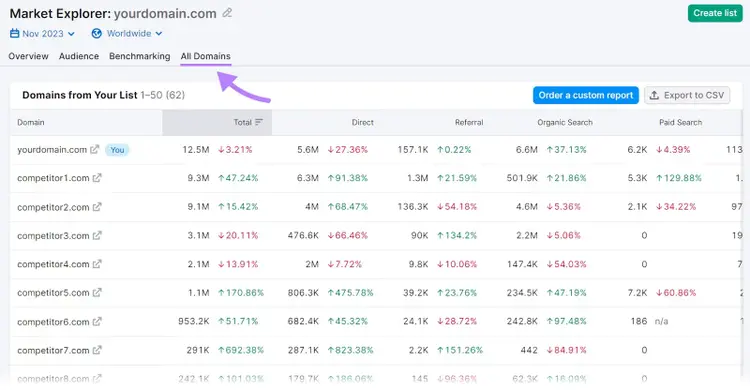
From here, you can check their traffic stats, growth trends, and other useful data.
Is a particular competitor growing rapidly? Go to its website to investigate pricing, positioning, product features, and other key details to inform your strategy.
Next, run Traffic Analytics to investigate that specific competitor further.
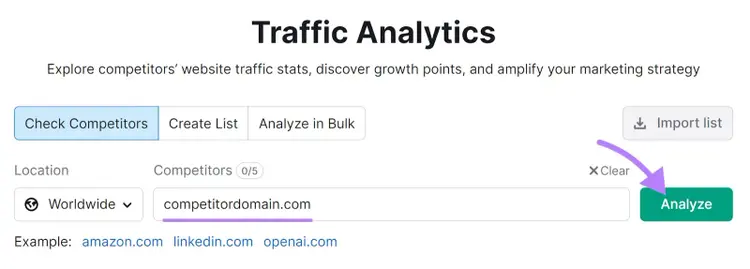
Open the tool and select the “Check Competitors” tab. Add in your competitor’s domain and click “Analyze.”
Then, navigate to the “Traffic Journey” tab for details on your competitor’s biggest traffic sources.
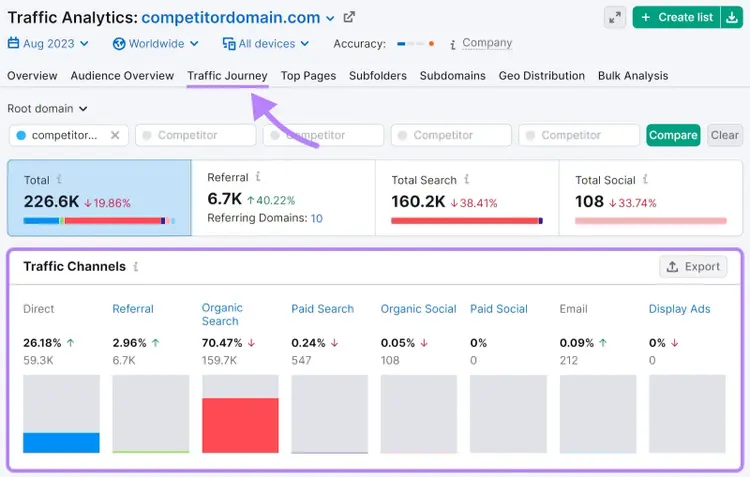
Say you discover that your competitor has high organic search traffic. You can carry out an SEO competitor analysis to better understand the competitive landscape in search.
Or, you realize your competitor is getting many direct visits. Which may well indicate an investment in brand awareness campaigns. Consider focusing on brand awareness-building efforts, too.
Analyze External Factors
Identify external political, economic, socio-cultural, and technological factors relevant to your business. They can have a significant impact on your growth.
Analyzing these four factors is also referred to as PEST analysis.
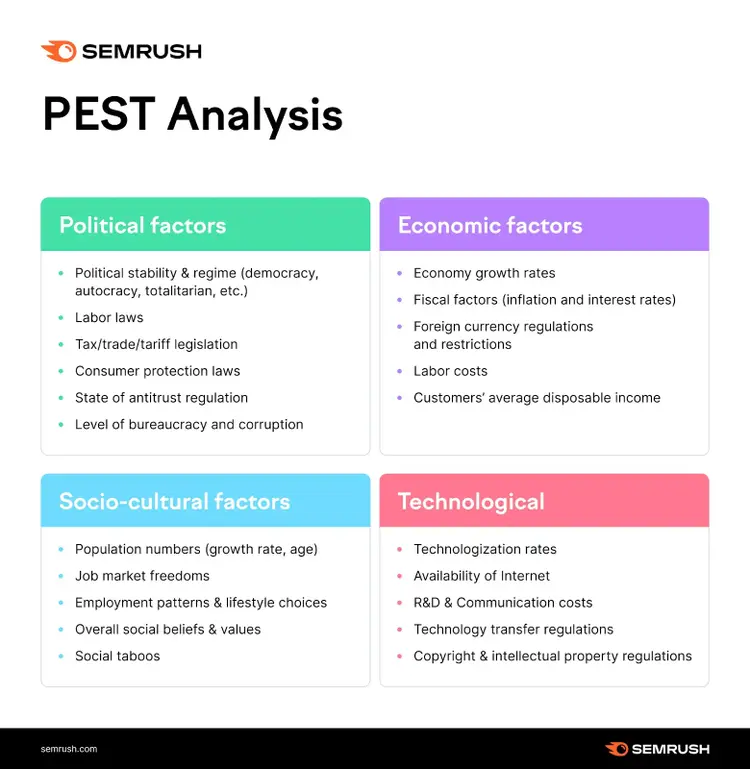
Consider these scenarios as examples of PEST factors:
A government introduces new tax breaks that benefit your company (political). An economic downturn strips your target audience of its spending power (economic). Low birth rates lead to severe workforce shortages you can’t overcome (socio-cultural).
Here are some matters you should look into when analyzing external factors:
- What are the current domestic government policies that could impact your business?
- Is the country where you operate maintaining stable economic relations with other states?
- How do economic conditions, like inflation rates or economic growth, affect your market?
- What social trends, such as demographic shifts or lifestyle changes, could bring about changes in your market?
- How do technological advancements influence your industry?
- What are the relevant regulations, compliance rules, and legal challenges in your sector?
- How do climate change effects and environmental policies impact your business?
Answering these questions can help your company or business unlock new market opportunities.
Electric car maker Tesla is a case in point.
Led by entrepreneur Elon Musk, the company benefits from the growing popularity of electric vehicles (technological factors) brought about by environmental concerns (socio-cultural) and government subsidies (political). Which translates into ongoing revenue growth.

Uber is another great example.
Founded in 2009, the company harnessed the popularity of smartphones (technological) to launch its ride-hailing app. But it also had to navigate taxi regulations and labor laws (political) in various countries. Analyzing external factors was therefore central to Uber’s global success.
Analyze Internal Factors
Dive into your company’s capabilities. Assess your workforce, skills, finances, and other internal factors that can give you a competitive edge.
Maybe your company’s cash reserves enable you to acquire a promising tech startup— denying other market players the use of its technology. And letting you stay ahead of the curve.
Look inward to seek answers to questions like:
- What are your core technological strengths and unique capabilities?
- How effective are your current operations and processes?
- Which skills do your employees lack?
- Which unique skills do your employees have?
- What’s your company culture and employee engagement like?
- How cash-rich are you compared to the competition?
Introspection helps reveal market opportunities you can seize to expand your business and offerings.
For instance, Facebook acquired Instagram in 2012 and WhatsApp in 2014. Leveraging internal strengths, such as Facebook’s tech prowess and financial resources, made this move possible.
Both acquired apps have grown tremendously since then. See how they dominate the market for social networks and messaging services:

Another approach you can take here is to evaluate internal company processes.
Think: Can a specific production process be faster? Can a different delivery service reduce shipping costs? Can you increase profit margins by cutting certain costs?
Encourage your team to look beyond established processes. So you discover market and revenue opportunities that exist within the business itself.
Explore Strategic Partnerships and Investments
Consider entering into strategic partnerships that can enhance your company’s market position. Doing so may gain you access to new markets, technologies, and opportunities.
Finding strategic partners and investors may take time. We provide some handy questions to ask when looking for and evaluating potential partnerships:
- Who could be good partners to enhance your strong points or improve your weak areas?
- What are the aims and advantages of possible partnerships or investments?
- How can working with other partners or investors help you reach new markets or get new technology?
- What are the likely negative aspects of these partnerships?
- What are the terms and conditions of potential partnerships or investments?
- How do these partnerships or investments align with your plans for the future of your business?
Strategic partnerships can be a game changer.
For example, OpenAI’s tie-up with Microsoft since 2019 has given the startup access to Microsoft’s vast Azure cloud computing infrastructure. OpenAI would otherwise find it hard to scale and seize the ever-growing market that is generative AI. Just look at the projections for the next ten years:

Consider Geographical Expansion
Think about the possibility of expanding to different regions or countries if your domestic market is saturated. It’ll help you tap market opportunities with a broader scope.
Perhaps your product is too expensive for your local market. Selling to customers in a high-income city or country could see you sell more products, faster.
When exploring geographical expansion, try and find out:
- Which geographies are most attractive for your business?
- What’s the size of the potential market?
- Who will you compete against in that area?
- What’s the purchasing power of the target audience?
- Are there any legal or regulatory obstacles you might face?
- How does local cultural and consumer behavior differ from your current market?
Be aware that different regions have their own culture, tastes, and habits. What works in your domestic market may not work in other settings.
Plus, you’ll likely encounter many new ideas and inspiring practices in different locations. Assess which are the best ones to implement in specific markets.
To give an example, Starbucks excels at adapting to local tastes.
In Japan, the coffeehouse chain introduced matcha lattes that enjoyed instant local appeal. While in Mexico, it offers beverages inspired by the traditional Mexican spiced coffee, Café de Olla.
Starbucks’ geographical expansion over the years likely fueled its consistent revenue growth, as shown by Statista.
Get Started on Your Market Opportunity Analysis
Now that you know the importance of market opportunity analysis and how to carry it out, it’s time to do it yourself.
It’s easy to discover and research market opportunities when you have the right tools at hand.
Semrush’s market analysis software can help you collect vital data points about your industry and target audience. You can then act on any identified market opportunities to help you meet customer needs and grow your business effectively.
Access a Suite of Market Analysis Tools
in One Platform with Semrush

Ajdin Perco is a senior content marketer with nearly ten years of in-house and agency experience. From producing content and developing strategies to leading marketers and advising executives, his experience spans across multiple roles, industries, and content channels.

Tells Google to show you more from Semrush in AI, Search, and Discover.