
What Is a Multimodal Content Strategy?
A multimodal content strategy is the process of turning one high-quality asset into multiple formats—text, video, audio, and visuals—so your message connects with audiences in the ways they best absorb information.
Instead of producing content randomly across formats, top-performing marketing teams start with one comprehensive piece, then systematically adapt it.
For example, a single webinar can become a blog post, short podcast clips, social graphics, and an email sequence—all reinforcing the same message from different angles.
This approach is essential in the AI-powered search era, where search experiences surface answers that draw from multiple content types.
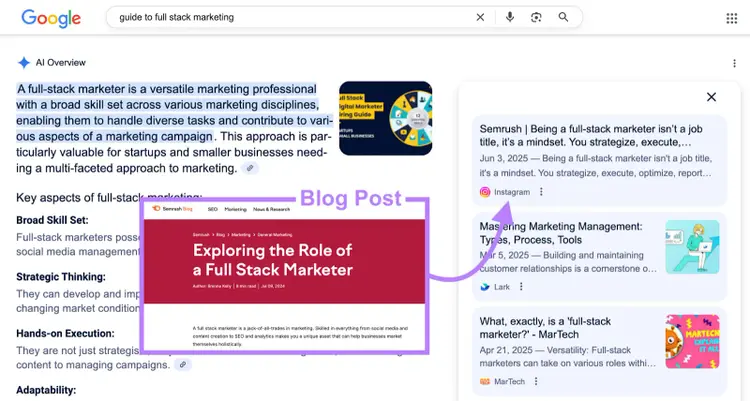
In a multimodal ecosystem, content that appears in text, video, and visuals has a greater chance to be referenced or cited by AI systems.
Multichannel vs. Multimodal: What’s the Difference?
Many marketers confuse "multichannel" with "multimodal," but they're fundamentally different:
AI search tends to reward multimodal content, not just multichannel distribution.
You can post the same blog article on five platforms and still lose to someone who blends text, visuals, and video on a single page.
Why Multimodal Content Drives Better Results
Multimodal content drives better results for three main reasons:
- Your audience engages through different attention states
- AI search draws from multiple content types
- It multiplies your content return on investment (ROI) by extending each asset’s reach and lifespan
Your Audience Lives Across Multiple Attention States
People move through different attention states throughout the day, and their content preferences change with them.
During busy moments, they might skim a short article. When they have more focus, they watch a video. While multitasking, they prefer to listen to audio.
If your brand publishes only one content format—say, text—you’re visible to your audiences during just one of those states.
A multimodal content strategy ensures you’re discoverable and relevant across them all. It keeps your brand present whether your audience is scrolling, watching, or listening.
AI Search Gives You Multiple Ways to Win
AI-powered search experiences, like Google AI Overviews, deconstruct complex queries into subtopics and pull diverse content types to answer each part.
This creates a major opportunity most content marketers overlook.
For example, when someone searches "how to build a content strategy," the AI Overview might:
- Use a written guide for the general explanation
- Pull a process diagram for visual context
- Embed a short video walkthrough for step-by-step guidance

Each content format satisfies a different part of the full AI-generated answer.
Single-format content can appear once. Multimodal content increases your chances of appearing multiple times—across text, visual, and video results.
It Multiplies Your Content ROI
A multimodal content strategy dramatically increases the lifetime value of every content asset you create.
Instead of publishing one blog post that reaches a single audience segment, you can adapt it into several formats. And reach multiple audience preferences and discovery channels.
The result: one core idea, many touchpoints.
This approach helps teams maximize the time and expertise behind every piece of content marketing, without expanding workload proportionally.
Companies that systematize this process consistently see greater reach, engagement, and repurposing efficiency than those producing single-format content alone.
How to Build a Multimodal Content Strategy (5-Step Framework)
This five-step framework shows you how to transform existing assets into a scalable multimodal content strategy, from identifying high-performing content to tracking what truly drives results.
1. Audit Your Existing Content for Repurposing Gold
A strong multimodal content strategy starts with knowing what already works.
Begin by conducting a content audit to identify your top-performing assets from the past 12 months.
Use tools like Semrush’s Organic Rankings tool to uncover pages that drive consistent traffic, engagement, or conversions. Supplement that data with Google Analytics, social engagement metrics, and email performance insights.
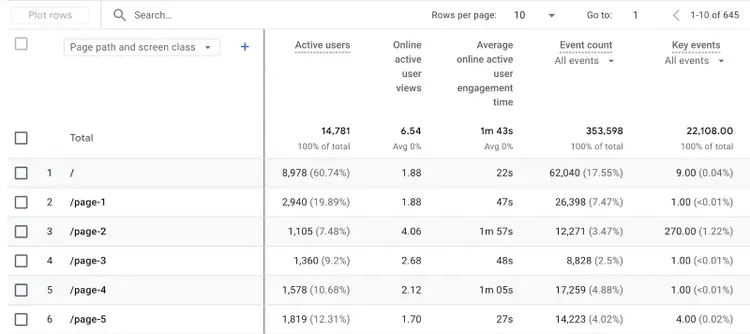
Once you’ve gathered your list, evaluate each piece for repurposing potential. The content should easily expand into new formats without starting from scratch. Look for:
- Comprehensive content (1,500+ words) that covers a topic in depth
- Case studies with clear story arcs or measurable outcomes
- Data-driven reports or posts rich with visuals, charts, or takeaways
These often become the “anchor pieces” for your multimodal workflow.
Prioritize content that requires minimal additional work to convert into other formats. For example:
- Blog posts with step-by-step processes can become video tutorials
- Data-heavy articles can become infographics or visual dashboards
- Interview-based content can become podcast episodes
- How-to guides can become email mini-courses or automated sequences
Create a simple spreadsheet that ranks each content asset by:
- Performance potential (traffic, conversions, engagement)
- Repurposing potential (ease of adaptation, visual elements, evergreen value)
Your top 3-5 pieces become your first multimodal projects.
No obvious winners? Look deeper for hidden gems.
- Articles that completely answer a question, even if traffic is low
- Step-by-step explainers with strong instructional value
- High-performing social posts or email newsletters that sparked engagement
When in doubt, start with your most comprehensive piece from the past year and use it as your pilot project. The goal is to build momentum, not perfection.
2. Map Content Formats to Audience Preferences
Once you’ve identified which assets to repurpose, the next step is to decide which formats and channels best match your audience’s habits.
A multimodal strategy succeeds when every piece meets people where—and how—they prefer to engage.
That means pairing the right message with the right format at the right attention level.
Use available data and insights to learn how your audience interacts with content across different modes
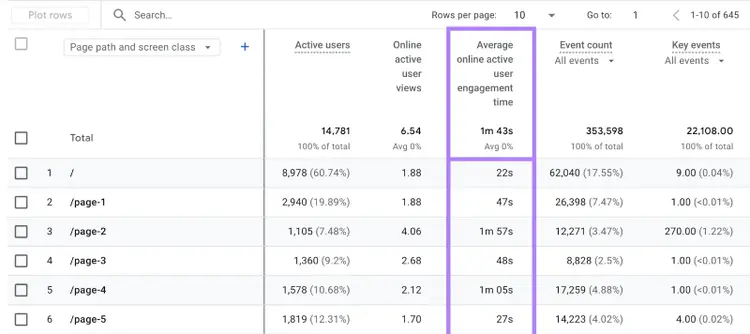
Check your Google Analytics to see which content types get the highest engagement rates and longest time on page.
Also analyze social media analytics to identify which post formats generate the most shares and comments.
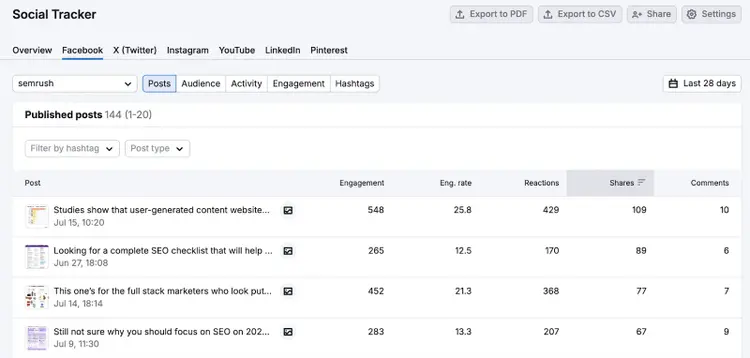
Source: Semrush Social Tracker
Based on what you find, prioritize these content formats for your multimodal strategy:
- If blog posts perform well, prioritize written content as your hub, then create videos and graphics from it
- If videos get high engagement, start with video content, then extract blog posts and social clips
- If infographics get lots of shares, include visual summaries in every multimodal package
From this analysis, identify your top three priority formats.
These become your anchors for future repurposing.
After your first few campaigns, refine your mapping by layering in:
- Platform-specific trends (e.g., TikTok prefers short visuals, LinkedIn favors text-plus-graphic hybrids)
- Audience feedback loops (survey, poll, or comment analysis)
- Competitor analysis (which formats drive traffic for them)
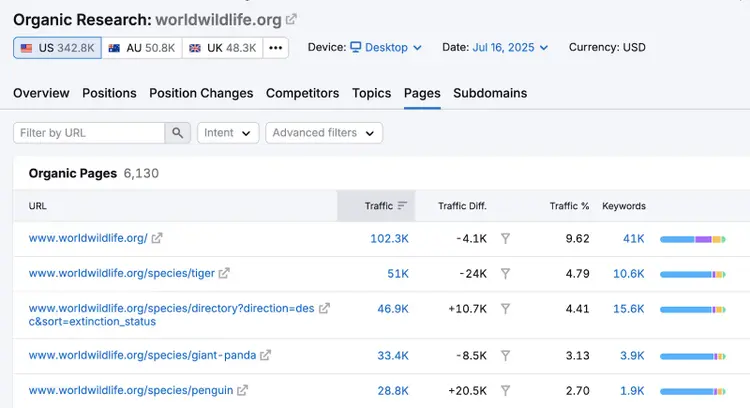
For example, you can use the “Pages” tab in Organic Rankings to see which competitor pages get the most organic traffic.
3. Design Your Content Multiplication System
The goal is to build a predictable process that expands every piece of content across multiple channels and attention modes—without reinventing the wheel each time.
Plan your content multiplication around these proven paths.
Path 1: Starting with video content:
- Extract audio to create podcast episodes
- Pull transcripts and edit them into blog posts or articles
- Capture short clips (15-60 seconds) for social media promotion
- Design quote graphics from key sound bites
Path 2: Starting with written content:
- Convert step-by-step sections into short video tutorials
- Turn data points and statistics into infographics or visual dashboards
- Repurpose key insights as social carousels or quote posts
- Build email sequences from the main points to nurture subscribers
Path 3: Starting with audio or podcast content:
- Transcribe episodes into blog posts or downloadable guides
- Extract quotes and turn them into social graphics or snippets
- Add visuals or slides to create video versions for YouTube or social platforms
- Summarize insights into email content or newsletter recaps
4. Build Your Production Workflow
Map your current content creation process and identify where multimodal tasks can fit naturally.
- If you publish weekly blog posts, schedule repurposing tasks immediately after each post goes live.
- If you run monthly webinars, schedule the repurposing work for the following week.
Then, batch related tasks to minimize context switching and improve speed:
- Dedicate one day to creating all social media graphics
- Reserve another day for infographic design
- Block a third day for editing and exporting video clips
Create simple checklists for each content format to maintain quality, for instance:
- Video clips: Confirm captions, aspect ratios, and branding elements
- Social posts: Verify that key messages align with original content and include proper links
- Infographics: Double-check data accuracy, sources, and visual hierarchy
Keep these checklists in your project management or documentation tool so every team member follows the same standards.
Combine your content multiplication system with a realistic production timeline.
If your workflow starts with a blog post, for example:
- Monday: Publish the post
- Tuesday: Edit and export two short video clips
- Wednesday: Design and schedule social graphics
Adjust timing to your team’s capacity. Starting with generous timelines for your first few multimodal projects gives space to develop templates and refine the process.
Tip
Use Semrush’s Content Calendar templates to coordinate production tasks, deadlines, and format-specific checklists in one centralized view.
5. Set Up Tracking That Actually Matters
Tracking helps you uncover which topics and formats perform strongest in specific roles:
- A technical tutorial may generate higher engagement as a video than as a blog post
- Industry analyses might perform better as long-form written content
- Data-heavy topics could drive more social shares when visualized as infographics but attract more leads when packaged as downloadable reports
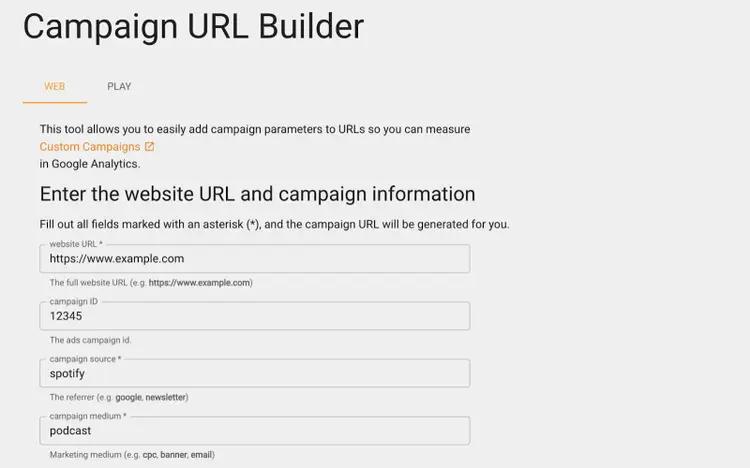
Before publishing, set up UTM parameters (tracking codes) for each format and distribution channel. This lets you see exactly which versions of your content drive traffic and conversions.
- Use Google's free UTM Builder
- Standardize naming conventions so you can easily filter by format (e.g., utm_medium=video, utm_content=infographic)
- Store links in your content calendar or project tracker to ensure every asset is traceable
Define simple success metrics for each format based on its purpose, for example:
- Blog posts: organic traffic, time on page, and assisted conversions
- Video content: view duration, click-throughs, and engagement rate
- Social media posts: share-to-view ratio and profile visit volume
- Email sequences: open rates, click rates, and downstream conversions
Review your data regularly—monthly or quarterly—to pinpoint which combinations of topic and format drive the strongest results.
When you see patterns, adjust your production priorities:
- Double down on the formats that amplify key topics
- Scale back on formats with low engagement or ROI
- Reinvest learnings into Step 1 for your next content audit cycle
Over time, this feedback loop makes your multimodal strategy smarter, leaner, and more profitable.
Essential Tools for Planning and Measuring Success
The right content creation tools make multimodal content strategy scalable and sustainable.
Rather than managing dozens of disconnected assets, these platforms help you analyze performance, streamline repurposing, and track results efficiently.
Here are the key tool categories that support each step of your strategy.
Content Analysis and Planning Tools
- Google Analytics identifies your highest-traffic content and shows which formats get the most engagement time
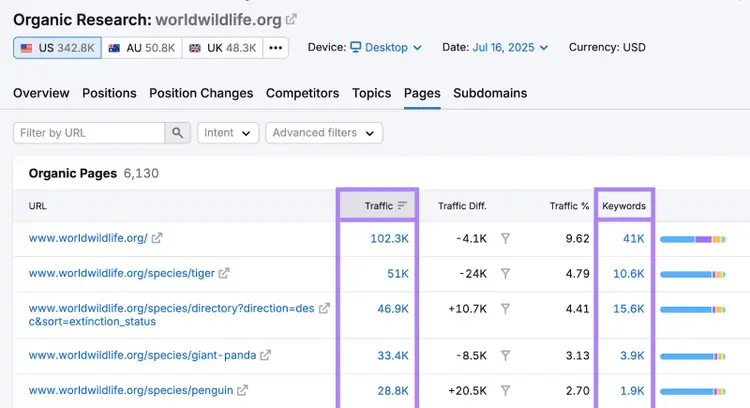
- Organic Rankings reveals your (or your competitors’) top-performing pages for repurposing by showing organic traffic and keyword rankings
- Native social platform analytics (Instagram Insights, LinkedIn Analytics) reveal which post formats generate the most engagement from your audience
Content Creation and Repurposing Tools
- Canva streamlines graphic creation for social posts and infographics with consistent templates
- Loom (free) creates quick video clips from blog content without complex editing software
- AI writing tools (Claude, ChatGPT) help repurpose written content into social posts, email sequences, and video scripts
- Trello or Notion organize your multiplication workflow and track which content gets repurposed into which formats
Analytics and Attribution Tools
- UTM Builder (free Google tool) tracks which content formats drive website traffic and conversions
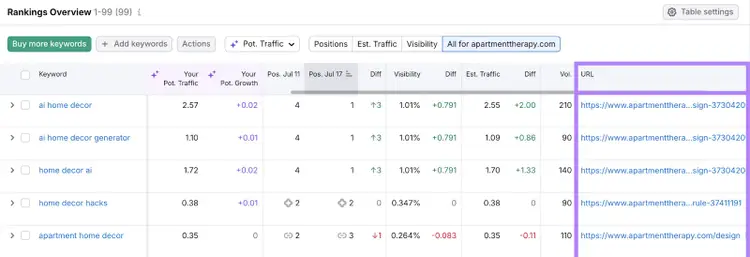
- Position Tracking shows which of your pages rank for target keywords, helping you identify whether video-rich pages or text-heavy pages perform better in search results
- Looker Studio creates dashboards combining performance data from all your content formats
- Google Analytics tracks conversions and goal completions from each format
Start with free tools and upgrade only when you've proven the value of your multimodal approach.
The strategy matters more than the tools—sophisticated software won't fix a poorly planned content multiplication system.
Common Pitfalls That Kill Multimodal Strategies
Even well-intentioned multimodal strategies can stall without a disciplined approach. Watch for these common mistakes that derail teams early—and learn how to avoid them.
- Trying to do everything at once: Many teams attempt eight or more content formats right away and quickly exhaust their resources. Start with a maximum of three core formats. Build reliable systems around those before expanding. Mastery beats volume.
- Ignoring mobile optimization: A majority of content consumption now happens on mobile devices, yet many teams design graphics or videos that don’t translate to smaller screens. Always preview every asset—visuals, videos, and carousels—on mobile before publishing. Optimize aspect ratios (1:1, 9:16) and ensure text remains readable without zooming.
- Skipping tracking setup: You can’t optimize what you don’t measure. Without format-level tracking, it’s impossible to know which versions perform best. Set up UTM codes and conversion tracking from day one. Use Semrush Position Tracking or Traffic Analytics to tie performance back to specific formats and pages.
- Treating repurposing as extra work: When repurposing isn’t baked into the workflow, it becomes the first task dropped when deadlines tighten. Integrate multimodal creation directly into your content calendar. Treat it as a standard production stage, not an optional add-on.
- Producing formats your audience doesn’t want: Teams often invest heavily in complex formats before confirming audience demand. Test before scaling. A short, phone-recorded video or quick-turn infographic can validate interest faster and cheaper than full-scale production.
Start small, measure consistently, and scale only what works for your audience.
A focused, data-driven approach ensures your multimodal strategy grows sustainably and delivers measurable results instead of creative fatigue.
Ready to Multiply Your Content's Impact?
You now have a complete framework for turning single pieces of content into multiple formats that reach new audience segments and increase your visibility in AI-powered search results.
Start small:
- Go back to Step 1 and audit your existing content. Identify your top three to five assets with strong repurposing potential.
- Choose one of those pieces and create just two new formats from it—such as a short video and a social carousel.
This focused start gives you quick, measurable proof that a multimodal content strategy works without overloading your current workflow.
Once you’ve validated your first project, scale up using the insights from Step 5 to guide which formats deliver the best engagement and conversions.
Your competitors are still publishing one-dimensional content. The teams investing in multimodal systems today will shape how audiences discover information as AI continues transforming search behavior.
Claim Your Free 7-Day Trial
and Explore Our Digital Marketing Tools

Carlos Silva leads the editorial pipeline for the English blog—coordinating writers, editors, strategy, and building AI workflows that boost content quality and AI visibility. With 10+ years of experience writing and editing across in-house and agency roles, Carlos blends content strategy, SEO, and AI to help marketers stay ahead of an evolving search landscape.
Carlos Silva
Carlos Silva leads the editorial pipeline for the English blog and builds AI workflows that boost content quality and AI visibility. 10+ years writing and editing across in-house and agency roles.

Tells Google to show you more from Semrush in AI, Search, and Discover.