What Is Content Marketing? [Simple Definition + Starter Guide]
Expert reviewed
Our subject matter experts have reviewed this article to ensure it meets the highest standard for accurate information and guidance. Learn more about our editorial standards and process.
Content marketing is the process of planning, creating, and sharing valuable content to attract and engage a specific audience. To build relationships that eventually contribute to business results.
It focuses on solving problems and answering questions. Not necessarily directly selling products or services.
Common types of content include:
Blog posts
Videos
Podcast episodes
Infographics
Ebooks
Newsletters
Social media posts
Webinars
The goal?
To build trust with your audience and establish your expertise. So that when your audience needs a solution you offer, they'll be more likely to turn to you first.
For example, look at how Dove uses content marketing:
Their blog contains articles on body positivism and self-esteem. Their inspirational YouTube videos challenge beauty stereotypes. And their Instagram showcases real, unedited photos of women of all shapes and sizes.
Each content type serves a specific purpose. But together, they create a platform of empowerment and self-acceptance.
This approach helps Dove build a loyal community and positions their brand as more than just a soap.
Which means:
When someone shops for personal care products, they’re more likely to choose Dove.
Higher search engine rankings: Publishing and updating website content that’s created with search engines in mind can help you appear prominently in search results
Increased organic traffic: Having your content appear prominently in search results often leads to more website visits
Enhanced customer loyalty: Providing content that your audience finds valuable can foster trust and loyalty
Increased conversion rates: engaging content can convert visitors into loyal customers
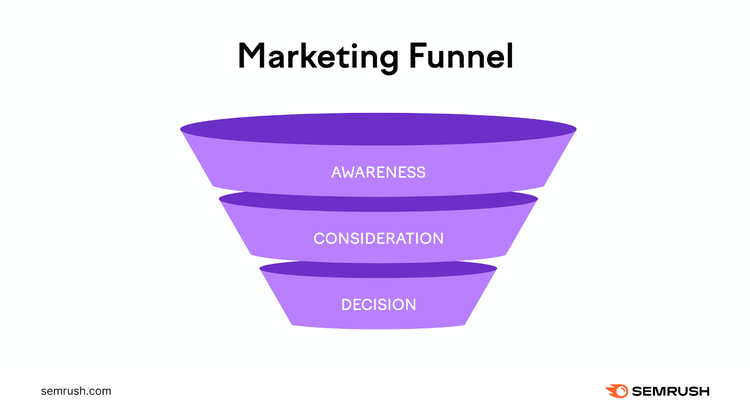
Content marketing works by reaching the right audience at the right time. Which is largely about targeting each stage of the marketing funnel—from awareness to decision.
Note
Many funnel models also include a fourth phase—loyalty—because you ideally want to retain customers in the long term. But you need to start with these three before getting to that point.
Awareness
At this stage, content marketing is all about creating awareness for your brand and your products or services.
Your potential customers are just realizing they have a problem. And your goal is to grab their attention.
You should create content that provides high-level education and has broad appeal. To attract as many relevant people as possible.
Effective content types for this stage can include:
Blog posts
Infographics
Ebooks
Social media posts
Example: The Squarespace blog helps businesses and entrepreneurs learn how to build their own websites.
And their blog brings in around 14.9K monthly visitors from organic search alone.
In the consideration stage, you can nurture leads and urge them to consider your business. Because your audience is actively researching solutions.
Your best bet is to create in-depth content that’s persuasive and explains what makes you stand out from the competition.
Effective content types at this stage:
How-to guides
Comparison articles
Webinars
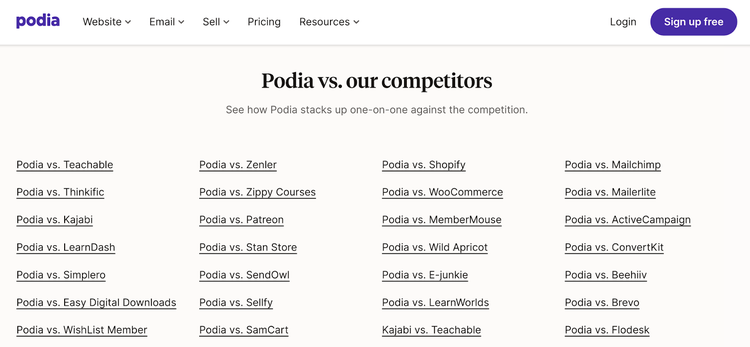
Example: Podia’s “alternatives” webpage with in-depth information about how their product compares to their closest competitors.
Decision
In this third and final stage, leads are ready to buy. So, provide leads with content that solidifies your value to give them the final push toward taking action.
You want to create content that instills a sense of urgency, addresses any objections, and makes it easy to take the next step.
Effective content types:
Success stories
Product demos
Customer testimonials
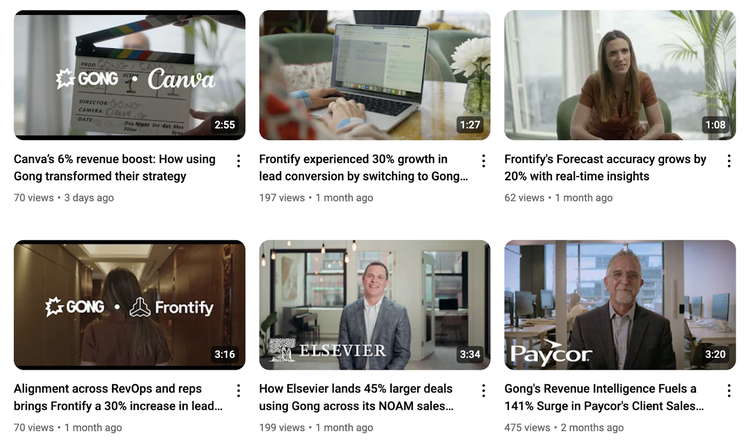
Example: Gong’s YouTube channel highlights how real teams and businesses have benefited from using their tool.
Before creating any content, you need to know two things: your goals and your audience.
Your goals are the specific outcomes you want to achieve with your content marketing.
For example, you might want to increase site traffic by a certain percentage or drive a specific number of leads in support of a larger company goal.
Your audience is the group of people you want to reach with your content.
For example, you might want to target bloggers in the food industry or recent college graduates seeking internships.
This step is critical.
And here’s why:
Defining your goals and audience guides your entire content strategy
A solid strategy helps create content likely to resonate with your audience
Impactful, relevant content leads to better ROI
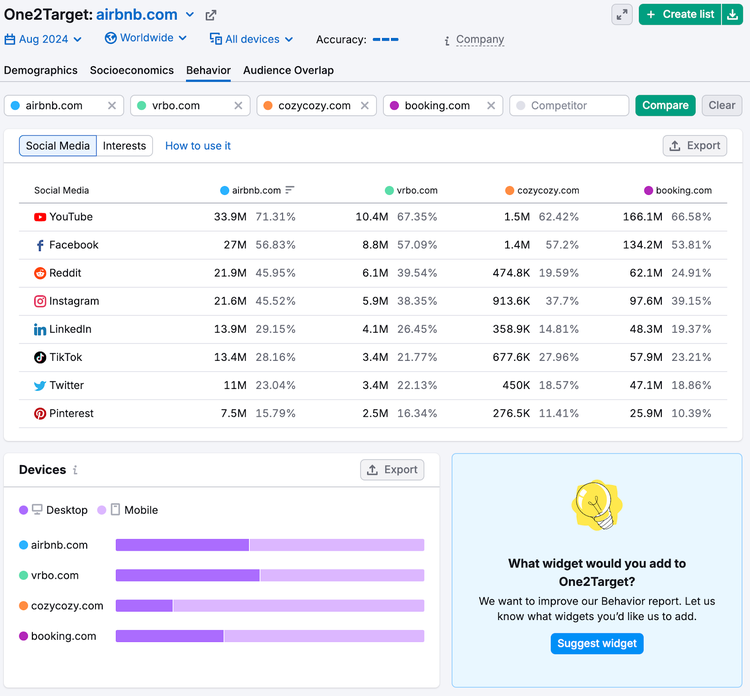
You can quickly find your target audience by analyzing competitor audiences with One2Target.
Enter up to five competitors’ domains, and the tool will gather information about their audiences’ demographics, socioeconomics, and behavior.
Like this:
Here are some additional steps you can take to define your goals and audience:
Review your current performance. What are your strengths and weaknesses? What are your opportunities and threats?
Create your ideal customer personas. Who are they? What are their pain points, needs, and desires? How can you help them?
Conduct a competitor analysis. Who are your main competitors? What are they doing well and poorly? How can you differentiate yourself from them?
Set the right types of goals. Specific, measurable, achievable, relevant, and time-bound (SMART) goals make it easy to see whether you’re on track. For example, a SMART goal could be: “Increase organic traffic by 50% in the next six months.”
Choose key performance indicators (KPIs) that measure progress. For example, common KPIs for content marketing are sessions, bounce rate, average engagement time, social shares, email subscribers, etc.
You’ve defined your goals and audience. Now, you need to choose the best content types for your content marketing efforts.
We discussed some of these earlier, including:
Blog posts
Ebooks
Videos
Podcast episodes
Webinars
Case studies
Social media posts
Don’t know where to start?
A great way is to reverse-engineer your competitors’ content strategies. See what’s working for them and replicate it in a better way.
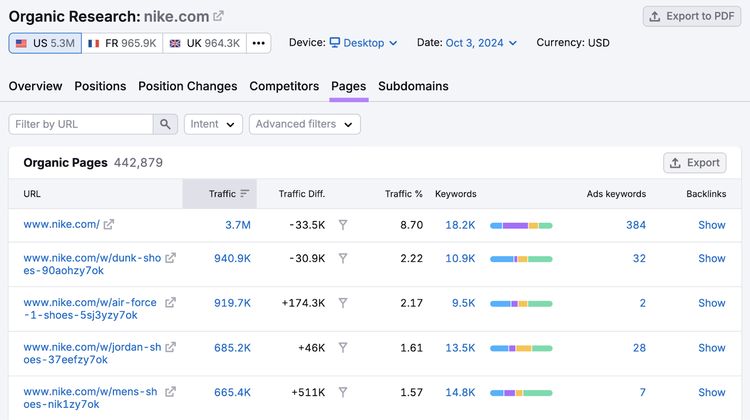
Open Organic Rankings, enter any competitor’s domain, and head to the “Pages” tab.
This is a list of your competitor’s pages, conveniently sorted by the estimated amount of organic traffic they bring in.
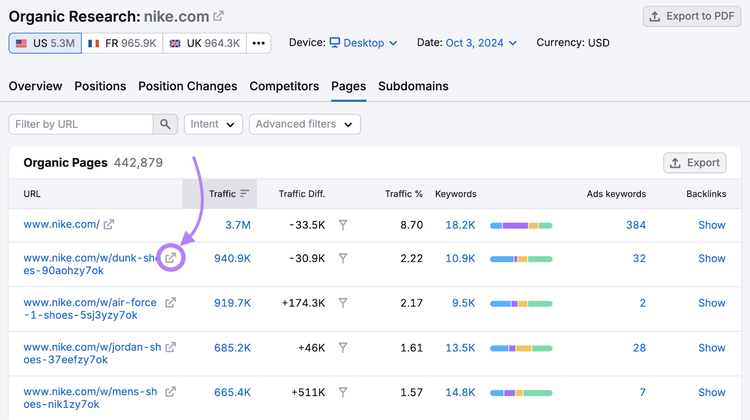
Click the icon next to the URL to see the actual page:
Browse through several of their top pages. And repeat this process for your main competitors.
As you do this, look for patterns.
For example:
Do they use lots of visual assets?
Is the content mostly long-form or short-form?
Are the URLs mostly landing pages, ebooks, case studies, or something different?
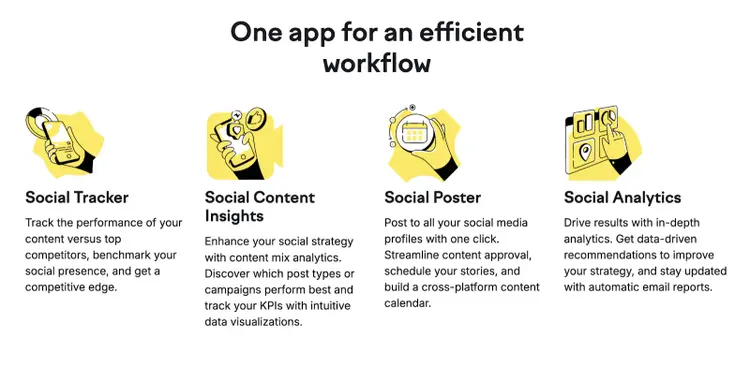
Follow a similar process using the Social Tracker tool within Semrush’s Social Toolkit to see what kinds of social media content your competitors post. And what resonates with their audiences the most.
Again, review the content to look for patterns and ask questions. Then, use the answers to guide your content choices.
Here are some additional tips for deciding which content types to use:
Align content types with your goals. Different content types have different purposes and benefits. For example, blog posts are great for driving traffic, ebooks are great for generating leads, and videos are great for increasing engagement.
Align content types with audience segments. Some content types appeal to different segments. For example, some audiences prefer visual content, some prefer audio content, and some prefer interactive content.
Experiment and optimize. You don’t need to stick to one content type. In fact, you shouldn’t. Mix and match to see what works best. Track KPIs and adjust accordingly.
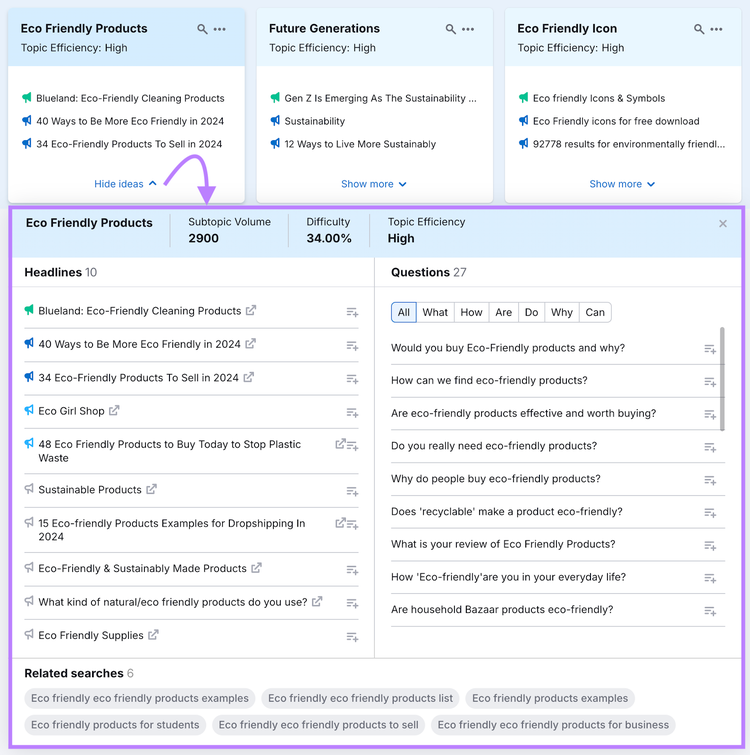
Start by conducting keyword research to find content ideas that are relevant to your brand, popular, and possible to rank highly for.
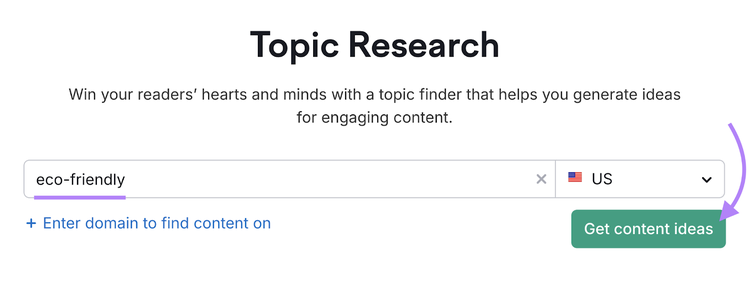
An effective way to do this is to enter a topic related to your brand into Topic Research.
Then, click “Get content ideas.”
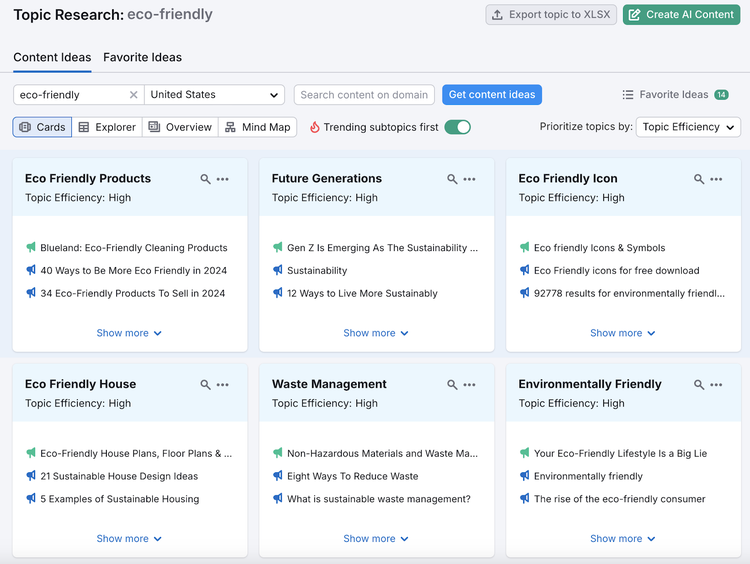
The tool will show related content ideas sorted by “Topic Efficiency.”
These are topics with high search volumes (a high number of average monthly searches) and low keyword difficulty (a low score that indicates you can feasibly rank for a given term).
Click “Show more” on any card to see the search volume, difficulty score, popular headlines, related questions, and related searches for that topic.
Like this:
Use these ideas to create different content types around popular topics.
Pro tip
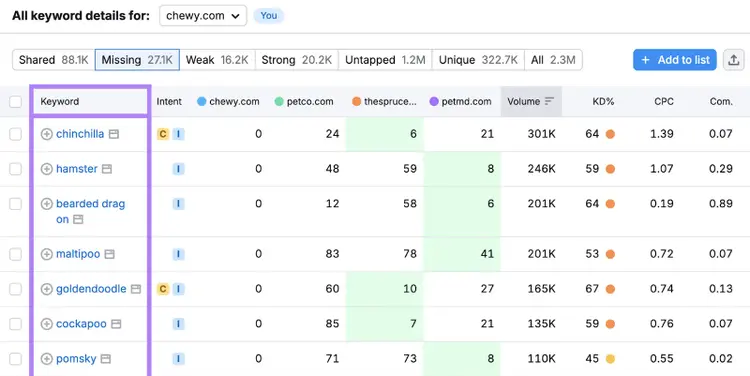
Conduct a keyword gap analysis with Keyword Gap to find keywords your competitors rank for but you don’t. Each of these keywords represents an opportunity for you to create content and capture more traffic.
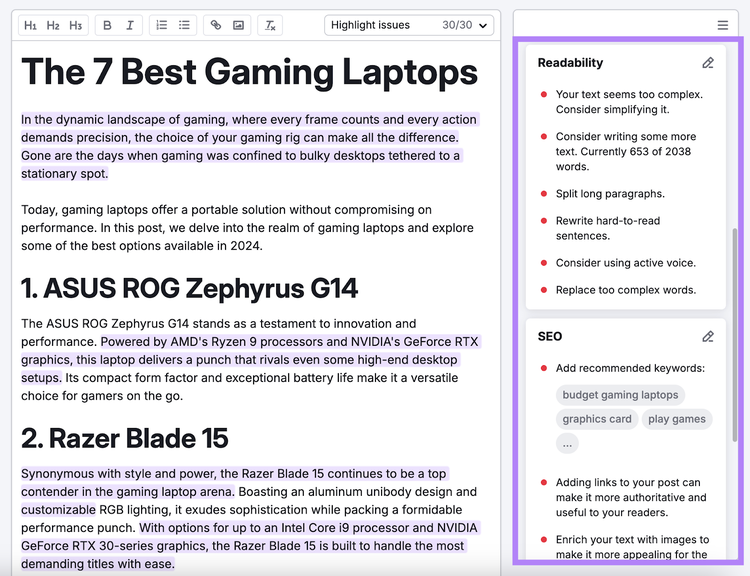
4. Create High-Quality Content
You’ve done the hard work involved in planning.
Now, it’s time to create some high-quality content.
Great content needs to be seen to do its job. Which is why promotion is so important.
Effective content promotion can increase visibility and attract potential customers.
Some content promotion tactics (many of which are content types themselves) include:
Social media: Use your social media platforms to share stand-alone posts and promote content on your site that you want to drive more people to
Paid advertising: Use Google Ads to quickly get your content in front of more people
Email marketing: Send your subscribers new content and encourage them to read and share it
Content syndication: Share your content on relevant, third-party sites to expand your reach
Digital PR: Use tactics like media outreach to get your content featured in other publications
Not all of these will work for you.
So, make sure to prioritize the ones that align with your goals and your audience. And test and iterate often.
Tip
Managing multiple social media accounts can be overwhelming. Use our Social Media Toolkit to streamline your workflows, save time, and boost your content’s reach.
Your final step is to monitor and analyze your results. So you can see how your content is performing and whether it’s helping you achieve your goals.
How?
Try following these steps:
Use analytics tools. These are tools that can help you measure and track your content performance, such as Google Analytics, Google Search Console, and Semrush.
Use feedback tools. These are tools that can help you collect and analyze feedback from your audience, such as SurveyMonkey, Hotjar, and UserTesting.
Use reporting tools. These are tools that can help you create and share reports on your content results, such as Google Looker Studio, Tableau, or Power BI.
Compare results with your goals. See how your content is performing against your SMART goals. Identify what’s working, what’s not, test, and iterate.
Make data-driven decisions. Based on your results and analysis, decide what actions you need to take to improve your marketing content. For example, you might want to create more or less content, change your content types or channels, or optimize your content for SEO or conversions.
Develop Your Content Marketing Skills
This guide gives you a solid start. But mastering content marketing requires continuous learning and the right tools.
To build an effective strategy, you need to dive deeper into the nuances of content creation, SEO, and audience engagement.
Semrush offers free resources to boost your content marketing skills. Pair these with a free account to put your new knowledge into action.
Carlos Silva leads the editorial pipeline for the English blog—coordinating writers, editors, strategy, and building AI workflows that boost content quality and AI visibility. With 10+ years of experience writing and editing across in-house and agency roles, Carlos blends content strategy, SEO, and AI to help marketers stay ahead of an evolving search landscape.
Subscribe to learn more about Content
Subscribe
By clicking “Subscribe” you agree to Semrush Privacy Policy and consent to Semrush using your contact data for newsletter purposes
Carlos Silva
Carlos Silva leads the editorial pipeline for the English blog and builds AI workflows that boost content quality and AI visibility. 10+ years writing and editing across in-house and agency roles.
Share
Tells Google to show you more from Semrush in AI, Search, and Discover.