
Short-Form vs. Long-Form Content: Which Should You Use?
Both long-form and short-form content can be valuable for engaging your audience.
But knowing when to choose short-form versus long-form content depends on multiple factors. Like your audience, the platform, the topic’s complexity, and your budget.
In this article, you’ll learn more about both types of content. And how to decide which one is best suited for your specific marketing goals.
Let’s start with some key distinctions.
Short-Form vs. Long-Form Content: Main Differences
What Is Short-Form Content?
Short-form content is any content that's easy to consume. The exact length can vary, but written short-form content is often under 1,000 words. And short-form videos are typically 60 seconds or less.
Examples of short-form content include:
- Blog posts
- News articles
- Emails
- Infographics
- Social content like TikTok videos, Instagram posts, and memes
The goal of short-form content is often to get a message across quickly. Without overwhelming the user.
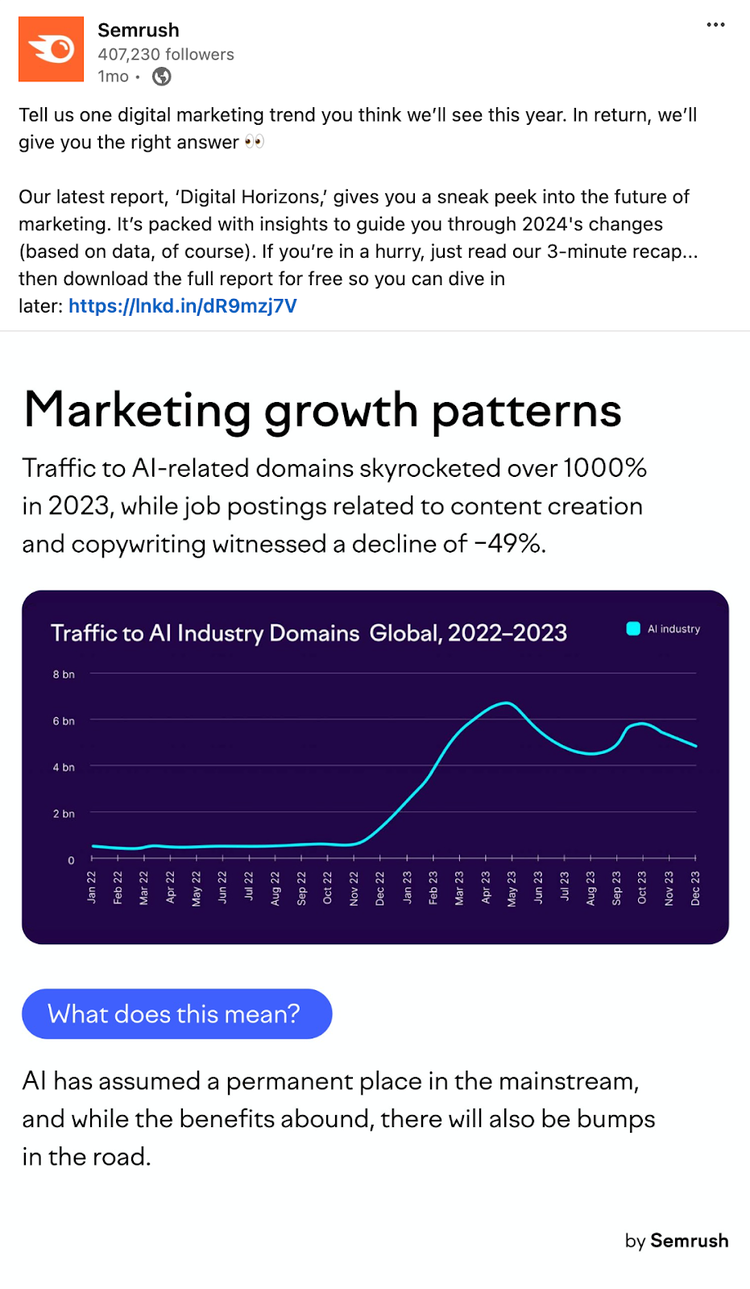
Here’s an example of a Semrush LinkedIn post that gets a message across quickly with a combination of both text and an image:
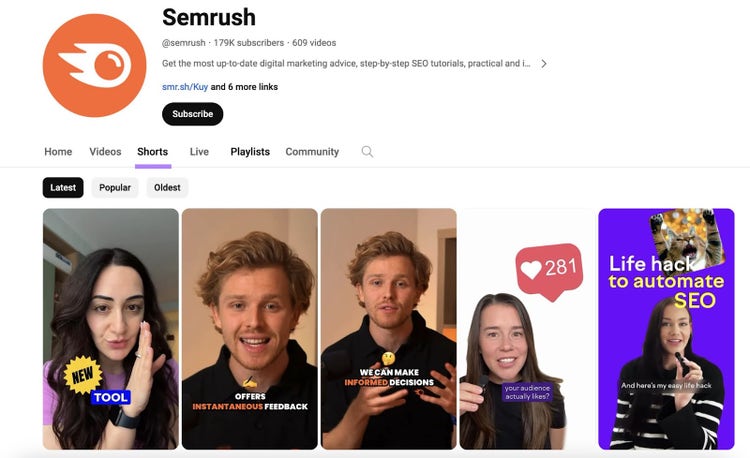
Some other examples of short-form content include videos like YouTube Shorts:
What Is Long-Form Content?
Long-form content covers a topic in greater detail and is typically over 1,000 words (or longer than 60 seconds for videos).
This type of content isn’t usually intended to be rapidly consumed. And instead aims to educate and inform those looking to learn more about a topic.
Long-form content formats include:
- Blog posts
- Guides and tutorials
- White papers and ebooks
- Webinars and virtual events
- Pillar pages
For example, this ebook from Learnerbly:
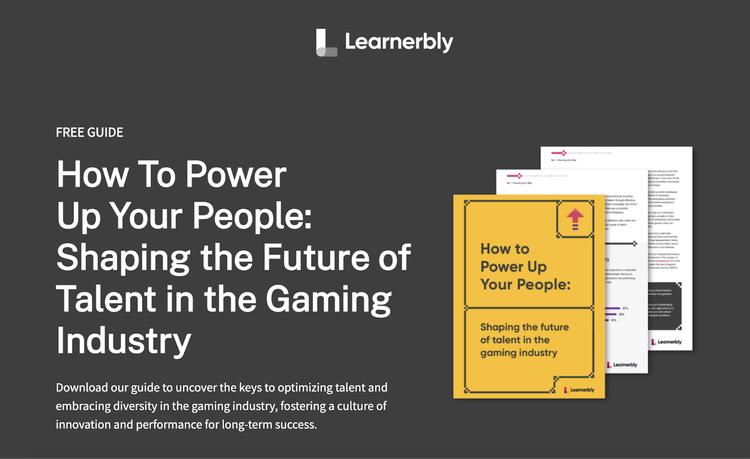
It’s a 25-page ebook that explores the present and future of learning and development in the gaming industry. And shares actionable tips on retaining talent.
Here’s an example of long-form video content:
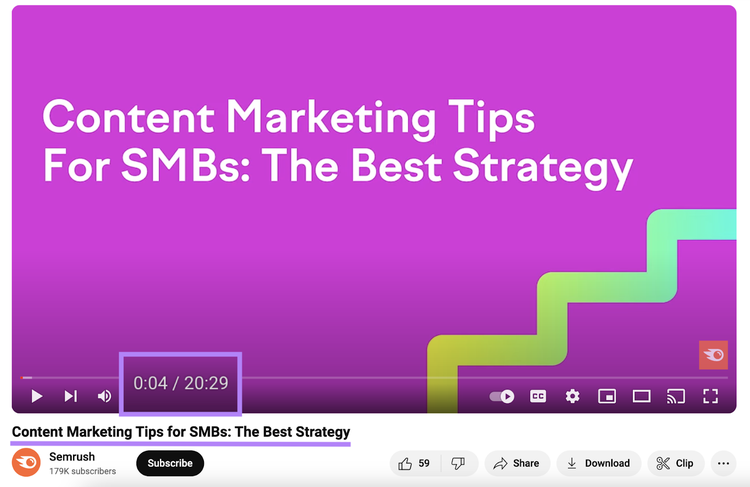
This 20-minute video thoroughly explains the best content marketing tips for small- to medium-sized businesses. Providing viewers with a well-rounded understanding of the topic.
Short-Form vs. Long-Form Content: Pros and Cons
Pros and Cons of Short-Form Content
Some of the best reasons to use short-form content are that it’s:
- Easier for users to consume
- Typically mobile-friendly
- Less resource-intensive to produce and easier to scale compared to long-form content
- Sharable due to its brief and often punchy nature
As for downsides, short-form content:
- Doesn’t allow you to cover a topic in depth, which can lead to oversimplification or skipping key details
- Can easily start to seem repetitive if it’s not produced with a well-planned strategy
- Often has a shorter shelf life than evergreen content, so its relevance can fade quickly
- Might not establish your authority as well as long-form content given the limited space
Pros and Cons of Long-Form Content
Some of the main advantages of long-form content are that it:
- Stands a better chance of getting keyword rankings that boost visibility in search engines
- Tends to earn more backlinks (links on other websites that point to your website) that can improve your search engine rankings
- Often stays relevant and attracts traffic and engagement for longer periods of time
- Can be reworked and shared on other platforms, giving you more value for your effort
- Helps to position you as a thought leader in your industry, especially when it includes original research and insights
But long-form content has some downsides. Such as that it:
- Often takes more time and resources to produce
- Doesn’t always display properly on mobile devices. Which can impact user experience and SEO.
- Might overwhelm or discourage people who prefer snackable content
- Doesn’t always garner as much engagement or inspire action
How to Choose Between Short-Form and Long-Form Content
Any successful content marketing strategy should balance both short- and long-form content to meet the audience’s needs and wants.
Here’s what to do when determining which type of content to create:
Identify Your Goals
The type of content you produce depends on what your goals for the piece are. Because different content formats work best for different purposes.
Long-form content can be most useful for:
- Building brand awareness and authority
- Nurturing leads, especially for expensive offerings or B2B sales
- Establishing your company as a thought leader
Short-form content will be most effective if your goals are focused on:
- Building engagement on social media
- Promoting customer loyalty and brand affinity with new prospects
- Driving immediate conversions like sales or event sign-ups
Imagine you just released a new technical feature. And you want to teach your audience about how valuable it is within your niche.
In this case, creating a long-form video for YouTube or a dedicated section on your website would be the way to go. Because long-form video gives you the space to explain things in detail while also showing concepts that might be difficult to convey in writing.
Understand Your Audience
Learning about your target audience’s preferences and behaviors can inform the topics you cover and how you cover them.
Use Semrush’s Market Explorer tool to discover key information about your audience.
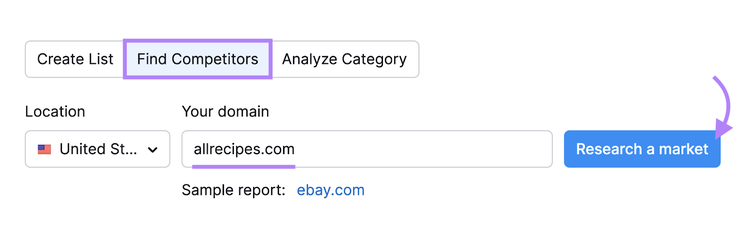
To get started, open the tool and select the “Find Competitors” tab.
Select your location from the drop-down menu, enter your domain, and click “Research a market.”
Once the tool is ready, navigate to the “Audience” tab.
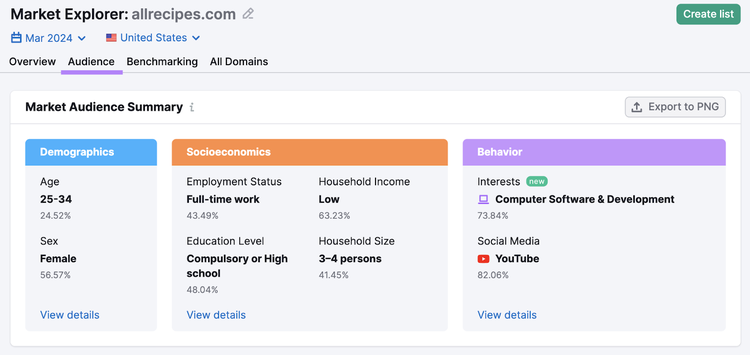
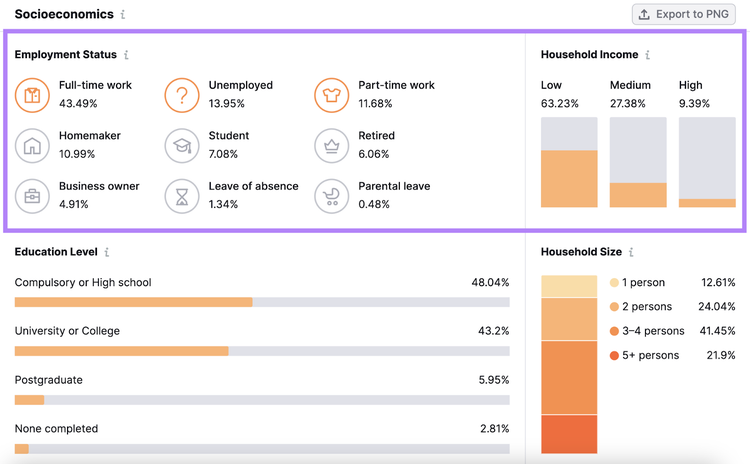
Here, you’ll see a detailed breakdown of your target audience’s characteristics. Like their age, employment status, and more.
The employment status and income data can give you clues about your audience’s buying power.
And the social media section reveals which platforms they use most.
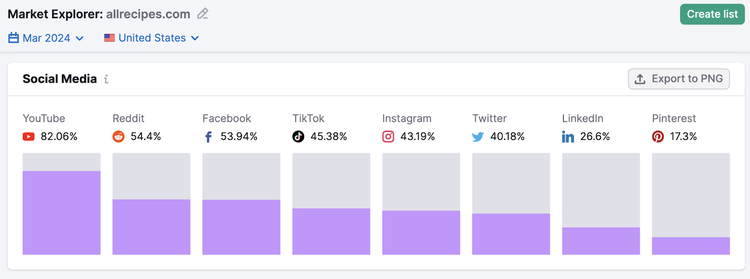
If most of your audience has a lower income and prefers to use YouTube, they may need more convincing about your product’s value and pricing via video content.
In this case, long-form videos that thoroughly explain the benefits of your product or service could be especially effective.
Analyze Your Market
with the Market Explorer Tool
Consider the Platform
Doing audience research can give you a lot of insight into which platforms to focus on. And some platforms are more suited to a particular type of content.
For example, X (formerly Twitter) has a strict post limit of 280 characters. Making it best for short-form content like brief insights, infographics, and quick videos.
Alternatively, Instagram Stories are all about brief visual stories that disappear after 24 hours. This makes them perfect for quick posts that aren’t meant to stand the test of time. Like a day-in-the-life clip or an event-focused promotion.
Here’s an example of how Puma uses Instagram Stories to promote its brand:

You can also use Instagram Stories to direct people to your long-form content on other platforms. But posting large chunks of text in a story is difficult to execute and unlikely to be effective.
But company blogs and YouTube are great for long-form content. Because they offer the space and flexibility to create more detailed content.
Analyze Your Keywords’ Search Intent
For content you’re planning to publish on your website, it’s a good idea to keep in mind which keywords you’re targeting and their corresponding search intent—the reason why a user is searching a given term.
Generally, there are four types of search intent:
- Navigational: Users want to find a specific page or brand (“reddit careers page”)
- Informational: Users want to learn more about something (“what is short form content”)
- Commercial: Users want to do research before making a decision (“best accounting software”)
- Transactional: Users want to take action like making a purchase (“buy casper mattress”)
Long-form content like in-depth blog posts will work well if your audience’s intent is commercial or informational. But short-form pieces like product pages are better for keywords with transactional intent.
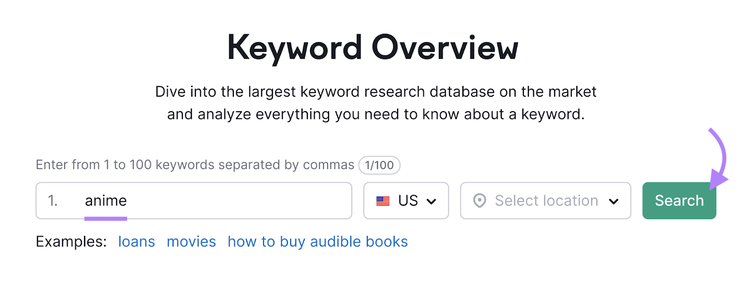
Use the website keyword checker to discover your audience's intent when they're searching for a particular query.
Open the tool, type your target keyword in the field, and click “Search.”
Look for “Intent” on the “Overview” report.
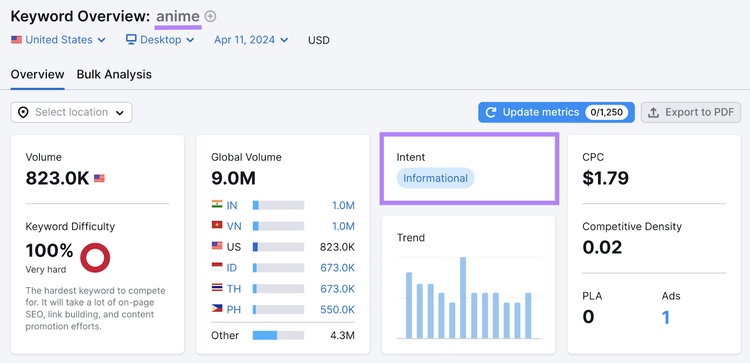
Now, you have more insight to help you figure out whether to create long-form or short-form content for your particular keyword.
Get Audience Insights for Your Content Strategy
with the Website Keyword Checker
Evaluate Topic Complexity
Topic complexity plays a huge role in whether you should opt for long-form or short-form content. Because complex topics usually require a long-form format that lets you cover all the necessary details.
But if you’re dealing with a straightforward topic that doesn’t require much explanation, short-form content might be the better option.
For example, if you’re promoting a sale, a super brief email like this one from video game platform Steam is a good choice.

Determine What Can Be Repurposed
Repurposing content involves taking an existing piece and modifying it to make something new. It’s a great way to use the existing long-form content you have to quickly create multiple short-form pieces.
For example, you can turn a lengthy blog post into several short-form pieces for social media, newsletters, and more.
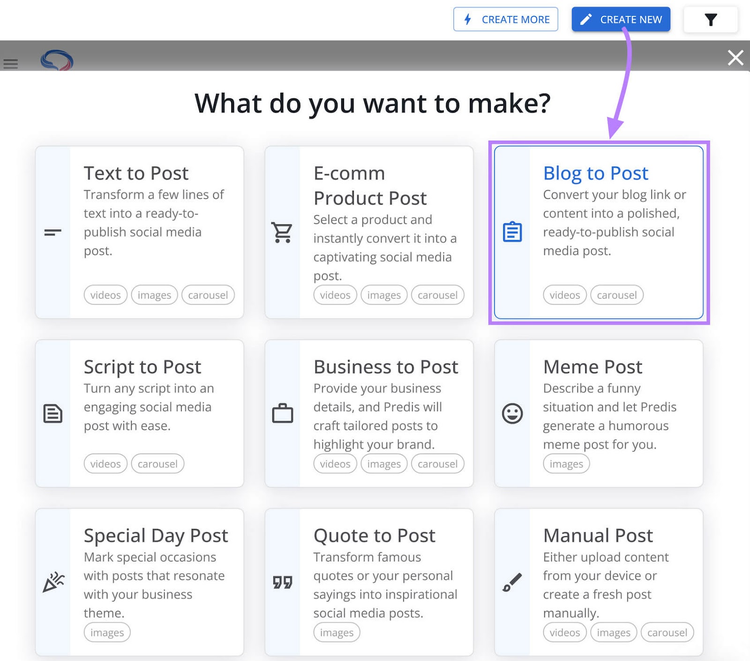
Use the AI Social Content Generator app to make this even easier.
Once you’ve set up the tool, select “Create New” and choose “Blog to Post.”
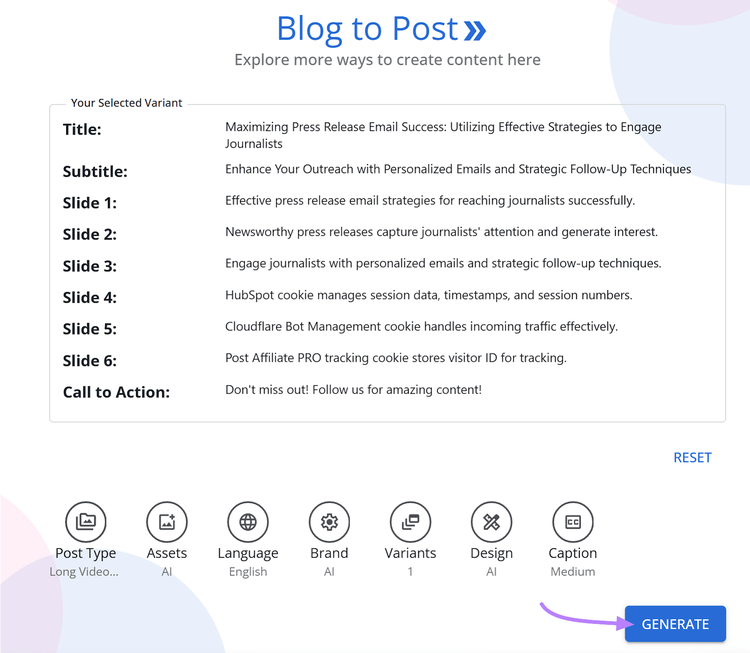
Once you provide a URL or paste in the text for the article you’re repurposing, the tool will use AI to generate a script that you can adjust as needed.
Choose your post type and make any needed finishing touches. Then, select “Generate” to get a post you can publish to your social media channels.
Create the Content That Helps You Reach Your Goals
A well-rounded content strategy includes long- and short-form content. And they both require thorough audience research.
Use Semrush’s Market Explorer tool to gain valuable insights you can use to create a mix of short-form and long-form content that helps drive results.
Elevate Your Content Strategy
with a Semrush Subscription

Hava Salsi is a Swiss-based content writer specializing in B2B SaaS, HR, and tech. With over 5 years of experience working with startups and businesses around the world, she produces engaging, user-centric content that ranks highly and drives conversions.
Tells Google to show you more from Semrush in AI, Search, and Discover.