
Brand Mentions: Complete Guide to Tracking, Measuring & Optimizing
Your brand is likely being talked about online right now. In news articles, Reddit threads, review sites, and social posts. Some of those brand mentions help people find you. Others shape how your audience perceives you before they ever visit your site.
In this guide, you’ll learn how to get brand mentions, how they affect your search and AI visibility, which KPIs matter, and how to monitor your brand mentions.
What are brand mentions?
A brand mention is any online reference to your company, product, or service, whether or not it links back to your site. These mentions could be in social posts, news articles, Reddit threads, podcasts, and on other websites.
If your brand is consistently mentioned by authoritative sources, it signals that your brand is trustworthy to search engines and AI systems. This can lead to improved search visibility and more mentions, citations, and recommendations in AI responses.
Why does tracking brand mentions matter?
Tracking brand mentions gives you actionable insight into how your brand is perceived, discovered, and recommended online. It helps you:
- Measure your brand awareness: Online mentions give you a concrete way to see whether knowledge of your brand is growing across the web
- Manage your reputation: You can monitor what people say about your brand and respond strategically to shape public perception when needed
- Gauge your brand authority: Mentions on relevant, trusted sources indicate how credible your brand appears to search engines and AI systems
- Compare yourself to competitors: You can see where competitors earn coverage, how they’re discussed, and where you may have visibility gaps
- Spot AI visibility signals: Brand mentions across the web can show whether your brand is referenced in the types of sources that influence AI-generated answers
3 types of brand mentions and what each does
There are three broad types of brand mentions, each affecting your visibility across search engines and AI platforms differently.
Here's a breakdown of each type:
Note that AI mentions are different from AI citations, where your content is linked as a source and may drive referral traffic. A brand mention in an AI response may also contain a link, but not always.
How to track online brand mentions
You can track online brand mentions manually, or by using free tools, dedicated monitoring platforms, or AI search tracking platforms.
Google Alerts and manual searches
Google Alerts offers simple brand monitoring by sending you email notifications whenever your brand appears in news articles, blogs, or other websites.
Set up alerts for your brand name (including common misspellings), executives’ names, or product/service names.
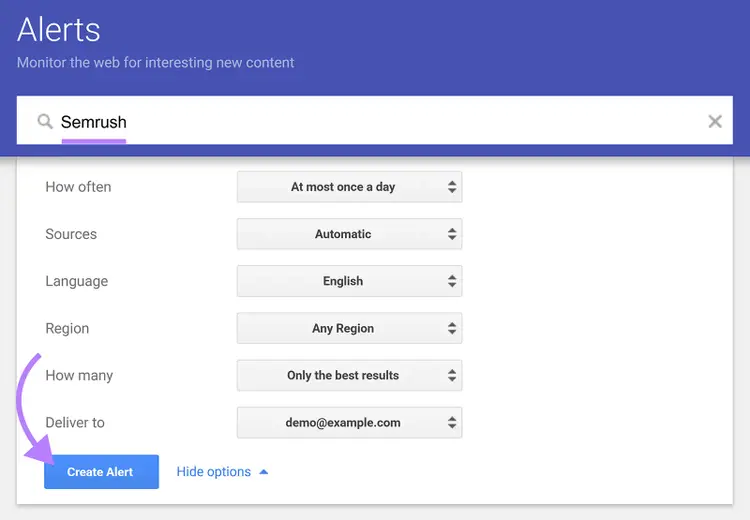
Google Alerts doesn’t cover mentions on social platforms or forums like Reddit. It also lacks sentiment analysis and historical data, making trend tracking difficult.
To fill the gaps, manually search X, Instagram, LinkedIn, Reddit, and TikTok for brand mentions. Note how frequently people mention your brand, relevant hashtags they use, and the language people use when they talk about your brand and competitors.
This method is best for:
- Small teams testing demand for more robust brand monitoring solutions
- Brands with low mention volume
- A baseline option before upgrading to tools with broader coverage and analytics
Social listening and brand monitoring platforms
Dedicated social listening and brand monitoring tools track conversations across social networks, forums, blogs, news sites, and review platforms, giving you more visibility into where and how your brand is being discussed online.
Social listening tools surface trends across community-driven platforms. Some tools offer features such as sentiment analysis, influence scoring, keyword grouping, and language or location filters.
Media and brand monitoring platforms focus on earned coverage and let you track mentions across news outlets, industry publications, and high-authority sites. They often include journalist databases, share of voice reporting, and historical data, so you can benchmark your presence over time.
Some platforms also connect mentions with SEO insights, which can help you identify link-building opportunities and strengthen your search visibility.
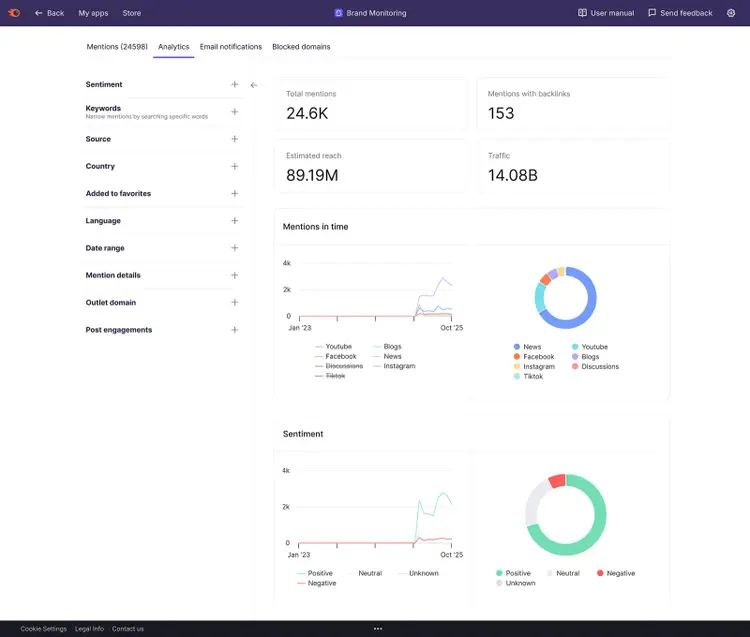
For example, Semrush’s Brand Monitoring app shows mentions across web, social, press, and backlinks in a single dashboard.
This method is best for:
- PR and social teams that need sentiment tracking and coverage analysis
- Brands that want competitive benchmarking across multiple channels
- Teams that prefer unified dashboards that consolidate mentions and trends
Track brand mentions in AI search
Tracking brand mentions in AI search means checking whether your brand appears in AI-generated answers. This can help you understand whether the brand mentions you’re getting across the web are improving your AI visibility.
You can do this manually by picking five to 10 prompts to track. To find the right ones:
- Check your existing keyword research for question-based queries in your category
- Search Reddit, Quora, and relevant forums to see how your audience naturally phrases questions
- Look at Google's "People Also Ask" results for your main keywords
Then run each prompt across the major AI platforms and note whether your brand appears, how it is described, and which competitors show up.
Repeat this weekly to spot changes over time, tracking your findings in a spreadsheet.
Manual tracking is useful at first, but it only covers the prompts you choose and becomes harder to manage as your list grows.
If you need a more scalable approach, Semrush’s AI Visibility Toolkit includes Prompt Tracking, which:
- Monitors your brand’s visibility across AI platforms
- Tracks mentions for selected prompts
- Benchmarks your performance against competitors over time
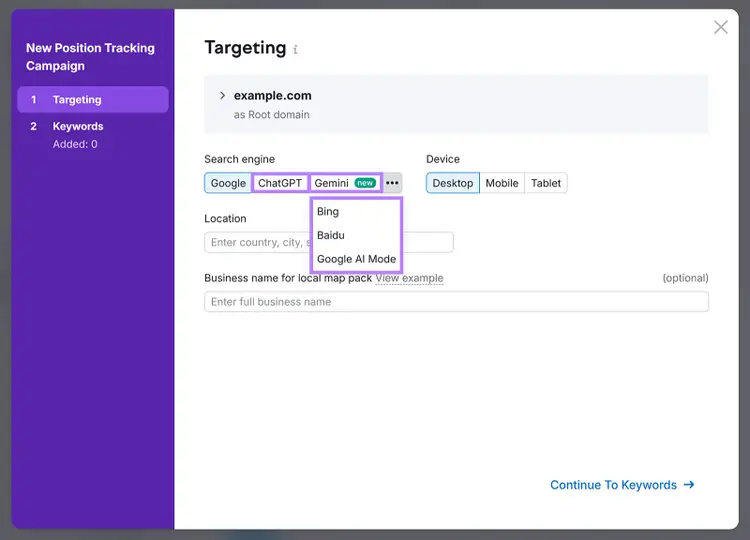
To get started, open the tool and create a Prompt Tracking campaign. Choose the AI platforms you want to monitor, such as Gemini, ChatGPT, and Google AI Mode. Then add the prompts you want to track and finish the setup.
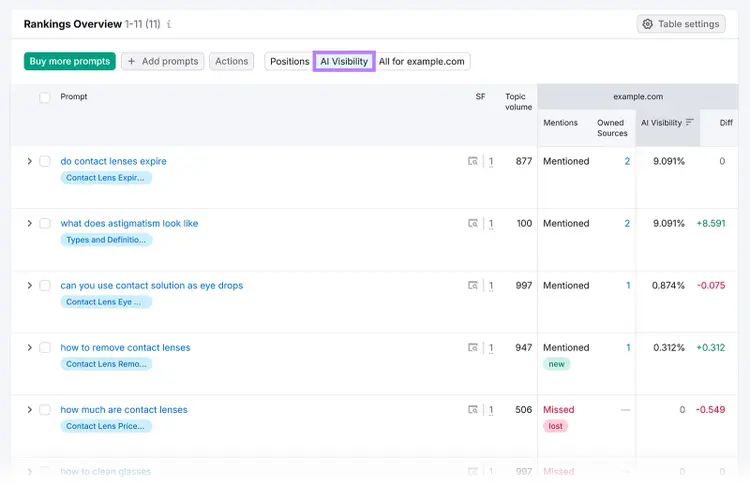
Once your campaign is live, go to the “Overview” tab and review the “Rankings Overview” table.
Use the “AI Visibility” filter to see which prompts your brand appears for, how often it is mentioned, and where you’re currently missing visibility.
Whether you track manually or with a tool, focus on three things:
- Presence: Does your brand appear for relevant prompts?
- Sentiment and accuracy: When it does appear, is it described correctly and positively?
- Competitor gaps: Are competitors showing up in answers where you aren't?
Further reading: AI visibility: What it is and how to grow yours in 2026
Set up your monitoring workflow in 4 steps
Setting up a brand monitoring workflow involves defining what to track, configuring alerts, routing mentions to the right people, and responding consistently.
No matter what tool you use, here are the steps you can follow:
1. Build your term list
Make a list that includes your brand name (plus common misspellings and abbreviations), product/service names, executives’ names, and other terms that are relevant to your brand.
Include competitors to compare your brand mention frequency to theirs.
2. Configure filters and alerts
Set alerts for high-impact mentions (e.g., publications with 10K+ followers or posts with 1K+ engagement) and daily or weekly digests for lower-priority ones.
With Semrush’s Brand Monitoring app, you can set up email notifications with filters for engagement levels, specific sources, and more.
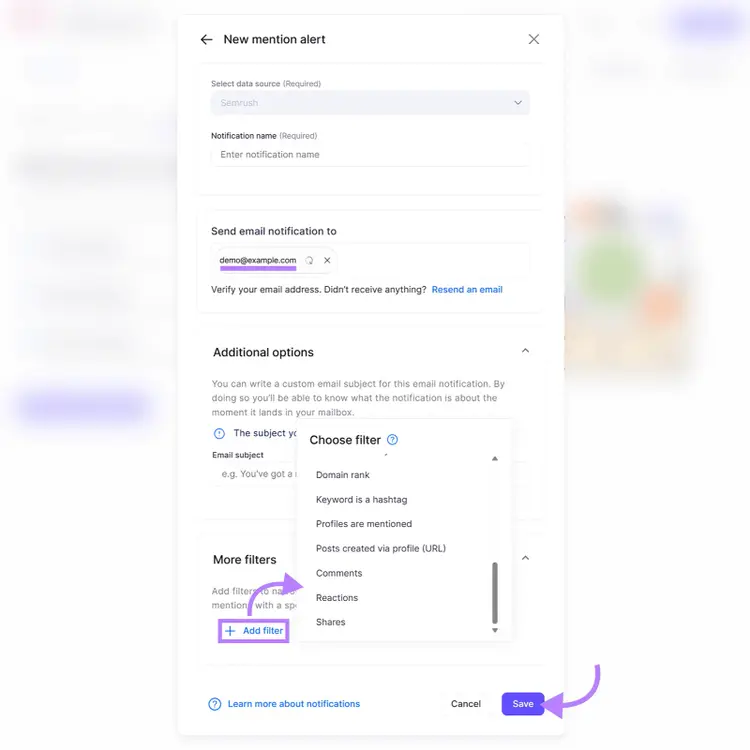
Use filters to exclude spam, bot activity, job listings, and unrelated content by blocking irrelevant keywords or low-quality sources.
3. Route notifications to the right stakeholders
Send each mention type to the right team or team member. For example:
- Social mentions: Alerts should go to your community management team
- Press coverage or high-visibility negative mentions: PR should handle these mentions
- Unlinked mentions with backlink potential: Send these to your SEO team, so they can evaluate and reach out if appropriate
Deliver alerts via email, Slack, or in-platform notifications depending on urgency.
4. Create a response playbook
Define clear rules for how your team should respond to different types of mentions. For example:
- Engage when the mention could lead to a conversion: Respond to positive mentions, genuine questions, product feedback, or neutral comments that show curiosity
- Escalate when the mention could impact reputation or accuracy: Flag legal threats, emerging crises, factual errors, negative campaigns, or high-visibility criticism
- Ignore noise that doesn’t require action: Skip spam, bot activity, irrelevant comments, or mentions from low-quality sources with no audience
A clear playbook ensures every team member knows when to respond and when to seek support. This keeps communication consistent across the organization.
How to get more brand mentions
To get more brand mentions, you need to create reasons for other people, platforms, and publications to talk about your brand. Here are six tactics to help you do that.
Publish original research and data
Publishing original research gives journalists, creators, and other brands a reason to mention you by name because your data becomes a source they need to reference.
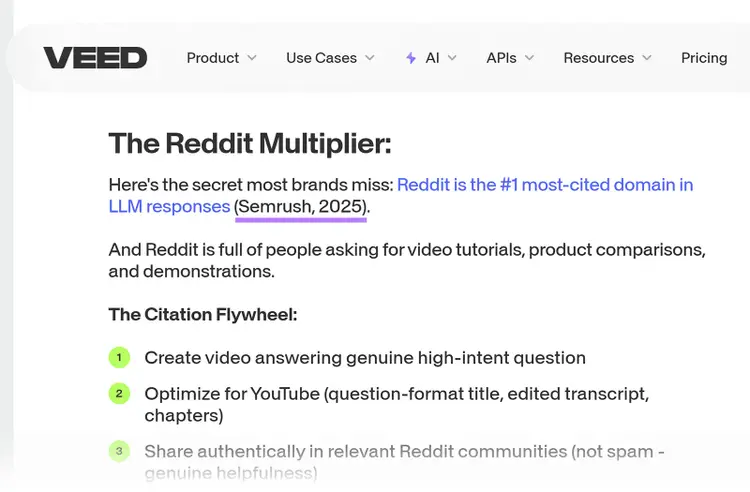
At Semrush, we regularly publish original studies, which become source material for articles, roundups, and industry reports across the web. Like our study on the most-cited domains in AI answers.
This study earned brand mentions from high-authority sites like Veed.
Here's how to plan, conduct, and publish original research:
- Find your angle: Identify a question your audience is actively searching for that hasn't been answered with real data yet
- Collect the data: Run a customer survey, analyze your internal product data, or conduct an industry poll
- Publish it: Lead with a clear headline stat, include a shareable chart, and add a brief “key findings” summary at the top
- Get it out there: Pitch the study to relevant publications and newsletters in your niche
The more specific your findings, the more likely other sites and AI are to cite your brand by name.
Get featured in listicles and roundups
Reach out to the authors of listicles and roundups in your category and pitch a clear reason to include your brand.
These pages are where buyers compare options before making a decision. Getting featured puts your brand in front of high-intent readers at exactly the moment they're choosing between you and a competitor.
For example, let's say you sell sustainable yoga mats. Search "best yoga mats" or "eco-friendly yoga mat roundup." You'll see pages listing top options in your category.
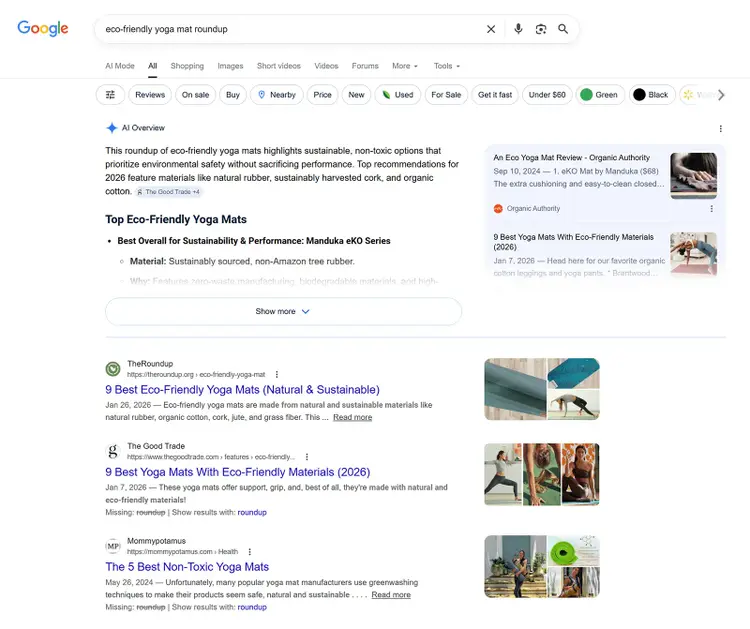
Check each page. If you're not listed, reach out and pitch to be included.
Also run a similar check in AI tools to find the listicles that these tools reference in their responses.
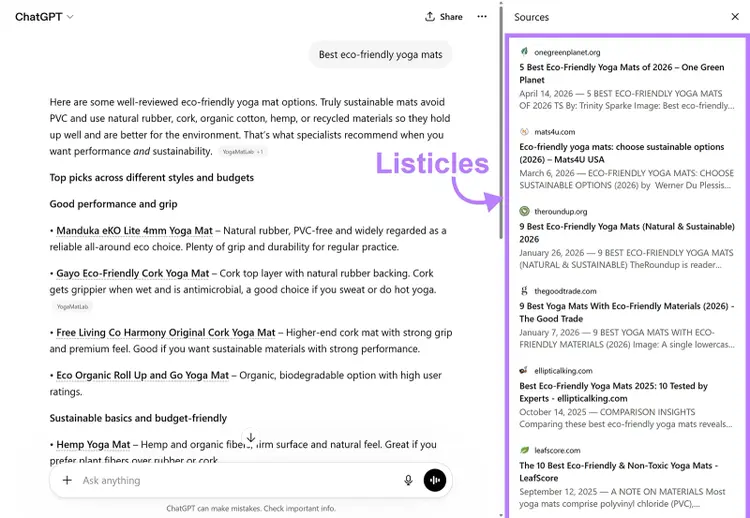
Here's how to get featured in these roundups:
- Find the gaps: Identify high-ranking roundups in your category where you're missing
- Assess the fit: Prioritize pages that are well-maintained, rank well, and where your inclusion adds genuine value for readers
- Pitch your case: Contact the author with one specific reason to add you, like a unique feature, a use case competitors don't cover, or why you’re the ideal fit for a particular type of user
- Make it frictionless: Provide ready-to-use details like pricing, key features, and a short description so the author can add you without extra research
Being included matters even when you're not ranked first. Any mention in a roundup that either gets a lot of organic traffic or is commonly cited by AI tools puts your brand in front of buyers at exactly the moment they're making a purchase decision.
Invest in digital PR and media outreach
Digital PR and media outreach help you earn brand mentions in trusted publications by giving journalists and editors a reason to cover your brand.
When trusted publications describe a brand in similar ways over time, search engines and AI systems can pick up on those patterns, which in turn can inform their rankings or responses.
Here’s how to properly run a digital PR campaign:
- Find your angle: Identify a story, dataset, or expert perspective journalists in your niche would find genuinely newsworthy
- Target the right outlets: Prioritize publications your audience trusts and that AI systems frequently cite as sources
- Pitch clearly: Lead with the value to their readers with one short paragraph and one clear angle
- Build relationships: A journalist who has covered you once may be more likely to cover you again in future
Further reading: The Best AI Tools for Public Relations
Participate in communities where your audience asks questions
Participating in relevant communities helps you earn brand mentions in places where your target customers are already asking about products/services like yours. And since AI tools often cite community forums like Reddit in their responses, it can also improve your AI visibility.
Look for relevant conversations on platforms like Reddit, Quora, and niche forums where people in your category already ask questions and compare options.
For example, if you sell protein powder, search Reddit for queries like “best protein powder,” “whey protein for beginners,” or “best protein powder for weight loss.”
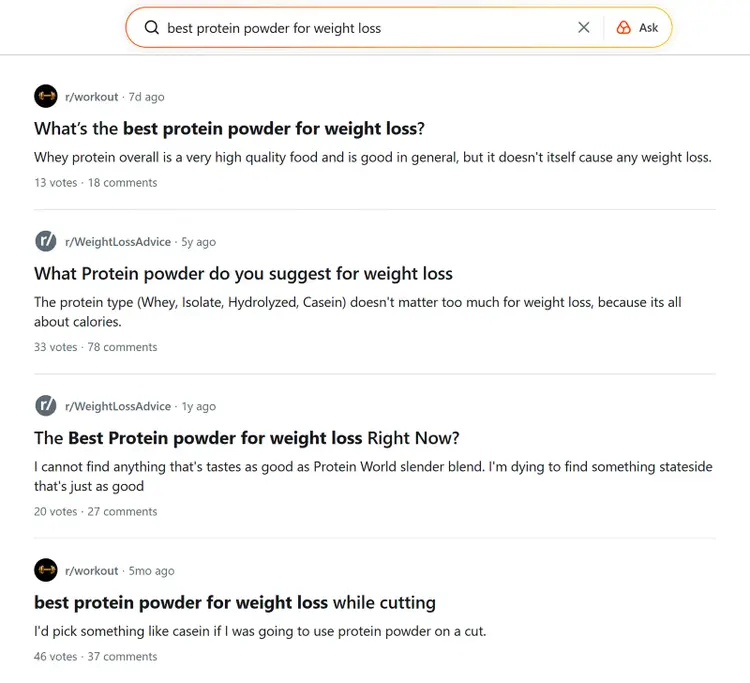
Look for recurring recommendation threads, comparison posts, and questions about use cases, ingredients, or side effects.
Once you find the right threads, participate in a way that adds value. Share practical advice, examples, and context before mentioning your brand. A relevant recommendation can build trust, but forced promotion usually gets ignored or removed.
If you have a community management team, work with them to identify the platforms and conversations that come up most often.
Further reading: Reddit Marketing: How to Do It Right (+ 7 Tips to Get Results)
Encourage reviews and customer content
Encouraging reviews and customer content helps you earn brand mentions through real customer experiences shared on third-party platforms and public channels.
Reviews can come from places like Google reviews, Trustpilot, G2, Capterra, Amazon, Shopify app listings, or niche review sites in your category.
Customer content can include testimonials, social posts, videos, before-and-after photos, and other public proof shared by customers themselves.
Together, they create third-party mentions that show what your brand is known for in real-world situations.
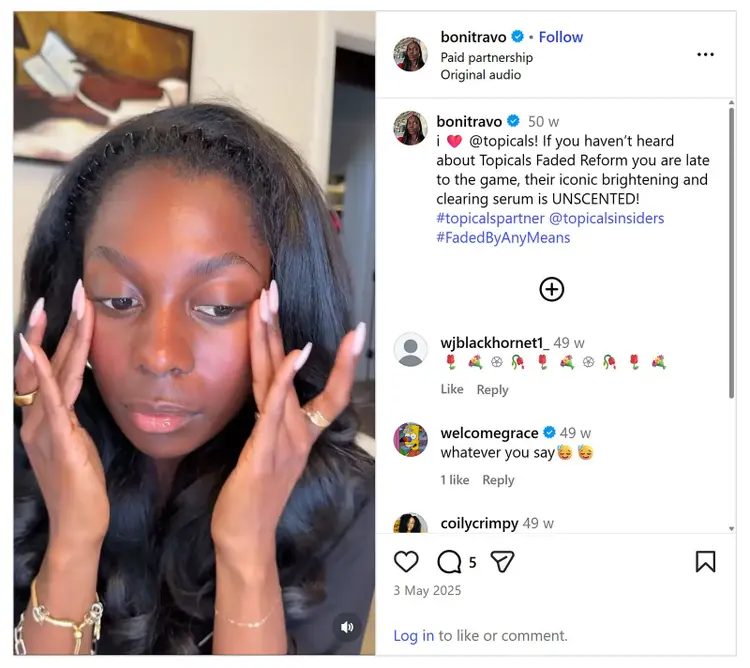
For example, if you sell skincare products, useful mentions might come from customer before-and-after posts or creator partnership content that shows how the product is used in real life.
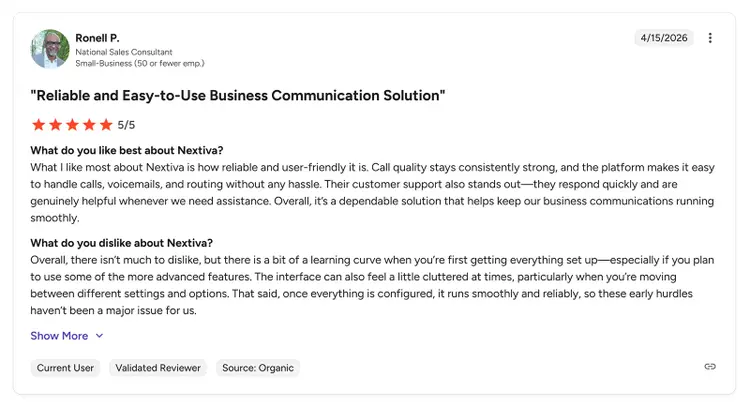
If you sell B2B software, useful mentions might come from G2 reviews where customers describe their use case, what they like, and what they would improve.
Here’s how to encourage your own audience to produce more of this content:
- Ask in the right place: Send customers to the platform that matters most in your category, such as Google, Trustpilot, G2, Capterra, Amazon, or a niche review site
- Ask at the right moment: Request a review after a successful purchase, onboarding milestone, or customer support win
- Guide for specificity: Prompt customers to mention the problem they solved, what they liked, and who the product is best for
- Turn customer proof into more mentions: Repurpose strong reviews into testimonials, case studies, quote graphics, or social proof on your site and social channels
3 ways to get more out of brand mentions
Brand mentions can create value on their own, but you can often get more out of them by turning them into backlinks, marketing assets, and stronger media relationships.
Convert unlinked mentions to backlinks
Converting unlinked brand mentions into backlinks strengthens your SEO authority and drives referral traffic.
Not every unlinked mention needs a link though.
Mentions on well-known publications or active community platforms are already valuable on their own. Search engines and AI systems read these mentions as signals that your brand is credible and relevant, even without a link.
So focus your outreach on mentions where a backlink adds clear SEO or referral value — typically on relevant blogs, news sites, and industry publications.
Reach out to the site or author and ask them to add a link to the relevant page on your site.
Send a short, personalized email to thank them for the mention, explain how a link helps their readers, and share the URL to include. Follow up once if there's no reply after a week.
Here’s an email template you can use:
Hi [Name],
Thanks for mentioning [Your brand] in your piece on [Topic].
I noticed the mention isn't linked at the moment. If it's useful for your readers, here's the most relevant page to include: [URL]
It gives your audience a bit more context on [product / feature / topic mentioned].
Let me know if there's anything I can help with on my end.
Thanks again,
[Your Name]
Repurpose user-generated content
User-generated content (UGC), like reviews, social posts, forum threads, and testimonials, offers authentic social proof that you can repurpose in marketing campaigns.
Monitor your mentions across social, review, and community platforms to find standout content to repurpose.
You can reuse many types of UGC without formal permission, such as embedding public social posts, quoting reviews, or reposting. For anything you download, edit, or use outside its original context, ask the creator for permission and credit them clearly.
For example, Airbnb turns guest-created content into marketing assets across its website, emails, and social channels. Photos and videos posted by travelers — showing real stays, host interactions, and unique homes — are embedded or reshared to highlight authentic experiences.

Build relationships with journalists & creators
Keep an eye out for writers and creators who mention your brand, and engage with them to increase the likelihood that they'll reference you again.
Position yourself as a trusted source by offering creators something helpful, such as expert quotes, proprietary data, or early access to research or announcements.
The goal is to become their go-to expert whenever they’re covering a topic related to you.
For example, Duolingo engages with creators who reference their brand. They repost and respond to social posts, stitch videos, leave comments, and incorporate viral moments into their own content.
When journalists publish stories about language learning or app engagement trends, Duolingo amplifies those articles on its social channels and often provides additional quotes or data.

Bring your brand mentions full circle
Start monitoring brand mentions with Google Alerts and manual searches on relevant platforms.
From there, you can decide whether a dedicated brand mention tool like Brand Monitoring makes sense for your company.
Once your monitoring system is in place, keep the loop active. Review your core metrics regularly, respond when needed, and use what you learn to improve.
Once you have a system in place for gaining and acting on brand mentions across the web, you can track how that awareness translates to AI visibility. Which you can monitor with the AI Visibility Toolkit.
Track your AI brand mentions
with the Semrush AI Visibility Toolkit

Vlado is a content marketer with 10+ years of experience in SEO, content strategy, and building websites for both clients and personal projects. As Content Operations Lead at Semrush, he streamlines workflows and optimizes processes. He also played a key role in scaling content production and shaping the blog Style Guide. Previously, as Head of Content at Mangools, he led initiatives that made the blog a major driver of organic traffic. He enjoys making complex SEO topics accessible to others.
Vlado Pavlik
Vlado is a content marketer with 10+ years of experience in SEO, content strategy, and website building. As Content Operations Lead at Semrush, he focuses on improving content workflows, optimizing processes, and helping scale content production.
Tells Google to show you more from Semrush in AI, Search, and Discover.