
Content Marketing for Small Businesses: 10 Steps to Succeed in 2025
Content marketing is changing fast.
What worked a few months ago may not deliver the same results today.
For small businesses, that means being strategic about where to invest time and resources.
In this guide, I’ll show you how to build a content marketing strategy that maximizes your time, budget, and efforts.
But first…
Does Your Small Business Need Content Marketing?
I’ve worked with many businesses that were wondering whether to invest in content or just stick with paid ads.
After all, content marketing can feel daunting, especially when big corporations dominate search results.
But here’s the thing: content marketing can benefit companies of all sizes—even small companies with limited budgets.
Paid ads stop the moment you turn them off.
Content, on the other hand, continues driving leads long after it’s published.
Sometimes content marketing is the best way for small business owners to compete against others with larger budgets for online advertising and PR. Be sure to leverage your unique viewpoint on your industry to get noticed.
Dale Bertrand, Founder and President at Fire&Spark
For example, Sugar Geek Show (an online cake-decorating platform) grew their organic traffic to 300K+ by doubling down on SEO.
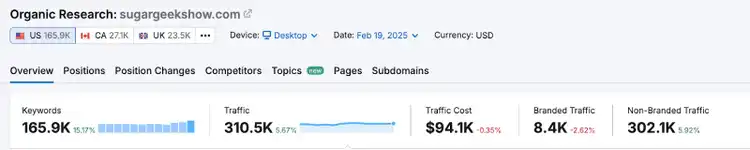
Once the company began investing in SEO, their blog started generating 60% of their total revenue.
When done right, you can see similar results.
That’s why I’m a huge advocate of content marketing. I believe it should be treated as a long-term growth engine.
How to Build a Content Marketing Strategy For Your Small Business in 10 Steps
It’s never too early or too late to start content marketing.
In fact, if you’re just launching your company, I recommend starting right away.
Start yesterday! The slow and steady approach works for content marketing as long as you are adding value and servicing your customers with your content. So start now and build a library of content that attracts organic traffic.
Dale Bertrand, Founder and President at Fire&Spark
Below are a few core steps you should take before diving into full-scale content creation.
1. Work on Your Foundations Before Rushing into Content Creation
I’ve seen businesses jump straight into content without a solid base—then wonder why their efforts aren’t paying off.
Content marketing is just one piece of your marketing puzzle.
If your website, branding, or analytics aren’t in shape, even the best blog posts and social media videos won’t drive real results.
Focus on:
- Your website: If your site is slow or poorly structured, visitors will leave quickly. Make sure you have the necessary landing pages featuring your products and services.
- Strong copy and design: Your content should match your brand’s look and voice. If it feels disconnected, people won’t engage with it, and may not trust you.
- Reliable analytics: Without tracking the right data (such as conversions and user behavior) it’s hard to know what’s working.
- Clear conversion strategies: If you're publishing content but not using clear calls to action (CTAs), sending follow-up emails, or adding product workflows, you're missing out on conversions.
It can be as simple as creating pages for each product you sell and linking to them from relevant blog articles.
For example, we convert blog visitors using a mix of banners and other conversion elements:

Get your foundations right first, and you’ll save time, money, and frustration later on.
2. Document Your Content Strategy
I’ve worked with clients who tried a scattergun approach—one week an Instagram Reel, the next a 2,000-word blog post—without connecting it all back to their goals.
Once they documented a content strategy, they saw stronger results, because every piece of content had a clear purpose.
The most successful businesses (even the smallest ones) treat content marketing like a real business function, not just guesswork.
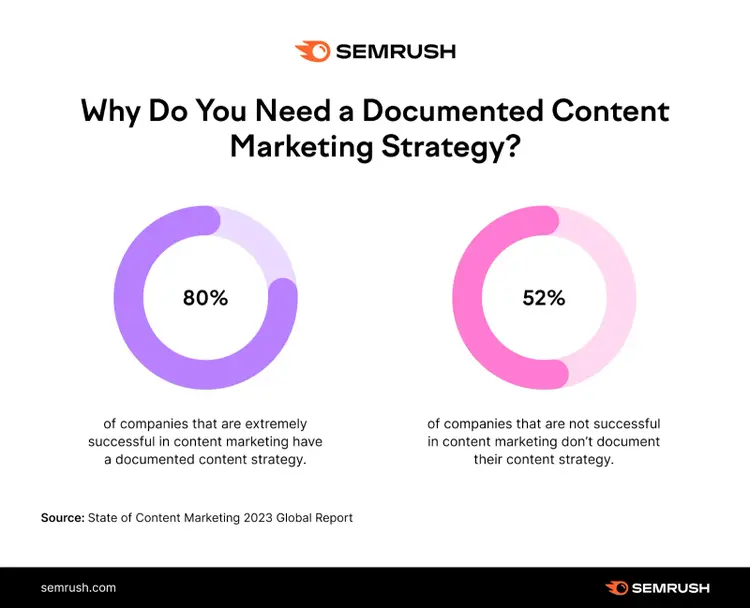
In fact, 80% of highly successful companies in content marketing have a documented strategy, while 52% of unsuccessful ones don’t.
So, where to begin?
- Know your audience: Who are they, and what problems do they need solved?
- Set goals and metrics: Are you aiming for leads, brand awareness, or conversions? How will you measure success?
- Choose content topics: What themes will you cover consistently?
- Pick formats: Will you focus on blogs, videos, or podcasts?
- Plan distribution: Which channels (website, social media, or newsletters) will get your content in front of the right audience?
By documenting your content strategy, you can keep your content efforts focused on your goals. This can help you save time, avoid frustration, and achieve better results.
Not sure where to start? Use Semrush’s free content strategy template for step-by-step guidelines.
3. Create a Culture of Storytelling in Your Content Marketing Strategy
Small businesses often struggle to stand out, especially when competing with larger brands.
But I’ve seen how putting storytelling at the center of your strategy can make all the difference.
When you tell genuine stories, you create deeper connections that go beyond just selling a product. These could be stories about your background, mission, goals, or passions as a small business owner.
Why is storytelling so powerful?
Small business owners can capture the attention of their target audience by telling good stories through content marketing. You can use your mission and their unique backgrounds to fuel these stories.
Brian Moran, Founder and CEO at SmallBusinessEdge
In other words, stories engage people on an emotional level.
They’re more memorable than plain facts or feature lists, and they allow customers to see the human side of your business.
Here’s one of my favorite real-life stories.
iFixit is an ecommerce site that sells repair kits for smartphones and computers. Instead of just saying, “Buy our tools,” they center their brand around the Right to Repair movement.

They claim people should have the knowledge and materials to fix their own devices.
By publishing content around this topic (like DIY guides and advocacy pieces), they attract an audience who shares their values.
This approach has not only increased their organic traffic but also positioned iFixit as an authority in the field. In February 2025, the company attracted over 3 million unique website visits.

It shows how powerful storytelling can be when it’s a key part of your content strategy.
Once you know the core idea you want to communicate, planning and creating relatable content gets easier.
4. Develop a Customer-Centric Approach to Your Content
I’ve watched many small businesses cover a wide range of topics, hoping to reach everyone.
But the ones that truly thrive focus on their most important target personas—the customers they know they can serve best.
By creating content that directly addresses these customers’ real questions, pain points, and goals, you’ll stand out—even in a crowded market.
Does it solve a problem? Is it helping them through a pain point? We can do a lot of things as marketers, but we will wear ourselves out! Be intentional about your marketing plans and build a strategy around it with the focus on your customer.
Michelle Buck, Marketing Coordinator at Crystal D
How do you keep content customer-centric? Follow these tips:
- Identify your core personas: Pin down the specific groups you’re best equipped to help. What are their biggest challenges? What do they value most? Let those answers guide your content.
- Go deep on topics they actually care about: Don’t spread yourself thin. Instead, produce content that offers genuine solutions or insights for your core audience’s needs. Show that you understand them better than anyone else.
- Share clear and actionable advice: You don’t need to write long-winded explanations to prove you’re an expert. Offer clear, actionable advice tailored to your niche. Your audience will appreciate concise tips they can apply right away.
- Stick to your niche: If you’re an expert in boutique fitness for new moms, lean into that specialty. Trying to be all things to all people can dilute your impact.
When you tailor your content to your top personas, you build trust and credibility.
People see you as the go-to source for their specific issues, rather than just another voice in a sea of general advice.
For example, brands like Absolute Collagen target specific topics their audience cares about—like “Are menopause symptoms worse in winter?” and “how can menopausal women deal with hair loss?”.
This helps the brand stay focused and generate engagement.

5. Select Your Priority Content Formats
I’ll say this again: just because the big brands you follow are on TikTok doesn’t mean your business has to be there too.
Instead of chasing every content format there is, focus on what works for you and your customers.
For example: let’s say you run a local spa salon.
Try investing in highly visual social media content created with your staff, customers, and influencers from your area. Make notes of questions and concerns your customers usually have and address them in your videos.
Here’s how Peachy Studio in NYC does it by regularly publishing Instagram Reels featuring their employees and clients:

Or, perhaps you are a small copywriting agency targeting international clients.
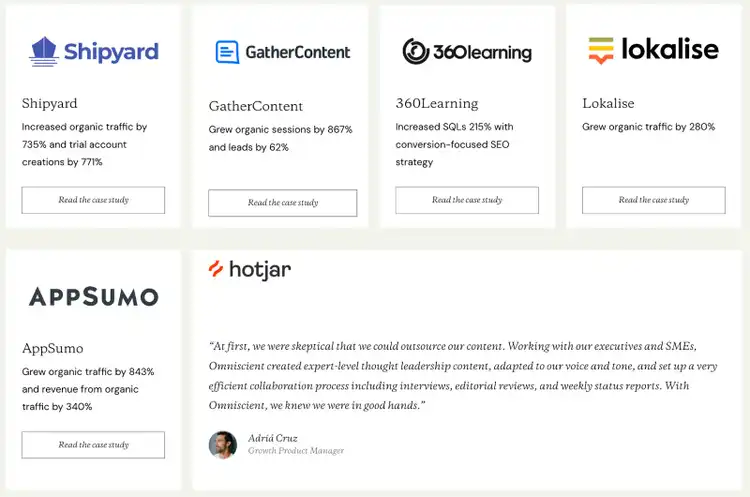
Focus on creating thought leadership content about industry trends and create how-to case studies with your clients—just as Omniscient Digitalagency does on its website:
In other words, consider your audience’s pain points and what channels they typically use to find products and services like yours. Then, think of a way to translate this into engaging content.
The options are almost endless:
- Blog posts to attract users who use search engines and other channels to find step-by-step guidelines and deep insights
- Long-form videos on YouTube to attract visual learners
- Social media shorts to engage your audience with quick content that fits into their daily scrolling habits
- Email newsletters to nurture relationships and keep potential customers in the loop
- Podcasts to establish authority and connect with audiences who prefer audio content
- User-generated content campaigns to build trust and showcase real customer experiences
6. Organize Your Content Production Process
Before you start creating content, look at your budget, resources, and how much you can realistically produce.
This step helps you figure out how often you can publish, whether you need in-house or freelance help, and what kind of content you can create.
Here are 3 questions to help you plan your process:
What Are My Needs, Budget, and Resources
Think about:
- Needs: First, think about how many pieces of content you’d like to publish each month, based on your content marketing goals. This will help you figure out what roles you need to fill—such as writers, strategists, designers, or video creators.
- Resources: Look at the people you already have on your team. Do you have enough hands on deck, or do you need extra help? If needed, consider bringing in freelancers, agencies, or part-time support to fill the gaps.
- Budget: Your budget will shape how much content you can realistically produce, who you can hire, and which tools you can invest in. Even if your budget is small, focusing on the right mix of talent and tools can help you make a big impact.
Once you evaluate your needs, budget, and resources, you’ll have a clearer picture of how to move forward.
Who Will Create My Content?
Producing content takes time, so you’ll need to decide whether to handle it yourself or get outside help.
In-house: If you or someone on your team can create content, this keeps costs down and ensures your brand voice stays consistent. You can also pull insights from customer interactions and real experiences to make content more relatable.
Freelancers or agencies: If you don’t have the time or skills, outsourcing is a flexible option. Freelancers can help with blogs, social media, or videos without the cost of a full-time hire, while agencies handle bigger projects but come at a higher price. The key is to find someone who understands your business so that the content still feels authentic.
Which Content Marketing Tools Do I Need?
Finally, you can choose from several software tools to make content production easier. Key options include:
- AI writing tools, like the AI Article Generator within Semrush’s Content Toolkit to create content that ranks in search results
- Project management tools, such as Notion or Relato
- Social media management and content creation tools, such as Semrush’s Social Media Toolkit
- AI video content tools, such as Veed.io
- Simple design tools for creating visuals, such as Canva
For example, Semrush’s Content Toolkit automates multiple steps in your content workflow. It finds high-impact content ideas and keywords for your business, turns them into SEO-optimized articles, and lets you publish directly to your website or export to Google Docs—all from one place.
7. Be Selective with Your Content Distribution Channels
Just as with content topics and formats, don’t spread yourself too thin by trying to post content on every possible platform.
It can quickly become overwhelming.
Instead, focus on where your most valued customers actually spend time.
Are your customers on social media? Do they watch videos, and if so, where? Do they look at photo galleries, specs, or other data? Once you’ve identified the best outlets, creating content that can be repurposed is an efficient way to generate more with less.
Nicole Wolfe, Digital Content Expert
How should you approach this? Start by revisiting your customer research:
- Which sites do they browse?
- Which influencers and creators do they follow?
- Which channels do they make purchasing decisions on?
Knowing these things helps shape your plan. It’s better to maintain a strong presence on one or two channels than struggle to keep up on five.
For example, you could focus on social media platforms like TikTok or LinkedIn, SEO, influencer marketing, community building, and more.
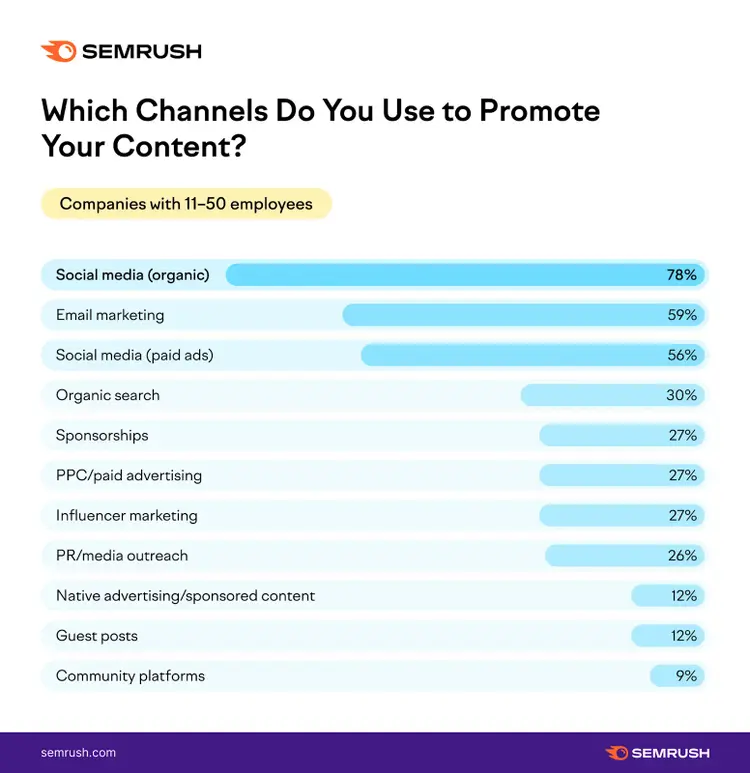
Here is the full list of channels that are especially popular among small business marketers:
8. Build Your Content Calendar
By now, you should know what kind of content you’re creating, how much you need, and who will produce it.
The next step? Map out your editorial plan, so everything runs smoothly.
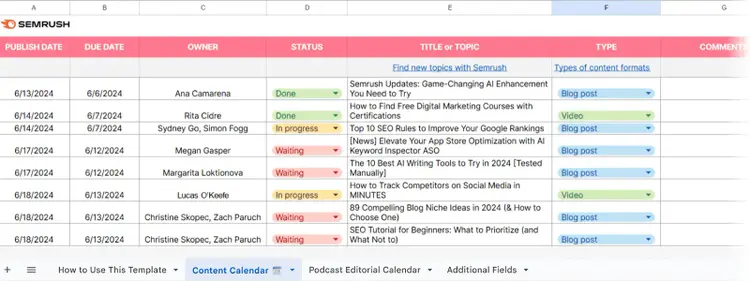
I’ve found that a clear, organized content calendar not only saves time but also helps you stay consistent and hit your goals. Here’s what to include:
- Topics and keywords: Choose themes that match your audience’s interests and that align with your goals
- Content formats: Blogs, videos, newsletters, podcasts—pick the right medium for each topic
- Audience segment: Note which group you’re targeting (e.g., new customers vs. existing ones)
- Timeline: Assign publish dates, review periods, and any promotion deadlines
- Team responsibilities: Clearly state who’s in charge of writing, editing, design, or social media
You can use a simple tool like Google Sheets or use platforms like Notion. Here’s what it might look like:
9. Be Experimental and Avoid Creating Generic Content
Competing with big brands on popular topics can feel like a losing battle—especially if you have a smaller budget.
For example, companies like HubSpot already rank high for the most common CRM or digital marketing keywords.
And LLMs like ChatGPT already provide generic information to basic customer questions.
If you go head-to-head with them on generic content, your work might get lost in the crowd.
You’re small, so you have limited reach. The subject you’re covering is likely already handled by bigger companies. If you write generic content, it probably won’t make a ripple in the vast ocean of existing posts. There’s an information overload and content fatigue out there.
Sandip Acharyya, Marketing Strategist
Instead of trying to beat them at their own game, show off your brand’s unique personality and find angles those bigger names might ignore.
How?
- Be bold and experimental: For example, use memes, humor, or pop-culture tie-ins—when they fit your style. Instead of rehashing “top 10 trends,” take a strong stance or question common assumptions. This gives people a reason to notice you.
- Create original research: Can you run a quick survey or analyze data from your product? Share these insights. They are hard for competitors (and AI tools) to replicate, which makes them extra valuable.
- Publish thought leadership posts: If someone on your team has deep expertise, encourage them to share it. Fresh industry perspectives or strong opinions often stand out more than yet another generic “how-to” article.
Take REI.com, for example. This ecommerce seller of hiking gear creates blog listicles that actually bring value to their customers.
Instead of putting together a random list of “the best hiking shoes”, they have their staff test the product first in real-world conditions—and only then write the article.

10. Diversify and Repurpose Content That Delivers Results
I love getting more mileage out of my top-performing content.
If something is driving leads, conversions, or brand awareness, why not adapt it for other channels?
It's especially important for smaller companies with limited resources.
As a small business, you don’t have the resources large companies do, so you need to get the most out of each piece of content. Repurposing can give you high engagement or reach without having to create everything from scratch.
Anastasia Chechkova, Marketing Lead at OnePageCRM
Here are some tactics you could use:
- Turn a webinar or video into a blog post: Have you hosted a webinar or recorded a podcast? Convert the main insights into a blog article. That way, people who prefer reading can still get the full story.
- Transform YouTube videos into clips (and a podcast): Take long YouTube videos and chop them into bite-sized segments for social media. If the content is engaging or conversational enough, you can even rip the audio and turn it into a podcast episode.
- Build a research report from the data: If you want to share stats or survey findings, package them into a concise report. You can then repurpose it into social media posts, infographics, articles, and more.
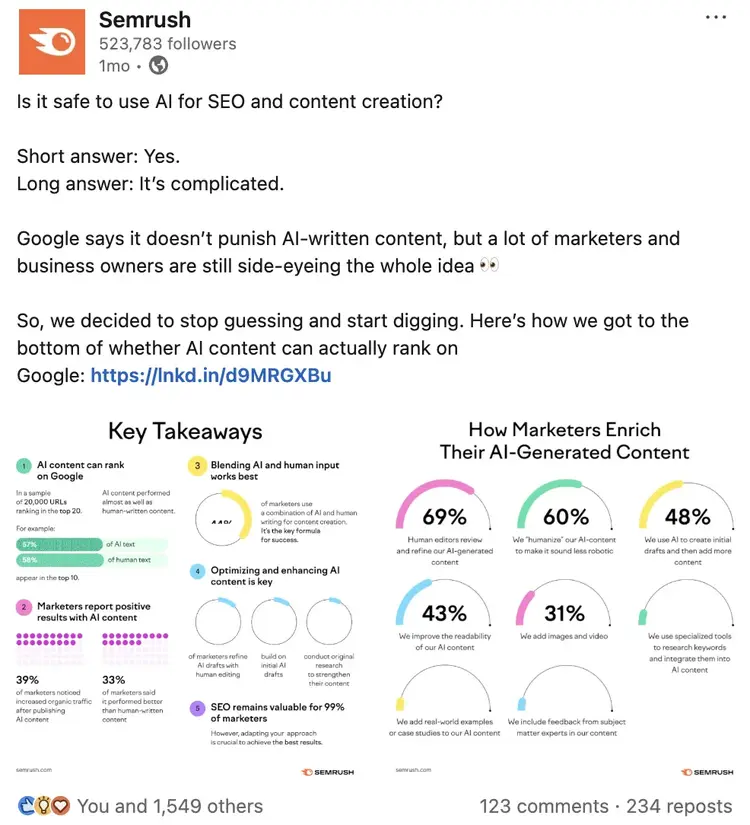
For instance, we recently published research on whether AI content ranks in search (spoiler: it does).

We then repurposed it as social media content and blog articles like this one.
11. Keep an Eye on Your Metrics to Improve Performance
Measuring your content’s performance is the only way to know you’re meeting your goals.
To make this easier, schedule regular check-ins—for example, every two weeks or every month—to see what’s working and what isn’t.
This will help you adjust your strategy before you invest too much time in content that might not deliver results.
Content performance metrics you could track include:
- Traffic and on-page user behavior: Look at page views, engagement rate, bounce rate, and top-performing pages. Google Analytics (GA4) is my go-to for these insights. It shows me what kind of topics keep readers engaged.
- Social media engagement: Track likes, comments, shares, and mentions. You can also use specialized social listening tools such as Media Monitoring to see how people discuss your brand.
- SEO: Monitor organic traffic, backlinks, and keyword rankings to see if your SEO efforts are driving results with tools such as Position Tracking or Google Search Console.
- Impact on the bottom line: Ultimately, you need to know if your content leads to conversions, sign-ups, or sales. By tracking cost per lead or revenue, and tying it back to content in a CRM such as Salesforce, you get a clear view of content ROI.
For example, if your goal is to get more traffic, track your keyword rankings on a weekly basis.
Open the Position Tracking tool and add the keywords you want to monitor.
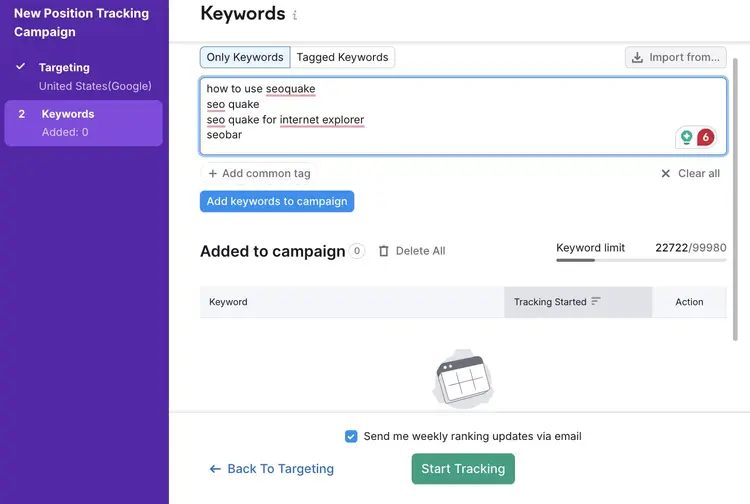
From now on, you can see how your keyword rankings change over time and add more keywords as you expand your content plan.
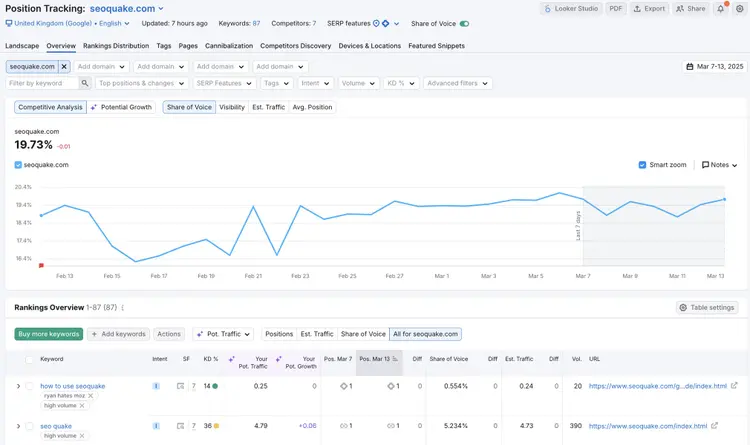
Use this information to take action and find low-hanging fruits.
For example, if a page is losing rankings, it’s time to update it. If another is doing really well, check what’s working and apply it to other content.
Final Thoughts
Content marketing has never been more exciting—or more competitive. Still, it’s one of the most powerful tools small businesses have for reaching new customers.
How do you succeed in 2025?
Focus on meaningful, high-quality content that truly speaks to your audience. Experiment with formats, keep an eye on performance metrics, and refine your strategy as you learn what resonates.
To get started faster, use AI-powered content marketing solutions like Semrush’s Content Toolkit and Social Content AI.

Evgenia is a Communications Expert with over 8 years of managing communications in B2B tech, international, state and non-profit environments, formulating strategies and executing media & influencer marketing large-scale strategic campaigns.

Tells Google to show you more from Semrush in AI, Search, and Discover.
Table of contents
-
How to Build a Content Marketing Strategy For Your Small Business in 10 Steps
- 1. Work on Your Foundations Before Rushing into Content Creation
- 2. Document Your Content Strategy
- 3. Create a Culture of Storytelling in Your Content Marketing Strategy
- 4. Develop a Customer-Centric Approach to Your Content
- 5. Select Your Priority Content Formats
- 6. Organize Your Content Production Process
- 7. Be Selective with Your Content Distribution Channels
- 8. Build Your Content Calendar
- 9. Be Experimental and Avoid Creating Generic Content
- 10. Diversify and Repurpose Content That Delivers Results
- 11. Keep an Eye on Your Metrics to Improve Performance