Fresh content in SEO refers to recent content (blog posts, videos, etc.). And that newness becomes important when the content is relevant to timely search queries like those about breaking news.
But fresh content that addresses a timely query doesn’t have to be a newly published piece. It can also be an older page that was updated with the latest information.
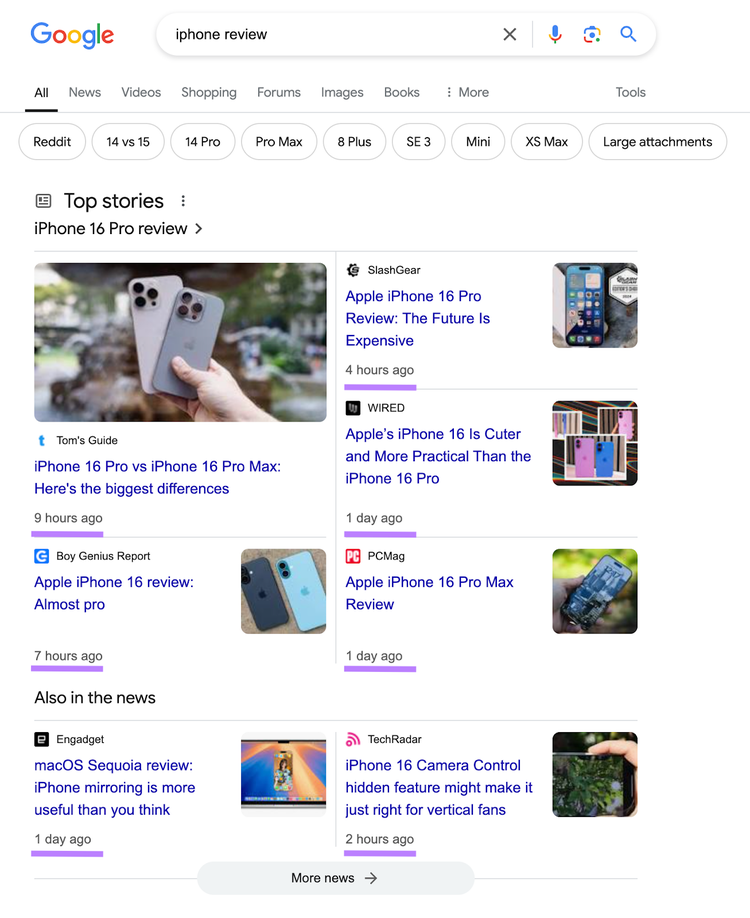
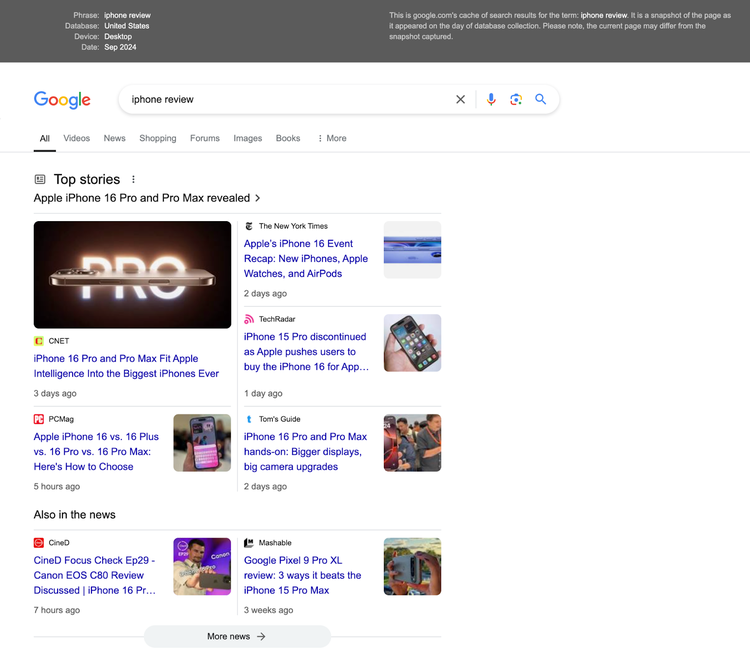
For example, this is what the search results look like for the query “iphone review.”
As you can see, Google is serving a lot of recent reviews of the iPhone 16. Not older reviews of previous models.
Freshness vs. Frequency
Freshness refers to how recently you published or updated your pages. For example, a press release that goes out the morning you’re launching a new product is fresh content.
But frequency is about how often you publish content. Like if you publish a blog post each weekday.
That means you can publish fresh content at any frequency. But doing so more often won’t necessarily help you rank for especially timely queries.
That said, a higher frequency can broaden the scope of topics you cover to help you rank for a diverse range of keywords. And possibly get additional backlinks.
Is Content Freshness a Google Ranking Factor?
Google looks at factors like relevance to the query, content quality, usability, and more when ranking results. And for certain queries, freshness also matters.
Tip
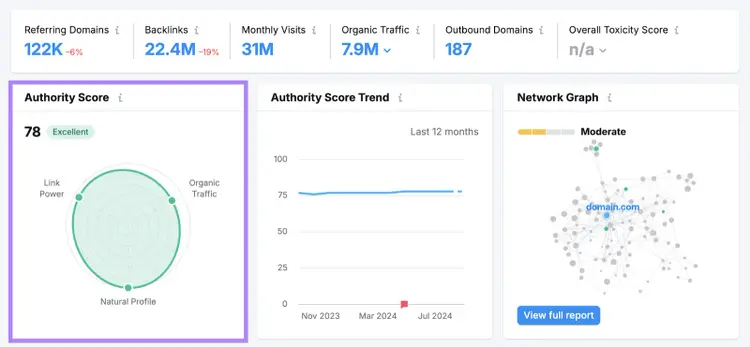
Get a reliable estimate of how likely your website is to appear in the top 10 search results by checking your Authority Score with the backlink tool. The higher your score, the more likely you are to rank highly.
These factors can be weighed differently depending on the search.
The freshness of the content plays a bigger role in answering queries about current news topics than it does about dictionary definitions.
So, content that’s fresh matters for time-sensitive queries. But not for evergreen topics.
Here are some examples of both types:
Queries That Call for Freshness Results ✅
Queries That Don’t Call for Fresh Results ❌
next week weather forecast
how to bake chocolate chip cookies
nfl scores last night
history of the roman empire
iphone review
best practices for time management
stock market news today
what is photosynthesis
upcoming concerts in london
classic literature recommendations
presidential election results
guitar tutorials for beginners
movies releasing next week
how to change a flat tire
Understanding Google’s Freshness Updates
Familiarizing yourself with how Google recognizes when freshness matters can help you better plan your content and allocate resources.
While it was initially challenging for search algorithms to know when freshness was important, Google now has multiple freshness systems.
Here’s a brief overview of the freshness-related updates:
Query Deserves Freshness
Query deserves freshness (QDF) is part of the Google algorithm that helps the search engine better understand when queries require the most recent information. And was first publicly discussed in a 2007 article published in The New York Times.
Amit Singhal, the head of Google search at the time, explained the QDF model can determine when a topic is trending and indicates searchers are looking for the most current information.
Freshness Update
After Google launched caffeine (a new web indexing system that helped Google find and index content significantly faster), the search engine rolled out a freshness update in 2011. Which aimed to deliver particularly timely results to searches related to:
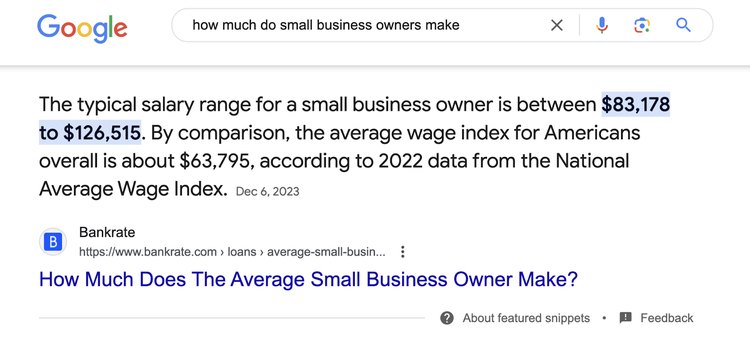
A good example of a featured snippet that shows the most current information is the one that appears for “how much do small business owners make”—Google understands searchers want to know about current salaries.
Best Practices for Publishing and Updating Content
Follow these practices to make sure your content satisfies both people and Google’s algorithms.
1. Only Publish High-Quality Content
High-quality content is useful, accurate, trustworthy, and answers searchers’ questions. And it’s more likely to rank well in search results and drive organic traffic.
A focus on quality can also establish your site as a credible, go-to source of information. To keep users coming back and even convince them to recommend your content to others.
It’s worth noting that Google values quality over quantity. So, publishing frequently doesn’t necessarily improve your SEO results.
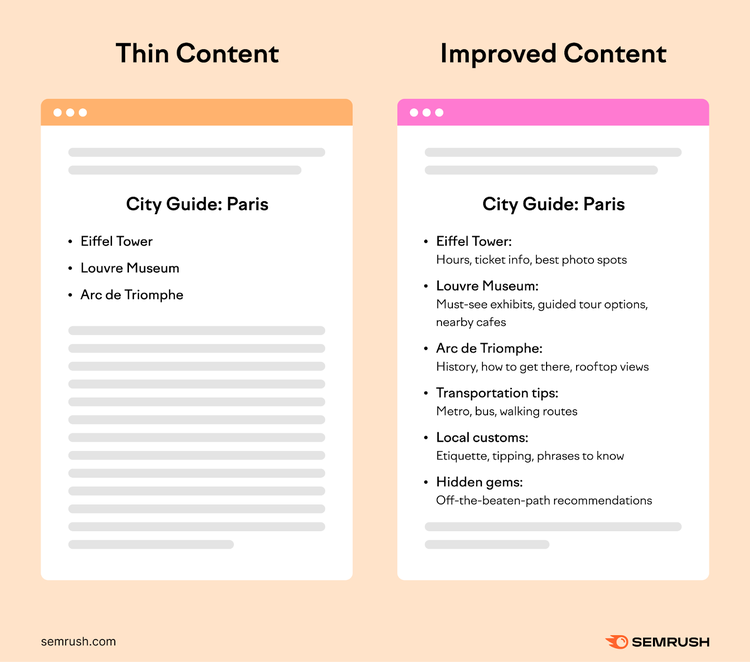
That means your site can perform better with 20 pieces of genuinely helpful content than with 200 pieces of thin content.
So find a pace that works for your site and audience. To ensure you can consistently create quality content.
Follow these tips to make sure your content is the best it can be:
Understand your target audience. Learn about their characteristics, preferences, motivations, and problems. (The One2Target tool is helpful for this.) Tailor your content to address these factors.
Do thorough research. Extensive research on your topic helps you add depth to your content. To help it stand out from more generic articles.
Involve subject matter experts. Collaborate with internal or external experts to add unique insights and perspectives to your content. This makes your content truly original.
Use data and examples. Back your claims by citing relevant studies or primary research. And use examples to simplify complex ideas or concepts. Both of these make your content more useful.
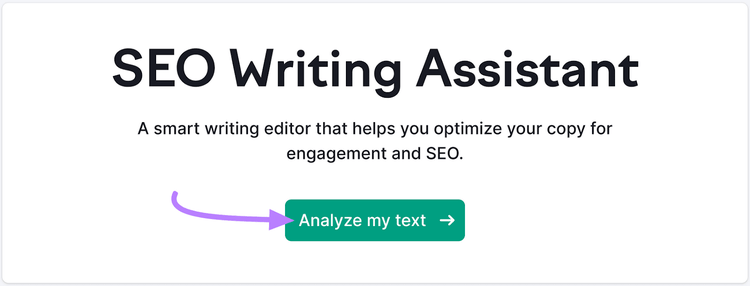
Open the tool and click the “Analyze my text” button.
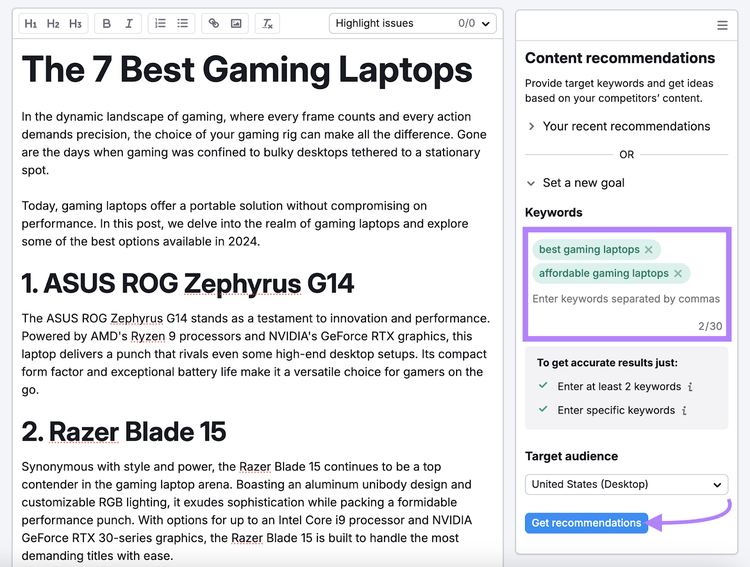
Add your text (type directly in the editor, copy and paste from another document, or import from a URL) and target keywords. Then, click “Get recommendations.”
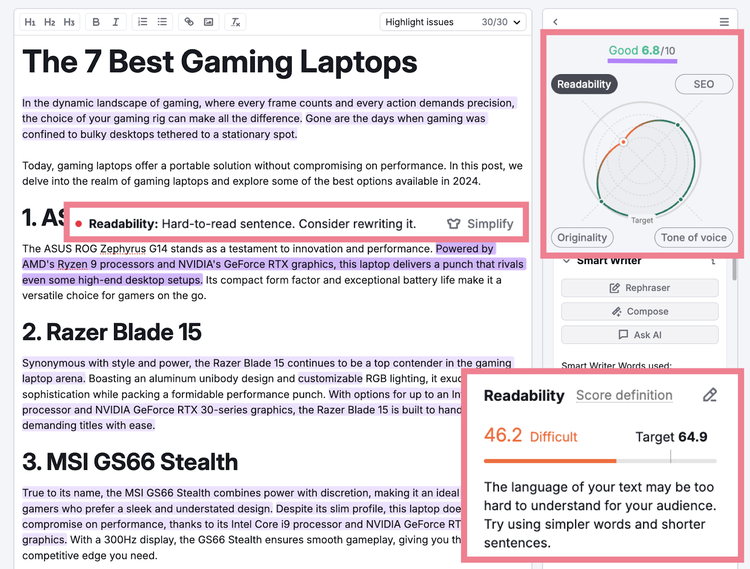
You’ll now see suggestions to improve your content’s SEO performance, readability, originality, and tone of voice.
For example, click “Readability” to check your readability score and get suggestions to improve it.
The tool will highlight portions that need work. And you can hover over the highlighted text and click “Simplify” to automatically rephrase it.
Because freshness matters for time-sensitive topics, keep your pages covering those topics up to date. That can include news articles, product reviews, and event listings.
Exactly what those topics are and how frequently you’ll need to make updates depends on your niche and the specific topic.
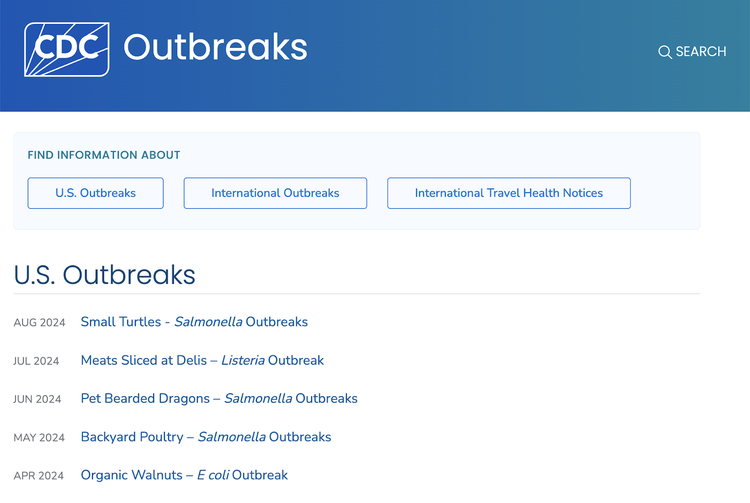
For example, the Centers for Disease Control and Prevention (CDC) updates this page whenever there’s a major outbreak or health concern:
But U.S. News & World Report only updates their list of best colleges (and the associated pages it links to) once per year:
Having trouble deciding which terms demand fresh content?
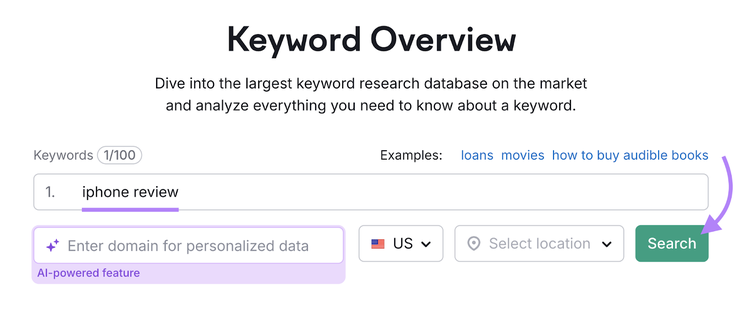
Just enter a keyword you’re targeting and click “Search.”
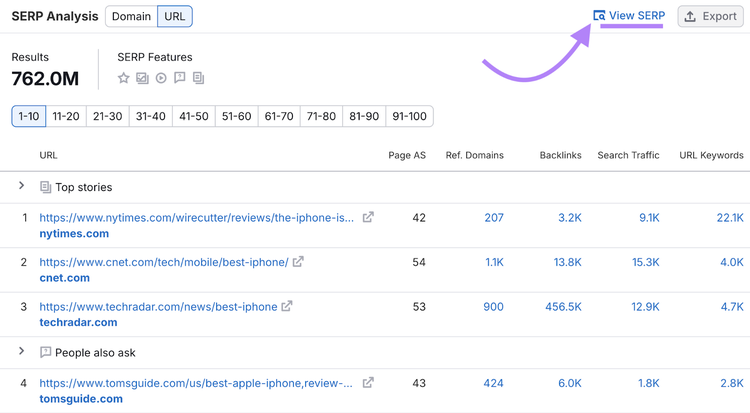
Scroll down to the “SERP Analysis” table and click “View SERP.”
This will show you what the search results that aren’t personalized to you look like. And you can evaluate the results to determine whether freshness is important.
If most competing pages have very recent publish dates (like in above screenshot), freshness is crucial. And you should update your page.
3. Track Content Performance to Determine When to Refresh
Not every keyword you’re targeting requires fresh results. But it’s still a good idea to make updates to evergreen content here and there to ensure it’s still relevant.
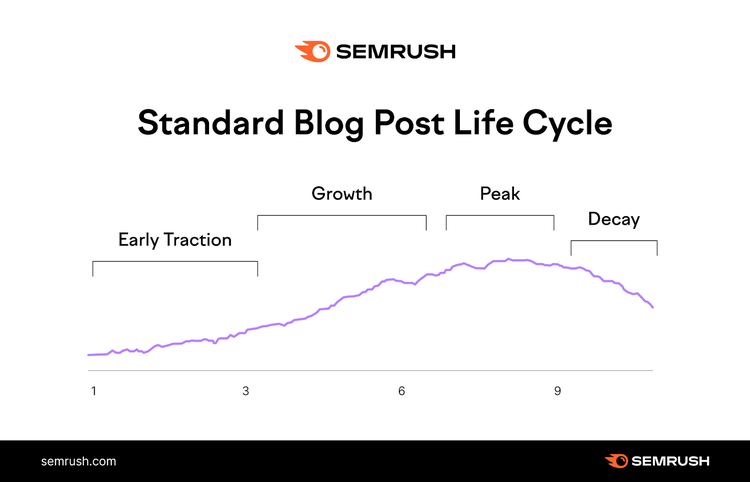
This is because many pages see an eventual decline in rankings and organic traffic.
And you can determine when to update these pages based on performance.
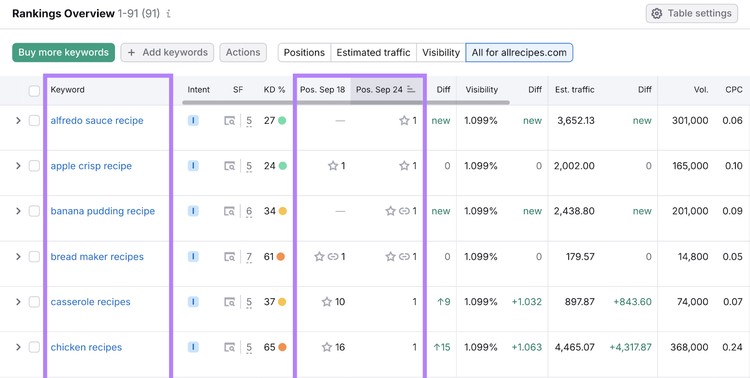
If you notice any pages that are consistently losing positions, study them (and the current high-ranking results) to see if there are any updates you could make that might boost performance.
Then, prioritize updating your most important pages.
4. Focus on Genuinely Useful Content Updates
Anytime you’re updating content either based on the need to cover something recent or based on a desire to recoup performance, those changes should be genuinely helpful for your audience. This ensures you abide by Google’s recommendations.
Some examples of useful updates include:
Replacing outdated or inaccurate information with current and accurate details
Adding new developments, perspectives, statistics, and product/service details
Complying with legal or regulatory requirements
Including user feedback to improve your content
Rewriting content to better align with users’ search intent (the reason behind the query)
Let’s say you’ve determined you need to refresh a page to better address search intent.
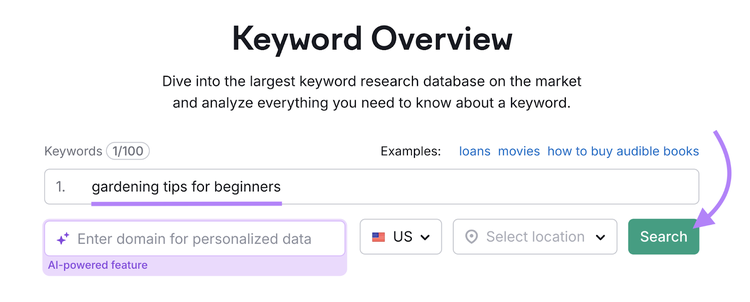
To get a better understanding of what type of content you should create, enter the page’s target keyword in Keyword Overview.
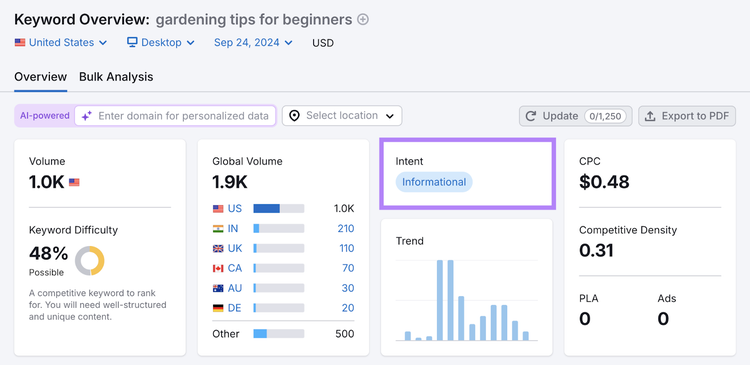
On the next screen, you’ll quickly be able to see the main intent category/categories.
In this case, an informational page will be key.
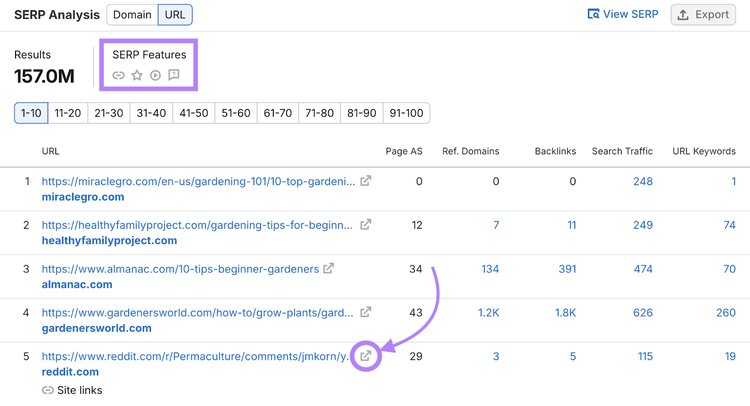
Next, scroll down to the “SERP Analysis” section.
Make note of any SERP features (special results that stand out from the standard blue links) that appear. And click the arrow icon next to each page to see exactly how it’s formatted, what information is included, etc.
For this query, it will be crucial to cover at least 10 tips, consider that searchers don’t have much experience, and include helpful visuals. And it may be beneficial to include a video overview.
Ravi is a data-driven content marketer, writer, and strategist with over 10 years of marketing experience. He helps B2B SaaS companies drive organic growth with product-led content and SEO.
Subscribe to learn more about General SEO
Subscribe
By clicking “Subscribe” you agree to Semrush Privacy Policy and consent to Semrush using your contact data for newsletter purposes
Share
Tells Google to show you more from Semrush in AI, Search, and Discover.