Organic marketing is a strategy that uses non-paid tactics to grow brand awareness of and loyalty to your business. Instead of relying on paid ads, it focuses on producing long-term results through creating valuable, shareable content and fostering community.
Examples of organic marketing content include blog articles, videos, and social media posts.
In contrast, paid marketing involves paying for ads on social media, search engines, and other channels to get in front of your audience. It can generate sales or subscribers more quickly, but only as long as you keep buying ads.
Want to build long-lasting relationships with your target audience without paying for visibility?
Read on to learn more about organic marketing. And how you can start using it to attract customers.
Benefits of Organic Marketing
Organic marketing is a cost-effective way of reaching your target audience. And presenting your product or service as the solution to their problems.
More specifically, organic marketing helps you do the following:
Build trust with your target audience. Publishing reliable, authentic, and accurate content can foster trust with your target audience. Which can eventually lead them to become customers.
Nurture loyal customers. As users engage with your content over time, they may become loyal fans who make repeat purchases and recommend your brand to others.
Produce cost-effective, long-term marketing gains. Organic marketing requires an upfront time investment. But it doesn’t require an ongoing ad spend to keep producing results, making it a budget-friendly marketing approach.
Here are five organic marketing tactics that can increase your organic reach on search engines and social media platforms:
1. Learn About Your Target Audience
Getting to know your audience through market research ensures your content resonates and engages the right people.
There are a couple of ways you can get to know your audience:
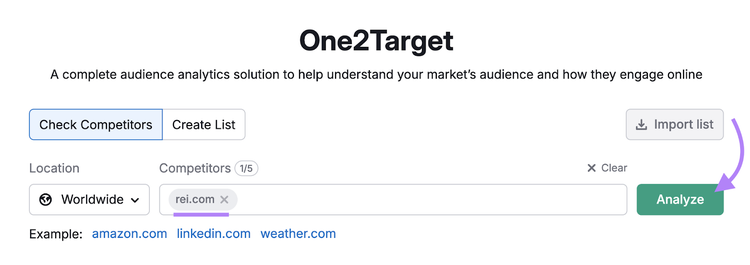
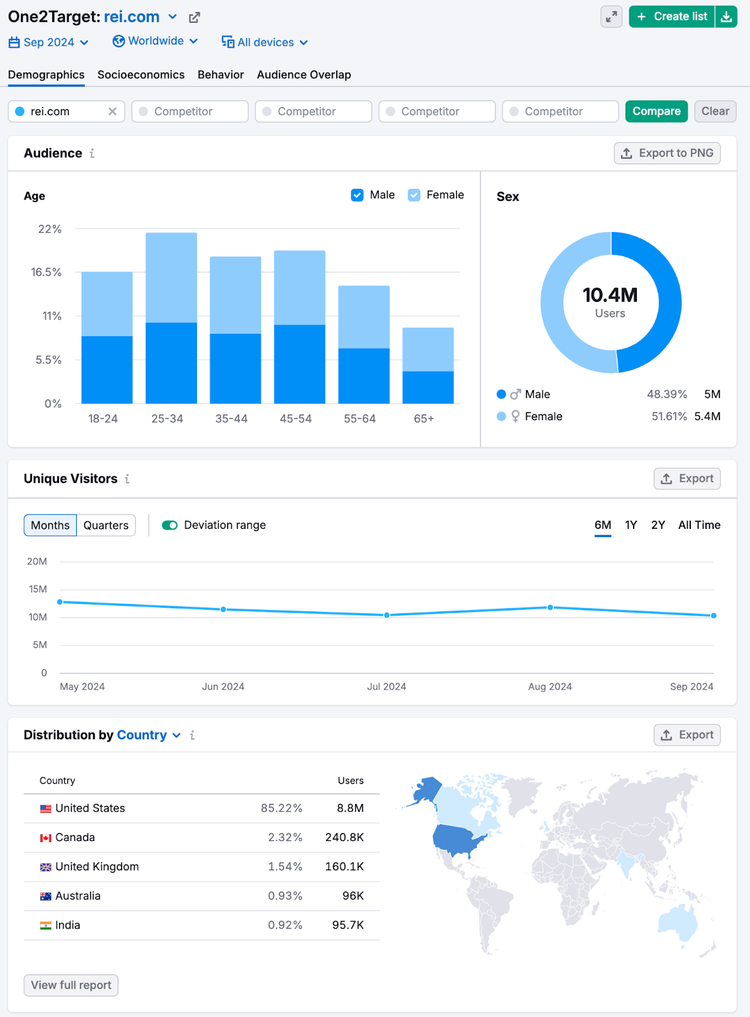
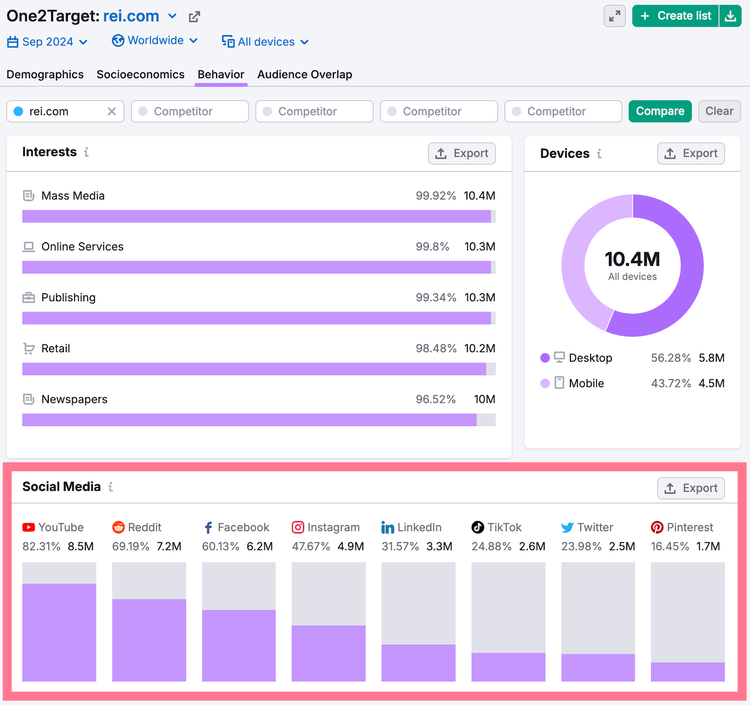
First, use One2Target to find out more about your website visitors.
Open the tool. Type in your domain. And click “Analyze.”
Visit the tool’s “Demographics,” “Socioeconomics,” and “Behavior” tabs. To learn more about your audience’s age, geographical location, income levels, favorite social media platforms, and more.
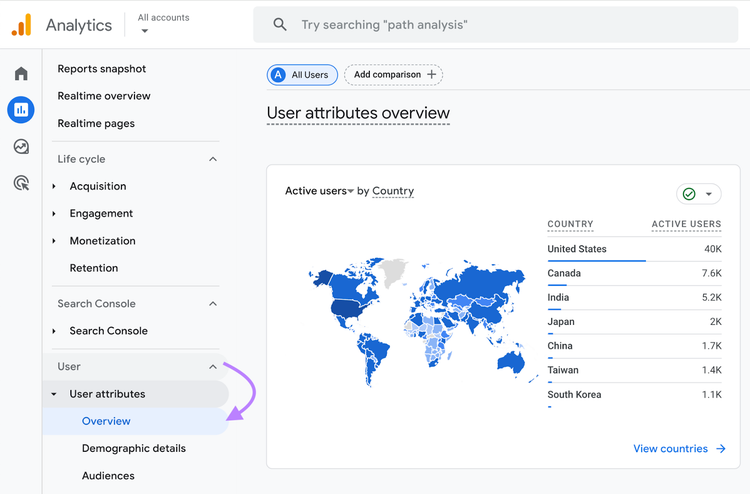
You can also learn more about your site visitors from Google Analytics 4.
Just navigate to “Reports” > “User attributes” > “Overview.”
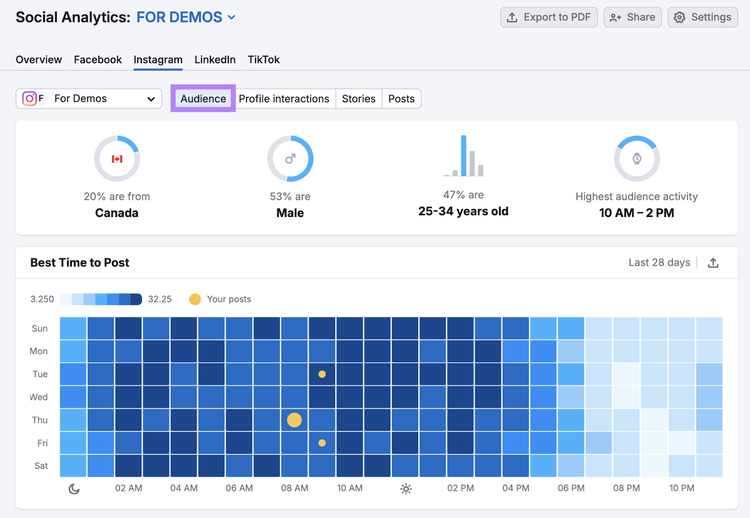
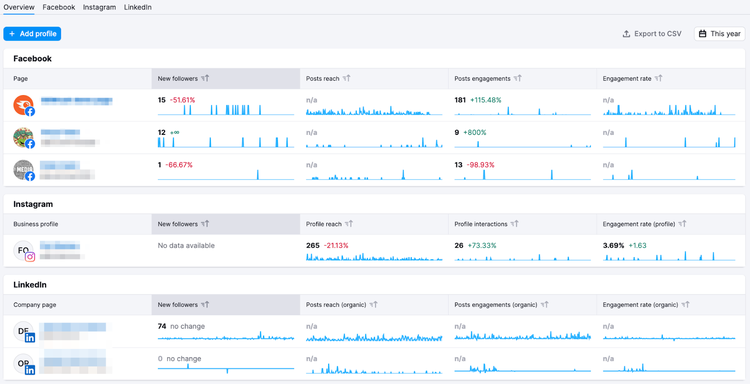
Lastly, find out the times your audience is most active online with Social Analytics by adding your social media accounts to the tool. And then navigating to the “Audience” tab.
After understanding your audience, you can create the content they want to consume.
Keyword research is the process of identifying words or phrases (aka search terms or keywords) that people use to search for information related to your business.
For example, if you sell travel backpacks, your target audience may use keywords like “travel backpack” or “travel backpacks with laptop compartment.”
Effective keyword research is essential to drive traffic from search engines and ensure your content aligns with what your audience is searching for
But how do you conduct effective keyword research?
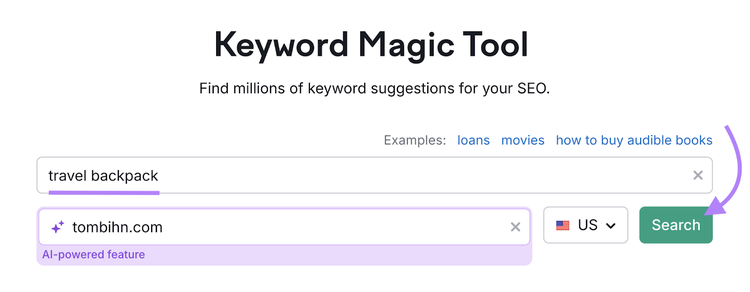
Enter a word or phrase related to your business or the products you sell. And enter your domain to get AI-powered, personalized results.
Then, hit “Search.”
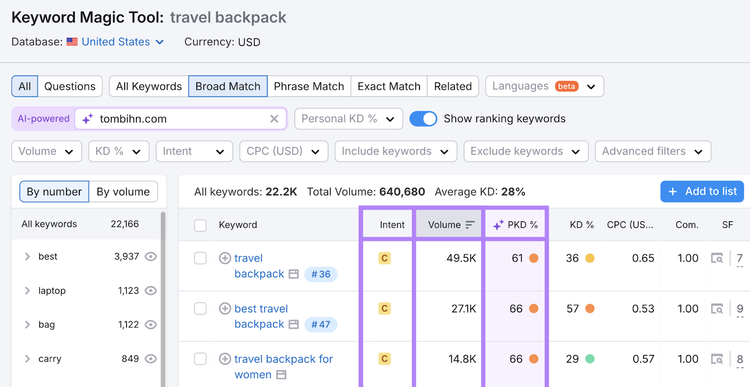
You will get a list of potentially thousands of keyword suggestions.
But not all of those keywords are the right ones for your brand.
The right keywords align with your organic marketing strategy goals, get enough searches per month, and aren’t too hard to rank for
To find those keywords, pay specific attention to the “Intent,” “Volume,” and “PKD %” columns.
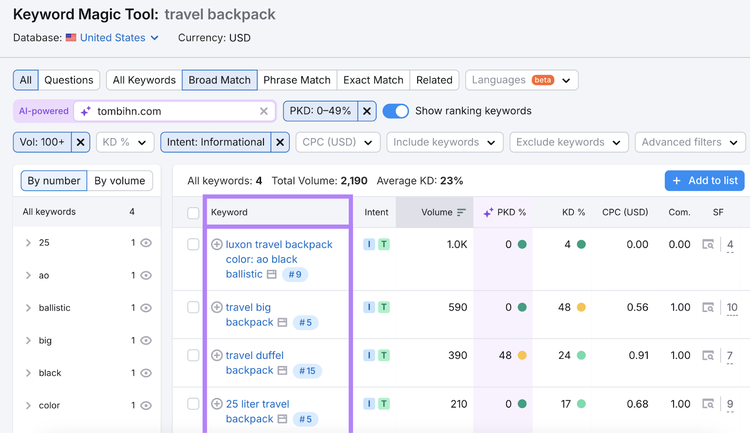
For newer sites, we recommend narrowing down the list using the available filters.
First, use the “Intent” filter to find keywords that align with your goals.
If your content goal is to reach as many people as possible by educating your audience, then find keywords with an “informational” intent.
If your content goal is to sell a product, then look for keywords with a “commercial” intent.
Then, use the “Volume” filter to find out which keywords get enough searches per month. A general rule of thumb is to filter for keywords that get at least 100 searches per month. (But that may not apply in all situations.)
Lastly, use the “Personal KD %” filter to find keywords that aren’t too difficult for your website to rank for. Again, if you’re just starting out, we recommend going for keywords with a score of less than 50%.
Now you have a shorter list of four keywords.
Go through the list and find keywords that align with your organic marketing goals.
For example, if your goal is simply to reach as many people as possible, then choose keywords with higher search volumes. And possibly informational intent, as your goal isn’t to sell yet.
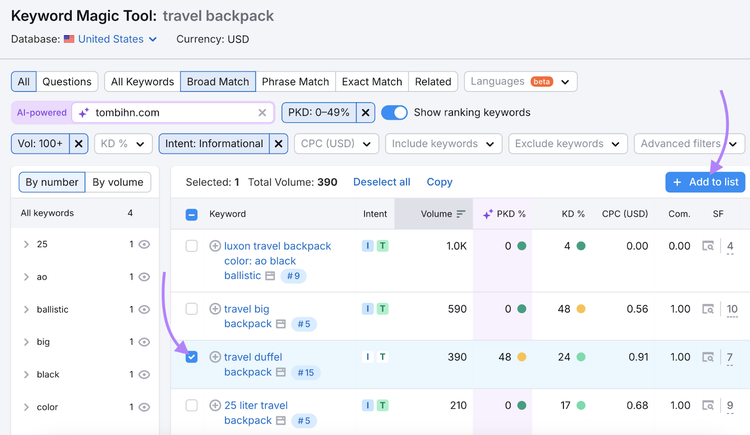
Like “travel duffel backpack.”
Then, click the checkboxes beside each of your chosen keywords. And hit “+ Add to list” to save those keywords to a list.
Now you have a list of keywords to create content for. Read on to learn how to produce optimized content that is more likely to rank well and reach more people.
3. Create Genuinely Helpful and Optimized Blog Content
Creating well-optimized and well-written blog posts is a great way of reaching your target audience. Because genuinely helpful content is generally more engaging.
Case in point:
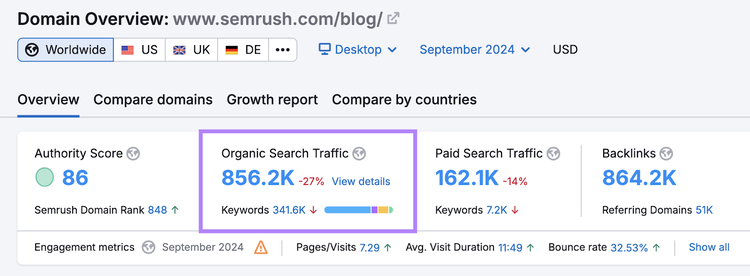
The Semrush blog gets roughly 850,000 visitors from organic search every month, according to the Domain Overview tool.
But how do you reach that big of an audience?
Create genuinely helpful, people-first content. Then, optimize it for search engines using the keywords you just found.
There are two ways to do this.
First, you can write the blog post manually, keeping the following best practices in mind:
Write a clear and engaging title that contains your main keyword and is compelling enough to encourage clicks
Organize your content with heading tags (H1, H2, H3, etc.) to make it easy for readers and search engines to scan
Make your content more readable by writing in short sentences and paragraphs, using bullet points, and breaking up long sections of text
Write a short, engaging meta description that summarizes your post and includes your target keyword
Use real-world examples and case studies to showcase your experience, engage readers, and make your content more actionable
Cite reliable sources to build trust and credibility
Use keywords naturally throughout the content without overusing them (i.e., avoid keyword stuffing)
Add internal and external links to related content on your website and trusted external sources to boost SEO and user experience
Include a clear call to action (CTA) to encourage readers to take the next step, like subscribing or sharing your content
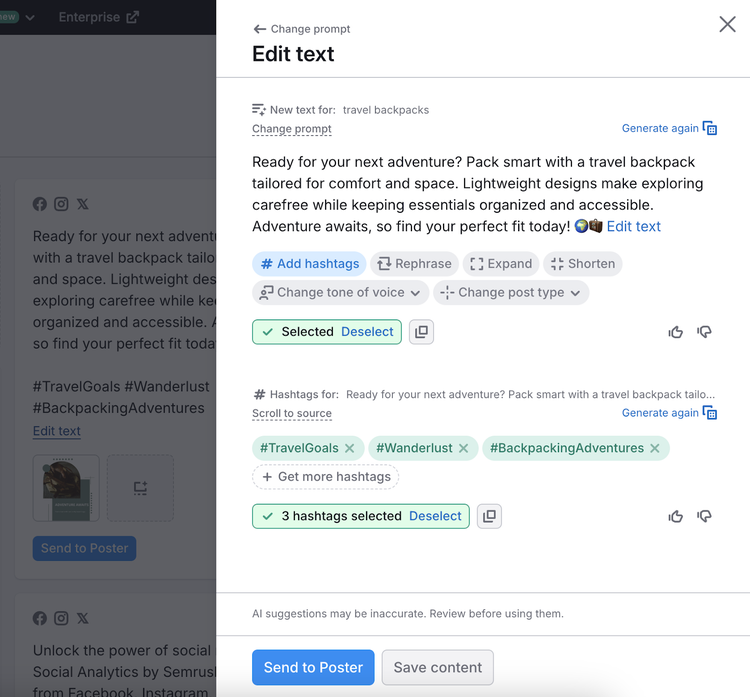
Another way to create a blog post is by using AI tools like the AI Article Generator within Semrush’s Content Toolkit. It uses AI to generate a full-length, SEO-friendly blog post draft, giving you a strong starting point to work from.
To get started, launch the AI Article Generator.
Enter your primary keyword. Then, click “Get suggestions.”
The tool will generate a recommended title, target keywords, and audience location. You can use these suggestions as-is or customize them based on your content goals.
You can even enable an SEO boost to increase its chances of ranking higher.
Once you’ve set your preferences, click “Create article.”
You’ll get an AI-written draft. Review the content for accuracy and make edits to add a human touch before publishing.
4. Create Relevant and Engaging Social Media Content
Create engaging social media content to organically grow your brand awareness and engage your followers.
Doing this keeps your brand top of mind when potential customers look for solutions you offer.
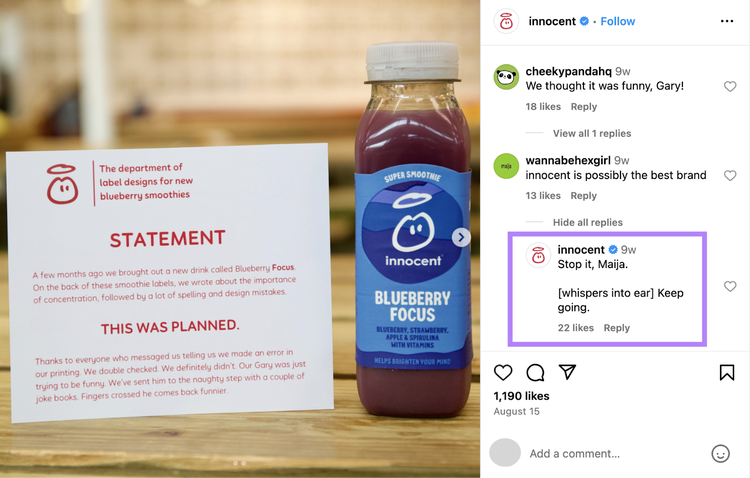
A great example of a brand on social media is healthy drinks company Innocent.
The brand posts on Instagram multiple times a week, often promoting its drinks in humorous ways. It also builds rapport by replying to commenters and addressing them by name.
Like this:
Vocal coach Victoria Rapanan, on the other hand, creates and uploads educational videos to YouTube to build trust with her audience.
Which has led to sales and testimonials from her loyal customers.
Organic marketing takes time. But the effort is well worth it.
Organic marketing content leads to long-lasting results. Like continued lead generation (even from old blog articles) and high engagement (like for organic social media posts).
Invest in the right tools now to maximize your organic marketing efforts.
Siew Ann draws on her five years of SEO and email marketing experience to write creative, well-researched content for B2B SaaS businesses. Her articles have ranked on the first page of Google and as high as #1.
Subscribe to learn more about General Marketing
Subscribe
By clicking “Subscribe” you agree to Semrush Privacy Policy and consent to Semrush using your contact data for newsletter purposes
Share
Tells Google to show you more from Semrush in AI, Search, and Discover.