Keyword Stuffing in SEO: What It Is & How to Avoid It
Expert reviewed
Our subject matter experts have reviewed this article to ensure it meets the highest standard for accurate information and guidance. Learn more about our editorial standards and process.
Keyword stuffing is a spammy SEO tactic that involves unnaturally forcing keywords into webpages. With the aim of ranking higher on the search engine results page.
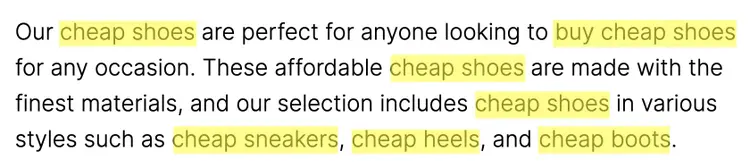
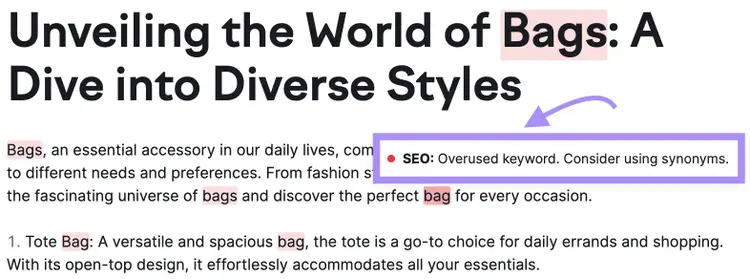
For example, the main content might read like this:
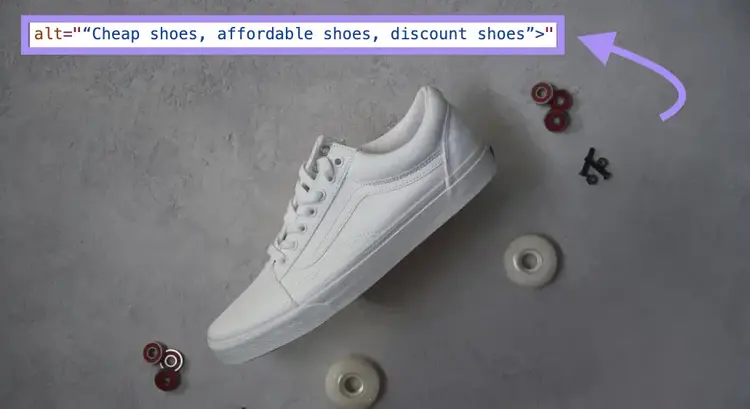
Keyword stuffing may also occur in the following places:
Stuffed keywords into on-site content (especially at scale) or
Built backlinks (links to your site from other sites) that use overly keyword-rich anchor text across various domains
You may see your rankings suffer. Or even receive a manual action (also known as a Google penalty). This means that your site will be suppressed or removed from Google search results.
Why Websites Use Keyword Stuffing
Websites use keyword stuffing in a misguided effort to earn higher SEO rankings.
In the early days of SEO, keyword stuffing could lead to higher rankings.
Google’s algorithm treated pages with keywords—or more repetitions of the keyword—as more relevant. And gave weight to keyword-rich backlinks.
Google has since rolled out numerous algorithm updates to devalue or penalize keyword stuffing.
Which means Google understands context and currently ranks pieces based on factors like comprehensiveness and search intent. Rather than how many times you use a keyword.
Also, Google’s current web spam detection systems are highly effective. So keyword stuffing will hurt your performance in search results.
That being said, Google does look for search terms on pages to determine whether they’re relevant to the user:
The most basic signal that information is relevant is when content contains the same keywords as your search query. For example, with web pages, if those keywords appear on the page, or if they appear in the headings or body of the text, the information might be more relevant.
— oogle
And does use anchor text to understand what linked pages are about.
But you don’t need to use a keyword on a page a certain number of times to rank for it. Or have numerous incoming links with keyword-rich anchor text.
How to Identify Keyword Stuffing
You can manually identify keyword stuffing by reading your content. And checking for the excessive or unnatural placement of keywords.
If you want to bulk analyze content for keyword stuffing, some SEO tools will scrape content (e.g., all your alt text) and export it to a spreadsheet.
But this can still be a time-consuming and subjective process. So, let’s learn how to speed things up with two Semrush tools: On-Page SEO Tool and Backlink Audit.
Analyze Your Site with Semrush’s On Page SEO Tool
To check your on-site content more efficiently, import your pages and their target keywords into Semrush’s On Page SEO Tool.
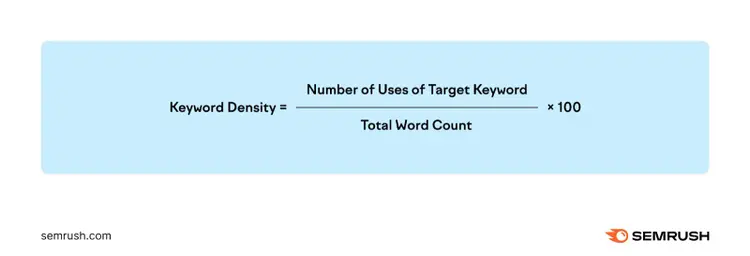
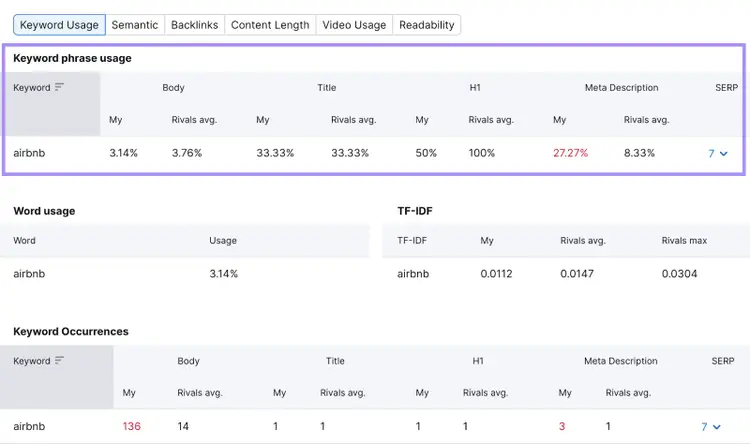
The tool calculates keyword density (i.e., what proportion of words are keywords) in the following tags:
<body>: The body tag, which should contain your main content
<h1>: The H1 tag, which should contain your on-page title
<meta>: The meta tag, which should contain a page description
<title>: The title tag, which should contain your off-page title
Then compares your keyword densities against your top-ranking rivals’ keyword densities. To see whether there’s a disparity.
The tool also compares many other on-page SEO factors. And provides recommendations accordingly.
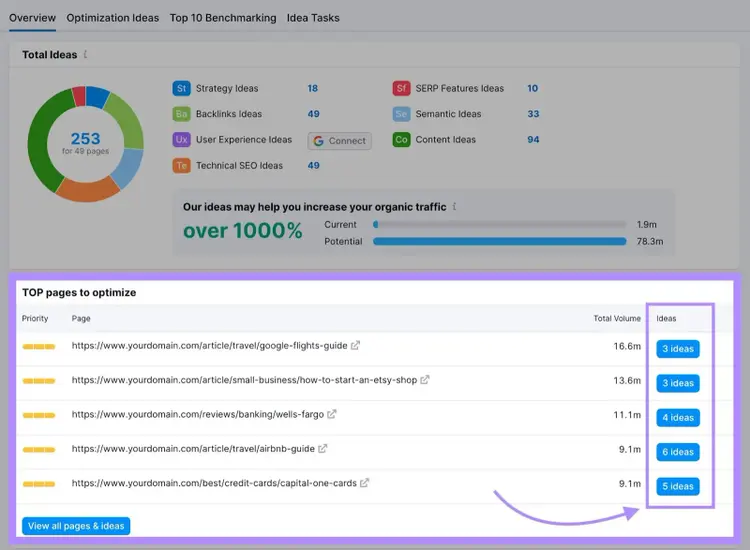
After setting up, scroll down to “TOP pages to optimize.” And click “# ideas” alongside your highest-priority page.
Go to the “Content” section to see whether your page has stuffed keywords.
If not, you’ll see a note like this:
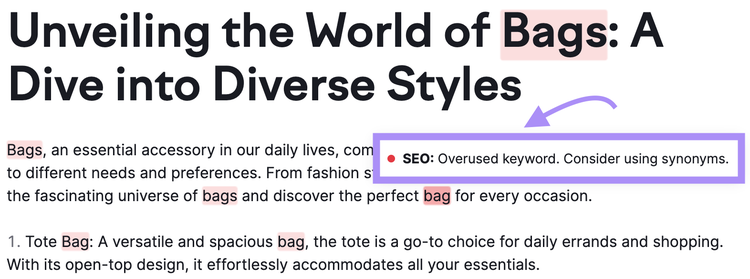
If yes, you’ll see a recommendation like this:
Click “See detailed analysis” for a keyword usage breakdown.
If your keyword density is significantly higher than top-ranking competitors’, rewrite your content. Making sure to use keywords more naturally.
Don’t forget to apply the other optimization ideas, too.
Tip
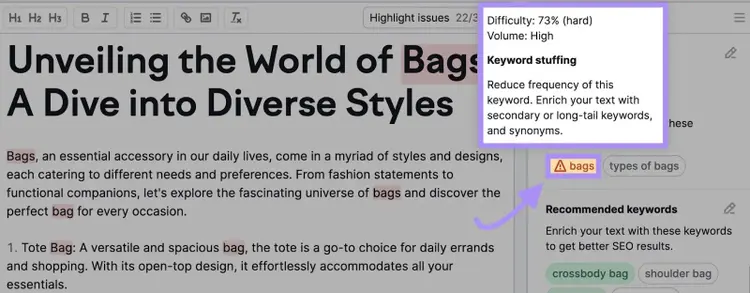
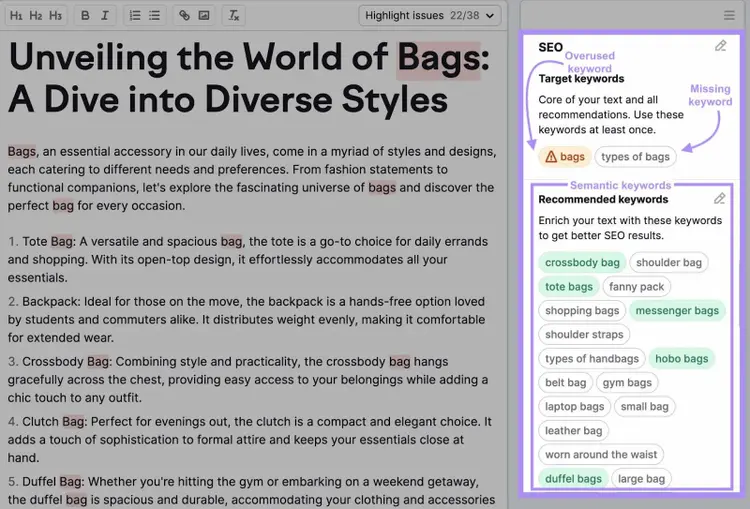
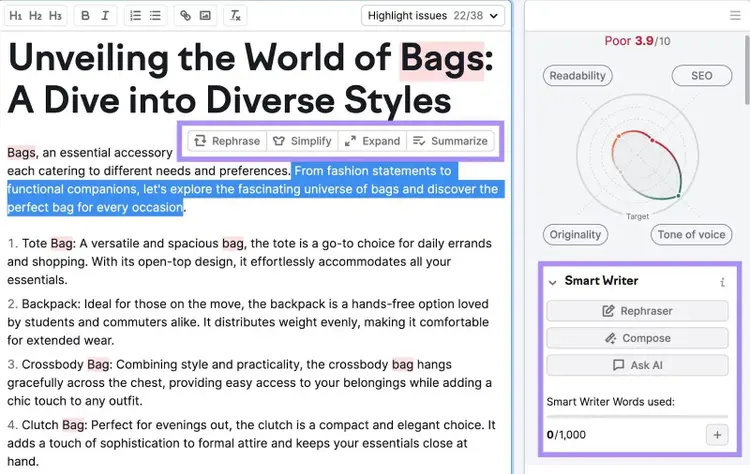
You can also check for keyword stuffing as you write with the SEO Writing Assistant. It calculates keyword density and highlights instances where you might be using your target keyword too many times.
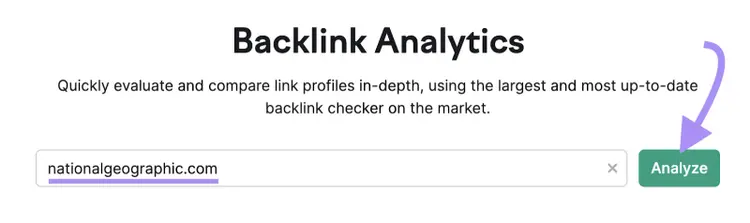
To check your backlinks for over-optimized anchor text, use Semrush Backlinks tool.
Enter your domain and click “Analyze.”
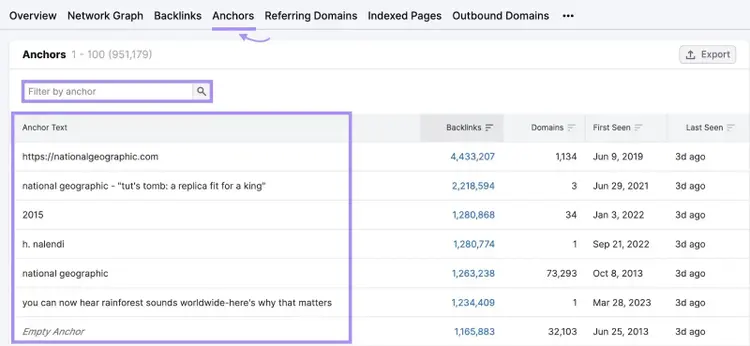
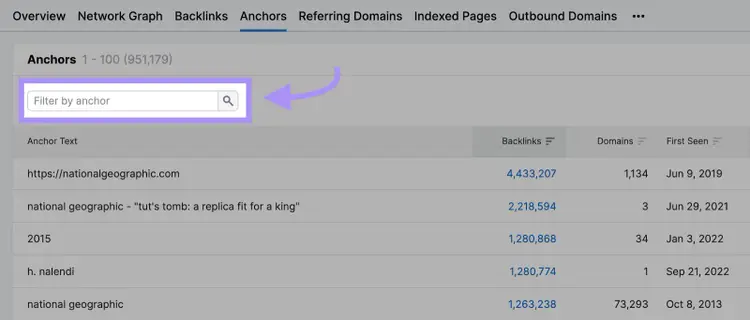
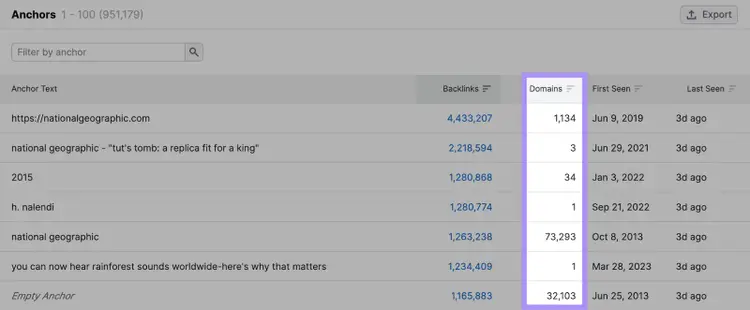
Then, go to the “Anchors” report. And check the “Anchor Text” column for keyword-rich anchor texts.
Alternatively, use the “Filter by anchor” feature to focus on particular terms.
The potentially riskiest anchors are:
Money anchors, which exactly match a keyword you’re trying to rank for
Compound anchors, which contain your brand name with another word or term
If you have too much keyword-rich anchor text across multiple domains, these backlinks could do more harm than good. Particularly if you have a disproportionately large percentage of keyword-rich anchors compared to other kinds of anchor text.
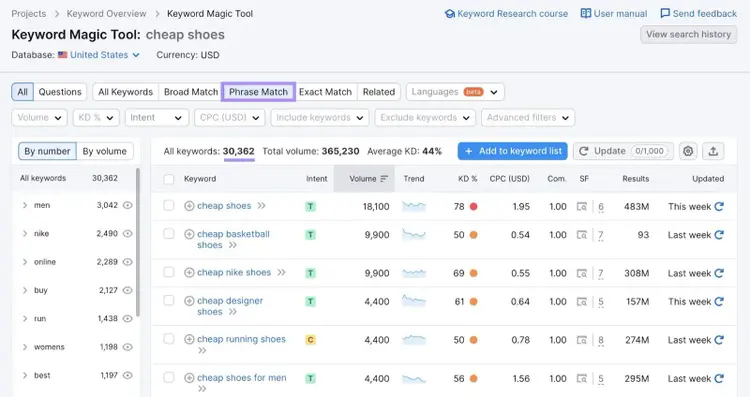
Search volume: The average number of searches per month
For each page, we recommend that you pick one primary keyword (the main keyword you want to target).
And one to five secondary keywords (other keywords you want to target). The larger the scope and depth of your content, the more secondary keywords you can safely include.
Rachel is a Senior Content Writer with 12+ years‘ experience in content marketing and SEO. In a previous role as Head of Content at a digital marketing agency, Rachel developed and executed search-driven content strategies for a diverse range of clients, including global ecommerce brands and local B2B companies. She later transitioned to an in-house role at an SaaS startup, where she focused on scaling content operations and driving organic growth.
Subscribe to learn more about Keyword Research
Subscribe
By clicking “Subscribe” you agree to Semrush Privacy Policy and consent to Semrush using your contact data for newsletter purposes
Rachel Handley
Rachel is a Senior Content Writer with 12+ years‘ experience in content marketing and SEO. She has worked agency-side, developing and executing content strategies for a wide range of brands, and in-house, driving organic growth for a SaaS startup.
Share
Tells Google to show you more from Semrush in AI, Search, and Discover.