SEO traffic is the number of visitors who come to your website from organic search results.
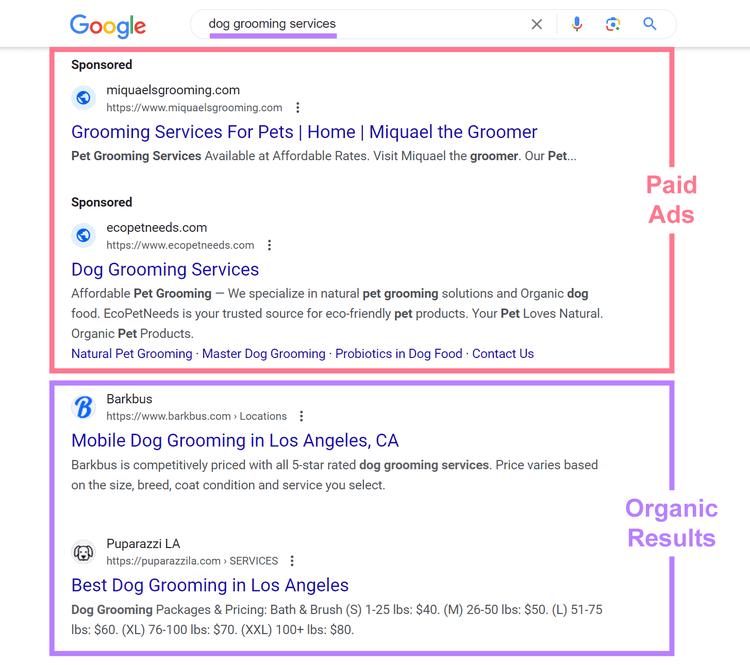
Organic search results are the webpages that appear on search engines like Google that are not paid ads.
SEO traffic, also known as organic traffic, is important because it’s often made up of your target audience. These are visitors likely to be interested in your content, products, and services. Because they’re searching for terms related to your business.
Unlike paid traffic, traffic generated through search engine optimization is free. And it can provide long-term results.
If your content ranks well and is valuable for your readers, it can drive traffic to your site for months or even years. Traffic that has the potential to convert into loyal readers and paying customers.
Tip
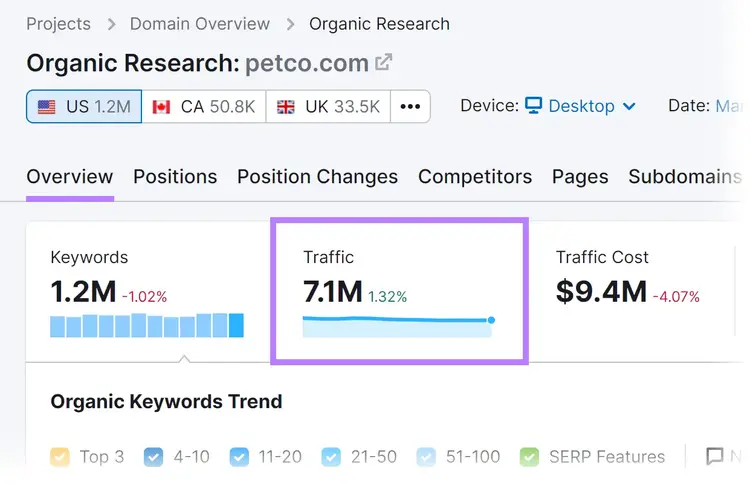
You can check any website’s average monthly organic traffic with Organic Rankings.
How Does SEO Generate Traffic?
SEO generates traffic by making it easier for search engines to understand your content and where they should rank it in search results. This can increase your site’s visibility because you can appear in searches relevant to your target audience.
And the higher you rank, the more clicks and visits you can get from organic search. But that’s not the only reason SEO traffic is worth paying attention to.
What Are the Benefits of SEO Traffic?
The main benefits of SEO traffic are:
It’s free. You don’t have to pay for clicks or impressions like you do with pay-per-click marketing (PPC). You just need to create high-quality content and optimize your site for SEO.
It’s targeted. You can attract visitors actively looking for the products, services, or solutions you offer. Which makes them more likely to convert.
It’s sustainable. With a robust SEO strategy, you can keep and improve your rankings over time. You can have a steady flow of traffic without needing to continually pay for ads.
Let’s explore the different ways you can boost your site’s SEO traffic.
Tip
Sign up for a free Semrush account (no credit card required) to follow along with the steps below.
1. Target the Right Keywords
Target keywords that are relevant to your site and that your target audience is already searching for.
Use Semrush Keyword Magic Tool to find terms that are relevant, have high search volume, and have low competition. And then target them with high-quality content.
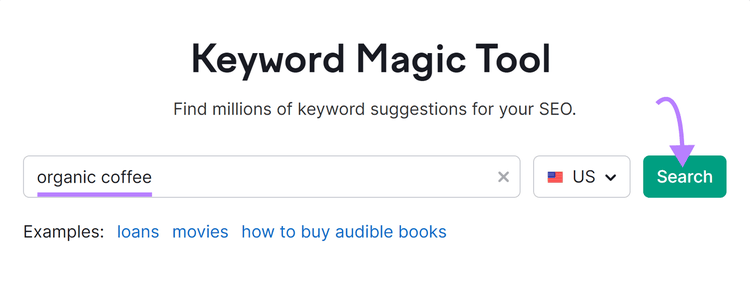
Start by adding a seed keyword (a broad term related to your industry), choosing your target audience’s location, and clicking “Search.”
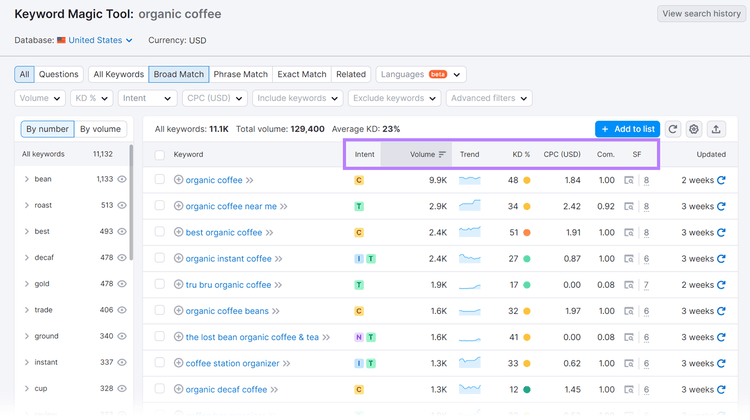
The tool will display a list of related keywords. Along with various helpful metrics.
It’s often best, especially with a new website, to target terms with lower levels of competition. These are typically easier to rank for.
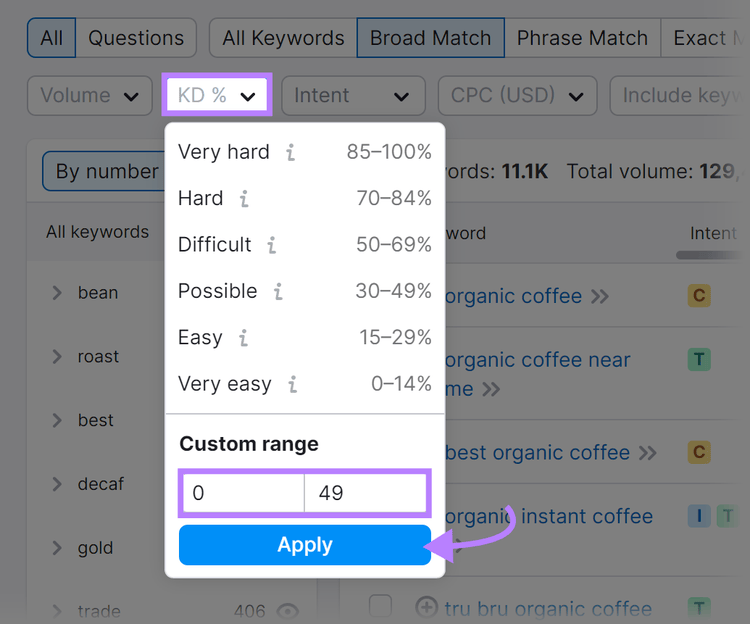
Use the keyword difficulty filter (marked “KD %”) to only show keywords with relatively low levels of competition.
Do this by choosing one of the filters, or manually entering numbers like 0 to 49.
Then click “Apply.”
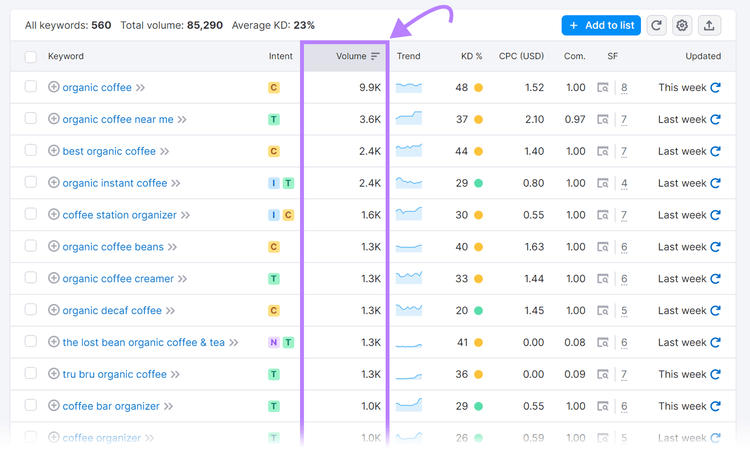
You’ll see a list of keywords within this range of keyword difficulty scores.
You can sort these by volume to find opportunities with the most SEO traffic potential.
Do this by clicking the “Volume” header.
But don’t just choose the keywords with the highest volume. You also need to consider how relevant they are to your website. And the search intent.
Search intent is the reason behind a user’s search. Whether that’s answering a question, looking for a specific page, buying a product, or exploring a topic further.
And satisfying intent (giving searchers what they want) is one of Google’s main goals with its search results.
What does that mean for you?
You should always make sure your content matches the search intent of the keyword you’re targeting.
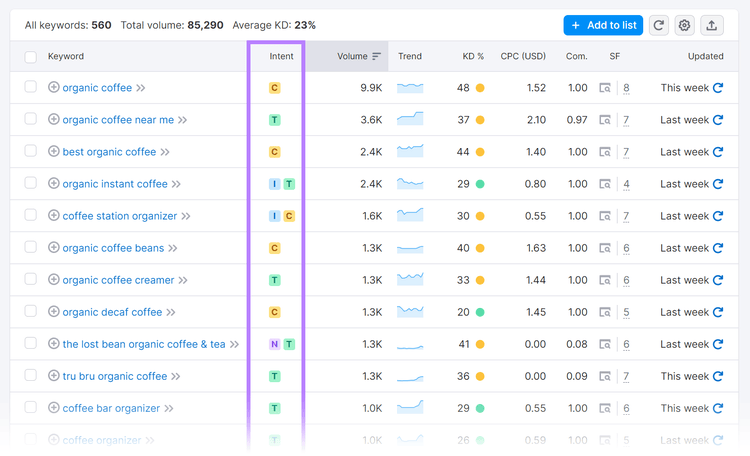
To quickly find a keyword’s intent, just look in the “Intent” column of the list in the keyword tool from the previous step.
There are four different search intents that may be listed here:
Informational (I)
Navigational (N)
Commercial (C)
Transactional (T)
Navigational intent suggests a user is looking for a specific page.
For example, someone searching for “Monday.com project management software login” is probably looking for that specific page on Monday.com’s website.
Probably not a keyword you should target.
Generally, informational, commercial, and transactional intents can all be useful ones to target. Depending on what your website offers.
Let’s say you run a blog all about photo editing. You might want to target informational queries from users with questions about editing their photos.
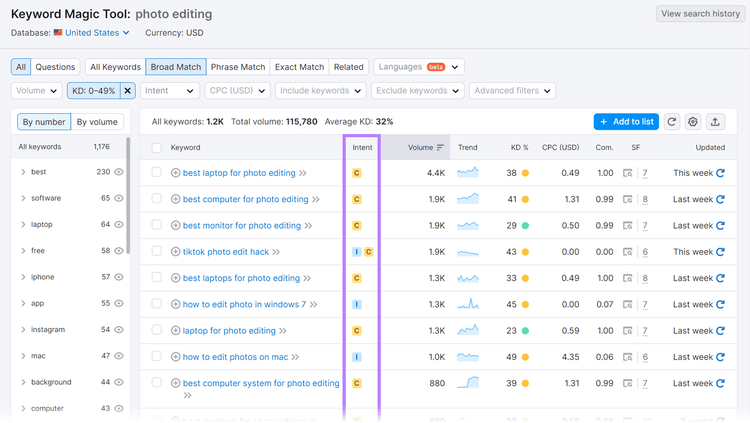
The Keyword Magic Tool’s list might originally look something like this:
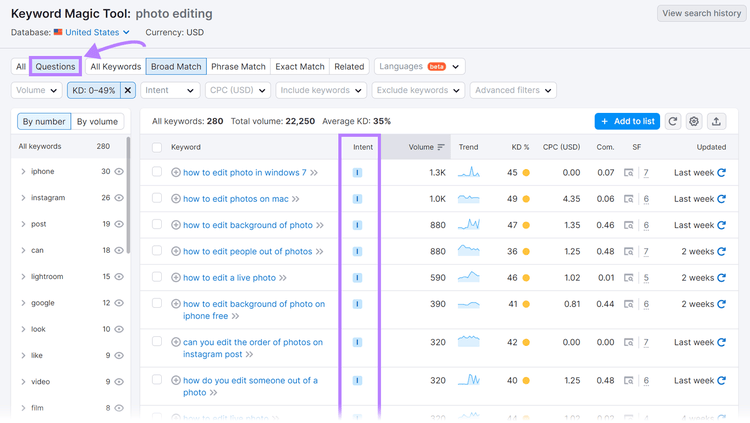
Notice that many of the keywords have commercial intent (marked with a “C”). You may indeed want to create content around these keywords.
But if you want to create how-to guides for your readers, for example, you might want to narrow down your search to primarily show keywords with informational intent instead.
Do this by selecting the “Questions” filter.
Notice how the keyword suggestions are now primarily informational queries (marked with an “I”).
Let’s now imagine you sell products or services related to photo editing rather than writing how-to guides.
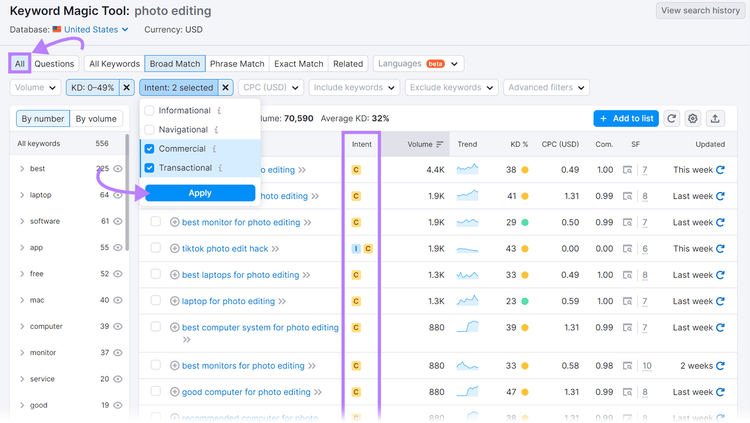
You might want to filter for keywords with commercial and transactional intent instead.
Do this by clicking the “Intent” filter and selecting “Commercial” and “Transactional” from the drop-down that appears.
Then click “Apply.”
You may want to select “All” if you previously selected “Questions,” to provide more results.
Matching your content with the intent of the keywords you’re targeting doesn’t just increase the likelihood of attracting SEO traffic.
It also ensures you’re aligning the content with what your users want. Improving the value of your content and potentially boosting your conversion rate.
You need to produce high-quality content that satisfies the user’s query and provides value if you want to drive SEO traffic to your site.
You need to create content around topics your target audience is interested in.
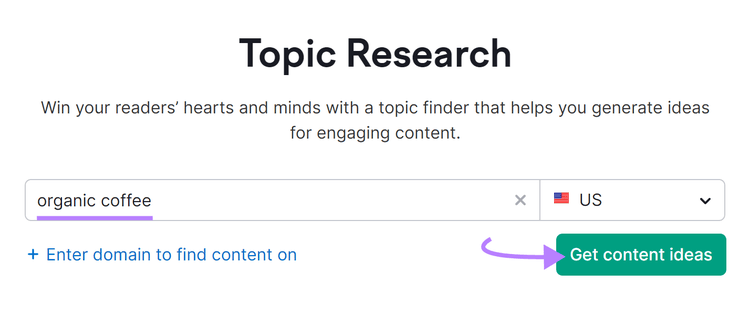
Use Semrush’s Topic Research tool to find hundreds of content ideas in minutes.
Just enter a broad keyword and click “Get content ideas.”
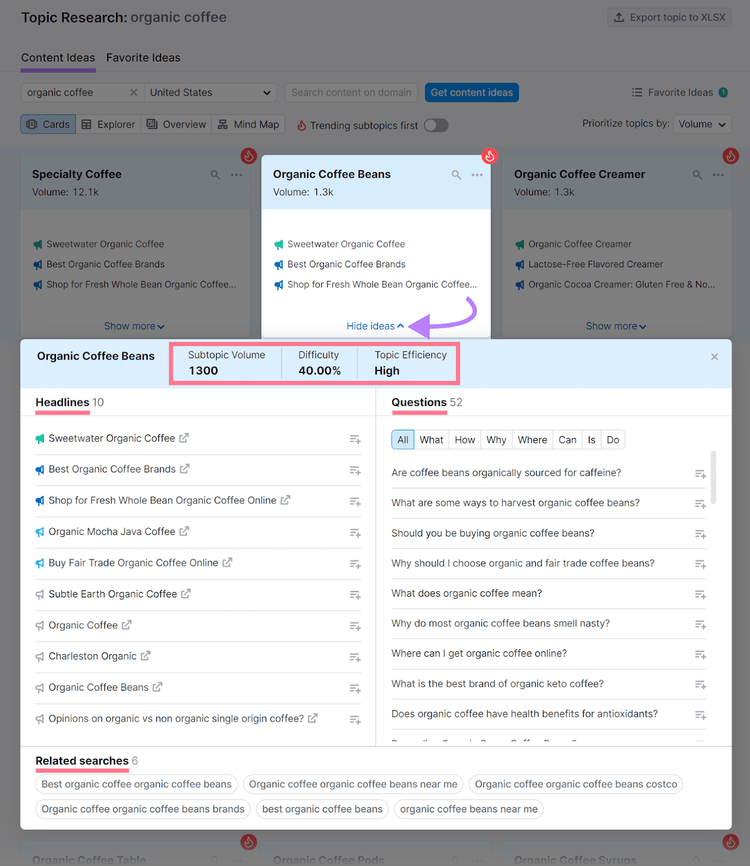
The tool will display a list of cards with content ideas, search volumes, and the top headlines.
Clicking “Show more” at the bottom of a card reveals more information—including difficulty, Topic Efficiency (based on search volume and keyword difficulty), more headlines, questions, and related searches.
It’s typically best to go for topics that are relevant to your website/business and have a high Topic Efficiency.
Once you know which topics to create content for, it’s time to start writing.
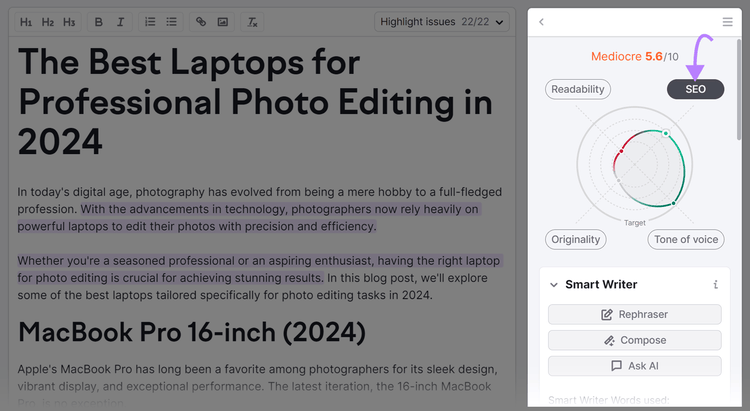
SEO Writing Assistant can ensure your content is optimized from the start. To increase your chances of generating SEO traffic.
Either type your content directly into the tool or import your URL if it’s already live on your website. The tool will analyze your content to help you improve its readability, originality, tone of voice, and SEO.
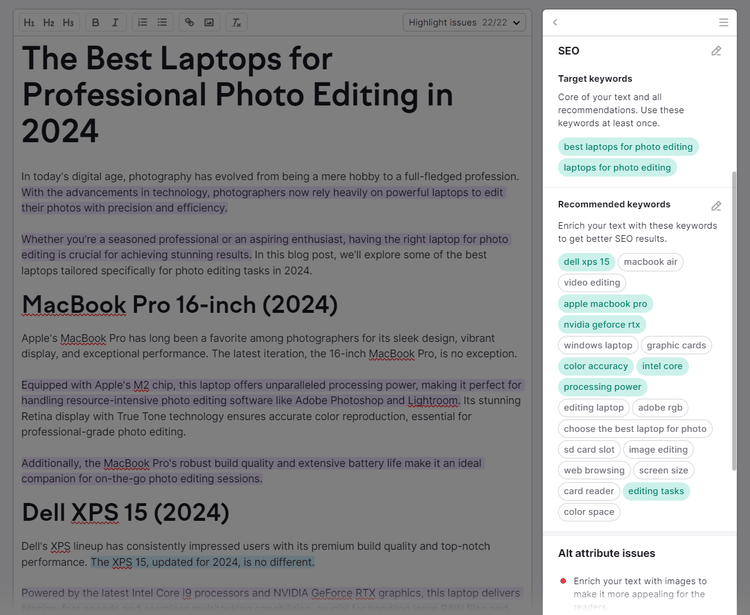
As you want to increase your SEO traffic, you’ll want to click the “SEO” button in the quadrant section at the top right.
This will give you helpful SEO recommendations to improve your content. Including recommended keywords and issues with your links.
Implementing these recommendations can help you improve your content’s quality and drive more SEO traffic to your website.
Backlinks are links from another website to yours.
And they’re one of the many important factors Google uses within its ranking algorithms.
High-quality backlinks can signal to search engines that your content is valuable, relevant, and trustworthy.
Which means one way to help increase your SEO traffic is to get high-quality backlinks from authoritative, relevant, and popular websites.
You can do this by creating linkable assets.
Linkable assets (sometimes referred to as link bait) are pieces of content that are so useful, informative, or entertaining that other websites want to link to them.
They can be guides, case studies, infographics, videos, podcasts, or anything else that provides value.
This is a tactic where you find a popular piece of content in your niche, create something much better, and reach out to the websites that linked to the original content asking them to link to you instead.
Tip
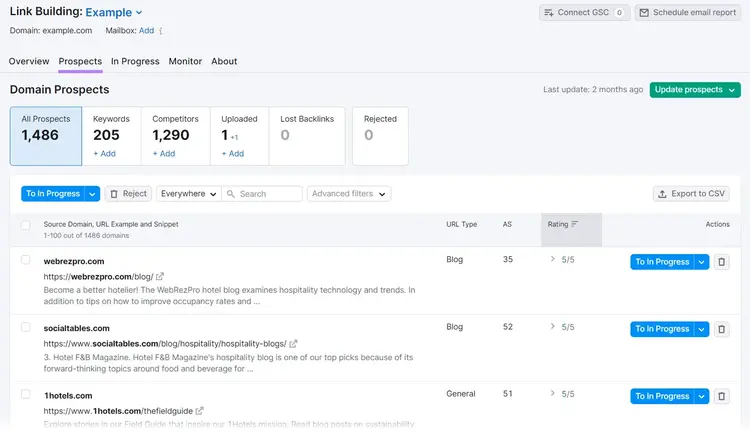
You can use the Link Building Tool to quickly find prospects you can reach out to for backlinks to your linkable assets and skyscraper content.
5. Leverage On-Page SEO
On-page SEO is the practice of optimizing individual elements on your webpages to rank higher and drive more SEO traffic to your site.
It helps search engines understand your content and match it to relevant search terms. Which can lead to higher rankings for target keywords, and increased organic traffic.
Here are some quick ways to improve your on-page SEO:
Optimize for target keywords. Use your target keyword(s) in your title tag, meta description, URL, headings, and body text. But don’t overdo it—use them naturally, and use variations where appropriate.
Improve your page speed. Page speed can affect both your SEO and your user experience. To improve your page speed, consider implementing a caching solution, using a content delivery network (CDN), and minifying your code.
Implement image SEO best practices. Use descriptive file names, alt tags, and captions for your images. And compress them to minimize their impact on page loading times.
Tip
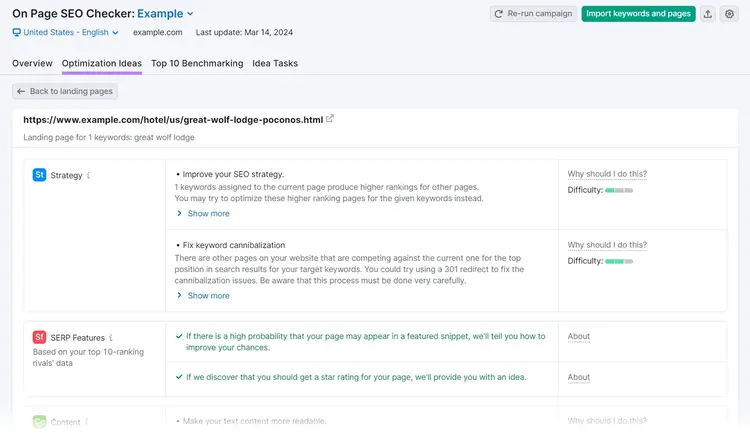
Use the On Page SEO Checker to analyze your pages to ensure you make the right changes, and to find further optimization ideas. Using data from Semrush and Google, the tool provides actionable steps to help improve your rankings and SEO traffic.
6. Manage Your Technical SEO
Technical SEO is the practice of optimizing aspects of your site to make it easier for search engines to find, understand, and index your content.
It helps make sure your website is crawlable, indexable, secure, and fast. And avoids errors, penalties, and other issues that can harm your SEO and user experience.
Technical SEO best practices include optimizing site speed and ensuring your website is mobile friendly.
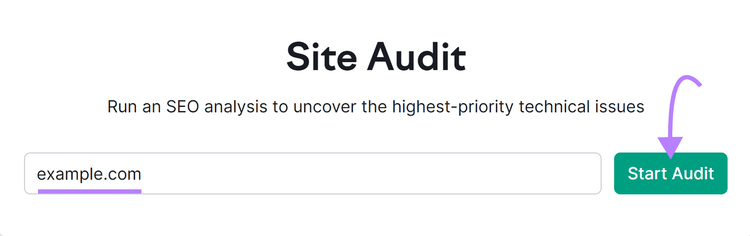
Run a free SEO check for a quick technical scan. For full coverage of crawl errors, broken links, and duplicate content, use Semrush Site Audit.
Enter your domain into the tool and click “Start Audit.”
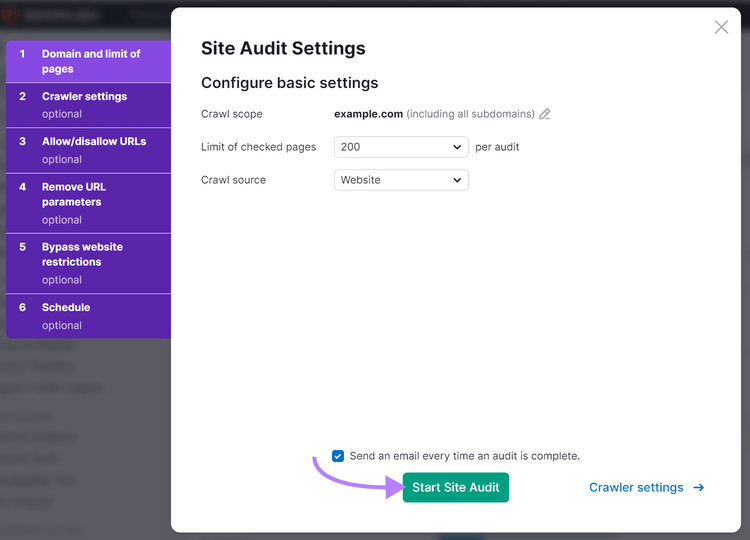
After configuring your audit settings, click “Start Site Audit.”
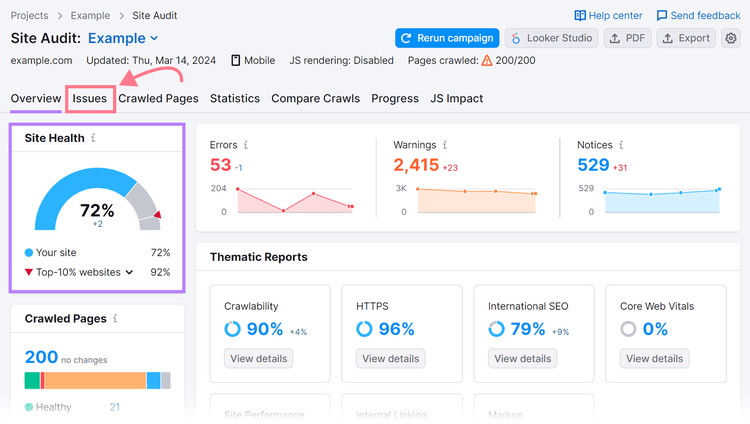
You’ll see an overview of your site’s health. Click the “Issues” tab to see all the errors, warnings, and notices affecting your site.
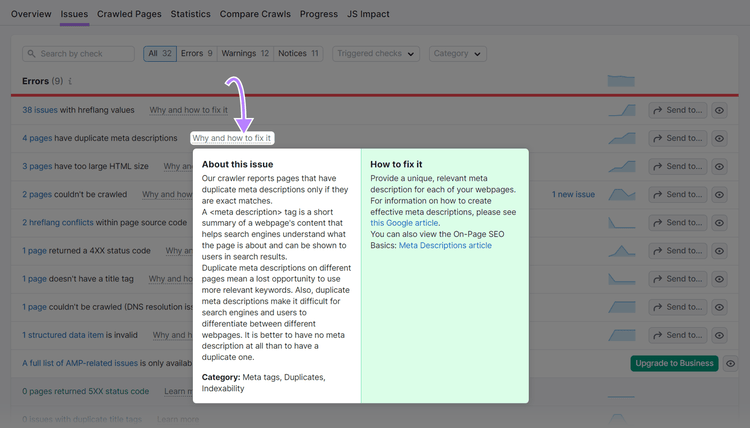
Click “Why and how to fix it” to learn more about each issue and how to address it.
You can configure the tool to automatically audit your site on a regular basis. So you can stay on top of any issues that could be impacting your SEO performance.
Generating SEO traffic takes time. It usually takes between four and 12 months before you’ll see significant results from your SEO efforts.
The exact amount of time it takes can vary based on factors. Like how old your website is, how much authority it has within your industry, and the level of competition in your niche.
The changes you make and the overall quality of your website can also affect the time it takes.
Patience and persistence are key. SEO is a long-term investment. And it requires continuous optimization and adaptation.