
Building Trust for SEO: Why It Matters & How to Do It
Trust is the foundation of strong search engine visibility.
Google wants to recommend sites that are credible, useful, and safe.
The user experience matters, too. Your site’s design, speed, and ease of navigation play just as big a role as the words on the page. If visitors bounce because your site is slow or frustrating to use, Google takes it as a sign you can’t be trusted.
Let’s explore why trust matters for SEO and the steps you can take to build it.
What Is Trust in SEO?
In SEO, trust is how credible and reliable users and search engines like Google perceive you to be.
Google has an Experience, Expertise, Authoritativeness, and Trustworthiness (E-E-A-T) framework that human reviewers use to assess the quality of search results. And those raters’ feedback can inform future algorithm changes, meaning Google aims to prioritize content that’s seen as trustworthy.
Google can also assess how trustworthy you are based on whether other websites link to you and how long users view or interact with your content before returning to search results.
That means building trust with people can make you seem more trustworthy to Google. Which means you’re more likely to rank (appear) higher in search results.
Note
Trust isn't the same as authority, which means you're an expert in your field. Trust means you're credible and reliable.
Why Trust Drives SEO Success
Trust drives SEO results because Google's entire business model depends on sending users to reliable, helpful websites.
When Google recommends a site that’s reputable and reliable, that protects their reputation.
And when users see you as more trustworthy, that leads to:
- Better click-through rates: Users recognize and choose your brand when they see it in search results
- Lower bounce rates: Visitors stay and explore your site
- More quality backlinks: Trusted sites vouch for your credibility by linking to you
So, there’s a compound effect. Better rankings drive more engagement from websites and users. And more engagement from websites and users sends positive trust signals to Google that can further improve rankings.
Plus, visitors who trust you are more likely to become customers and brand advocates.
Ways to Build Trust That Benefits Your SEO
Building trust that translates to SEO success requires improvements across these areas:
1. Be Transparent
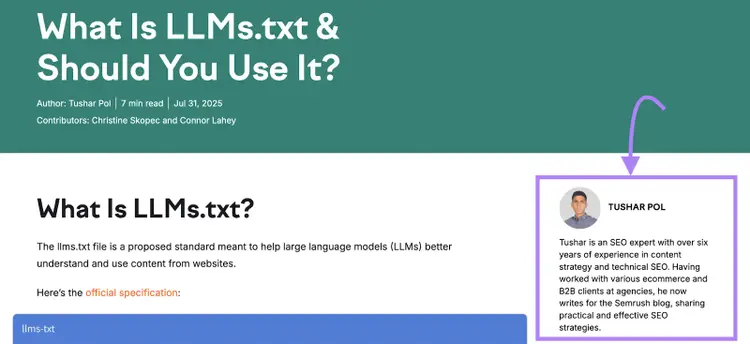
Displaying clear information about your company and the people who create your content goes a long way toward building trust with users.
Google's Quality Rater Guidelines specifically mention looking for "information about who is responsible for the website and its content." Especially for "Your Money or Your Life" (YMYL) topics—meaning topics that can affect a person’s health, financial stability, safety, or well-being.
Essential author elements to display include:
- Full name and professional headshot
- Relevant credentials and experience
- Link to the author's LinkedIn or professional profile
- Brief bio highlighting expertise in the topic area
- Contact information or social media links
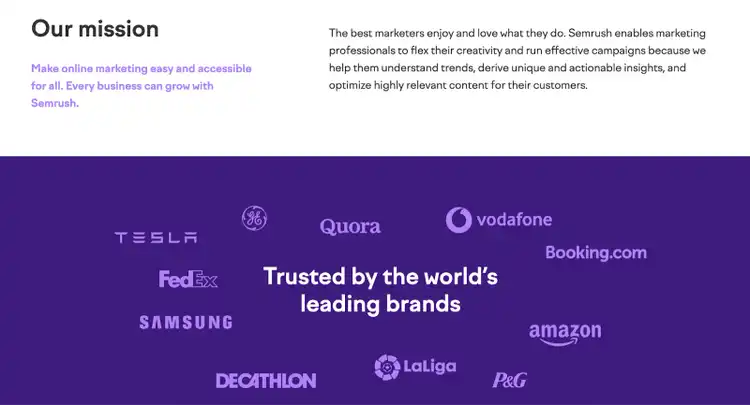
Beyond individual authors, your site needs transparent information about the company. Create a detailed about us page that includes your:
- Company history and mission
- Physical address and contact details
- Team members with photos and roles
- Clear editorial or review processes
If your site has content from multiple authors, implement author schema markup. This is a type of structured data (in a standardized format) that helps Google understand who wrote the content and what their credentials are.
Schema markup can also be helpful for giving large language model tools (LLMs) more information about your content. Which could be helpful for improving your visibility on platforms like ChatGPT.
2. Publish High-Quality Content
Quality content that reflects real experience and expertise builds credibility, turning E-E-A-T from theory into practice. That credibility is what earns user and Google trust.
Here are some ways to craft helpful content that’s likely to build trust:
- Answer the searcher's question completely
- Anticipate and address follow-up questions
- Share specific examples and case studies from your work
- Include original photos, screenshots, or data
- Update content regularly with fresh information
- Add expert quotes and contributor insights
- Show any processes with step-by-step details
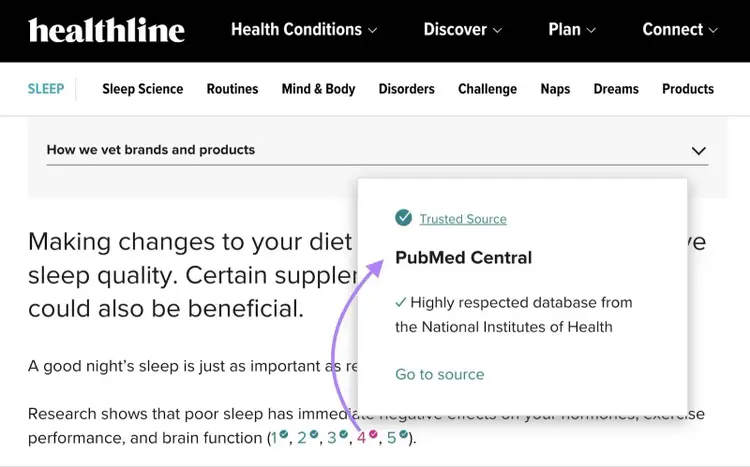
- Cite authoritative sources with proper links
Quality matters more than volume. One well-researched, comprehensive guide outperforms 10 thin articles. So, fact-check everything—especially statistics and claims that could impact readers' decisions.
For YMYL topics, go further by:
- Having qualified professionals review the content
- Linking to medical journals, government sites, and/or academic sources
- Including disclaimers where appropriate
- Indicating when the content was last updated at the top of the page
3. Prioritize the User Experience
Trust starts with the basics. If your site feels slow, unstable, or unsafe, visitors won’t stick around. And Google will notice. That’s why SEO basics tied to user experience are non-negotiable.
Start with Google’s Core Web Vitals, which directly measure how users experience your site:
- Largest Contentful Paint (LCP): Keep your main content loading within 2.5 seconds or less
- Cumulative Layout Shift (CLS): Prevent shifting buttons, images, or text as the page loads
- Interaction to Next Paint (INP): Make sure clicks, taps, and typing respond almost instantly
Beyond Web Vitals, reinforce trust with these foundational SEO basics:
- Use HTTPS across your entire site
- Ensure mobile-responsive design
- Maintain clear navigation and logical structure
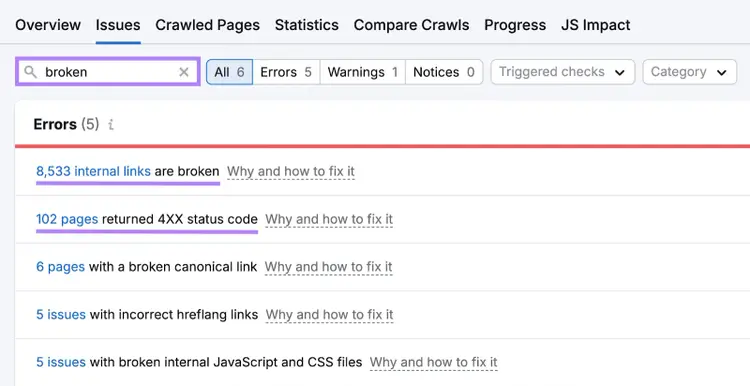
- Fix broken links and avoid 404 errors
Note
Core Web Vitals and HTTPS also have a direct (though small) impact on rankings, so they help with both trust and visibility.
Run our free website audit for a quick read on Core Web Vitals and mobile-friendliness.
For site-wide coverage that shows which pages are affected and provides suggestions for fixing issues, use Semrush Site Audit.
Maintaining trust is also easier if you avoid:
- Aggressive pop-ups that block content
- Auto-playing videos with sound
- Misleading titles or clickbait
- Hidden costs at checkout
- Fake urgency or scarcity tactics
4. Show External Validation
Incorporating external validation proves that other people and websites trust you, which can influence your rankings.
For example, high-quality and relevant backlinks are one of the strongest ranking factors for Google. They’re clear signs that other websites trust you and are vouching for your credibility. Just keep in mind that one link from a recognized brand in your niche is more valuable than dozens from blogs covering unrelated topics.
You can gain backlinks by:
- Writing guest posts for respected industry publications
- Contributing expert quotes to journalists, so they can incorporate your expertise and hopefully link to you in the process
- Publishing original research others will cite
- Creating partnership content with established brands
Beyond backlinks, incorporating external validation through customer reviews, testimonials, case studies, industry certifications, and memberships can make your business appear more trustworthy. Display these prominently—especially on service pages and product pages.
Brand mentions without links also matter. When people discuss your company on social media, forums, or news sites, Google notices and so do LLMs. The more your brand is referenced across trusted sources, the more likely it is to surface in AI-driven answers and summaries.
SEO expert Andrew Holland explains why LLMs rely on brand mentions:
“Large language models cannot judge performance. They cannot look at your product and determine if it's better than your competitor's. They have no way to evaluate quality firsthand. So what do they do? They go to the network. They look at what other people are saying about you. They measure your reputation across the entire ecosystem.”
Note
It’s important to earn validation. Buying links or faking reviews destroys trust and violates Google’s policies.
How to Measure Trust
You can measure trust through a variety of related metrics, even though Google doesn't have an official trust score.
Start with Semrush's Authority Score—a metric that evaluates your website’s overall quality and SEO strength—which can be used to give you a trustworthiness benchmark. Generally speaking, a higher score is better.
Here's how to check your Authority Score:
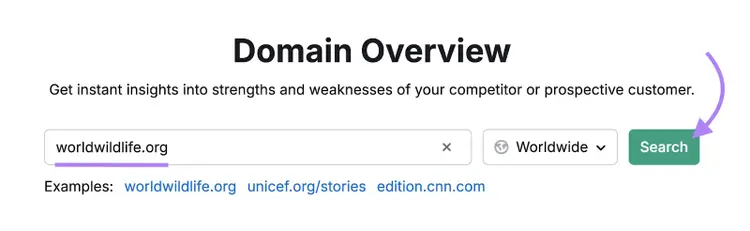
- Go to Semrush’s Domain Overview
- Enter your domain name
- Click “Search”
- Look for "Authority Score" at the top
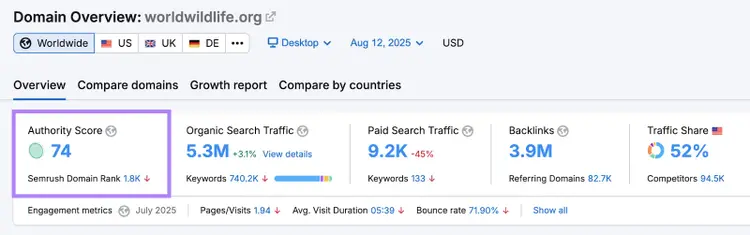
Once you find your Authority Score, repeat the process with some of your competitors to see how you compare. If your score is higher than others in your space, that’s an indication you’re seen as more trustworthy than they are.
Don't chase perfection—consistent growth matters more than hitting specific numbers.
To get a sense of how trustworthy users think you are, track:
- Bounce rate: If users leave after only viewing one page, it may indicate they didn’t find what they expected or didn’t trust your content. A bounce rate of 40% or lower is generally considered strong performance.
- Average engagement time per session: More time spent on a page can signal that visitors find your content credible and useful. But this metric is context-dependent. A quick bounce from a blog post might be bad, but a short visit to a help page (because the user found the answer immediately) is a good sign.
- Brand mentions: Use the Brand Monitoring app to track how often and where people talk about your brand online. This won’t measure search volume, but a growing number of mentions across reputable sites, social media, or forums can indicate that awareness and trust are increasing.
- Brand searches: Rising branded search volume (people specifically typing your company or product name into Google) is a clear sign that your reputation is building. You can track branded keyword trends using Position Tracking in Semrush.
Start Improving Your SEO with Our Trust Checklist
This checklist (which you can download here) prioritizes actions by impact and urgency. Start with "Today" items and work down.
Today
- Enable HTTPS across your site. This involves obtaining an SSL certificate. Work with a developer if you need help.
- Find issues that need to be addressed using Semrush SEO Audit tool
This Week
- Create or update your about us page. Include team photos, the company mission, your physical address, and contact information.
- Claim your Google Business Profile if you’re a local business. Go to business.google.com, verify your listing, and fill out all your business details.
- Add contact information to a dedicated contact page and in your website footer
This Month and Beyond
- Add author names to articles and create author bio pages. On each bio page, add a headshot, credentials, and two to three sentences about expertise.
- Earn quality backlinks. Contribute guest posts on industry blogs or get quoted in trade publications.
- Collect customer reviews. Email recent customers asking for Google or industry platform reviews.
- Update old articles. Refresh outdated content with new information and add "Last updated: [date]" to the top of those pages.
- Publish new, high-quality content that incorporates elements like original images, reputable source citations, and specific examples
- Work through technical issues discovered with the SEO checker
Common Questions About SEO Trust
Does Google Have a Trust Score for Websites?
No, Google doesn't publish an official trust score. Third-party tools like Semrush provide metrics that approximate trust but aren't official Google metrics.
Can You Build Trust Without Backlinks?
Yes, backlinks are a strong ranking factor for Google. They’re clear signs that other websites trust you and can vouch for your credibility. But keep in mind that just one link from a recognized brand in your niche is more valuable than dozens from blogs covering unrelated topics.
Does Social Media Impact Trust?
Not directly. Social shares aren't a ranking factor. But having an active social presence with real engagement shows you're a legitimate business. Google can see brand mentions and discussions across social platforms.
How Long Does It Take to Build Trust?
How long it takes to build trust depends on your website, your niche, and more. Generally speaking, new sites may need six to 12 months to establish trust with search engines and users. You can monitor your progress by tracking various metrics. Such as Authority Score, which you can view with Domain Overview.

Vlado is a content marketer with 10+ years of experience in SEO, content strategy, and building websites for both clients and personal projects. As Content Operations Lead at Semrush, he streamlines workflows and optimizes processes. He also played a key role in scaling content production and shaping the blog Style Guide. Previously, as Head of Content at Mangools, he led initiatives that made the blog a major driver of organic traffic. He enjoys making complex SEO topics accessible to others.
Vlado Pavlik
Vlado is a content marketer with 10+ years of experience in SEO, content strategy, and website building. As Content Operations Lead at Semrush, he focuses on improving content workflows, optimizing processes, and helping scale content production.
Tells Google to show you more from Semrush in AI, Search, and Discover.