The helpful content update is a significant change to Google’s algorithm that rewards high-quality, user-focused content in search results and demotes low-quality pages created primarily to rank well in search engines.
Google launched the first helpful content update in August 2022. And has since refined it through several iterations.
Google’s helpful content updates affect SEO because they changed how Google assesses and ranks pages and websites.
These updates marked a before and after in SEO. And potentially reshaped the search engine results pages (SERPs) for many queries.
Not only did old SEO tactics like keyword stuffing and content spinning stop working. They were identified and demoted.
Content quality matters now more than ever.
Here's how these updates impact search results:
Surfacing people-first content: Pages that directly address user intent and provide comprehensive answers will likely rank higher
Penalizing thin, AI-generated content: While AI is not banned outright, content must be high-quality, edited by humans, and provide unique value to rank well
Emphasizing expertise: Google favors content created by people with first-hand experience or deep knowledge of the topic
Effects are sitewide: If Google determines a lot of your content is unhelpful, your entire domain could see reduced visibility in search results
Here’s an example:
A fitness blog post about "best exercises for beginners" written by a certified trainer, with detailed instructions and safety tips, is likely to rank higher than a brief, generic list of exercises with no expert insights.
To adapt to these updates, focus on creating content that truly helps your audience. Prioritize value.
Ask yourself: “Would I find this information useful if I were searching for this topic?”
If the answer is “yes,” then you’re on the right track.
How to Identify Whether Your Site Was Affected by a Helpful Content Update
Google's helpful content updates can shake up search rankings. When they hit, you'll feel it.
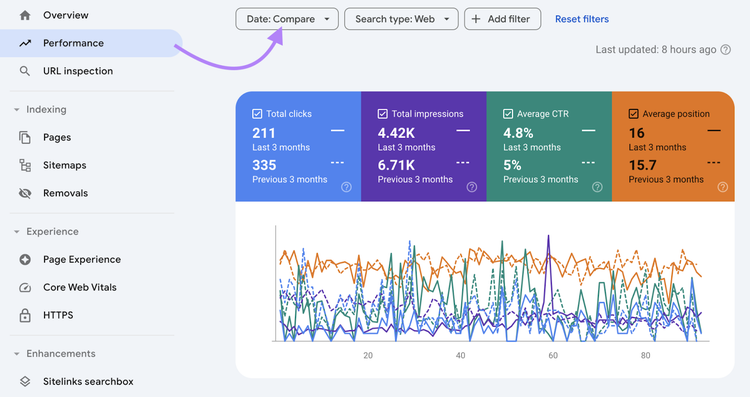
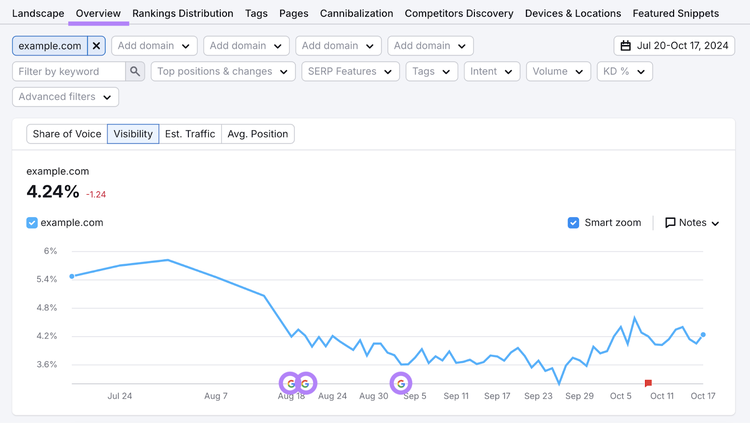
You may notice significant and sudden drops in traffic, ranking, and overall visibility.
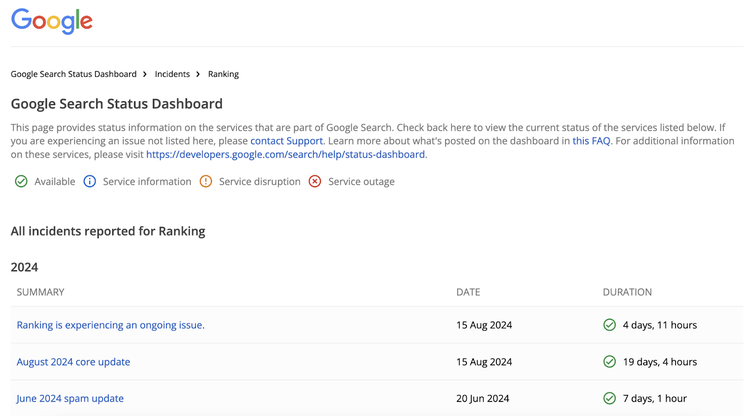
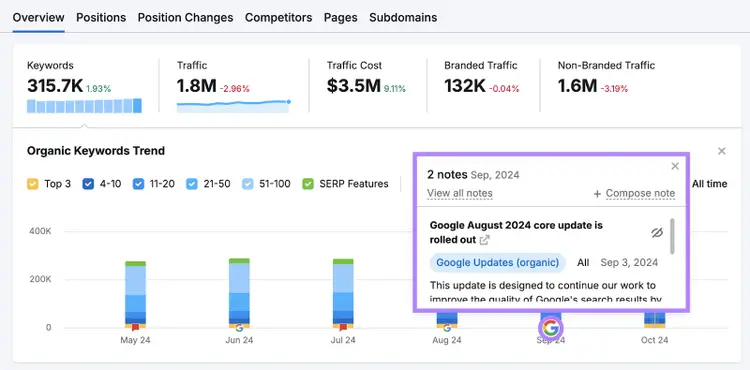
And these changes typically align with Google's announcements.
Check the “Overview” tab regularly for significant changes
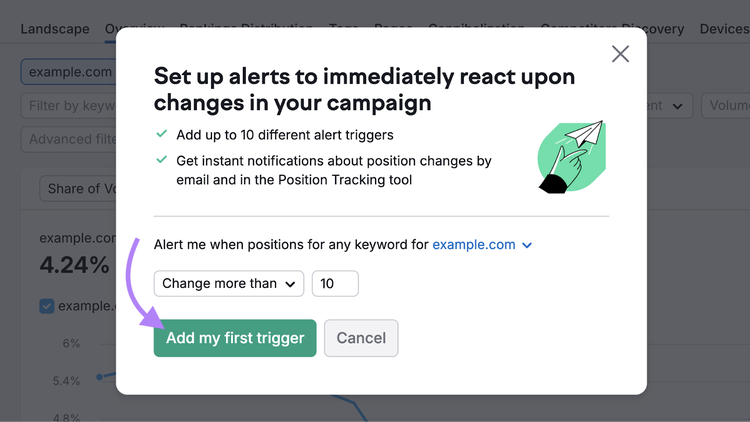
You can also set up triggers to get notified if your positions change by a significant amount.
Why Might Your Site Have Been Hit?
While no one can pinpoint exactly why a site gets hit (or doesn’t), these updates generally target unhelpful content.
Here are three key factors that often play a role:
Low-Quality Content
Google may demote your content if it:
Lacks depth or original insights
Summarizes other sources without adding value
Doesn't thoroughly answer questions
Google wants to reward content that truly helps people. Not filler designed to rank.
Over-Optimization
You could be over-optimizing your content.
Look out for these signs:
Excessively repeating the primary keyword
Using awkward phrasing to include specific search terms
Creating pages solely based on keyword research, not user needs
Google's algorithms have become sophisticated enough to detect signs that content prioritizes SEO tactics over user experience.
Lack of Expertise
Sites that lack clear expertise or attempt to cover topics beyond their core competencies may be flagged as less helpful.
Google wants to rank content that showcases topical expertise. It even uses the Experience, Expertise, Authoritativeness, and Trustworthiness (E-E-A-T) framework to help its manual reviewers assess the quality of ranking content.
To help on this point, make sure your content includes:
Author credentials, background, and reputation
Use of industry-specific terminology and entities
Breadth, depth, and accuracy of topic coverage
Consistency in subject matter across your site
How to Recover from a Helpful Content Update
There’s no guarantee you’ll recover from a helpful content update.
Even if you make improvements, you might not see results until the next major update.
But these Google-approved suggestions can improve your content's helpfulness:
Perform a Content Audit
A content audit is a thorough review of your site’s pages. In this case, to specifically uncover unhelpful content.
It’s a really important first step because you can’t fix what you don’t know is broken.
To do a content audit:
List all the important content pages on your site (blog posts, landing pages, white papers, etc.)
Analyze current performance metrics like traffic, rankings, and backlinks
Flag underperforming content
Categorize content as “Keep,” “Update,” or “Remove”
Quality content is content that is helpful, accurate, reliable, and relevant to your audience. It’s well-researched and produced thoughtfully to provide genuine value.
Here are a few things you can do to improve the quality of your content:
Thoroughly research the topic
Address your customers’ needs and solve their problems
Showcase your expertise
Write directly and clearly
Format for easy reading (short paragraphs, headers, bullet points)
Check for grammar and spelling errors
Use plenty of examples throughout
Tip
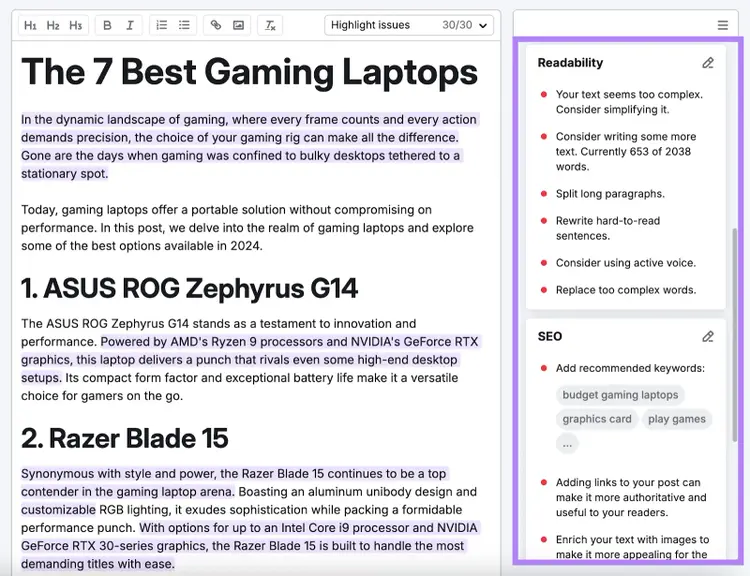
Use SEO Writing Assistant to improve the quality of your content. It scans your text in real time and provides recommendations.
Carlos Silva leads the editorial pipeline for the English blog—coordinating writers, editors, strategy, and building AI workflows that boost content quality and AI visibility. With 10+ years of experience writing and editing across in-house and agency roles, Carlos blends content strategy, SEO, and AI to help marketers stay ahead of an evolving search landscape.
Subscribe to learn more about General SEO
Subscribe
By clicking “Subscribe” you agree to Semrush Privacy Policy and consent to Semrush using your contact data for newsletter purposes
Carlos Silva
Carlos Silva leads the editorial pipeline for the English blog and builds AI workflows that boost content quality and AI visibility. 10+ years writing and editing across in-house and agency roles.
Share
Tells Google to show you more from Semrush in AI, Search, and Discover.