Business writing is a type of professional communication that uses clear, concise language to convey information, provide education, persuade an audience, or achieve a specific goal in a business context. And can take various forms like proposals, reports, emails, press releases, and memos.
Business writing relies on good grammar, punctuation, and vocabulary. Plus, the ability to adapt the tone, style, and structure to the intended reader and situation.
How Is Business Writing Different from Other Kinds of Writing?
Business writing is not just writing for a business. It’s writing with business in mind.
It’s about communicating effectively with your audience. Who could be customers, colleagues, investors, or stakeholders.
In fact, business writing has unique characteristics that set it apart from academic writing, creative writing, journalism, and other forms of content writing.
Here are the main differences:
It has a clear purpose and goal. Business writing is meant to achieve a specific outcome, such as solving a problem, making a decision, or taking an action. You need to know what you want readers to do after reading your document—and write accordingly.
It’s structured and organized. Business writing presents information logically and coherently. You need to use visual aids to guide readers and highlight key points and actions.
It’s concise and precise. Business writing should get to the point quickly using simple and direct language. You need to avoid ambiguity, jargon, and filler words that can confuse or bore your readers.
It has a professional tone. Business writing is formal and follows the rules of etiquette and grammar. You should use a polite and appropriate tone and address readers by their names or titles (if necessary). And avoid slang, humor, or personal opinions.
Tip
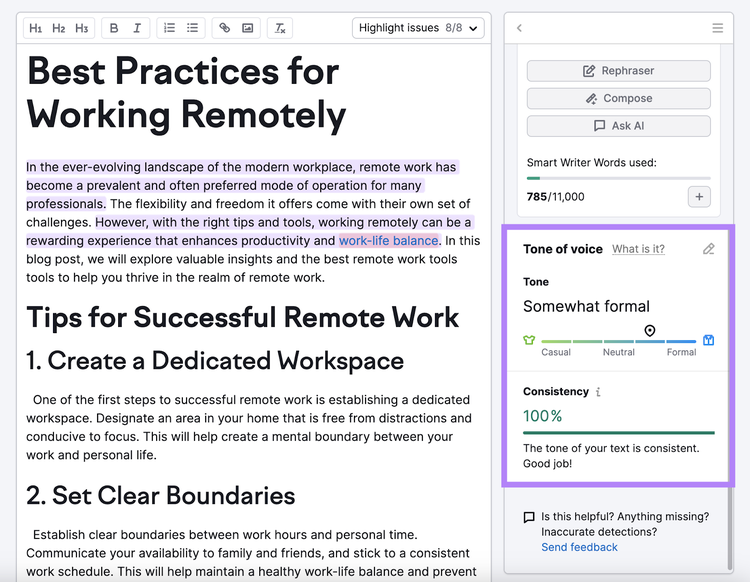
You can quickly check and adjust your content’s tone of voice (and other factors) using the SEO Writing Assistant.
Types of Business Writing
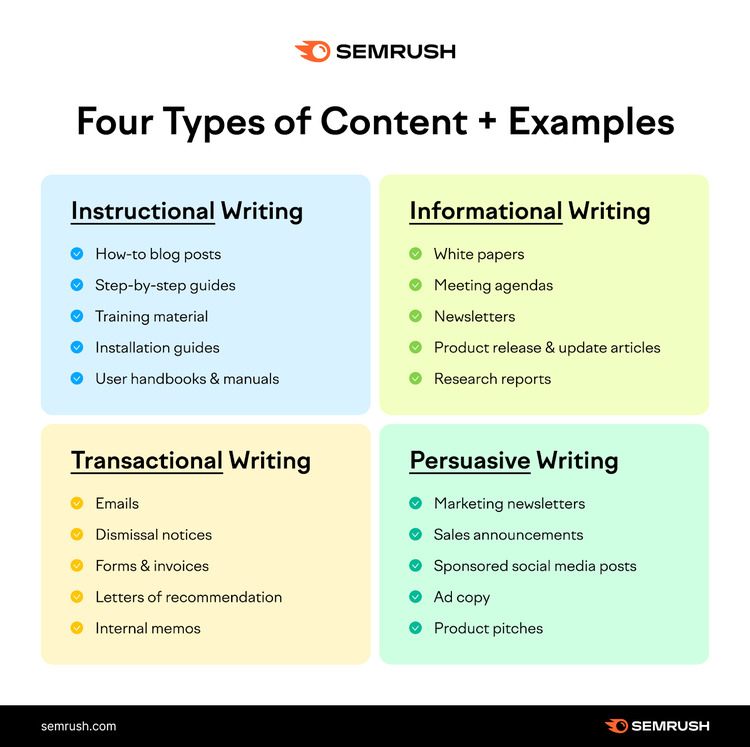
Business writing can be classified into four main types: instructional, informational, persuasive, and transactional.
Here’s an overview of each—including some specific business writing examples:
Instructional Business Writing
This type of business writing is used to help the reader perform a task, learn a skill, or understand a process. It includes documents such as manuals, procedures, policies, tutorials, etc.
For example, consider a user guide for a software product. It’s an instructional business document that explains how to install, use, and troubleshoot the product.
Informational Business Writing
This type of business writing is used to inform or educate the reader about a topic, issue, or event. It includes documents such as reports, memos, newsletters, and emails.
For example, a market research report is an informational business document that presents the findings, analysis, and recommendations of a market study.
Persuasive Business Writing
Persuasive business writing aims to motivate the reader to take a specific action, such as buying a product, signing a contract, or supporting a cause. And includes documents such as proposals, pitches, advertisements, etc.
For example, think of a sales-focused ad. It’s a persuasive type of business communication that showcases the features, benefits, and testimonials of a product or service. And urges the reader to take action.
Transactional Business Writing
This type of business writing confirms, acknowledges, or records a business transaction or interaction. To ensure smooth, efficient communication in daily operations. And includes documents such as invoices, receipts, orders, confirmations, etc.
For example, an order confirmation email is a transactional business message that confirms the order number, items, price, delivery date, and payment method used in an online purchase.
This type of business writing is also crucial for legal records. And helps in legal cases or regulatory compliance.
Business Writing Fundamentals
These are the elements it takes to execute strong business writing:
Simplicity
Simplicity means using plain and easy-to-understand language.
So, avoid jargon and acronyms that may confuse or alienate readers. And use short sentences and paragraphs.
If you need to use a complex or unfamiliar term, explain it or provide an example.
Directness
Directness means getting to the point quickly and confidently. To cut through the fluff and tell readers exactly what to do.
You can do this by stating your main point, recommendation, or request at the beginning with positive and assertive language. Then, follow with supporting details and evidence.
Using bullet points or numbered lists helps, too. They let readers see the key points quickly, making your message easier to comprehend.
Like in this example from one of our own emails:
Clarity
Clarity is expressing the information in a clear and logical way that avoids ambiguity and confusion. Which ensures smooth communication and efficient decision-making in any business setting.
How do you write with clarity?
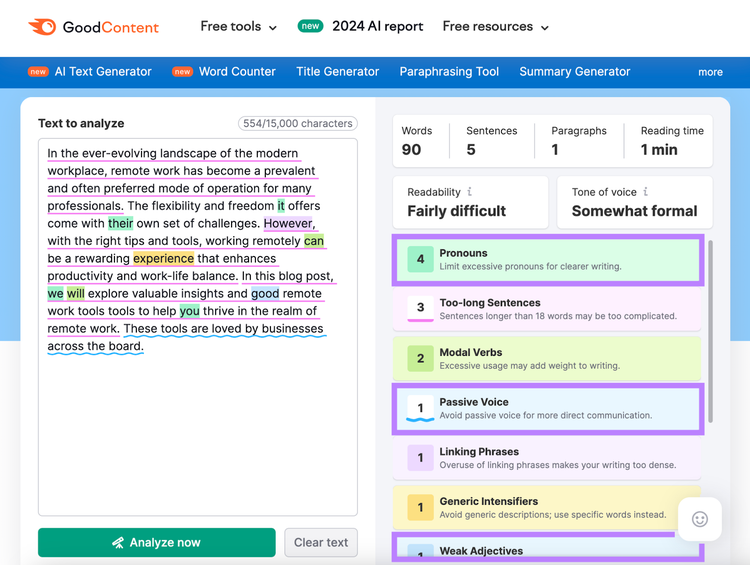
Use active voice, subject-verb-object structure, and transitions to show the relationship between your points.
An online proofreader can highlight instances where you use passive voice, excessive pronouns, or weak adjectives:
Time to Value
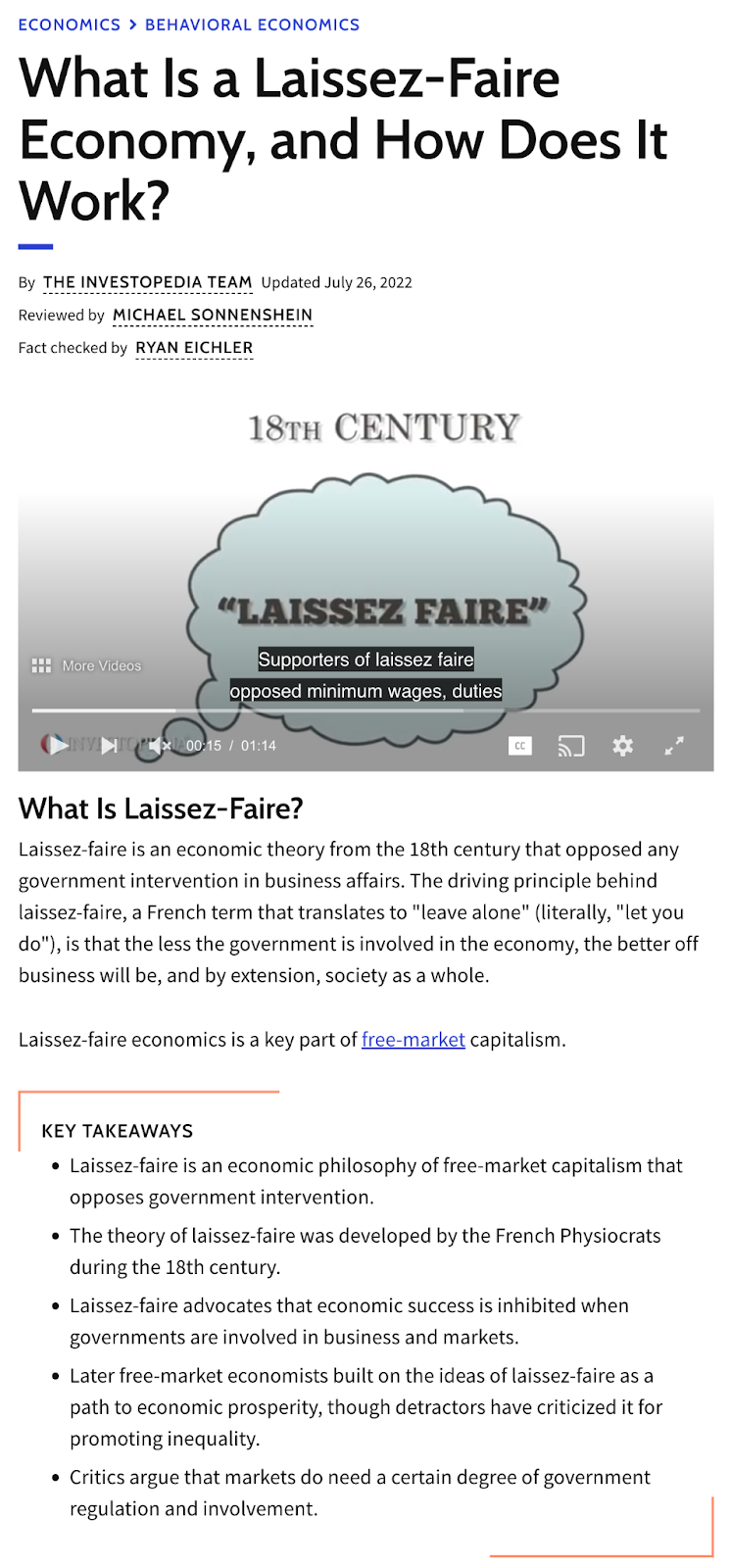
Time to value is all about helping readers get something out of your writing as soon as possible. Which means presenting the key information right away.
Like this article from Investopedia does:
Use examples, stories, and data to illustrate your points and show how they apply to your readers’ situations.
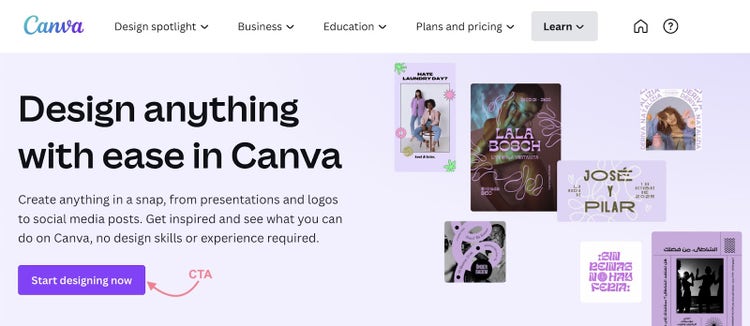
And include a clear call to action (CTA) that tells your readers what to do next.
Concision
Concision is all about eliminating unnecessary words and information that don’t add value or meaning. To make your business writing more impactful.
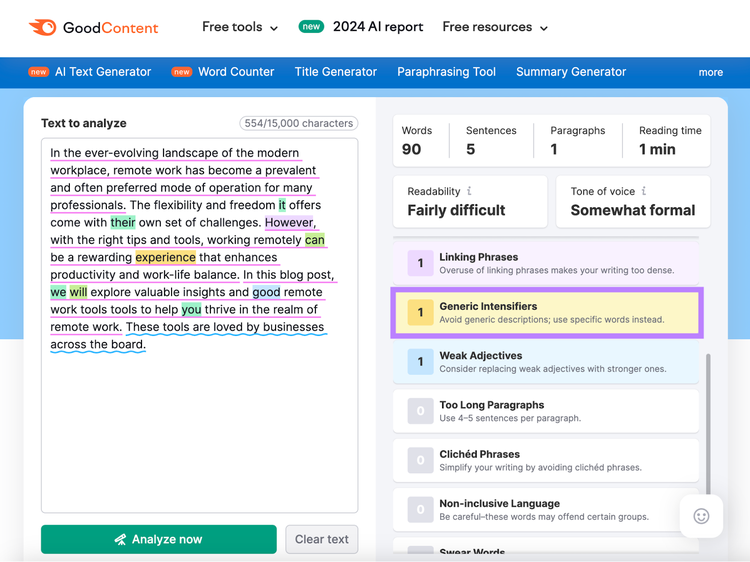
So, be specific and precise. Use modifiers sparingly and only when they enhance your message. And avoid repetition, filler words, and vague expressions.
An online proofreader can help you see where you have generic words that don’t add value:
Formatting
Using visual elements and design principles makes your business writing easy to read, scan, and navigate.
Use headings and subheadings to break up the text and let readers quickly find what they need.
Bullet points are great for drawing attention to important details or steps.
And using white space, margins, and alignment creates a clean and professional layout. Which helps readers focus on the content without feeling crowded.
You can also add tables, charts, graphs, and images to show complex information in a simple way. They provide a nice visual break and add extra value.
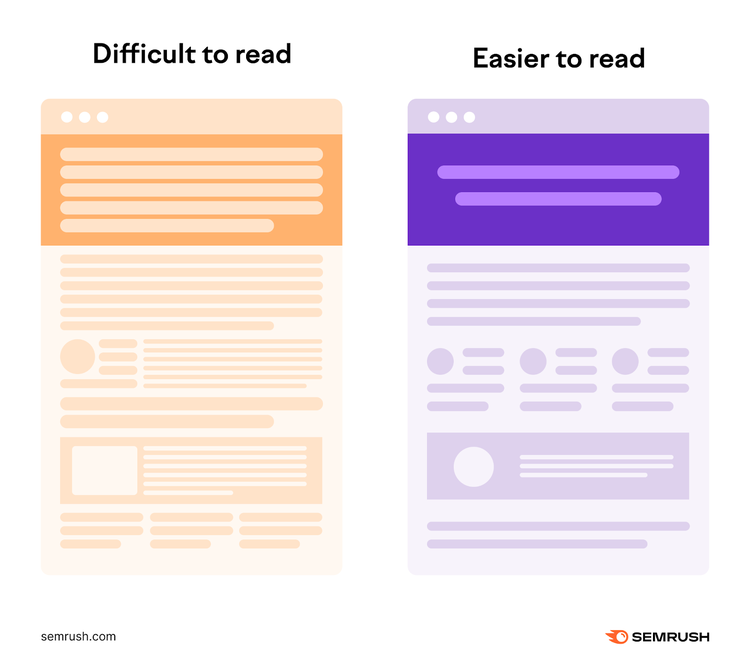
Just take a look at how much easier it is to digest the information in a document that uses effective formatting:
Professional Tone
Using a respectful and formal style that matches your purpose, audience, and context ensures your message comes across the right way.
Avoid slang, colloquialisms, humor, sarcasm, or emojis that may be inappropriate or misunderstood.
Instead, use polite and positive language. And avoid negative or harsh words that may offend or antagonize your readers.
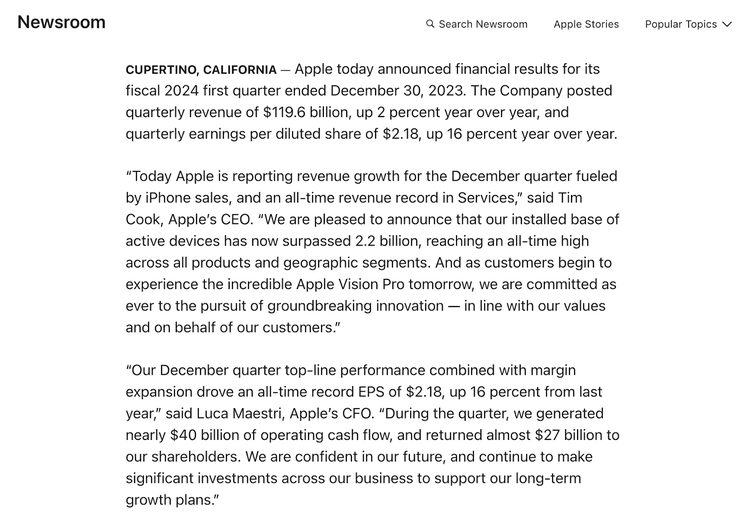
Here’s an example of Apple using a professional tone in a press release:
8 Effective Business Writing Tips
Here are eight practical tips to improve your business writing skills and achieve your goals.
1. Think About What You Want to Write
Before you start writing, have a clear idea of what you want to say, why you want to say it, and how you want to say it.
This will help you plan your document, structure your content, and choose your style. To make your message stronger and more focused.
Ask yourself these questions:
What’s the purpose of your document?
What’s the main point or message you want to convey?
What are the key facts, arguments, or evidence you want to include?
What are the benefits or outcomes for your readers?
How do you want your readers to feel or act after reading your document?
This preparation builds a strong base for any type of business writing.
2. Consider Your Audience
Your audience is the most important factor in business writing. You need to know who they are and what they need or want to effectively communicate with them.
Consider:
Who your reader is, where they work, and what their role is
What your reader’s background, level of knowledge, and interest in your topic are
What your reader’s goals, challenges, and pain points are
What questions, objections, or concerns your reader might have
What tone of voice you think is most appropriate based on your reader
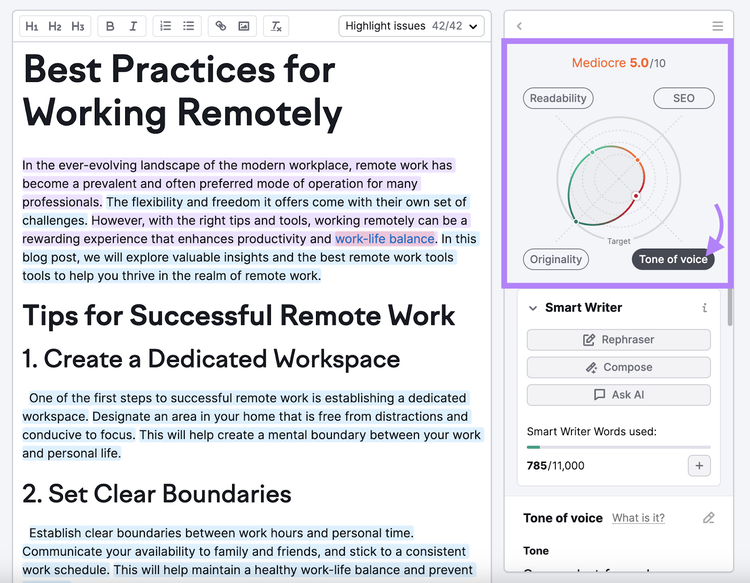
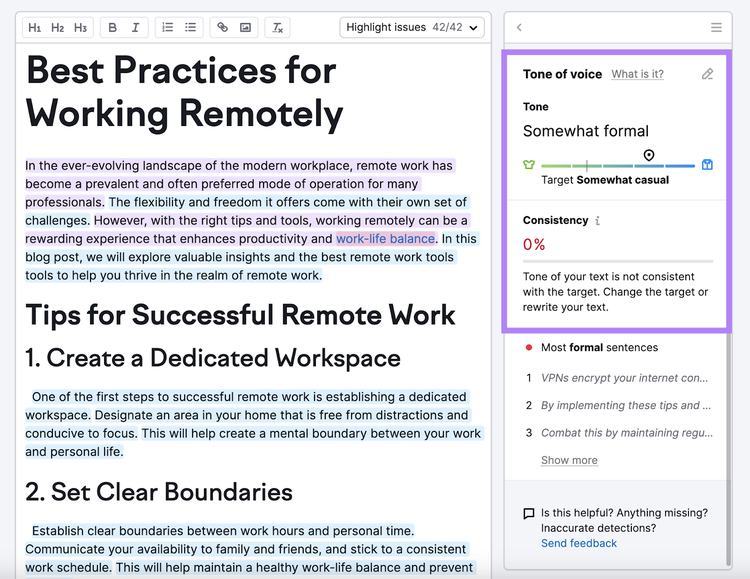
You can quickly check and adjust your writing’s tone of voice using a tool like the SEO Writing Assistant.
Just paste your text in and click the “Tone of voice” button on the right.
The tool displays your content’s current tone of voice and overall consistency (how well you keep the tone of voice across your text).
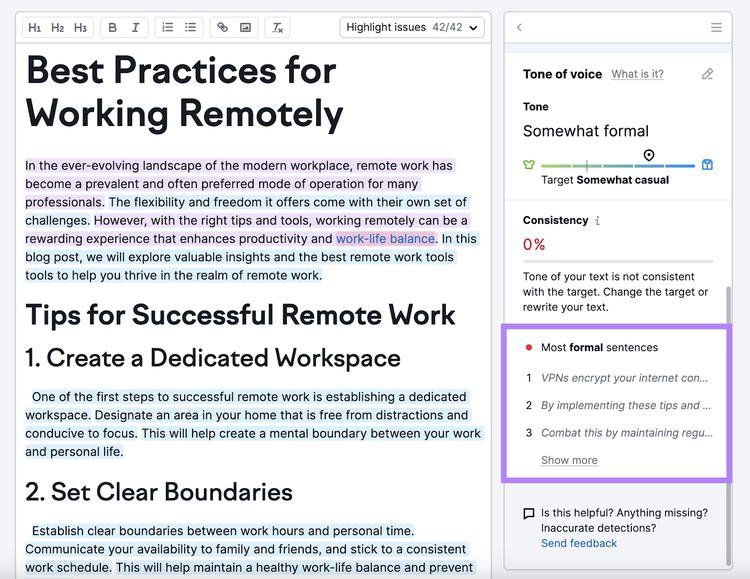
Scroll down. You’ll see the tool highlights sentences you should consider removing or replacing for consistency.
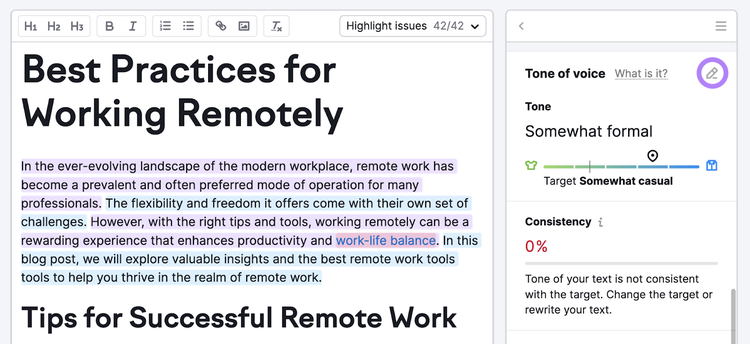
If you want to change the target tone of voice, click on the pencil icon above the “Tone of voice” bar on the right.
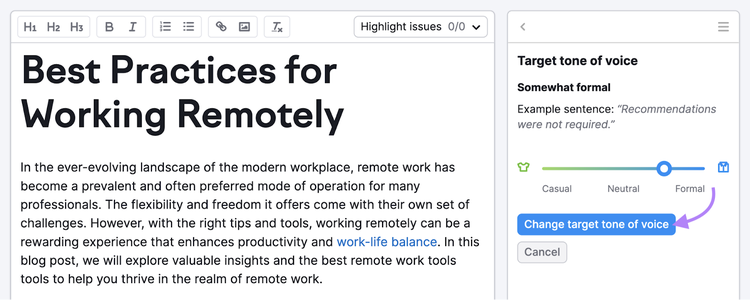
Then, move the slider toward more formal or more casual depending on your audience. And click “Change target tone of voice.”
An outline is like a roadmap for your document. It helps you organize ideas, structure your content, and avoid missing any important points.
An outline can also save you time and effort. Because you can easily see what you need to write and how to write it.
For example, use the SEO Brief Generator within Semrush’s Content Toolkit to create a blog post brief with a suggested structure based on competitor SERP analysis and real-time Semrush SEO data.
To get started, enter your primary idea and audience location.
This will trigger a guided workflow that pulls in top-ranking pages, identifies secondary keywords, and outlines your post’s structure.
Here’s what you’ll get in the brief:
A list of competitor articles currently ranking for the topic
Suggested title for your post
A set of secondary keywords with search volume and difficulty metrics
A ready-made structure, including subheadings pulled from high-ranking pages
A suggested meta description
You can either share this brief with your writers or use it to generate a full blog post directly inside the AI Article Generator.
4. Take a Bottom Line Up Front Approach
One of the best ways to make your business writing clearer and more direct is to use the bottom line up front (BLUF) approach.
This means stating your main point, recommendation, or request first. And then adding supporting details and evidence.
Using BLUF helps readers understand the main point right away—without getting lost in details. And it makes your content easier to scan and digest.
To use BLUF, begin your writing with the most important information. At the very top.
For example:
BLUF email subject line: “Need your feedback on report by Friday”
BLUF sales pitch: “Our product can help you save 30% on your energy bills. Here’s how.”
BLUF presentation slide: “Revenue increased by 15% last quarter thanks to these three strategies”
5. Incorporate Storytelling
Business writing is more effective when it tells a story.
It tells a compelling narrative that shows how the brand’s products enabled a major fashion brand to rapidly scale their creative processes.
6. Use Active Voice
Active voice is when the subject of the sentence performs the action. While passive voice is when the subject of the sentence receives the action.
For example:
Active: The manager approved the project
Passive: The project was approved by the manager
Using active voice makes your business writing clearer, more concise, and more powerful.
Why?
Because it avoids ambiguity and confusion. And clearly conveys who’s responsible for the action, what the action is, and what the result is.
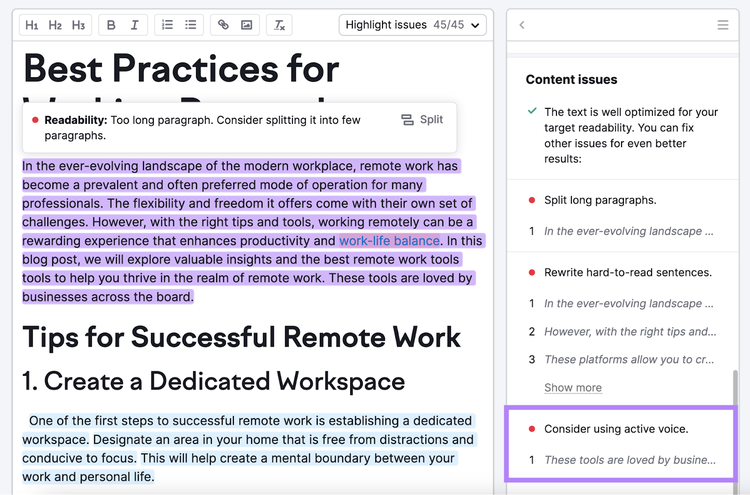
To check your business writing for active voice, run it through the SEO Writing Assistant.
It’ll highlight instances where you should consider using active voice. Along with other factors that affect readability.
7. Include a Call to Action
A CTA is a statement that tells readers what you want them to do next. Such as buy, subscribe, download, contact, visit, etc.
Like this:
Calls to action are essential for any business writing that aims to persuade, influence, or motivate your readers to take a next step.
Here are a few tips for including a call to action:
Make it clear and specific
Make it compelling and urgent
Make it convenient
Use action verbs
Use positive and assertive language
8. Proofread Your Work
Proofreading is the final step of your business writing process. And involves checking and correcting any grammar, spelling, SEO, originality, or style errors.
It’s a crucial last step for ensuring the quality and professionalism of your business writing.
And it ensures you don’t damage your credibility or relationship with your audience.
To proofread your work:
Use a spelling and grammar checker
Read your document out loud or have someone else read it for you
Use a checklist or a guide to spot and fix common errors
Take a break and review your document again with fresh eyes
If you want to thoroughly and quickly proofread any business writing, run it through a tool like Grammarly.
Improve Your Business Writing at Scale
You just learned the fundamentals of effective business writing and tips to get started. But don’t stop there.
Put them into practice. And apply them consistently and efficiently across all your business writing projects.
One of the best ways to do that is to use an AI-powered content marketing solution like Semrush’s Content Toolkit.
Carlos Silva leads the editorial pipeline for the English blog—coordinating writers, editors, strategy, and building AI workflows that boost content quality and AI visibility. With 10+ years of experience writing and editing across in-house and agency roles, Carlos blends content strategy, SEO, and AI to help marketers stay ahead of an evolving search landscape.
Subscribe to learn more about Content
Subscribe
By clicking “Subscribe” you agree to Semrush Privacy Policy and consent to Semrush using your contact data for newsletter purposes
Carlos Silva
Carlos Silva leads the editorial pipeline for the English blog and builds AI workflows that boost content quality and AI visibility. 10+ years writing and editing across in-house and agency roles.
Share
Tells Google to show you more from Semrush in AI, Search, and Discover.