
Most businesses know who their competitors are. What they often don't know is what those competitors are actually doing, which channels are driving their growth, and where the real gaps in the market are.
That gap is exactly what competitive intelligence fills. In this guide, you'll learn how to gather it, organize it, and use the insights you gain to improve your own business strategy.
What is competitive intelligence?
Competitive intelligence is the process of collecting and analyzing data on your competitors, industry, potential customers, and market trends to inform important business decisions.
It can help you identify opportunities and threats, anticipate market shifts, benchmark performance, and improve things like your positioning and pricing.
Why is competitive intelligence important?
We surveyed 100 marketers to find out what they consider to be the most valuable benefit of competitive intelligence. Here’s what they said:
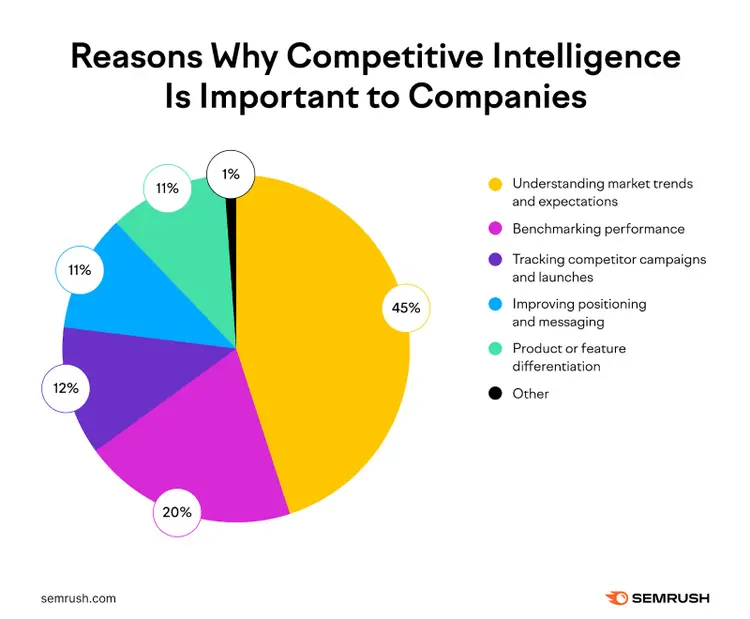
Almost half (45%) of surveyed marketers said that understanding market trends and customer expectations is the biggest benefit of competitive intelligence.
This makes sense — you can use the knowledge you gain about customers and your overall market to adjust your larger strategy or more specific tactics.
In our poll, 20% of marketers considered the ability to benchmark brand performance against the competition to be the most important benefit of competitive intelligence. Likely because it can help you understand whether you’re falling behind and inform goal-setting.
For 12% of polled marketers, tracking competitor campaigns and launches is what makes competitive intelligence so valuable. It’s clear why — this can help marketers create counter-campaigns and get better results from their marketing efforts.
Competitive intelligence can also help you:
- Spot competitive threats early: If a rival launches a new product or ramps up their advertising, or a new competitor enters your market, you can adjust your strategy before it affects your business
- Inform product development: Knowing what competitors offer, and what their customers complain about, shows you exactly where to build or improve
- Refine your positioning and messaging: Understanding how competitors describe and differentiate themselves helps you craft a clearer, more distinct message for your own brand
- Identify gaps in your search and AI visibility: If competitors are showing up in search results or AI-generated answers where you aren't, competitive intelligence helps you spot and close that gap
Beat your competition in AI search
with the Semrush AI Visibility Toolkit
Types of competitive intelligence
The two broad types of competitive intelligence are strategic and tactical intelligence. Here’s a breakdown of the two types:
Competitive intelligence covers three core areas:
- Competitor intelligence: What your rivals are doing, including their products, pricing, and strategic moves
- Market intelligence: What is happening in your industry, from trends and regulations to emerging market shifts
- Customer intelligence: What your customers actually want, including their behavior, preferences, and frustrations
Each area answers a different question, and you need all three to build a complete picture of your competitive landscape.
How to gather competitive intelligence for your business
You can gather competitive intelligence by following a clear process to collect competitor insights, identify patterns, and use those findings to inform your business decisions. Follow these steps:
1. Identify your top competitors
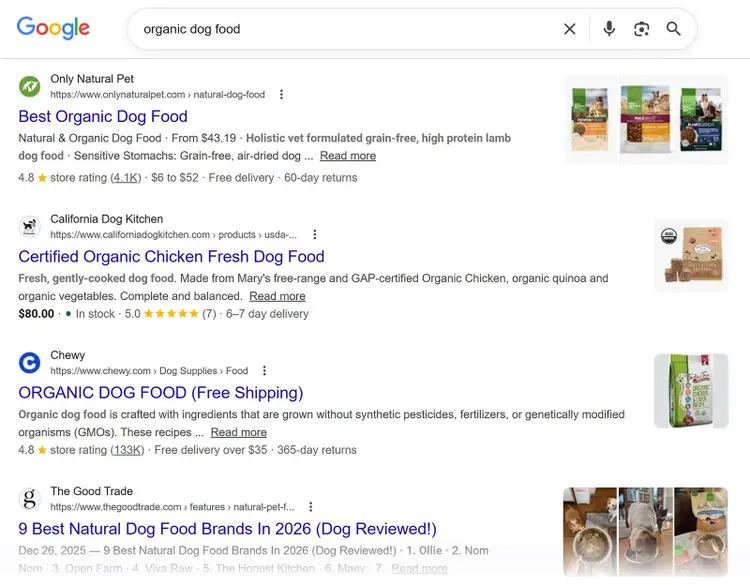
You likely already know some of your competitors. If not, start with a quick Google search.
Search for your product or service (such as "organic dog food") and note which brands appear in both paid and organic results. Try a few keyword variations too (like "affordable organic dog food") to surface competitors that might not appear for your main keyword.
You can also prompt tools like ChatGPT or Perplexity with something like "who are the top brands selling [your product] in [your location]?" to see which names come up in AI-generated answers.
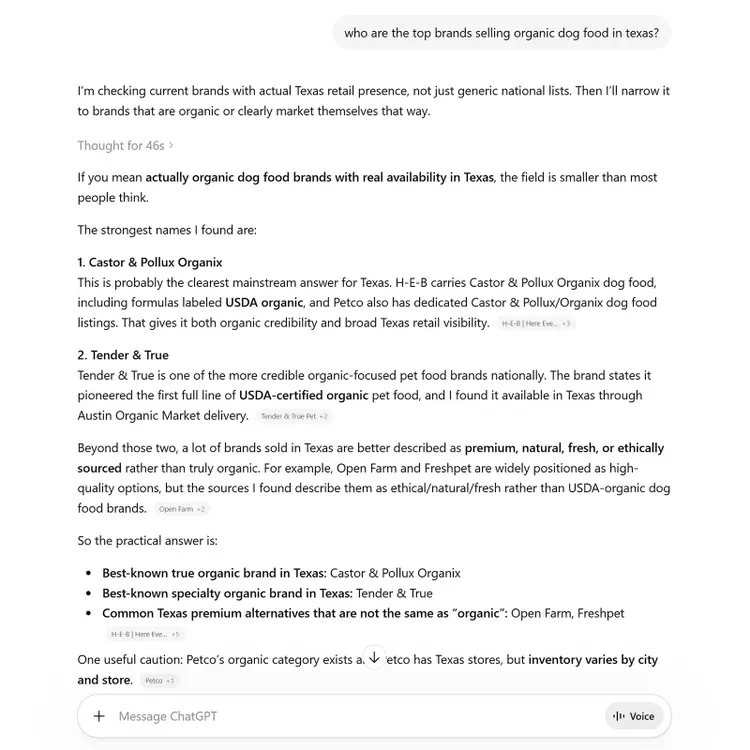
After a few quick searches with Google and AI tools, you'll have a list of brands.
But which ones actually deserve your attention? That's where it helps to look at some hard data.
Semrush's Traffic & Market Toolkit shows you who your competitors are and it also gives you various data points. You can see their market share, traffic volume, and growth trends. This helps you prioritize relevant competitors worth researching in depth, rather than spreading your efforts across every brand you found.
Go to the Market Overview tool and scroll down to the “Market Players” section to see a comprehensive list of competing websites.
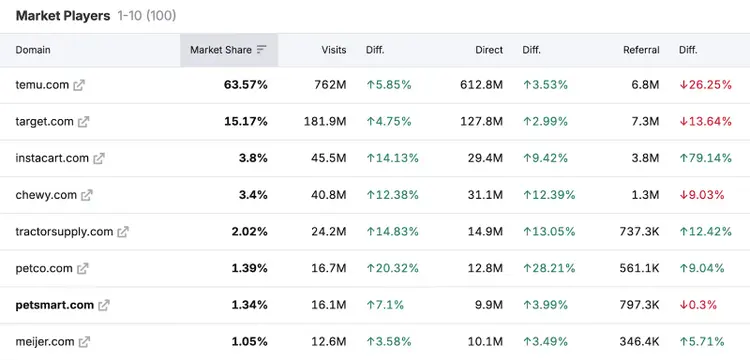
Review the list and choose the top competitors you’re going to focus on for your competitive intelligence project.
2. Gather data from multiple sources
Once you know which competitors you want to track, use multiple sources to collect relevant data on them. Here are a few places you can look:
- Competitor websites: Homepages, as well as product/service, pricing, and other landing pages can all be great sources of valuable competitive information
- Customer reviews: Feedback on competing products or services can help you identify weaknesses in their offerings and find gaps your product can fill
- Direct observation: Industry conferences, trade shows, and webinars give you firsthand access to competitor messaging, product announcements, and partnership news that rarely appears in published content
- Firsthand product evaluation: Signing up for a competitor's free trial, demo, or sales call reveals how they position their product, handle objections, and present their pricing
- Public financial information: When available, earnings calls, shareholder letters, and SEC filings can help you spot competitors’ growth trends and strategic shifts
- News and media appearances: News articles, interviews, and podcasts featuring your competitors help you track public perception, access executive commentary, and spot strategic moves early
- Industry publications: Industry journals and websites can surface emerging trends, competitor mergers and partnerships, and industry benchmarks
- Market research reports: Analyzing market research reports helps you understand overall market saturation, category growth, opportunities, and changing customer expectations and preferences
You can also gather useful data through specialized tools, including:
Website traffic data
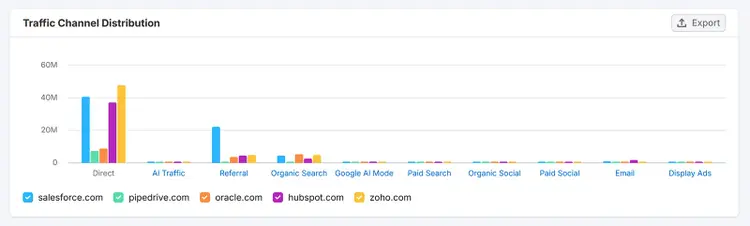
Understanding where competitors' website traffic comes from allows you to identify which marketing channels are driving growth for their businesses and spot opportunities to improve your own acquisition strategy.
Semrush's Traffic Analytics tool lets you enter and compare up to five competitors. Use the "Traffic Channel Distribution" section to see a breakdown of each competitor's traffic by channel.
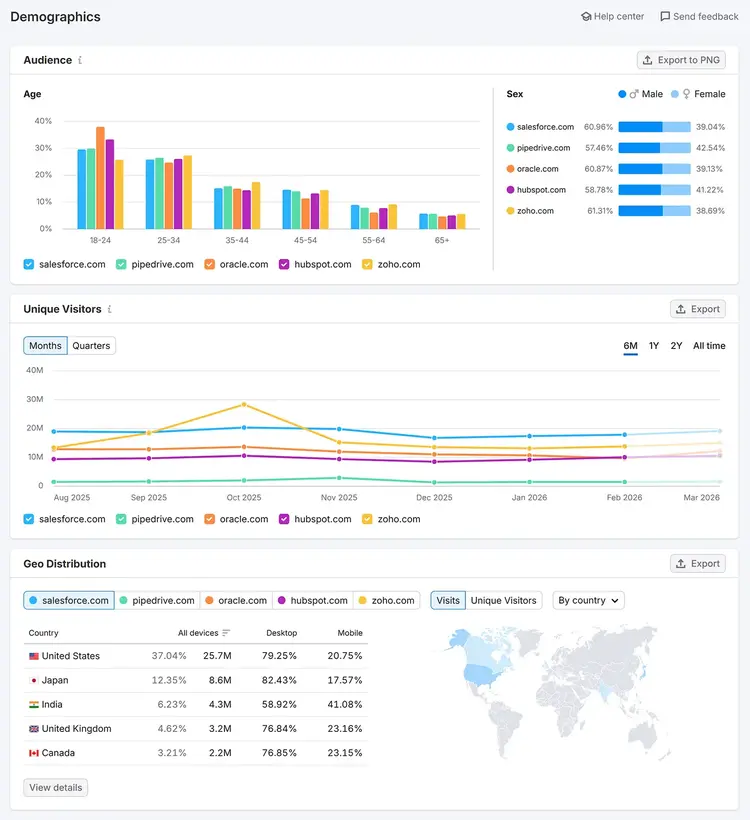
You can also visit the Demographics dashboard to see demographic data on your competitors' audiences, including age, gender, and geographic distribution.
Get insights to drive business growth
with the Semrush Traffic & Market Toolkit
Audience research
Learning more about prospective customers’ needs, behaviors, and preferences allows you to identify opportunities and refine your positioning to get better results.
Here are a few ways you can get more insights on your customers:
- Surveys: Run a survey to gather quantitative data on audience preferences and needs. You can survey your own customers or use platforms like Pollfish or SurveyMonkey to reach participants who fit your target audience.
- Interviews: Perform one-on-one interviews with existing customers to dive deeper into pain points, motivations, and their decision-making process. Just be aware that your current customers don’t necessarily reflect your target audience.
- Third-party reports: Analyze relevant industry reports from companies like Gartner and Pew Research to get insights into broader trends and behavioral and market shifts
- Review mining: Read through customer reviews for your own and competing products to learn what customers like and dislike about existing solutions
- Audience research tools: Use audience research tools to learn about your competitors’ audiences, including their age, gender, location, and preferred devices. If they’re direct competitors, their audience demographics may be similar to your own.
This research can uncover valuable patterns in customer behavior and preferences.
For example, you might find that target customers for your SaaS product value integrations with their existing tech stack. You could then prioritize messaging that speaks to your software's integration capabilities, which could help convert more visitors into customers.
Social media activity
Your competitors’ social media activity is a source of valuable competitive data that can help you understand what your audience responds to and allow you to improve your own social media strategy.
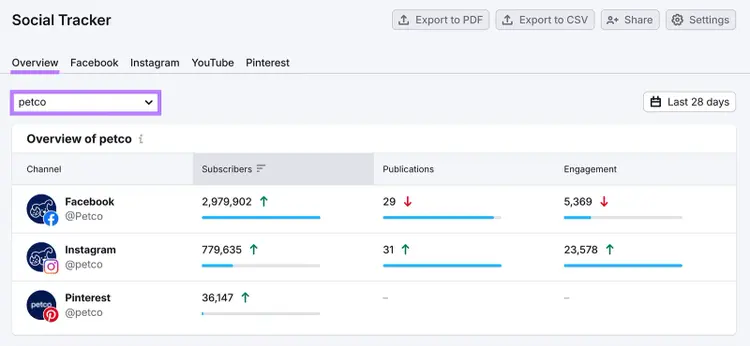
Use Social Tracker (part of Semrush’s Social Toolkit) to track the total follower count and engagement numbers for each competitor.
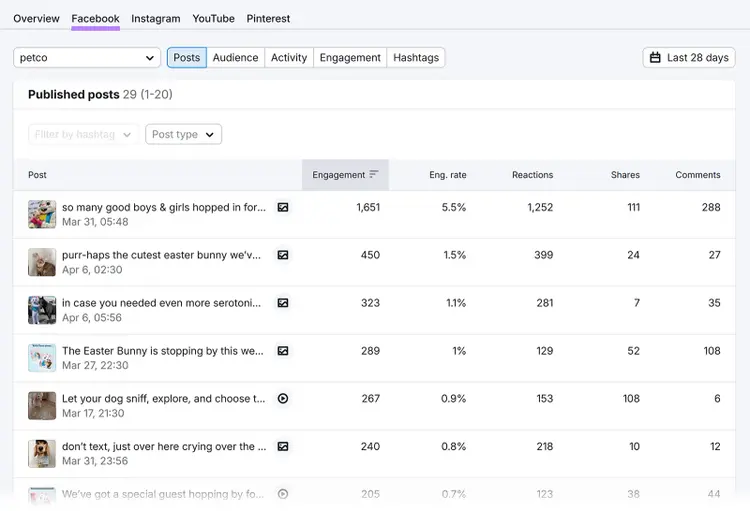
Then, dive into competitors' individual social posts across Facebook, Instagram, YouTube, and Pinterest, and see engagement numbers for each. Pay attention to the topics and formats of top-performing posts, and use these insights to inform your own social strategies, including the types of content you share and on which platforms.
Ad strategy
Analyzing your competitors' ad strategies can help you understand how they attract and convert customers through paid ads, and which messaging, offers, and ad platforms are worth investing in.
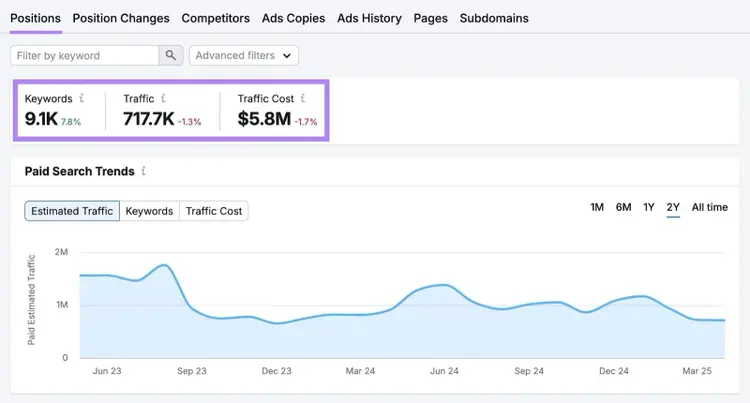
Semrush's Advertising Research tool lets you study what your rivals are doing with their search ads. At the top of the “Positions” report, you’ll be able to see the total number of keywords they’re bidding on, how much traffic they’re generating from paid ads, and how much it’s costing them.
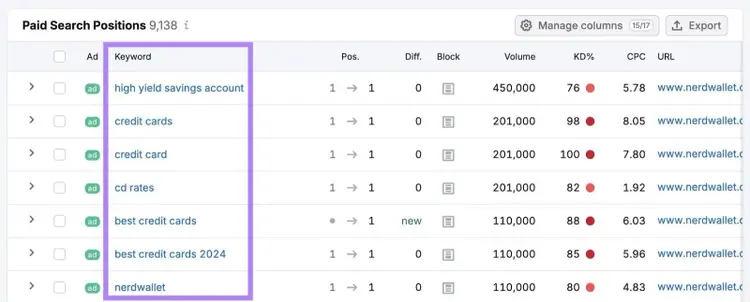
Scroll down to the “Paid Search Positions” section to see the exact keywords they’re bidding on.
And visit the “Ads Copies” tab to see the exact ad copy they’re using for their ads.
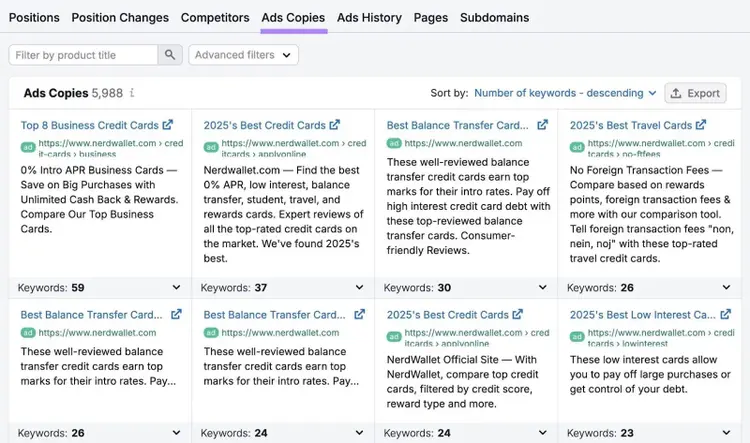
Keywords your rivals continue to bid on over time are likely keywords that drive results for them. These are therefore keywords you may also want to target with your own ads. And the Ads Copies tab can help you understand what kind of copy performs well too.
AI search visibility
AI search visibility data shows you which competitors are being mentioned in AI-generated answers, and how your brand compares on relevant topics over time.
When someone searches for a product or service on platforms like ChatGPT or Perplexity, such as "best moisturizer for dry skin" or "top-rated running shoes," the brands that appear in those answers can gain visibility and consideration before the customer visits any website.
Tracking this gives you competitive data that your traffic or ad reports can't provide.
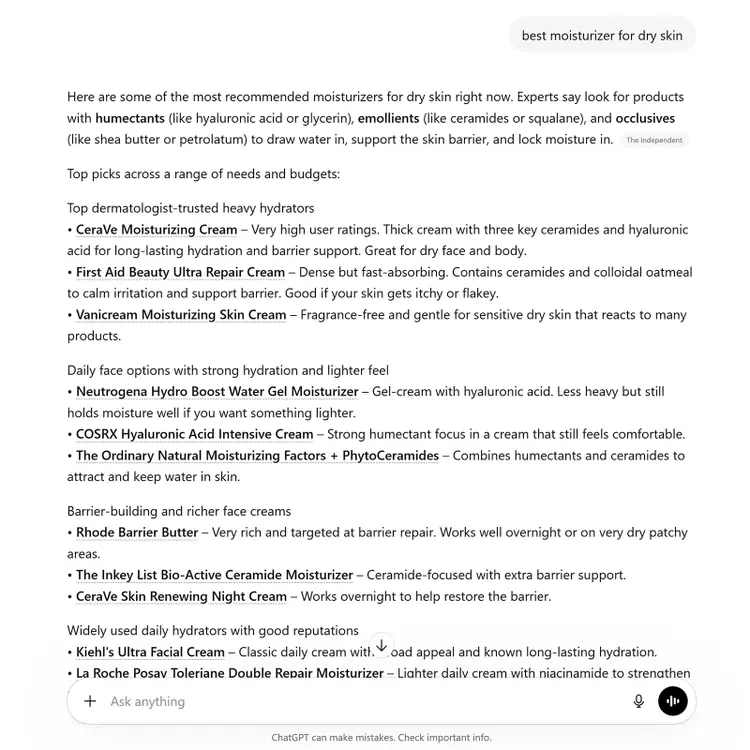
Semrush's AI Visibility Toolkit lets you benchmark your brand against competitors across AI platforms at scale, rather than relying on manual prompting. You can see which brands are recommended for topics relevant to your business, track your share of voice over time, and identify where gaps exist.
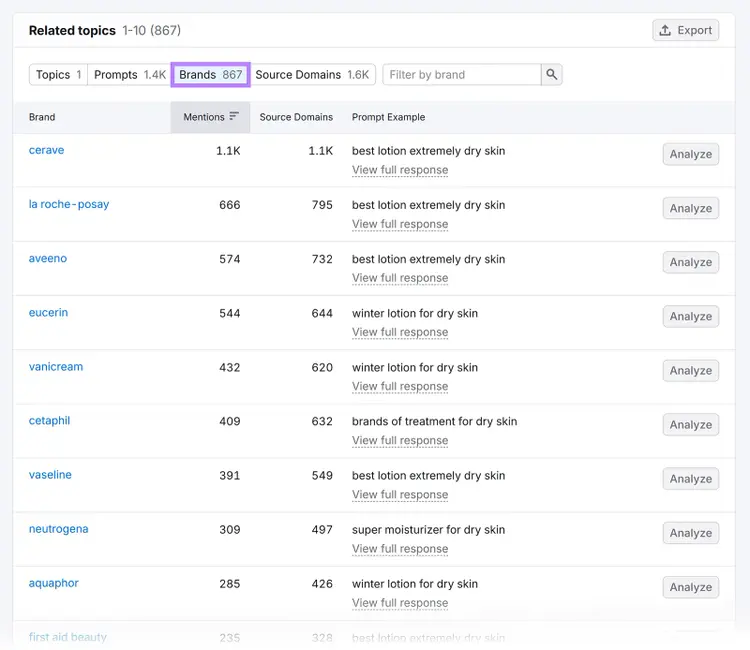
For a deeper look at improving your AI search presence, check out our guide on how to optimize for AI search results.
3. Organize and analyze the data
Organizing your data makes it easier to spot patterns, gaps, and opportunities across competitors.
Collect all the data in a spreadsheet or shared document that lets you analyze competitors side by side.
At minimum, you'll want to capture each competitor's positioning, pricing, key traffic channels, social media presence, and any recent strategic moves (e.g., partnerships). As your research deepens, you'll naturally add more dimensions, such as customer sentiment, content strategy, ad activity, and product gaps.
The goal is to build a living document your team can build on over time, not a one-time snapshot.
This side-by-side view makes it easier to benchmark your own performance against rivals and spot where you're falling behind or pulling ahead.
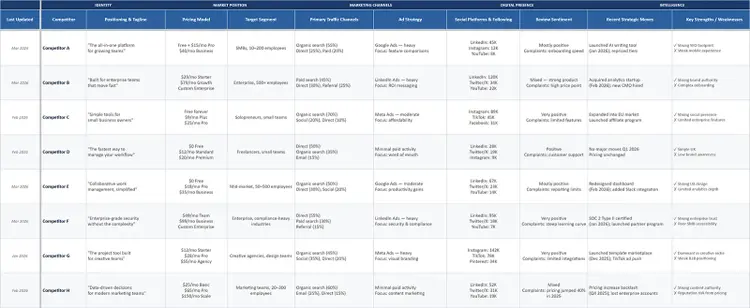
When analyzing the data, look for:
- Patterns: Do you see multiple competitors leaning heavily on the same traffic source, targeting the same keywords, or consistently appearing in AI-generated answers for your category?
- Gaps: Have you noticed a traffic channel your competitors are largely ignoring? Are there customer questions or topics no one in your industry is addressing?
- Strategic shifts: Are there any signs that a competitor might be changing their strategy, such as updated website messaging or a sudden increase in AI search presence?
Once you have your findings, store them in a shared repository such as a structured document, wiki, or dedicated competitive intelligence tool that relevant teams can access, since:
- Sales teams need competitive positioning to win deals
- Product teams need feature comparisons and customer feedback to prioritize roadmaps
- Leadership needs market trend summaries to make strategic calls
Insights locked in one person's spreadsheet won't drive decisions.
4. Use the insights to shape your strategy
Use your findings from gathering competitive intelligence to make changes to your strategy.
For example, maybe you’ve discovered that multiple competitors are investing heavily in Google Ads and putting a heavy emphasis on affordability in their messaging. But you've also learned that a growing segment of customers values saving time over saving money.
Based on these findings, you might decide not to compete on price.
If competitors are all fighting for the same ad placements and messaging around cost, that space is already crowded and expensive. Instead, you might shift your positioning and messaging to focus on speed and convenience, and move your budget toward channels like SEO and email marketing.
Pro tip
Not every insight would need immediate action. Prioritize changes that align with your biggest business goal right now — whether that's growing traffic, increasing conversions, or entering a new market.
5. Keep tracking data & be ready to adapt
Competitive intelligence is only useful if it stays current, because competitors, markets, and industries shift constantly.
Here are a few ways you can build competitive intelligence into your existing workflow:
- Set up alerts for competitor brand mentions on social media and in the news (Google Alerts can help here)
- Monitor competitors' websites for changes in messaging, pricing, product launches, and feature updates
- Track competitors' ad activity to spot new campaigns, offers, or channels they're investing in
- Subscribe to industry publications to stay informed on emerging trends, regulatory changes, and market shifts
- Monitor AI-generated answers for your category at least monthly to catch changes in which competitors are being recommended
How to measure competitive intelligence effectiveness
You can measure competitive intelligence effectiveness by tracking whether your insights are being used and whether they improve business outcomes over time.
Measuring your efforts helps you see what’s working, justify continued investment, and refine your focus as your program matures.
Here are five metrics worth tracking:
You don't need to track all five from day one. Start with stakeholder usage and speed of response. Both are easy to observe and give you an immediate signal that your competitive intelligence program is working.
As your program matures, layer in win rate, market share movement, and competitive visibility tracking for a more complete and measurable picture of your progress.
Stay one step ahead of your competition
Competitive intelligence only delivers results when you gather it consistently and act on what you find. The more regularly you do this, the sharper your strategic decisions become.
Semrush's Traffic & Market Toolkit brings the core of this work into one place. Use it to understand the overall competitive landscape, identify competitors' top traffic channels, track market trends, and benchmark your performance against rivals.
Gather Competitive Intelligence Faster
with the Semrush Traffic & Market Toolkit

Zach Paruch is a data-driven SEO strategist with 10+ years of experience driving organic growth through smart, scalable search strategies. His expertise includes on-page and technical SEO, AI search optimization, and content strategy—with a special focus on ideating and implementing AI-driven processes. By leveraging in-depth search intent analysis, refined information architecture, and user-centered design, Zach consistently delivers high-impact content that drives business outcomes.
Zach Paruch
Zach Paruch is a data-driven SEO strategist with 10+ years of experience driving organic growth through scalable search strategies. He specializes in on-page and technical SEO, content strategy, AI search optimization, and AI-driven processes.
Tells Google to show you more from Semrush in AI, Search, and Discover.