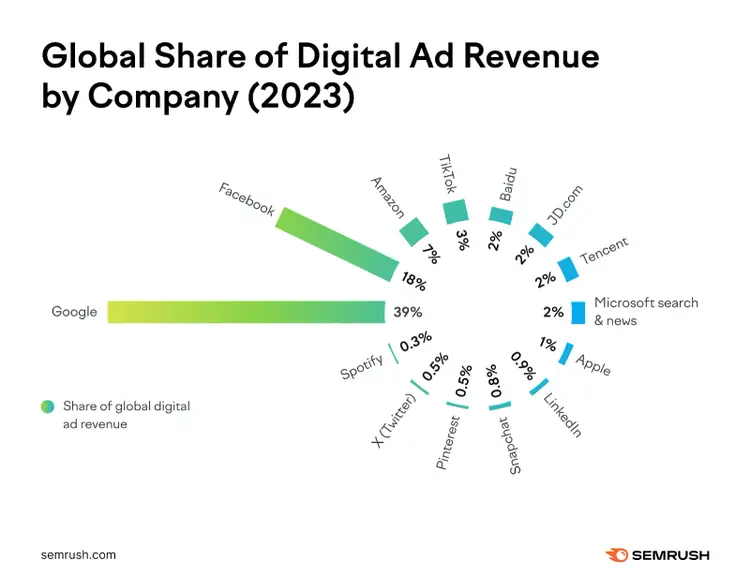
Google’s total revenue in 2023 was around $305.6 billion (Statista, 2024). Which means the company made over 77% of its revenue from ads.
And by 2027, the company’s ad revenue is expected to reach $340.18 billion (Statista, 2023).
The fact that so many businesses choose to invest in Google’s advertising platform reflects its success at driving targeted traffic and delivering strong returns on investment.
2. In 2024, Google Was Expected to Generate $62.87 Billion in Search Ad Revenue in the US
And the company’s search ad revenue was forecasted to be bigger than 10 times the size of Microsoft’s by 2026.
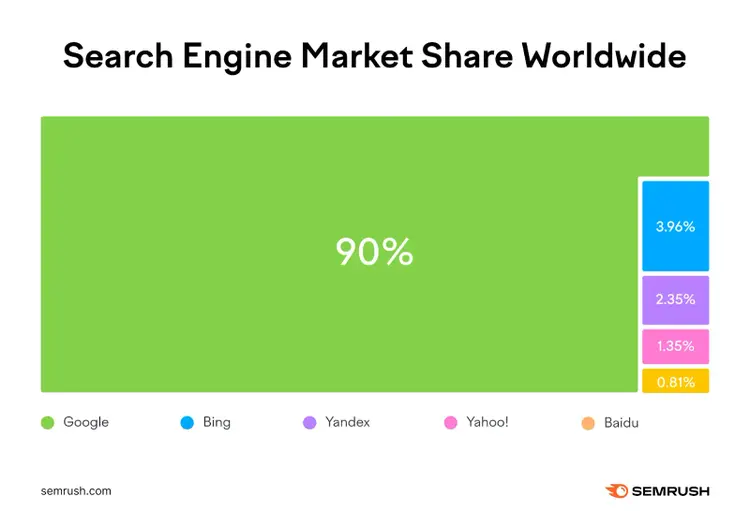
This underscores Google’s continued dominance in the global search advertising landscape.
3. Ad Revenue From Google Display Network Sites Totaled $31.31 Billion in 2023
This figure highlights the importance of display advertising within Google’s ad ecosystem.
The Google Display Network (GDN) allows advertisers to reach a vast audience by placing ads across a wide range of websites, apps, and other online properties.
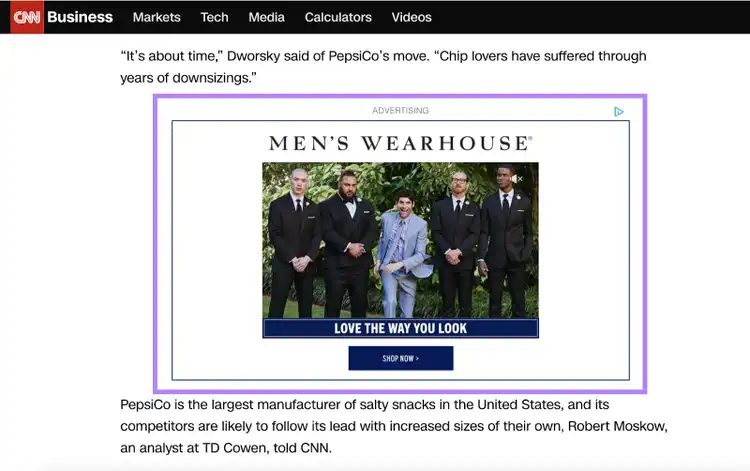
Here’s what a display ad looks like on a GDN site:
5. In 2023, Google Was Responsible for Around 26.8% of Digital Ad Revenue in the US
Followed by Meta at 21.1%. And Amazon at 12.5%.
While Google’s share of U.S. digital ad revenue isn’t as large as its global share, this figure is another reminder it remains ahead of other major ad platforms.
8. Over 2 Million Websites Make Up the Google Display Network
The GDN reaches the majority of global internet users—and all Google Ads customers have access to it.
This extensive reach allows advertisers to engage diverse audiences through targeted display ads. Which helps them build brand awareness and drive conversions.
9. In 2024, the Average CTR for Google Ads Was 6.42%
In other words, around 1 in 16 people who saw a Google Search ad clicked on it (WordStream by LocaliQ, 2024).
This figure is slightly higher than the 6.11% average CTR for 2023. Which suggests that Google’s results pages may be becoming more ad-friendly.
However, it’s important to appreciate that the top organic search result alone has a 39.8% CTR (FirstPageSage, 2024).
This disparity highlights the significant impact of organic search visibility on driving organic (unpaid) traffic.
While paid Google Ads are effective for immediate results, investing in SEO can drive substantially more traffic over time.
Google Ads Cost Statistics
10. 44% of Surveyed Businesses Spend $100 to $10,000 on Google Ads Every Month
This demonstrates that Google Ads are an affordable way to start advertising.
It also demonstrates that bigger businesses are willing to spend more on Google Ads. Because ads can be a crucial investment for driving targeted traffic and achieving marketing objectives.
13. In 2024, the Average Conversion Rate for Google Ads Was 6.96%
Conversion rates are an essential PPC metric since they indicate how many ad clicks turn into actual sales or leads.
However, average conversion rates were higher in 2023 at 7.04%.
This could be because Google’s search ads often appear for keywords with low commercial intent. In other words, users who click on them may not be ready to convert.
15. Businesses Make $8 for Every $1 Spent on Google Ads (If You Account for Organic Search Clicks)
This is because—as we saw earlier—businesses typically get five organic search clicks for every paid search click.
And Google estimates that organic clicks are 70% as commercially valuable as ad clicks.
So, if businesses make $2 for every $1 they spend on Google Ads, and they get five organic clicks for every ad click, the combined value of both translates to $8 for every $1 spent.
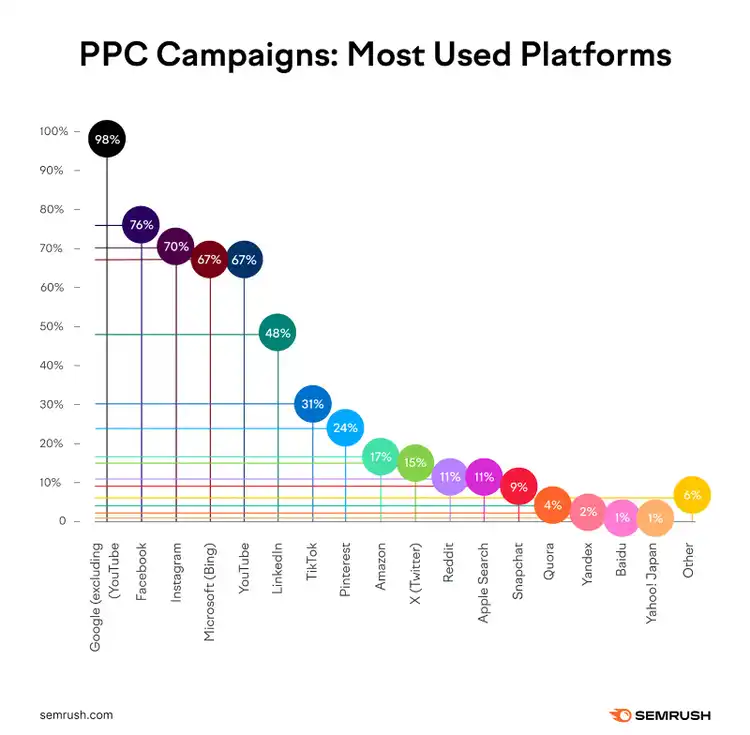
17. Between 80% to 85% of PPC Budgets Are Allocated to Google Ads
And 15% to 20% to Microsoft Advertising.
This stat again emphasizes Google Ads’ dominance in the PPC market, with businesses prioritizing the platform for its broad reach and proven ability to drive results.
18. Google Blocked 5.5 Billion Ads on Its Network in 2023
These ads were removed for violating Google’s policies.
Additionally, 2.1 billion publisher pages were restricted or blocked. And 12.7 million advertiser accounts were suspended.
This demonstrates Google’s commitment to maintaining a safe and compliant advertising environment, protecting its users from misleading or harmful content.
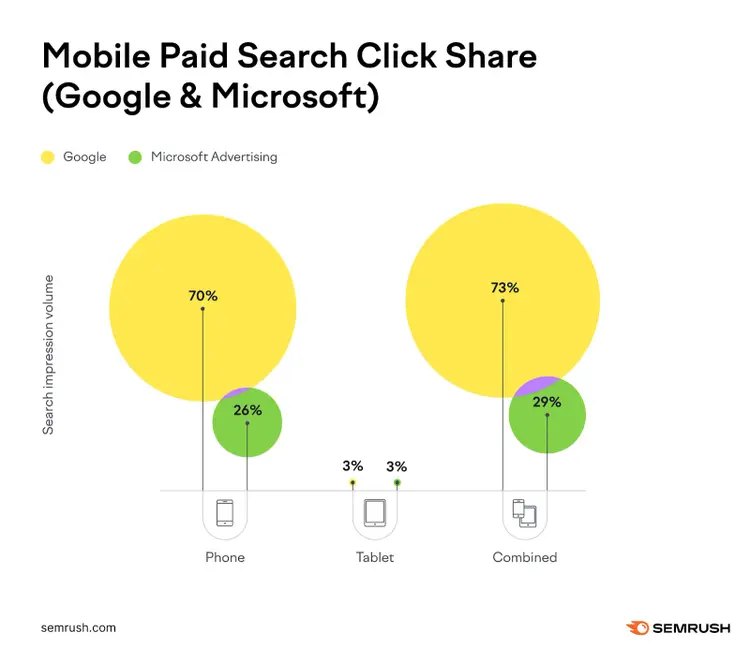
Globally, that figure is higher—at $251 billion globally by 2028 (Statista, 2024).
This highlights users’ increasing reliance on mobile devices for search activities and the need for businesses to adjust their search strategies accordingly.
25. Mobile Will Account for 66% of Search Ad Spending in the US by 2029
Once again, the importance of mobile-optimized paid search campaigns will only increase with each passing year.
31. 91.8% of Google Searches Consist of Long-Tail Keywords
These are highly specific (often niche) search terms.
Typically, long-tail keywords have a lower CPC than generic, higher-volume keywords. And since they target specific user intents, they usually convert better than short-tail keywords.
Which is why optimizing Google Ad campaigns for long-tail keywords can help maximize ad efficiency.
33. Google Ad Conversion Rates Dropped Slightly in 2024
The average conversion rate was 6.96% in 2024. Compared to 7.04% in 2023.
The industries with the highest conversion rates were automotive repair, service, and parts (12.96%), animals and pets (12.03%), and physicians and surgeons (11.08%).
The lowest conversion rates were found in furniture (2.53%), finance and insurance (2.78%), and real estate (2.91%).
35. At $27.94, the Automotive Repair, Service, and Parts Industry Had the Lowest Average CPL in 2024
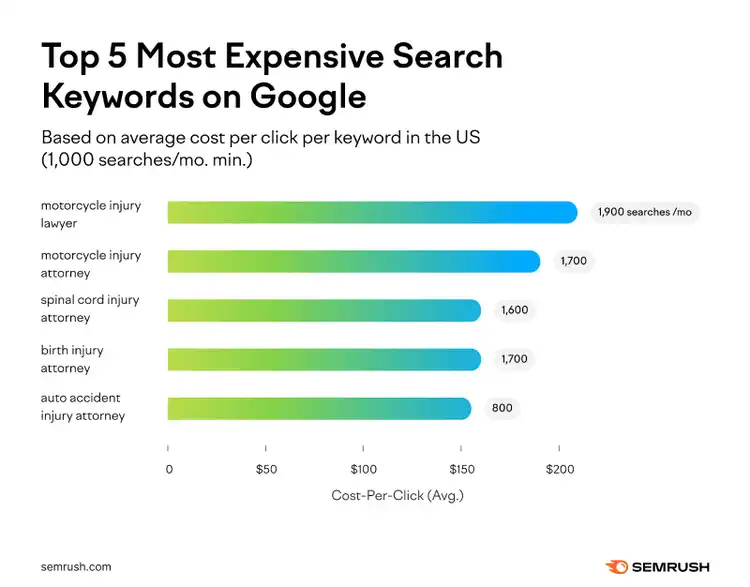
The highest CPLs were found in the attorneys and legal services ($144.03) industry. Followed by the furniture ($119.10) and career and employment ($117.92) industries.
However, it’s important not to read too much into CPL differences between industries. After all, a lead for an attorney may be worth more in absolute terms than a lead for an automotive repair service.
The stats are clear: Google Ads is an advertising giant that seems set to continue growing for the foreseeable future.
If you run paid search campaigns, you can’t afford not to use Google Ads. The ability to reach so many potential customers just isn’t available with any other search platform.
But what can you do to give your Google Ads campaigns the best shot at success?
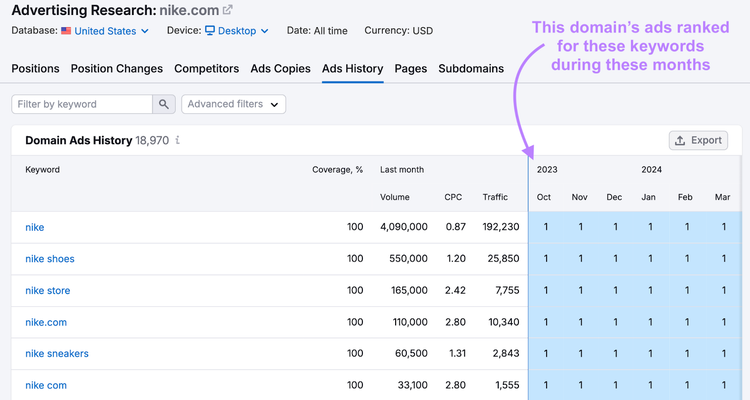
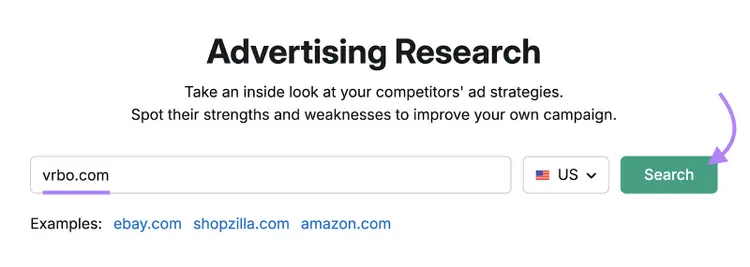
A good place to start is with Semrush’s Advertising Research. This tool allows you to identify your closest PPC competitors and analyze their keyword bidding strategies and campaign creatives.
Start by entering a competitor’s domain into the search bar and click “Search.”
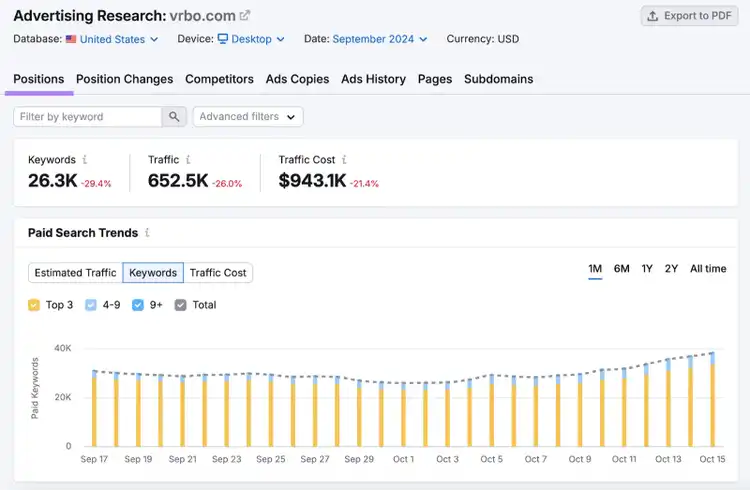
In the “Positions” tab, you’ll see the number of paid keywords driving traffic to that site, how much paid traffic they get, and the estimated cost of appearing for those keywords.
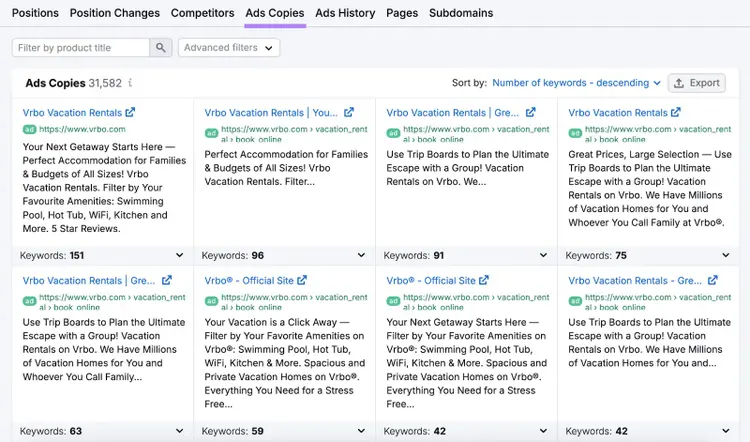
In the “Ad Copies” tab, you can see the actual ad copy your competitors are using. And the corresponding keywords they’re targeting.
Padrig is a copywriter for B2B SaaS and marketing companies, specializing in writing conversion copy and traffic-generating long-form articles. He has over ten years of digital marketing experience and holds a master‘s degree in decision science.
Subscribe to learn more about Paid Advertising
Subscribe
By clicking “Subscribe” you agree to Semrush Privacy Policy and consent to Semrush using your contact data for newsletter purposes
Share
Tells Google to show you more from Semrush in AI, Search, and Discover.