
What Are Google Ranking Factors?
Google ranking factors are the specific signals Google's algorithms use to determine which content to rank in search results and where.
Google outlines how it ranks content using five broad “search signals”:
- Meaning of your query: Google uses language models to match queries to relevant content
- Relevance of content: Google analyzes whether content contains search terms (in headings, body text, etc.) and uses user interaction data to determine if pages offer genuinely relevant information beyond just keyword repetition
- Quality of content: Google prioritizes content that demonstrates expertise, authoritativeness, and trustworthiness
- Usability of content: Google favors content that's accessible and easy to use by considering page experience factors
- Context and settings: Google personalizes results based on user location, search history, and search settings to deliver the most relevant content for each specific situation
Below, we’ll break these down into more defined factors you can use to assess (and optimize) your content to rank higher in Google.
Here are some notes to bear in mind before reading this list:
- Google has only confirmed a small number of ranking factors over the years. It’s in the search engine’s best interest to be somewhat vague about how it ranks content to limit manipulation.
- We’ve based our list on factors that Google has confirmed and those that are widely believed to be part of Google’s ranking systems due to widespread evidence or testing (including our own ranking factors study).
- Google uses multiple algorithms to rank content. But we often refer to these as simply “the Google algorithm.”
Content Ranking Factors
Google has updated its algorithm several times specifically to better surface more helpful content that solves real user problems.
There are a few factors that matter, the most important being overall quality.
Content Quality
Google has published guidance on what helpful content looks like. This guidance focuses on:
- Originality: Google’s ranking systems tend to prioritize content that provides original information, research, or analysis
- Comprehensiveness: Content that provides a complete description of the topic tends to perform better than thin content
- Value for the reader: High-quality content provides substantial value when compared to other pages in the search results
How to Optimize for This
- Write content that caters to user search intent—don’t just optimize it for Google
- Create original content based on your own data, research, experience, or insights
- Update your content regularly to maintain accuracy
Content Freshness
Google's algorithm prioritizes recent content for time-sensitive queries like those about trending topics, news, and regularly recurring events.
For example, queries about recent sporting events are likely to yield fresh results. Often content that was updated within the past 24-48 hours.
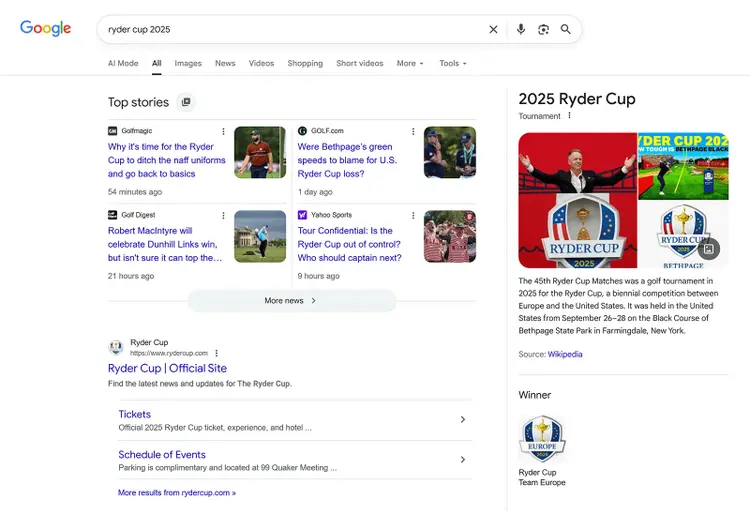
While Google’s freshness updates don’t apply to evergreen content, it’s important to be aware that Google’s AI Overviews seem to prioritize recent content—even for evergreen queries.
So, updating evergreen content routinely matters. But that’s more about ensuring relevancy, which we’ll cover in the next section.
How to Optimize for This
- Write content on newsworthy and trending topics in your niche
- Add publication and last updated dates to your pages to make it clear to users and Google that your content is up to date
- Don't just update the date without meaningfully updating the content
Relevance to the Search
Google matches content to searchers based on how relevant it is to their query. In other words, the search engine aims to show content that gives the user what they want—generally referred to as search intent.
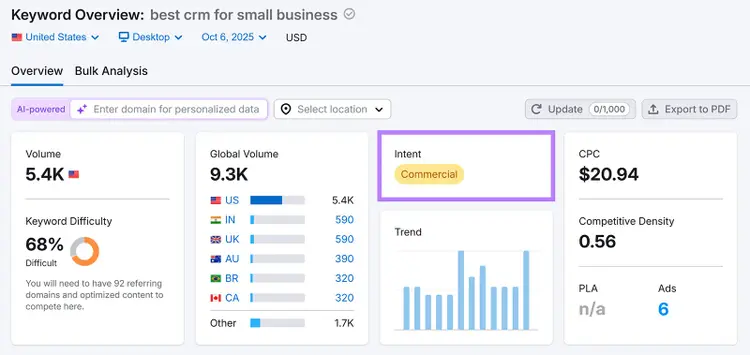
You can broadly think of these types of intent as informational, navigational, commercial, and transactional intent. Content that doesn't match the dominant intent for a keyword usually struggles to rank.
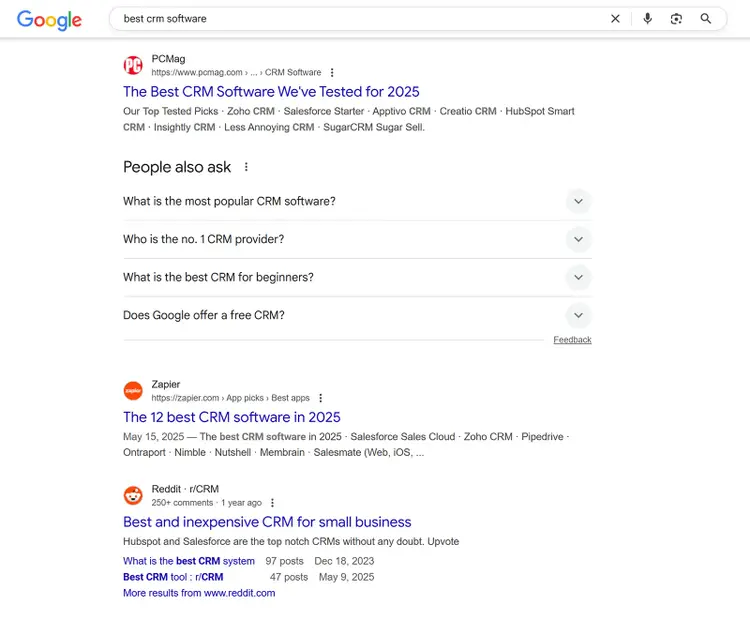
For example, the search intent for the keyword “best crm software” is commercial. This means people are looking to learn more before making a purchase. And it’s why you’ll see tool listicles ranking for this term—not landing pages or informational guides about what a CRM is.
How to Optimize for This
- Match your content format to what Google is rewarding in the search results
- Do extensive research on a topic before creating the content to ensure you deeply understand the user’s intent
- Use our Keyword Checker to understand the search intent of your target keywords
Backlinks and Authority-Related Ranking Factors
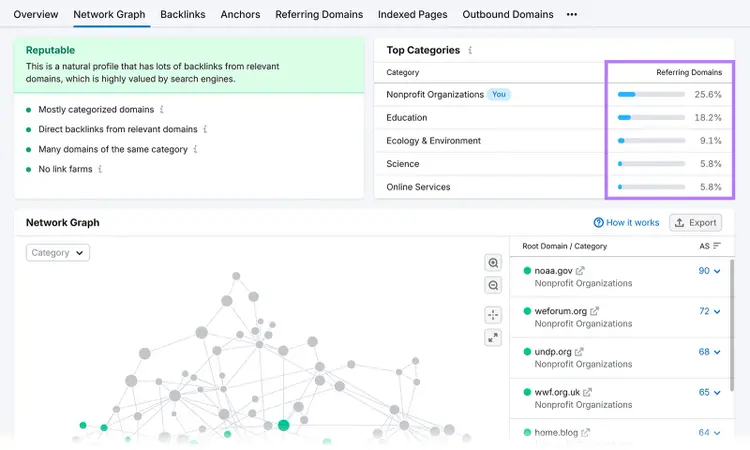
Backlinks are links to your website from other websites. You can think of these as “votes of confidence” that suggest to Google that your content is high quality and trustworthy.
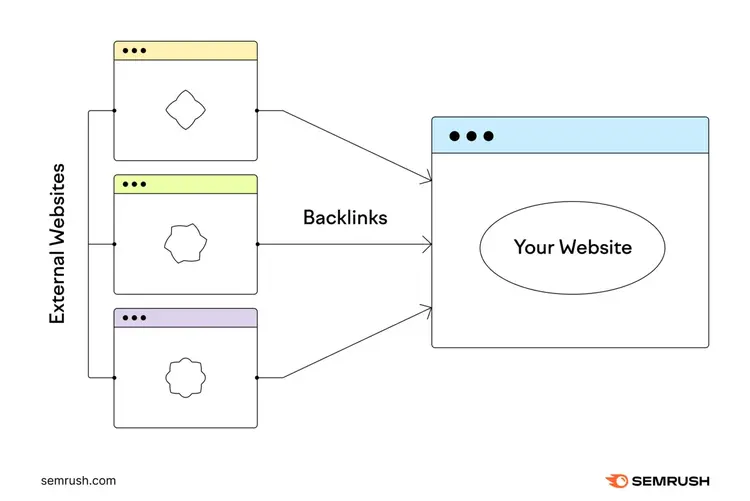
Backlinks are often described as being able to “pass authority” from the linking site to your site. But not all backlinks carry equal ranking influence, so you’ll need to keep a few factors in mind.
Backlink Quality
Sites tend to benefit more when they get links from authoritative, trustworthy websites over links from low-quality sites.
A single link from a relevant, respected industry publication typically carries more weight than many links from spammy directories.
How to Optimize for This
- Focus on digital PR, expert contributions, and original research that industry sites want to reference
- Avoid link schemes, paid links, and low-quality link-building tactics that can trigger penalties (known as manual actions)
Further reading: How to Get Backlinks: 10 Realistic Methods
Backlink Relevance
Links from websites that are relevant to you tend to pass more authority than links from unrelated sites.
For example, a link from a marketing blog will probably carry more weight for an article about marketing than it would for an article about cooking.
How to Optimize for This
- Guest post on topically related sites rather than accepting any linking opportunity
- Use link building tools to identify pages you could get relevant links from
Referring Domain Diversity
Google tends to reward sites that have links from many different domains. Our ranking factors study shows that the number of referring domains (i.e., referring domain diversity) was the 12th most influential ranking factor in 2024.
This means that a site with 100 backlinks from 100 different domains will typically rank higher than a site with 100 backlinks from 10 domains (with all else being equal).
How to Optimize for This
- Prioritize earning one link from multiple domains over accumulating multiple links from the same source
- Check your backlink profile with the website backlink checker to monitor the distribution of referring domains that link to your website
Technical Performance Ranking Factors
Technical SEO elements affect how easily Google can crawl, index, and serve your content to users. Google can't rank pages that it can't crawl or index. So, sites with technical issues may struggle to rank even if they publish high-quality content.
This makes sense, since Google aims to reward websites that provide a good user experience. Google considers the factors below part of its set of page experience signals, which can influence rankings. Even if the individual factors themselves don’t directly influence rankings.
Core Web Vitals
The Core Web Vitals are a set of metrics Google uses to measure your website’s loading speed, interactivity, and visual stability.
The three Core Web Vitals are:
- Largest Contentful Paint (LCP): How long it takes for the largest content element on the page to load
- Interaction to Next Paint (INP): How much time it takes from when a user initiates any interaction to when the next visual update displays
- Cumulative Layout Shift (CLS): How much the page layout moves around unexpectedly as the page loads
How to Optimize for This
- Compress images and use modern formats like WebP to improve your page speed
- Minimize JavaScript and CSS
- Use tools like PageSpeed Insights and SEO Audit to identify specific page speed issues affecting your Core Web Vitals scores
Mobile-Friendliness
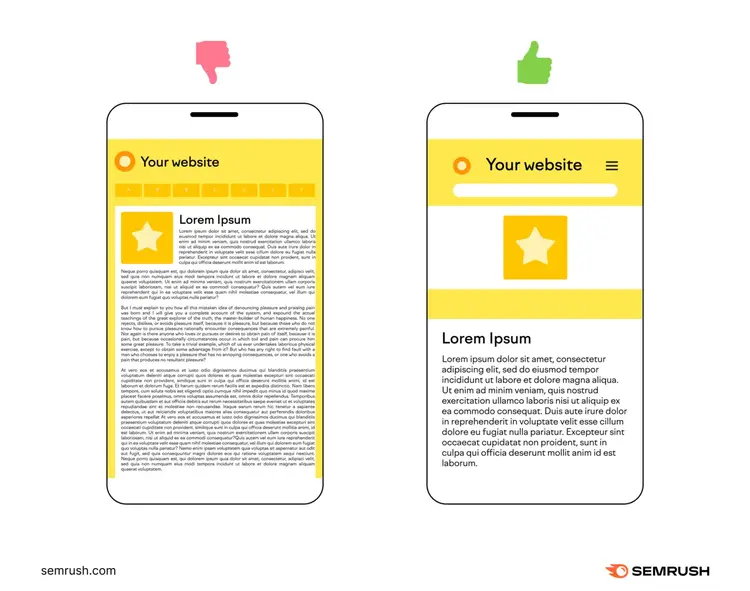
Google uses mobile-first indexing, which means it primarily uses the mobile version of your content for indexing and ranking. So, sites that don't work well on mobile devices can struggle to rank—even for desktop searches.
A mobile-friendly website has a responsive design, readable text without the need to zoom, and tap targets that are appropriately spaced. In other words, it’s easy to use and navigate on mobile.
How to Optimize for This
- Ensure your site uses a responsive design that adapts to different screen sizes
- Check your website functions properly on mobile any time you make changes to its design
HTTPS/SSL Certificate
HTTPS encrypts data between your server and your users' browsers—and you must have something called an SSL certificate installed to have an HTTPS site. Google confirmed HTTPS as a (lightweight) ranking signal in 2014, and it’s now part of the page experience ranking system.
Unsecure sites will flag a “not secure” warning in most browsers.
How to Optimize for This
- Install an SSL certificate from your hosting provider (these are often free)
- Update all internal links to use the HTTPS version of your site rather than HTTP
- Set up 301 redirects from HTTP to HTTPS versions of your pages
Further reading: HTTP vs. HTTPS: Explaining the Difference & How to Switch
On-Page Ranking Factors
On-page elements help Google understand what your content is about and how it's organized. These signals help guide the algorithm in matching your pages to relevant search queries.
Title Tags
Google uses title tags to understand the page’s content. And can display them as clickable headlines in search results (but google often rewrites titles shown in search results).
Pages with target keywords in their title tags may rank higher for those terms than pages without keyword-optimized titles.
How to Optimize for This
- Place your primary keyword near the beginning of the title tag
- Keep titles under 60 characters (or around 550 pixels) to avoid truncation in search results
- Write titles that accurately describe page content
Further reading: What Is a Title Tag? How to Optimize Your SEO Titles
Internal Links
Internal links distribute authority throughout your site (among other things), which means adding them strategically can help different pages rank better.
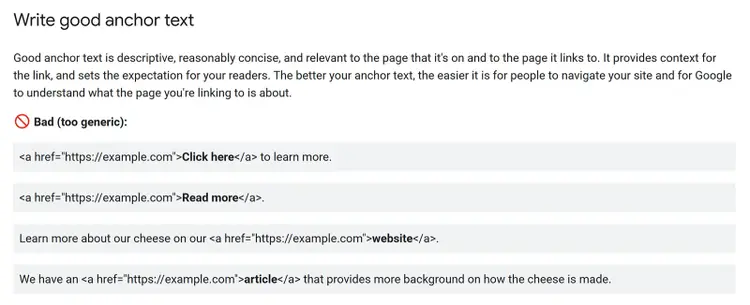
It’s best to incorporate links to relevant content and to place them with contextual anchor text that helps both users and Google understand what the linked page contains.
How to Optimize for This
- Use descriptive anchor text that indicates what the linked page is about
- Minimize (or eliminate) orphan pages by ensuring every page on your site has at least one internal link pointing to it
- Link from high-authority pages to important pages you want to rank
You can find out which pages on your site are most authoritative using the Internal Linking report in Semrush Site Audit.
The “ILR” column on the “Crawled Pages” report shows each page’s Internal LinkRank. In other words, how authoritative it is compared to the rest of your pages.
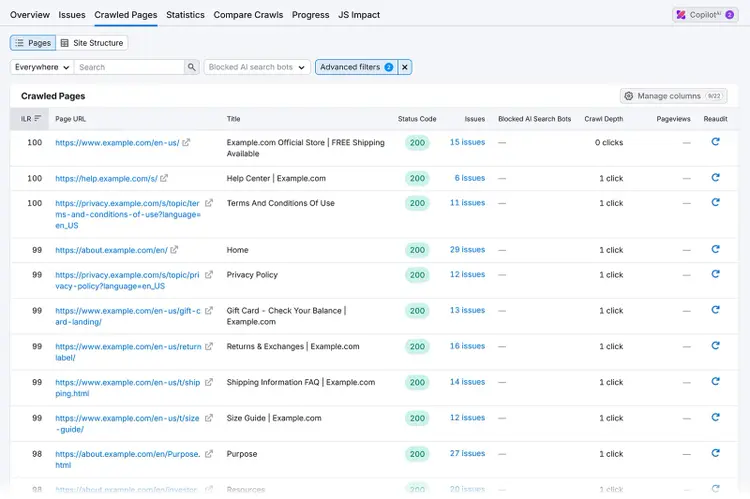
Link out from these pages to effectively pass authority throughout your website.
Local Ranking Factors
Local ranking factors apply when Google determines a search has local intent. These signals help Google match businesses to nearby searchers.
Local SEO operates on different principles than traditional organic ranking. Here are the three main signals that can influence your local rankings:
Relevance
Google’s relevance ranking factors assess how closely your business matches the intent of the user’s query.
One signal that can influence this is the presence of pages on your website targeting location-specific keywords. Like “Emergency Plumber Based in Santa Monica.”
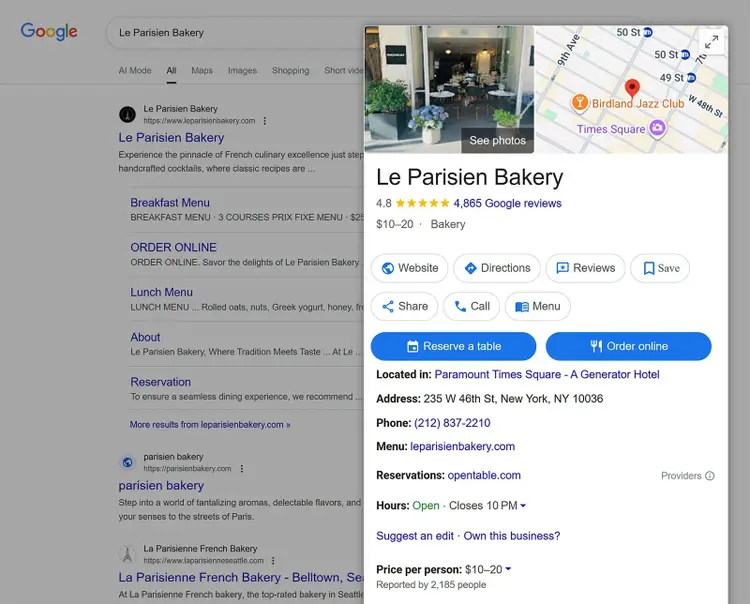
Your Google Business Profile (GBP) is another important aspect of displaying relevance to Google and your users.
Google uses profile information like category and business hours to determine relevance for local searches.
How to Optimize for This
- Create location-specific pages on your site optimized for relevant local keywords
- Complete every section of your Google Business Profile with accurate, detailed information
- Choose the most specific business category that matches your services
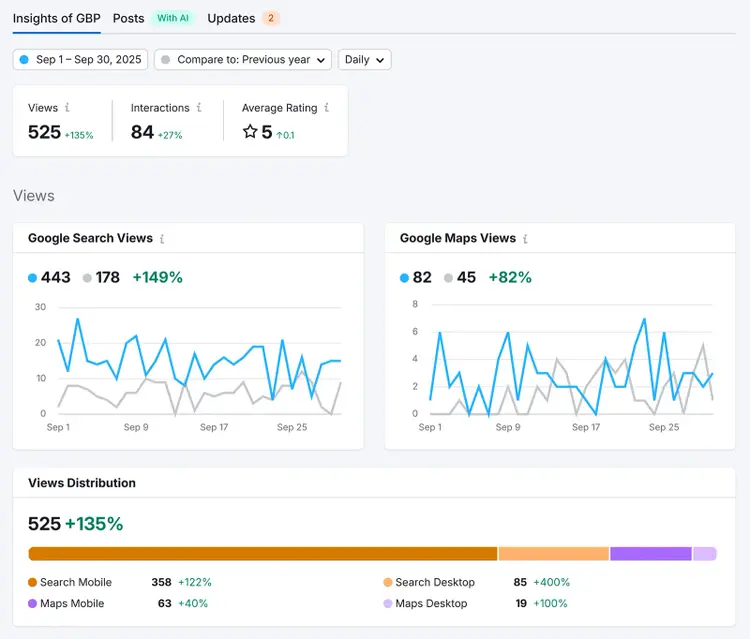
Use Semrush’s GBP Optimization tool to stay on top of your business’s details and performance. You can also access insights like how many views your profile has, the number of actions users take, and your average rating.
Proximity to Searcher (Distance)
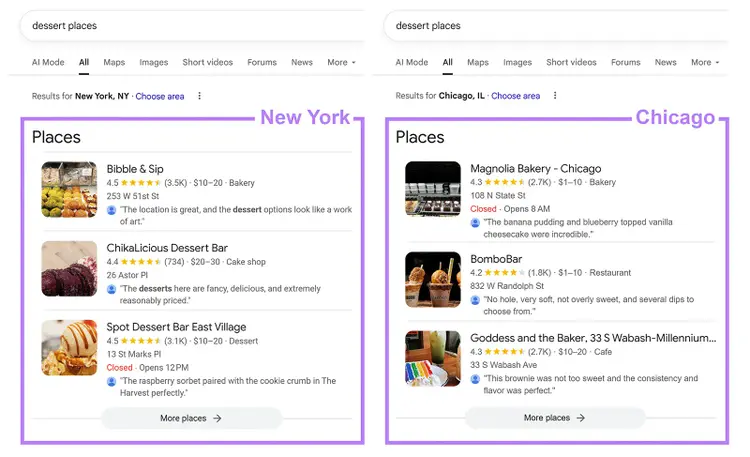
Google prioritizes businesses that are physically close to the searcher's location. So, a business in downtown Chicago can rank higher for "coffee shop" when someone searches from downtown rather than from a suburban location, even if the suburban shop has better reviews and content.
How to Optimize for This
This ranking factor is largely out of your control. But you can still optimize for it indirectly by including your service area in your Google Business Profile to rank for nearby searches outside your immediate location.
Prominence
Prominence refers to how well-known a business is. The more well-known your business appears to be to Google’s algorithms, the more likely you are to show up in search results. Reviews and citations can influence your business’s prominence and therefore also its local rankings.
Review quantity, quality, and recency can influence local rankings. Businesses with more positive reviews tend to rank higher than competitors with fewer or lower-rated reviews.
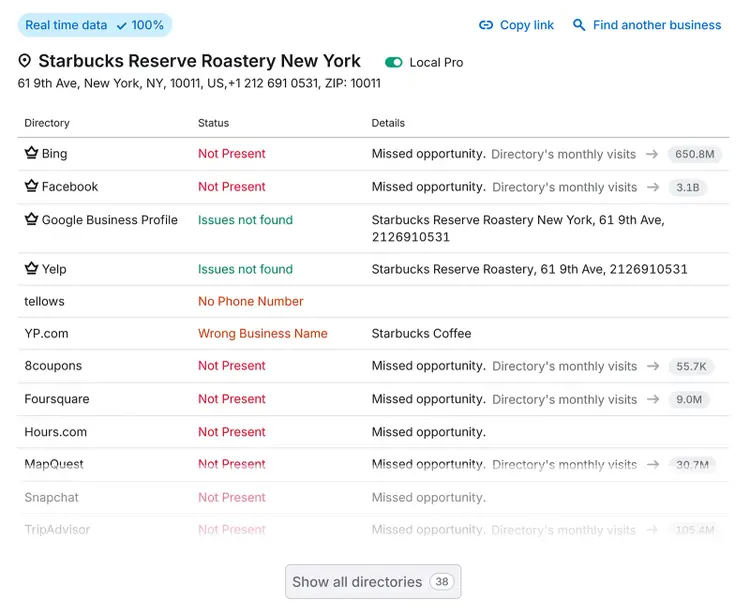
Citations are mentions of your business name, address, and phone number (NAP) on other websites like Yelp, Yellow Pages, and industry directories. More citations from authoritative directories can improve your local rankings.
Google cross-references your business information across multiple sources to determine accuracy and trustworthiness. NAP consistency across your citations helps Google verify your business information.
How to Optimize for This
- Ask satisfied customers to leave reviews on your Google Business Profile
- Respond to all reviews, both positive and negative, to show engagement
- List your business on major directories like Yelp, Bing Places, and Apple Maps
- Ensure your business name, address, and phone number match exactly across your website, Google Business Profile, and all existing directory listings
The Listing Management tool automates this process. Just enter your business name and the tool will highlight directories with missing or incorrect NAP information.
Which Google Ranking Factors Are Most Important?
There’s no definitive list of the most important Google ranking factors. The factors you should prioritize depend a lot on your specific business’s situation.
Here are some examples of what you might prioritize based on your website type:
These are not tasks you absolutely must prioritize. But it should be clear that tasks that matter most for one business may not significantly affect the rankings of another business.
Optimize Your Website for Key Google Ranking Factors
The above Google ranking factors can provide insight into what you might want to do to improve your rankings.
There’s no doubt that having solid SEO foundations can help grow your online presence.
Optimize your site for key Google ranking factors with Semrush’s SEO Toolkit. Try it for free today.
Claim Your Free 7-Day Trial
and Explore Our Digital Marketing Tools

Zach Paruch is a data-driven SEO strategist with 10+ years of experience driving organic growth through smart, scalable search strategies. His expertise includes on-page and technical SEO, AI search optimization, and content strategy—with a special focus on ideating and implementing AI-driven processes. By leveraging in-depth search intent analysis, refined information architecture, and user-centered design, Zach consistently delivers high-impact content that drives business outcomes.
Zach Paruch
Zach Paruch is a data-driven SEO strategist with 10+ years of experience driving organic growth through scalable search strategies. He specializes in on-page and technical SEO, content strategy, AI search optimization, and AI-driven processes.
Tells Google to show you more from Semrush in AI, Search, and Discover.