
Marketing Channel Strategy 101: Everything You Need to Know
What Is a Marketing Channel Strategy?
A marketing channel strategy details how a company reaches its target audience through different platforms.
You choose which channels to use, allocate resources to each, then set specific goals for performance and engagement.
A solid marketing channel strategy ensures you’re showing up where your customers are. Which creates an even better experience with your brand. Meaning more opportunities for conversion.
What Are the 6 Cs of Channel Strategy?
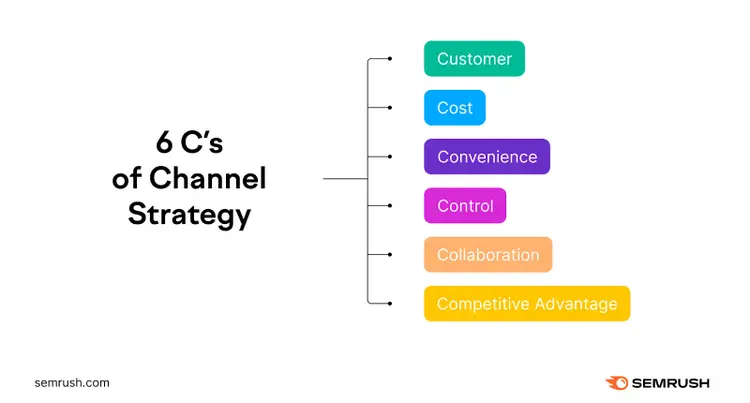
Marketing channel strategies rely on six core components to deliver results. These are:
- Customer: Understand your target audience’s needs, preferences, and behaviors. For example, a wedding planning business could conduct an online survey to determine what local brides and grooms want.
- Cost: Determine profitability and optimize resources by analyzing the expenses associated with each channel. Once the wedding planner knows their audience, they can figure out the most cost-effective way to reach them. Is it on social media or through banner ads?
- Convenience: Make sure selected channels are easy to access and buy from. Does the wedding planner need only a social presence? Or should they invest in banner ads?
- Control: Manage, adjust, and refine channel operations to meet dynamic business and market demands. If a post focused on “say yes to the dress” didn’t do the trick, the planner could create a new one spotlighting great wedding venues in the area.
- Collaboration: Work with channel stakeholders to amplify reach and effectiveness. The wedding planner could collaborate with local influencers to amplify their message.
- Competitive advantage: Use unique strengths or differentiators to beat your competitors. If the wedding planner has a stronger social presence than a rival across town, they’re more likely to get ahead.
Why Is a Marketing Channel Strategy Important?
Ever heard of the marketing Rule of 7? It says a potential customer needs to interact with your brand at least seven times before making a purchase.
Those seven interactions are all part of a marketing channel strategy. They’re vital to increasing brand recognition. And to helping your business get ahead in target markets.
When you diversify your marketing strategy, you increase the chance of these interactions happening. Every channel works to get your message across to new customers. All while building brand awareness.
Take Spotify, for example. It doesn’t rely only on app stores. You’ll find it:
- Creating content on social media platforms like TikTok

- Sending emails based on your listening history

- Taking up public spaces for its billboards

Image Source: Muse by Clio
Today, Spotify’s value is around $30 billion. Being present on multiple channels plays a massive role in its rapid growth and global brand recognition.
A multichannel presence ensures Spotify touches base with users and potential subscribers across various settings. It boosts brand recognition and pushes potential customers closer to that purchase or subscription.
What Is the Difference Between Channel Strategy and Marketing Strategy?
A marketing strategy is much broader than a channel strategy. It involves the overall plan to achieve your marketing objectives—of which a channel approach can be an important component.
Target market identification, brand positioning, value proposition, product mix, and pricing are all part of a marketing strategy. It’s a comprehensive view of all marketing efforts and how they work together.
Further reading: Marketing Strategy Guide: What It Is and How to Create One
Multichannel vs. Omnichannel Strategy
A multichannel marketing strategy involves using multiple platforms for your marketing.
An omnichannel marketing strategy connects these platforms for a cohesive customer experience.
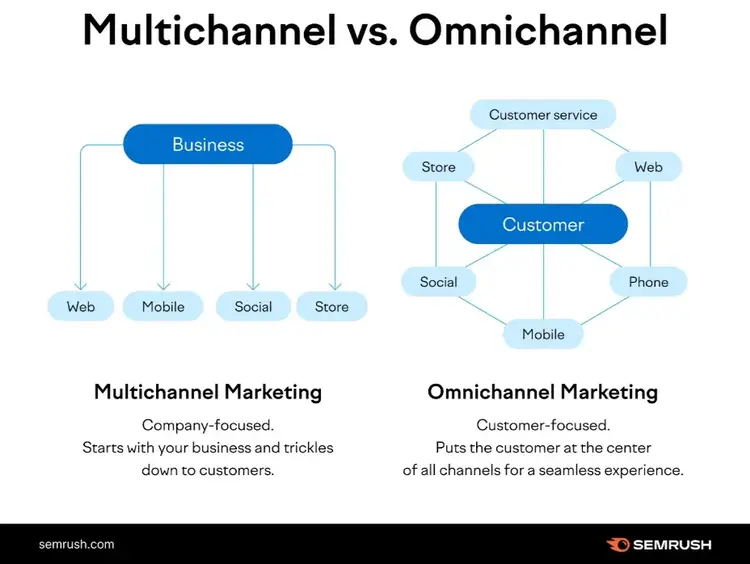
In other words, a multichannel approach spreads your brand across various platforms. The omnichannel way ensures those channels work together to offer a consistent and integrated customer experience.
Important: Recognize this distinction to help you curate more targeted and fluid customer journeys.
Use a multichannel strategy to engage with a greater number of customers. And an omnichannel approach to improve the quality of those interactions.
In this article, we’ll focus on multichannel marketing strategies that promote desired brand messages while increasing customer engagement.
What Are the Four Types of Marketing Channels?
By understanding the different types of channels available, you can tailor your approach for each. Here are the four main ones:
Paid Marketing Channels
Paid marketing channels involve spending money to promote your website or content. They include:
Pay-Per-Click (PPC) Advertising
PPC is a type of digital marketing where you pay each time a user clicks on one of your ads.
Here’s what a PPC ad looks like:
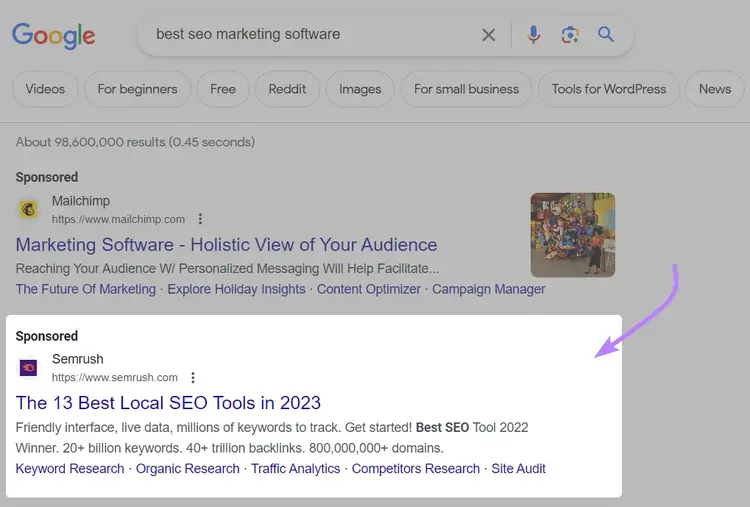
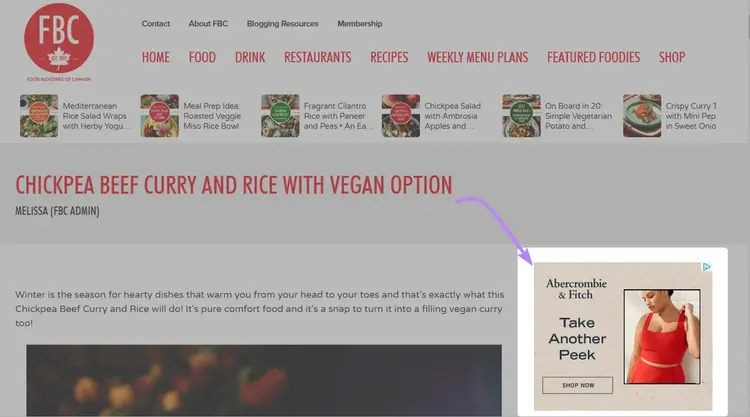
PPC campaigns also include display ads on social platforms like Facebook, mobile apps, and websites.
A business averages a $2 revenue for every $1 spent on Google Ads.
PPC ads work well because they allow you to target specific audiences. Based on factors like demographics, purchase history, and location.
Boosting your brand visibility to precise demographics or behaviors ensures your message resonates with those most likely to engage or convert.
Here’s how to get started:
- Choose a platform: Google Ads is popular, but consider Bing Ads or platforms like Facebook and Instagram, too
- Set a budget: Set your daily or monthly limits, considering cost per click (CPC)
- Pick your keywords: Use Semrush keyword research tools to identify what your target customers are searching for. Run Advertising Research reports to analyze your competitors’ efforts.
- Design your ad: Create compelling ads and copy to make ads stand out
- Monitor and adjust: Track how your ads perform using tools like Google Analytics. Not getting enough clicks? Tweak your keywords or ad design.
Uncover Your Competitors’ Search Ads
with the Advertising Research Tool
Partnership Marketing
Partnership marketing is a collaboration between two or more businesses or entities to promote and amplify each other’s products, services, or messages.
Types of collaborations include:
- Influencer partnerships: Individuals with a strong online presence act as brand ambassadors. Promoting a brand’s products or services to their audience.
- Affiliate marketing: Collaborators earn a commission for each sale or lead they generate through their unique referral link
- Co-branding: Two brands team up to create a product or service that showcases both their strengths
- Joint promotions: Brands collaborate on promotional efforts like contests or giveaways. To increase their reach and share marketing costs.
- Licensing: Brands allow other companies to use their intellectual property in exchange for royalties or fees
Here’s the thing:
Customers love getting recommendations from people they trust.
When you align with a trusted channel partner, you use its established reputation and audience trust to boost your own brand’s credibility and reach.
Our research shows that 30% of very successful marketers and 31% of successful marketers use influencer marketing to promote their content.
Let’s consider the clinical skincare brand La Roche Posay. It collaborates with dermatologists like Dr Mamina Turegano (@dr.mamina), who promotes skincare products based on her expertise.
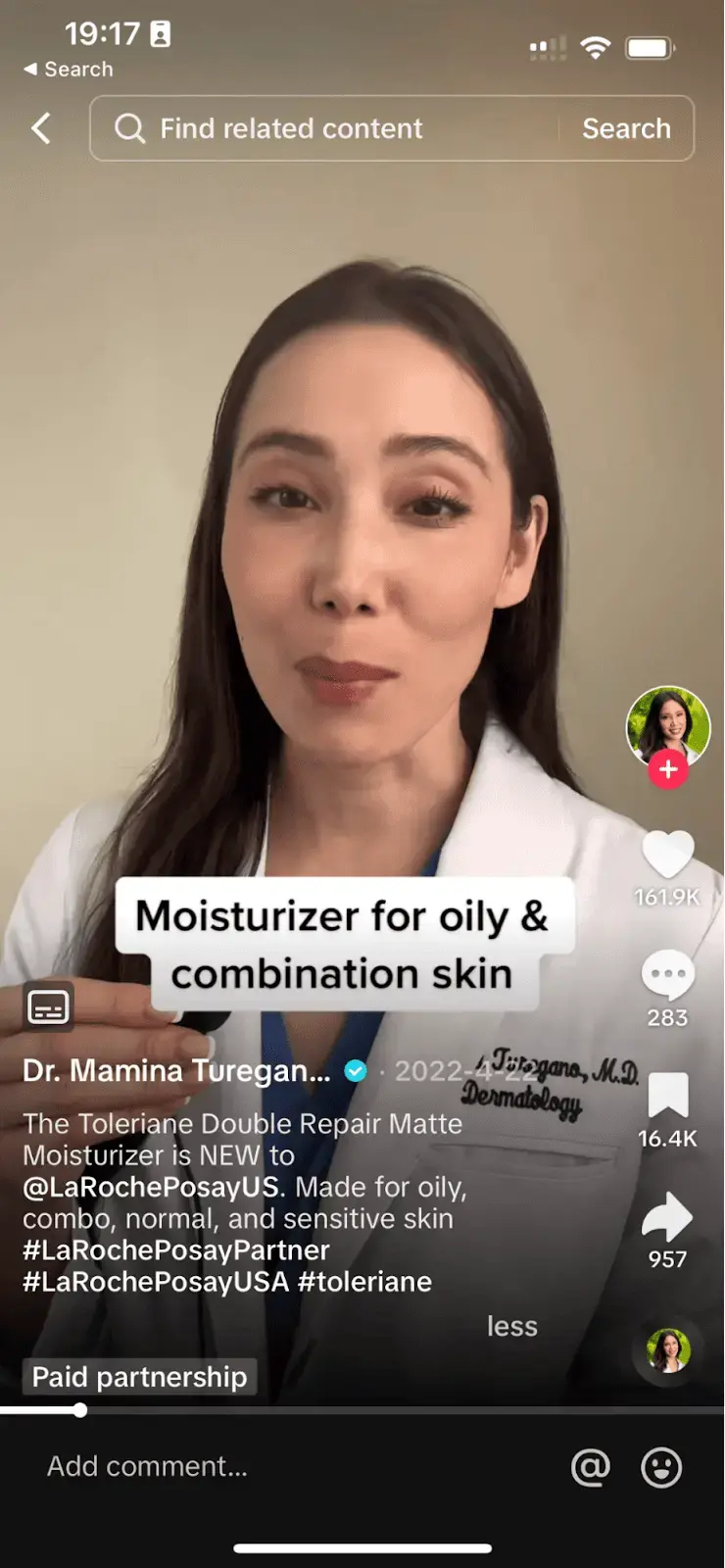
Influencers like Dr Mamina typically have a dedicated audience they’ve cultivated through genuine content and authentic engagement. Dr Mamina’s credentials also position her as a trustworthy source.
When these influencers vouch for a product or a brand, it comes across as a trusted recommendation rather than a blatant advertisement. Making the message more persuasive and impactful.
To create an influencer marketing campaign, you must know your target audience inside out. You also need to set a budget. And define what message you want to communicate.
But the key is to find the right influencers. Semrush’s Influencer Analytics platform can help with that.
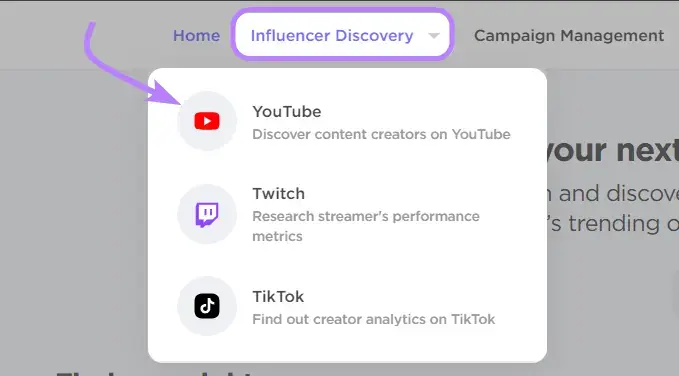
Suppose you want to find influencers on Instagram. Go to “Influencer Discovery” and select “YouTube.”
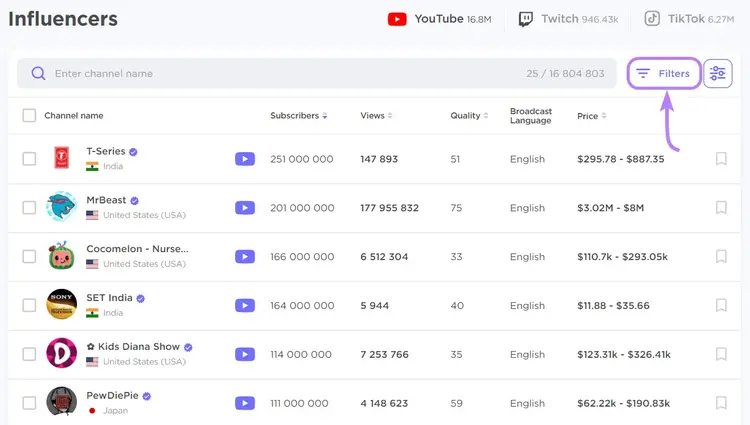
Click on “Filters” in the top right corner.
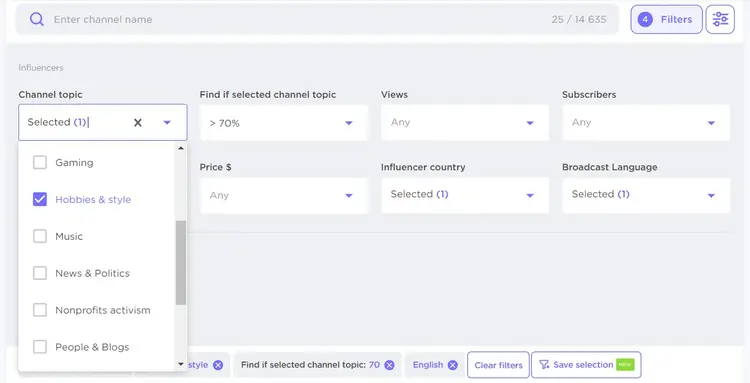
Then set your preferences for subscriber count, category, pricing, and engagement rate.
Depending on your search criteria, you’ll see a list of results.
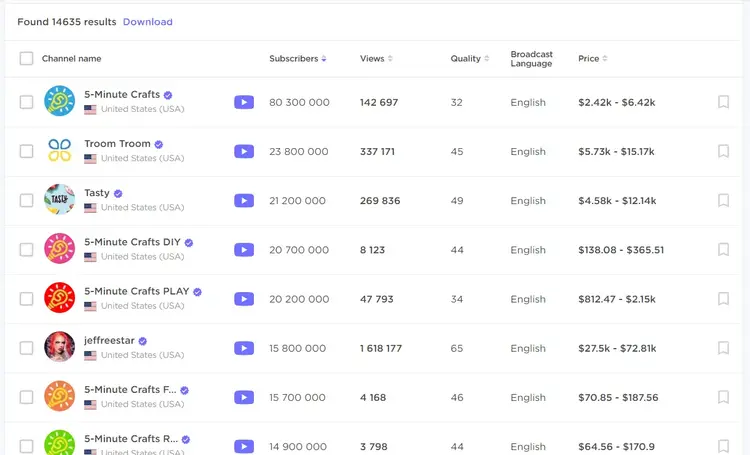
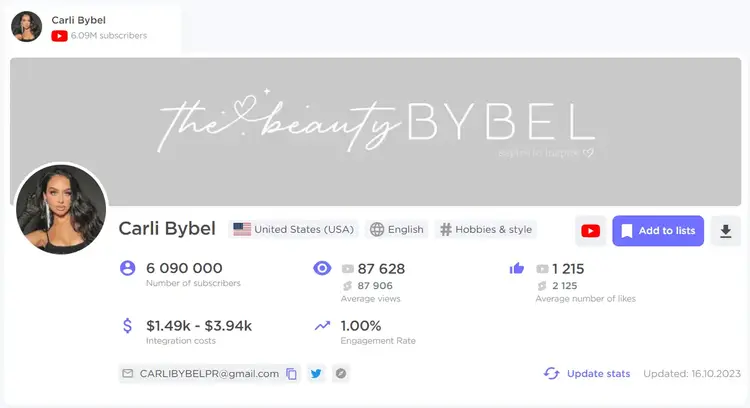
Each influencer’s profile contains additional data like contact information.
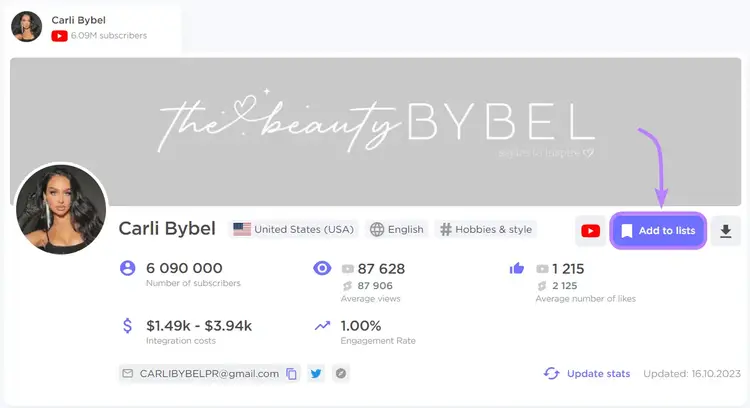
As you research influencers, save them to a list to review later.
Once you’ve found the right influencers, simply get in touch.
To get the most out of your influencer marketing campaign:
- Build genuine relationships: Aim for a long-term connection with the influencer to foster authenticity in your promotions
- Provide creative freedom: Allow influencers to present your brand in their unique voice. So the content resonates with their audience.
- Measure and adjust: Analyze the campaign’s performance regularly using Influencer Analytics’ reporting and analysis features. Tweak strategies based on what’s working and what’s not.
- Collaborate on content: Brainstorm with influencers on content ideas. Their insights can lead to engaging campaigns.
- Set clear expectations: Outline deliverables, timelines, and brand guidelines upfront to avoid misunderstandings
Further reading: Influencer Marketing: What Is It and How to Build a Solid Strategy
Free Marketing Channels
Free marketing channels are platforms where businesses can promote their products or services without incurring direct advertising costs. They include:
Organic Search
Organic search focuses on attracting website traffic by optimizing content for better visibility on search engines.
Your efforts to boost organic SEO (search engine optimization) may be low- or no-cost, but their impact can be huge.
Organic search allows brands to establish long-term digital authority while ensuring consistent and sustainable online visibility.
Plus, because it doesn’t rely on paid strategies, organic search can be a great way to boost your reach without incurring advertising costs.
SEO basics include:
- Keyword research: Identify and analyze the terms users enter into search engines. Then optimize your content around them.
- On-Page SEO: Optimize individual webpages for specific keywords to rank higher and drive more relevant search traffic
- Link building: Acquire quality backlinks from reputable external websites. The right links can help increase the authority and credibility of your site.
- Technical SEO: Address backend website aspects like page speed, indexing, and crawlability to improve search visibility
- Mobile SEO: Optimize your site’s design and functionality for mobile devices, enhancing user experience and search rankings
- User experience (UX): Ensure a website’s design, functionality, and structure provide visitors with a smooth, intuitive experience
2023 research from First Page Sage shows that ranking organically at the top of the SERPs in your niche generates a click-through rate (CTR) of 39.8%.
Compare it to the 2.1% CTR for paid ad position one.
What does that tell you?
The top organic results take up most of the real estate in search. Like this one for the keyword “Which sunscreen is best for dry skin,” where the top SERP listing appears before any ad:
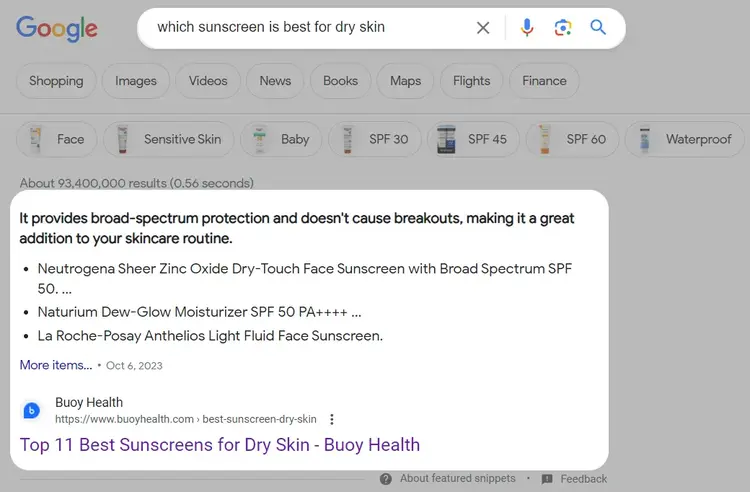
SEO done right can help you push your website up the SERPs. Semrush has a suite of SEO tools you can use to achieve that.
First off, run our free SEO audit to get instant insights into areas that need improvement.
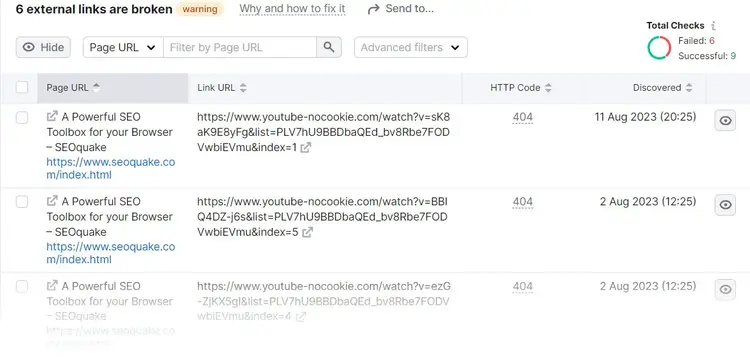
For deeper coverage, head over to Semrush Site Audit to find all the issues you can fix—like sitemaps, internal links, on-page SEO, crawlability—in one place.
Here’s how the tool displays these issues:
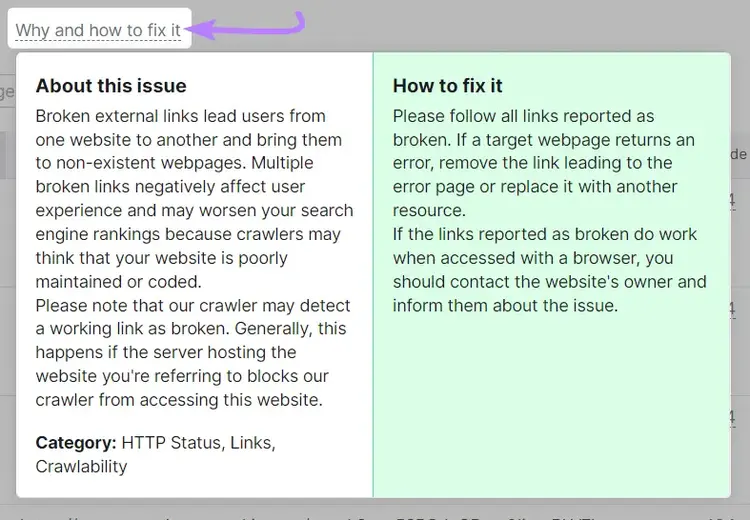
If you’re unsure how to solve things, click on “Why and how to fix it.” You’ll get an explanation and a short “how to” guide for each issue.
Optimizing your site and staying on top of any issues ensures a seamless UX. On top of potentially boosting your search engine rankings and organic traffic.
Further reading: How to Perform a Complete SEO Audit (in 14 Steps)
Social Media Marketing
Social media marketing entails engaging with a wider audience by promoting products, services, or brands through social media platforms. Think Facebook, Instagram, and TikTok.
You can sign up and post to these platforms for free.
People spend around 2.5 hours every day on social media. A strong social presence can connect you directly to your audience and build brand loyalty.
Take Revlon as an example.
It uses social media advertising on platforms like Instagram to promote its latest products. The “Shop Now” CTA button below further encourages action.

The brand also creates free content that its target customers can find organically.
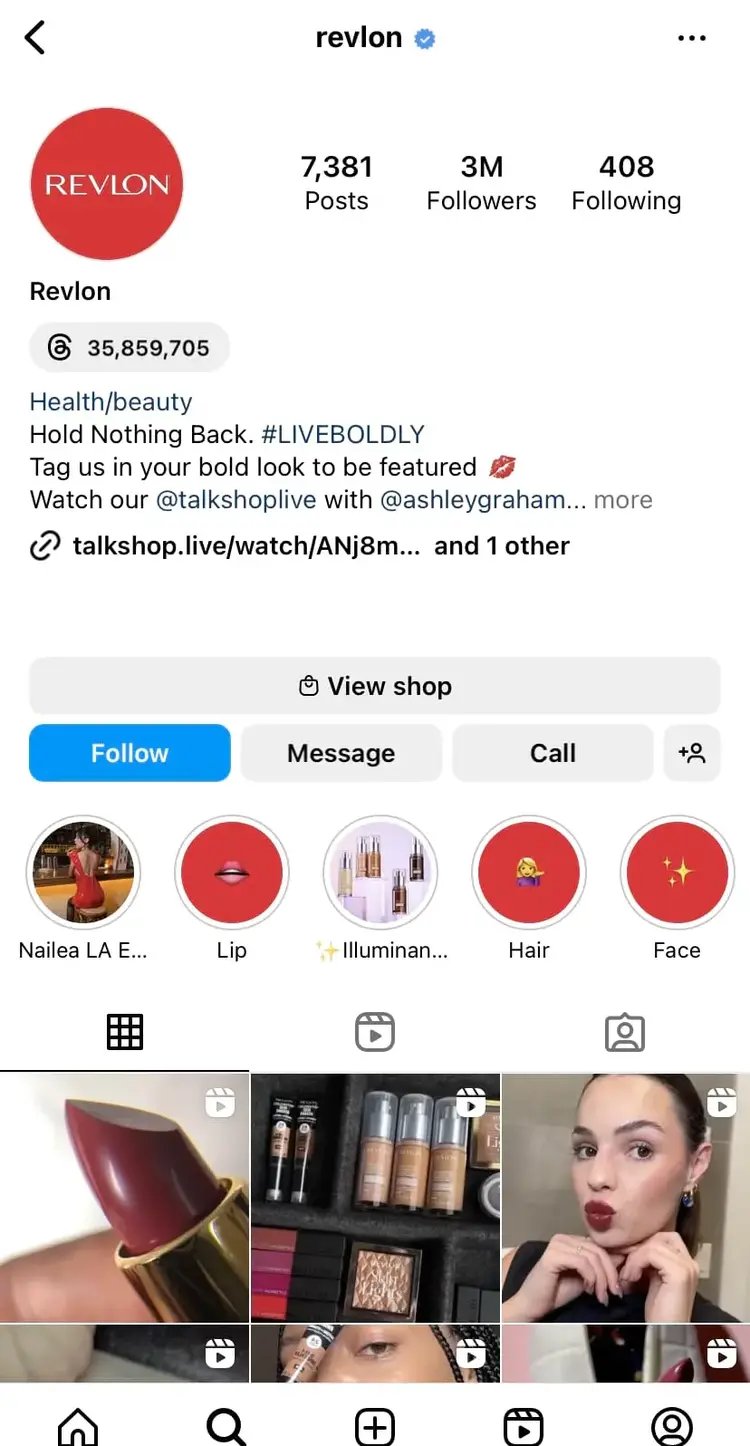
So how did Revlon attract its three million followers?
The brand engages with its audience.
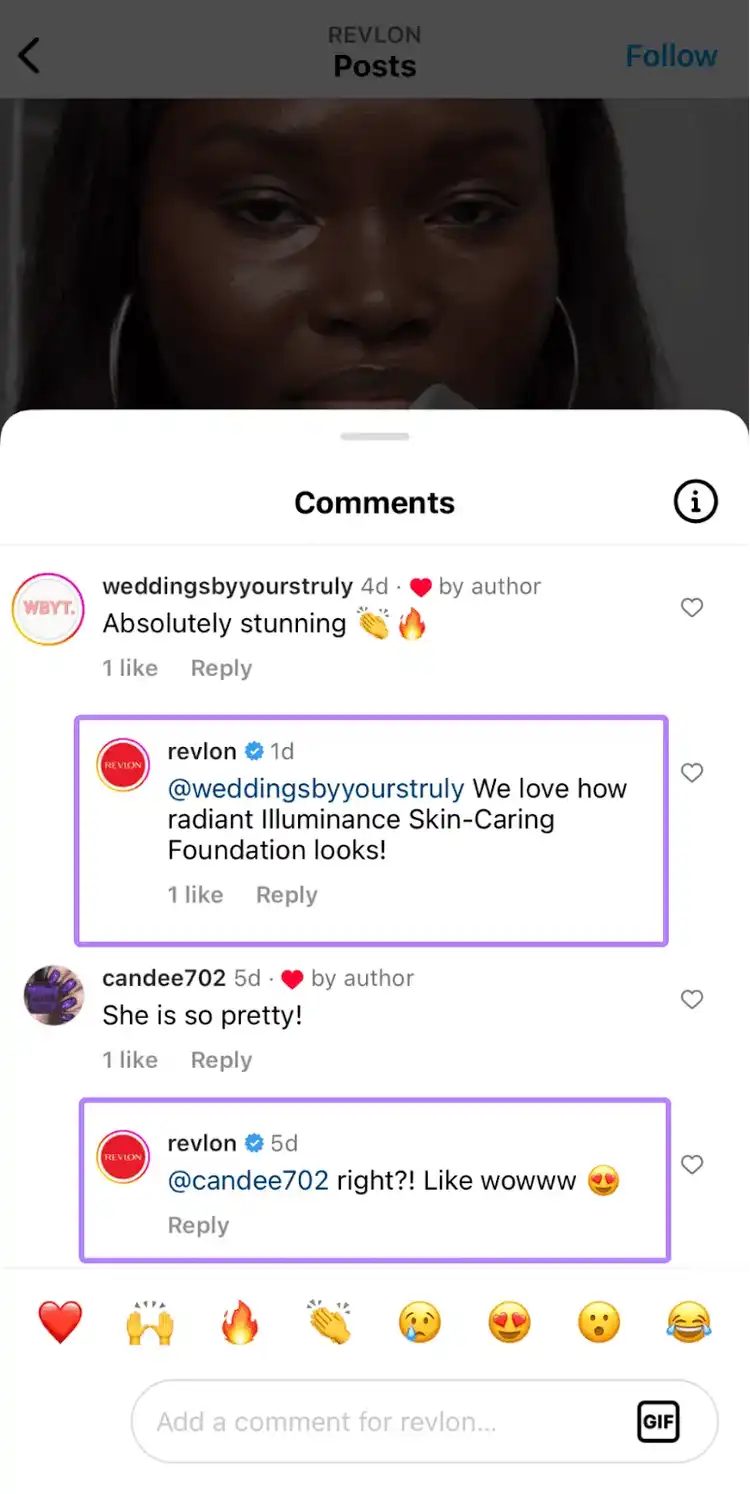
It replies to comments, hosts Q&A sessions, and creates interactive polls. All of which fosters a sense of community.
Revlon also collaborates with influencers to create user-generated content (UGC).

When people see products in action and content creators they trust advocating their use, this builds social proof.
Diversifying content formats also helps cater to different audience preferences. For example, Revlon uses videos, stories, posts, and live sessions.
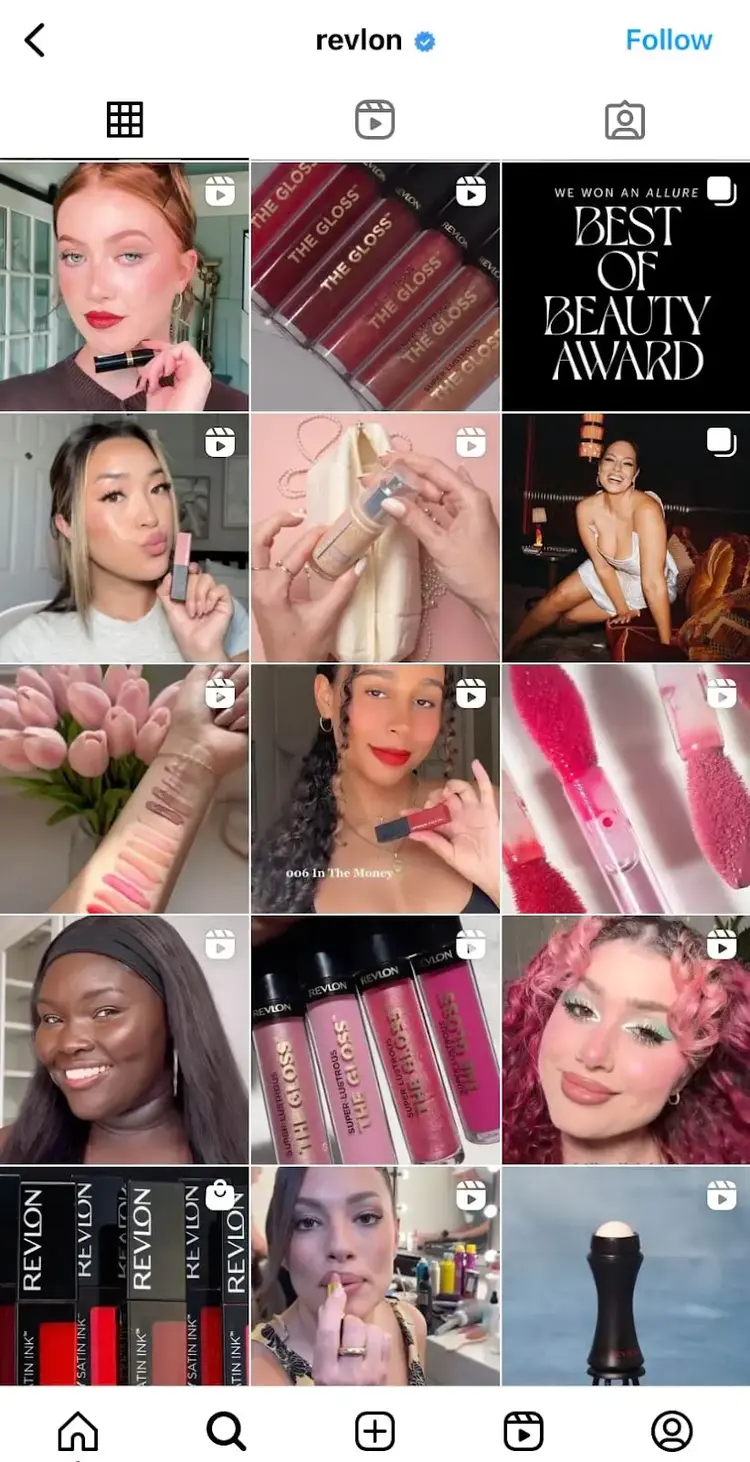
Aim to create engaging content to build genuine relationships with your audience. This is how you can position your brand as a trusted leader in your industry.
Digital Marketing Channels
Digital marketing channels are online platforms and methods that promote products, services, and brands to a targeted audience. They include:
Content Marketing
Content marketing is the creation and distribution of valuable, relevant content to attract and engage your target audience. Content types include:
- Blog posts
- Infographics
- Videos
- Podcasts
- Ebooks
- Webinars
- Case studies
Almost three-quarters of content marketers who regard their efforts as successful have a documented strategy. As do 80% who consider themselves very successful.
At Semrush, we have a comprehensive content marketing strategy in place.
For instance, blogs provide our target audience with actionable insights and latest industry trends.
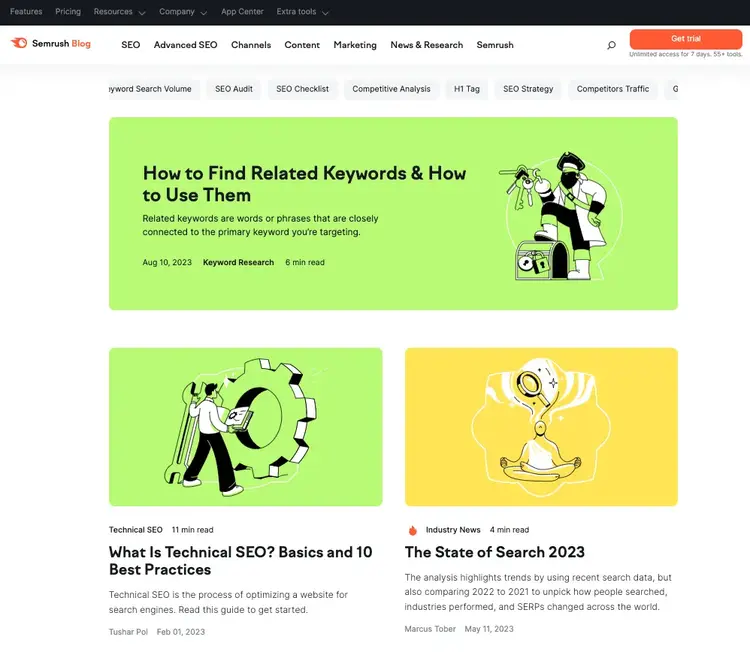
We also feature webinars that dive deep into digital marketing topics. While offering our audience hands-on tutorials and expert insights.
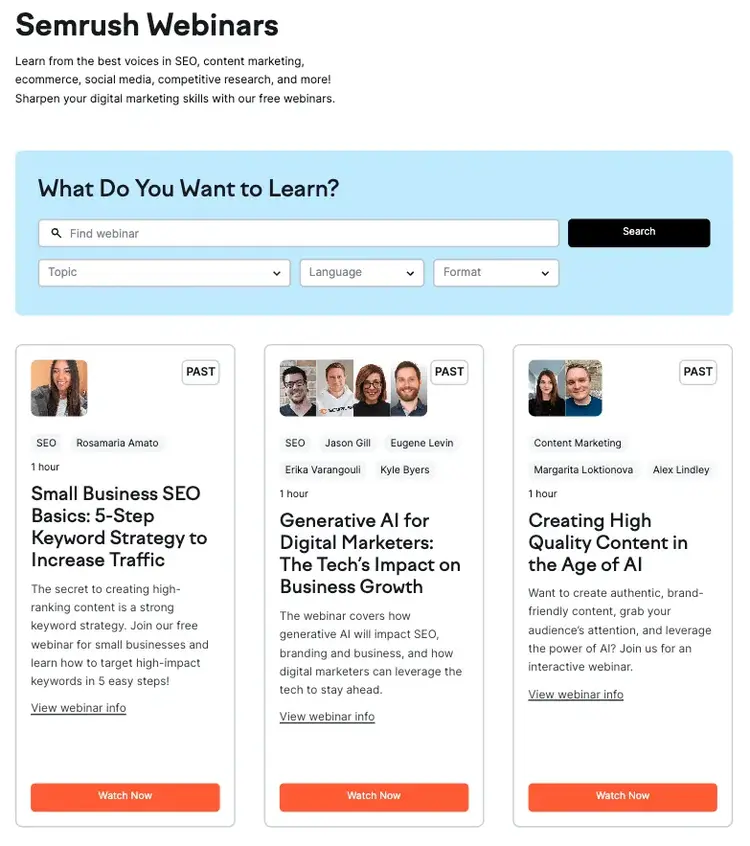
Our content marketing strategy establishes trust and positions our brand as an industry authority. By offering useful information, we continue to drive organic traffic and nurture leads.
Content marketing is a must-have channel for business owners. Here are some best practices to focus on:
- Understand what your target audience needs and values. Interact with potential customers to discover why they’re searching for something. Then go ahead and create content that meets their goals.
- Use data and buyer personas to get ahead. A well-planned and evidence-based content marketing strategy can boost organic traffic.
- Share real-life experiences to position your content as valuable and original. Provide original expertise, use creative storytelling, and draw from subject matter experts in your community.
- Be smart with your marketing budget. Find out which channels and content formats drive the most results. Double down on them to maximize your impact.
- Optimize your content for search. SEO and content go hand in hand. Producing quality content that meets search intent can make it easier for search engines to discover and rank higher.
- Update your content to keep it relevant. Refresh outdated material in line with latest trends and best practices to get the most out of your content assets.
Email Marketing
Email marketing involves sending targeted messages to people via email. Businesses use it to promote products, share news, or build relationships with their subscribers.
According to research from Databox, around 45% of marketers send weekly emails.
So why is email so popular?
It’s widely accessible, with billions of mobile users able to check messages on the go.
Email is also cost-effective and user-friendly. Automation tools make for a seamless campaign process. So your business can reach audiences efficiently without any manual intervention.
This blend of reach, affordability, and convenience positions email as a top choice for marketers.
Of course, email marketing will only work if you have a healthy email list. But how do you create one?
HubSpot, for instance, provides informational resources like this one to convince visitors to subscribe:

The above template and similar content act as lead magnets. Encouraging potential customers to provide their email address in exchange for valuable content.
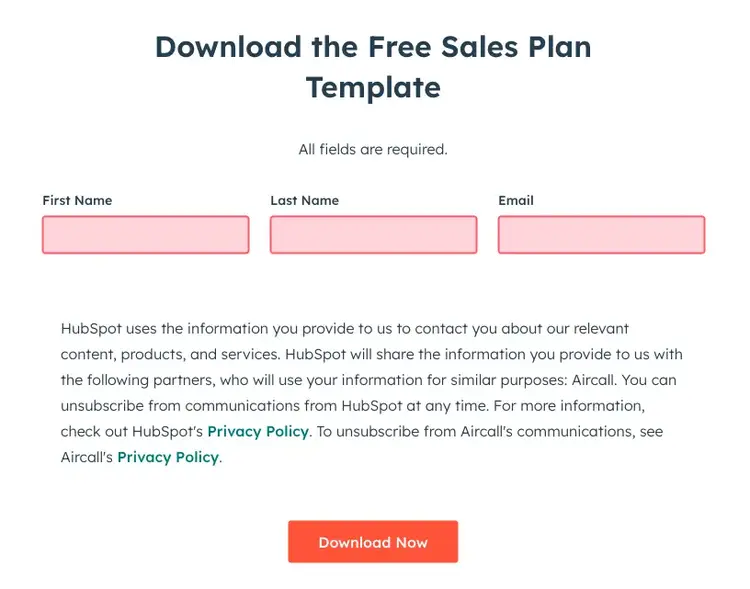
Notice how the form is straightforward and doesn’t ask for too much.
A simple form is more likely to reduce bounce rates and result in signups. Because it doesn’t overwhelm users with too many fields to fill out.
Here’s how you can improve your email marketing practices for increased conversion potential:
- Segment your audience to deliver tailored messages based on preferences or behavior
- Personalize your emails to resonate better with individual recipients, making them feel valued and understood
- Optimize for mobile devices, ensuring emails look great and function perfectly wherever people view them
- Test different subject lines and email formats to discover what engages your audience and drives higher open rates
- Create interactive content like polls or surveys to gather insights about your subscribers
Use all the information at your disposal while keeping things simple for potential customers. A data-driven approach, combined with a user-first mindset, will help you create an email campaign that resonates with your audience.
Traditional Marketing Channels
Traditional marketing existed before the age of the internet. It is great for reaching local audiences, older demographics, or broad regions effectively.
A brand often uses traditional marketing channels because they are tangible, credible, and can have a lasting impact on the target audience. These include:
- Print advertising: Promotional messages and visuals in printed media like newspapers, magazines, brochures, and billboards
- Television commercials: Short, impactful commercials during TV programs or commercials
- Radio broadcasting: Audio promotions during program breaks to reach audiences during commutes, work, or leisure listening
- Direct mail: Physical promotional materials like postcards or catalogs. These reach potential customers’ mailboxes directly.
- Billboards and outdoor advertising: Large-scale visual promotions in high-traffic areas that draw pedestrians’ and drivers’ attention
Here’s what an ad for project management platform monday.com looks like on a subway:
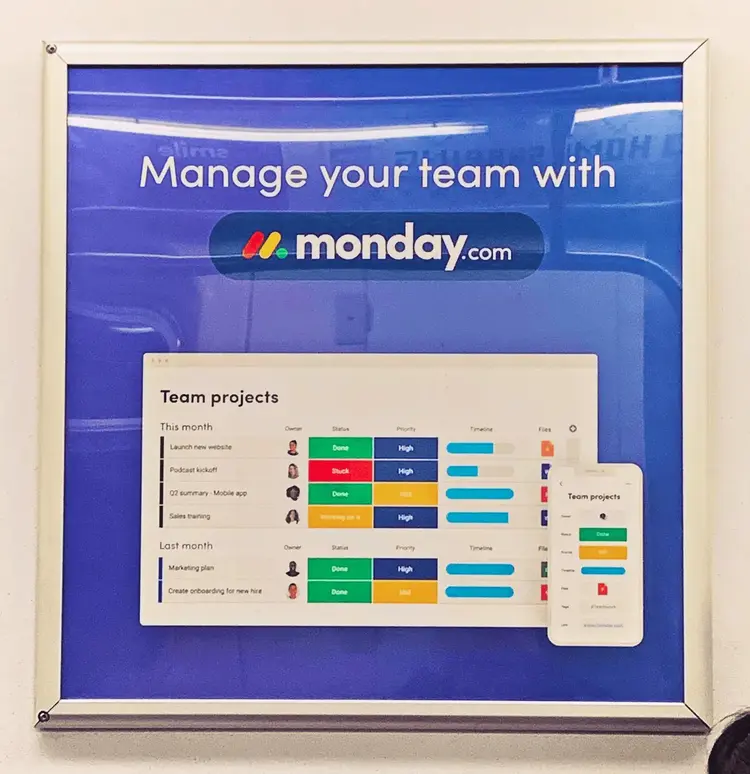
Image Source: Medium
When going down the traditional marketing route, focus on a clear message and use high-quality visuals.
Finally, you can also bridge the gap between traditional and digital. Use QR codes or unique URLs on print ads to direct readers to your online platforms.
For example, many restaurants that switched to QR code menus at the start of the COVID-19 pandemic have retained the practice.
It’s an effective way to potentially raise your conversion rate with a quick scan.
How to Create a Marketing Channel Strategy in 6 Steps
Crafting a multichannel approach requires more than your presence on various platforms.
To really succeed, you need to understand your audience, plan strategically, and monitor your marketing efforts consistently.
Ready to diversify your marketing efforts?
Here’s a step-by-step guide to creating an effective channel strategy.
1. Define Your Target Audience
A target audience is a specific group of people having similar demographics, behaviors, or interests. You can target these individuals with the same products, services, or marketing campaigns.
There are various factors that determine your business’s target audience. Including age, gender, income, and lifestyle.
Your marketing efforts could be more efficient if you understand your target audience first. So you know who you need to cater to.
To find out who makes up your target audience, conduct surveys and interviews. And track social media analytics.
Your audience will also often overlap with your competitors’, so it’s helpful to research their customer base.
Semrush’s One2Target tool gives you demographic, socioeconomic, and psychographic data about your competitors’ target audience.
Suppose a clothing brand you own or market competes with Zara and Banana Republic.
Open the tool, enter their domains, and click “Analyze.”
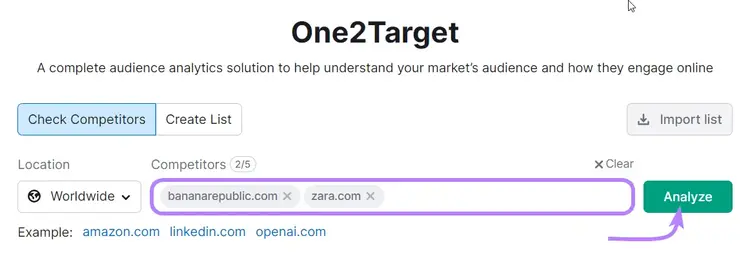
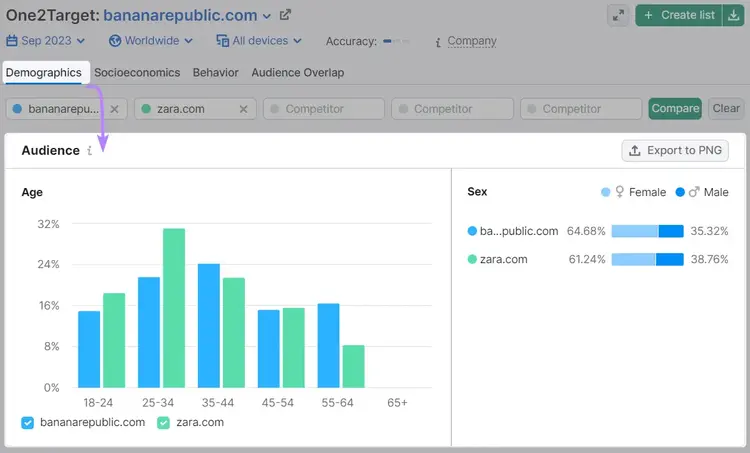
The “Demographics” tab breaks down their audiences by age, sex, and country.
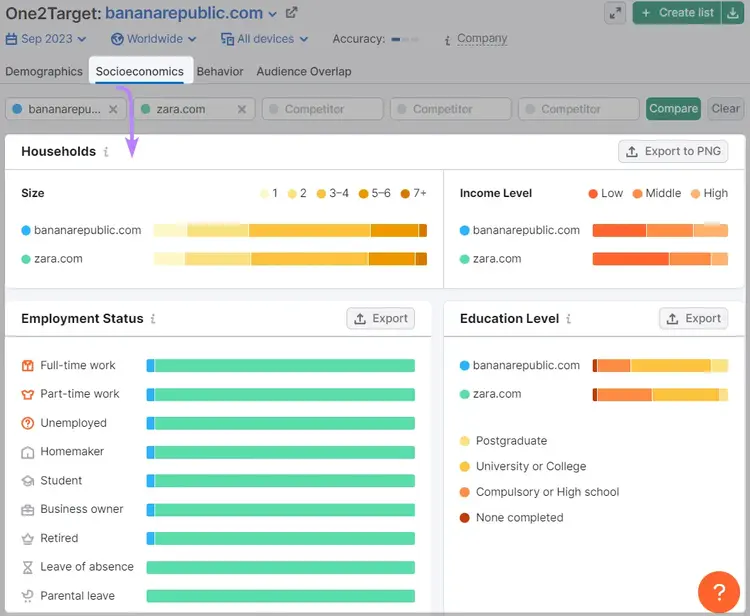
“Socioeconomics” gives you these audiences’ household size, household income, employment status, and education level.
The “Behavior” tab shows their interests, device types, and most used social media platforms.
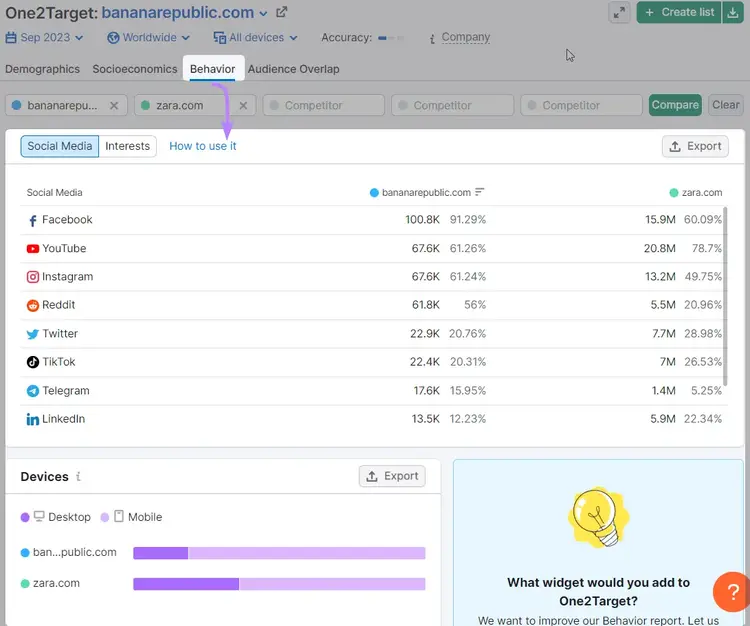
Identify your target audience through this data-driven approach to ensure you focus your marketing efforts on the right people.
2. Set Your Budget
Setting a budget involves allocating your financial resources across various marketing channels.
Make sure you establish a clear budget for each of your marketing efforts so you don’t overspend.
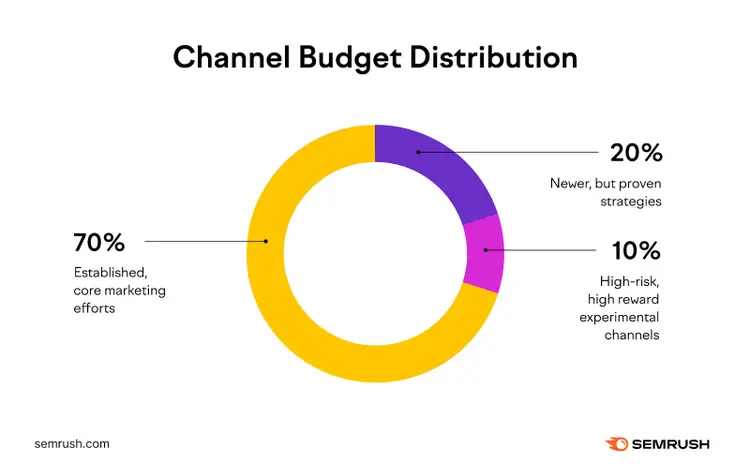
Consider the 70-20-10 distribution when pricing your marketing initiatives:
- 70% toward established, core marketing efforts (often organic channels like search) known to yield steady, sustainable results
- 20% for strategies that fall between core and experimental tactics, like scaling up newer but proven strategies
- 10% reserved for high-risk, high-reward experimental channels that can generate rapid results but might be less sustainable in the long run. Like paid advertising.
Fast growth from paid channels is tempting but often short-lived.
On the other hand, owned organic channels—like your website and Facebook page—or earned organic channels—like product reviews and news articles—might require patience. But they promise longer-lasting, stable growth for your business.
3. Identify Key Metrics
Key metrics are measurable outcomes that best evaluate the effectiveness and performance of your marketing efforts.
Define your metrics to provide a clear view of what success looks like for you. And make sure they are relevant to and align with your business goals.
This will help you gauge the effectiveness of your campaigns and refine strategies over time.
Some metrics to measure your marketing performance include:
- Cost per lead (CPL): the price you—the advertiser—pay for each generated lead
- Conversion rate, indicating how many users take a desired action
- Overall lead quality to see whether the leads you’re generating are valuable
- Reach, meaning how many potential customers viewed your campaign
- Impressions, or how many times your content is displayed
- Engagement rate: how many interactions your content receives
- Customer retention, or how many customers keep coming back
- Lifetime value: the estimated total revenue a customer will generate
Here’s an example:
You create a social media campaign to increase your store’s follower count. Initially you could focus on reach, impressions, and engagement rate.
Many new followers are likely quality leads. Try and attract them to your location with store-only deals. Those leads will hopefully become customers you retain for life.
Once you understand these metrics, you’ll get a comprehensive view of marketing performance to guide your long-term growth.
4. Choose the Right Channels
Choosing the right marketing channels means being present where your target audience spends its time. So your efforts are more likely to result in conversions.
To pinpoint the optimal channels, focus on these factors:
- Audience research: Understand where your audience hangs out on specific social platforms, industry blogs, or forums. One way to figure this out: identify and leverage channels where customers engage the most with your store.
- Nature of business: Business to business (B2B) companies might succeed more on LinkedIn, while business to consumer (B2C) businesses could thrive on Instagram. Direct to consumer (D2C) brands may leverage both traditional and digital channels.
- Budget constraints: Some channels like TV or direct mail will require more investment than others, so allocate your costs wisely
- Message type: Visual products including food or clothing may excel on visual platforms like Instagram or Pinterest. Thought leadership might resonate more on blogs or LinkedIn.
Aligning channels with audience behavior and your business goals can lead to better engagement and conversion. There’s some trial and error involved, but it’s worth the effort.
5. Combine and Integrate Channels
When channels complement each other instead of operating in silos, that amplifies the overall marketing strategy.
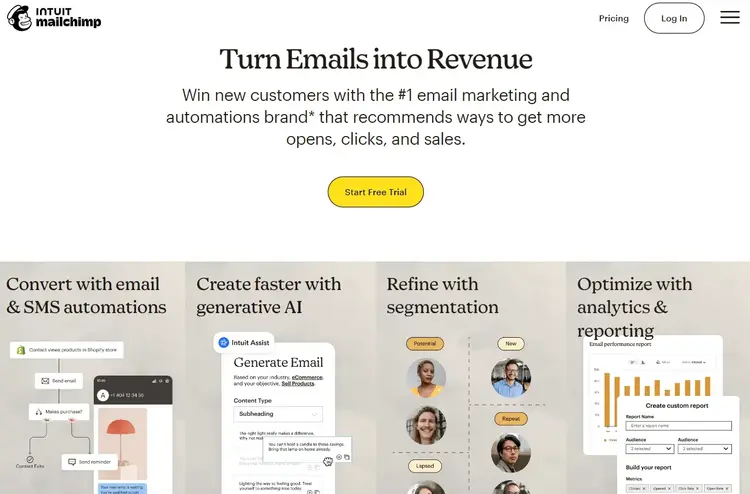
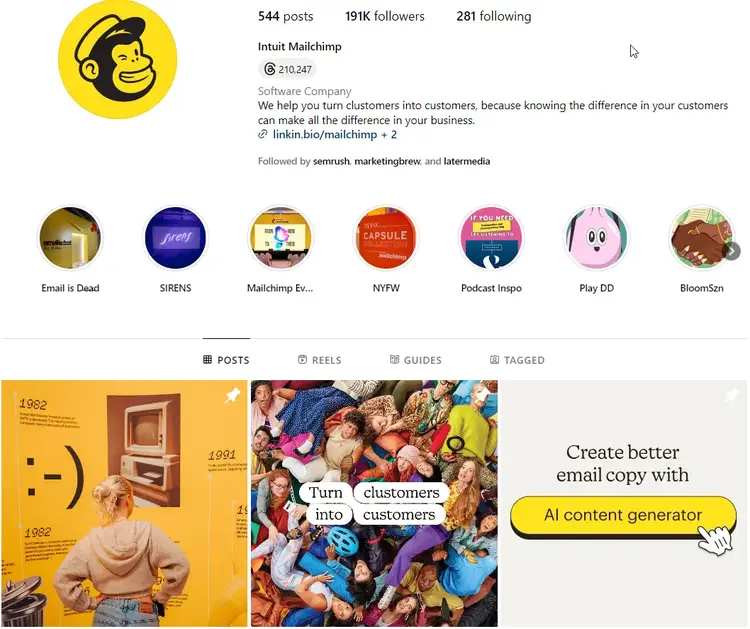
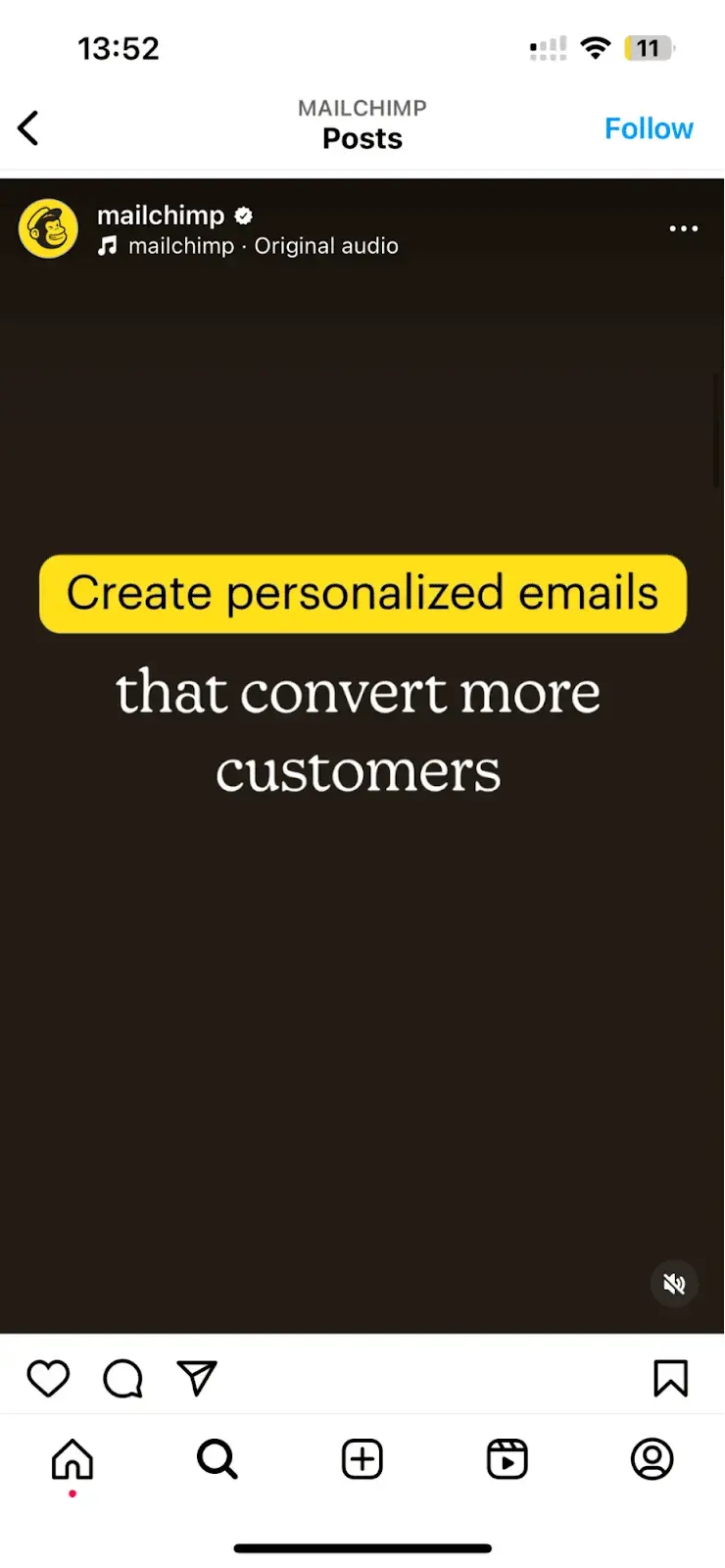
Take Mailchimp. It uses the same colors, fonts, and tone of voice (ToV) across multiple channels. Here are its website and Instagram profile:
Below are some key tips to help you create a similarly well-integrated marketing channel strategy:
- Cross-promotion: Share your latest blog post on social media. Or reference a YouTube video in your email newsletter.
- Retargeting: Use digital ads to target website visitors. Remind them of products they viewed, or encourage them to complete a purchase.
- Unified messaging: Ensure the brand voice, style, and messaging remain consistent across every touchpoint
- Data sharing: Apply insights from one channel (like email open rates) to inform strategies in another (like social media content themes)
An integrated marketing strategy lets you build a more seamless and personalized user experience. That way, you can make the most of each customer interaction.
6. Measure and Optimize
This practice involves monitoring your marketing campaigns’ performance. And making the necessary adjustments to improve results.
So you can expect the highest return on investment (ROI) while identifying areas that need fine-tuning.
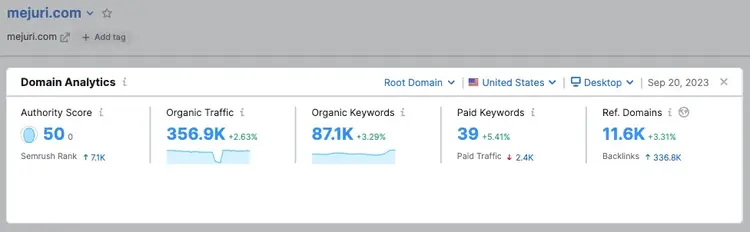
Open Semrush’s SEO Dashboard for a general overview with quick insights into your website’s performance.
The tool highlights metrics like authority score, paid keywords, plus organic traffic and keywords.
You also get detailed “Traffic Analytics.”
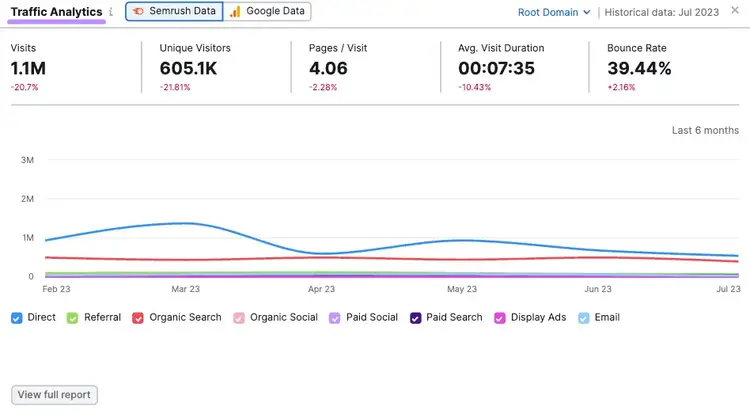
The data emphasizes fluctuations and trends over time. You also find out which marketing channels send the most visitors, so you can shift gears if needed.
This way, you identify which marketing efforts are working, discern seasonal variations or industry trends, and react quickly to unexpected dips or surges.
Streamline Your Marketing Efforts with Semrush
Your chances of converting potential customers increase when you diversify your marketing strategies across multiple channels.
That’s where a comprehensive SEO toolkit like Semrush enters the picture to support your efforts across the board.
The result? Cohesive and efficient marketing campaigns that sell every time.
Let Semrush’s all-in-one suite help you craft the right marketing channel strategy for your business needs.
Access Everything You Need
in One Platform with Semrush

The Semrush Team brings together AI visibility experts, SEO specialists, data analysts, and product practitioners to help businesses grow and manage their online visibility. We publish research, experiments, and practical guidance grounded in real data from the Semrush platform, covering search, content marketing, and the broader digital marketing landscape.

Tells Google to show you more from Semrush in AI, Search, and Discover.