On-page SEO and off-page SEO both involve taking steps to increase your visibility in search results.
But they’re quite different.
Let’s go over the distinctions and how you can use both.
What’s the Difference Between On-Page SEO and Off-Page SEO?
On-page SEO refers to things you can do on a webpage to improve its search engine rankings. While off-page SEO refers to things you can do outside your website to improve its search engine rankings.
Generally, on-page SEO makes your content better for users and search engines.
It may involve:
Writing unique titles for your pages
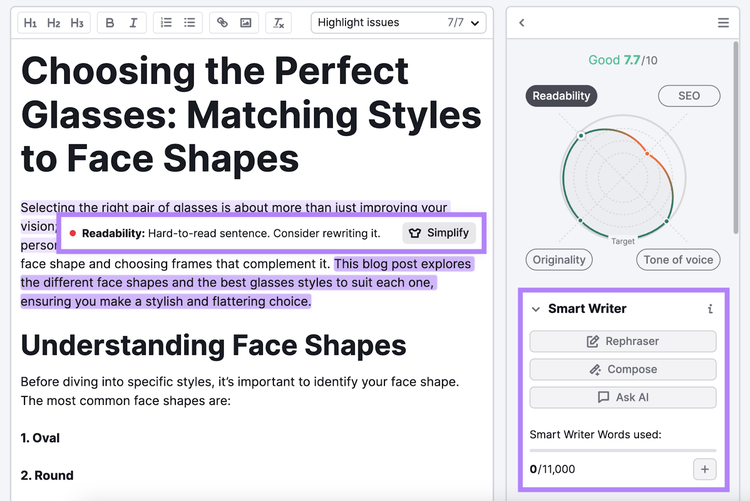
Adding links between pages on your site
Optimizing images on your site
Off-page SEO is mainly about improving your website’s reputation.
It may involve:
Getting other websites to link to your site
Promoting your brand on social media
Managing your reviews on external platforms
Why Are On-Page SEO and Off-Page SEO Important?
On- and off-page SEO help you get more organic (unpaid) visibility in relevant search engine results pages (SERPs). To attract more high-quality traffic to your website/location.
Google considers both on-page and off-page factors when ranking search results.
So, you typically need to balance on-page and off-page SEO if you want to rank prominently.
When Should You Use On-Page SEO vs. Off-Page SEO?
Generally, you should focus on on-page SEO before off-page SEO.
Why?
Because on-page SEO helps Google understand your pages. And ensures users have a great experience on your website.
So, it’s foundational to your success.
Plus, you have control over your on-page SEO efforts. Since it involves making direct changes to your website.
Off-page SEO is less straightforward. And it can be harder to get results because you’re often relying on other people to endorse your website.
But all else being equal, Google will likely rank the website with the better reputation over one with a worse reputation. So, off-page SEO may be necessary for gaining (and maintaining) a competitive edge.
On-Page SEO Factors
Let’s explore things on your website that can affect its organic search rankings.
Here are some of the most important on-page SEO factors:
Title Tags
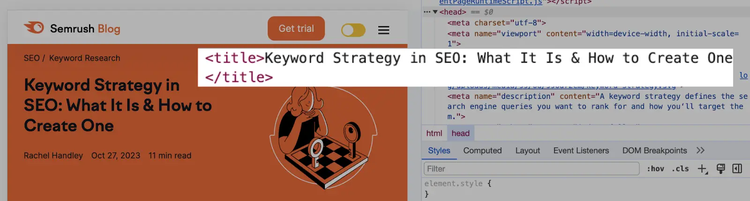
A title tag is a piece of HTML code that’s used to specify a webpage’s title. It tells search engines what the page is about to help them understand what kinds of queries it should rank for.
Here’s an example of a title tag:
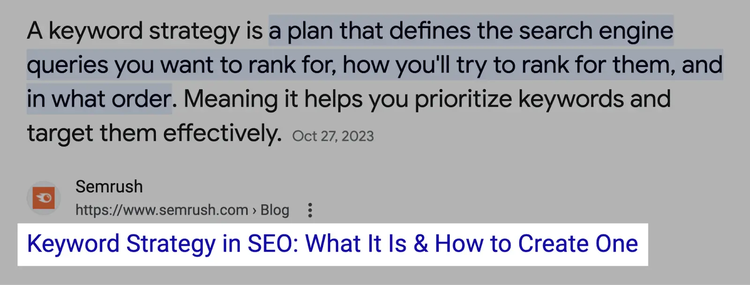
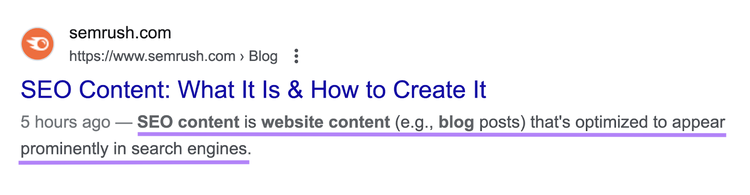
While they don’t have to, search engines may display your title in the SERP.
Like so:
This means that your title tag is an on-page SEO factor that can influence your organic search rankings and clicks.
Here are some best practices to follow when writing title tags:
Make sure your title tag accurately describes what the page is about
Keep your title tag between 50 and 60 characters to make the most of the space that’s typically available in the SERP
Include your primary keyword near the front to emphasize its importance
Avoid keyword stuffing (i.e., unnaturally forcing in keywords), which can harm your rankings
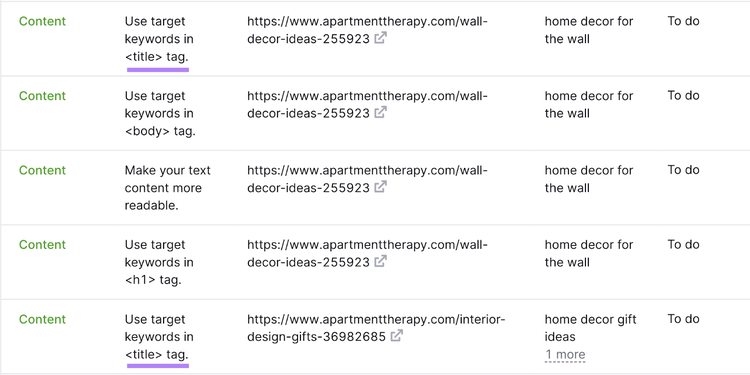
Check the quality of your title tags with Semrush’s On Page SEO Tool.
The tool lets you know if any title tags:
Are missing or duplicated
Don’t contain the target keyword(s) for the page
Demonstrate keyword stuffing
Don’t match the title that Google displays in SERPs (this may suggest that your title is too long or poorly written)
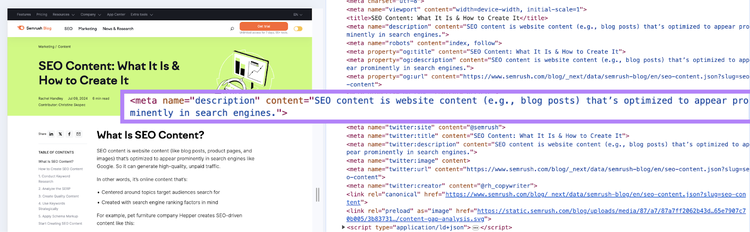
A meta description is a piece of HTML code that’s used to specify a webpage’s summary.
Like this:
This description can appear in the SERP. Like so:
Meta descriptions don’t directly influence your page’s rankings. But they can affect how many people click your results.
So, make sure these summaries appeal to your target audience and compel them to click. And keep them to around 105 characters to reduce the risk of your text being truncated.
Tip
Use the On Page SEO Tool to see if your meta description matches the summary Google displays in the SERP. If not, this might suggest your description isn’t optimized.
URL Slugs
A URL slug is the unique part of a webpage address. And should help search engines and users understand what the page is about.
For example, the URL slug for this post is on-page-vs-off-page-seo.
Customize your URL slugs so that they’re descriptive yet concise. Making sure to separate words using hyphens—not underscores or other characters.
In many cases, it’s a good idea to use the page’s primary keyword as the URL slug.
Tip
Organizing your content into well-named subfolders will also make your URLs more search-friendly. For advice on doing this, read our guide on website architecture.
Heading Tags
Heading tags are important in on-page SEO because they help search engines (and users) understand the structure and content of your pages.
Every page should have one H1 tag that includes the main title. (And this title should match or nearly match your title tag.)
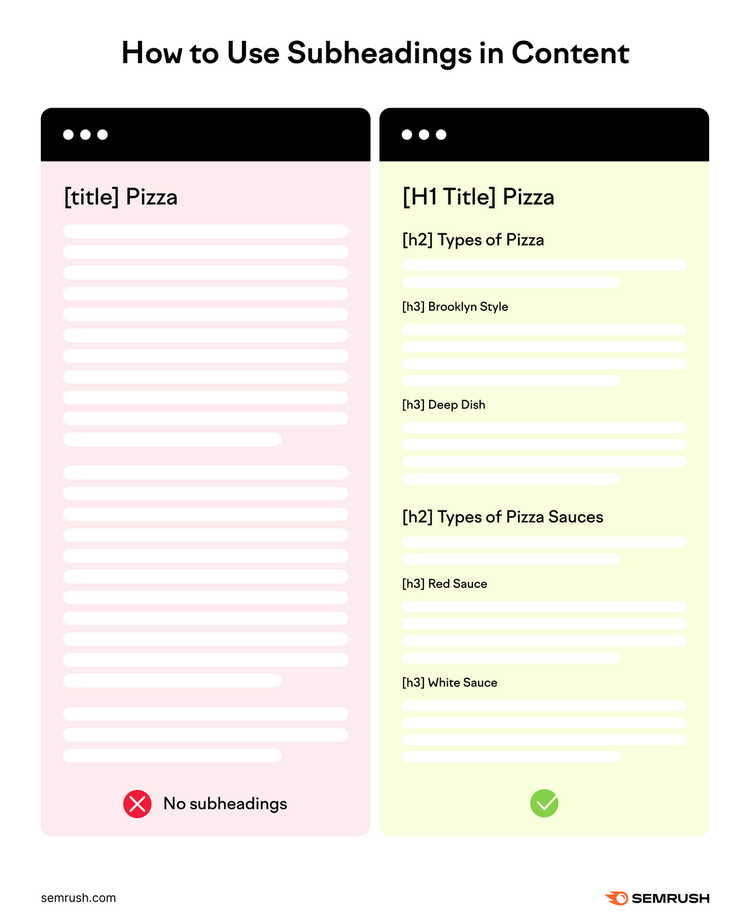
You can use subheadings (H2, H3, etc.) to split the rest of your content into sections.
They should work in a hierarchical structure. Like this:
Make sure all your headings accurately describe the content beneath them. To help users to scan and navigate your page.
Content Quality
To perform well in search, you should focus on creating original, accurate, and helpful content. And a big part of doing that is making sure to address search intent—the underlying reason or goal behind a user's search query.
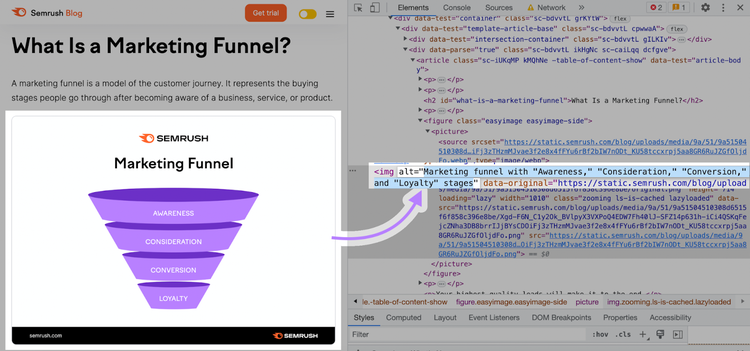
Alt text is an image description that’s stored in the webpage’s code. To allow search engines and people using screen readers to understand what the image depicts.
Like this:
Keep alt text short but informative. And consider incorporating keywords, where natural.
Internal Links
Internal links are hyperlinks that point to other pages on your website.
They’re important in on-page SEO because they help search engines (and users) discover all your content. And understand how it fits together.
For example, this post links to:
“https://www.semrush.com/blog/on-page-seo/” with the anchor text “on-page SEO”
“https://www.semrush.com/blog/off-page-seo/” with the anchor text “off-page SEO”
This helps Google understand that:
“https://www.semrush.com/blog/on-page-seo/” is the most relevant result on the site for someone interested in on-page SEO
“https://www.semrush.com/blog/off-page-seo/” is the most relevant result on the site for someone interested in off-page SEO
“https://www.semrush.com/blog/on-page-seo-vs-off-page-seo/” is the most relevant result on the site for someone interested in both on-page SEO and off-page SEO
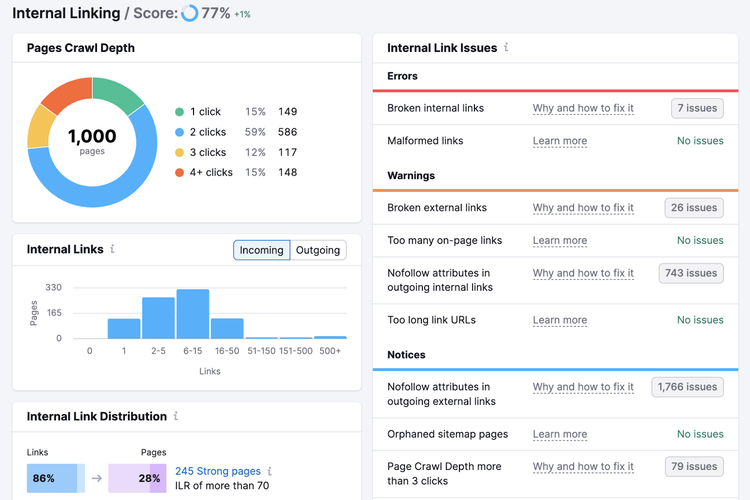
You can review and optimize your internal links with the help of Semrush SEO checker tool.
It reveals pages that aren’t linked to at all. As well as those that have too few incoming links.
Page Experience
Page experience refers to a user’s overall experience of interacting with your webpages.
Users want webpages that are fast, secure, and easy to navigate. So, these are the kinds of pages that search engines want to rank.
Page experience is often considered a technical SEO tactic (rather than an on-page SEO tactic). Because many issues are resolved at a sitewide level.
But it’s still a good idea to make sure your individual pages deliver a great experience to users.
Get a quick read with our free SEO checker—it flags slow load speeds and other page experience issues fast.
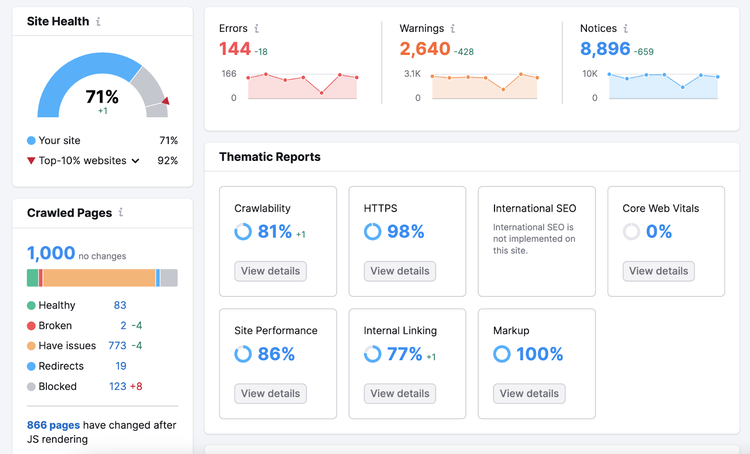
For deeper coverage, Semrush Site Audit performs over 140 on-page and technical SEO checks to flag issues with:
Slow load speeds
Broken images, links, and pages
Non-secure pages
And much more.
Off-Page SEO Factors
Now, let’s explore things outside your website that can affect its organic search rankings.
Here are some of the most important off-page SEO factors:
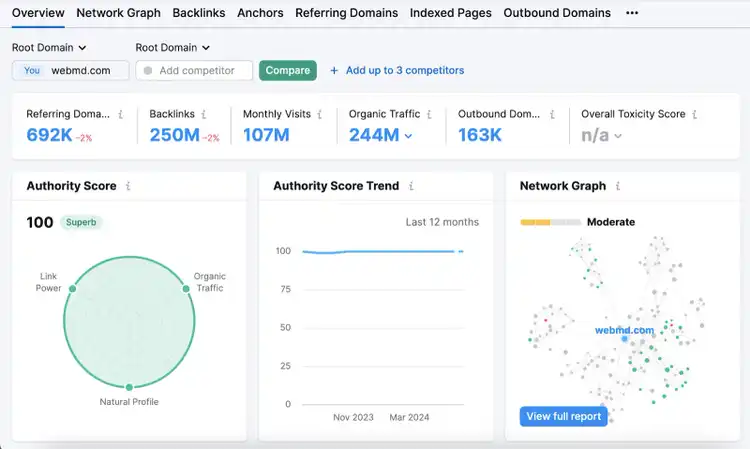
Backlinks
SEO backlinks are links to your website from other websites.
They can help Google find and understand your content (much like internal links). But more importantly, they may be treated like endorsements.
Basically, the higher the quality and quantity of backlinks you have, the more authoritative your website/webpage is perceived to be. And the higher it might rank.
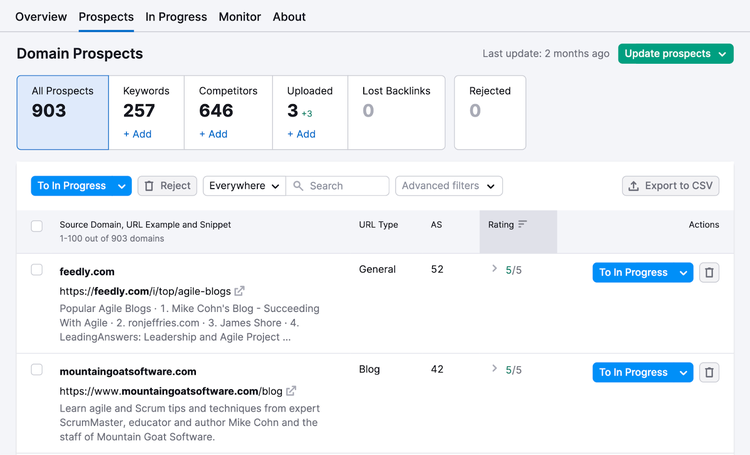
The process of trying to get useful backlinks is called link building.
It generally involves finding a publisher who might want to link to you (e.g., because you have a statistic that’s relevant to their article). And sending them a persuasive pitch asking for a link.
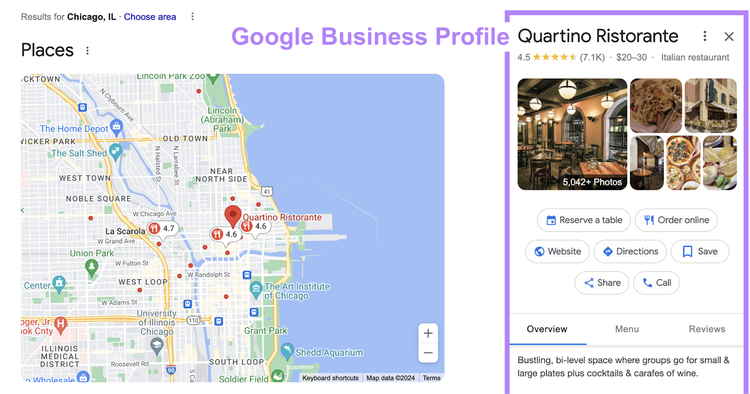
If you have a local business, creating and optimizing your Google Business Profile (a free business profile) can help you appear in Google Search and Google Maps. And reach more potential customers.
Here’s an example of what this type of result can look like:
Here are some quick tips for success:
Claim and verify your profile
Enter complete and accurate information (e.g., address, opening hours, and photos)
Encourage customers to leave reviews
Respond to your reviews
Post about important updates (e.g., events and new products)
Keep your profile up to date
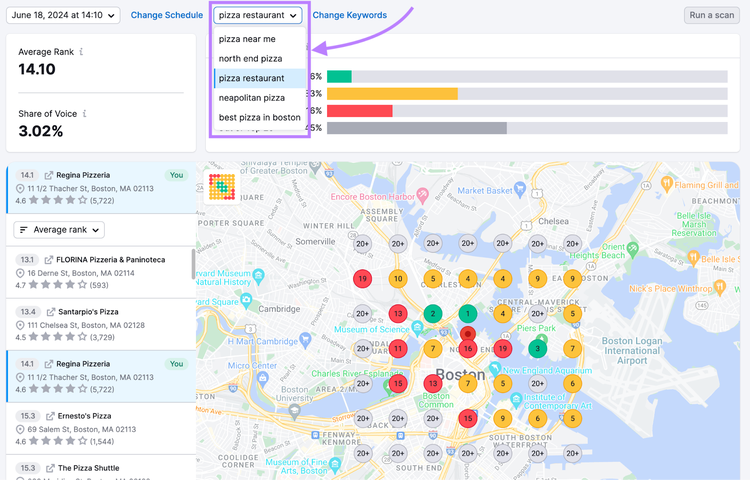
You can see if these off-page SEO efforts are working with the Map Rank Tracker tool.
It shows where your business ranks for the keywords you specify in your target locations:
Social Media
Social media SEO is the process of optimizing your social profiles and posts so they appear higher in search engines and social media platform search results.
And it can indirectly benefit your website’s search performance. Because appearing on social media can boost your authority and brand awareness. Which may contribute to more traffic from search engines over time.
Here are some key tips:
Link to your website from your social profiles
Share your website content on social media (repurposing where necessary)
Use relevant hashtags and keywords to make your social content more discoverable
Streamline and automate your social media management efforts with Semrush’s Social Toolkit.
The toolkit includes multiple tools that can help you:
Plan and schedule posts across multiple platforms
Discover fresh content ideas with AI
Analyze your performance
Benchmark your results against competitors
Find relevant influencers in your niche
Track brand mentions and sentiment online
NAP Citations
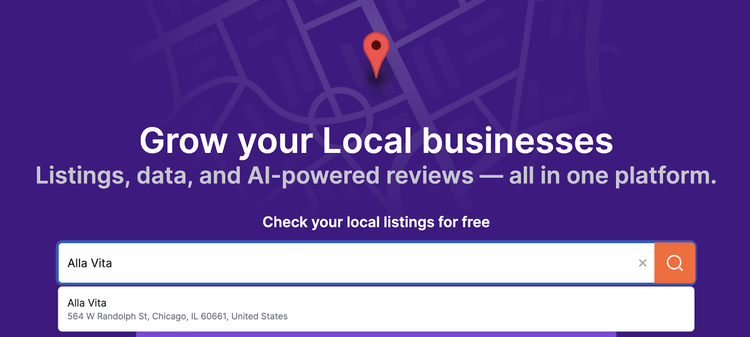
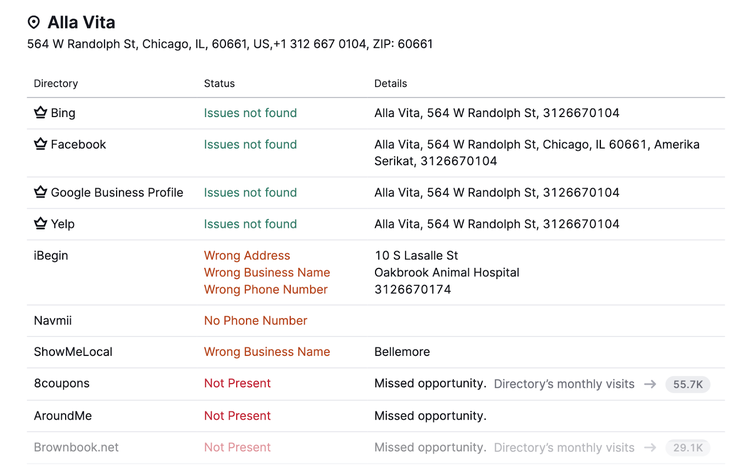
Name, address, and phone number (NAP) citations are mentions of information about your business—often in the form of online directory listings—that allow search engines to verify your information (to boost local SEO). And they can increase your business’s online prominence.
The reviews and ratings you get on third-party platforms can affect your off-page SEO. Because they may appear in search results and affect your reputation.
In local SEO, reviews are especially important. Because they affect your local rankings.
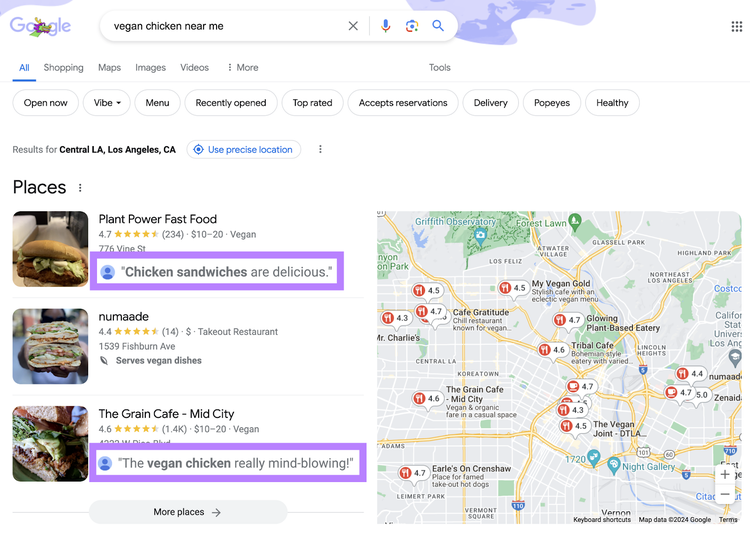
Plus, Google can use the contents of customer reviews to match your profile with relevant search queries.
Like this:
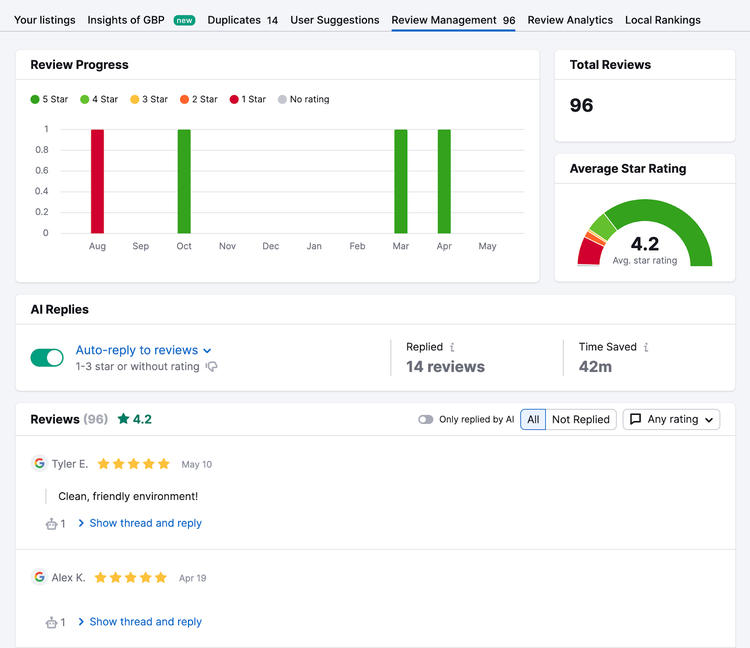
If you have a local business, use the Review Management tool to keep track of your online reviews.
You can also respond to Google reviews using AI.
Start Building Your SEO Strategy
There’s a lot to consider when balancing on-page and off-page SEO. But our tools are here to help you save time and make better decisions.
Rachel is a Senior Content Writer with 12+ years‘ experience in content marketing and SEO. In a previous role as Head of Content at a digital marketing agency, Rachel developed and executed search-driven content strategies for a diverse range of clients, including global ecommerce brands and local B2B companies. She later transitioned to an in-house role at an SaaS startup, where she focused on scaling content operations and driving organic growth.
Subscribe to learn more about General SEO
Subscribe
By clicking “Subscribe” you agree to Semrush Privacy Policy and consent to Semrush using your contact data for newsletter purposes
Rachel Handley
Rachel is a Senior Content Writer with 12+ years‘ experience in content marketing and SEO. She has worked agency-side, developing and executing content strategies for a wide range of brands, and in-house, driving organic growth for a SaaS startup.
Share
Tells Google to show you more from Semrush in AI, Search, and Discover.