
What Is Legal Content Writing?
Legal content writing is the process of producing written content (such as blog posts and newsletters) on law-related topics. It’s a marketing tactic that helps law firms and attorneys engage target audiences—and convert them into clients.
For example, the Law Offices of Robert Tsigler, PLLC, has a blog post about common law marriage in New York:
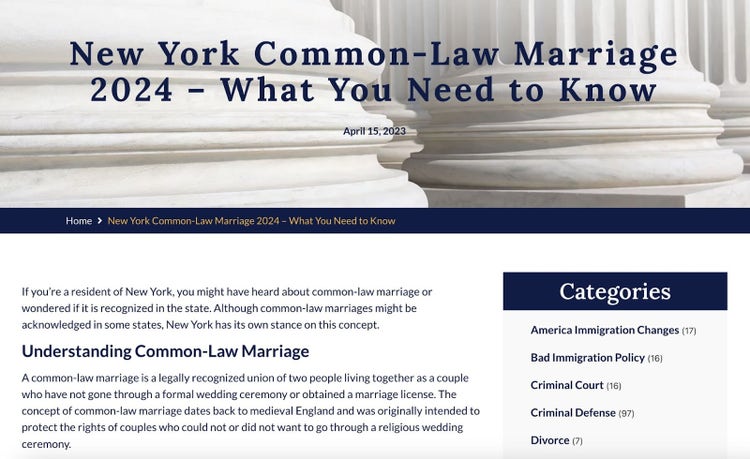
This can reach its intended audience in a variety of ways (e.g., by being shared on social media).
Perhaps most importantly, the post ranks for over 500 keywords in Google’s organic (unpaid) search results. And these rankings drive 2.5K organic visits per month, according to Semrush’s Organic Rankings tool.
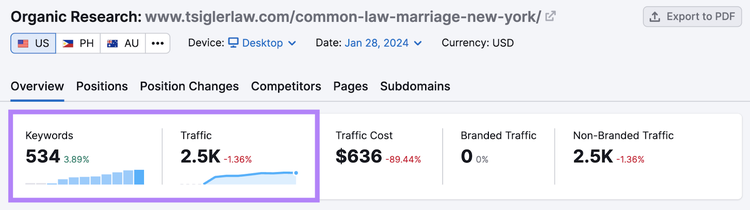
The post is designed to equip readers with relevant and reliable information about common law marriages in New York. So that they:
- Develop a positive impression of the law firm
- Understand the legal options available to them
Both of these factors can drive inquiries.
Even if they don’t convert right away, people who read this blog post may be more likely to choose the firm in the future. Because they’ve developed a level of awareness and trust with the firm.
If you follow the best practices below, legal content can do the same thing for your law firm.
Analyze Competitors’ Rankings
with the Organic Rankings Tool
How to Choose Topics for Legal Content
When writing legal content, it’s important to choose topics that are relevant to your potential clients and legal expertise.
Otherwise, you’ll fail to attract the right people and make the right impression.
Here are three keys to success:
Create Buyer Personas
Buyer personas are fictional profiles that represent different types of buyers (or, in your case, clients).
They typically contain information about buyers’ demographics, socioeconomic status, goals, challenges, and content preferences.
Here’s a quick example created with the Semrush Persona tool:
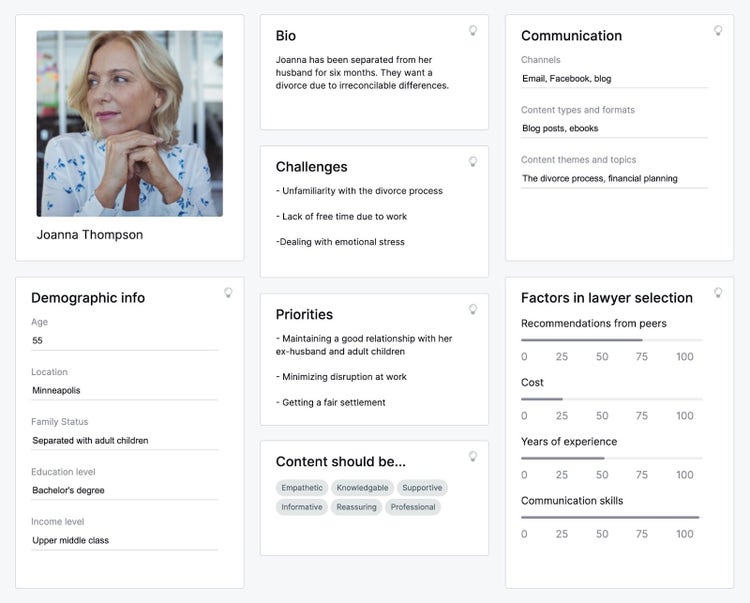
As you can see, buyer personas give you a better understanding of key audience segments. So it’s easier to create legal content that appeals to each one’s needs and preferences.
Based on our example, we might brainstorm the following content ideas:
- A blog post explaining how divorce proceedings work in Minnesota
- Facebook posts about positive client reviews
- An email series that provides emotional support for women going through divorce
To gather the information required for your buyer personas, you’ll need to conduct audience research.
You can gather insights from tools like Google Analytics, Facebook Audience Insights, and Semrush One2Target.
Conduct Keyword Research
Keyword research tells you what potential clients search for in Google. So you can find out what type of legal content is in demand.
Plus, keyword-optimized content can rank higher in search engine results. It’s an important part of law firm SEO.
To get started, go to Semrush’s Topic Research tool.
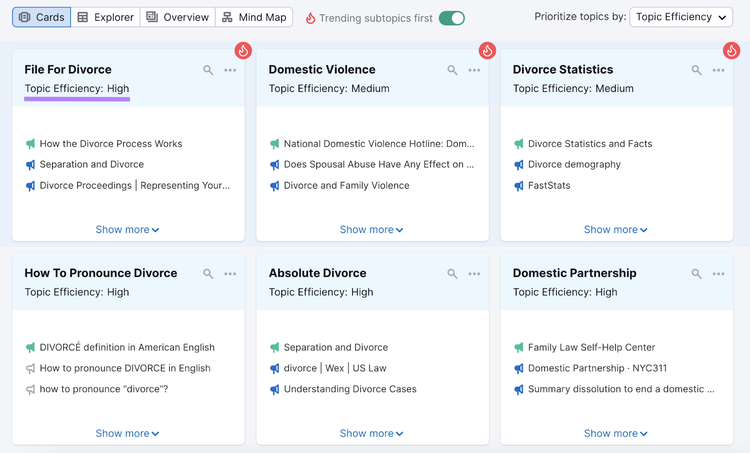
Enter a topic to base your research around (e.g., “divorce”), choose your country, then click “Get content ideas.”
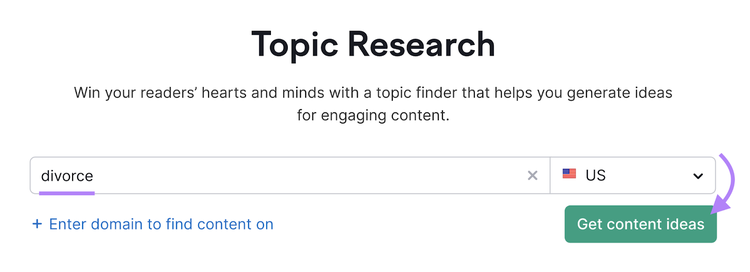
The tool will collect keywords that represent content ideas.
A high topic efficiency rating means that the keyword is popular among searchers and relatively easy to rank for.
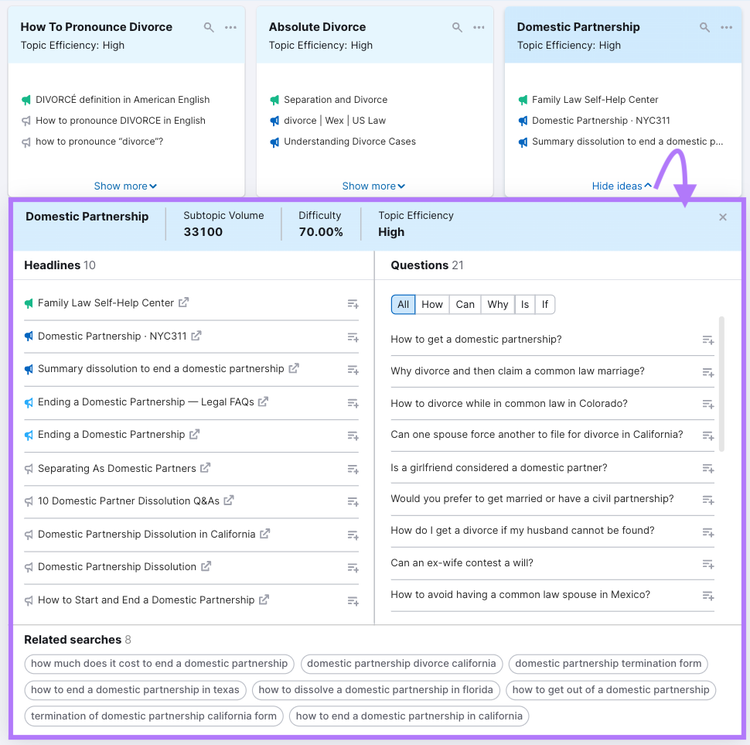
Click “Show more” on any idea to see:
- Subtopic volume: the average number of monthly searches for the keyword
- Difficulty: a measure of how hard it’ll be to earn a high organic ranking
- Headlines: related articles, ordered by the number of links they have from other sites
- Questions: frequently searched questions related to the topic
- Related searches: associated search queries that show up on Google
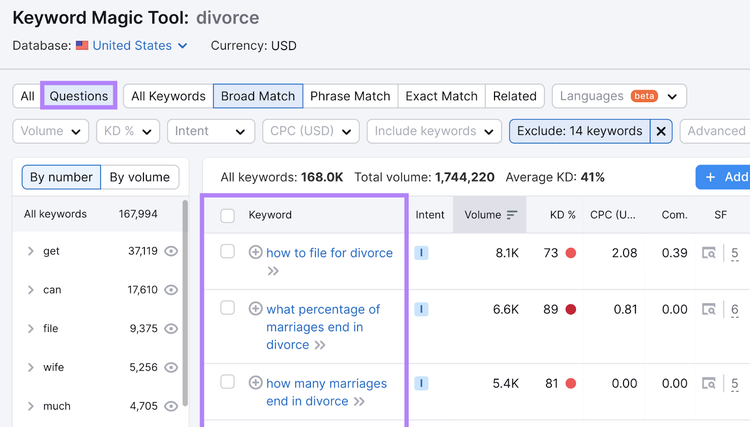
Another option is using the Keyword Magic Tool.
It finds relevant keywords based on a seed term you provide (e.g., “divorce”).
One of the best ways to home in on content ideas is to apply the “Questions” filter:
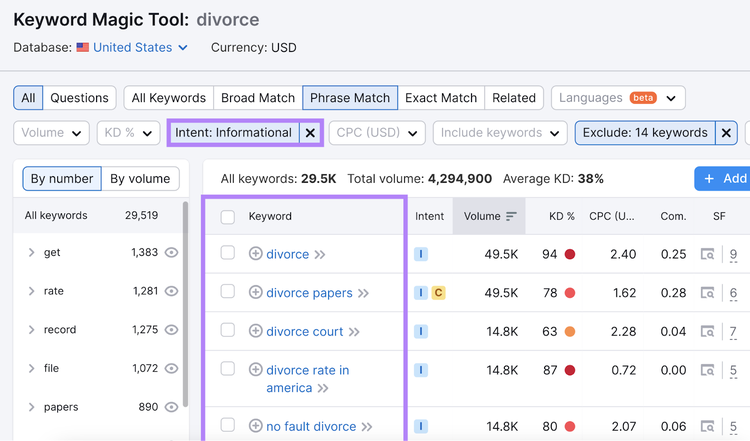
Or filter for keywords that have informational search intent (i.e., queries that people use to find information).
Like this:
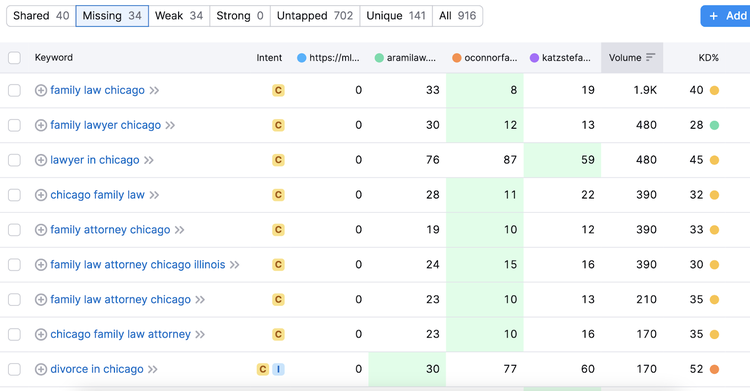
Try the Keyword Gap tool, too.
It finds keywords that competitors rank for but you don’t. So you can make sure you haven’t missed anything important.
All you have to do is enter your domain and your competitors’ domains.
Get Legal Content Ideas
with the Topic Research Tool
Gather Client Feedback
Gather and record feedback from clients. Then, use it to inform your legal content writing ideas.
For example:
During initial consultations, ask clients what challenges they faced before seeking legal advice. And what resources they found helpful.
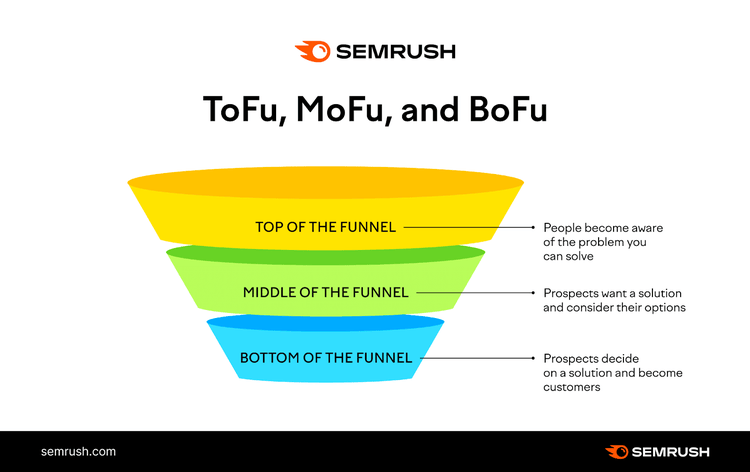
This will help you create top-of-the-funnel (ToFu) content (content for clients in the earliest stages of their legal journey). And start building relationships with them—perhaps before they’ve even realized they need a lawyer.
As client cases progress, ensure that other firm members take note of common questions and misconceptions. So you can create resources that address them.
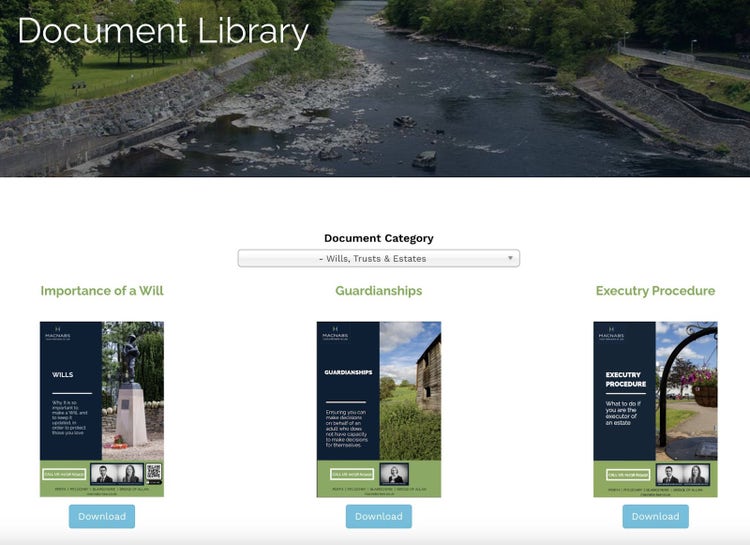
Your firm can share these resources with clients who’ll find them helpful. And distribute them online to help generate new leads.
Just like Macnabs Solicitors has here:
Last but not least, consider asking clients who’ve completed their legal journeys to provide testimonials. Or collaborate on case studies.
Like this one:
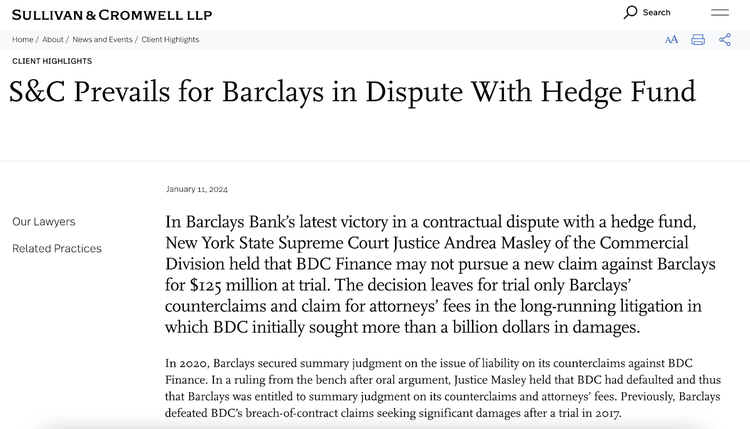
This type of content can prove particularly valuable. Because many people look to their peers’ actions and opinions when choosing a lawyer.
How to Write Effective Legal Content
Content writing for law firms presents a unique set of challenges. You’re likely to be up against stiff competition. And you have your firm’s reputation to uphold.
Follow these best practices to give your legal content the best chance of success:
Focus on Content Quality
Quality content gives readers a better impression of your law firm.
It also tends to get more traffic because it’s better at generating shares, backlinks (links from other sites), and high organic rankings.
So, what is quality content?
It’s content that satisfies the target audience’s needs, usually because it’s:
- Comprehensive: It covers all the main points that readers are interested in (without going off-topic). And links to related resources for additional learning.
- Actionable: It tells readers what they should do after they’ve finished reading. And gives them the information they need to get started.
- Well-written: The text is easy to read and understand. And the tone of voice is suited to the topic being discussed.
- Well-presented: Information is presented in an effective and attractive way. This typically means making good use of white space, bullet points, subheadings, images, etc.
- Accessible: The content is accessible to everyone—including people with disabilities. It also performs well on different device types (e.g., desktop, tablet, and mobile).
- Accurate: The information is correct and up to date. And readers know this because the creator demonstrates trustworthiness—something we’ll discuss more in the next section.
In law firm content writing, quality is even more important than usual. Because clients need the highest levels of trust and confidence in their legal representatives.
Demonstrate Experience, Expertise, Authority, and Trustworthiness
Demonstrating Experience, Expertise, Authority, and Trustworthiness (E-E-A-T) gives potential clients more confidence in your law firm.
It’s also what Google is looking for in web content.
FindLaw establishes E-E-A-T by explaining that its content is legally reviewed and fact-checked.
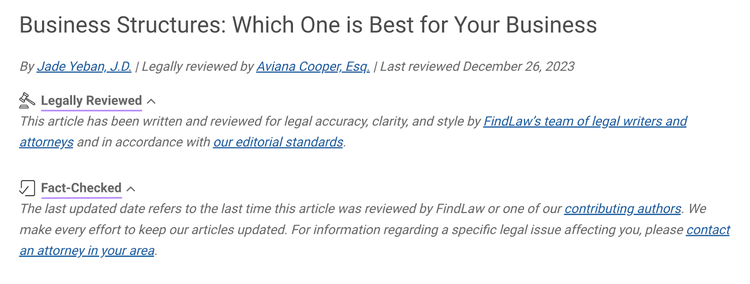
The site also provides a “last reviewed” date to assure readers that the content’s up to date.
And information about the writer’s and reviewer’s credentials:
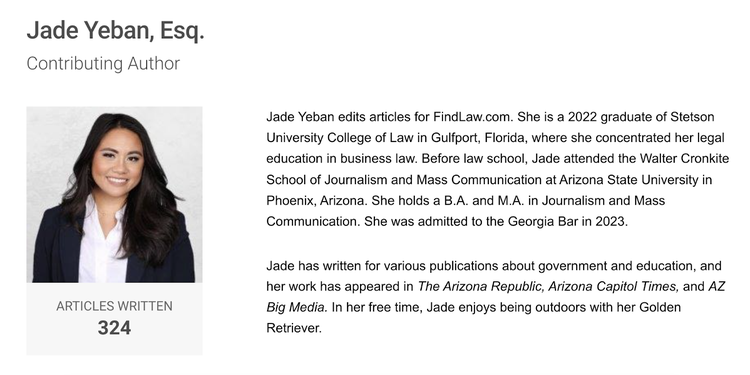
FindLaw builds authority by covering topics extensively, too.
For example, here’s their topic cluster about incorporation and legal structures:
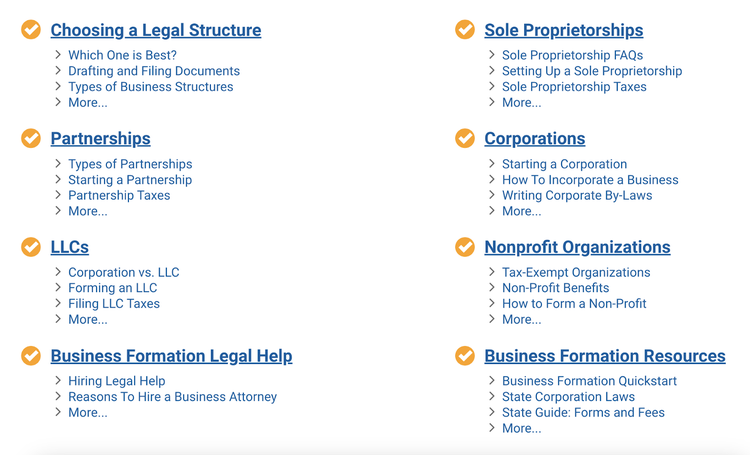
You can employ similar tactics when writing content for your law firm.
Avoid Unnecessary Legal Jargon
While it’s important to demonstrate your expertise, be wary of legal jargon. It can alienate and confuse your clients.
Try to stick with simple language. And when you need to use legal terminology, include easy-to-understand explanations.
You could even provide definition tooltips (pop-ups that provide context), like the ones on Wikipedia:
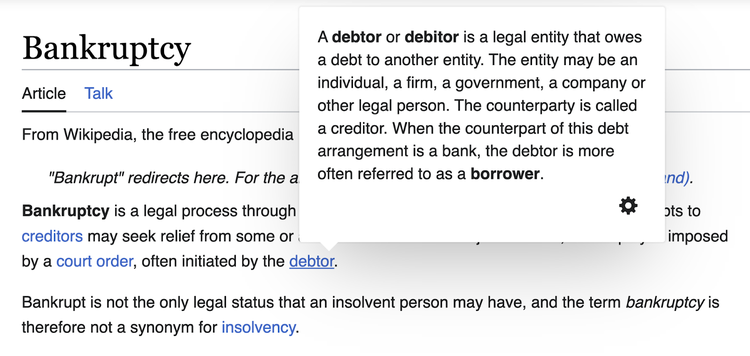
If you’re used to writing for lawyers, it can be tricky to adjust your style. But Semrush’s SEO Writing Assistant can help.
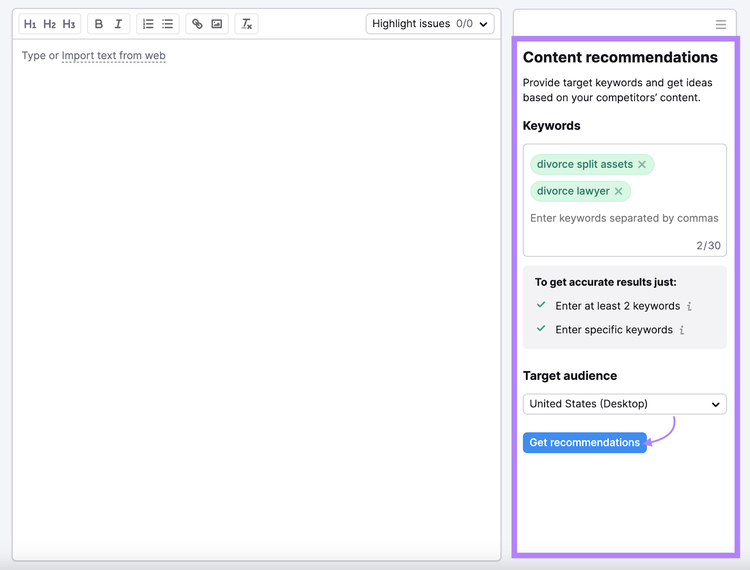
Just enter at least two keywords specific to your topic.
Then, set your target audience and click “Get recommendations.”
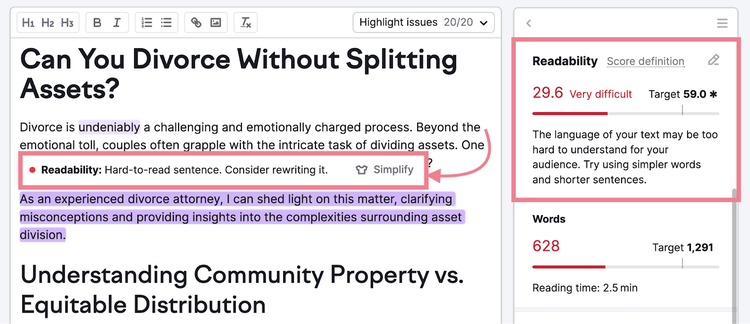
As you write your content, the tool will score its readability. And highlight any hard-to-read sentences or complex words.
Hover over these instances and click “Simplify” to let the AI suggest different text.
The SEO Writing Assistant can also help you achieve a consistent tone of voice, avoid accidental plagiarism, incorporate keywords effectively, and much more.
Review Your Drafts in Real Time
with the SEO Writing Assistant
Apply On-Page SEO Best Practices
Using simple on-page SEO techniques (improvements to your webpages aimed at both users and search engines), you can optimize your law firm’s website content. And attract more organic traffic.
To get started, identify any keywords that directly relate to your topic. And choose the most relevant and important one—this is the primary keyword.
Then, write the following elements:
- Title tag: The HTML page title that can appear in search results. Make sure it’s descriptive and engaging. And try to include your primary keyword near the front.
- Meta description: The HTML page summary that can appear in search results. It should encourage users to click through to your page.
- H1 tag: The main headline that appears on your page. It should be identical or very similar to your title tag. We recommend aiming for a length of 50 to 60 characters.
- URL slug: The unique part of the URL (e.g., “/divorce-guide/”). This should be concise and descriptive. Use your primary keyword if appropriate.
When writing your body content, try to incorporate your keywords (or close variations) without forcing them. And make a special effort to include your primary keyword in the opening paragraph.
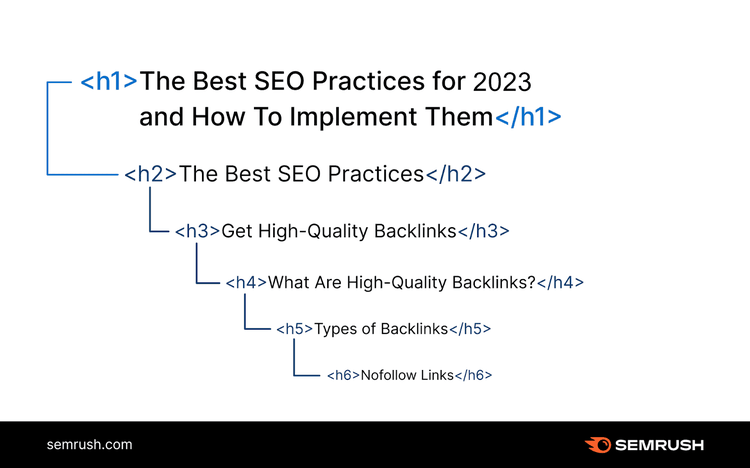
If you use subheadings, apply the relevant HTML heading tags (H2s, H3s, etc.). So it’s easier for search engines to understand your content’s structure.
We also recommend that you incorporate internal links that point to relevant pages on your site. Making sure to use descriptive anchor text (the clickable text where the link is placed).
Tip
Get optimization ideas for your existing content with Semrush’s On Page SEO Checker.
End with a Strong Call to Action
You should inspire readers to take the actions you want (e.g., get in touch) wherever it’s natural to do so. But particularly at the end of your content.
Because this is where your most engaged readers end up. And where they’re primed to take action.
Generally, a legal content writer wants readers to do one of the following:
- Get in touch: If you offer a relevant legal service that readers might be ready to pursue, try embedding a contact form. If that’s not possible, you can just add your email address and phone number. Or link to your firm’s contact page.
- Check out a related resource: If readers are likely to want more information before getting in touch, point them to the most relevant resource on your site. (If you try to promote your services too early, you might scare these users off.)
- Subscribe to your newsletter: If the topic is news-related, readers might be more interested in getting future updates (rather than booking a consultation). So, encourage them to subscribe to your newsletter, if you have one. That way, you can keep them engaged with your brand.
- Follow you on social media: If you don’t have a newsletter, you could encourage readers to follow you on social media instead. This can help your firm maintain and build trust.
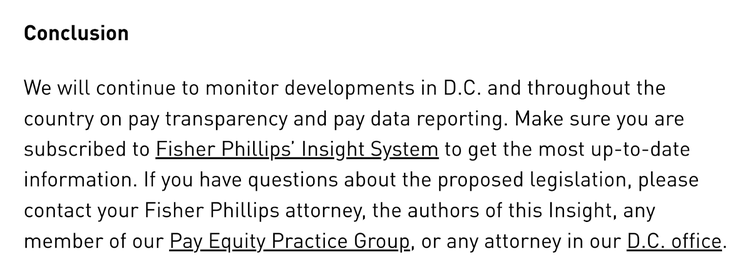
For example, Fisher Phillips published a blog post about Washington, D.C.’s pay transparency law.
In the conclusion, they encourage readers to subscribe to their newsletter (“Insight System”). Or contact one of their attorneys.
So, take time to consider the most appropriate option(s) for the legal content you’re writing. And craft compelling call to action (CTA) text.
It can make all the difference when it comes to getting visitors to take the next step.
How to Distribute Your Legal Content
Many law firms house their resources in a content hub. This makes it easy for visitors to find content they’re interested in.
For example, here’s a snippet of the “Insights” section from Herbert Smith Freehills:

Publishing content on your website is one of the best ways to increase traffic and engagement.
And you can expand its reach further with these content distribution channels:
- Email marketing: If you have an email newsletter, include summaries of (and links to) your latest content. For the best results, try tailoring your emails to different audience segments.
- Online communities: Lots of people go to online communities (like /r/LegalAdvice on Reddit or divorce support groups on Facebook) for help with legal issues. You can benefit from sharing your expertise and links to your content when it’s appropriate to do so.
- Social media: Repurpose elements of your content for social media (e.g., share key insights via a LinkedIn carousel post). And provide a link so users can click through to learn more.
Tip
With a Semrush Social subscription, you can schedule posts on multiple social platforms, compare your social metrics to competitors’ metrics, and much more.
We also recommend that legal content writers try email outreach. This involves contacting relevant influencers or publications and encouraging them to link to your content.
You have the potential to get exposure on highly influential sites. Which is good for SEO, brand awareness, and referral traffic.
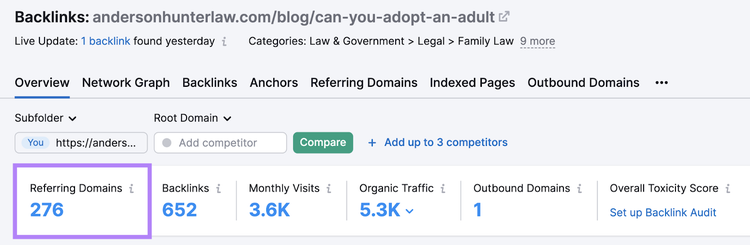
For example, Anderson Hunter Law Firm's post about adult adoption has backlinks from 276 sites, including CBS News and the Clark County, Washington, government. According to the backlink tool:
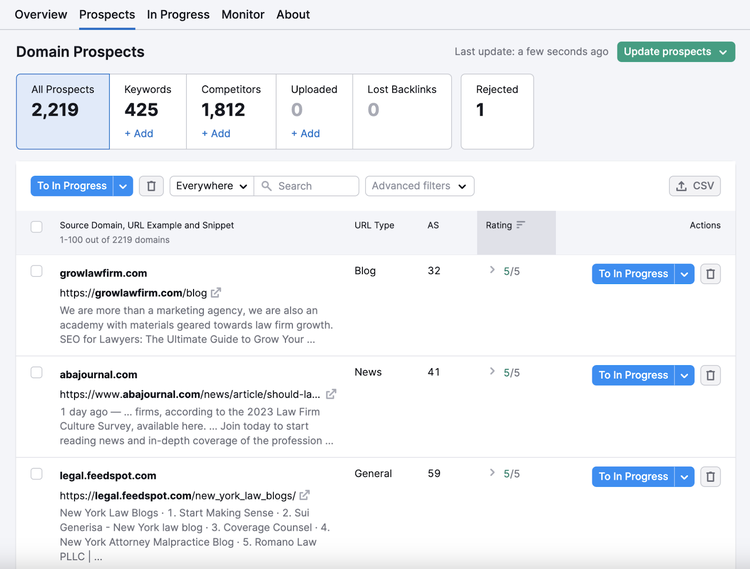
For help acquiring backlinks, use Semrush’s Link Building tool.
It identifies high-quality link building prospects (sites that might link to you) based on your target keywords and competitors.
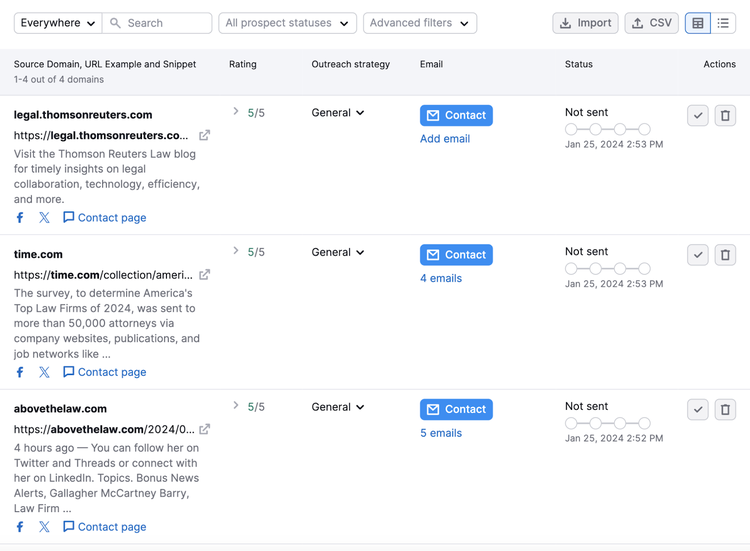
You can then send and track emails through the platform.
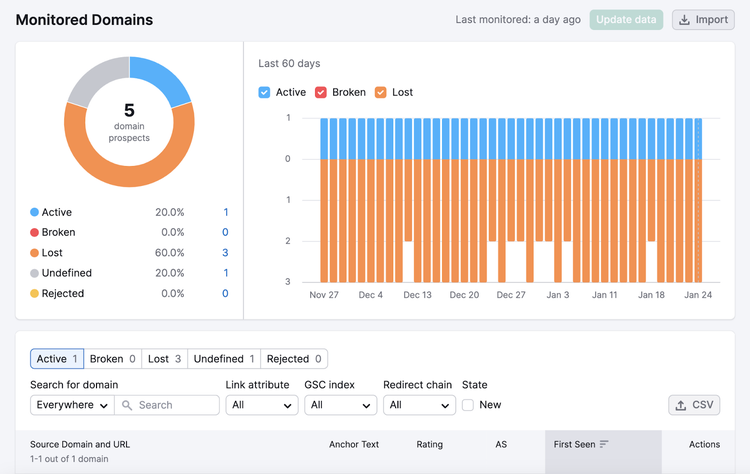
And monitor any backlinks you acquire.
Get Links and Exposure
with the Link Building Tool
How to Measure the Success of Your Legal Content
With the right content marketing metrics, you can identify strengths and weaknesses in your law firm’s website content. And make improvements over time.
First, we’ll explain how to track your SEO success:
Monitor Google Rankings with the Position Tracking Tool
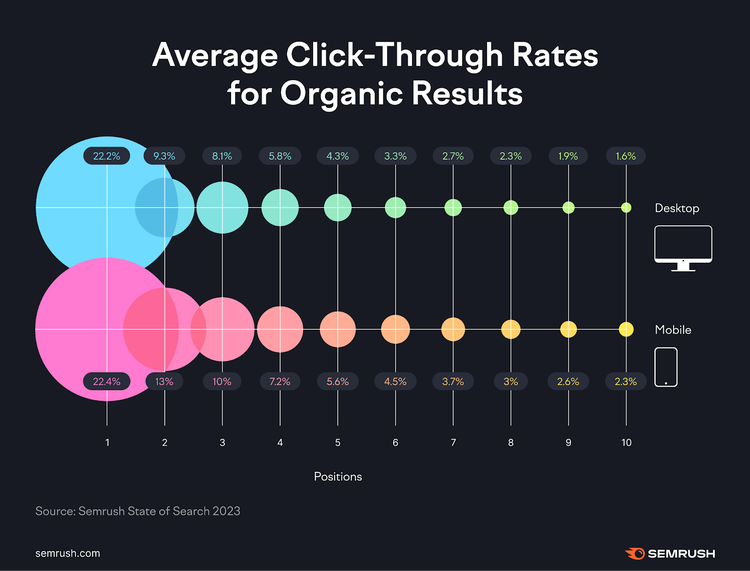
Keyword rankings are an important content metric because they have a huge impact on organic traffic.
On average, 22.2% of desktop searchers click the top organic result in Google. While just 1.6% click the one in position 10.
Semrush’s Position Tracking tool makes it easy to monitor your website’s rankings for target keywords.
After setting it up, head to the “Overview” report for a full breakdown.
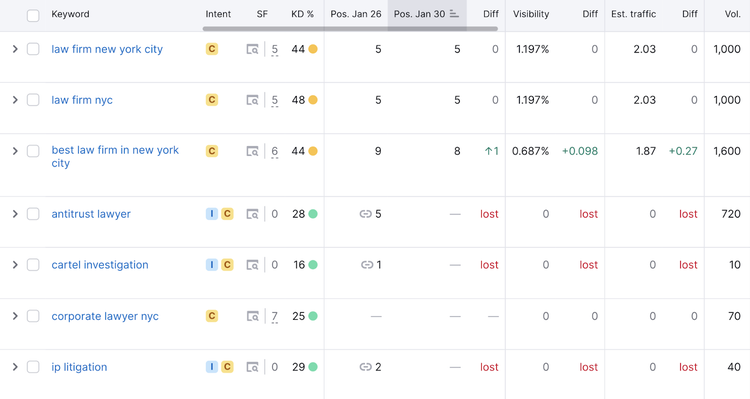
You can use filters to home in on opportunities for improvement.
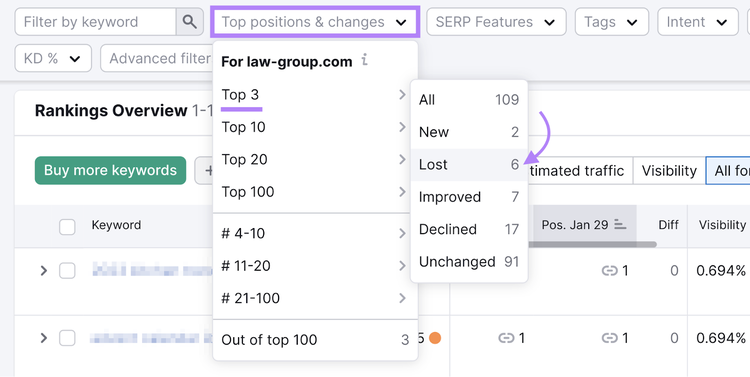
For example, look at rankings that have recently dropped out of the top three. And consider what you can do to get your higher position back.
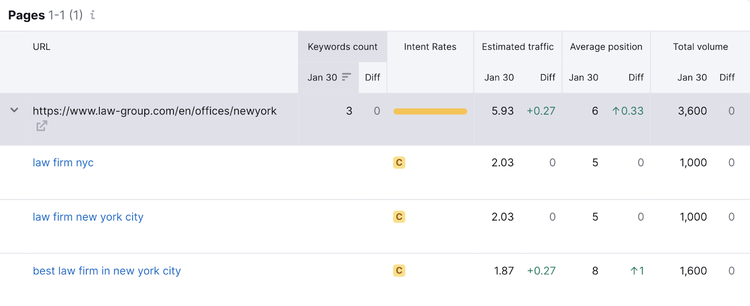
To identify underperforming content (rather than underperforming keywords), go to the “Pages” report.
This presents keyword metrics by URL:
If you don’t have time for regular analysis, you can:
- Sign up for weekly email updates
- Set up ranking alerts based on important triggers (e.g., a keyword leaves the top three)
- Generate daily, weekly, or monthly reports by sending data to the My Reports tool
Track Your Rankings
with the Position Tracking Tool
Analyze User Engagement with Google Analytics 4
Google Analytics 4 (GA4) is a free analytics platform that lets you see how users interact with your law firm’s website.
Go to “Reports” > “Engagement” > “Pages and screens.” And choose the time range you’re interested in.
Then, click “Customize report” and add the page metrics you want to measure.
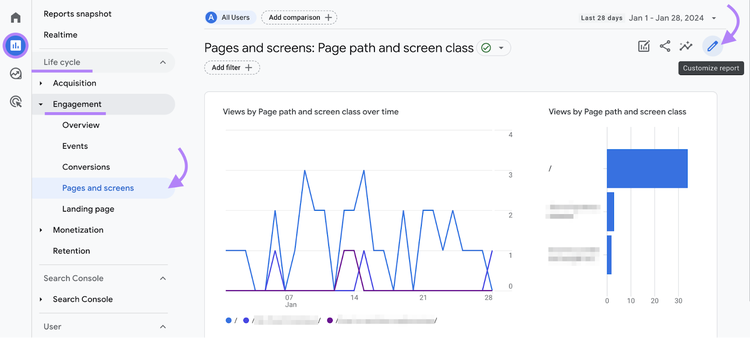
We recommend monitoring:
You should end up with a table that looks something like this:
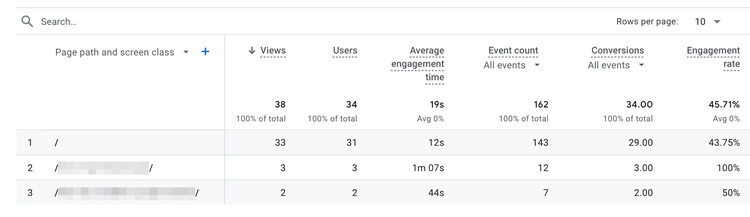
These metrics help you work out how popular each piece of content is. And how it’s contributing to your law firm’s marketing goals.
Elevate Your Legal Content
Semrush’s Content Marketing Platform has all the tools you need to streamline legal content writing and get better results. Especially when it comes to SEO.
- Generate content ideas with the Topic Research tool
- Get content recommendations with the SEO Content Template tool
- Analyze your drafts in real time with the SEO Writing Assistant
Start your free trial today.
Create Better Legal Content
with the Content Marketing Platform

Rachel is a Senior Content Writer with 12+ years‘ experience in content marketing and SEO. In a previous role as Head of Content at a digital marketing agency, Rachel developed and executed search-driven content strategies for a diverse range of clients, including global ecommerce brands and local B2B companies. She later transitioned to an in-house role at an SaaS startup, where she focused on scaling content operations and driving organic growth.
Rachel Handley
Rachel is a Senior Content Writer with 12+ years‘ experience in content marketing and SEO. She has worked agency-side, developing and executing content strategies for a wide range of brands, and in-house, driving organic growth for a SaaS startup.

Tells Google to show you more from Semrush in AI, Search, and Discover.