
What Is a Marketing Plan?
A marketing plan outlines how a company will promote its products or services. And provides a strategic roadmap for growth.
It typically maps out:
- Clear marketing goals that specify what the company aims to achieve
- A defined target audience your business aims to reach
- Insights from competitors to identify opportunities and stay ahead
- Marketing strategies and channels to reach your audience effectively
- A budget and resource plan to guide execution
- Performance metrics to measure success and adjust your plan as needed
Marketing plans are often confused with business plans and marketing strategies.
But each document serves a different purpose.
A business plan outlines the company’s overall mission, financials, and structure. It’s a broader document that covers the operational aspects of your business.
A marketing plan details how you will promote your products or services to reach your target audience. It outlines the tactics, channels, and strategies you plan to use to achieve your marketing goals.
A marketing strategy defines the high-level approach a business plans to use to achieve its marketing goals. It provides specific guidance on positioning, messaging, and value propositions.
Sometimes, marketers include their marketing strategy in their marketing plan instead of creating another document.
Access 55+ Tools
with a Free Semrush Account
Types of Marketing Plans
Specific marketing plans detail the strategies and tactics you plan to use to reach and engage audiences and track results on different channels.
Here are some of the most common types of marketing plans:
- Content marketing plan: Establishes how you plan to create and distribute content like blog posts and videos to attract, engage, and retain your target audiences
- Social media marketing plan: Provides a roadmap for using social media platforms to increase brand awareness, connect with audiences, and encourage engagement
- Email marketing plan: Details strategies for email campaigns, like newsletters or promotional email sequences, to nurture leads and improve customer relationships
- Growth marketing plan: Guides experimentation across channels to identify tactics that will help you achieve rapid growth through continuous optimization
- SEO marketing plan: Lays out the steps to improve the quantity and quality of organic (unpaid) traffic to your website using search engine optimization tactics
- Paid advertising plan: Outlines how you’ll use paid advertising channels, like social media ads and pay-per-click (PPC) advertising, to target audiences and deliver results within a set time frame
Most successful businesses use an overarching marketing plan to align their marketing efforts with business goals. And stay consistent across multiple channels.
They also create specific marketing plans for key channels to stay focused and track progress more effectively. Having clear guidance helps you stay organized and on target.
By having both, you can align your channels, measure performance, and continuously improve your results.
How to Create a Marketing Plan for Your Business
Here are six steps to create a marketing plan that keeps you focused and on track.
Download our marketing plan template to follow along.
1. Determine Your Marketing Goals
Having a clear goal ensures all your efforts align with achieving those objectives.
Let's say you're creating a marketing plan for a fintech company that allows people to transfer money internationally.
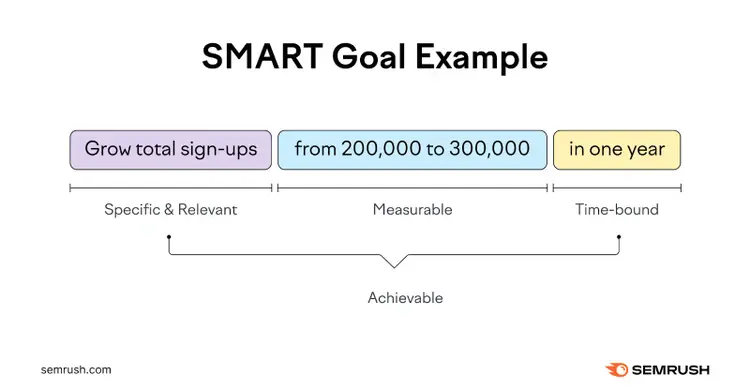
Set goals that are specific, measurable, achievable, relevant, and time-bound (SMART).
- Specific: Defines exactly what you want to accomplish
- Measurable: Details how you will measure progress and determine success
- Achievable: Ensures the goal is realistic and attainable with your available resources
- Relevant: Aligns with your business goals
- Time-bound: Establishes a clear deadline to maintain focus and urgency
Here’s what that looks like:
❌ Grow sign-ups.
✅ Grow total sign-ups from 200,000 to 300,000 in one year.
Here are some common marketing goals:
- Grow organic website traffic by X% over [time period] through improved SEO and content optimization.
- Generate X qualified leads per month within [time period] using targeted paid campaigns.
- Increase [social media platform/s] engagement by X% over [time period] through weekly posts, influencer collaborations, and targeted giveaways.
Once you’ve decided on your goal, add it to the marketing plan template.

2. Identify Your Target Market
Your target market is the specific group of people you want to reach with your marketing efforts.
In general, it is made up of people who have problems your product or service can solve. Making them more likely to eventually become customers or subscribers.
Understanding your target market will help you identify which marketing channels to use and craft content they can relate to.
That way, you can reach and engage with them better. Which can lead to better marketing results.
Here’s how to identify your target market.
First, talk to your existing customers. Learn why they love your products or services and what needs your offerings solve.
Do this by asking them the following questions through an email, a survey, or any other channel you use to communicate with your customers:
- Where do you typically look for information related to our product/service?
- What factors influence your purchasing decisions?
- What are your biggest challenges or pain points related to our product/service?
If you can’t ask your customers, talk to your support team and uncover common questions and frustrations your customers mention.
Then, conduct market research using the Market Explorer tool.
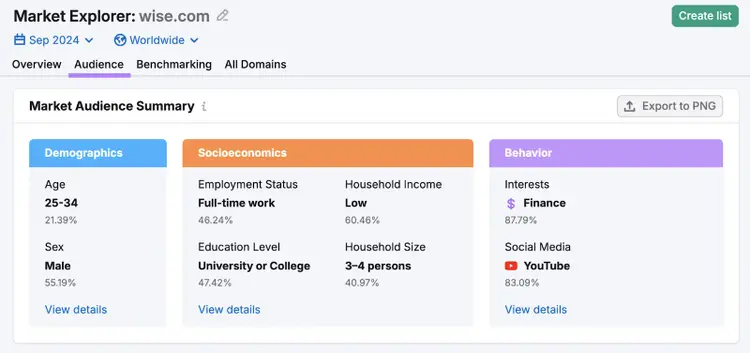
The tool shows your target audience’s demographics, socioeconomics, behaviors, and interests.
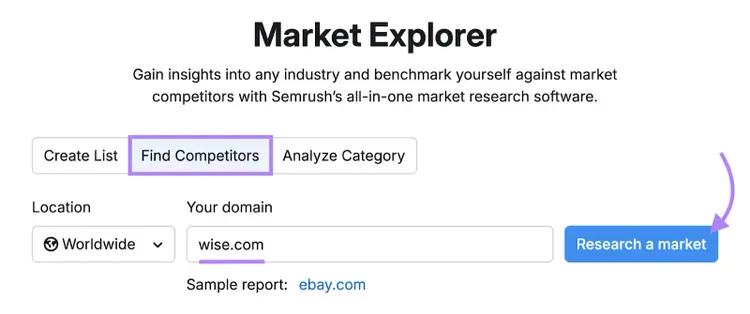
To get started, open the tool and click the “Find Competitors” option.
Then, enter your domain name. And click “Research a market.”
Click on the “Audience” tab to get a summary of your target audience’s characteristics.
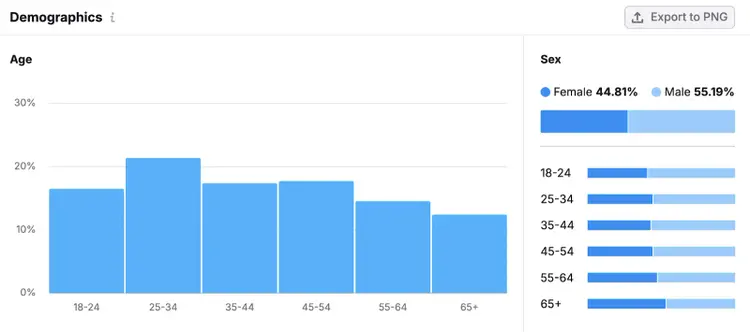
Scroll down to “Demographics” to see your target audience’s average age range and gender.
This data can help you choose how to communicate your marketing messages.
For example, younger audiences may prefer a more casual tone, while older audiences may appreciate a more formal tone.
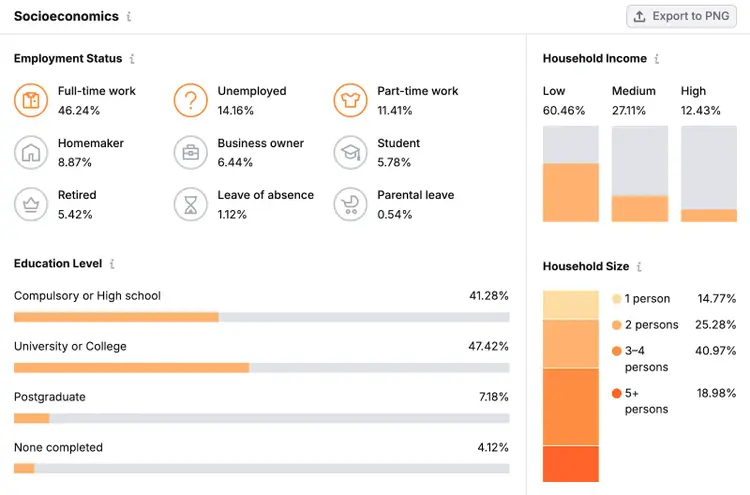
The “Socioeconomics” section shows your audience’s employment status, household income, education level, and household size.
This data can help you understand how you should price your products or services and communicate those prices.
For example, if your target audience has a lower household income, you may want to offer a free or low-cost plan with optional upgrades.
If your target audience has high income, on the other hand, you benefit from emphasizing premium features in your marketing messages.
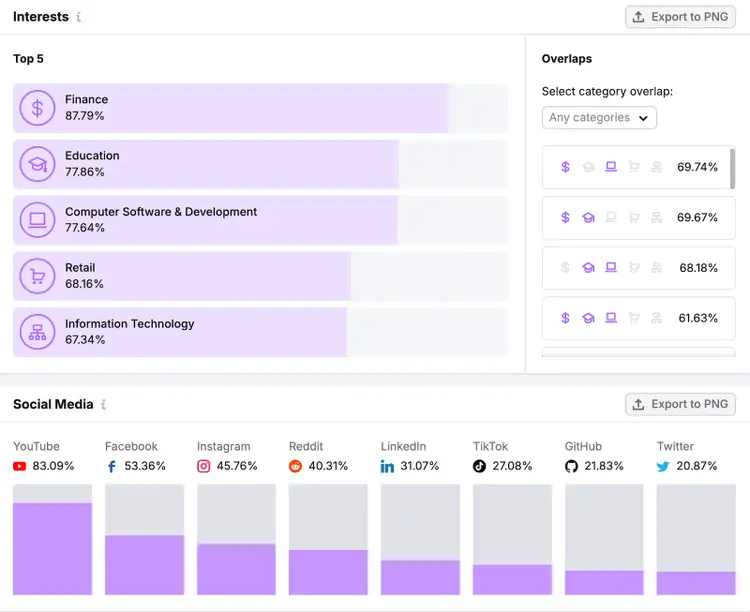
Lastly, the “Interests” and “Social Media” sections tell you what topics your audience is interested in and what platforms they use the most.
This data helps you identify which channels to use to effectively reach and engage with your audience.
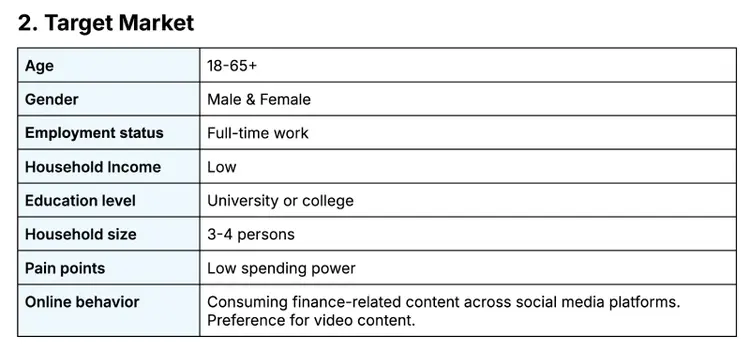
Once you have all the information, record it in the marketing plan template.
Like this:
Understand Your Target Market
with the Market Explorer Tool
3. Gather Competitor Insights
Understanding your competitors’ marketing strategies can help you identify opportunities and avoid potential pitfalls.
A competitor is any company that provides the same (or similar) product or service as you in your market.
Specifically, you need to gather the following information about them:
- What is their positioning in the market?
- What marketing channels do they use?
- What is their communication strategy?
How do you collect this information?
First, visit your competitor’s homepage.
For example, a fintech company that specializes in international transfer may want to take a closer look at Payoneer.
Just by looking at Payoneer’s homepage, we know they position themselves as a global payments platform.
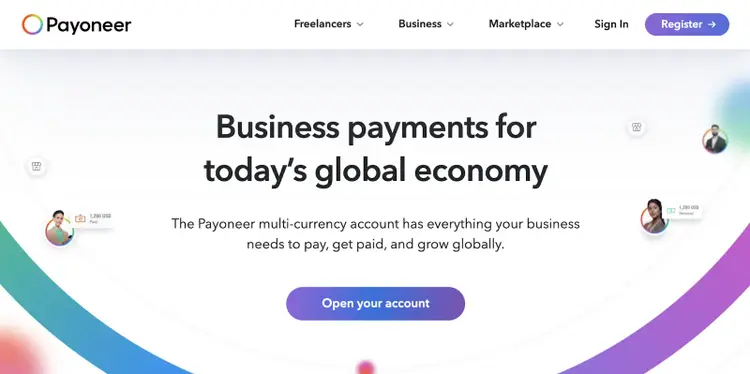
This means your hypothetical fintech company might need to differentiate itself in other ways. Like positioning itself as a cheap, fast, and transparent way to send money abroad.
Then, uncover your competitors’ marketing channels using Semrush’s Traffic Analytics tool.
Enter Payoneer’s domain name and click “Analyze.”
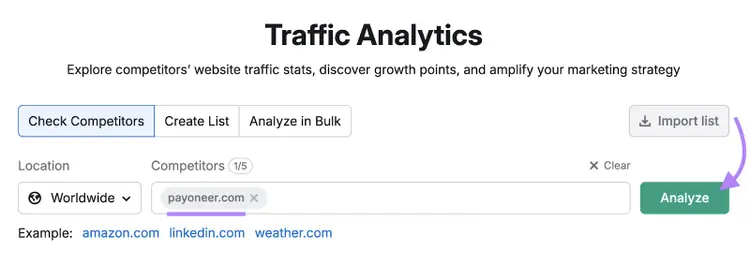
Then, go to the “Traffic Journey” tab. You’ll see which channels are driving the most traffic to their website.
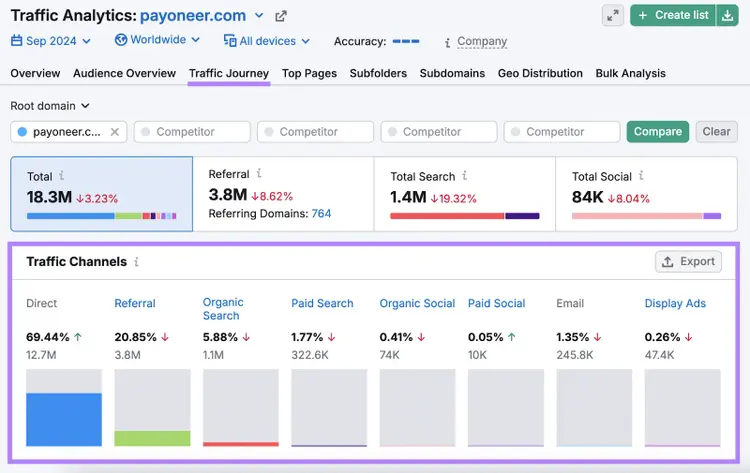
You may want to target the same channels with your marketing content.
Lastly, you need to understand their communication strategy. To do this:
- Follow their social media accounts to see how they engage with their audience
- Read their blog posts and other content to understand their tone and messaging
Your communication style should stand out and reflect your brand’s identity.
As you learn more about your competitors, make notes for yourself in the template.
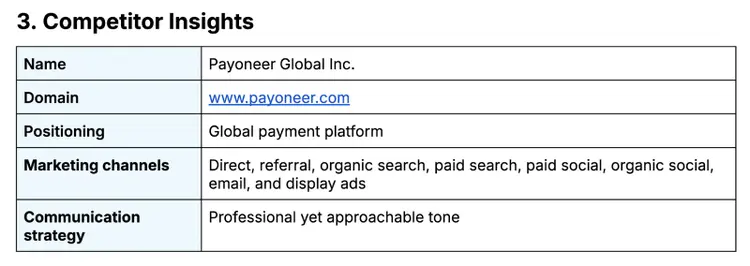
4. Define Your Marketing Strategies and Tactics
Marketing strategies provide a high-level approach to achieving your goals. These strategies focus on where and how you’ll promote your product or service.
Once you've decided on your strategies, break them down into specific tasks and tactics.
Here’s how to do that.
Let’s say your marketing goal is to increase sign-ups by 50% over the next year.
One strategy you might consider is search engine optimization or SEO.
SEO helps you rank higher on search engine results pages so you can reach people who are searching for your products or services.
Since these people already want to find your brand, product, or service, they’re also likely to sign up for your platform.
Some SEO tactics you can use include the following:
- Find and target relevant keywords with commercial intent (i.e., searchers who use keywords with commercial intent want to buy a product) on your homepage and other key webpages
- Use blog posts to answer common questions your audience might search online
- Create optimized bottom of funnel content
Find Commercial Keywords
with the Keyword Magic Tool
Add as many strategies and tactics as you want to your marketing plan. As long as they align with your overall goals and are achievable with the available time, resources, and budget.
Here are more examples of strategies and tactics to consider:
- Post customer reviews and testimonials on Instagram
- Run interactive polls on LinkedIn
- Launch a TikTok challenge
- Publish blog posts, videos, and infographics
- Write guest posts for industry sites
- Share tutorials on YouTube
- Create automated onboarding sequences
- Send promotional offers to subscribers
- Run a re-engagement campaign
- Partner with influencers for product review videos
- Run co-branded social media campaigns
- Offer influencers exclusive discount codes to share
- Provide unique referral links for partners
- Collaborate with niche content creators
Don’t know which strategies and tactics to implement?
Get inspiration by going back to the “Competitor Insights” section of your marketing plan. And looking at what your competitors do.
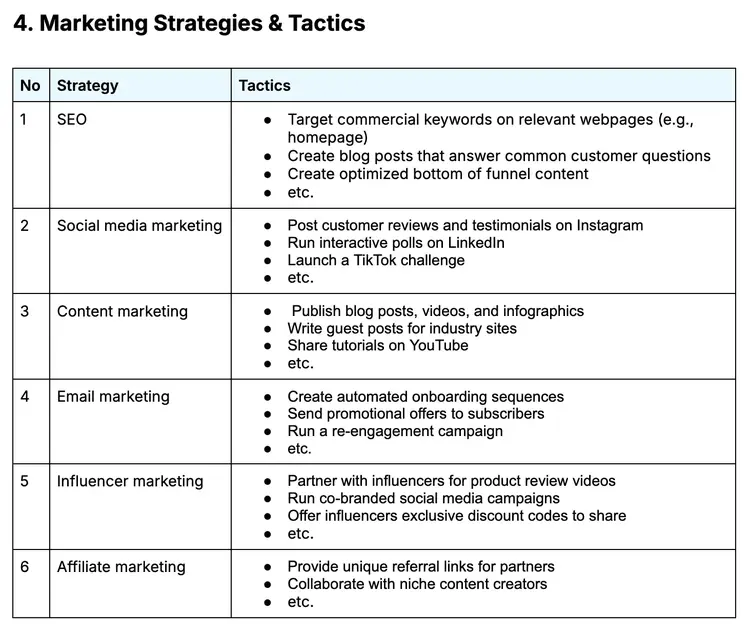
Mention all the strategies and tactics you've chosen in the marketing plan template. And include some you want to test or implement.
Like this:
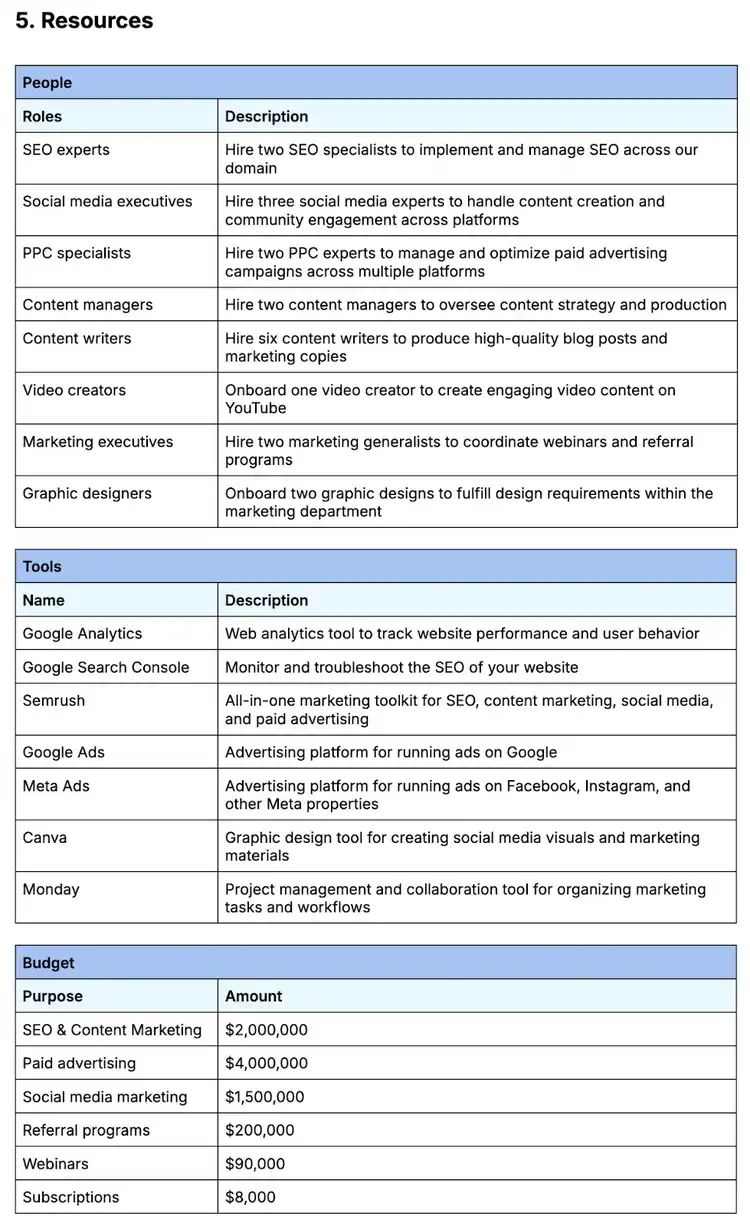
5. Determine Your Resources
At this stage of planning, you need to determine your resources.
This includes:
- People: Based on your marketing activities, assess whether you need additional staff. You may decide to invest in training your team. Or hire SEO experts, content writers, social media managers, and paid advertising specialists.
- Tools: Identify the tools necessary to manage and execute your marketing strategies and tactics. This could include analytics software like Google Analytics, advertising platforms like Google Ads, and all-in-one marketing tools like Semrush.
- Budget: Calculate the financial investment needed to implement your marketing plan. Consider costs for advertising, content creation, software subscriptions, and any other expenses related to your marketing activities.
Once you've identified your resource requirements, fill out the marketing plan template like this:
6. Pick Your KPIs
Key performance indicators (KPIs) are metrics used to measure the effectiveness of your marketing efforts.
When you execute your marketing plan, you’ll monitor how close you are from achieving your goals.
This is where KPIs come into play.
If you're using lots of marketing strategies, you might be tempted to track every possible metric for each channel.
There is nothing wrong with this approach. In fact, you should track as many metrics as you can.
However, when it comes to evaluating the overall success of your marketing plan, it's important to choose metrics that directly relate to your marketing goal.
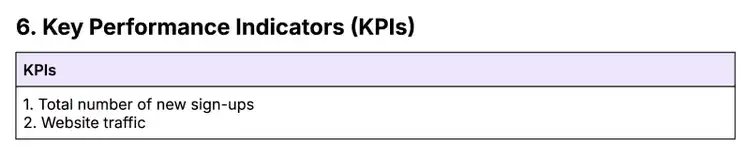
For example, two relevant KPIs for the goal of increasing sign-ups are the following:
- Total number of new sign-ups: This metric directly measures progress toward your main goal
- Website traffic: This measures the number of visitors coming to your website. While not all visitors will sign up, an increase in traffic often correlates with an increase in sign-ups.
Mention your KPIs in the template.
Get Better at Marketing
You just learned how to create a marketing plan.
So, what's next?
You can deepen your marketing knowledge to drive better results.
Here are some recommended resources to level up your skills:
- How to Use AI for Content Marketing
- 13 Leading Advertisement Ideas for 2024
- How to Promote Your YouTube Channel
- Brand Partnerships: Examples and How to Get Started
Access Semrush Tools & Data
with a Free Subscription

Sydney has been creating content for over 10 years. She has been a writer, content manager and coordinator, editor, and strategist. At Semrush, she’s a blog editor who makes sure each article is as accurate, optimized, and helpful as possible.

Tells Google to show you more from Semrush in AI, Search, and Discover.