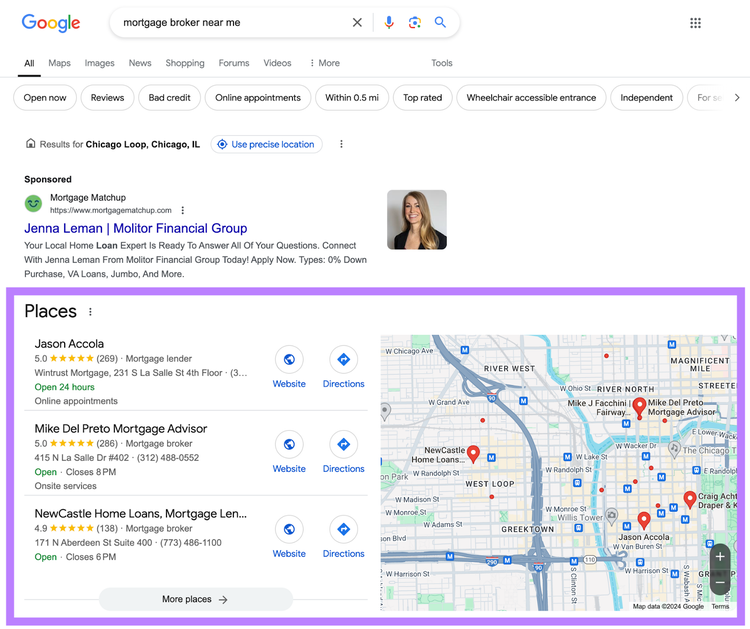
SEO for financial services is the process of trying to improve a financial service company’s organic (unpaid) visibility in search engines like Google. With the ultimate goal of attracting more clients.
It can help your business’s website and/or location appear prominently when people search relevant keywords.
Like this:
This visibility can help you get more brand awareness and organic traffic.
As for specific tasks, financial services SEO typically involves:
Publishing quality content around relevant keywords
Ensuring your website delivers a great user experience
Making your website accessible to search engine bots
Improving your brand’s online reputation and prominence
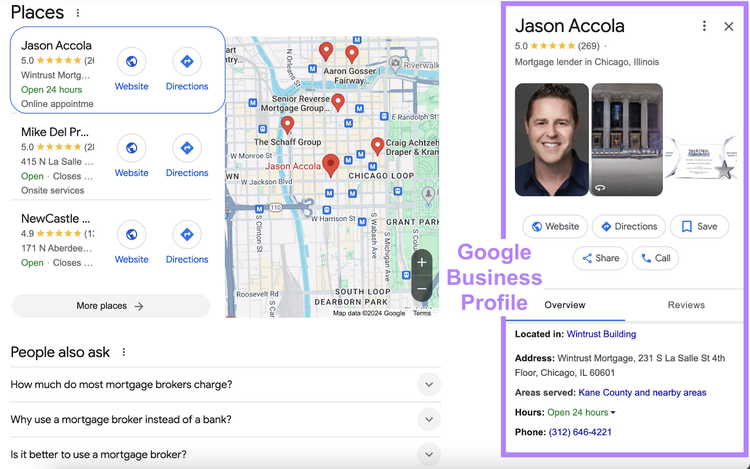
Creating Google profiles for your business locations (where relevant)
Tip
Claim your free Semrush trial to follow along with the tutorials in this guide.
Why Does SEO Matter in Financial Services?
SEO matters in financial services because search engines drive 2.2 billion organic visits to websites in the finance industry each month, according to our Market Explorer tool.
It can also generate brand awareness, foot traffic, and concrete business results for your financial services company.
To get a bigger slice of these benefits, you need a good SEO strategy.
Otherwise, you’re likely to lose out to your competitors.
Plus, financial services SEO is primarily about making your website better for users. Those visitors may be more likely to become clients—whether they come to your site from a search engine or somewhere else.
How to Do SEO for Financial Services
Here’s how to get started with SEO for financial services companies:
1. Conduct Keyword Research
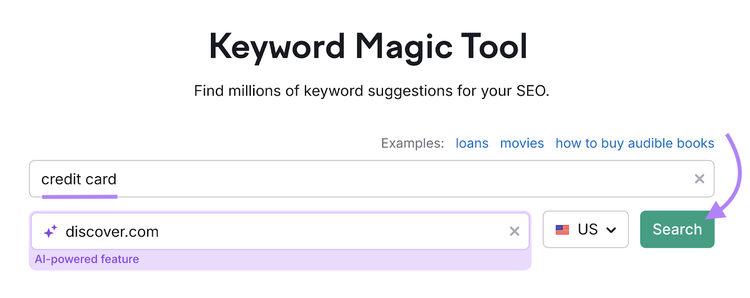
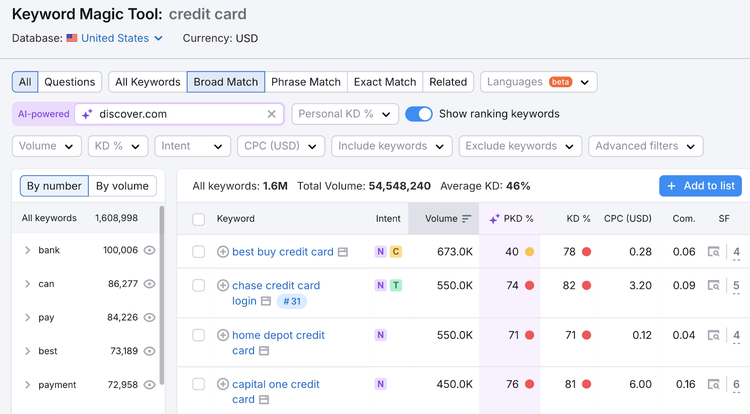
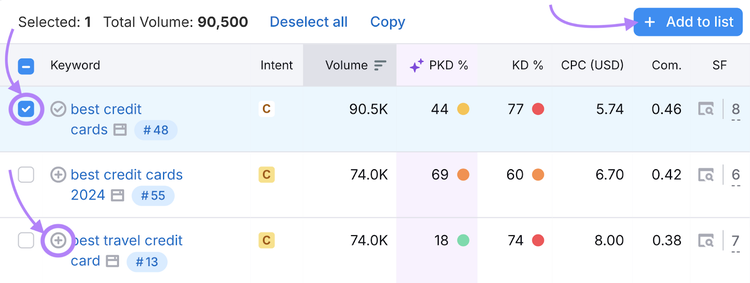
Keyword research is the process of finding and analyzing search terms your target audience uses that are relevant to your business.
It helps you figure out what kind of content to create. And how to optimize it.
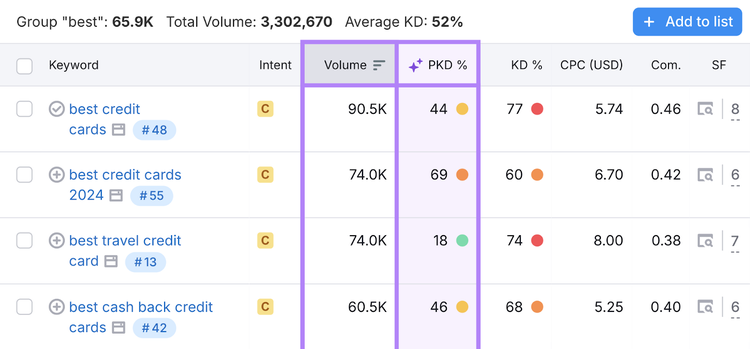
“Volume” refers to the average number of monthly searches the keyword gets.
Higher-volume keywords have more potential reach. But tend to attract more competition from other websites.
That’s why it’s important to consider volume alongside Personal Keyword Difficulty (PKD%). Which indicates how hard it’ll be for your website to achieve a top-10 organic position/ranking in search results.
Also pay attention to the “Intent” column.
This shows the type(s) of search intent behind the keyword—i.e., the general purpose behind each respective search.
Type
User intent
Keyword Example
Informational (I)
The user wants to find general information
“what is apr on a credit card”
Commercial (C)
The user wants to research products, services, or brands
“best credit cards”
Navigational (N)
The user wants to go to a specific website or webpage
“chase credit card login”
Transactional (T)
The user wants to perform an action (e.g., make a purchase)
“apply for amazon credit card”
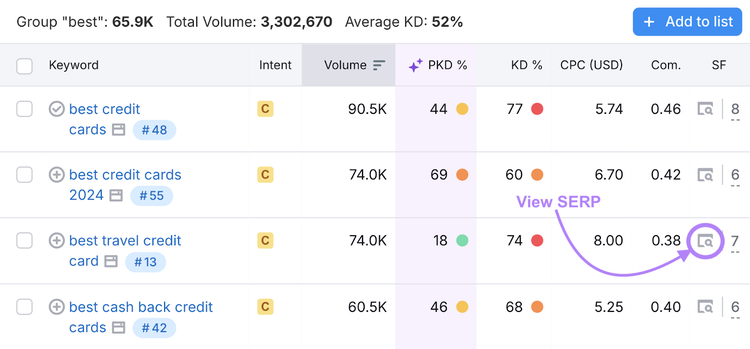
For a better understanding of a term’s search intent, click the icon in the “SF” column.
To give yourself the best chance of ranking prominently for your target keywords (the terms you selected in the last step), create quality content that:
Satisfies search intent better than competing content does
Delivers a great user experience
Demonstrates Experience, Expertise, Authoritativeness, and Trustworthiness (E-E-A-T)
E-E-A-T is a framework Google reviewers follow when evaluating the quality of content that appears in search results. So they can provide feedback aimed at improving the search experience.
In other words, you could cause harm to users by providing inaccurate or misleading information.
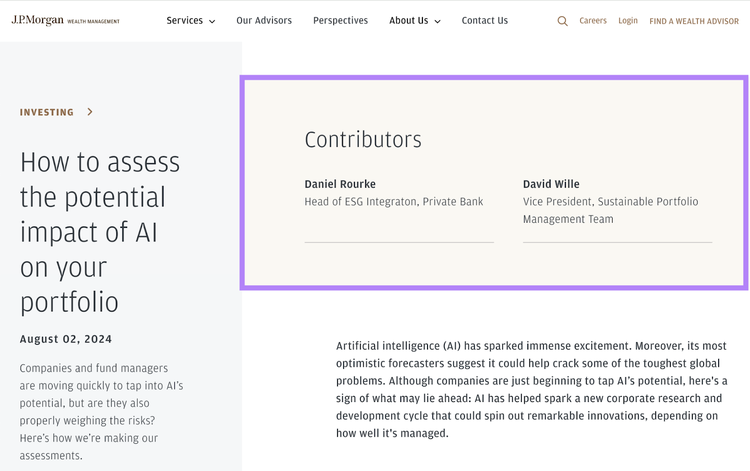
One way to establish trust is to have financial experts create or review your content. And display their credentials.
Like JP Morgan does:
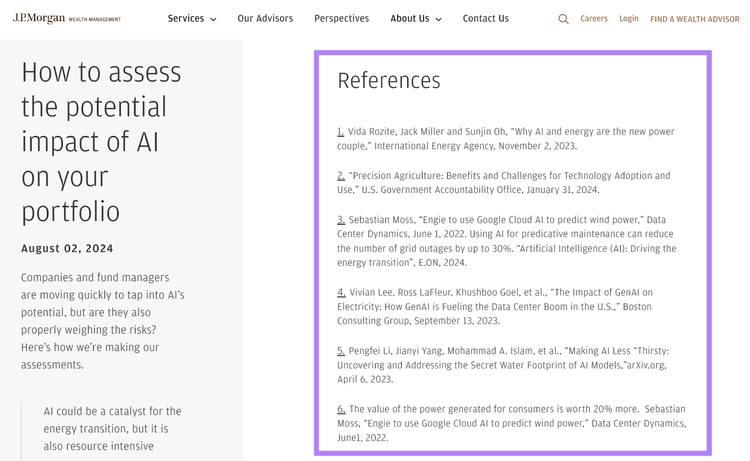
And always make sure your content is well-researched.
Sharing methodologies and sources helps prove that your content is reliable.
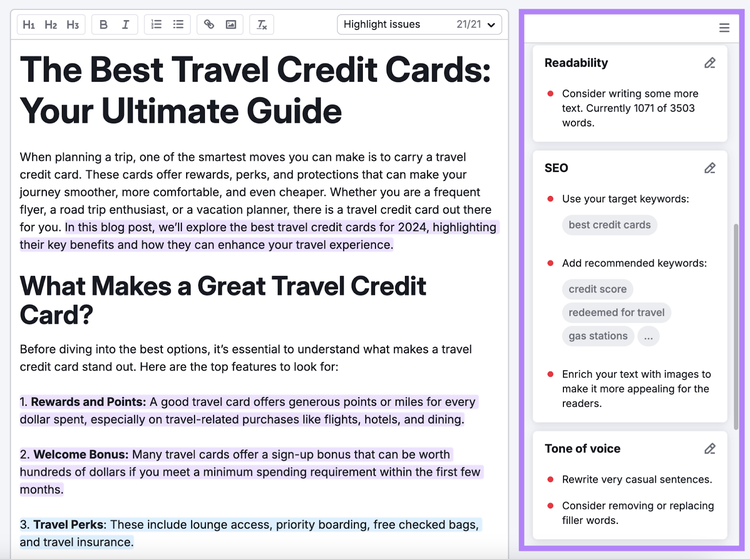
When doing SEO marketing for financial services, also be conscious of readability. Because the finance industry uses lots of technical terms that audiences may be unfamiliar with.
Use clear explanations, short sentences, and plain language to make your content more accessible. And build better relationships with your readers.
Tip
Use the SEO Writing Assistant to check your content’s readability and tone of voice as you write.
3. Follow On-Page SEO Best Practices
On-page SEO is about making your webpages more search engine-friendly.
First, use your keywords strategically. So search engines (and users) understand your content is relevant.
Where natural, incorporate them into these elements:
Heading tags: The main on-page heading (H1 tag) and any subheadings (H2s, H3s, etc.)
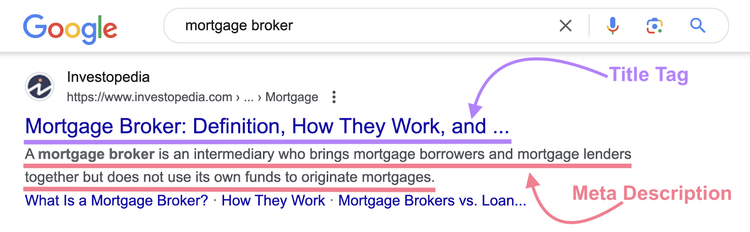
Title tag: The HTML page title that can appear in SERPs
This is a page summary that can appear in the SERP (underneath the title that’s displayed). So, your main goal in crafting one is encouraging users to click through.
Using schema markup (code that provides contextual information about your content) to help search engines understand and categorize different types of data on your page
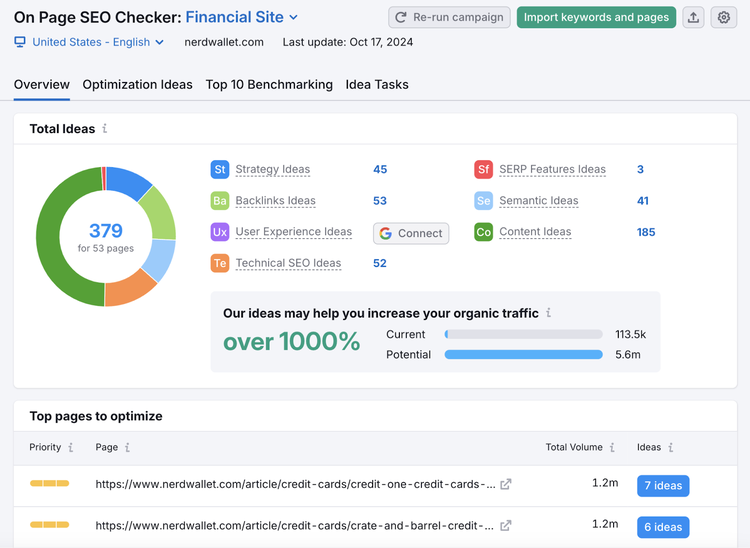
You can get tailored recommendations for your existing content with Semrush’s On Page SEO Checker.
It provides optimization ideas based on SEO best practices. And an analysis of your top-ranking competitors.
4. Run a Technical SEO Audit
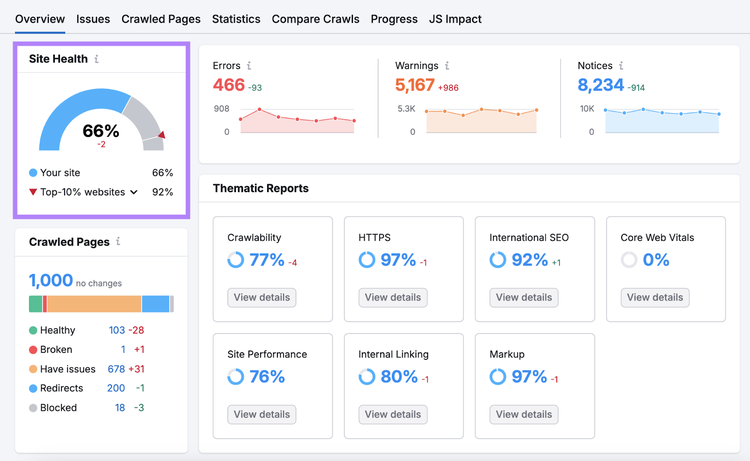
Run a technical SEO audit to see if your site has any technical issues that could hold its rankings back. Because even exceptional content can fail to gain visibility if you have these types of issues.
Start with our free SEO check to spot technical problems on a page. For full-site coverage, use Semrush Site Audit to surface problems relating to:
Crawling and indexing: Processes that search engines use to find your content and make it available in search results
Core Web Vitals: Metrics that Google uses to evaluate page experience (e.g., how quickly your main content loads)
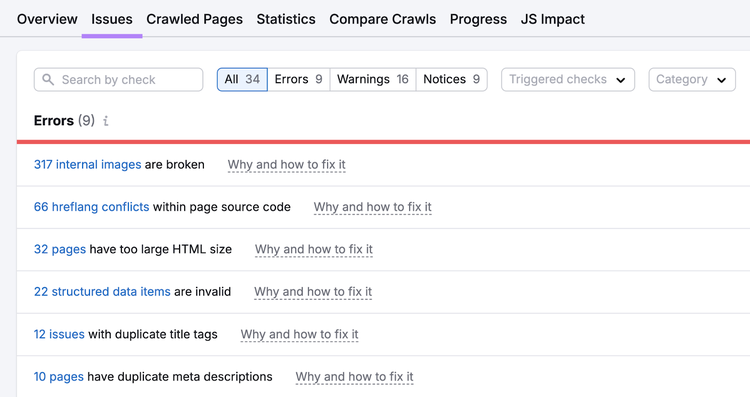
When your first audit is ready, go to the “Issues” report. To see a list of Errors (high priority), Warnings (medium priority), and Notices (low priority).
You can get advice on why and how to fix each one. Please note you may need to work with a developer for some of them.
Once you’ve addressed your issues, re-run the audit to see if you’ve successfully fixed them.
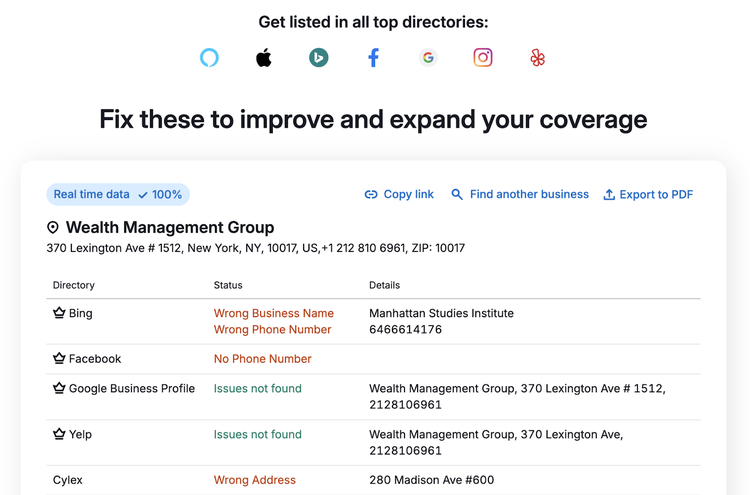
It’s also helpful to get listed on other reputable directories. Because it makes your business more findable. And may improve Google’s perception of your business.
Head over to the Listing Management tool to check whether you’re listed in prominent directories. And whether the information is accurate.
If not, consider signing up for a plan.
As a subscriber, you can update all your listings at once. And access a variety of other local SEO tools.
6. Build Backlinks
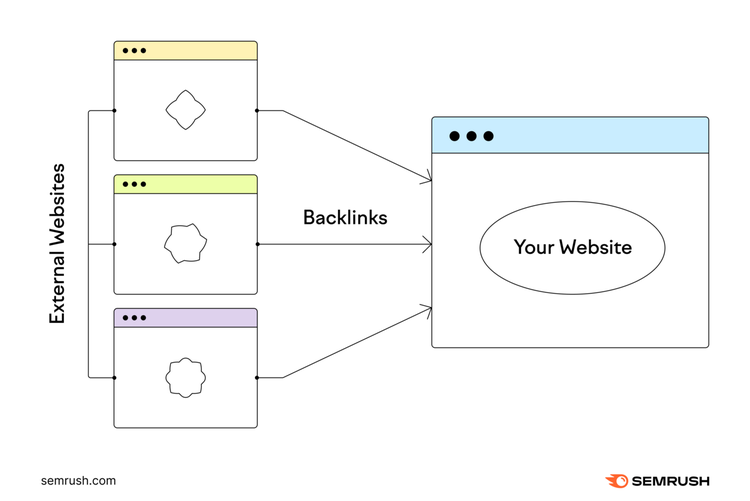
Backlinks are links on other websites that point to your website.
If you have backlinks from reputable and relevant websites, Google may perceive your site to be more trustworthy and authoritative.
And that can translate to better rankings.
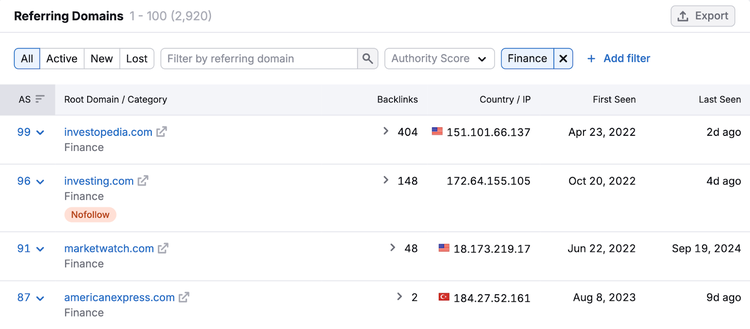
For example, Chase Bank has backlinks from thousands of finance sites. According to the Backlink Checker:
The process of trying to acquire valuable backlinks is called link building.
And there are many tactics you can use, including:
Link baiting: Create content that people naturally want to link to. For example, a financial report containing statistics that journalists want to cite. Or a free mortgage calculator tool that money bloggers can direct their readers to.
Skyscraper technique: Create a better version of a widely linked resource in your niche—then try to inherit its links. For example, one of Chase’s most-linked pages is a home value estimator. So, you might try to create a better version and encourage people to link to yours instead.
Email outreach: Find writers who may be interested in linking to your content (e.g., because you have data that could add value to their article). And email them with your proposal.
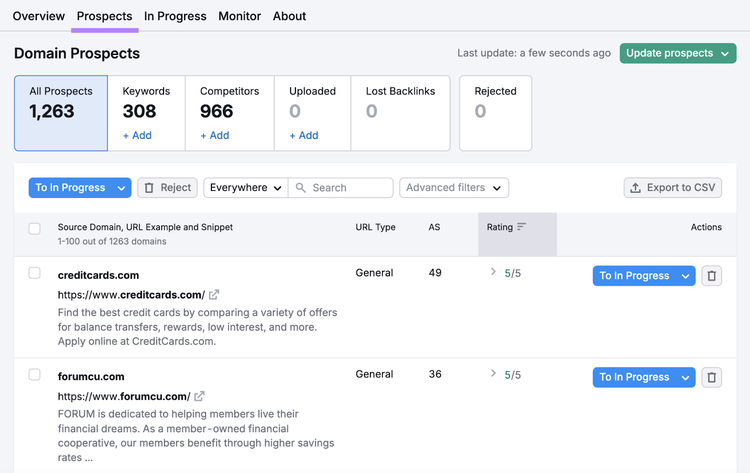
Unlinked mentions: Use the Media Monitoring app to find unlinked mentions (instances where people refer to your brand without linking) on the web. Then, get in touch with the writer and ask them to add a link.
Broken link building: Use the Backlinks tool to find broken backlinks to your own or competitors’ websites. Then, try to get them replaced with functional links to your website.
Media requests: Use a tool like Connectively to find and respond to relevant media requests (e.g., journalists might request expert commentary about the latest inflation figures). If your submission is used, you’re likely to receive a backlink as attribution.
Tip
Use Semrush’s Link Building Tool to streamline the outreach process. It helps you identify relevant contacts, track your outreach emails, and monitor acquired backlinks.
7. Track Your Results
Monitor your SEO results so you can invest more in the projects that work. And avoid or adapt the ones that don’t.
Here’s your quick guide to the most important metrics:
Rachel is a Senior Content Writer with 12+ years‘ experience in content marketing and SEO. In a previous role as Head of Content at a digital marketing agency, Rachel developed and executed search-driven content strategies for a diverse range of clients, including global ecommerce brands and local B2B companies. She later transitioned to an in-house role at an SaaS startup, where she focused on scaling content operations and driving organic growth.
Subscribe to learn more about General SEO
Subscribe
By clicking “Subscribe” you agree to Semrush Privacy Policy and consent to Semrush using your contact data for newsletter purposes
Rachel Handley
Rachel is a Senior Content Writer with 12+ years‘ experience in content marketing and SEO. She has worked agency-side, developing and executing content strategies for a wide range of brands, and in-house, driving organic growth for a SaaS startup.
Share
Tells Google to show you more from Semrush in AI, Search, and Discover.