
Businesses use marketing to promote their products, services, or brand. You can have diverse marketing objectives, from growing an audience to driving sales. But not all marketing channels work well for every business.
Below, we’ll go through 20 of the most useful types of marketing for both B2B and B2C businesses. We’ll also cover examples and best practices for each one.
1. Search Engine Marketing
Search engine marketing (SEM) is a digital marketing strategy to increase your site's visibility on search engine results pages (SERPs). It involves both search engine optimization (SEO) and paid advertising.
You can optimize your webpages to rank organically (for free) for keywords your target audience is searching for. And you can also buy ads that show up for those keywords in the SERPs.
There are many pay-per-click (PPC) platforms, including search engines and social media sites. But the one most relevant to SEM is Google Ads. These ads can appear throughout SERPs, and often at the top of the first page.
The screenshot below shows two types of PPC ads on a Google SERP. The first is a carousel of shopping ads. The second is a standard paid search ad.
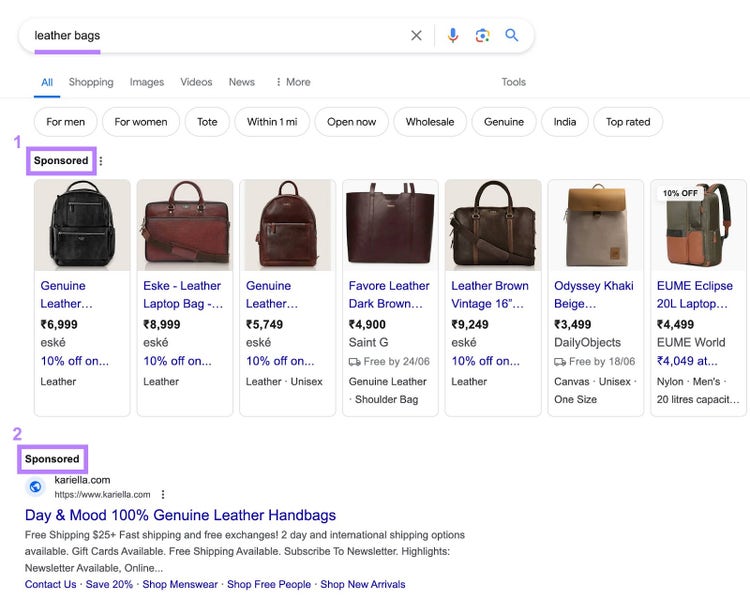
While SEO can involve investment, you don’t need to pay to rank in the same way as with paid ads. But you do need to optimize your pages for users and search engines. And create high-quality content.
The first stage of any successful SEO or paid advertising campaign is typically finding keywords that match what your potential customers are searching for. So that your content can appear in front of them.
How to Find Keywords for SEO Campaigns
Use Semrush Keyword Magic Tool to find keywords to target with your SEO campaigns.
To start, enter a broad keyword related to your business and choose a target location. Then click “Search.”
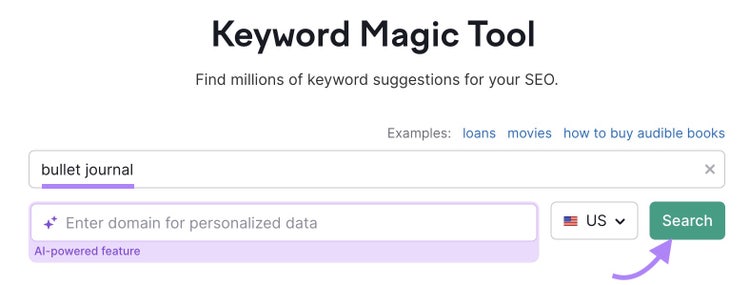
The tool will generate a list of related terms. But the best keywords have high search volume and low keyword difficulty.
To find them, click the “KD %” filter and select a custom range of 0-49. Then click “Apply.” This will show only keywords that are “Possible” or easier to rank for.

Your keyword list is automatically sorted by volume from highest to lowest. So the resulting list contains keywords that match our high volume/low difficulty criteria.

For example, if you sold customized bullet journals, there are a few keywords in the list above that you could target.
You could create a listicle of great “bullet journal ideas.” Or perhaps a shareable resource of “bullet journal templates.”
Or you could optimize your “habit tracker bullet journal” product pages for better visibility in search results.
Find Keywords for Your SEO Campaigns
with the Keyword Magic Tool
How to Find Keywords for Paid Advertising Campaigns
If you’re also using paid ads as part of your search engine marketing campaign, use Semrush’s Advertising Research tool to find keywords based on your competitors’ ad strategies. To see what’s working for them and how you can learn from it.
To get started, enter your competitor’s URL and click “Search.”
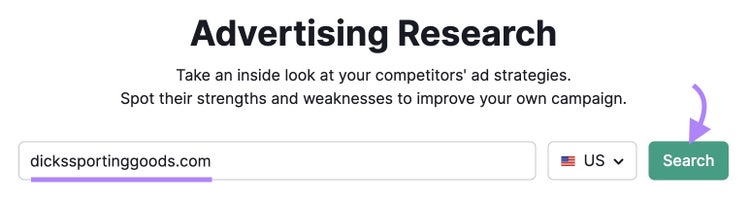
You’ll see an overview of their traffic, estimated ad costs, and the number of paid keywords their ads appear for.

This can give you an idea of the kind of money your competitors are spending on Google Ads. But to see the keywords they’re targeting, scroll down to the “Paid Search Positions” widget.
You’ll see each keyword their ads appear for. Along with metrics for each one, like search volume, the estimated traffic each one drives to their site, and how much it costs per click. You can even see the total cost of each keyword, and what percentage of their total traffic costs that corresponds to.

When choosing paid keywords you might want to target with your own SEM campaigns, consider the search volume, CPC, and competitive density (the “Com.” column above) in particular.
You ideally want to target keywords with high search volume, low cost per click, and low competitive density. To maximize your paid ads budget.
Search Engine Marketing Best Practices
- Combine organic and paid search engine marketing to optimize for both short and long-term results
- Use tools like the keyword tool and Advertising Research to ensure you’re targeting the right keywords with SEM campaigns
- Use SEM alongside other marketing types to target customers on various platforms
2. Social Media Marketing
Social media marketing is a digital marketing tactic that involves using social media platforms to connect and engage with a target audience.
Like search engine marketing, social media marketing consists of paid and organic strategies. And many social media sites have built-in PPC platforms.
This example from Wendy’s shows social media marketing inventiveness. The brand’s feed is full of witty jokes and sassy commentary that delights followers.

This helps Wendy’s get engagement on posts (likes, comments etc.) which can boost brand awareness. Without having to pay to post.
But you can also run ads on social media platforms. This can help increase your reach and put targeted ads in front of potential customers.
Here’s an example from Dose Daily, a drinkable supplement company. The brand uses engaging product videos and images to capture Instagram users’ attention:

Semrush Social lets you manage and analyze your social media performance, schedule posts, and manage your community. All in one place.
Once you connect your accounts, you’ll have access to a few key tools.
In the Social Poster, you can schedule posts days, weeks, or even months in advance. You can schedule posts to platforms like Facebook, Instagram, X (Twitter), LinkedIn, Google Business Profile, and Pinterest.
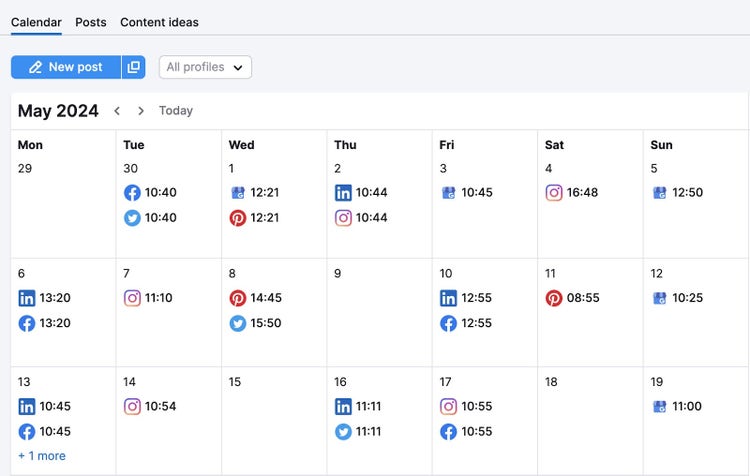
You can then monitor your social profiles’ performance in the Social Tracker. Which shows your top content by channel, an overview of engagement levels, and even comparisons with your competitors.
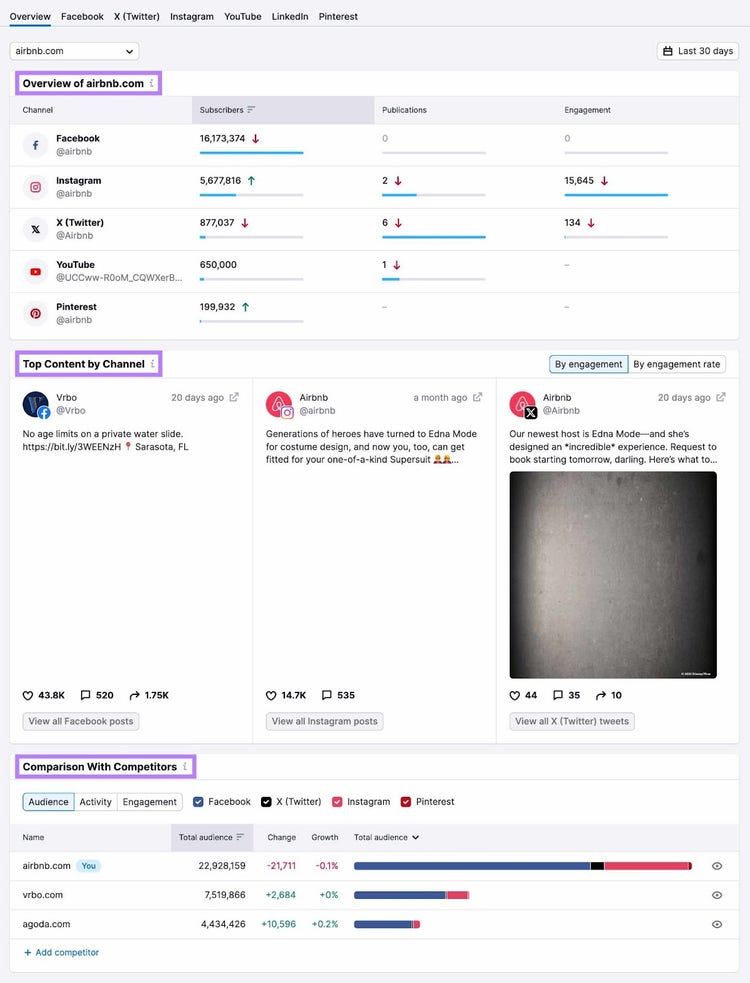
Get a deeper understanding of your engagement metrics with Social Content Insights. These can quickly show you which content is performing well. And which content is not. So you can continuously adapt your social media marketing strategy accordingly.

Access all of these tools and more with Semrush Social. To make it easy to manage, analyze, and improve your social media marketing strategy.
Social Media Marketing Best Practices
- Choose your platforms carefully based on your audience’s preferences and behavior
- Consider combining paid and organic social media marketing strategies
- Prioritize content that solves an audience problem or entertains them rather than promotional content
Streamline Your Social Media Management
with a Semrush Social Subscription
3. Content Marketing
Content marketing is the creation and distribution of content to grow, engage, and maintain your audience. A successful content marketing strategy helps you achieve your business’s goals through high-quality content that converts readers into customers.
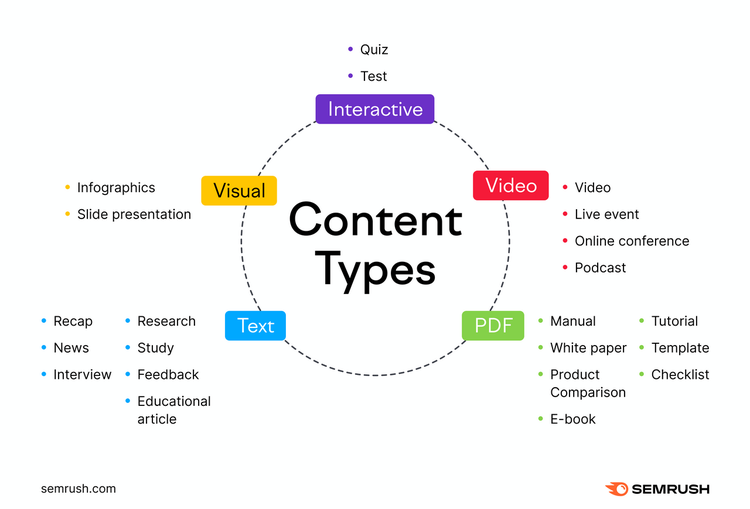
You can use diverse types of content in content marketing campaigns, including:
- Blog posts
- Newsletters
- Social media posts
- Ebooks
- Whitepapers
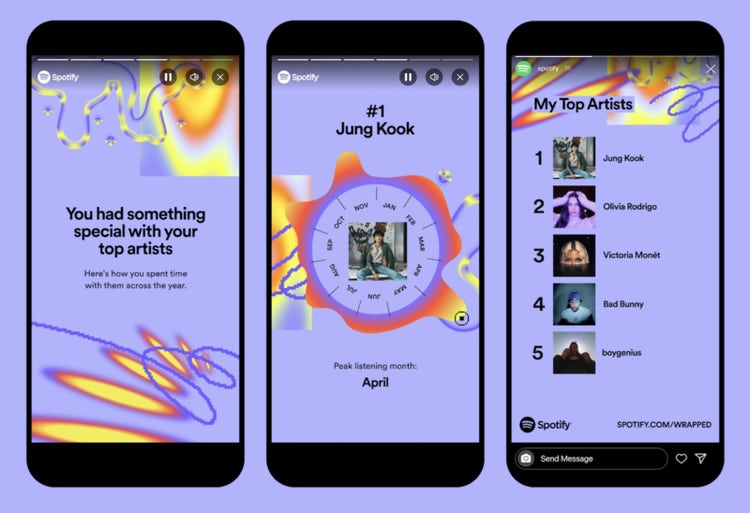
Spotify’s annual “Wrapped” campaign is an excellent example of content marketing. It gives customers an analytical view of their music tastes from the past year.
This engages current users with personalized content. And encourages them to share their “Wrapped” result with their friends and family. Boosting the campaign’s reach and attracting new customers.
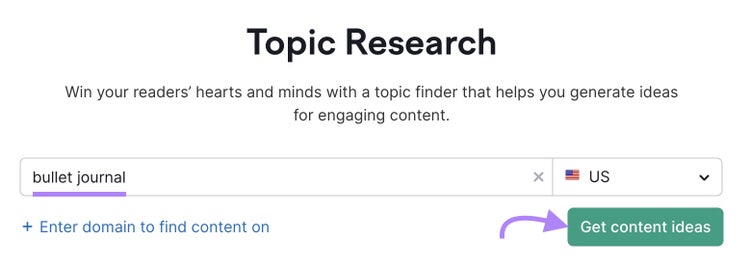
Use Semrush’s Topic Research tool to generate content ideas for your own brand.
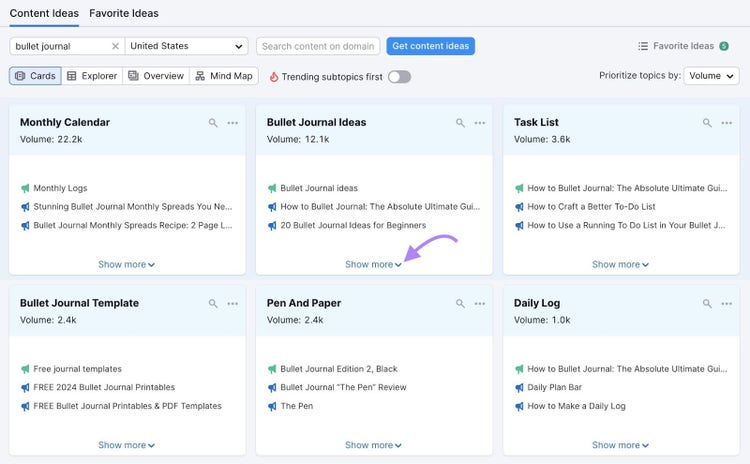
Just enter your topics of choice and click “Get content ideas.”
You’ll then see a selection of topic cards. Clicking “Show more” under one of them will show you more ideas.
You’ll then see lists of related headlines, questions, and searches. Along with metrics about the overall subtopic volume and difficulty.
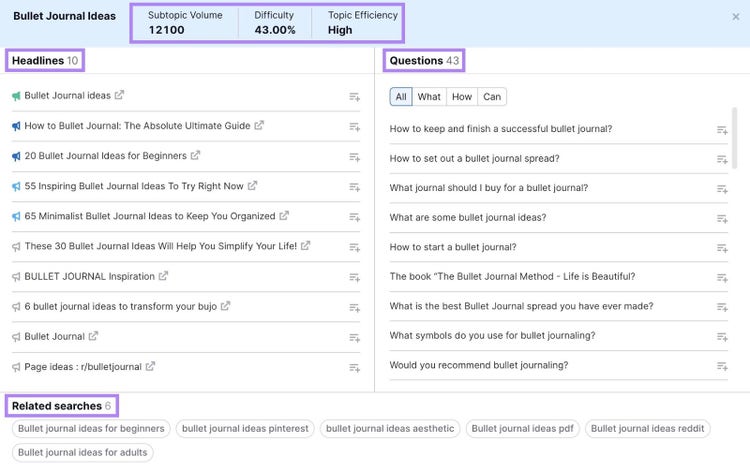
Going back to our example of someone selling bullet journals, there are a few opportunities here, such as:
- An interactive quiz on what people use their bullet journals for
- Blog posts to help people start and finish their bullet journals
- PDF templates on what to include in a bullet journal
You could then create this content on your chosen platforms (like a blog or on social media). To drive engagement with your audience and inform them about how your products can help solve their problems.
Content Marketing Best Practices
- Try out different types of content to see what works best with your audience
- Use content marketing as part of a multi-channel campaign, especially for driving brand awareness
- Leverage tools like Topic Research to quickly come up with lots of content ideas
4. Email Marketing
Email marketing is a direct marketing channel that allows you to connect with customers one-on-one.
You can use email marketing for various purposes within your wider strategy, including:
- Welcoming new customers to your business
- Telling existing customers about new products or promotions to drive conversions
- Getting feedback from customers to improve your products or services
- Sales emails to directly pitch products or services to potential customers or clients
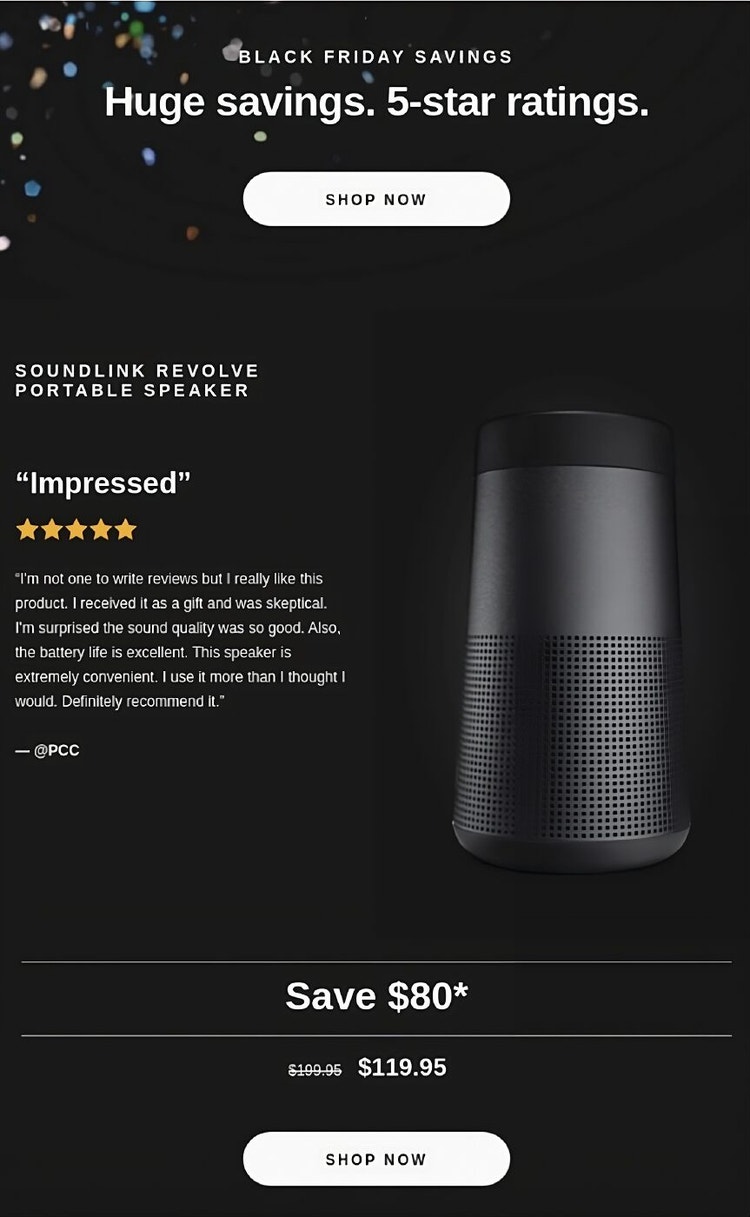
Electronics giant Bose's Black Friday email highlights a single product. It includes a prominent customer review. And details about the “huge savings” to encourage recipients to buy.
Email Marketing Best Practices
- Aim to capture your audience’s email addresses through CTAs on your website
- Segment your audience to facilitate better email personalization and increase engagement
- Try different types of email campaigns, like newsletters and promotional offers, to see what drives the most engagement and conversions
5. Influencer Marketing
Influencer marketing is the collaboration between businesses and individuals (influencers) who have a large social media following.
Common examples of influencers include celebrities, athletes, and digital content creators. Businesses will then compensate these influencers to promote their products or services.
For example, the social media post below shows influencer Ellen Brock promoting Purina cat food, along with a discount code that likely earns her some form of commission when people make purchases with it:

Influencer marketing can be a useful way to reach a wider audience. One that already trusts the influencer you want to work with.
But it doesn’t suit every business model. And it can be expensive. So you need to choose the influencers you want to work with based on your industry, goals, and values.
Influencer Marketing Best Practices
- Research influencers in your industry to find individuals who fit with your brand
- Choose a clear objective, like brand awareness or revenue growth
- Build strong relationships with influencers by listening to their feedback and giving them creative license to suit their audience
6. Public Relations
Businesses use public relations to maintain a favorable public image. They pitch the press for news coverage, podcast or video appearances, and speaking opportunities.
Here’s an example of a press release put out by Taboola, a recommendation engine for publishers, announcing a new partnership:
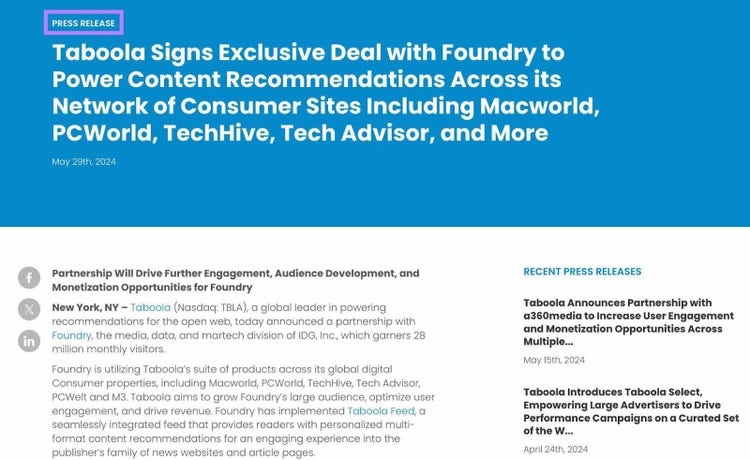
Press releases are a great tool to send to reporters, who then may cover the story if they feel it’s relevant for their audience.
Public Relations Best Practices
- Maintain strong relationships with journalists and content creators from related industry publications, podcasts, and news channels
- Always be authentic and honest. Only pitch when you have something valuable to offer.
- Keep your brand narrative and storytelling consistent
Further reading: A Guide to Digital PR & Why It Matters
7. Affiliate Marketing
Affiliate marketing is a type of digital marketing where companies offer compensation to merchants selling products on their behalf. These merchants are known as affiliates.
Affiliate marketing shares some similarities with influencer marketing. But while influencer marketing campaigns are often tailored to that specific influencer and their audience, businesses with affiliate programs may have hundreds or thousands of affiliates promoting their products. Without having much of a formal relationship with them.
For example, the online education platform MasterClass has an affiliate program. The New York Post reviewed its education platform, and would earn commission if readers signed up through its links.
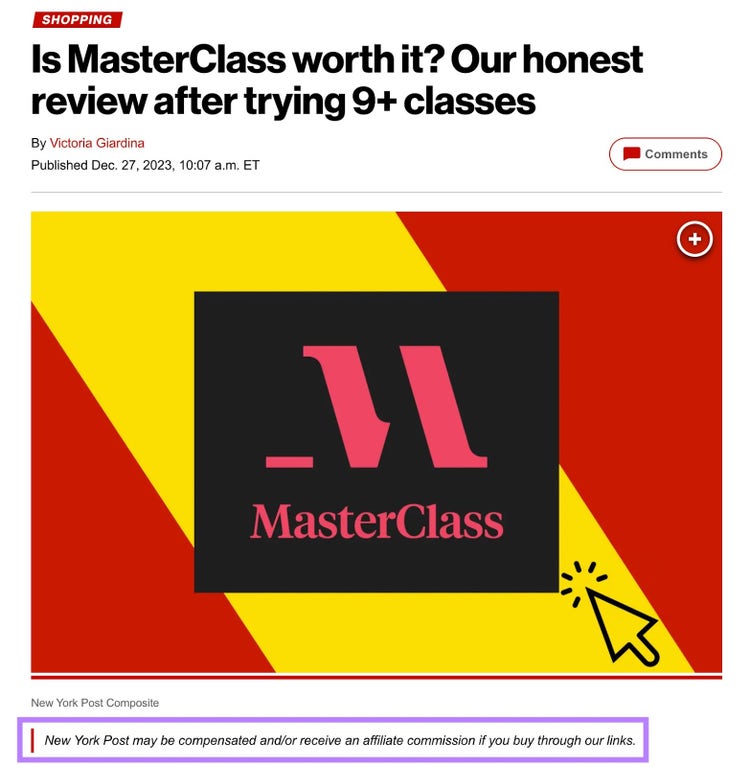
A call to action (CTA) prompts readers to sign up for MasterClass. Clicking the link leads you to a MasterClass landing page with a unique tracking code that tells MasterClass when the New York Post makes a sale. So that the New York Post can be compensated.
Affiliate Marketing Best Practices
- Look for affiliates who can access your target audience, like blog owners or YouTubers with relevant channels
- Create a clear commission structure, such as paying affiliates a flat fee or a percentage based on the number of sales they’ve generated for you over time
- Work with a platform like ShareASale or Awin to keep track of payments
8. Video Marketing
With video marketing, you create videos that promote or provide information about your products or services. These can be long-form (like YouTube tutorials on using the product) or short-form (like TikTok clips highlighting key features).
When asked about content format types, 45% of people said video content performed best. And 82% of respondents have been convinced to buy a product or service by watching a video.
Put your own video marketing strategy into action by starting with basic keyword research. To find out what people are searching for on the platforms where you’ll create your videos.
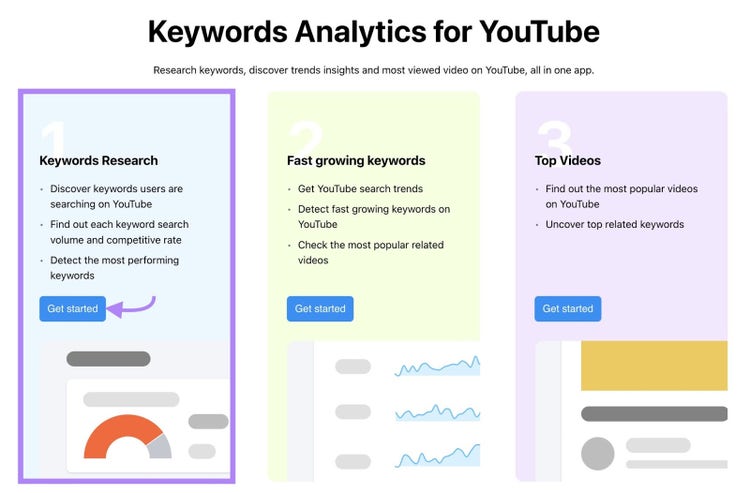
Use Keyword Analytics for YouTube if you plan on creating content for the platform. Whether that be long-form or short-form.
Go to the tool and click “Get started” under “Keywords Research.”
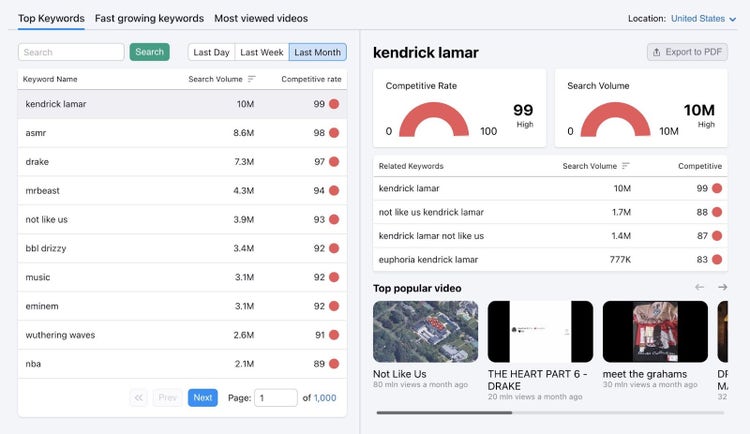
The next screen will show you the past month’s top YouTube keywords in your location.
Enter a term related to your niche in the search bar to find relevant keywords.
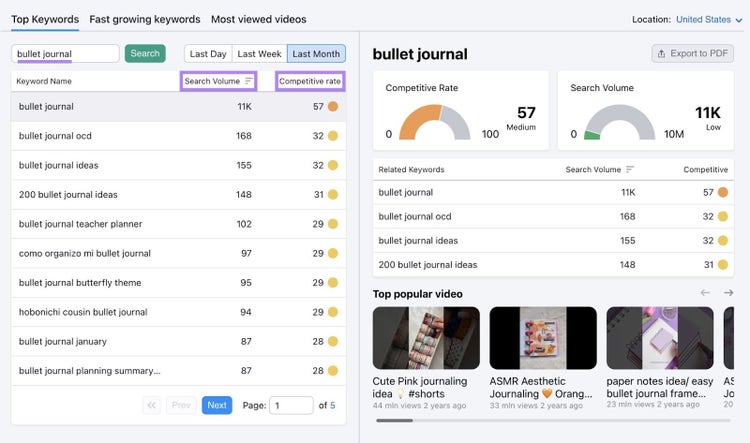
Use these ideas as a starting point for your video marketing campaigns. Ideally targeting keywords with high search volume and low competitive rate.
Click any of the terms to see more related keywords you may want to target.
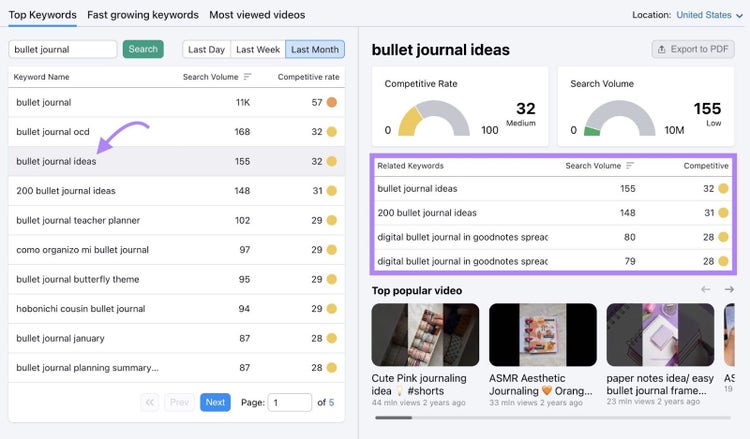
You’ll find Keyword Analytics for YouTube in the Semrush App Center.
Video Marketing Best Practices
- Try out both short- and long-form video content across various platforms
- Use video content as part of your social media marketing strategy to boost engagement and reach a wider audience
- Treat YouTube as a search engine and apply SEO techniques to increase your organic visibility on the platform
9. Print Advertising
Print advertising is a traditional marketing tactic that involves buying advertisements in printed/physical materials. It includes brochures, magazine ads, flyers, billboard ads, and more.
It’s one of the oldest forms of marketing, but brands still use it today. For example, Times Square in New York is full of both print and digital billboards.

As with many types of offline marketing, print marketing’s impact is difficult to measure. So, it’s often used in brand awareness campaigns or when targeting local audiences. Like this MotoX magazine ad:

Unlike many digital marketing tactics, where you can tie website visits and conversions directly to your marketing efforts, print marketing doesn’t inherently provide a way of tracking these metrics. So it can get very expensive very quickly.
Print Advertising Best Practices
- Use print marketing as part of your wider strategy, as it often doesn’t have high conversion rates on its own due to its broad targeting
- Use billboards and other out-of-home advertising placements to spread brand awareness at scale
- Set a budget and stick to it, as print advertising costs can quickly rise as you dial in your targeting
10. Direct Mail
Direct mail involves sending brochures, postcards, and other physical mail to your potential customers to generate business. It’s a specific subtype of print marketing.
An example of direct mail marketing comes from Oriflame. It sent personalized samples of its skincare products via mail.

Free samples can be a great way to delight potential customers while letting them try before they buy. This can build trust in your brand.
However, deploying a direct mail marketing campaign requires extensive input. You must collect contact information, segment your audience, and create tailored messaging for each segment. So, like print marketing in general, it can get quite expensive.
Direct Mail Best Practices
- Use bold colors or textured papers for flyers and postcards so they stand out
- Aim to delight your customers with personalized messaging
- Use QR codes to encourage potential customers to interact with your brand digitally, which can help you track your efforts
11. Broadcast Marketing
Broadcast marketing is a traditional marketing tactic where companies run television or radio ads. Typically, companies purchase a block of time to play their pre-recorded audio or video commercials.
TV and radio ad placements are often expensive. At the extreme end of the scale, a 30-second ad during the Super Bowl can cost as much as $7 million. And that’s not counting the production costs.
They’re also difficult to target at a narrow audience. And it’s hard to track their performance.
This makes TV advertising in particular more accessible for bigger companies than small brands. But broadcast marketing can still be an effective way to get eyes or ears on your products as part of a brand awareness campaign.
Broadcast Marketing Best Practices
- Research your target audience to ensure your ads air on the right platforms at the right times
- Factor in all expenses when budgeting your broadcast marketing ads, from production costs to the price of the ad slot
- Use broadcast marketing as part of a wider marketing strategy, as they’re best for brand awareness rather than highly targeted campaigns
12. Telemarketing
Telemarketing is a type of traditional marketing where a salesperson calls a potential customer over the phone to encourage a sale.
This type of marketing comes in various forms. And for various stages of the buying cycle. For example:
- Cold calling: Reaching out to prospects in an attempt to generate business. This generally has low conversion rates and is often seen as intrusive.
- Inbound calls: These are usually calls to individuals who have submitted their contact information and shown interest in your business. These may convert better than cold calls, but it may still be seen as an intrusive form of marketing.
- Sales calls: These are typically calls to potential or existing customers that have shown interest in what you offer. These require skilled salespeople to convert leads into customers over the phone.
Telemarketing is often done at scale with call centers. But small businesses can use telemarketing as well. As it can allow you to build a relationship with potential customers compared to email when done right. But when executed poorly, it can frustrate them instead.
Telemarketing Best Practices
- Don’t try to sell right away, and focus on the customer’s needs
- Offer to call back if it’s not a good time
- Focus your telemarketing efforts on leads that have shown strong interest in your products or services
13. Event Marketing
Event marketing is a traditional marketing tactic where businesses use events to attract attention to a brand, product, or service. These events are typically held in person, but online events are common and can work well too.
The key aim of event marketing is to create a memorable brand experience. Businesses can host events, attend trade shows as exhibitors or speakers, or sponsor events for exposure.
The Society for Human Resources Management (SHRM) uses this type of marketing. Its website has a dedicated events page for upcoming webinars and conferences:
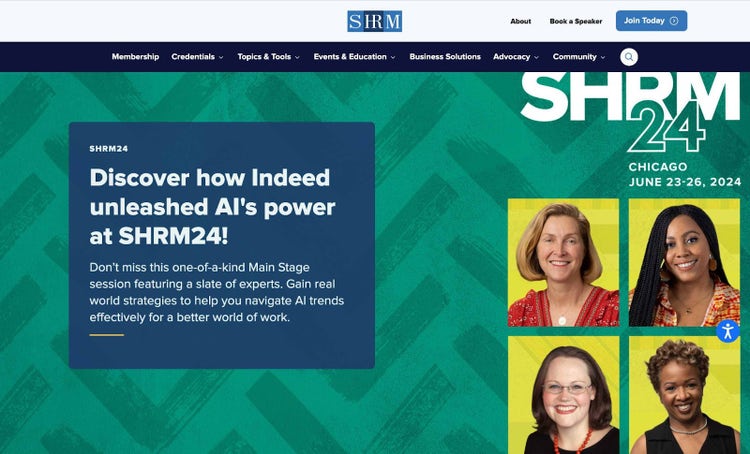
Event marketing can work well for brands looking to increase awareness or reach a specific audience directly. Putting on a popular and exciting event can build hype around your brand. And generate leads too.
Event Marketing Best Practices
- Think about whether hosting, attending, or speaking at events suits your objectives
- Trial both online and in-person events to see which one works best
- Aim to create memorable, valuable experiences
14. Acquisition marketing
Acquisition marketing is the process of moving customers through the marketing funnel. It covers the process of creating awareness, attracting leads, nurturing them, and converting them to customers.
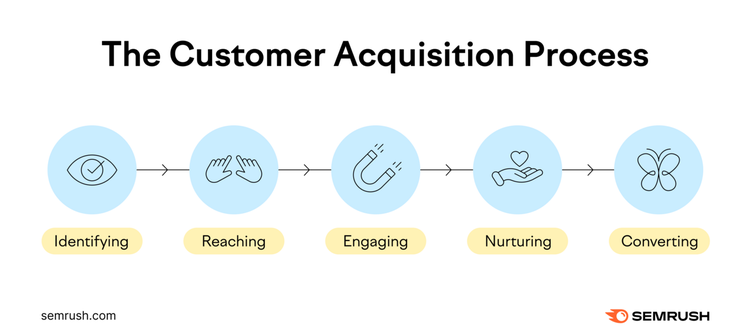
Acquisition marketing is therefore a catch-all term for many different types of marketing employed as a wider strategy.
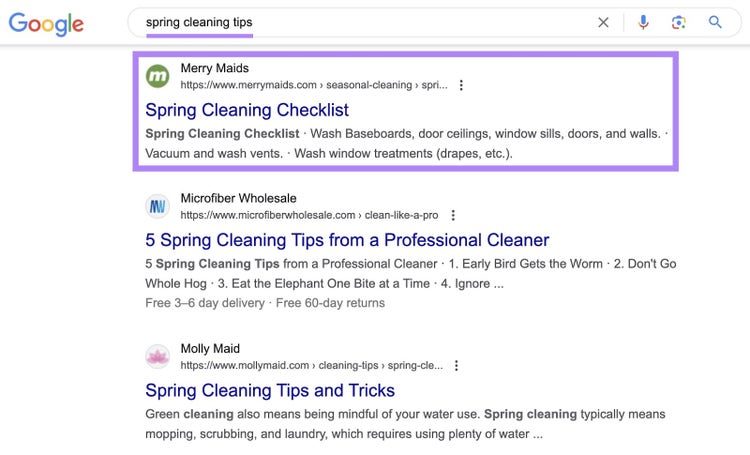
Let’s walk through an example campaign from Merry Maids, a national cleaning service with local branches throughout the US.
If you search for “spring cleaning tips” on Google, you’ll find a blog article on the Merry Maids website. This helps generate awareness of the brand and its services.
At the end of the blog article is information about the brand’s cleaning services. And a call to action to get a free quote.
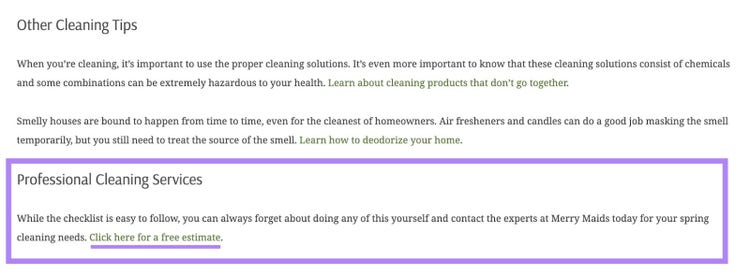
From there, the article prompts you to fill out a form on a landing page. You then become a lead that Merry Maids can reach out to and attempt to convert into a customer.
Acquisition Marketing Best Practices
- Track important marketing key performance indicators (KPIs) to measure performance across your marketing efforts
- Frequently test different content formats and campaign tactics
- Adjust your strategy continuously based on the data you gather in these tests
15. Inbound marketing
Inbound marketing is a type of digital marketing that attracts customers through tailored content or experiences. It’s also known as “pull” marketing because it attracts your audience.
Inbound marketing relies on audience targeting. It identifies people who meet your ideal customer profile and reaches them with tailored messaging across various channels.
The EarlyBird blog is an example of inbound marketing. It contains articles covering topics for families who want to invest for their children early.
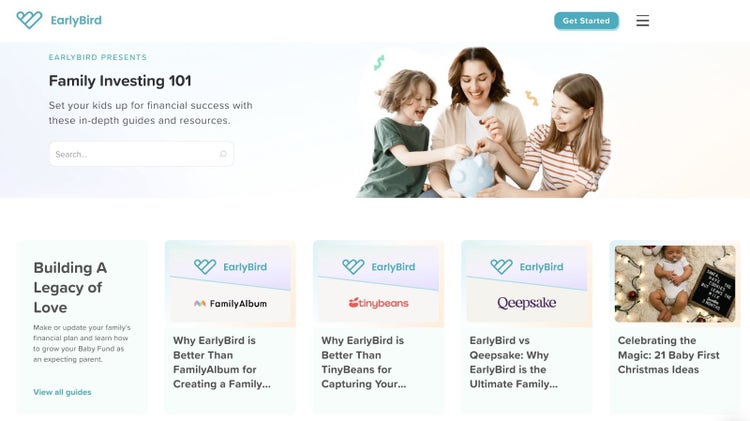
This inbound strategy “pulls” searchers to the website. As the articles may appear in search results. After receiving value from the article, readers may feel compelled to choose that brand for their needs. And convert into customers.
Inbound Marketing Best Practices
- Get to know your ideal customer through market research
- Use audience targeting to your advantage to maximize content relevance and ROI
- Create multi-channel campaigns to attract, engage, and delight your audience
Elevate Your Inbound Marketing Strategy
with a Semrush Subscription
16. Outbound marketing
Outbound marketing involves proactively reaching out to potential customers.
This marketing style is interruptive. You’re targeting an audience not necessarily looking for a product or solution. Unlike the “pull” nature of inbound marketing, you’re “pushing” your brand toward potential customers.
Your goal is to generate interest among potential buyers. So you’re casting a wide net to gain new customers.
Super Bowl ads are an example of outbound marketing. Every ad reaches a vast, demographically diverse audience. This offers great brand visibility but comes at the cost of relevance. And, as we mentioned earlier, this type of traditional marketing can be very expensive.
Here’s an example of Squarespace’s Super Bowl ad from 2023:

The ad is fairly straightforward, showing off Squarespace as a “website that makes websites.” It also features a famous face (Adam Driver), and a unique overall approach. An important trait of any TV commercial where capturing the audience’s attention is key.
Outbound Marketing Best Practices
- Focus on reaching the highest number of relevant customers while staying within your budget
- Use simple messaging to ensure your audience understands your offering
- Provide a clear next step for your audience to follow to make it easy for them to convert
17. Word of Mouth Marketing
Word-of-mouth marketing is a traditional type of marketing that encourages happy customers to recommend your products or services.
A 2022 Nielsen study backed up the potential value of word-of-mouth marketing strategies. Finding that 89% of people trust personal recommendations more than any other channel.
Companies can encourage word-of-mouth marketing in many ways. Loyalty programs and product referral campaigns are marketing activities designed to foster conversation about the brand.
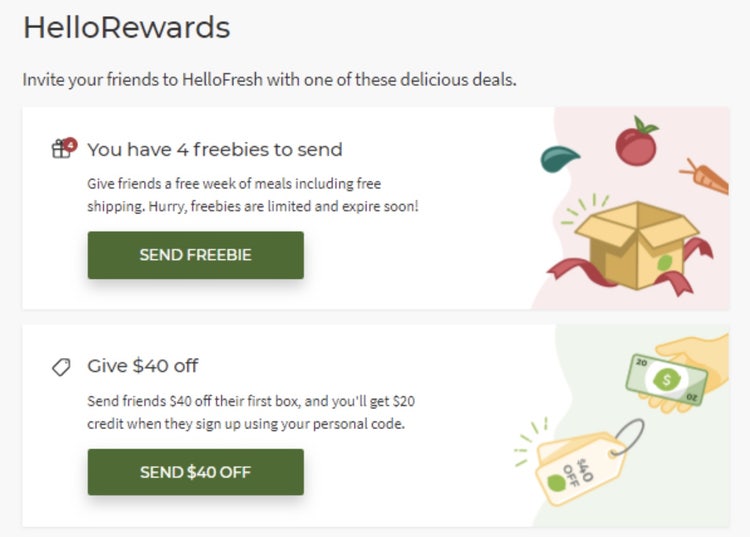
For example, Meal-kit service Hello Fresh encourages word-of-mouth marketing by offering referral discounts. Existing customers can send “freebies” to friends to try the service at no charge. Or they can share a referral code that rewards both parties with a discount.
Word-of-Mouth Marketing Best Practices
- Choose appropriate KPIs for measuring the success of word-of-mouth marketing, like referral code entries at checkout
- Encourage your customers to share your brand with their friends and family through friendly messaging
- Consider creating a loyalty program that encourages customers to refer others in exchange for a discount or free item
Further reading: Word of Mouth Marketing Statistics
18. Relationship Marketing
Relationship marketing is a type of marketing that’s designed to foster long-term relationships with customers. As opposed to just driving short-term results.
For example, Capital One knows its customers hate waiting in line at the airport. So, it reimburses card holders up to $100 when they pay the TSA PreCheck fee with their Capital One travel card.

Relationship Marketing Best Practices
- Focus on what keeps your customers happy to encourage loyalty
- Offer solutions to problems your customers have to show them you care about your relationship with them
- Measure customer satisfaction and retention to determine your effectiveness
19. Brand Marketing
Brand marketing combines traditional and digital marketing tactics to build brand awareness and affinity with your target audience. It improves brand reputation, which can result in more loyal customers. It’s often rolled out as part of a multi-channel strategy.
Brand marketing places the brand in front of a bigger audience and establishes itself as an authority.
The Michelin Guide is a good example of brand marketing. Although the project has almost nothing to do with Michelin’s key products (tires), it increased brand awareness and relevance.
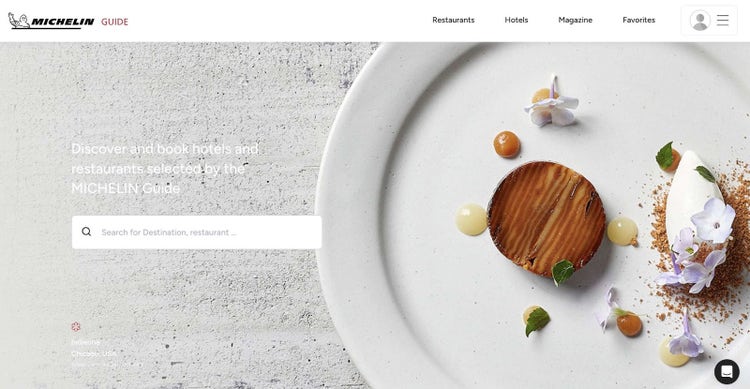
The guide is a well-known standard for distinguishing top-tier restaurants. It also has the bonus effect of associating Michelin’s name with quality and luxury.
Brand Marketing Best Practices
- Think outside of the box to promote your brand in creative ways that get attention
- Use a mix of other marketing types within your overall brand marketing strategy
- Keep your brand positioning and messaging consistent across all marketing channels
20. Product Marketing
Product marketing leverages a product as its own narrative. It can be as simple as focusing marketing campaigns on the product's benefits or features. You can also offer free trials or tiered pricing models and let the product market itself.
It’s a popular approach with SaaS businesses. These companies operate in competitive markets where slight differences in product positioning and pricing can create a sizeable competitive edge.
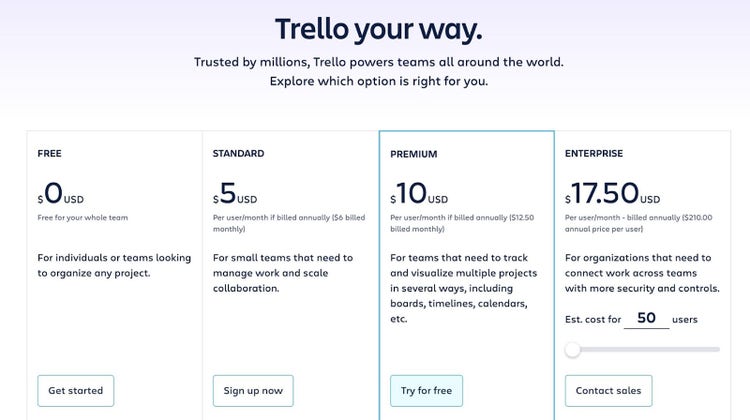
Trello, for example, offers a free platform with various price tiers and a free trial of its paid plans to let users try the product before committing.
Product Marketing Best Practices
- It often works well to keep your product marketing efforts simple, letting the product sell itself
- Use free trials or a freemium pricing model to let your customers try before they buy
- Use product-related creatives across all your marketing channels
Choose a Mix of Marketing Types to Create Your Perfect Campaign
Focusing on one type of marketing can generate results. But often a combination of marketing types provides the best return on your investment. As you can target a more specific audience at different stages of the buying funnel.
Like a solid content marketing strategy to drive traffic to your blog along with an email marketing campaign to turn those visitors into customers. Or combining your own video marketing campaigns with influencer or social media marketing for greater reach.
Semrush offers several tools to help you get the most out of whichever types of marketing you use for your business. These tools help you research, run, and measure your SEO, content, social, influencer, and digital advertising campaigns. Sign up for a free trial today.
Elevate Your Marketing Strategy
with a Semrush Subscription
This post was updated in 2024. Excerpts from the original article by the Semrush team may remain.

Sydney has been creating content for over 10 years. She has been a writer, content manager and coordinator, editor, and strategist. At Semrush, she’s a blog editor who makes sure each article is as accurate, optimized, and helpful as possible.

Tells Google to show you more from Semrush in AI, Search, and Discover.