Ecommerce (short for electronic commerce) refers to selling products or services online. Meaning customers use websites or apps to make purchases rather than coming to physical locations.
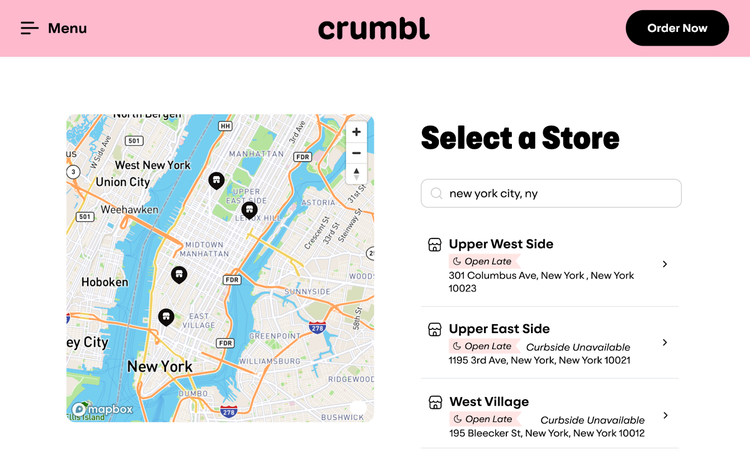
Some companies are solely ecommerce ventures. While others operate both online and in person—like Crumbl Cookies.
If you’re thinking about starting an ecommerce business, it's crucial to understand how it works in practice.
How Does Ecommerce Work?
Here's an overview of how a typical ecommerce transaction between sellers and buyers unfolds:
The seller lists their products or services on their website, mobile app, or a third-party marketplace (sometimes a combination). They’ll likely also use various digital marketing tactics to increase their visibility.
Potential customers find the products or services through online searches, social media, advertisements, and other marketing channels the seller uses. Or by directly visiting the online destination(s) where they’re sold.
When customers are ready to buy, they add items to their virtual shopping carts
At checkout, customers provide payment information (credit card, digital wallet, or other another type of online payment method)
The payment is processed securely through an online payment gateway
For physical products, the order is fulfilled and shipped. For services or digital goods, access or delivery is provided electronically.
After the customer receives their order, they may have the opportunity to provide feedback and rate their experience. Or initiate a return if necessary.
Advantages of Ecommerce
Running an ecommerce business has many perks:
Global reach: Ecommerce allows you to offer your products or services to customers worldwide. Meaning your potential customer base is quite large.
Convenience: Customers can engage with your business at any time, from anywhere, and without being limited by physical locations or business hours
Low operating costs: Many ecommerce businesses enjoy lower operating costs compared to traditional brick-and-mortar operations. Because they don’t have to account for expenses like rent, utilities, etc.
Online purchase popularity: Global ecommerce transactions are expected to surpass $8 trillion by 2027, according to Statista. Which means you have ample opportunities for selling online.
More data: Ecommerce businesses typically have more opportunities for easily collecting and storing information about prospects and customers. Which can be used for personalized marketing and customer retention.
Tip
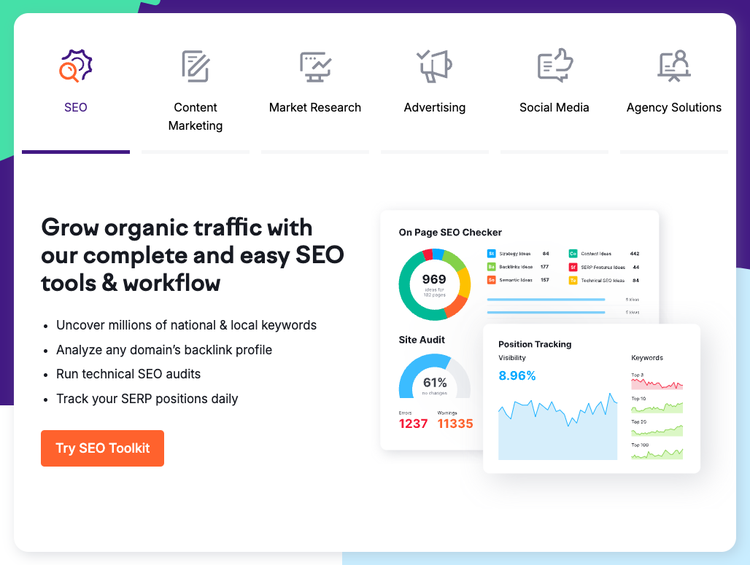
Semrush offers a suite of marketing tools to help you get started with digital marketing. Sign up for a free account and take your business to new heights.
While ecommerce has many benefits, it also comes with some challenges:
Intense competition: Because of how simple it is to get started, the ecommerce landscape is highly competitive. Which means both established players and new entrants are competing for the same market that may or may not be growing quickly.
Shipping and logistics: If you sell physical products, managing inventory, fulfilling orders, and handling returns can be complex
High customer expectations: Customers expect fast shipping, easy returns, and responsive customer service. And it can be challenging to maintain those consistently.
Limited face-to-face interaction: Ecommerce often lacks the personal touch of in-store shopping, which some customers may prefer
Data security: Customers provide financial information and personal details during online transactions. So, ecommerce businesses need to take extra precautions to ensure data is protected.
Types of Ecommerce Businesses Models
In ecommerce, there are several business models you can adopt.
Here are the main ones:
Business to Business
The business-to-business (B2B) model is when businesses sell products or services to other businesses. And the sales cycle is typically rather long—it can take weeks or even months to close a deal.
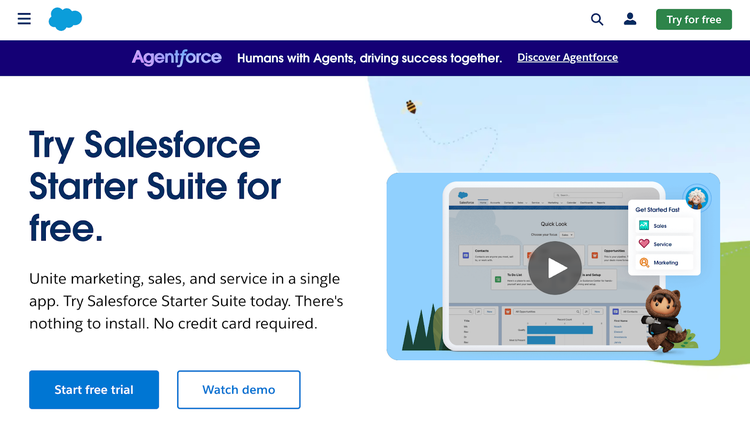
The CRM software company Salesforce is a prime example of a B2B ecommerce company. They offer cloud-based customer relationship management solutions to businesses of all sizes.
Business to Consumer
The business-to-consumer (B2C) model is when businesses sell products or services directly to individual consumers. Rather than to other businesses.
And this is the most common form of ecommerce.
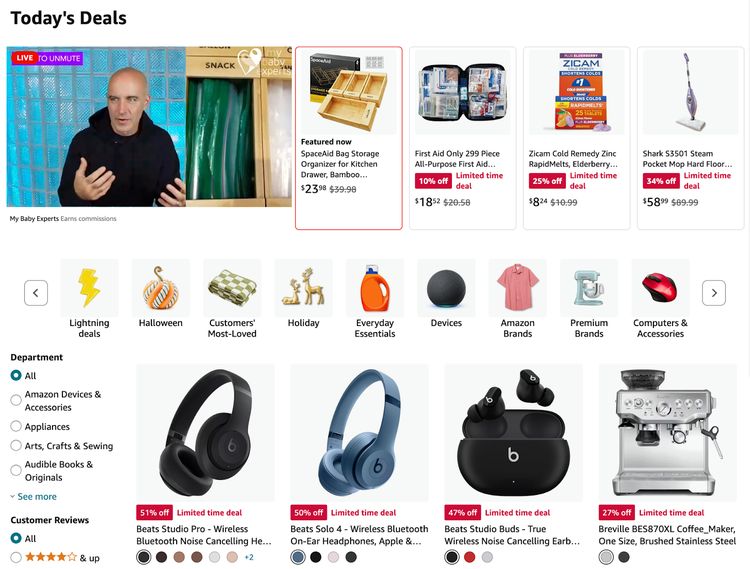
Amazon is a great example in this category. They offer a vast array of products directly to consumers through their online marketplace.
Business to Government
The business-to-government (B2G) model involves businesses selling products or services to government entities. Such as agencies and departments at the federal, state, and local levels.
This may include supplying equipment, services, or technology.
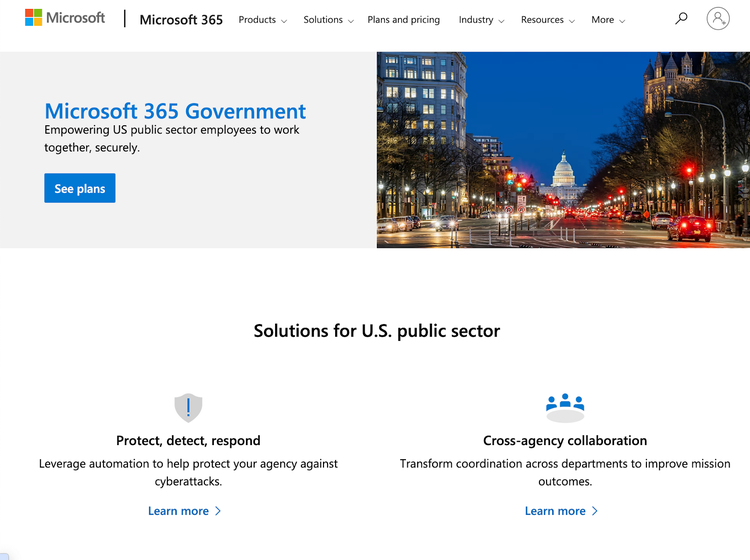
For example, Microsoft provides a version of its software to various government agencies to improve their efficiency and security.
Consumer to Consumer
In the consumer-to-consumer (C2C) model, individuals sell products or services to other individuals. Often by becoming sellers on online marketplaces.
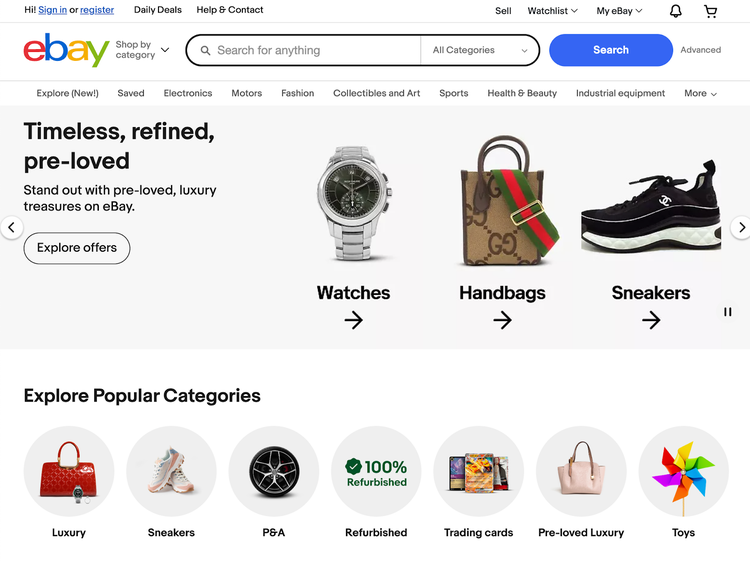
eBay is a prime example of C2C ecommerce that makes it easy for individual buyers and sellers to connect.
Consumer to Business
The consumer-to-business (C2B) model is when individuals offer products or services to businesses. This reverses the traditional B2C relationship, allowing individuals to create value for companies.
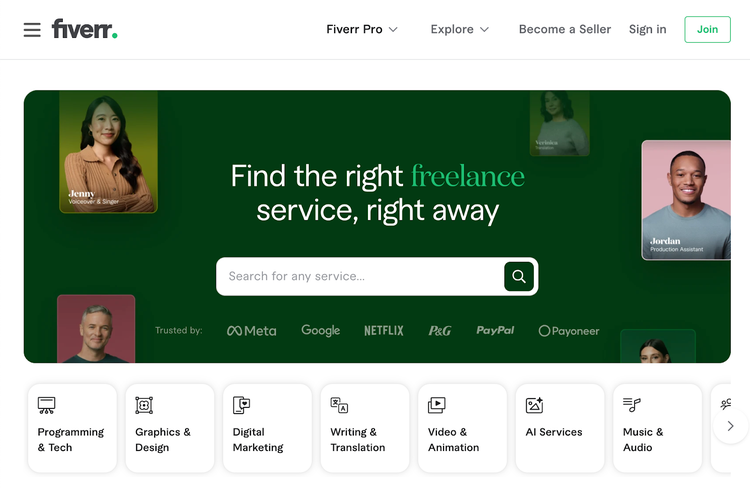
Fiverr is a great example of this. This platform connects businesses with freelancers who provide a wide range of services—from graphic design to writing and programming.
Ecommerce Revenue Models
Ecommerce businesses can use one or more of the following revenue models:
Direct sales: This is when revenue is generated from selling your own products and services. For example, an online electronics retailer and a business consultant both follow this model.
Subscription: You offer access to your products or services through a recurring fee (often monthly). Many also operate on a freemium model that offers a basic version for free but charges a premium for a more advanced one. Like Spotify.
Affiliate marketing: You promote other companies' products or services and earn a commission based on the results you drive through your unique referral links. Commissions are often based on sales, but it depends on the relationship.
Marketplace: You join a platform to sell through, and the platform provider earns a commission based on the sale. Amazon's third-party seller program is a prime example.
How to Start an Ecommerce Business
Launching an ecommerce business isn’t the same for everyone. Because it depends on your business model, the revenue model(s) you choose, and more.
As an example, let’s say you’re going to run a B2C ecommerce store and sell cosmetics directly on your own website.
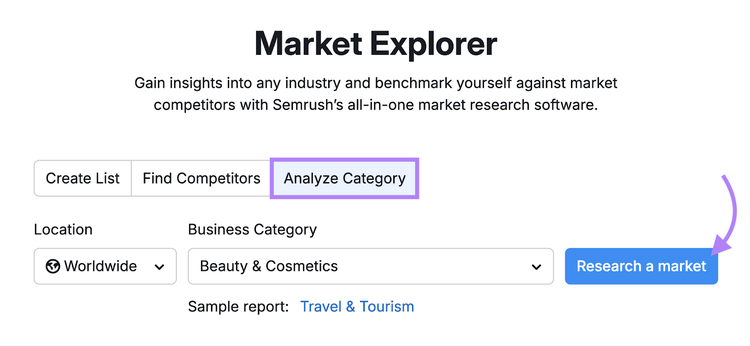
The first step is to learn about your market and customers, so you can make informed decisions. This is called doing market research.
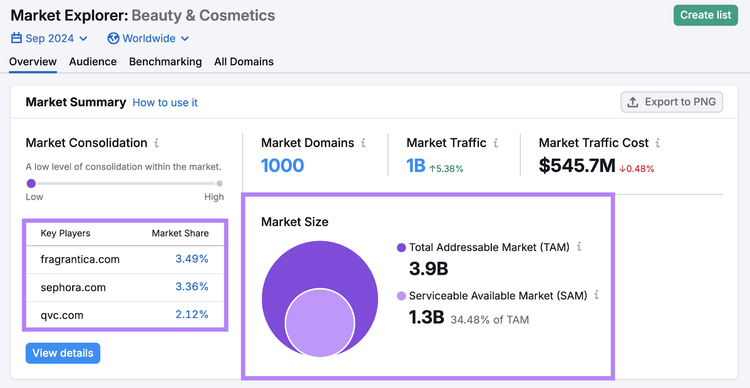
Open the tool and click “Analyze Category.” Then, select your location, choose your business category, and click “Research a market.”
You’ll see key information about your chosen industry. Like key players and their positions in the market. Plus the overall market size.
Note
This is also a good time to verify that your business can be successful. If the market size seems small or is dominated by just one or two companies, you may want to consider other options.
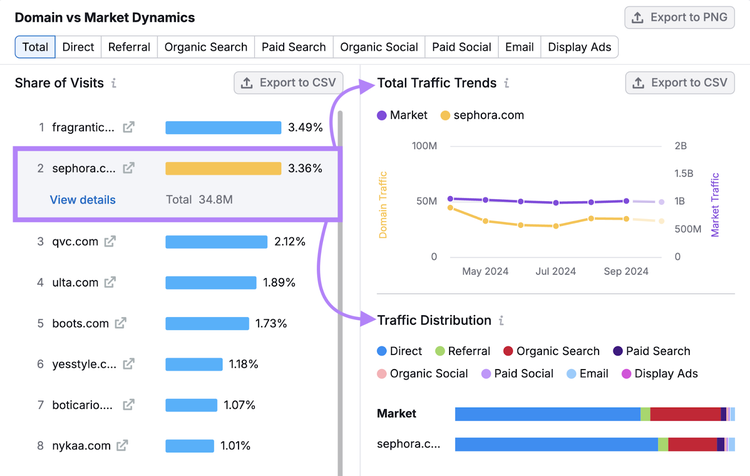
Scroll down to the “Domain vs. Market Dynamics” section and click on the different competitors. To see information about how much traffic their websites get and where that traffic comes from.
This information can give you ideas about marketing activities you may want to try.
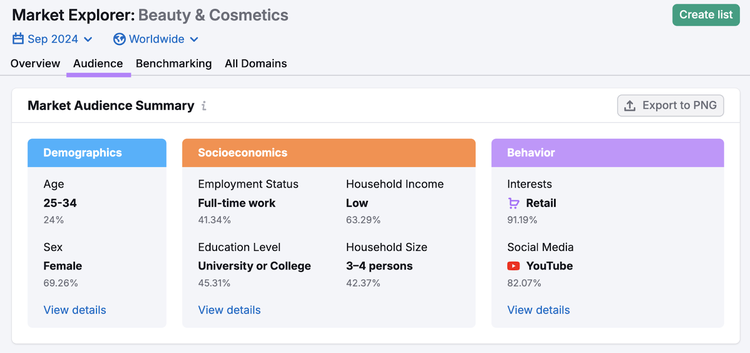
Next, click the “Audience” tab to learn about your audience’s age, gender, socioeconomic status, etc. Which can help you make decisions related to targeting, pricing, and more.
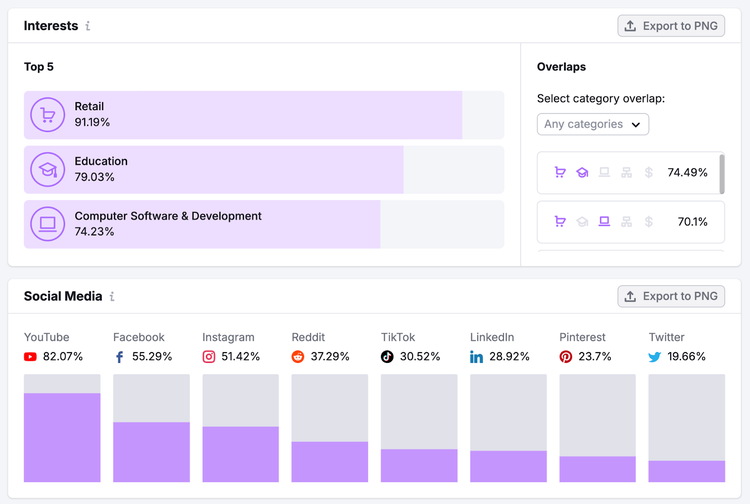
If you scroll down further, you’ll also see your audience’s top interests and preferred social media platforms.
These insights can further guide your ecommerce marketing strategy. Because you’ll know where your potential customers are spending their time online.
Once you’ve analyzed this market data, you can start developing your website. Which you can build yourself using platforms like Shopify or Wix. Or with the help of a developer.
Once your digital storefront is set up, you'll add your products, upload product images, write detailed descriptions, and set prices. To help customers make informed decisions.
Next, you'll need to set up payment processing. Popular options include PayPal, Stripe, and Square. And make sure to offer multiple payment methods to cater to different customer preferences.
After that, it’s time to establish your shipping and fulfillment process. Which includes deciding on shipping carriers, setting shipping rates, and determining how you'll handle order fulfillment.
You might choose to handle order fulfillment in house or partner with a third-party logistics provider like ShipMonk or ShipBob.
Finally, your store is ready to launch. And that means you can push your site live and start promoting your products.
Launch Your Ecommerce Business Today
If you have a solid ecommerce business idea, now is the time to turn it into reality.
Sydney has been creating content for over 10 years. She has been a writer, content manager and coordinator, editor, and strategist. At Semrush, she’s a blog editor who makes sure each article is as accurate, optimized, and helpful as possible.
Subscribe to learn more about Ecommerce
Subscribe
By clicking “Subscribe” you agree to Semrush Privacy Policy and consent to Semrush using your contact data for newsletter purposes
Share
Tells Google to show you more from Semrush in AI, Search, and Discover.