Dental SEO: The Complete Guide to SEO for Dentists
Expert reviewed
Our subject matter experts have reviewed this article to ensure it meets the highest standard for accurate information and guidance. Learn more about our editorial standards and process.
Dental SEO (search engine optimization) is the process of optimizing a dental practice’s online presence with the aim of getting more exposure in unpaid search engine results. It’s a marketing tactic that helps dentists acquire new patients.
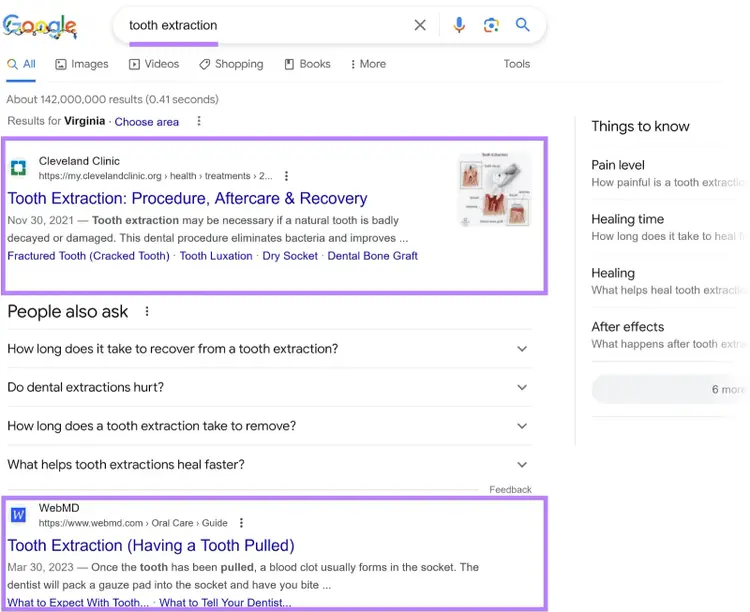
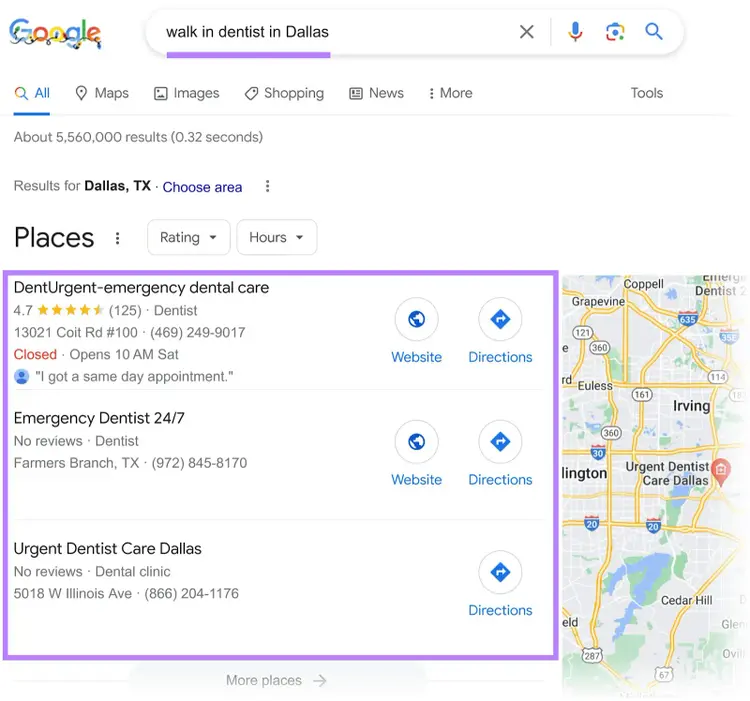
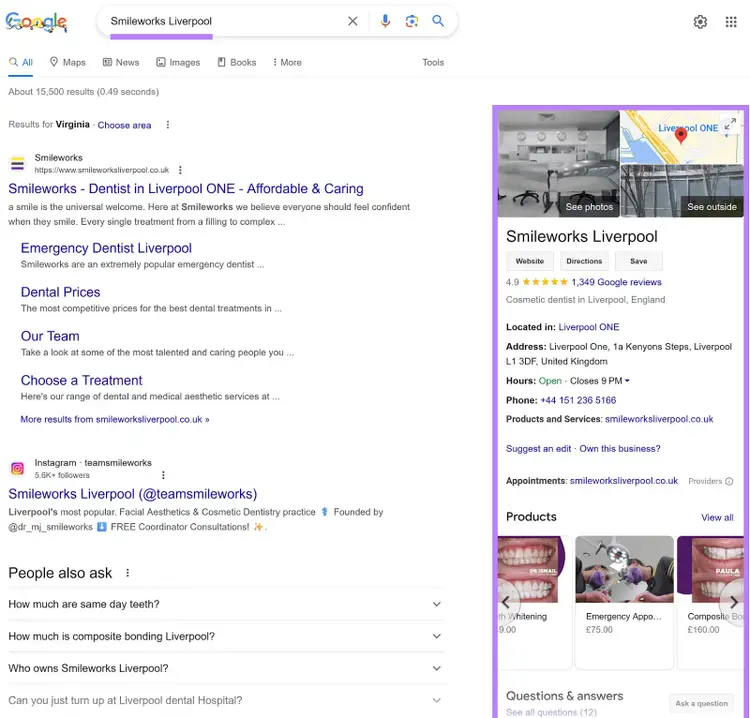
For example, dental SEO can help you earn Google rankings like this:
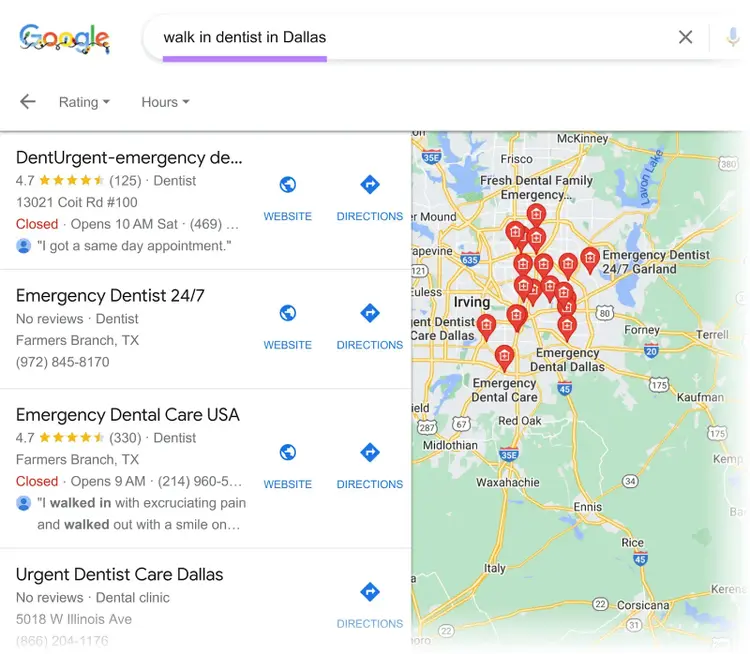
And this:
This exposure can drive people to visit your website or contact your practice.
Dental practice SEO can benefit general dentists, orthodontists, pediatric dentists, periodontists, prosthodontists, oral surgeons, and endodontists. No matter their size or location.
Why Is SEO Important for Dentists?
SEO is important for dentists because many patients look for dental services and information through search engines.
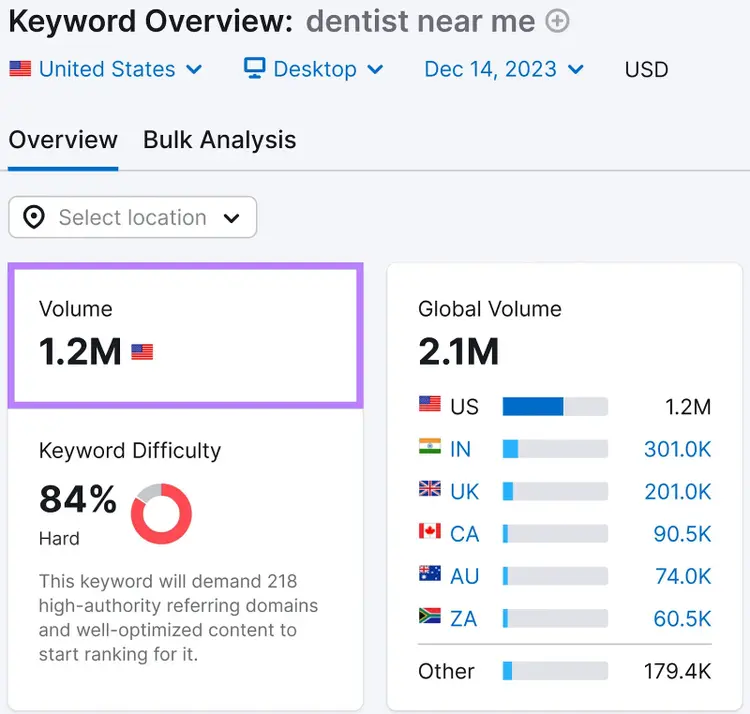
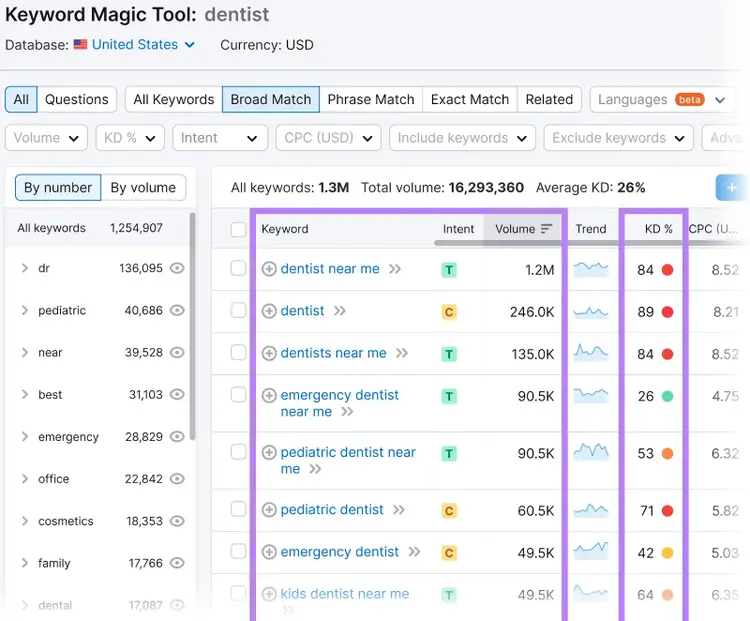
For example, there are over 1.2 million Google searches for "dentist near me" in the U.S. every month, according to our Keyword Checker.
If your dental practice doesn’t appear when people search for relevant keywords, you’ll likely lose business to one of your competitors.
You need to rank prominently, too.
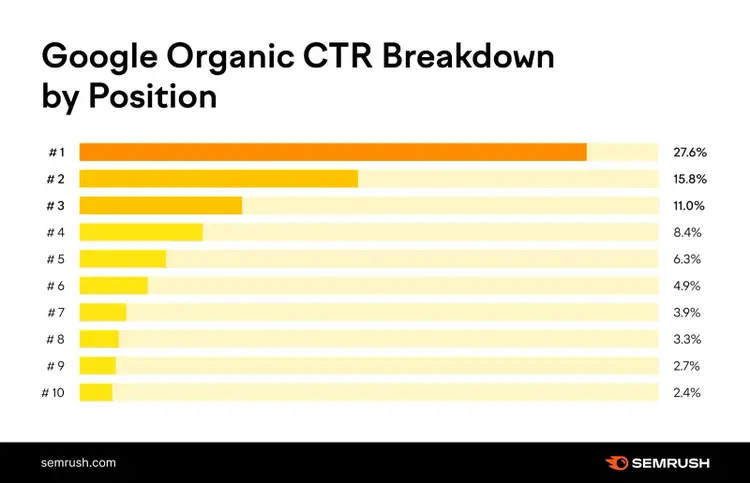
On average, 27.6% of searchers click the top organic (unpaid) result. But only 2.4% click the organic result in position 10.
Whether you’re doing SEO for a dentist or another business, the same SEO basics apply.
But dental practices should prioritize some techniques. Particularly when it comes to local SEO (i.e., reaching searchers in your area).
Here are 10 tips for success:
1. Update Your Information on Google Business Profile
Google Business Profile is a free tool that lets you manage your business listing on Google.
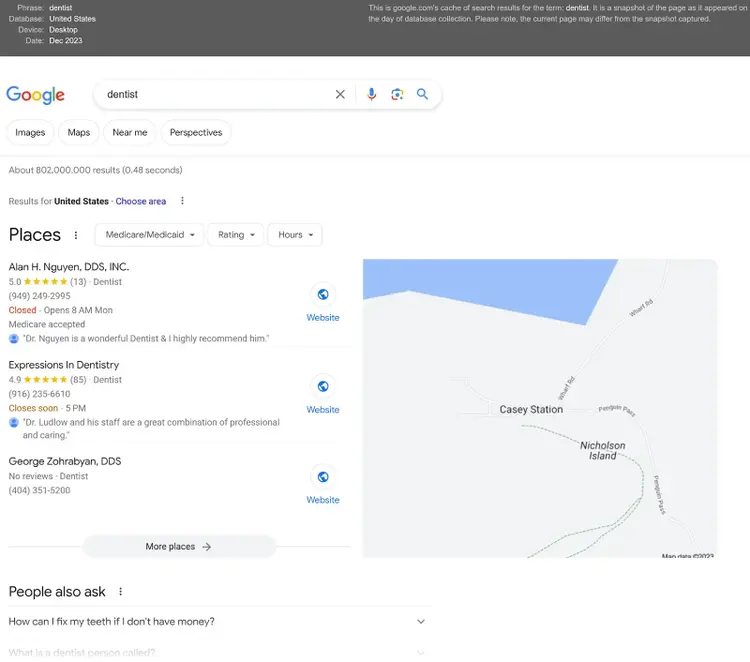
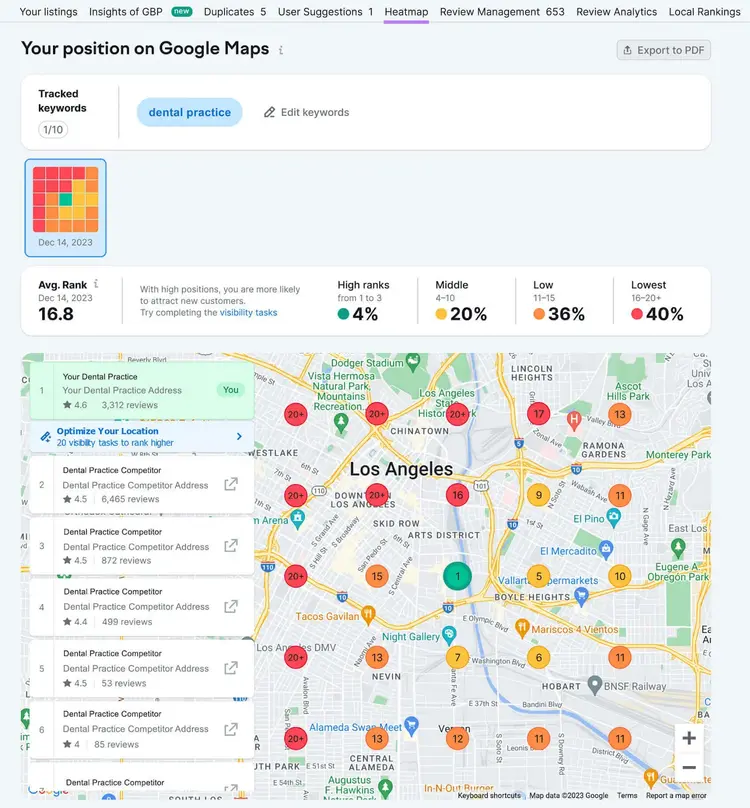
Providing complete and accurate information about your dental practice can help your listing rank higher in local results (or the local pack):
The Local Finder (which appears when users click the local pack):
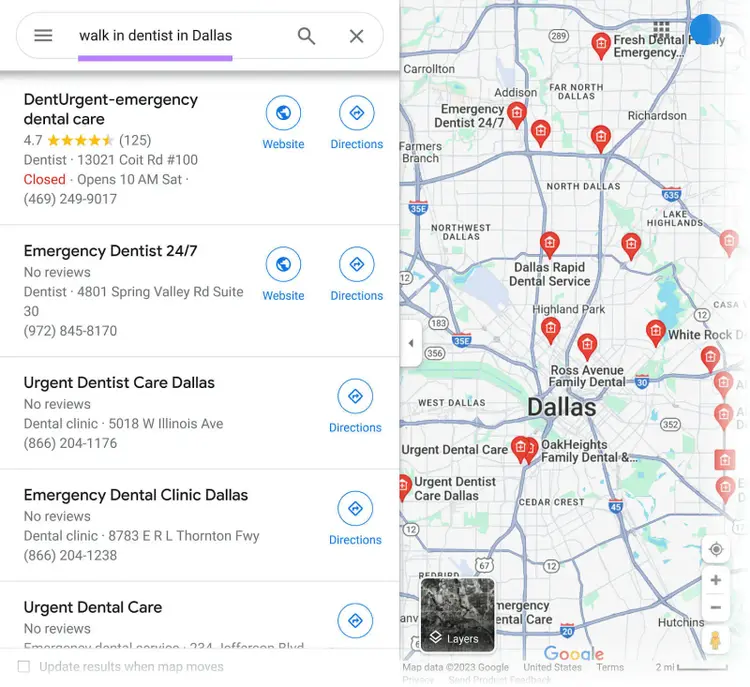
And Google Maps:
An optimized Business Profile also ensures that prospective patients get the details they need.
For example, your profile should appear when people search your practice’s name. So, it’s crucial that it contains the right phone number, etc.
Check out Google’s detailed advice on setting up a healthcare provider Business Profile.
2. List Your Practice in Reputable Online Directories
Listing your dental practice in reputable online directories gives patients more ways to discover your services through search.
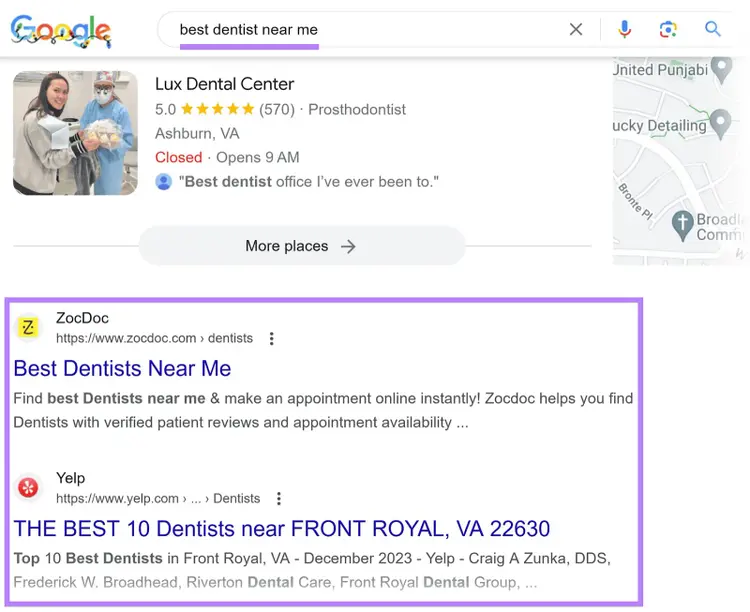
For example, ZocDoc and Yelp rank highly for “best dentist near me”:
Online citations that include your business’s name, address, and phone number (NAP) also help Google verify your information. And understand your prominence.
This can lead to higher rankings in local search results.
Where appropriate, list your dental practice in the directories offered by reputable:
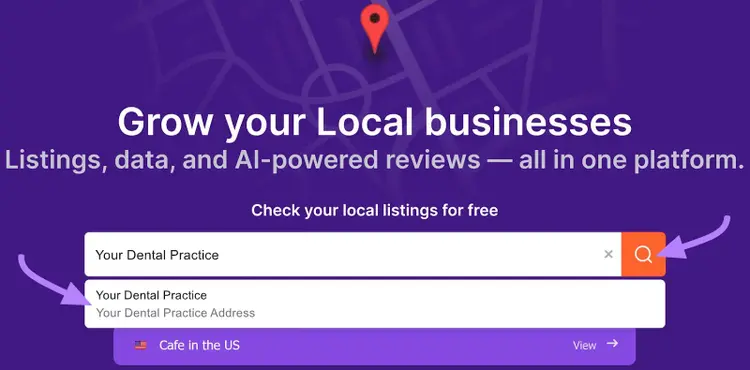
Simply enter your practice name and select the right result from the list.
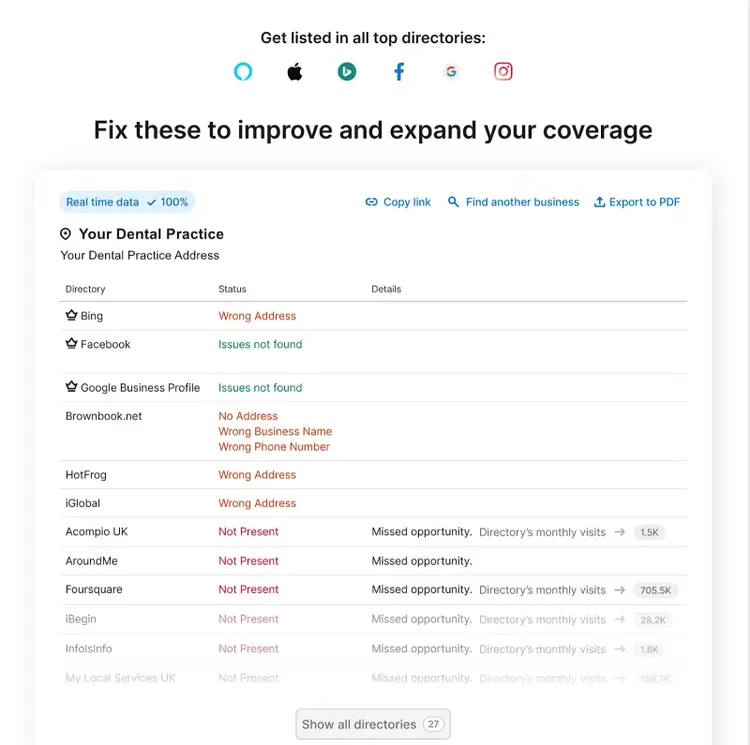
Then, the tool will identify top directories you’re missing out on.
If you purchase a Semrush Local subscription, the tool will automatically submit the business information you provide to every directory in the list. Ensuring your NAP is present and correct across platforms.
3. Encourage Patients to Leave Reviews
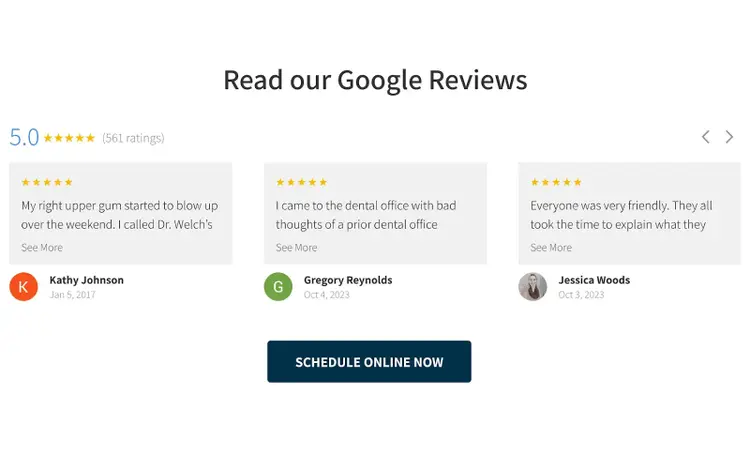
The more high ratings your dental practice has on Google, the higher you can rank in local results. And the more inquiries you can expect to receive.
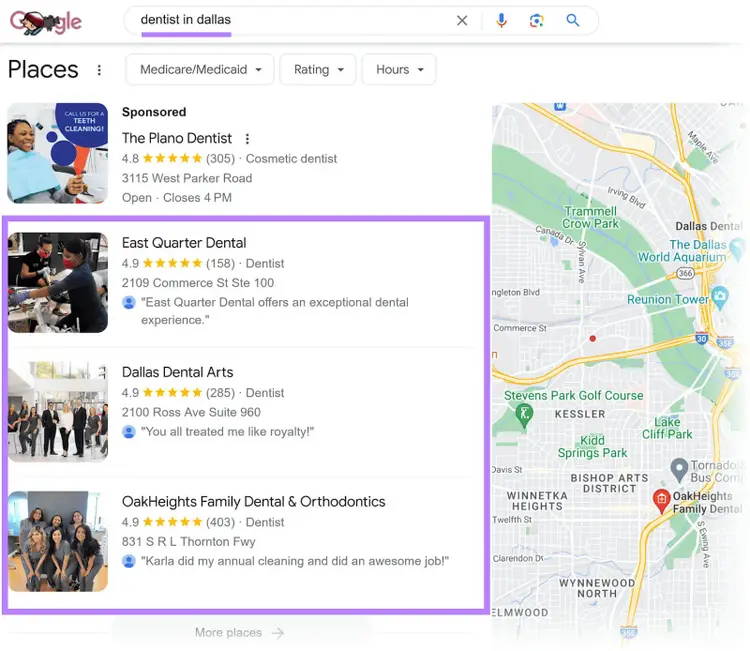
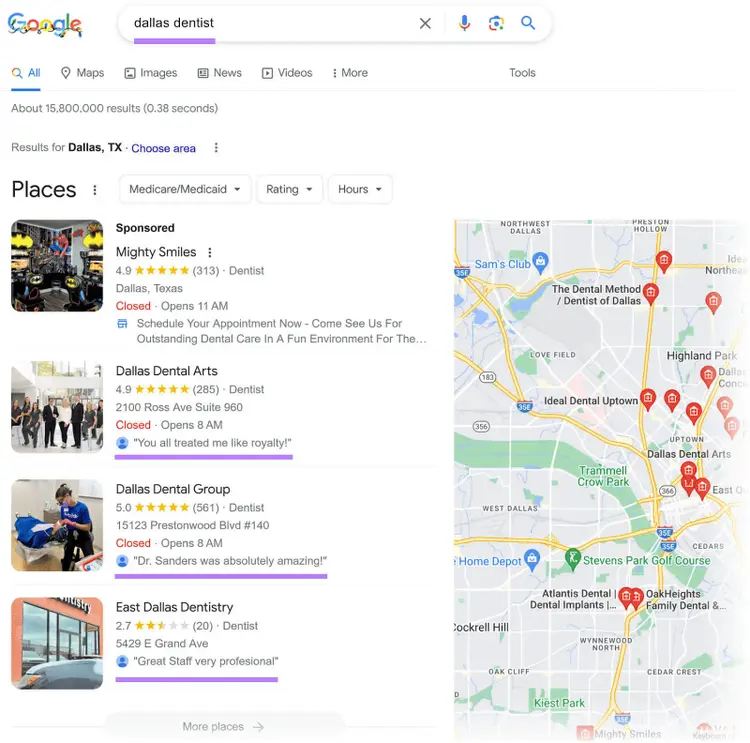
To illustrate, here are the top-ranking places for “dallas dentist”:
You shouldn’t incentivize patients to leave positive reviews, but you can ask them to leave honest feedback on your Google Business Profile.
Display printables (e.g., posters) that encourage patients to share feedback. Google offers a free customized marketing kit to help you.
Ask your dental office receptionist to mention reviews as part of their goodbyes. They can even set up a tablet that allows patients to submit reviews there and then.
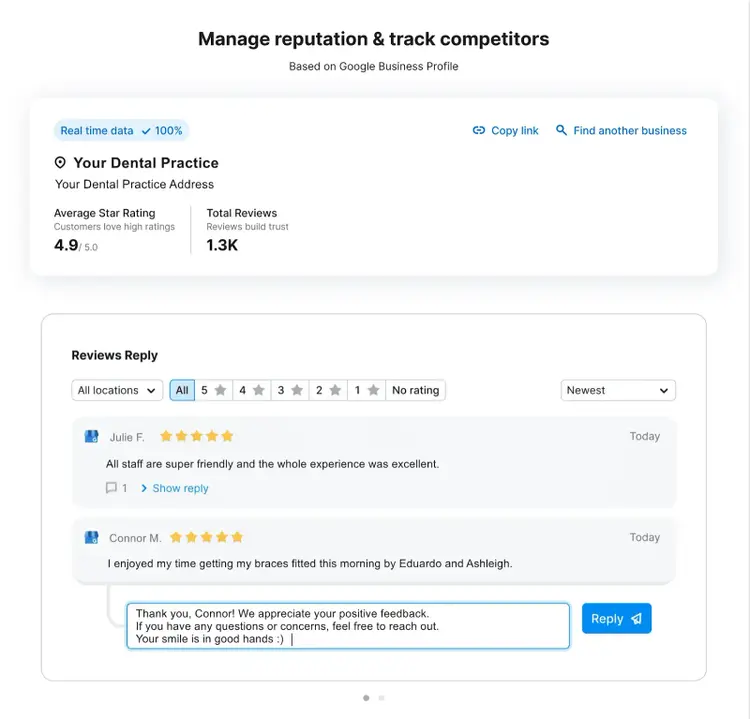
It’s also important to respond to Google reviews. This proves that you care about patient feedback and allows you to neutralize any negative comments.
Semrush’s Review Management allows you to generate responses using AI.
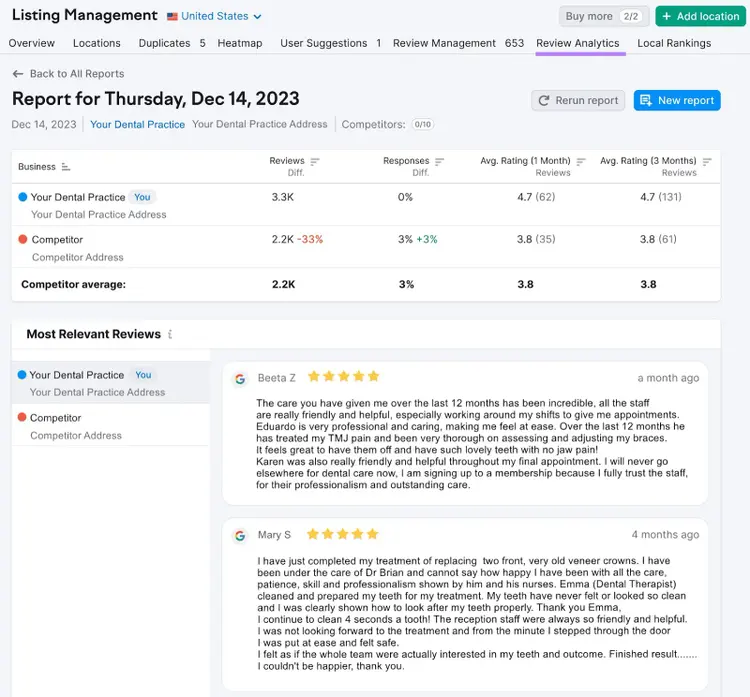
You can also see how your review metrics compare against competitors’.
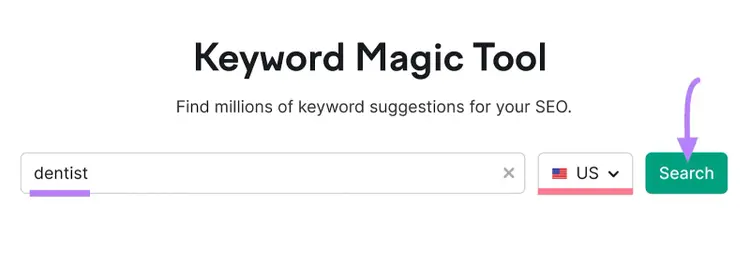
Local keyword research is the process of finding what people type when they’re searching for products, services, or amenities in their area (e.g., an emergency dentist).
Both processes are important when doing SEO for dental practices.
Because adding keywords to your website content and Business Profile can help them rank higher in associated search results—and attract more clicks from users.
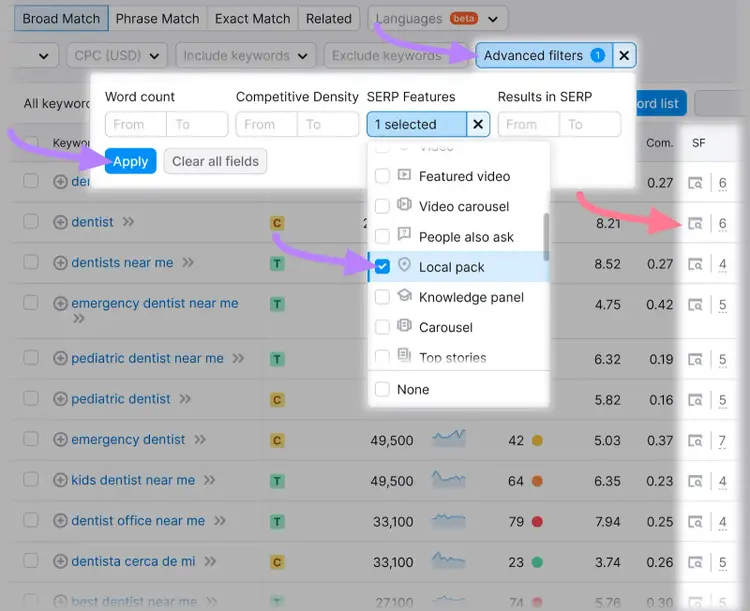
This lets you conduct SERP analysis—i.e., check the user intent behind the query and see what competition you’re up against.
To learn more about choosing target keywords (terms you want to rank for), check out our guide to keyword strategy.
6. Optimize Your Webpages with On-Page SEO
On-page SEO is the process of optimizing a webpage so it ranks higher for relevant keywords and encourages more visitors to take a desired action (e.g., book an appointment).
Here are some top tips:
Add your primary keyword (the main keyword you want to rank for) to the title tag and meta description (which can appear in search results), H1 tag (the main heading on your page), and first paragraph of body content
Naturally incorporate relevant keywords throughout your body content
Use semantic HTML to help Google understand your page’s contents
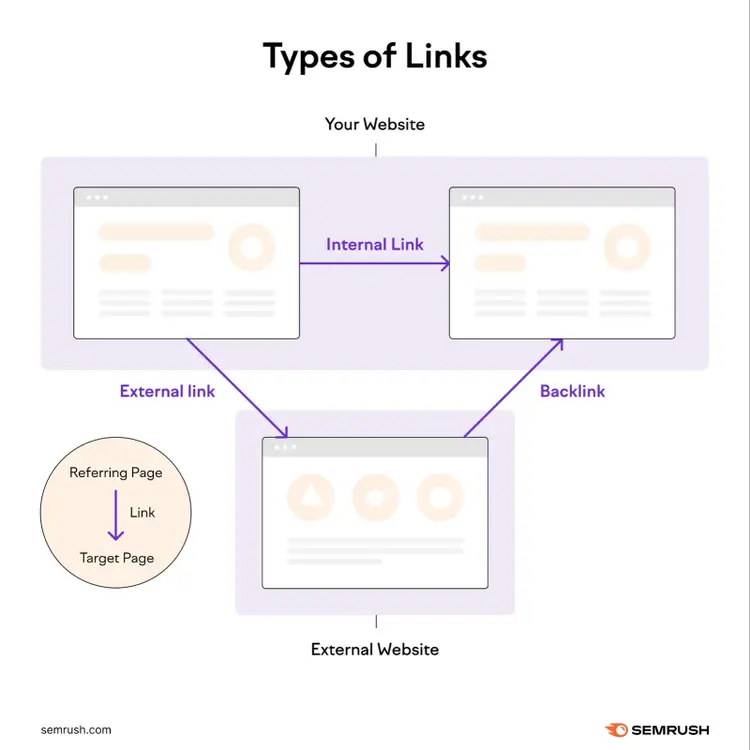
Build internal links between associated pages on your site
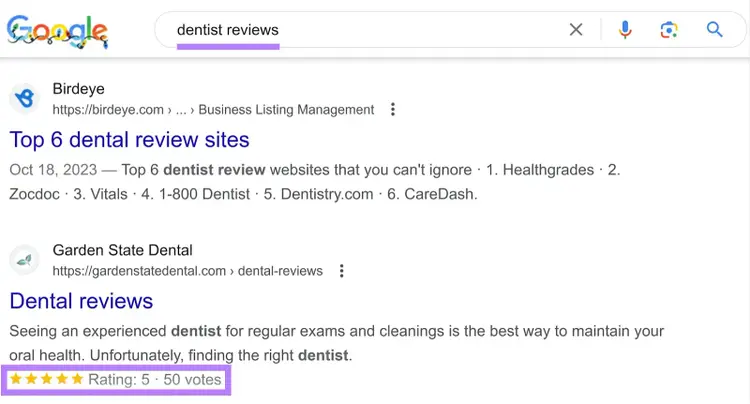
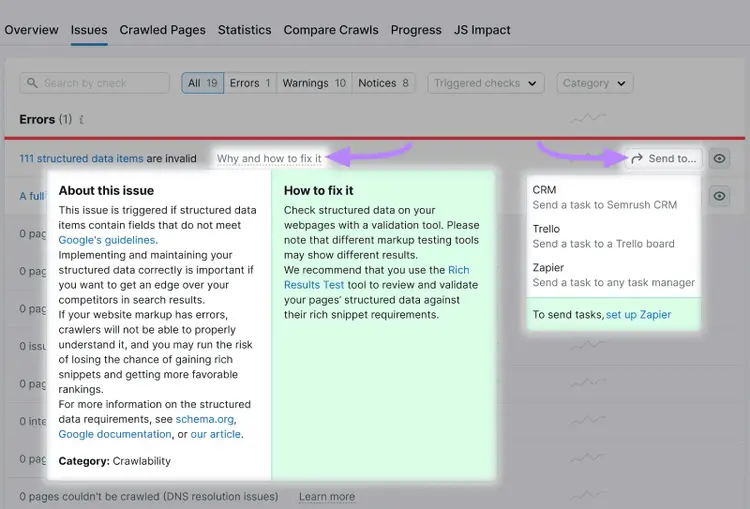
Using structured data (or schema markup) on your site makes it eligible for rich snippets—enriched search results on Google. Which can attract more clicks than standard results.
For example, this result features an average star rating. Because Garden State Dental uses review schema on its page.
You can use structured data to confirm your dental office’s:
If you need help implementing the markup, try Google’s Structured Data Markup Helper. Or speak with a website developer.
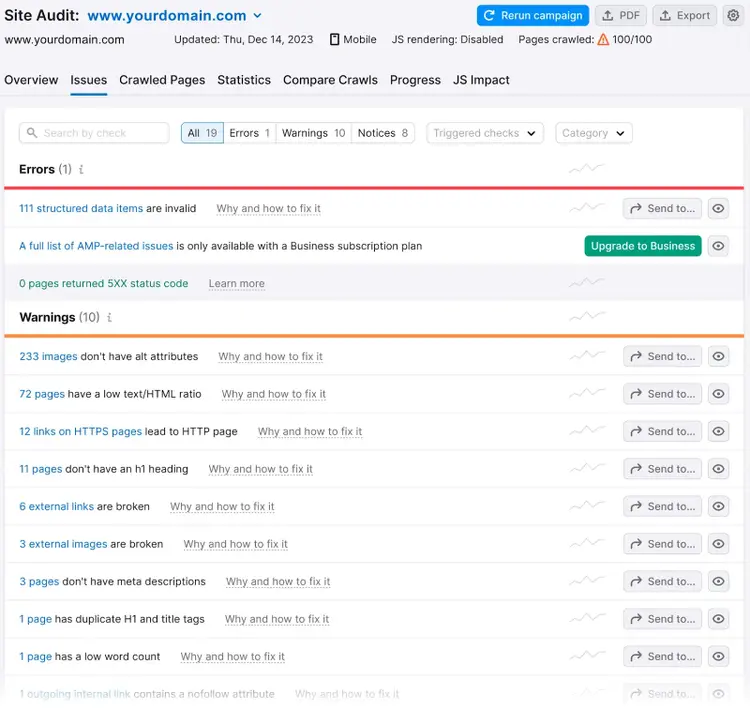
8. Conduct a Technical SEO Audit
Technical SEO involves optimizing technical aspects of your site (such as speed and security) with the aim of ranking higher in search engines and providing a better user experience.
When doing SEO for dentists, improvements should ultimately translate into more patients and bookings.
Google treats certain types like votes of confidence, so they can contribute to higher SEO rankings. Plus, they can drive referral traffic to your site.
Your site may accrue backlinks naturally, but you can also try link building.
Create link bait: Publish content that sites in your industry might want to share with their audience (e.g., research studies and useful videos)
Skyscraper technique: Identify rival content that gets lots of links, create a better version, then convince publishers to link to your version instead
And focus your efforts on relevant, high-quality sites. Google tends to ignore backlinks that appear unnatural or untrustworthy.
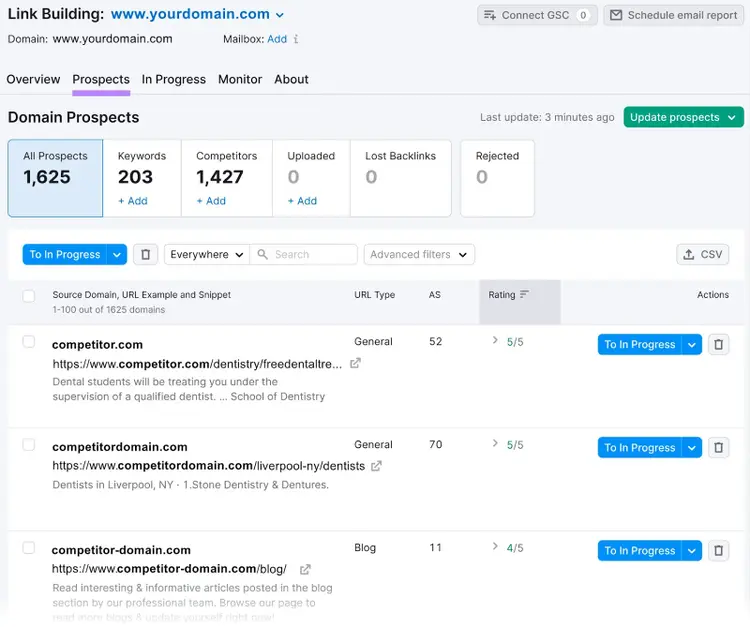
You can find good link building prospects with Semrush’s Link Building Tool.
It analyzes your target keywords and competitors to find the best backlink opportunities.
Each opportunity rating is based on 50+ factors. Including the prospect site’s Authority Score (AS). Which measures domain or webpage authority out of 100.
The tool also makes it easy to send outreach emails to your prospects and track their progress.
10. Measure Your Dental SEO Metrics
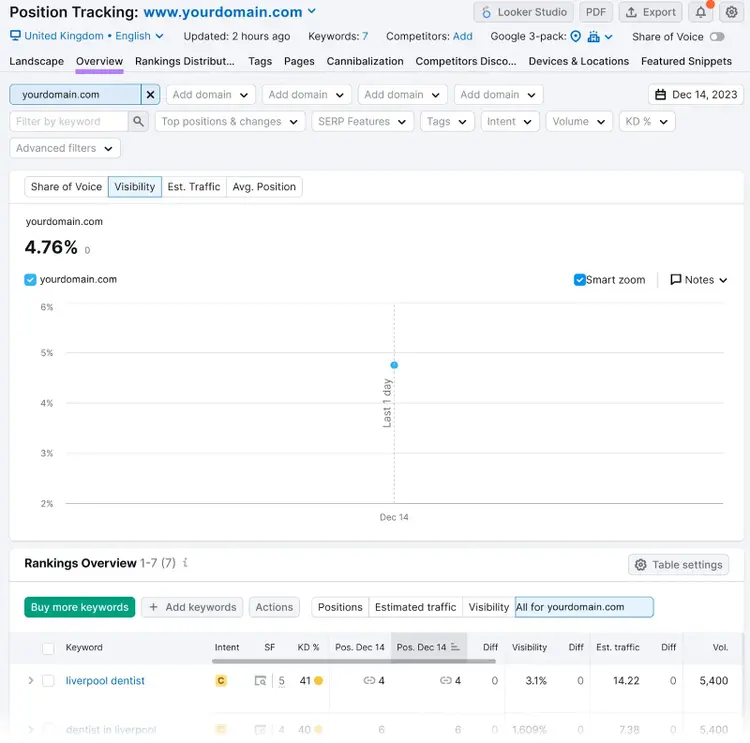
Before you jump into dental SEO, collect some key metrics.
That way, you can identify strengths and weaknesses in your current performance and measure your progress over time. And tailor your SEO strategy to your practice’s changing needs.
Rachel is a Senior Content Writer with 12+ years‘ experience in content marketing and SEO. In a previous role as Head of Content at a digital marketing agency, Rachel developed and executed search-driven content strategies for a diverse range of clients, including global ecommerce brands and local B2B companies. She later transitioned to an in-house role at an SaaS startup, where she focused on scaling content operations and driving organic growth.
Subscribe to learn more about Local SEO
Subscribe
By clicking “Subscribe” you agree to Semrush Privacy Policy and consent to Semrush using your contact data for newsletter purposes
Rachel Handley
Rachel is a Senior Content Writer with 12+ years‘ experience in content marketing and SEO. She has worked agency-side, developing and executing content strategies for a wide range of brands, and in-house, driving organic growth for a SaaS startup.
Share
Tells Google to show you more from Semrush in AI, Search, and Discover.